buleha faces suspension
|

Buleha” faces suspension as Senate demands name change and removal of Bulleh Shah dialogue

Islamabad: A controversy over the Pakistani film “Buleha” after a Senate committee questioned whether the movie damaged the image of legendary Sufi poet Baba Bulleh Shah by showing a character connected with violence, weapons and personal justice.

During a heated discussion, Senator Pervaiz Rashid questioned how a film carrying the name of a famous symbol of peace and love was approved despite scenes and dialogues that critics said were opposite to Bulleh Shah’s teachings.

The controversy intensified when members of the Censor Board admitted that some important points were overlooked during the approval process. Dr. Sultan Azam Taimuri, a senior member of the board, accepted responsibility and said the concerns raised about the connection between the fictional character and Baba Bulleh Shah should have been discussed more carefully.

The committee argued that Baba Bulleh Shah was known for promoting peace, humanity and love, while the film appeared to show a character using force and weapons to fight criminals.

Members questioned whether such a portrayal could create confusion among young viewers about the real message and personality of one of Punjab’s most respected Sufi poets.

The debate became intense when a Senator Pervaiz Rashid asked if a film about another respected poet, such as Khushal Khan Khattak or Ghalib, showed that personality in a completely opposite way, would the Censor Board approve it.

A censor board member admitted that such a film would not be acceptable and said it would be wrong to show a historical personality against their actual beliefs. The committee then questioned why the same standard was not applied to “Buleha.”

The Censor Board defended its decision by saying the movie was not a biography of Baba Bulleh Shah. Officials explained that the character in the film was fictional and had no direct connection with the real life of the Sufi poet.

They said the board considered the movie a fictional story and believed the name alone was not enough reason to stop its release because Bulleh Shah himself used the word “Bullah” in his poetry.

However, the committee pointed out that the board’s explanation created confusion. Members questioned how the film could have no connection with Bulleh Shah but still use a name and dialogue strongly linked with him.

The discussion became more serious when Dr. Sultan admitted that the committee’s concerns had a point. He said the board did not discuss this angle properly at the time of approval and accepted responsibility. He also admitted that a dialogue in the film where the character compares himself with Bulleh Shah could be controversial.

Another Censor Board member, Syed Farooq Hassan, also accepted that the board overlooked this perspective.

He said the board knew Baba Bulleh Shah’s teachings were completely different from the violence shown in the film, but members believed the character was fictional and not based on the actual life of Bulleh Shah.

The board members also explained that Pakistan’s film industry was already struggling, and they wanted to support local movies within acceptable limits. They said promoting cinema was also one reason behind their decision.

The committee, however, questioned whether supporting the film industry should come before protecting the image of respected cultural and historical figures.

During the meeting, criticism was also directed at the writer of the film. Members questioned whether being a successful film writer was enough qualification to handle the story of a major historical and spiritual personality.

They argued that the writer’s fame came mainly from action based films and said success in commercial cinema does not automatically mean expertise in history, culture or the lives of national figures.

One committee member strongly criticised the idea of approving a film simply because it was written by a famous writer. He said the writer was known for introducing violent action elements in films but was not known as an expert on Sufi personalities or Pakistan’s cultural traditions.

The committee also rejected the argument that other provincial censor boards had already approved the film. Officials said Punjab and Sindh censor boards had approved the movie without cuts, and it had also been aired on Local TV.

However, committee members said approval by other boards did not remove the responsibility of reviewing the film’s impact. The discussion also raised questions about the knowledge and background of Censor Board members.

Members suggested that people approving films about major personalities should have knowledge of history, literature, culture and society. They said the selection criteria for board members should ensure they understand how films can influence children and families.

The committee argued that showing respected personalities incorrectly could affect how younger generations understand their history. At the end of the meeting, the committee made a strong recommendation regarding the film.

The committee suggested that the film name should be changed and the dialogue in which the character calls himself Bulleh Shah should be removed. It further recommended that the film’s exhibition licence should remain suspended until these changes are made and that online versions should also be removed if available.

The Senate Standing Committee on Information and Broadcasting has also included the film “Buleha” issue in its upcoming agenda, calling Censor Board members and producers to explain the certification process and the discussions behind the film’s approval.

Similar Posts

  • |

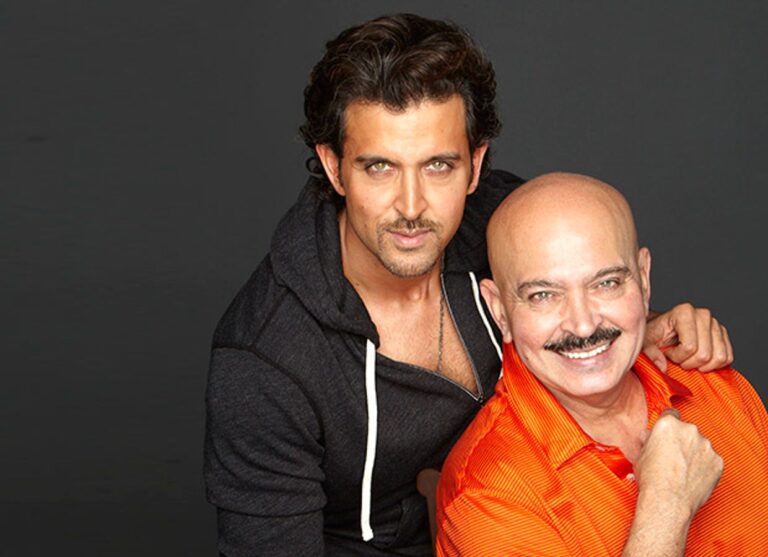
    Hrithik Roshan recalls father’s financial crisis after Koyla setback

    Bollywood actor Hrithik Roshan has opened up about one of the most emotional periods in his family’s life, recalling the financial difficulties his father, filmmaker Rakesh Roshan, faced following the commercial disappointment of Shah Rukh Khan’s 1997 film Koyla. The 52-year-old actor recently spoke about his father’s struggles and revealed that there was a time when Rakesh Roshan lost a significant portion of the money he had earned throughout his career. According to Hrithik, the setback was severe enough to create financial difficulties for the family and left a lasting impression on him. Recalling the difficult period, Hrithik said he still remembers a particular morning when he saw his father with tears in his eyes for the first time. The actor explained that Rakesh Roshan had told him that he had lost all the money he had earned. For Hrithik, witnessing his father in such a vulnerable state was an experience he could never forget. He described the moment as extremely emotional because he had never previously seen his father so broken and distressed. Rakesh Roshan had produced Koyla under his production banner Filmkraft Productions. The action thriller featured Shah Rukh Khan and Madhuri Dixit in the lead roles, alongside Amrish Puri, Deepa Sahi, Ashok Saraf, Johnny Lever and several other prominent actors. Released in 1997, Koyla revolved around Shankar, played by Shah Rukh Khan, a mute and loyal coal miner who works in a coal mine. The film combined action, romance and drama and was one of the major productions associated with Rakesh Roshan’s production house at the time. Despite its scale and star-studded cast, the film failed to achieve the level of commercial success that had been expected. It was reportedly made on a budget of around Rs 12 crore and earned approximately Rs 28 crore worldwide. Although the film recovered a significant amount at the box office, its overall commercial performance was considered disappointing in relation to its investment and expectations. The experience became an important chapter in Hrithik Roshan’s understanding of his father’s professional and personal journey. Years later, the actor has established himself as one of Bollywood’s leading stars, while Rakesh Roshan has continued to remain an influential filmmaker and producer. The father-son duo is now preparing to return to the superhero franchise that has been closely associated with their careers. Hrithik and Rakesh Roshan are currently involved in preparations for Krrish 4, the next installment in the popular superhero series. Hrithik’s recent recollection offers a rare glimpse into the challenges his family faced behind the glamour of Bollywood and highlights the personal impact that professional setbacks can have, even on established filmmakers.

  • |

    Paris Jackson reveals intense treatment during sobriety journey

    Paris Jackson has opened up about her difficult road to sobriety, revealing that she underwent intensive electroconvulsive therapy after coming dangerously close to attempting to take her own life. The 28-year-old singer, who is the daughter of late pop legend Michael Jackson, recently reflected on her struggles and recovery while speaking on Jay Shetty’s On Purpose podcast. Paris revealed that she has now been sober for six years, but reaching that milestone involved confronting some of the darkest moments of her life. She recalled a period when she came “very, very close” to attempting suicide and eventually received electroconvulsive therapy as part of her treatment. According to Paris, she underwent nine sessions within three weeks. Describing how close she was to making an attempt, she said she was only “centimeters away” from doing so. The singer also provided a detailed account of what the treatment involved. While electroconvulsive therapy can have a frightening reputation, Paris explained that modern procedures are carried out under general anesthesia, meaning patients are unconscious during the treatment. She recalled having to prepare for the procedure by replacing the metal jewelry from her facial piercings with plastic earrings. After arriving at the hospital, she said she changed into a hospital gown before being given anesthesia. Paris explained that she was then secured in place and given a bite guard before the electrical stimulation was administered. Although the treatment was performed while she was unconscious, she said the experience still came with difficult physical effects afterward. The singer described experiencing what she called “gnarly side effects” and recalled feeling sharp pains after waking up from the sessions. Despite the challenges she endured, Paris has continued moving forward with her recovery and has now maintained six years of sobriety. Her willingness to discuss such a painful period has given fans a more personal look at the struggles behind her journey. Paris has previously spoken about her experiences with addiction, emotional struggles and recovery. Her latest comments further highlight the seriousness of the crisis she experienced and the extensive treatment she received while working toward a healthier life. By openly discussing her past, Paris is shedding light on the realities of recovery and the different forms of professional support people may receive during severe mental health crises. Her six-year sobriety milestone represents a significant achievement after what she described as an extremely difficult chapter in her life.

  • | |

    Girls dominate Hyderabad Board Class X results

    HYDERABAD: Female students have secured several top positions in the Class X annual examinations conducted by the Board of Intermediate and Secondary Education Hyderabad, with the results being announced after a delay of nearly one month. The results for both Science and General groups were released late Thursday, providing students with the long-awaited outcome of their examinations. In the Science Group, Sarah, daughter of Nisar Ahmed, from Foundation Grammar High School, Tando Allahyar, claimed the top position by securing 991 marks. Aswad Amir of Government High School No 1, Matli, stood second with 986 marks, while Mukarrama Abid of St Mary’s Convent Girls Higher Secondary School, Hyderabad, secured third position with 982 marks. A total of 78,935 candidates had registered for the Science Group examinations. Of these, 77,703 students appeared. Among the candidates who took the examination, 10,799 achieved A1 grade, while 40,769 secured A grade. Another 17,248 students obtained B grade, 3,816 received C grade and 239 were placed in D grade. The board declared 4,781 candidates unsuccessful. Results of 32 students were withheld because of reported use of unfair means and other reasons. The General Group also produced strong performances by female students. Wajihullah Khan of Deaf Reach Higher Secondary School secured first position with 873 marks. Habiba from Government Girls High School, Latifabad Unit No 6, Hyderabad, secured second position with 865 marks. Her schoolmate Halima stood third with 861 marks. The General Group had 1,570 registered candidates, of whom 1,488 appeared in the examinations. Three candidates achieved A1 grade, while 332 obtained A grade. A total of 808 students secured B grade, 227 received C grade and 18 were placed in D grade.

  • | |

    Sunny Deol protects Shabana Azmi in Batwara 1947 trailer

    Veteran Bollywood actor Sunny Deol has unveiled the trailer for his upcoming historical drama Batwara 1947, offering audiences a powerful glimpse into a story set during the Partition of India in 1947. Released on Tuesday, July 28, the trailer showcases Deol in a striking new role as a man determined to protect humanity amid one of the darkest chapters in the subcontinent’s history. Sharing the trailer on social media, the 68-year-old actor wrote, “Har insaan ka pehla mazhab MAA hai (Every person’s first religion is a mother). #Batwara1947 Trailer Out Now. 14th August in cinemas near you.” The film is set against the backdrop of the 1947 Partition, when millions of people were displaced following the creation of India and Pakistan. The story follows a Muslim family that migrates to Lahore after independence and discovers that an elderly Hindu woman is still living in the house allocated to them. Sunny Deol plays Sikander Mirza, who arrives in Pakistan with his wife Hamida Mirza, portrayed by Preity Zinta, and their son Javed Mirza, played by Karan Deol. Upon reaching their new home, they meet an elderly Hindu woman, played by Shabana Azmi, who refuses to abandon the house where she has spent her entire life. As tensions rise and others attempt to force the woman out of the property, Sikander chooses compassion over hatred. Defending her against growing hostility, he delivers one of the trailer’s most memorable lines: “Hindu woman? She is a mother. Do not label her with Hindu-Muslim. Our first religion is mother! The first word that we speak is mother.” The emotional dialogue has resonated strongly with viewers, many of whom praised the film’s message of humanity above religious divisions. The trailer also highlights the violence, fear and forced migration experienced during Partition while emphasising themes of empathy, sacrifice and coexistence. Soon after the trailer’s release, social media users shared positive reactions. One viewer commented, “No religion can be good or bad, only human can be good or bad.” Another fan wrote, “Goosebumps Yar… Only Sunny Deol and Preity Zinta can give 100% justice to this Movie.” A third praised the film’s overall presentation, commenting, “A powerful, emotional, and thought-provoking trailer that promises a grand cinematic experience. With Rajkumar Santoshi’s direction, Sunny Deol’s powerful performance, A.R. Rahman’s unforgettable music, and a talented ensemble cast, Batwara1947 has all the ingredients to become one of the most impactful historical dramas of the year.” Directed by Rajkumar Santoshi, the film boasts an impressive cast featuring Sunny Deol, Preity Zinta, Shabana Azmi, Karan Deol, Ali Fazal, Abhimanyu Singh and Khushi Hajare. Academy Award-winning composer A.R. Rahman has provided the film’s music, adding to anticipation surrounding the project. Batwara 1947 is scheduled to release in cinemas on August 14, 2026, coinciding with Pakistan’s Independence Day. With its emotionally charged narrative and message of unity during a time of division, the film is already generating significant attention ahead of its theatrical release. 

  • |

    Zanjeerain sparks memes after unexpected Chota Bheem reference

    Pakistani drama Zanjeerain, which initially attracted viewers with its revenge-driven storyline and suspenseful plot, is now facing growing criticism from fans who believe the serial has lost its direction. Many viewers have expressed disappointment over the drama’s recent episodes, pointing to slow pacing, inconsistent storytelling and scenes they feel add little to the overall narrative. The latest episode has sparked a wave of discussion on social media after featuring an unexpected reference to the popular animated character Chota Bheem. The scene quickly went viral, with viewers sharing clips, jokes and memes across various platforms. In the scene, Sarbuland is seen talking to Rabiya during a light-hearted conversation. He tells her about his favourite cartoon from childhood, revealing that he was a fan of Chota Bheem. He goes on to mention that the cartoon character loved eating laddus, adding that he also enjoys the sweet treat. While the moment appeared to be intended as a playful exchange, many viewers found it unusual given the serious tone the drama had established in its earlier episodes. The unexpected dialogue immediately became a trending topic online, with fans questioning why such a reference was included in a drama centred around revenge, family conflict and emotional turmoil. Several viewers argued that the scene felt disconnected from the main storyline and interrupted the overall flow of the episode. Social media users were quick to respond with humorous reactions. Many joked that Sarbuland was comparing himself to Chota Bheem, while others suggested that the conversation implied Rabiya was being portrayed as Chutki, another well-known character from the animated series. One user joked, “Sarbuland mein Bheem jaisi shakti,” while another wrote that the scene made it seem as though Sarbuland was indirectly calling himself Chota Bheem. Others laughed that if Sarbuland was Bheem, then Rabiya must be his Chutki. The comments quickly spread across social media, turning the dialogue into one of the most talked-about television moments of the week. The memes did not stop there. Fans created numerous edited images and short videos featuring Sarbuland alongside Chota Bheem, blending scenes from the drama with clips and artwork inspired by the beloved cartoon. Many of these posts attracted thousands of views and shares, with users praising the creativity of the memes even as they criticised the drama itself. Beyond the jokes, several viewers also voiced broader concerns about the direction of Zanjeerain. Fans who had praised the series during its early episodes said they were disappointed by what they described as stretched storylines, repetitive scenes and uneven editing. According to many comments online, the drama’s original revenge-thriller premise has gradually been overshadowed by scenes that feel unnecessary or out of place. Despite the criticism, the viral moment has significantly increased online engagement surrounding the show. Clips from the Chota Bheem conversation continue to circulate on social media, attracting reactions from both regular viewers and people who do not normally follow the drama. Whether the unexpected reference was intended as comic relief or simply a nostalgic nod to a popular childhood cartoon, it has become one of the most memorable moments from the series so far. However, many fans hope future episodes will return their focus to the gripping storyline that originally drew audiences to Zanjeerain, rather than relying on scenes that risk distracting from the central plot.

  • | |

    Spotify names HAVI as RADAR Pakistan artist for Q3 2026

    Music streaming platform Spotify has selected Pakistani singer-songwriter HAVI as its RADAR Pakistan Artist for the third quarter of 2026, recognising the rising musician’s rapid growth and expanding international audience through its global artist development programme. HAVI, whose real name is Abdur Rahman Sajid, has emerged as one of Pakistan’s fastest-growing independent artists, earning praise for his emotionally driven songwriting and deeply personal storytelling. According to Spotify, the singer’s listenership on the platform has increased by more than 335% over the past year, reflecting his growing popularity both at home and overseas. The RADAR programme is Spotify’s global initiative aimed at supporting emerging artists by providing editorial promotion, original content and international exposure. As part of the programme, HAVI will receive dedicated promotional support, including a professionally produced mini-documentary exploring his musical journey, inspirations and creative process. Spotify said HAVI’s music has connected with listeners because of its honest storytelling and relatable themes, helping him build a loyal audience across multiple countries. Beyond Pakistan, his biggest streaming markets now include Bangladesh, the United States, the United Kingdom, Canada and the United Arab Emirates, highlighting the growing international appeal of Pakistani music. Several of HAVI’s tracks, including Andaz E Karam, Na Milay and Farz, have contributed significantly to his success. Spotify noted that the singer’s music has also been added to more than 200,000 user-generated playlists, demonstrating strong listener engagement across the platform. Commenting on the announcement, Rutaba Yaqub, Spotify’s Artist and Label Partnerships Manager for Pakistan and the UAE, praised the artist’s ability to connect with audiences through authentic storytelling. She said HAVI’s remarkable growth reflects how his music resonates with listeners and showcases the strength of Pakistan’s emerging music scene. Expressing his excitement over the recognition, HAVI welcomed the opportunity to introduce his music to even more listeners through the RADAR programme. The singer said the initiative would allow him to share not only his songs but also the experiences and inspirations that shape his artistic journey. Spotify launched the RADAR programme to spotlight promising artists worldwide by combining playlist support, editorial promotion and original visual content designed to help emerging talent reach wider audiences. Over the years, the initiative has featured several Pakistani musicians, reflecting the platform’s continued investment in the country’s growing music industry. HAVI’s selection marks another milestone for Pakistan’s independent music scene, with his rapidly expanding fan base and streaming numbers signalling increasing global recognition. Through the RADAR programme, Spotify aims to amplify his voice further and introduce his music to audiences around the world while celebrating the diversity and creativity of Pakistan’s next generation of artists.

Leave a Reply

Your email address will not be published. Required fields are marked *