
police officer took
| |

Police officer took his own life after leading dou…

An investigation has found that a police officer who died by suicide in May carried out a series of rapes and attempted murders targeting women over a period of at least fourteen years while serving as an officer.

PC Alan Greer’s earliest known victim was a woman he raped inside her own home in Glasgow in 2012, shortly after she had contacted police to report an unrelated crime. The woman came forward late last year to report the assault, a disclosure that triggered one of the largest anti corruption investigations in Police Scotland’s history.

Detectives have since identified eight additional victims, five of them sex workers who were attacked while Greer was off duty. Investigators have also established that Greer paid for sex from hundreds of women throughout his career and expect further victims to come forward as the inquiry continues.

Assistant Chief Constable Lynn Ratcliff, who is leading the investigation, described the findings as deeply disturbing. She said the officer had abused his position of authority by returning to target a woman he had first encountered through his police duties. Ratcliff said the woman’s decision to come forward and speak with investigators became the catalyst that launched the wider inquiry.

Her confirmation of the investigation followed months of reporting into Greer’s conduct. A source close to the case said the scale and nature of the case draws comparisons to the conviction of Wayne Couzens, the London police officer sentenced for the rape and murder of Sarah Everard five years ago, suggesting the Greer case could represent a similarly significant reckoning for Police Scotland.

Greer was born in Australia in 1978 and moved to the United Kingdom at age six. He joined Strathclyde Police in 2009, and continued serving after the force merged into Police Scotland in 2013, building what appeared to be an unblemished seventeen year career. He initially worked as a uniformed response officer in Glasgow before moving into an officer safety training role based in Coatbridge around 2016, a position that involved training probationary officers and refreshing the skills of more experienced colleagues.

Greer was 47 years old when he died in May, and was married with a child. Those close to him, including his family and police colleagues, are understood to have had no knowledge of his pattern of violence. Senior officers have said there were no clear opportunities that would have allowed the force to identify his offending earlier.

The investigation traces back to a woman in her late thirties who walked into a Glasgow police station late last year to report the assault. She described how, in 2012, she had called officers to her home after a disturbance, only for one of the responding officers to later attack her.

Cases involving police officers who abuse their positions of trust to target victims, particularly vulnerable women and sex workers, have prompted broader scrutiny of vetting and oversight procedures within UK police forces in recent years. Investigations of this kind often expose gaps in how forces monitor off duty conduct and respond to complaints against serving officers, and they tend to renew public pressure for independent oversight mechanisms capable of identifying patterns of abuse before they escalate over many years.

The investigation into Greer’s offending remains active, and Police Scotland has said it anticipates identifying more victims as the inquiry proceeds.

Similar Posts

  • | |

    Khawaja Asif says Mir Raza case exposes compromise…

    Defence Minister Khawaja Asif has criticised the Sindh government over the investigation into the Mir Raza case. He said the developments emerging from the case suggest that the entire system had been compromised. In a social media post, Asif said continued attention was needed to ensure that the matter was investigated properly. He warned that any previous attempts to settle or cover up the issue should not be repeated. The defence minister also called for those who allegedly tried to conceal facts in the case to be exposed. His remarks came as questions continued to be raised over the handling of the Mir Raza case. The case has attracted attention because of conflicting information and concerns about the progress of the investigation. Meanwhile, the Sindh government has decided to establish a judicial commission to investigate the Mir Raza murder case. Sindh Home Minister Zia Lanjar said the provincial government wanted justice for Mir Raza’s family. He said a new committee had also been formed to examine the matter. Lanjar said the authorities would allow the judicial commission or the court to determine how conflicting reports should be dealt with. The government’s decision to form a judicial commission is expected to provide another forum for examining the circumstances surrounding the case. It may also help clarify conflicting accounts and determine responsibility based on the available evidence.

  • | |

    Rising heat pushes even Africa’s resilient c…

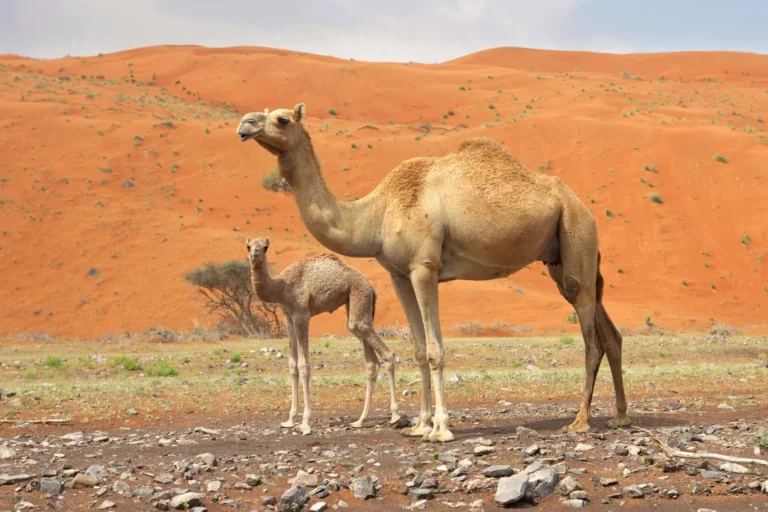
    Camel herders and scientists across Africa say that rising temperatures are now overwhelming animals long regarded as uniquely suited to desert extremes, with herds facing rising death tolls, illness, and shrinking grazing lands. In the Afar region of northeastern Ethiopia, among the hottest and driest places on the planet, nomadic herders traditionally lead camel caravans loaded with salt across the desert. Ali Umer, a 40 year old herder from Semera who owns around 500 camels, said he watches his animals struggle under conditions he has never seen before. He described blistered feet, watery eyes, and burned skin among his herd, and said the sand itself now scorches the animals as they rest. Umer said he lost eight camel calves in a single month due to extreme heat, and added that even the wind no longer brings relief. He said the changes have become noticeably worse in recent years. Umer’s account matches what researchers and veterinarians are documenting across the continent. Scientists and animal welfare specialists point to stress, fatigue, dehydration, and rising disease rates as direct consequences of extreme heat, while indirect effects such as water shortages, vegetation loss, and disappearing shade compound the damage. North Africa and the Horn of Africa are home to roughly 80 percent of the world’s dromedary camel population, the single humped variety that farmers across the region have increasingly relied on because of its reputation for withstanding drought and heat. A 2025 study examining herder perceptions in southern Ethiopia found that climate variability had measurably harmed camel health, productivity, and reproduction. The crisis appears especially acute in Somalia. Research published in June found that drought linked camel deaths have affected nearly 46 percent of camel owning households, based on a survey of almost 6,000 pastoral families. The mortality was heavily concentrated in northern areas, with the Sool region recording a death rate of nearly 73 percent. Experts say extreme heat is the central driver behind the region’s drought conditions, though poor veterinary access and weak herd management make outcomes worse. Atmospheric scientists have linked the severe 2021 to 2022 drought to sustained high temperatures, which accelerate evaporation from soil and water sources and increase the rate at which plants release moisture into the air. Veterinarians on the ground report a growing caseload tied to heat. Hassan Nuya Guyo, a veterinary officer in Marsabit county in northeastern Kenya near the Ethiopian border, said his clinic is seeing a sharp rise in hyperthermia cases that leave camels vulnerable to secondary infections. He said camel deaths in the county have risen more than 15 percent over the past two years due to heat and drought. Separate research from the Horn of Africa links heat stress to higher disease rates and falling milk yields among camel herds. A similar pattern is emerging in North Africa. A study conducted in Algeria and published this year documented a marked rise in camel deaths during summer heatwaves, with researchers noting clear seasonal mortality spikes that they say call for targeted responses such as emergency water supplies, supplemental feeding, and closer disease monitoring during peak summer months. The World Meteorological Organization says extreme heat events have become routine across North Africa, with heatwaves trending upward since 1981. Several countries in the region and the wider Middle East recorded temperatures above 50 degrees Celsius in 2024. The organization’s most recent State of the Climate in Africa report found that North Africa warmed faster than any other subregion on the continent between 1991 and 2025, at a rate of 0.43 degrees Celsius per decade. Camels are naturally equipped to handle heat up to about 40 degrees Celsius. Their bodies allow internal temperature to fluctuate throughout the day, reducing the need to sweat, while concentrated urine, dry waste, and a thick protective coat help limit water loss and block solar radiation. But researchers say those adaptations are no longer enough. Mohammed Bengoumi, a camel health specialist with the United Nations Food and Agriculture Organization who works across North Africa, said summer temperatures in large parts of the Sahara now regularly exceed 50 degrees Celsius, raising the risk of severe heat stress, especially where vegetation, water, and shade are already scarce. Abdelmadjid Chehma, a professor at the University of Ghardaia in Algeria who has conducted experimental research on desert camels, said sustained heat above 41 to 45 degrees Celsius damages the animals at a cellular level, weakening their immune systems and preventing white blood cells from repairing themselves. He said the resulting stress slows the animals’ metabolism as their bodies try to limit internal heat production, which in turn reduces appetite and causes lethargy, lower milk output, and reproductive problems. Mohammed el Khasmi, an animal hydrobiology expert at the University of Casablanca in Morocco, said his team has documented a wide range of heat related harm in camels, including weight loss, inflammation, muscle and bone damage, kidney related chemical imbalances, and parasite driven infections. The combined pressures are forcing some herding communities to abandon land they have used for generations. Daniel Gelan, a pastoralist development researcher at Vision University in Ethiopia, said herders in the country’s north are relocating permanently to southern areas with more reliable water and vegetation, rather than following the seasonal migration patterns of the past, because the northern region can no longer sustain camel herding. The Horn of Africa is still recovering from a severe drought that lasted from 2020 to 2023 and is now facing another period of harsh conditions, according to the charity Oxfam, which reported that water prices in parts of Somalia have jumped by more than 2,000 percent. Back in Afar, Umer said he fears disease could soon begin killing his adult camels as well. Chehma said that concern reflects a broader shift underway across the region, where an animal once seen as the ultimate survivor of desert life is now being pushed toward its own breaking point by the pace and severity of current heatwaves.

  • |

    Lahore High Court rules abused women retain dower rights following divorce

    The Lahore High Court has ruled that a woman who seeks a divorce on the grounds of her husband’s cruelty, abuse, or marital misconduct is not automatically deprived of her right to receive her unpaid dower, known as haq mehr. Delivering the judgment, Justice Mohsin Akhtar Kayani dismissed a petition filed by a man challenging lower court decisions in Toba Tek Singh that awarded 50 percent of a deferred dower to his former wife, Nisha Shahid. The petitioner argued that under family law provisions, the court lacked a legal basis to grant dower following a khula dissolution. However, the High Court drew a clear distinction between a standard khula, where a woman seeks separation solely due to personal incompatibility, and a judicial dissolution triggered by a husband’s mistreatment. The court clarified that abuse encompasses physical violence as well as psychological, emotional, verbal, and economic misconduct, noting that a wife is not required to present formal medical reports or police filings to establish her claim. The ruling directed Family Courts to assess the underlying causes of a marital breakdown rather than stripping a woman of her dower rights purely because the separation is categorized as a khula. Additionally, the Lahore High Court recommended that the Punjab government and the Law and Justice Commission of Pakistan update relevant family laws to ensure clear determinations of fault in dower disputes.

  • | |

    Ben Affleck wins rare $1 million Who Wants to Be a Millionaire prize

    Hollywood star Ben Affleck and Jeopardy! champion Jamie Ding secured the top prize on Who Wants to Be a Millionaire, winning $1 million for charity after correctly answering the game’s final question in one of the show’s rare celebrity jackpot victories. The pair claimed the grand prize during the July 30 episode of the ABC quiz show, hosted by Jimmy Kimmel. Their winnings will benefit Eastern Congo Initiative, the nonprofit organisation Affleck co-founded to support community-based development projects in the Democratic Republic of Congo. The episode resumed with Affleck and Ding already just two questions away from the million-dollar prize after carrying over from the previous week’s episode. Before the game continued, Affleck explained the mission of the Eastern Congo Initiative, saying the organisation works alongside local communities in a region that has endured years of conflict. The $500,000 question asked which historic achievement occurred only two months after The New York Times predicted it would not happen for “1 million to 10 million years.” The possible answers included splitting the atom, cloning a mammal, the first airplane flight and the polio vaccine. Ding immediately believed the correct answer was the Wright brothers’ first airplane flight, while Affleck recalled reading about the newspaper’s famous misjudgment years earlier. To be safe, the pair used their 50:50 lifeline, leaving only two options. They ultimately trusted Ding’s instinct and correctly selected the first airplane flight, advancing to the final question. The million-dollar question proved even more challenging. Contestants were asked which pair of names had not been used for turkeys pardoned by a U.S. president during the annual White House Thanksgiving tradition. After debating the possible answers, Affleck and Ding turned to host Jimmy Kimmel using the Ask-the-Host lifeline. Kimmel admitted he was not completely certain but suggested “Spaghetti & Meatball” seemed unlikely to have been used. The pair also attempted to use their Phone-a-Friend lifeline, but Ding’s friend was unable to provide a definite answer. With no better option available, Affleck decided to trust Kimmel’s judgment, and the duo locked in “Spaghetti & Meatball.” It proved to be the correct answer, earning them the $1 million prize. As confetti filled the studio, Affleck and Ding embraced in celebration while Kimmel announced their victory. The win places them among the small number of celebrity contestants to claim the show’s top prize, joining previous million-dollar winners including Matt Damon and Ken Jennings, Ike and Alan Barinholtz, and Oscar Nuñez and Kate Flannery. Affleck’s appearance on the programme not only showcased his trivia skills but also raised significant funds for a cause he has supported for years, making the rare television triumph both entertaining and meaningful.

  • | |

    Azma Bukhari fires back at Mohsin Naqvi over gover…

    Lahore: Punjab Information Minister Azma Bukhari has strongly responded to Interior Minister Mohsin Naqvi’s criticism of Pakistan’s governance system, arguing that he should not condemn the same structure that helped him rise to a senior position. In her reaction, Bukhari said Naqvi had advanced through the existing system and was now calling it a failure despite being one of its beneficiaries. She also claimed that the responsibilities entrusted to him had produced disappointing results, adding that the country’s leadership would decide how to address the matter if it was being raised seriously. Her remarks came after Naqvi, speaking at the Pakistan Economic Summit in Islamabad, described the current governance system as ineffective and incapable of solving the country’s long-standing challenges. The interior minister called for sweeping administrative reforms, including decentralizing authority and creating new administrative units, saying such changes are essential to improve governance and prevent Pakistan from facing the same problems in the years ahead.

  • |

    Trump aide impersonator texts UK PM, sparking security scare

    A security mystery has emerged after an individual posing as White House Chief of Staff Susie Wiles reportedly exchanged text messages with UK Prime Minister Andy Burnham. The communications have raised concerns in both Britain and the United States. Officials are examining how the impersonator was able to establish contact with the British prime minister. According to reports, Burnham received a limited number of messages from the individual while he was campaigning for office. The communication reportedly continued for a short period after he became prime minister. Sources familiar with the matter said the messages were ultimately considered to be of no significant consequence. However, the incident triggered concerns because the impersonator claimed to represent a senior White House official. The matter was serious enough for the British embassy in Washington to raise the issue directly with the White House. British officials initially considered the possibility that the real Susie Wiles’ phone, contact information or communications may have been compromised. Authorities therefore examined whether the incident involved a wider security breach. The identity of the person behind the impersonation remains unclear. The incident has highlighted the growing risks posed by sophisticated impersonation scams. High-profile political figures are increasingly being targeted by individuals who attempt to gain their trust by pretending to be senior officials or influential public figures. Similar incidents have previously involved prominent American politicians and business leaders. In such cases, scammers have used false identities and digital communications to establish contact with their targets. The latest case has attracted particular attention because of the positions held by the people involved. Wiles is a senior figure within the White House, while Burnham is the UK prime minister. Despite the security concerns, there is currently no indication that sensitive information was exchanged during the messages. Sources described the content of the communications as having no significant impact. Downing Street has declined to discuss the specific details of the incident. British officials have maintained that national security matters are not normally discussed publicly. The White House has also declined to comment on the reported communications or the identity of the impersonator. The incident nevertheless raises questions about how the individual obtained access to Burnham and successfully presented themselves as a senior White House official. Officials are expected to examine the communication trail and other available evidence to determine how the impersonation occurred. The case also highlights the challenges faced by governments in verifying digital identities. Text messages and other online communications can make it easier for individuals to impersonate senior officials, particularly when they use convincing names, photographs or other identifying details. For now, the mystery surrounding the impersonator’s identity remains unresolved. Authorities have not publicly identified the person responsible or confirmed whether the incident was part of a broader campaign.

Leave a Reply

Your email address will not be published. Required fields are marked *