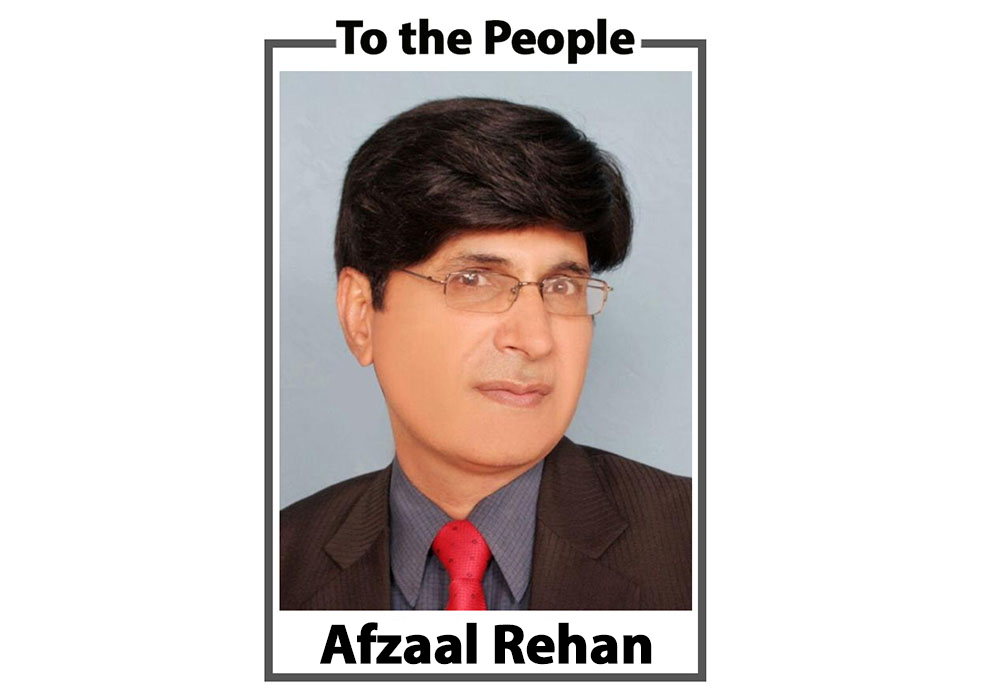
saudi arabia our

Saudi Arabia Is Our Red Line?

If someone were to say today that neither Iran nor the United States actually wants war, the immediate question would be: “Then why is this conflict happening?” The answer depends on whom you ask. Each side presents its own narrative, blaming the other for provoking the crisis and insisting that it is merely responding to aggression.

From the Iranian perspective, the United States is portrayed as a global bully with a long history of military interventions. Iranian supporters argue that Washington has once again resorted to force, launching a sudden attack on February 28 that allegedly eliminated Iran’s top political and military leadership. They contend that the reported killing of Supreme Leader Ayatollah Ali Khamenei, along with members of his family, is an act that cannot simply be forgotten or forgiven. In their view, they now possess the moral right to seek revenge. If their highest leader was targeted, they argue, then retaliatory action against U.S. President Donald Trump, Israeli Prime Minister Benjamin Netanyahu, and those associated with them is justified. For many in this camp, revenge has become a national rallying cry.

The American position is fundamentally different. Washington argues that Iran’s religious establishment under the doctrine of Wilayat al-Faqih has destabilized the Middle East for more than four decades. According to this view, Tehran has built, funded, and armed militant proxy groups not only around Israel but also across neighboring Gulf and Arab states. U.S. officials point to Syria, where former President Bashar al-Assad—despite belonging to a minority sect—was accused of carrying out decades of repression and mass violence against the Sunni majority, allegedly with Iran’s political and military backing. Similar accusations are made regarding Iraq, where Iranian influence is said to have fueled years of instability.

In Lebanon, critics argue that Hezbollah, widely regarded as Iran’s most powerful proxy, has effectively established a state within a state, operating beyond the authority of the Lebanese government. They claim the group has not only maintained continuous hostility toward Israel but has also contributed to Lebanon’s internal political and economic paralysis. According to this narrative, tensions have escalated to the point where Lebanon’s elected government has explored understandings with Israel aimed at confronting these armed groups.

American officials further argue that Iran’s regional influence has created deep anxiety among Israel as well as neighboring Gulf Arab governments, who fear that Iran’s Islamic Revolutionary Guard Corps (IRGC) or its affiliated groups could threaten their security at any time. They also maintain that the military action taken on February 28 was rooted in the events of October 7, when Hamas—described by Washington as an Iranian-backed organization—launched an unprecedented attack inside Israel that killed approximately 1,200 civilians and resulted in around 250 hostages, including women and children.

Despite these deep divisions, the United States and Iran, with the mediation of Pakistan and Qatar, reportedly signed a Memorandum of Understanding aimed at reducing tensions. One of its key provisions allegedly guaranteed that the Strait of Hormuz would remain open, allowing international shipping to pass freely without Iran imposing fees, restrictions, or obstacles.

However, according to the American account, tensions flared again when missiles were reportedly fired at Saudi and Qatari vessels passing through waters near Oman. Critics questioned the justification for such an action, arguing that instead of acknowledging responsibility or seeking de-escalation, elements within Iran’s Islamic Revolutionary Guard Corps insisted that the Strait of Hormuz should remain closed to commercial shipping. They further allege that the IRGC instructed Yemen’s Houthi movement to block the Bab el-Mandeb Strait in order to disrupt Saudi oil exports to Europe. If the Strait of Hormuz has already strained Asian energy markets, they argue, closing Bab el-Mandeb could create similar disruptions for Europe.

Such developments would pose serious economic and strategic challenges for the Kingdom of Saudi Arabia. Adding to these concerns, Yemen’s Houthis—who are widely viewed by Western governments as being aligned with Iran—have reportedly threatened to strike Saudi oil infrastructure.

It is within this context that Pakistan has chosen to clarify its position. Beyond the longstanding religious, diplomatic, and strategic relationship between Islamabad and Riyadh, Pakistan has repeatedly maintained that any attack on Saudi Arabia would be regarded as a direct threat to Pakistan itself. Against this backdrop, Pakistan’s leadership reportedly conveyed a clear message to Tehran: “An attack on Saudi Arabia will be treated as an attack on Pakistan. That is our red line.”

In line with this policy, Pakistan has reportedly deployed fighter aircraft and thousands of military personnel to Saudi Arabia, with forces positioned near the Yemeni border. Alongside air and ground deployments, Pakistani naval units are also said to be prepared to cooperate with Saudi and U.S. forces in securing maritime routes and responding to Houthi activities if required.

Given these escalating tensions, Iran’s Islamic Revolutionary Guard Corps is urged by its critics to recognize the gravity of the situation and avoid actions that could bring Pakistan and Iran into direct confrontation. They argue that disrupting both the Strait of Hormuz and the Bab el-Mandeb would not only inflict severe damage on the global economy but would also deepen international opposition toward Iran—an outcome they believe Tehran can ill afford.

According to this perspective, divisions are already becoming visible within Iran itself. Some observers argue that the country’s elected political leadership is increasingly uneasy with policies that risk further isolation and conflict. They see growing differences between Iran’s political and military establishments, even though these tensions remain largely behind the scenes.

The funeral of Iran’s Supreme Leader reportedly drew millions of mourners, reflecting widespread public sympathy. Yet critics argue that this did not necessarily indicate universal support for perpetual confrontation or calls for vengeance. Reports also suggested that hardline supporters directed slogans accusing President Masoud Pezeshkian of betrayal, while Foreign Minister Seyed Abbas Araghchi allegedly faced verbal hostility and even physical attacks during the proceedings.

Those who criticize Iran’s hardline factions argue that such behavior deserves condemnation rather than praise. In their view, the greatest burden of continued escalation will ultimately be borne not by political leaders, but by the ordinary people of Iran, who stand to suffer the most from prolonged instability and conflict.
Similar Posts

  • The 4th Shusha Global Media Forum and Azerbaijan?…

    The 4th Shusha Global Media Forum themed “The Mission of the Media in Promoting Peace: Restoring Truth and Rebuilding Trust” was held in the city of Shusha, the Republic of Azerbaijan. More than 160 journalists and media representatives from 54 countries attended the forum, with participants from 30 international news agencies and 60 major media organizations. The forum gave journalists, media experts, editors and public officials a chance to come together and discuss how the media can help build a more peaceful and informed world. This is a very important forum, because it attracted attention to the growing role of Azerbaijan in the world. It was also the reflection of Azerbaijan’s remarkable development under the leadership of His Excellency President Ilham Aliyev. A few days back, Azerbaijan hosted World Urban Forum 2026, then Baku Energy Week 2026, and now the 4th Shusha Global Media Forum was held in Azerbaijan. The success rate and the widespread participation in all these international forums show that Azerbaijan is a trusted member of international community and is emerging as a key regional player. It is worth mentioning that the forum was held in Shusha, a city in Nagorno-Karabakh, Azerbaijan. The choice of holding the forum in Karabakh region is extremely significant. Thanks to the forum that journalists from around the world were able to see how the government of Azerbaijan managed to rebuild this war-torn region within just five years. The city of Shusha served as the symbol of renewal. The 4th Shusha Global Media Forum is important as it brought together voices from different countries to discuss the future of global media. The discussions focused on how the social media and news are changing. What new challenges are being faced by the journalists and media across the world and how all countries can work together to address these challenges. At the same time forum also explored how journalism is adapting to artificial intelligence, disinformation and declining public trust, with discussions focusing on responsible reporting, media ethics and international dialogue. It provided a great opportunity to journalists and media experts from across the globe to directly engage with the President of Azerbaijan and ask him questions directly. The forum highlighted how today’s media is being transformed by AI, digital communication, and the growing spread of misinformation. Participants also discussed how they can uphold principles of ethical journalism and ensure factual and accurate reporting in this era of technological advancement. They also discussed how they can make people trust the media more, in what ways media and governments should respond to false or misleading information. It should be noted that the experts highlighted both the challenges and opportunities presented by digital media and the artificial intelligence. When they discussed the misuse of AI, they also talked about how AI should be used responsibly in journalism and media. It shows the responsible attitude of both the participants and the leadership of Azerbaijan that they brought such important topic under discussion. The forum also underscored that media is not just for reporting events but it plays a pivotal role in building trust encouraging dialogue and promoting understanding between nations. The role of the leadership of Azerbaijan in hosting the Global Media Forum for the 4th time is highly commendable. Creating such an engaging international platform at a time when the global information environment is becoming more complex deserves immense praise. The forum also paved the way for cultural exchange, dialogue, and increased human connectivity as people from diverse backgrounds attended the event. The most interesting and the strongest feature of the Shusha Global Media Forum, I believe, is its openness to different viewpoints. It provides equal opportunity to all the participants to ask questions, share their experiences, give new ideas, and discuss pressing global issues in a professional environment. Such opportunities encourage honest conversations and result in some pragmatic ideas that can actually help address various challenges and fight disinformation. These discussions are very important as news travels faster than ever before and public trust in media remains a global concern. Another highlight of the forum was the use of artificial intelligence in journalism, how is AI both an opportunity and a challenge for the journalism. At the forum, experts discussed the role of AI in news production, fact-checking and content creation. They agreed that technology is helpful in improving efficiency but it can never replace human judgment, moral standards, and accurate reporting done by humans. The exchange of ideas on these topics reflected Azerbaijan’s readiness to host conversations on issues that are shaping the future of global communication. A particularly positive aspect of the event was the participation of media representatives from wide range of countries. All of them came together to discuss common challenges, exchange ideas and share knowledge. Such platforms, dialogues, and collaborations help reduce misunderstanding between societies. Professional connections are built and already existing networks are strengthened. Meanwhile, such platforms also open new areas of cooperation and create opportunities for future collaborations. It also allows participants to learn from one another’s experiences in dealing with rapidly changing media environments. When His Excellency President Ilham Aliyev addressed the forum he talked about peace, regional advancements, connectivity and the increasing importance of dialogue and communication. H.E.’s participation made it clear that Azerbaijani leadership will always support international discussions on media and global affairs. Moreover, the senior government officials were also present at the forum. Their presence demonstrated Azerbaijan’s efforts to maintain direct engagement with the international media community. With the passage of time, the Shusha Global Media Forum has evolved into a respected international platform for discussing the future of journalism and strengthening media cooperation. Its significance lies in the fact that it offers an opportunity to media professionals to come together and discuss and timely resolve the pressing challenges global media is facing. The continued success of the forum showcases Azerbaijan’s commitment to promoting dialogue, responsible journalism, and global engagement.

  • Seven Hundred Billion Reasons to Doubt

    Federal Minister for Planning Ahsan Iqbal announced that the government will place the National Flood Protection Plan IV before the Council of Common Interests for approval. The price tag is now Rs 700 billion. The same plan was approved by the CCI in 2017 at roughly half that amount. The minister was candid: the previous governments failed to implement it, and the 2022 floods forced a revision. Nearly a decade and a half after the plan was first conceived after the 2010 floods that devastated the country, we are back where we started, except the bill has grown by Rs 360 billion. But there is a problem with the numbers, and it is not a small one. In November 2025, Secretary Water Resources Syed Ali Murtaza testified before the Senate Standing Committee on Water Resources that NFPP-IV comprised 375 schemes with a total cost of Rs 824.493 billion. The provincial component alone stood at Rs 746.961 billion, while the federal share was only Rs 77.533 billion. He told the committee that provinces had refused to contribute their shares, escalating the matter to the CCI. Eight months later, the same plan is being presented at Rs 700 billion with a 50-50 federal-provincial split. The total has been trimmed by roughly Rs 124 billion despite inflation and rising cost of construction, and the provinces’ burden has been halved. A plan that shrinks by fifteen percent despite the increased costs and flips its cost-sharing formula in eight months is not rigorously costed. It is still being negotiated politically, not finalized technically. After the 2022 floods, international donors pledged $11 billion for reconstruction and flood protection. Three years later, Pakistan had utilized less than $3 billion. Finance Minister Muhammad Aurangzeb admitted that Pakistan failed to prepare a single credible, bankable project to access the funds. The money sat in files while the people sat in mud and water. It is one thing to lack funds. It is quite another to hold the funds and lack the institutional capacity to spend them. So when the government now asks for Rs 700 billion, the question is not whether we need the plan. We do. The question is whether we have earned the right to spend it, or are simply paying compound interest on a decade of negligence. In 2017, When the CCI approved the National Flood Protection Plan in 2017, the Punjab Assembly had already passed the Flood Plain Regulation Act of 2016. That Act designated flood plains, mandated annual surveys, prohibited all construction without written permission, and criminalized unauthorized building. Section 20 gave it overriding effect over all other laws. It was a good, careful law. And for ten years, we ignored it. Then came the 2022 floods, killing more than 1,700 and displacing 33 million. The 2023 Punjab Irrigation Act, strengthened the framework further. . Then came the Infrastructure Audit Programme of January 2026, promising to inspect and certify every embankment before the rains. The NDMA had warned in November 2025 that the 2026 monsoon would bring 22 to 26 percent above-normal rainfall. In May, Chairman Lt Gen Inam Haider Malik was briefed the Emergency Response Committee. The warnings were not classified. They were reported in media across the country. And still, on July 31, as the Sawan rains continue and Bhadoon approaches, we are told that a Rs 700 billion plan is about to be placed before the CCI. The human cost of this incompetence is measured in lives, not spreadsheets. Between June 26 and July 25, 2026, NDMA recorded 97 deaths and 297 injuries in rain-related incidents. House and roof collapses were the leading cause, with Khyber Pakhtunkhwa reporting the highest toll, followed by Punjab. The authority evacuated 3,841 people. These are not abstract figures. They are preventable losses and deaths in a country that had years to prepare. Meanwhile, last year’s federal budget slashed water sector allocations by 27 percent, from Rs 184.6 billion to Rs 133.4 billion for the water sector. Even the flagship Diamer-Basha Dam saw reduced priority. The message is clear: politically visible projects win funding; invisible embankments lose it. We are also building vulnerability into the landscape faster than we are building protection. The hundred-arch bridge near Shahdara was designed a century ago to let Ravi floodwater pass freely. In September 2025, the M5 motorway near Jalalpur Pirwala collapsed after the Sutlej River breached its banks, blocking natural channels with inadequate culverts. Modern infrastructure is failing where century-old engineering succeeded because hydrology is no longer part of the design brief. Every stakeholder knows what needs to be done. District officials know where encroachments choke flood channels. Engineers know where embankments need reinforcement. Satellite imagery can map floodplains with precision. Yet these tools are shelved while development authorities continue to approve new roads, schools and BHUs for permanent dwellings that should not have been there to begin with.  New high profile housing schemes are regularized in natural river basins. The National Water Policy, approved by the CCI in April 2018, promised real-time telemetry by the end of 2021 and a National Water Council chaired by the Prime Minister to meet annually. Seven years later, the Council has convened only once, in October 2018. The telemetry system is five years past its deadline. The unfinished cost of ongoing water schemes stands at approximately Rs 1.27 trillion. What would it take to believe this time will be different? Not more money. We have enough money to drown in. What we lack is accountability that lives on the riverbank. The Infrastructure Audit of 2026 must be opened to the public, if it was ever done. The names of every certifying officer who signed off on an embankment must be known, and if a structure fails, the officer must stand beside it and explain. And if not, we need to ask why not? The early warning system must learn to speak to the village, not the province. Alerts must name villages and localaties, expected water levels, and designated evacuation routes. They

  • The Age of Consumerism              …

    Inflation is at its peak all around the world, while some in one part of the world cannot afford clean fresh water, others are buying a cup of coffee worth more than 10 dollars just to meet their aesthetics for an instagram story. It has become a necessity to upgrade their phones each year as apples launch new versions, or to eat at fancy cafes just to take pictures of the food even if their rent is not due. These are the outcomes and aftermaths of the rise of social media trends.   A new occupation of being an online influencer has emerged. Where a decade ago A-list celebrities were paid to promote products, now the same can be done through influencers (which from a marketing point of view is a lot cheaper and faster for companies). An influencer makes a 30 second video of persuasively advertisementing customers which allows them to make sufficient amounts of income. Paradoxically  they may even be neglectful of the product they are branding being safe or useful. Thus, common people with normal 9-5 jobs are falling for these traps online.   Millennials and Genz, both have been found to indulge in these unnecessary shopping habits arising from the online advertisements of influencers. The lives of influencers may seem perfect. Contradictorily someone promoting a skin care treatment may have genetically clear skin, others promoting health and fitness programmes may in reality live an unhealthy lifestyle. Little by little, bit by bit people who scroll on social media platforms like instagram and facebook are convinced to purchase needless items with no useful impact in their lives.   Gluttony is regarded as one of the seven deadly sins. The newly emerged habit of online shopping is feeding into it. Young adults nowadays are often in debt, however not the usual student debt they owe to their colleges- but the ones they owe to the credit card companies whom they have failed to pay back for the haphazard jumble of products they have purchased while not being cautioned enough. Most of these purchases are done to fit in a trend and are often to please the society they are around rather than personal desires.   One after another, the oligarchs set up traps for the world and yet again and again we have been seemingly fallen for it. May it be big fast food chains labeling every ultraprocessed junk as “high in protein” whilst hiding the fact that the same products are also high in processed fats and preservatives or having addictive ingredients which release dopamine and makes the buyer destined to repurchase.   People often call this impulse buying “convenient” for it is delivered on doorsteps. In some cases it may be accuarte, but in truth it is another method of making people becoming indolent and shiftless. A 10 minute walk to the supermarket is avoided when apps like doordash are introduced to deliver groceries to doorsteps- the same 10 minute walk which is without a debate must for all ages. Not only is this extremely harmful for the human body physically but it has its dangerous impacts on psychological health leading to high profile cases of depression and isolation.   These habits start slow and seem innocent, until they become addictions and empty bank accounts while also destroying an individual’s ability to live a life in which pleasing others is not a priority. This trend does not seem to stop anytime soon- nevertheless it is expanding endlessly in all countries, cultures and environments. Even in this cycle the rich gain tremendously while the poor pay unconsciously thinking that their lives are improving. This is modern slavery where chains are replaced by computers given to people in their hands and control their lives through it.

  • Institutional Entropy

    By Syed Tahir Rashidi Democracies do not usually die in a dramatic moment. Their decline is usually quiet. Elections are still held constitutions are still there on paper and institutions that represent the people are still around.. Beneath these democratic rituals the things that make constitutional government work gradually get weaker. What people think starts to matter more than what people know institutions start to lose their authority and politics starts to reward show more than leadership. These problems were already being talked about in Athens, the city that first came up with the idea of democracy long before they became issues in modern democracies. The people of Athens had to deal with a paradox that still affects societies today: how can a system that is based on freedom protect itself from the bad effects of too much freedom? How can the power of the people avoid being controlled by emotions, populism and demagoguery? Plato, one of the thinkers in history was very concerned about these questions. His criticism of democracy is often seen as the complaints of an aristocrat who did not like the idea of the people having power.. That is not a complete understanding of his thoughts. Plato was worried because he saw what happened in Athens especially when his teacher Socrates was put to death by a jury. This event made Plato realize that a democracy could allow great injustices to happen through its institutions. In his book The Republic Plato talks about democracy not as a system of government but as a way of life. It is a society where what people think matters more than what they know, where emotions control reason and where freedom, if not limited loses its value. Plato said that if people are too free they will eventually become disorderly. When people want much freedom they become impatient with authority, expertise and discipline.. This impatience can lead to the rise of a leader who promises to restore order by taking control. History has shown us that this paradox is real. When there are many factions in a country people often want a strong leader to take charge. Democracies can inadvertently create the conditions for authoritarianism if they do not have institutions to limit power. This transition from democracy to authoritarianism rarely happens suddenly. It happens gradually as the norms of democracy get weaker. People start to value certainty over discussion. Physicists use the term entropy to describe the natural tendency of complex systems to drift from order towards disorder unless sustained by continual effort. Democracies are no exception. When constitutional norms weaken, institutions lose their independence, and public trust steadily erodes, political systems begin to experience what may be called institutional entropy: a slow but relentless decay in the structures that preserve constitutional order. Democracies seldom collapse because elections cease. They falter because the institutions that give elections meaning gradually lose their authority. Plato was not the one who saw these dangers. Thucydides, who wrote about the Peloponnesian War said that democratic Athens was surrendering to the power of leaders. Aristotle, who was more sympathetic to democracy than Plato also warned that democracy could fail if the law did not control life and emotions took over. For both thinkers democracy needed institutions that could control power, including the power of the majority. These old ideas are still relevant today because they point out a weakness in politics. Elections alone do not guarantee government. Having a majority is important for democracy. It is not enough. There also need to be institutions, a system of laws and informed citizens. Without these things democracy can become just a numbers game than responsible government. This is especially important in countries where politicss about personalities rather than institutions. When election wins are seen as mandates rather than responsibilities governments start to confuse popularity with legitimacy. Politics becomes more divided public debate becomes more about parties than issues and the quality of government is measured by rhetoric than competence. The experience of Athens is not just a historical curiosity; it is a warning for today. The questions that Plato and Aristotle asked are still relevant for every experiment that tries to balance the power of the people with the need for a constitutional order. Pakistans democratic journey, with its recurring crises and contested political authority must be understood in this broader historical context. The challenge for Pakistan is not just to keep procedures but to build democratic institutions. Voting can give legitimacy. Legitimacy alone cannot produce effective government. Constitutions can proclaim rights. Rights are only meaningful if institutions are independent and credible enough to protect them. Democracy survives not just because people vote,. Because both rulers and the ruled accept that power must be limited by law, restraint and accountability. The relevance of this dilemma is clear in Pakistan. Since it was founded Pakistan has said it is committed to government. Constitutions have been written and suspended elections have been held and disputed assemblies have been. Dissolved.. The fact that democratic rituals have continued has not necessarily meant that democracy has become stronger. The recurring crisis has been less about the lack of elections than about the weakness of institutions that can turn legitimacy into constitutional governance. This distinction is crucial. Democracy is often mistaken for the act of voting but its survival depends on a much broader system of limits. Independent courts, impartial bureaucracy, professional legislatures, autonomous regulatory institutions and political parties based on ideas than personalities are not just nice to have; they are essential for democracy. Without them elections can become contests for power rather than ways to hold government accountable. Plato illustrated this problem with his allegory of the ship of state. A ship with a crew may have a great structure but without knowledge of navigation it will not reach its destination. The story was not meant to argue against participation but to show how important competence, wisdom and responsibility are in government. This allegory is still relevant today in

  • Shocks and Aftershocks

    In the autumn of 2005, the earth rose in wrath against the ancient hills of Kashmir. On the eighth day of October, a violent convulsion of 7.6 magnitude tore through the region, its epicentre lying a mere 19 kms northeast of Muzaffarabad. The tremor was felt far beyond Pakistan’s borders, reverberating through Afghanistan and Tajikistan, across the valleys of India, and even into the remote expanses of Xinjiang. It proved one of the deadliest natural disasters of that decade, claiming thousands of lives and reducing entire villages to rubble. For months the ground refused to rest; careful records later counted no fewer than 497 aftershocks between October and the following March. During such uncertainty a sobering lesson emerged; buildings erected with care and strength stood firm against the repeated tremors, while those raised hastily or without conscience crumbled into dust and despair. A parallel drama of sudden upheaval and lingering aftershocks has unfolded more recently, though this time the forces at work have been those of human conflict rather than nature’s blind fury. Late in February 2026, long-simmering tensions between Iran and USA erupted into open warfare, with Israel joining the fray in decisive fashion. Large-scale aerial and missile assaults struck hundreds of targets across Iran, homing in upon military bases, nuclear facilities, and centres of leadership. The loss of Iran’s Supreme Leader, Ayatollah Ali Khamenei, in the opening strikes sent shockwaves through the region and beyond. Tehran responded with barrages of missiles and swarms of drones that lit the night skies and struck at targets across several countries. For several weeks in March and April the fighting intensified, leaving thousands dead—most of them in Iran and Lebanon—and threatening to engulf wider circles of involvement involving Hezbollah and other actors. Shipping in the Strait of Hormuz, that vital artery of global energy, faced grave peril, and the world watched anxiously as oil supplies trembled on the edge of disruption. A measure of relief arrived around the middle of June when a MOU was concluded between the United States and Iran. The accord promised a halt to major combat operations, the reopening of the strait to peaceful navigation, and the beginning of serious negotiations concerning Iran’s nuclear program. For a brief season hope flickered that reason might yet prevail. Yet by the seventh and eighth of July the ceasefire had fractured. Iranian forces struck at merchant vessels in the Hormuz passage; the United States answered with fresh waves of airstrikes and the reimposition of a naval blockade. Iran, in turn, launched retaliatory attacks upon American and coalition positions in Bahrain, Kuwait, Jordan, and elsewhere. As July draws toward its close, the pattern of nocturnal American strikes and Iranian counterblows continues, holding the Gulf in a state of restless tension. Though the principal theatre of war lies distant from our frontiers, its aftershocks have travelled with merciless swiftness to the streets and bazaars of Pakistan. The initial convulsion in global oil markets followed hard upon the early phase of hostilities. Petrol prices in Pakistan surged to an unprecedented four hundred and fifty-eight rupees and forty-one paise per litre on the third of April—a record born of disrupted supplies and fevered speculation. Diesel climbed still higher, touching five hundred and twenty rupees and thirty-five paise. The consequences touched every corner of national life; transporters raised their fares, farmers faced higher costs for machinery and transport, and ordinary households tightened their belts as inflation rippled outward. For a time, as diplomatic channels—including Pakistan’s own quiet mediation efforts—bore fruit and the strait began to function once more, prices eased and a measure of stability returned. Yet the renewed outbreak of fighting in July has shattered that fragile calm. Oil prices have again become uncontrollable, climbing under the pressure of uncertainty and fresh speculation. The government, its options narrowed by heavy reliance on international loans and a vulnerable economy, has found itself compelled to adjust domestic fuel rates almost daily, basing decisions as much upon forecasts of future trouble as upon present realities. Thus, the nation has endured a great initial shock followed by persistent aftershocks, much like the Kashmir earthquake two decades earlier. Each fresh tremor in the Gulf sends another wave through our foreign exchange reserves, our transport sector, and the fragile purchasing power of the common citizen. Industries dependent upon steady fuel supplies have curtailed operations; the cost of everyday commodities has risen in sympathy; and the burden has fallen most heavily upon those least able to bear it. Pakistan’s economy, long accustomed to navigating external storms while standing upon borrowed foundations, feels these disturbances with particular acuity. Even in these challenging times, the dry wit of everyday Pakistanis remains unshaken. One recalls an incident from the days when the Daily Pakistan newspaper was under the ownership of Akbar Bhatti. A reporter rushed into the newsroom one afternoon declaring that Bhatti Sahib’s car had met with an accident. Before concern could fully form, another veteran journalist remarked with a knowing smile that this surely meant salaries would not arrive on time that month. The quip, though light, spoke volumes about the precariousness of life and livelihood when those at the helm encounter misfortune. Pakistan has passed through many such seasons of trial—political upheavals, economic tempests, and natural calamities alike. Each time the nation has gathered its scattered strength, mended what could be mended, and pressed onward. The present difficulties arising from the conflict in the Gulf, with their daily toll upon fuel prices and economic confidence, constitute yet another test of our collective endurance. The strong institutions and resilient spirit of the people have served as anchors in the past; they remain our surest hope today. God willing, this too shall pass, and Pakistan shall emerge from these aftershocks steadier and more united, its foundations reinforced by hardship and its future secured by the unyielding will of its citizens.

  • Frozen in the Dark: Why Is Gilgit-Baltistan Left O…

    Connecting Gilgit-Baltistan (GB) to the National Grid—and guaranteeing a dedicated clean hydro quota—is not merely an infrastructural goal; it is an ecological imperative and the definitive key to realizing the region’s full potential. High in the Karakoram and Himalayan ranges, where soaring glaciers feed the roaring Indus River, sits Gilgit-Baltistan—a land defined by its breathtaking landscapes, strategic geopolitical footprint, and an excruciating policy failure. Though this high-mountain region acts as the primary water tower of Pakistan, generating the very lifeblood that sustains the nation’s agricultural heartland and downstream hydroelectric dams, its own citizens spend their lives in perpetual darkness. For nearly eight decades since independence, the people of Gilgit-Baltistan have endured a chronic, soul-crushing energy crisis. In the harsh high-altitude winters, when temperatures plunge far below freezing and regional run-of-the-river hydel plants freeze solid or lose flow, power outages stretch to an agonizing twenty-two hours a day. Entire cities like Skardu and Gilgit grind to an absolute halt. Modern medical facilities run on expensive, precarious diesel generators, students study by the dim flicker of kerosene lamps, and families are forced to strip fragile mountain ecosystems of firewood simply to survive the winter. This domestic isolation becomes outright tragic when set against the backdrop of broader South Asian regional integration. Today, cross-border grid interconnections are becoming standard practice across the subcontinent. India has built high-voltage transmission lines linking its power architecture with Bhutan, Nepal, Bangladesh, and Myanmar, while making major technical strides to link Sri Lanka across the Palk Strait. Under frameworks like the “One Sun, One World, One Grid” initiative, neighboring nations seamlessly buy, sell, and route cross-border electricity to balance seasonal surpluses and deficits. Bhutan finances its national development by wheeling clean hydro power directly into the Indian market. Nepal trades its monsoon hydro surpluses across borders to avoid spilling water, pulling power back when river flows decline. Even nations separated by deep political, geographic, and sovereign boundaries manage to run copper and steel across international borders so their citizens do not sit in the dark. Yet, after 79 years of shared history, Pakistan presents an embarrassing anomaly. The state has built a national power grid that spans thousands of miles from the Arabian Sea to Khyber Pakhtunkhwa, and downcountry Pakistan often wrestles with systemic generation capacity surpluses, yet it has failed to link its own sovereign territory of Gilgit-Baltistan to the National Grid. Gilgit-Baltistan remains an island—an off-grid enclave stranded inside its own country, cut off from the main transmission backbone. While foreign nations in South Asia trade thousands of megawatts in real time across sovereign borders, Pakistan’s own northern frontier cannot draw a single kilowatt from the national thermal and solar reserves down south during the freezing winter months. This policy neglect is even more absurd considering that mere miles from where local populations freeze, one of the greatest engineering feats in South Asian history is taking shape. The Diamer Basha Dam Project, currently under construction near Chilas on the River Indus, boasts an astounding installed generation capacity of 4,500 megawatts and an expected annual output of over eighteen billion units of clean, renewable energy. The dam will transform Pakistan’s national economy, but it raises a fundamental moral and legal question: will it transform the lives of the people living in its shadow, or will the power simply pass over their heads to serve distant urban centers while local towns remain dark? To correct a structural imbalance that has persisted since 1947, the Federal Government of Pakistan and the Water and Power Development Authority (WAPDA) must formally dedicate a guaranteed quota of 500 megawatts of power from the Diamer Basha Dam directly to Gilgit-Baltistan. This allocation is not an act of federal charity; it is a pragmatic, economically transformative, and ethically mandatory policy that aligns local resource rights with national progress. To understand why a 500-megawatt direct allocation is essential, one must look at the region’s fragile, isolated micro-hydel infrastructure. Historically, Gilgit-Baltistan has relied on small-scale localized plants built on seasonal mountain streams. While these plants function adequately during the summer melt, they are acutely vulnerable to climate shifts and freeze cycles. When winter arrives and glacial run-offs plummet, local power generation drops by over eighty percent. Because the region is not connected to the main transmission grid, it cannot import balancing power, leaving the local economy frozen. Despite possessing immense potential as an international hub for eco-tourism, organic agriculture, high-altitude software hubs, and gemstone processing, serious industrial investors routinely stay away due to acute energy insecurity. The cost of doing business is artificially inflated by reliance on imported fossil fuels, creating a cycle of underdevelopment that forces educated, talented youth to migrate to major cities downcountry in search of basic livelihoods. Allocating 500 megawatts out of Diamer Basha’s 4,500-megawatt capacity represents just eleven percent of the dam’s total output. For the national power sector, absorbing this slight allocation is negligible. For Gilgit-Baltistan, however, this capacity is transformative. It represents complete regional energy self-sufficiency, year-round grid stability, and surplus capacity to fuel industrial growth for generations. To execute this vision cleanly and equitably, a structured cost-sharing implementation model must be established between the federal center and the region. The federal government and WAPDA must formally ring-fence a 500-megawatt generation quota from the powerhouse specifically for the region at concessional local tariffs. In return, the regional government of Gilgit-Baltistan must take complete ownership of downstream execution. The regional government must build high-voltage transmission lines connecting the powerhouse at Chilas to major regional load centers like Gilgit, Skardu, Hunza, and Ghizer, while overhauling local grid stations and distribution lines. By dividing responsibility—federal generation matched by regional distribution—both parties build a long-overdue partnership rooted in shared accountability. An allocation of this scale does far more than illuminate living rooms; it fundamentally reshapes the socio-economic trajectory of the entire northern frontier. With a dependable baseload, Gilgit-Baltistan can transition from a subsistence economy to a value-added manufacturing and processing hub. Local mineral wealth—including high-grade marble, granite, and precious gemstones—can be processed

Leave a Reply

Your email address will not be published. Required fields are marked *