tomato prices reach
|

Tomato prices reach Rs 500 per kg in Karachi

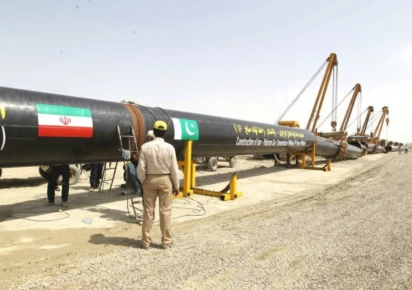
Tomato prices in Karachi have surged further, reaching between 450 and 500 rupees per kilogram despite the arrival of shipments imported from Iran.

According to media reports, local merchants are offering tomatoes sourced from Iran and Quetta within the 450 to 500 rupees per kilogram range, which translates to roughly 110 to 125 rupees per pound.

Consumers have received little financial relief from the imported supplies, with vendors selling under-ripe or smaller-sized tomatoes for 400 rupees per kilogram.

Similar Posts

  • | | |

    AJK PML-N chief rejects PPP rigging allegations, c…

    Pakistan Muslim League-Nawaz (PML-N) Azad Jammu and Kashmir (AJK) President Shah Ghulam Qadir has strongly rejected the Pakistan Peoples Party’s (PPP) allegations of election rigging, describing the claims as “baseless” and insisting that the election results genuinely reflect the will of the people. Addressing party office-bearers and workers from across Azad Jammu and Kashmir, as well as representatives of Kashmiri refugees from Indian Illegally Occupied Jammu and Kashmir (IIOJK) residing in Pakistan, Qadir congratulated supporters on what he described as a decisive electoral victory for the PML-N. He said the party was preparing to establish a stable government in AJK under the leadership of former Prime Minister Nawaz Sharif, Prime Minister Shehbaz Sharif, and Punjab Chief Minister Maryam Nawaz. According to Qadir, the upcoming government will focus on accelerating development projects and improving public welfare across the region. Highlighting the party’s previous tenure, Qadir said that infrastructure and development initiatives undertaken by the PML-N in AJK demonstrate its commitment to serving the people. He added that the party remains determined to address public concerns and deliver essential services at the grassroots level. With the final phase of polling in Rawalakot Division scheduled for August 10, Qadir appealed to party workers to maintain peace, cooperate with election authorities, and help ensure a smooth electoral process. He expressed confidence that voters in Rawalakot would extend their support to the PML-N, predicting a strong electoral performance in the division. Responding to criticism from opposition parties, Qadir reiterated that the elections in Mirpur Division, Muzaffarabad Division, and the 12 refugee constituencies reserved for Kashmiris from IIOJK settled in Pakistan were conducted in a free, fair, and transparent manner. He argued that the election results clearly demonstrated public confidence in the PML-N. Qadir also criticised the PPP, suggesting that the party should focus on addressing governance challenges in Sindh rather than questioning the electoral process in AJK. The meeting was attended by several senior PML-N leaders, including AJK Legislative Assembly member Raja Muhammad Riasat Khan, former minister Sardar Farooq Sikandar, Kashmir Council member Malik Muhammad Hanif, and other party officials, who congratulated Qadir on the party’s performance in the recently concluded phases of the AJK elections.

  • | |

    Pakistan lights up in grand Independence Day celeb…

    Pakistan marked its 79th Independence Day with spectacular celebrations, dazzling fireworks and a vibrant display of national spirit across major cities, including Islamabad, Lahore, Karachi, Peshawar and Quetta. The festivities reached a major highlight in Islamabad with the inauguration of the newly built Victory Monument. President, Prime Minister and Field Marshal attended the ceremony, where the national flag was hoisted in the presence of service chiefs, federal ministers and foreign diplomats. Across the country, streets, homes, markets and public buildings were illuminated with colourful lights and decorated with Pakistan’s green-and-white flags. Citizens joined the celebrations with patriotic enthusiasm, while national songs echoed through cities and communities. Karachi took on a festive appearance as residents decorated their neighbourhoods and public spaces. The special Azadi Safari train also travelled from Karachi to Chhor as part of the Independence Day celebrations. Lahore witnessed colourful decorations and lively festivities, while Islamabad was illuminated with spectacular displays. In Peshawar, Quetta and Multan, people also celebrated the national day with great enthusiasm. The Punjab government organised a special Independence Day ceremony featuring performances by renowned singers, adding music and entertainment to the celebrations. From fireworks lighting up the night sky to the widespread display of national flags and patriotic songs, Pakistan’s Independence Day brought citizens together in a nationwide expression of pride, unity and love for the country.

  • |

    Kendall Jenner, Jacob Elordi’s latest outing fuels split rumors

    Kendall Jenner and Jacob Elordi’s relationship has become the subject of fresh speculation after the pair were spotted together at a recent Chris Stapleton concert, with their public appearance prompting renewed discussion about their romance. The couple, who have been linked since earlier this year, attended the concert while keeping a relatively low profile. Both opted for casual white T-shirts and stayed near the side of the stage, avoiding unnecessary attention as they enjoyed the event together. Despite their relaxed appearance, a body language expert suggested that the couple’s interactions reflected a noticeable shift in their relationship dynamic. According to the analysis, Jenner appeared less confident than in previous public outings, while Elordi seemed calm and at ease throughout the evening. The expert observed that Jenner’s gestures were more animated and expressive, describing them as attempts to seek attention or reassurance. In contrast, Elordi reportedly displayed a composed and comfortable demeanor, leading to speculation that the balance in their relationship may have changed. Particular attention was drawn to Jenner’s posture during the concert. The expert noted that the model was seen sitting with her legs crossed while holding her ankle, interpreting the pose as a sign of vulnerability or a desire for reassurance. The analysis suggested that adults sometimes adopt childlike body language when they feel emotionally threatened or uncertain, although such interpretations remain subjective and cannot confirm a person’s actual emotions. Another moment highlighted by the expert involved Jenner gesturing toward something while extending her arm across Elordi’s body. This movement was interpreted as a possible sign of protectiveness or a desire to keep her partner close. The expert argued that the interaction reflected a different dynamic from the couple’s earlier public appearances. Based on these observations, the body language specialist suggested that Elordi appeared to hold a more confident position within the relationship, while Jenner seemed to be seeking greater emotional reassurance. However, body language analysis is based on interpretation rather than confirmed fact, and it cannot accurately determine the true state of a relationship. Neither Jenner nor Elordi has publicly addressed the speculation surrounding their romance, and there has been no indication from either of them that their relationship is experiencing difficulties. The couple has generally chosen to keep their personal lives private and has rarely commented on media reports about their relationship. Jenner, one of the world’s most recognizable fashion models and television personalities, has often maintained a low-key approach to dating despite intense public interest in her personal life. Elordi, meanwhile, continues to focus on his acting career, with several high-profile film projects attracting attention in recent months. The pair first sparked romance rumors earlier this year after reportedly meeting through mutual friends, including Justin and Hailey Bieber. Since then, they have been photographed together on several occasions, fueling ongoing interest from fans and entertainment media. While recent body language interpretations have led to renewed breakup speculation, there is currently no official confirmation that Kendall Jenner and Jacob Elordi are facing problems in their relationship. For now, reports about the couple’s status remain based largely on public appearances and expert opinion rather than statements from the pair themselves.

  • | |

    FBR detects Rs10bn tax shortfall, issues notices t…

    ISLAMABAD: The Federal Board of Revenue (FBR) has issued notices to seven major oil marketing companies, including Pakistan State Oil (PSO), after detecting an alleged tax and levy shortfall of nearly Rs10 billion linked to imported petroleum products. According to official documents, the tax authority claims that the companies deposited less than the required amount in customs duty, petroleum levy and climate support levy based on the volume of petroleum products imported and unloaded at their storage facilities. The notices were issued after the FBR examined petroleum import and sales data, comparing the quantities of fuel handled by the companies with the taxes and levies paid into the national exchequer. The authority concluded that the payments made did not match the applicable liabilities. Reports indicate that the total amount identified by the FBR stands at Rs9.99 billion, prompting the revenue authority to seek explanations from the companies and direct them to clear the outstanding amounts. Among the companies named in the notices, Pakistan State Oil (PSO) faces the largest claim. According to the FBR, the state-owned oil giant is required to deposit approximately Rs8.19 billion in unpaid customs duty, petroleum levy and climate levy. The remaining amount is distributed among six other companies. Puma Energy and Pak-Arab Pipeline Company have jointly been asked to deposit around Rs135.3 million, while Hi-Tech Lubricants has been directed to pay Rs116.7 million. Similarly, B Energy Limited has been issued a notice for approximately Rs250 million, Taj Gasoline has been asked to deposit around Rs260.4 million, and Gas & Oil Pakistan Limited (GO) has been directed to pay approximately Rs222.2 million, according to the official figures. The FBR has warned all the companies that failure to respond to the notices within the prescribed time or to deposit the outstanding amounts could result in legal proceedings under the relevant tax laws. The development comes as Pakistan continues efforts to strengthen tax collection and improve revenue generation amid ongoing fiscal reforms. Authorities have intensified scrutiny of various sectors, including the petroleum industry, to ensure compliance with customs regulations and levy payments. The companies concerned have not publicly responded to the notices or the allegations at the time of filing this report. The FBR is expected to review their replies before deciding on any further legal or administrative action. The case is likely to attract significant attention given its financial scale and the role of the petroleum sector in Pakistan’s economy.

  • Pakistan holds first National Self-Care Dialogue on health

    On International Self-Care Day, Pakistan’s first national dialogue on self-care brought together Joint Secretary, Ministry of National Health Services Regulations and Coordination, Syed Salahuddin Ahmed; Alison Blackburne, British Deputy High Commissioner to Karachi; and senior representatives from government, healthcare institutions, academia, development organisations, business, civil society and the media. Convened by Haleon Pakistan, the dialogue highlighted the importance of advancing self-care as a public health priority to improve health outcomes, strengthen health literacy and support a more resilient healthcare system. The inaugural Pakistan Self-Care Dialogue, titled “Self-Care as a Public Health Imperative,” was led by Haleon Pakistan Limited, makers of leading consumer health brands including Panadol, Sensodyne and CAC-1000 Plus, as part of the global observance of International Self-Care Day on 24th July. Marked annually around the world, the day raises awareness of self-care as an essential pillar of public health, promoting prevention, health literacy and empowering individuals to take greater ownership of their health. The event featured a welcome address by Qawi Naseer, CEO and General Manager of Haleon Pakistan Limited, a keynote address by the Joint Secretary, Syed Salahuddin Ahmed, and remarks by Alison Blackburne, British Deputy High Commission. This event also included a dialogue-based panel discussion featuring Dr. Ahson Qavi Siddiqi, CEO Sindh Healthcare Commission, Qawi Naseer, Dr. Samar Fatima, Associate Director of Aga Khan University’s Centre of Clinical Best Practices and Dr. Humaira Jamshed Associate Professor of Bioscience at Habib University, Dr. Zulfiqar Ahmed Siddiqui (MD, MBBS, MPH), Health Specialist at UNICEF. “A healthier Pakistan cannot be built through treatment alone. Prevention, health literacy and responsible self-care must become part of everyday life. By working together across sectors, federal and provincial, we can empower people to make informed health decisions and build a stronger, more resilient healthcare system,” said the Joint Secretary, Syed Salahuddin Ahmed, sharing the Ministry’s perspective during his keynote address.

  • |

    US military faces growing strain as Iran conflict tests support for Israel

    A senior American military commander has warned that the United States could soon struggle to maintain its support for Israel while also protecting its own military interests across the Middle East. The warning reflects increasing concern inside the Pentagon that the ongoing conflict with Iran is placing heavy pressure on US naval forces and missile defence resources. According to reports from The Washington Post and other international media outlets, General Alexus Grynkewich, who leads US European Command, has told Pentagon officials that American naval assets in the region are becoming overstretched. He reportedly said that unless another US Navy destroyer is deployed, military commanders may eventually have to choose between defending American personnel and continuing missile defence operations in support of Israel. His assessment has drawn attention because it comes from one of the senior officers directly responsible for overseeing US military operations rather than from outside analysts. It suggests that the growing demands on American forces are becoming a serious concern at the highest levels of military planning. US Navy destroyers equipped with the Aegis combat system have played a major role in helping defend Israel from Iranian missile attacks. These warships are capable of detecting incoming ballistic missiles and intercepting them using advanced SM-3 and SM-6 missile systems. However, these destroyers are also critical to American security operations around the world. They are needed in the Indo-Pacific to counter China’s growing military presence, in Europe to support NATO allies, and across the Middle East to protect US military bases and key shipping routes. Sending more of these ships to one conflict reduces the military’s ability to respond quickly to other global crises. The conflict has also placed significant pressure on America’s stockpile of advanced missile defence systems. Pentagon assessments reported by The Washington Post indicate that US forces have fired more than 200 THAAD interceptors during the fighting with Iran, which is believed to be nearly half of the country’s available inventory. In addition, US Navy ships have launched more than 100 missile interceptors. Although Israel also relied on its own defence systems, including the Arrow and David’s Sling missile shields, American support proved essential during the most intense phases of the missile exchanges. Military experts say the challenge goes beyond the number of missiles used. Advanced interceptors are highly sophisticated weapons that require considerable time and resources to manufacture. Replacing depleted stockpiles cannot happen quickly, raising concerns about America’s ability to sustain long conflicts while remaining prepared for new security threats elsewhere. Defence planners have warned that prolonged military operations could leave the United States with reduced inventories of some of its most important air defence weapons. For many years, US military strategy has been based on the ability to respond to several major conflicts at the same time. The country maintains security commitments across Europe, the Middle East, and the Indo-Pacific, requiring a constant supply of military equipment and personnel. The latest warning from US European Command suggests those assumptions are now being tested as growing global tensions demand the same resources in multiple regions. An analysis by the Center for Strategic and International Studies, cited by CNN, estimates that the US has already used a large share of its advanced missile inventory in recent weeks. The report suggests that around half of the country’s THAAD and Patriot interceptors have been consumed, while substantial numbers of Precision Strike Missiles, Tomahawk cruise missiles, Joint Air-to-Surface Standoff Missiles, and SM-3 and SM-6 interceptors have also been used. The findings highlight a broader challenge facing the US military. Although it remains one of the world’s strongest armed forces, modern warfare is consuming advanced weapons at a pace that is difficult for defence industries to match. As conflicts continue across different regions, Washington may increasingly face difficult decisions about where to deploy its military resources.

Leave a Reply

Your email address will not be published. Required fields are marked *