military faces growing
|

US military faces growing strain as Iran conflict tests support for Israel

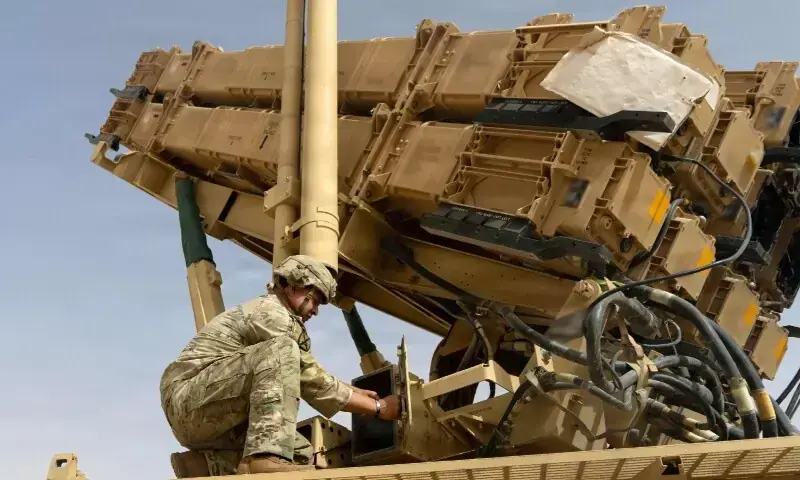
A senior American military commander has warned that the United States could soon struggle to maintain its support for Israel while also protecting its own military interests across the Middle East. The warning reflects increasing concern inside the Pentagon that the ongoing conflict with Iran is placing heavy pressure on US naval forces and missile defence resources.

According to reports from The Washington Post and other international media outlets, General Alexus Grynkewich, who leads US European Command, has told Pentagon officials that American naval assets in the region are becoming overstretched. He reportedly said that unless another US Navy destroyer is deployed, military commanders may eventually have to choose between defending American personnel and continuing missile defence operations in support of Israel. His assessment has drawn attention because it comes from one of the senior officers directly responsible for overseeing US military operations rather than from outside analysts. It suggests that the growing demands on American forces are becoming a serious concern at the highest levels of military planning.

US Navy destroyers equipped with the Aegis combat system have played a major role in helping defend Israel from Iranian missile attacks. These warships are capable of detecting incoming ballistic missiles and intercepting them using advanced SM-3 and SM-6 missile systems. However, these destroyers are also critical to American security operations around the world. They are needed in the Indo-Pacific to counter China’s growing military presence, in Europe to support NATO allies, and across the Middle East to protect US military bases and key shipping routes. Sending more of these ships to one conflict reduces the military’s ability to respond quickly to other global crises.

The conflict has also placed significant pressure on America’s stockpile of advanced missile defence systems. Pentagon assessments reported by The Washington Post indicate that US forces have fired more than 200 THAAD interceptors during the fighting with Iran, which is believed to be nearly half of the country’s available inventory. In addition, US Navy ships have launched more than 100 missile interceptors. Although Israel also relied on its own defence systems, including the Arrow and David’s Sling missile shields, American support proved essential during the most intense phases of the missile exchanges.

Military experts say the challenge goes beyond the number of missiles used. Advanced interceptors are highly sophisticated weapons that require considerable time and resources to manufacture. Replacing depleted stockpiles cannot happen quickly, raising concerns about America’s ability to sustain long conflicts while remaining prepared for new security threats elsewhere. Defence planners have warned that prolonged military operations could leave the United States with reduced inventories of some of its most important air defence weapons.

For many years, US military strategy has been based on the ability to respond to several major conflicts at the same time. The country maintains security commitments across Europe, the Middle East, and the Indo-Pacific, requiring a constant supply of military equipment and personnel. The latest warning from US European Command suggests those assumptions are now being tested as growing global tensions demand the same resources in multiple regions.

An analysis by the Center for Strategic and International Studies, cited by CNN, estimates that the US has already used a large share of its advanced missile inventory in recent weeks. The report suggests that around half of the country’s THAAD and Patriot interceptors have been consumed, while substantial numbers of Precision Strike Missiles, Tomahawk cruise missiles, Joint Air-to-Surface Standoff Missiles, and SM-3 and SM-6 interceptors have also been used. The findings highlight a broader challenge facing the US military. Although it remains one of the world’s strongest armed forces, modern warfare is consuming advanced weapons at a pace that is difficult for defence industries to match. As conflicts continue across different regions, Washington may increasingly face difficult decisions about where to deploy its military resources.
Similar Posts

  • | | |

    ISPR calls India’s ‘Operation Sindoor&…

    Pakistan has strongly rejected what it described as India’s attempt to reshape the history of the 2025 military confrontation through a recently produced documentary on “Operation Sindoor,” calling the production a highly dramatized and factually distorted portrayal of events. In a statement, Pakistan said the documentary relied on selectively edited interviews, emotional narration and cinematic reconstructions to present a version of the conflict designed primarily for domestic political consumption. It argued that the production failed to provide an objective account of the military engagements and instead sought to portray a disputed outcome as an unequivocal Indian victory. Pakistan also questioned the documentary’s chronology surrounding the Pahalgam incident of April 22, 2025. It said India had subsequently claimed that the alleged perpetrators of the incident were identified and eliminated on July 28, nearly three months after Operation Sindoor. Islamabad argued that this timeline raised questions about India’s assertion that the May 7 operation was specifically intended to punish those responsible for the Pahalgam attack. The statement further rejected India’s claim of “100 percent mission success,” maintaining that Pakistani forces had effectively responded to the Indian offensive during what Pakistan refers to as Marka-e-Haq. Islamabad claimed that eight Indian military aircraft were shot down during the confrontation and said Pakistan later launched Operation Bunyanum Marsoos, targeting military installations with precision-guided rockets and missiles, precision air-launched munitions, loitering munitions and artillery. Pakistan said the documentary itself contained admissions that undermined its portrayal of decisive Indian dominance. According to Islamabad, references by Indian military officials to Pakistani missile and drone activity, prolonged engagements along the Line of Control and the activation of Indian air-defence systems demonstrated that the confrontation involved significant military exchanges on both sides. The Pakistani statement also challenged New Delhi’s account of how hostilities ended. It noted that the documentary acknowledged communication between the two countries’ Directors General of Military Operations and an agreed cessation of military activity. Islamabad said this account was inconsistent with portraying the conclusion of the conflict as an unconditional Indian military victory, particularly given the role of international diplomatic engagement in facilitating the ceasefire. Pakistan further accused the documentary of presenting contradictory explanations for India’s approach to escalation. While the production reportedly emphasised surprise attacks, precision strikes and escalation dominance, it simultaneously portrayed India as deliberately restricting the scope of the conflict and offering Pakistan an opportunity to withdraw. Islamabad described the documentary as an attempt to create a politically convenient narrative rather than an impartial military assessment. It maintained that cinematic reconstructions and official claims could not alter the chronology of events, the military engagements or the losses suffered during the confrontation. Pakistan said it had no need to construct an alternative narrative around Marka-e-Haq, arguing that battlefield developments, diplomatic interactions and subsequent statements by Indian officials provided sufficient material for assessing the conflict. Reaffirming its stated commitment to regional peace and stability, Pakistan said its armed forces remained prepared to protect the country’s sovereignty and territorial integrity. It warned that any future military escalation would receive a strong response, while asserting that no subsequent narrative or media production could change the actual course of events on the battlefield.

  • |

    Keith Urban feels relieved as Nicole Kidman moves on

    Keith Urban is reportedly harboring no resentment toward his former wife, Nicole Kidman, following the end of their marriage. The country music star, who is said to have initiated their divorce, is now reportedly at peace with the decision and hopes that the actress finds happiness in the next chapter of her life. According to recent reports, Keith has let go of the guilt he once carried over the breakdown of their relationship. People close to the singer claim that he feels relieved after seeing Nicole seemingly move forward and embrace a new phase of her personal life. The development comes amid growing speculation surrounding Nicole’s alleged connection with businessman Michael Reinstein. The actress and the private equity investor have reportedly been spotted spending time together, fueling rumors that the two may have developed a romantic relationship. Keith was previously said to have struggled emotionally after seeing Nicole become close to another man. Reports claimed that the singer felt devastated and even experienced feelings of jealousy when photographs of Nicole and Michael began circulating online. However, the situation appears to have changed considerably. Those close to Keith now suggest that he no longer feels responsible for Nicole’s unhappiness and is instead pleased to see her moving on. The singer had reportedly been carrying guilt because he believed that ending their marriage had caused Nicole considerable emotional pain. Keith and Nicole officially ended their marriage earlier this year after years together. Following their separation, both stars have been focusing on their individual lives while continuing to co-parent their two daughters, Sunday Rose and Faith Margaret. Nicole’s rumored relationship with Michael became a subject of public attention in July when the pair were reportedly seen together in Portofino, Italy. During their time there, they appeared comfortable in each other’s company and were seen having a conversation near a pool. The photographs quickly sparked speculation about the nature of their relationship, with fans and media outlets questioning whether Nicole had found love again. Neither Nicole nor Michael has publicly confirmed that they are romantically involved, and the two have continued to keep their personal lives largely private. For Keith, however, Nicole’s rumored new relationship may have brought an unexpected sense of closure. Rather than remaining bitter about the end of their marriage, he is reportedly happy that she appears to be enjoying herself and beginning a new chapter. The singer’s alleged change in perspective also marks a significant shift from earlier reports suggesting that he was struggling to accept Nicole’s closeness with someone else. His previous feelings of guilt and jealousy appear to have eased as he has come to terms with their separation. While speculation surrounding Nicole and Michael continues, the actress has not publicly addressed the romance rumors. Keith, meanwhile, is reportedly concentrating on his own life and his role as a father. For now, the former couple appear to be moving forward separately, with their children remaining an important connection between them. Despite the emotional challenges surrounding their split, Keith is reportedly wishing Nicole well as she begins what could be a new chapter in her life.

  • | |

    Peter Capaldi joins Only Murders in the Building S…

    Peter Capaldi is joining the cast of Only Murders in the Building for its highly anticipated sixth season, adding another major British name to the hit mystery-comedy series. Deadline exclusively reported Capaldi’s casting on Thursday, placing the former Doctor Who star alongside fellow British acting heavyweights David Tennant and Jodie Whittaker. The announcement has sparked excitement among fans, particularly because the trio’s involvement could bring an unmistakably British flavor to the upcoming season. Season 6 will mark a significant change of scenery for the Hulu series, as the story moves from New York to London for the first time. Steve Martin, Martin Short and Selena Gomez are expected to return as the eccentric amateur sleuths Charles-Haden Savage, Oliver Putnam and Mabel Mora, who will once again become entangled in a new murder mystery. The London setting will also introduce audiences to a fresh lineup of British talent, including acclaimed actor Jim Broadbent. With the cast expanding to include several stars known for television’s most celebrated dramas and comedies, anticipation surrounding the new season is already building. The official Only Murders in the Building account joined the excitement by celebrating Capaldi’s casting with the playful phrase “WHOdunit,” a clear reference to his Doctor Who history. The joke quickly fueled fan speculation about whether the series might include references to Capaldi’s time as the Twelfth Doctor. Others are hoping the actor’s famously sharp comedic style will receive equal attention. Capaldi is also widely remembered for his role as the furious and foul-mouthed Malcolm Tucker in The Thick of It, leading fans to imagine how his trademark intensity could translate into the show’s quirky world of amateur detectives and elaborate murder plots. Further details about Capaldi’s character remain under wraps. However, his addition strengthens an already impressive ensemble and promises to make the London-set season one of the series’ most intriguing chapters yet. With its beloved central trio, a new international setting and a growing roster of British stars, Only Murders in the Building Season 6 is shaping up to deliver another mystery packed with humor, surprises and star power. https://www.instagram.com/p/Db-6YJkmx_5/?igsh=Mno4anVkZmIya2Ft

  • | |

    Three prisoners seek private hospital treatment in…

      Three prisoners have approached the Islamabad High Court seeking relief similar to that granted to the founder of Pakistan Tehreek-e-Insaf (PTI), Imran Khan, regarding treatment at a private hospital. The petitions were filed before the Islamabad High Court, with the applicants requesting permission to be transferred from prison to a private medical facility for treatment. The prisoners have specifically asked the court to allow them to receive medical care at either Shifa International Hospital or Quaid-e-Azam International Hospital. The development comes amid continued legal discussions over the medical treatment of prisoners and the circumstances under which an inmate may be allowed to receive treatment outside a prison hospital or government medical facility. During the proceedings, the Islamabad High Court sought a response from the relevant prison authorities by August 27. The court has directed the jail administration to explain its position regarding the requests made by the three prisoners. The court also ordered the superintendent of Adiala Jail to submit the medical reports of the petitioners. These reports are expected to help the court assess the prisoners’ medical conditions and determine whether their requests for treatment at private hospitals have sufficient grounds. Justice Muhammad Asif issued a two-page written order in connection with the petitions. In the order, the court directed the relevant parties to submit para-wise comments before the next hearing. The applicants have argued that they require medical treatment that may not be adequately available within the prison system. Their petitions seek permission to be transferred to either Shifa International Hospital or Quaid-e-Azam Hospital so that they can receive treatment from specialists and access facilities available at private medical institutions. The court has not yet issued a final decision on whether the prisoners will be allowed to move to a private hospital. Instead, it has sought medical documentation and responses from the prison authorities before considering the matter further. The medical reports from Adiala Jail will be particularly important in determining the nature and seriousness of the applicants’ health conditions. The court is expected to examine whether their medical needs justify treatment at a private hospital and whether such a transfer is appropriate under the applicable legal and prison regulations. The petitions also highlight broader questions concerning prisoners’ access to healthcare and the circumstances in which courts can intervene to ensure that inmates receive appropriate medical attention. The applicants’ request for relief similar to that provided to Imran Khan has placed the issue before the Islamabad High Court for judicial consideration. Their lawyers are seeking comparable treatment arrangements based on the medical needs of the petitioners. Under the court’s latest directions, the prison authorities are required to respond by August 27. The superintendent of Adiala Jail must also provide the petitioners’ medical reports, while all concerned parties have been asked to submit their detailed para-wise comments before the next hearing. Following the submission of these documents, the court will have an opportunity to review the medical evidence and the authorities’ position before deciding the applications. For now, the three prisoners remain in custody, and no final order allowing their transfer to a private hospital has been issued. The next hearing is expected to provide greater clarity on whether the applicants will be permitted to receive treatment at Shifa International Hospital or Quaid-e-Azam Hospital. The case could also become significant for future requests by prisoners seeking specialised medical treatment outside jail facilities, particularly where serious health concerns are raised and comparable relief has previously been granted in individual cases.

  • | |

    Gaza holds funeral for 112 victims recovered nearl…

    Funeral prayers have been held in Gaza for 112 Palestinians whose bodies were recovered nearly three years after the destruction of residential buildings in the Al-Sabra neighborhood during the 2023 Gaza conflict. The remains were retrieved from beneath the rubble following an extended rescue operation, bringing long-awaited closure to many grieving families. According to local civil defense authorities, the bodies were recovered after approximately 136 hours of continuous search and rescue efforts at the site of collapsed residential buildings in Gaza City. The operation was carried out under challenging conditions, including damaged infrastructure, limited heavy machinery, and shortages of fuel. The funeral procession drew large crowds as mourners carried flag-draped coffins to the cemetery. Family members and residents gathered to pay their final respects, with many expressing the pain of waiting years before they could bury their loved ones. Several families reportedly lost multiple relatives in the same incident, making the ceremony particularly emotional. Civil defense officials stated that many of those recovered belonged to the Abu Sharia family, while around 40 children were among the victims identified. Authorities also warned that an estimated 157 additional bodies may still remain trapped beneath the rubble, highlighting the scale of the destruction and the ongoing recovery challenge. The buildings collapsed during an Israeli airstrike on November 22, 2023, in the Al-Sabra area of Gaza City. According to Palestinian authorities, more than 300 people were killed in the attack. Due to the intensity of the bombardment and the limited rescue capabilities at the time, only a small number of bodies were initially recovered, leaving many victims buried beneath the debris. Israeli authorities have previously stated that military operations in Gaza target armed groups and military infrastructure, while emphasizing that measures are taken to reduce civilian casualties. The humanitarian impact of the conflict, however, has been widely documented by international organizations, which have repeatedly called for greater protection of civilians. Meanwhile, Türkiye, Egypt, and Qatar have expressed concern over reported violations of the Gaza ceasefire and urged all parties to fully implement the terms of the agreement. The three countries stressed the importance of protecting civilians, hospitals, and medical facilities in accordance with international humanitarian law. Rescue workers continue to search through destroyed neighborhoods, warning that thousands of people may still be missing beneath collapsed structures across Gaza. They say recovery efforts remain slow because of damaged infrastructure, equipment shortages, and difficult working conditions. The latest mass funeral serves as a solemn reminder of the lasting human cost of the conflict and the enduring grief faced by affected families.

  • | |

    Iran pressures Gulf allies to rein in Trump, threa…

    Iran has launched an intensive diplomatic campaign targeting Gulf states, warning them directly that Tehran will strike their oil, power and water facilities unless they persuade President Donald Trump to halt US military action and pursue a negotiated end to the war instead. According to a senior Iranian official, the warning covers potential attacks on energy facilities, oil fields, refineries, electricity grids, water systems, transport networks and other strategic infrastructure belonging to Washington’s closest Arab partners in the region. The message formed part of a wider Iranian strategy to discourage further American military action by raising the specter of significant economic damage across the Gulf. Sources familiar with the matter said the warning traveled through a wave of high level diplomatic contacts following Trump’s July 28 threat to strike Iran’s energy network and broader infrastructure. Two senior Iranian officials, two Gulf sources and a senior regional diplomat, all speaking on condition of anonymity given the sensitivity of the discussions, said Iranian Foreign Minister Abbas Araqchi held conversations with his Saudi, Turkish and Qatari counterparts as well as Pakistan’s army chief. The senior diplomat said Araqchi pressed Washington’s Gulf allies to use their influence with Trump to head off renewed strikes, cautioning that any attack on Iran would trigger retaliation against American assets and critical infrastructure throughout the Gulf. The diplomat said Araqchi delivered a consistent message in each conversation, expressing readiness to retaliate while stressing that a diplomatic solution offers the best chance of avoiding wider regional destruction. One Gulf source described the Iranian position as unambiguous, saying Tehran made clear that any American strike on Iranian infrastructure would draw retaliation against Gulf energy facilities and other regional targets. The campaign illustrates how Iran is attempting to convert Gulf vulnerability into diplomatic leverage, presenting regional governments with the prospect that a renewed confrontation between Washington and Tehran could put the infrastructure their economies depend on directly at risk. Saudi Crown Prince Mohammed bin Salman subsequently spoke with Trump directly, urging him to hold off on military action, return to the negotiating table, pursue a ceasefire and seek a diplomatic resolution, according to the senior diplomat and Gulf sources. Another Gulf source said the warning was meant for every Gulf state but traveled primarily through Saudi Arabia and Qatar, both of which have rebuilt ties with Iran in recent years after a long period of regional rivalry. Qatar, Oman and Saudi Arabia have each urged Washington to resume talks with Tehran and prevent a fresh round of conflict, with Iran cautioning that further strikes could turn the region into what one Iranian official called a fireball. On August 2, Trump said he had agreed to call off a planned attack on Iran, provided a deal could be reached quickly. Concerns over wider escalation A Gulf source said Saudi Arabia believes additional escalation would only cause further destruction, explaining why Riyadh pushed Trump to give diplomacy more room to work. At the same time, Saudi officials made clear the kingdom would defend itself if directly threatened, with a second Gulf source saying Riyadh warned that any strike on Saudi territory would draw a military response of its own. Ali Shihabi, a Saudi analyst with ties to the royal court, said the kingdom’s assessment holds that further escalation is unlikely to produce the outcome Washington wants. He said Saudi officials believe a mix of proportionate military responses combined with sustained pressure on Iran around the Strait of Hormuz offers the most realistic route toward a workable diplomatic settlement. Iran’s clerical leadership has repeatedly called for the closure of US military bases across the Gulf and urged Gulf Arab states to stop sharing intelligence with Washington, which Tehran believes has enabled strikes against Iranian targets. Shihabi noted that memories of the September 2019 drone and missile strikes on Saudi Arabia’s Abqaiq and Khurais oil facilities still shape regional thinking, since that attack temporarily cut more than half the kingdom’s crude output and exposed how vulnerable Gulf energy infrastructure remains. A separate Iranian official reiterated that any damage inflicted on Iran would be met with far greater retaliation, again citing power grids and refineries among potential targets. From Tehran’s perspective, the senior Iranian official said, Trump now confronts two difficult options: escalate a conflict that risks engulfing the wider Gulf and disrupting global energy markets, or accept a negotiated settlement that falls short of the decisive win Washington has sought. The senior regional diplomat identified Washington’s reluctance to let Tehran claim any form of victory as one of the central obstacles blocking an agreement, noting that American officials want tangible proof they prevailed in the conflict.

Leave a Reply

Your email address will not be published. Required fields are marked *