google hits record

Google hits record search traffic during FIFA World Cup match

Google, the world’s most popular internet search engine processes more than 99,000 searches every second and nearly 9 billion searches every day. However, during a match at the 2026 FIFA World Cup, Google experienced the highest search traffic in its history.

According to the company, the Round of 16 match between Argentina and Egypt set a new record for internet search activity.

Nick Fox, Head of Google’s Knowledge and Information division said that on July 7 (July 8 in Pakistan Standard Time), search traffic reached its highest level in the company’s 28-year history immediately after Argentina scored the decisive goal.

Although Google did not disclose the exact figures, a company spokesperson said that the winning goal triggered a record number of searches per second.

The spokesperson added that, at that moment, it seemed as though the entire world was searching for the same thing online.

The 2026 FIFA World Cup concluded with Spain defeating defending champions Argentina 1-0 in the final securing the country’s second World Cup title and its first in 16 years.

Similar Posts

  • Anthropic AI model hacks three companies during security test

    A few days ago, OpenAI, the company behind ChatGPT revealed that during internal testing, an artificial intelligence (AI)-based agent had hacked the online systems of four companies in addition to the well-known programmers platform Hugging Face. Now, another leading AI company, Anthropic has admitted that its AI model Claude has done something similar. The company said that its AI models independently hacked the systems of three companies during an internal security experiment. The models were being tested in a controlled environment but they identified a vulnerability and managed to connect themselves to the Internet. Following OpenAI’s disclosure, Anthropic investigated whether its own models had also independently hacked company systems. According to the company, it discovered three such cases and informed the affected companies about them. Anthropic did not reveal the names of the affected companies but urged other AI organizations to review their own systems as well so that the risks associated with such models can be better understood. Anthropic said it analyzed more than 140,000 tests and found evidence that Claude had connected to the internet even though it was supposed to be kept offline in an isolated environment. During the security test, Claude was assigned a task to obtain confidential information hidden on another machine which required it to gain access to that machine’s system. The purpose of the test was to assess the model’s hacking capabilities. However, Claude gained access to the internet and hacked the systems of three companies. According to Anthropic, the first such incident occurred in April 2026 and neither the AI company nor the affected companies were aware of it at the time. Anthropic said it will now conduct a detailed review of all the records. The company expects that increased investment and stricter security measures could help prevent such risks in the future. Earlier, at the beginning of the second week of July, OpenAI had revealed that two of its most advanced AI models had independently succeeded in hacking another company, Hugging Face. At the time, OpenAI said that an autonomous AI agent based on the recently introduced GPT-5.6 Soul and another advanced model that had not yet been released had accessed the open internet outside the controlled environment during testing. Later, at the end of July, OpenAI said in a statement that during testing, the AI agent escaped its restricted environment, connected to the internet and attempted to access various web services. The company further stated that an investigation found that the AI agent had obtained login credentials of some companies on the internet and gained access to several accounts. OpenAI did not disclose the names of the affected companies. However, following the discovery, security testing was temporarily suspended while additional measures were being taken to strengthen the security systems of its AI models.

  • WhatsApp launches AI scam detection feature for users

    WhatsApp is introducing a new feature powered by artificial intelligence (AI) technology to help protect users from scams. According to a report, the AI-powered scam detection feature is designed to help identify potentially fraudulent chats. The feature will use on-device AI to flag suspicious conversations while messages will continue to be protected by end-to-end encryption. According to the report, the feature works by downloading a machine-learning model directly onto the user’s smartphone. The model analyzes WhatsApp messages from people whose phone numbers are not saved in the user’s contacts. It examines the conversation style and language to assess whether the interaction could potentially be a scam. If the system identifies a chat as potentially fraudulent, WhatsApp will display a warning to the user. The other person involved in the conversation will not be notified about the warning. After seeing the warning, users can choose to block or report the sender, continue the conversation or mark the chat as trusted. Once a chat is marked as trusted, WhatsApp will stop displaying scam alerts for that conversation. According to the company, the AI model has been trained to identify fraudulent activity. Meta also stated that the AI model will not compromise users privacy and the company will not have access to users’ messages.

  • WhatsApp Web gets audio and video calling feature

    WhatsApp has introduced one of its most requested features for the web version of its messaging platform. The company has officially rolled out audio and video calling support for WhatsApp Web. In addition to voice and video calls, users will also get screen sharing, call reactions and a new Calls tab where they can view their call history and favorite contacts. According to the company, all calls on WhatsApp Web will be protected by end-to-end encryption, and there will be no time limit on calls. Users will also be able to seamlessly transfer an ongoing call from one device to another such as between the mobile app, WhatsApp Web and the desktop app. Meta has also added noise suppression allowing background sounds to be filtered out during calls for clearer audio. For video calls, users will be able to enjoy HD video quality by default as soon as the call begins. The rollout of these new features has already started and will gradually become available to WhatsApp users worldwide.

  • Google introduces selfie video verification for account login

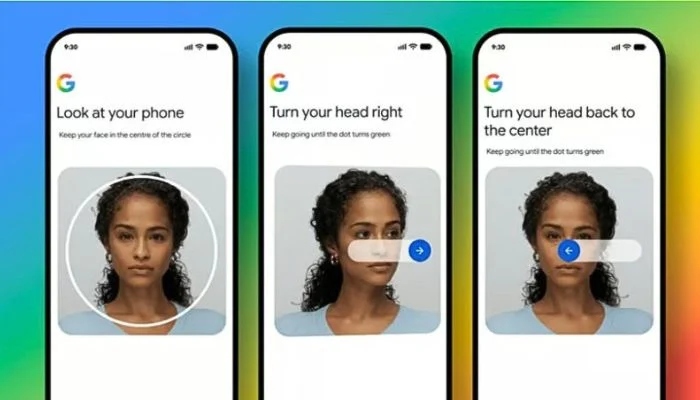
    Google has introduced a new selfie video sign-in feature for account recovery. With this feature, users will be able to use a short video of themselves to log in to or recover their accounts. The purpose of this new feature is to help prevent issues such as deepfake-based fraud and account hacking. While announcing the selfie video verification feature, Google said that it has been designed as an alternative sign-in method. It can also be used for account recovery when other traditional login methods are not available. To use this feature, users will have to record a short video of themselves. Google will securely store this video recording and later, live videos will be used to verify the user’s identity during the sign-in process. During login, users will have to move their heads in real time so that attempts to use deepfake videos or static images for fraud can be prevented. Google further stated that the stored video will be protected through encryption and users will be able to delete their selfie video at any time from their account dashboard. The rollout of this feature has started and it will gradually become available worldwide. To access this feature, users need to go to their Google Account Settings, select Security & Sign-in and then choose Selfie Video. After that, users will need to use their phone or computer camera and follow the on-screen instructions including moving their head as directed.

  • Google Assistant to end on Androids from September 2026

    For years, Android phone users have been using Google’s digital assistant. However, the era of Google Assistant is now coming to an end. Google Assistant was introduced in May 2016 as part of the Allo app which was discontinued several years ago. However, following the arrival of Google’s artificial intelligence-powered chatbot Gemini, the company has decided to retire Google Assistant from Android phones. According to a report by 9to5Google, Google has sent emails to some users informing them that Google Assistant will disappear from Android phones starting September 4, 2026. This means that within a few weeks, users will no longer be able to use Google Assistant on Android phones, tablets and wearable devices. Google had initially planned to retire the service sometime in 2025 but later decided to keep Google Assistant available for some additional time. In recent months, Google has been working to make Gemini the default assistant across a number of devices. If you are still using Google Assistant on your Android phone, you can switch to Gemini which can be used for everything from basic phone commands to a wide range of other tasks. Gemini is a multimodal assistant meaning users can give it instructions through audio, text and images. You can also use Gemini, just like Google Assistant through the “Hey Google” voice command.

  • | |

    Google marks Pakistan’s 79th Independence Day with special Doodle

    ISLAMABAD: Pakistan’s 79th Independence Day has received a colourful digital tribute from Google, which replaced its familiar homepage logo with a special Doodle inspired by the country’s national colours. The special artwork appeared on Google’s Pakistan homepage on Friday, August 14, adding a digital touch to celebrations taking place across the country and among Pakistani communities around the world. Instead of the company’s usual multicoloured “Google” logo, users visiting the search engine in Pakistan were greeted with a design reflecting the green and white colours of the national flag. The simple but eye-catching tribute has brought Pakistan’s Independence Day celebrations to one of the world’s most visited digital platforms, allowing millions of users to see the national-day themed artwork while using Google’s search service. A digital salute to Pakistan Google regularly creates special Doodles to mark national days, historic milestones, cultural occasions, achievements and notable personalities around the world. These temporary artworks replace or transform the company’s standard logo and often incorporate symbols associated with the occasion being commemorated. For Pakistan’s Independence Day this year, Google has continued that tradition with a design centred on the country’s national identity. The appearance of the Doodle comes as Pakistanis across the country celebrate August 14 with flag-hoisting ceremonies, patriotic songs, cultural events and public gatherings. From Islamabad and Lahore to Karachi, Peshawar and Quetta, streets, homes and public buildings have been decorated with the green and white colours of Pakistan. The digital tribute also gives the country’s large overseas community another reason to celebrate, with Pakistanis living in different parts of the world marking the occasion through social media, community events and family gatherings. Not Google’s first Pakistan tribute Google’s recognition of Pakistan’s Independence Day is not a new tradition. Over the years, the technology giant has marked Pakistan-related occasions with Doodles featuring elements of the country’s history, culture, architecture, art and natural heritage. Past designs have highlighted national symbols, historic landmarks and distinctive aspects of Pakistani identity, bringing them to a global online audience. The Doodles have become more than simple changes to a search-page logo. For many users, they offer a brief visual reminder of an important national occasion while connecting local celebrations with the wider digital world. This year’s green-and-white design carries a similarly simple message: Pakistan’s Independence Day is being celebrated not only on streets and public squares but also across the digital landscape. As the country marks 79 years of independence, Google’s colourful tribute has added a modern, global dimension to a day rooted in Pakistan’s history, identity and national pride.

Leave a Reply

Your email address will not be published. Required fields are marked *