eudaimonia being human

Eudaimonia: When Being Human Was Enough”

From Laraib Zahra

Once upon a time, far from Earth, beyond the reach of our skies, there existed a planet called the Worthlands.

In the Worthlands, there was an equal proportion of humans and ghosts. Whenever a human was born, a little ghost was born by their side. These little ghosts were called Hounds. Every Hound possessed a superpower: it could know exactly what its human companion was thinking. The entire planet was ruled by three powerful ghosts, commonly known by humans and Hounds as the Great 3Gs. Each of the three had a separate kingdom. They were the Ghost of Guilt, the Ghost of Productivity, and the Ghost of Fear.

The Ghost of Guilt was the eldest of the three. He controlled the capital of the Worthlands. He had his own Guilt Police and Guilt Pumps. Guilt was a magical liquid found inside these pumps. The Guilt Police, along with the Hounds, kept a constant check on the behaviour of the people in the capital. Their job was to make sure that nobody ever ran out of fuel—the fuel of guilt.

Whenever a person was caught running out of guilt, the Hounds immediately reported them to the Guilt Police. They were then provided with more guilt fuel to make sure that nobody went “insane.” The biggest crime in the capital was the Rest Crime.

As soon as a person became exhausted and decided to take some rest, the Hounds would begin fiercely whispering in their ears:

“Strong people don’t stop.”

They would tell them not to rest until they reached somewhere. But where exactly this “somewhere” was, nobody really knew.

Sometimes, when a person was genuinely unable to work any further because of an overwhelming workload, the Hounds would call specialised therapists known as the Fear Feeders from the Kingdom of Failure for counselling—a kingdom I shall discuss in greater detail later.

On the other hand, the entire north of the Worthlands was ruled by the second Great Ghost: the Ghost of Productivity. Unlike the Guilt Police, who were actually in charge of the capital, there was no such police force in the north. Instead, there was a ministry known as the Ministry of Merit.

The humans there were never supposed to sit idle. Instead, they were expected to work harder and harder to make sure that they remained at the top of the list maintained by the Ministry of Merit. Every year, there was a grand ceremony known as the Annual Worth Ceremony. The humans who earned the highest number of merit points received a golden star carved with their names in the Worth Register of the Ministry of Merit.

Every time a human refused to rest in order to increase their productivity, the Hounds would greet them by saying:

“Congratulations! You have earned three merit points.”

Humans were comparatively happier in the north than in the other two kingdoms because here, they were rewarded with golden stars bearing their names. The more golden stars a human had beside their name in the Worth Register, the more likely they were to become part of the Hounds—the most respected position in the Worthlands.

After all, the Hounds had the superpower to read human minds, and they could even fly.

Their slogan was:

“You could be doing more.”

To the south lay the third kingdom—the Kingdom of Failure, ruled by the Great Ghost of Fear. This kingdom was the most terrible of them all. The humans there were weak and diseased. Every second person was a victim of anaemia. They looked as though they had been starving for days, perhaps even weeks.

On the contrary, the Great Ghost of Fear was the fattest of the three ghosts.

The reason for this strange contrast was hidden in the Hounds.

Unlike the Hounds in the north and the capital, the Hounds in the south had a distinct name. They were called Fear Feeders.

The Fear Feeders had one duty: to sense fear-bearing thoughts in human minds and suck them out, because the Great Ghost of Fear fed on those thoughts.

There were many kinds of fears that humans carried in that kingdom:

The fear of not doing enough.

The fear of getting left behind.

The fear of failure.

And many more.

The Fear Feeders collected these thoughts and presented them to their master. The Great Ghost of Failure had one dish that was especially dear to him. It was his favourite dish of all:

“What If” Spaghetti.

“What If” Spaghetti was a special dish found in all three kingdoms, but it was particularly abundant in the Kingdom of Failure. The humans looked starved because they had to constantly produce fear in their minds so that they could feed it to the Fear Feeders.

These fears were produced through a process called whispering, carried out by Hounds that were not themselves Fear Feeders.

Then, one day, something unexpected happened.

A few Hounds disappeared.

Seven Hounds.

Everyone in the Worthlands was deeply concerned about their sudden disappearance.

The Guilt Police, along with other investigation departments, launched a search operation. But not even a single missing Hound was found. The humans whose Hounds were missing were arrested and questioned. The results of the investigation shocked everyone in the Worthlands.

The Hounds could only exist if their humans obeyed them.

This was something that neither the Hounds nor the humans had ever known before. The humans whose Hounds had disappeared were, surprisingly, close friends. During the investigation, they confessed that one day, they had decided to step back from their usual exhausting routines and take a break to rest their tired and ruptured nerves.

All of a sudden, seven Hounds appeared and began whispering their usual slogans:

“Strong people don’t stop.”

“What if you get left behind?”

And their most favourite:

“You could be doing more.”

The humans became lost in their thoughts once again and decided to give up on their plan to rest. But then, suddenly, a voice echoed through the room:

“But we are more than what we produce.”

Everyone was shocked. For the very first time in the history of the Worthlands, a human had questioned a Hound. They noticed something strange. The Hound had become slightly smaller. Watching this whole scenario, another friend spoke in a low voice:

“Our worth needs no marks.”

The Hound became even smaller. And then, suddenly, it disappeared. The circle of friends had broken the code. They now understood the truth. The Hounds had been monitoring their thoughts all along.

Their only duty was to inspect and inject thoughts of guilt, productivity, and failure into human minds. If there were no negative and overpowering thoughts—thoughts that distorted the true meaning of productivity and merit—there would be no Hounds.

A flow of words that had the power to tear the Hounds apart began echoing through the room:

“Our worth needs no marks.”

“We are humans, not machines.”

“Rest is not rebellion.”

And many more.

One by one, they witnessed all seven Hounds disappear. The confession sparked a huge controversy across the Worthlands. Every human was now aware of their actual worth.

They finally realised that having a golden star beside their name could never be compared with the value of their health, their peace, and their well-being.

Days passed.

Then weeks.

And eventually, there was not a single Hound left in the Worthlands.

The Great 3Gs were no longer great.

The humans had thrown them out of the Worthlands with a huge catapult, sending them far beyond the reach of their planet. The Worthlands was finally ghost-free. And the humans gave their planet a new name:

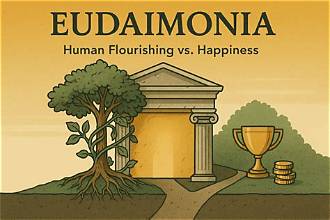
Eudaimonia.

A life well lived.

Perhaps that was the greatest victory of all. They finally understood that they had never been machines in need of repair, nor workers in need of constant direction. They were simply human. And that had always been enough.

By: Laraib Zahra Sial

About the author: Author is a student of International Relations at Department of Political Science, University of the Punjab. It’s her first effort and she really is enthusiastic to do more. 

Similar Posts

  • Beyond new provinces, a blueprint for better gover…

    Pakistan has entered a crucial phase in its constitutional and administrative journey. With a population exceeding 250 million, the governance model that served the country decades ago is increasingly being questioned. Recent public discussions, including remarks by Interior Minister Mohsin Naqvi advocating a debate on administrative reforms in light of Pakistan’s growing population, have reignited an important national conversation: Is it time to rethink how Pakistan is governed? In my view, the answer is yes. The real challenge is not simply whether Pakistan should create more provinces. The real challenge is how governance can be brought closer to the people. A modern state cannot be effectively administered through excessive centralization when its population, economy, and urban centers have expanded dramatically over the past several decades. The first and most important reform should be the empowerment of local governments. District administrations, metropolitan authorities, and municipal governments should be given genuine constitutional authority, financial autonomy, and administrative independence. Citizens interact with government primarily through local institutions. Therefore, healthcare, education, sanitation, water supply, transport, municipal planning, and public safety should be managed by empowered local governments rather than through an overly centralized administrative structure. Karachi represents the strongest example of why governance reform has become a necessity rather than a choice. As Pakistan’s largest city and economic engine, Karachi deserves a governance model specifically designed for a modern global megacity. Despite its enormous contribution to the national economy, the city continues to face serious challenges in urban planning, infrastructure, traffic management, public transport, water supply, waste management, and municipal administration. In my opinion, simply placing Karachi under direct federal control would not automatically solve these problems. The federal government already carries enormous national responsibilities, and transferring administrative authority without structural reforms may simply relocate existing governance challenges. Instead, Karachi requires a metropolitan governance model comparable to internationally recognized cities such as New York, where professional city administration, clearly defined institutional responsibilities, strong municipal leadership, effective policing coordination, urban planning, and financial autonomy work together under a comprehensive metropolitan framework. Such a model could improve service delivery while ensuring greater accountability and long-term planning. Governance reform should not stop at strengthening local governments. Pakistan should also seriously consider creating additional provinces wherever there is genuine administrative need, broad public consultation, and constitutional consensus. Smaller provinces can improve administrative efficiency, strengthen regional representation, and make governments more responsive to local communities. More representative provincial structures can also help ensure that the concerns of both urban and rural populations receive greater attention at the national level. Equally important is the devolution of administrative authority to districts and local institutions. Excessive concentration of political and administrative power often limits opportunities for ordinary citizens to influence decisions that directly affect their lives. A stronger local government system would enable communities to participate more effectively in governance while improving transparency, accountability, and public service delivery. This debate should never be viewed as an attempt to weaken Sindh or divide its people. On the contrary, I believe these reforms would strengthen Sindh by ensuring that development and decision-making reach every corner of the province. Whether someone lives in Kandhkot, Larkana, Mithi, Islamkot, Mirpurkhas, Badin, Hyderabad, Thatta, or Karachi, every citizen deserves equal access to quality healthcare, education, infrastructure, clean drinking water, municipal services, and economic opportunities. An equally important aspect of this reform process is public awareness and civic education. Pakistan needs a network of credible academics, constitutional experts, economists, retired civil servants, educationists, and respected members of civil society who can engage directly with communities across Sindh, particularly in rural and underserved areas where access to balanced political information may be limited. Their role should be to explain, in Sindhi and other local languages, the constitutional, administrative, and economic implications of decentralization, stronger local governments, and, where appropriate, the creation of additional provinces. Many citizens hear conflicting political narratives about these proposals. In my view, people should be encouraged to evaluate reforms on the basis of evidence, administrative efficiency, and public welfare rather than fear or political rhetoric. If these reforms genuinely improve representation, accountability, and service delivery, they should be supported regardless of political interests. Ultimately, the objective should not be to benefit any political party but to empower every citizen and ensure that governance serves the people instead of entrenched centers of power. Unfortunately, discussions about administrative reform are often overshadowed by political narratives that generate fear and misunderstanding. In my opinion, governance reforms should be evaluated on their administrative merits rather than through the lens of partisan politics. Citizens should be encouraged to examine whether decentralisation would improve their quality of life instead of viewing every proposal as a political contest. Meaningful reform also requires strengthening independent institutions, ensuring merit-based appointments, improving accountability, and modernising public administration. Whether Pakistan ultimately retains its parliamentary system or chooses another constitutional framework, lasting success will depend upon transparent institutions, professional governance, and effective local administration. Pakistan’s future does not depend merely on drawing new boundaries on a map. It depends upon building a governance system that places citizens—not bureaucracy or political centralization, at the center of public administration. Strong local governments, empowered districts, efficient metropolitan administrations, and, where constitutionally appropriate, additional provinces can together create a stronger federation, a more prosperous Sindh, and a better future for every Pakistani. A prosperous Pakistan will be built not through the concentration of power, but through the fair and effective distribution of power to the people.

  • Beyond’s the Bombing: The True Cost of Terrorism…

    By Laraib Ehsan “A nation does not only lose lives to terrorism it loses opportunities, confidence, and the promise of a peaceful future.” For over two decades, Pakistan has been at the forefront of the global war on terror. From suicide attacks on crowded marketplaces and educational institutions to the bombing of mosques, military facilities, and public infrastructure; terrorism has had an impact on the social fabric, economy, and politics of this nation. Despite progress achieved by Pakistan through the execution of extensive military and counter-terrorism operations, the revival of militant violence in recent years reminds us that the fight against terrorism requires continued vigilance. The true cost of terrorism is calculated not only in terms of the number of casualties but also in terms of the number of lives ruined, people displaced from their homes, and development hampered. According to the Global Terrorism Index (GTI) 2025 prepared by the Institute for Economics and Peace, Pakistan has been one of the countries worst affected by terrorism in 2024. The report showed a sharp rise in the number of terrorist attacks and casualties as a result of the increase in militant activity in Khyber Pakhtunkhwa and Balochistan. These two provinces have become the focal point of Pakistan’s current security threats where civilians, law enforcement officials, and government sites are regularly attacked. According to Security Report of the Pakistan Institute of Peace Studies 2025, presents equally worrying data. As per the report, 699 cases of terrorism were reported in Pakistan in 2025 leading to 1034 deaths and 1366 injuries occurring across the country.125 out of those killed included 354 civilians, 437 security personnel, and 243 militants. These statistics show that the phenomenon of terrorism has affected all parts of Pakistan, ranging from ordinary citizens to those responsible for ensuring the security of the state. Among all the provinces, Balochistan has suffered the most. It is rich in natural resources and significant in terms of strategic sites like Gwadar Port. Balochistan has seen not only attacks on law enforcement agencies, but also attacks on people, industrial workers, logistics, and infrastructure. Such incidents lead to loss of life as well as the reluctance of investors to invest in the region. A similar situation is happening in Khyber Pakhtunkhwa, with the major part of this region being made up of the merged districts along the border with Afghanistan. According to official statements of the Government of Pakistan and ISPR, the majority of the latest attacks were conducted by Fitna al-Khawarij, which is the official name given to Pakistani authorities to the banned Tehrik-e-Taliban Pakistan (TTP). The authorities have stated that such organizations try to exploit the safe havens they have across the border to carry out attacks on civilians and military personnel. The Impact caused by terrorism cannot be measured only in figures. Each attack leaves communities sorrowful, resulting in the creation of orphans, damaging lives, and making people unsure in the future. Schools are closed, businesses stop working, and basic health services are absent from such areas. The recent case Indicates that the threat is present. In 2025 and 2026, Pakistan witnessed multiple occurrences of deadly attacks in Baluchistan and Khyber Pakhtunkhwa aimed at security convoys, passenger transport systems, and public gatherings. One of the worst attacks was on the Jaffar Express train in Baluchistan as it targeted a passenger train carrying hundreds of civilians. The attack resulted in loss of lives, injuries to passengers, and large-scale rescue operations conducted by the security forces of Pakistan, along with other implications of terrorism, transportation disruptions, and psychological impact on travel. Despite the challenges facing Pakistan, the response of the country has always been multifaceted. It has employed its intelligence operations to respond to the attacks and adopted innovative methods for border management and coordination of various institutions in civilian and military spheres. Nevertheless, the recurring incidents of terror underline that military effects on terrorism cannot by themselves eliminate terrorism. Pakistan has made immense sacrifices during the last 20 years, with thousands of civilians dead and armed forces, police, Frontier Corps, and other law enforcement agencies sacrificing their lives for the security of their country. The strategy adopted by Pakistan against terrorism has changed substantially in the last twenty years. After a series of deadly terrorist incidents in Pakistan, the country implemented a wide-ranging counter terrorism policy consisting of military actions, intelligence sharing, border protection, and legal modifications. These operations, Operation Zarb-e-Azb (2014) and Operation Radd-ul-Fasaad (2017), destroyed terrorist facilities and disrupted the networks of terrorists working in the country. As stated in the Inter-Services Public Relations (ISPR), these operations led to the reduction of many terrorist organizations’ efficiency and helped restore state authority in previously affected territory. The Pakistan Army, together with the Pakistan Air Force, the Pakistan Navy, the Frontier Corps, the Police, and the intelligence services, has played a key role during the fight against terrorism in Pakistan. Thousands of soldiers and officers have become martyrs while saving civilian lives, defending borders, and conducting different intelligence led operations. Their sacrifices are in addition to the sacrifice made by police officers, rescuers, doctors, and ordinary people and represent one of the most significant contributions of Pakistan to the fight against terrorism in the world. Although military methods have diminished the power of terrorist organizations, specialists claim that it is not possible to defeat terrorism only by military efforts. As specified by the Financial Action Task Force (FATF), one of the most efficient means of fighting against terrorists is to stop their financing. Even though Pakistan has enhanced its anti-money laundering and counter-terrorist financing system in recent years, it is necessary to keep on practicing this idea and cooperating with other countries in order to avoid the rebirth of terrorist organizations. The economic Impact of terrorism is equally dangerous. The Pakistan Economic Surveys show that since 2001 terrorism has caused Pakistan direct and indirect economic damages of more than $150 billion. Namely, these damages include destroyed infrastructure, decreased foreign investments, reduced number of tourists,

  • The Crisis of Leadership and Fading National Prior…

    ​To diagnose the profound structural, intellectual, and economic stagnation gripping contemporary Pakistani society, one cannot analyze it merely through the lens of conventional lamentation or superficial moralizing. This pervasive crisis of the state and society is not the byproduct of a sudden natural calamity, but rather the logical culmination of a long-standing political economy where the unequal distribution of state resources, flawed policymaking mechanisms, and elite capture have systematically closed off all avenues for collective intellect. The devastating budget cuts inflicted on the social sector—specifically education, healthcare, and research institutions—under the relentless guise of International Monetary Fund (IMF) bailout packages and structural adjustment have compounded this crisis. When foundational pillars of a state are subordinated to personal self-interest, temporary political loyalties, and non-productive extravagances instead of fostering a productive economy, a leadership crisis ceases to be an accidental anomaly and entrenches itself as a permanent, systemic reality. The roots of this historical tragedy undeniably lie in the colonial state apparatus engineered by the British Empire to secure its subjugation over this region; yet the tragic reality is that post-independence, the domestic elite simply stepped into the shoes of the white master, retaining this exploitative machinery intact while refining it to serve their own interests. ​A hard look at ground realities and economic indicators reveals a deeply alarming landscape. The state’s warped priorities are laid bare in the fact that the lion’s share of federal and provincial budgets is routinely swallowed by debt servicing, non-productive administrative and defense expenditures, and lavish exemptions for the privileged class. Conversely, human capital development—education, scientific research, and health—languishes at the very bottom of the national agenda, treated as an unwelcome afterthought. Data from the World Bank and UNESCO confirm that Pakistan allocates a mere 0.2 to 0.3 percent of its Gross Domestic Product (GDP) to Research and Development (R&D), whereas dynamic economies like South Korea invest upwards of 4.8 percent and Israel surpasses 5 percent. This truncated, abysmally low allocation compared to regional peers is a damning indictment. When a nation’s educational budget is starved, and university leadership is appointed through political patronage, personal recommendations, and favoritism rather than merit, vision, and academic pedigree, the system ceases to radiate light, breeding instead sycophancy, boot-licking, and intellectual sterility. Such a decayed framework might churn out compliant manual laborers and clerical cogs for offices, but it will never produce a conscious citizen or independent critic courageous enough to question flawed state policies. ​The most agonizing casualty of this policy paralysis is the relentless brain drain—the systematic migration of our brightest minds abroad. Immigration bureaus and professional research data confirm that Pakistan’s finest intellects—top-tier engineers, specialized surgeons and physicians, global IT experts, scientists, and dedicated researchers—are abandoning their homeland in droves for Europe, North America, and the Gulf states. The state has never paused to calculate the immense national cost of educating and training a youth only to witness that capital, and the future it represents, vanish across borders. When policymakers trample over merit to appease political cronies, the meritocratic class finds itself fighting a losing battle for sheer survival. This is not mere emigration; it is the intellectual execution of an entire generation, sacrificed at the altar of incompetent governance. Nations like Singapore, Malaysia, and South Korea reached a historic crossroads where they discarded empty political rhetoric in favor of rigid meritocracy, transparent governance, and rigorous education, whereas our polity cultivated a culture that treats politics as a lucrative enterprise and the state as spoils of war. The dividends of that mindset surround us today. ​Another compounding driver of this societal decline and intellectual regression is the entrenched feudal and imperial character of our state structure, which bars the common human and ordinary citizen from accessing basic constitutional and human rights. In a stratified society where the rule of law is selectively enforced against the weak while endless judicial backdoors remain open for the powerful, justice becomes an elusive mirage. The ordinary citizen must endure decades of legal labyrinths just to secure elementary justice, while the resource-hoarding elite exploit every legislative loophole to remain above the law. This glaring injustice has bred an overwhelming sense of alienation, systemic frustration, and moral decay. When the younger generation observes that honesty, hard work, and integrity hold zero currency in this system, and that influence, corruption, cronyism, and deception are the lone keys to advancement, the moral fabric of society shatters. This ethical erosion metastasizes into a national malignancy when state patronage actively paralyzes intellectual spaces and universities, stifling critical discourse and strangling freedom of thought. ​Escaping this deep quagmire and resolving the crisis of leadership requires courageous structural reforms. First and foremost, the state must fundamentally overhaul its national priorities, elevating scientific self-reliance, research autonomy, and intellectual sovereignty to the core of national security alongside physical defense. Pushing the cumulative budget for education, science, and research to a minimum of four percent of GDP without delay is non-negotiable if we harbor any genuine ambitions of building a knowledge economy. Second, purging public administration, the civil bureaucracy, and state enterprises of political interference while establishing the ironclad supremacy of merit is paramount to ensure decision-making is driven solely by professional capability. We must transition away from traditional public service delivery by handing policy formulation over to empowered task forces composed of domestic and international technocrats. Concurrently, genuine autonomy must be restored to the Higher Education Commission (HEC), backed by stringent constitutional safeguards against political appointments in academia. To stanch the bleeding of brain drain and transform it into a “brain gain,” the state must proactively craft an attractive, enabling ecosystem that leverages the capital and expertise of the overseas Pakistani diaspora through modern remote research initiatives. ​True, visionary leadership rises above the hollow temptation of cheap, temporary popularity to lay enduring foundations for generations unborn. Until those occupying our corridors of power step outside the narrow confines of personal, familial, and factional self-interest, and until society sheds emotional sloganeering in favor of scientific, logical, and critical inquiry, the vicious

  • Pakistan: Facts, Challenges and a Positive Perspec…

    By Waqar Malik The foundation of independent, responsible, and impartial journalism is balance, honesty, and fairness. Criticism is an essential part of journalism; however, a true understanding of any country’s situation requires a comprehensive view of its historical, political, economic, regional, and security circumstances. A one-sided analysis may highlight certain realities, but it cannot represent the complete picture. The German newspaper DW has raised several concerns and critical observations regarding Pakistan’s political, economic, and security situation. No country should be considered beyond criticism, and accountability is an important element of democracy. However, criticism must also be accompanied by balance, context, and a comparative perspective. If the challenges of a country are discussed, its sacrifices, achievements, and ground realities should also be presented with equal fairness. Pakistan is often portrayed as a country facing political instability, economic difficulties, and security challenges. However, an important question remains: is there any country in today’s world that is completely free from such challenges? Inflation, unemployment, political disagreements, social issues, and governance challenges are not unique to Pakistan. They are global realities affecting nations across the world. Germany, one of the world’s leading economies, is facing economic pressures, including rising energy costs, challenges within its industrial sector, concerns regarding employment, and economic uncertainty. Similarly, countries such as the United Kingdom, France, and the United States continue to experience inflation, political divisions, public protests, and social challenges. Therefore, highlighting the problems of one country while ignoring similar difficulties faced by others cannot be considered a complete and balanced analysis. Every nation must be understood within the context of its own history, geography, political environment, and security needs. Freedom of Expression: Is Pakistan Being Judged by a Different Standard? Pakistan is frequently criticised regarding freedom of expression, democratic values, and human rights. Such discussions are necessary in every democratic society. However, an important question must also be asked: is Pakistan being judged by the same standards applied to other countries? In Pakistan, political leaders, opposition representatives, journalists, lawyers, and members of civil society openly express their views on governments, state institutions, and national affairs. Political debates, speeches, and different opinions are widely discussed through media platforms. On various occasions, statements from detained political figures have also been reported prominently in the media. This raises an important comparative question: do individuals in custody in countries such as the United States, the United Kingdom, France, or Germany receive exactly the same level of media access and opportunity to express their political views? In many democratic countries, detention laws are strictly implemented, and access to media is regulated according to legal procedures. Therefore, discussions about Pakistan’s freedom of expression should also consider international comparisons and broader realities. The right to peaceful protest is a fundamental democratic right, and Pakistan’s Constitution recognises this principle. However, every right comes with responsibilities. Pakistan has witnessed political protests that have continued for weeks and, in some cases, months. On certain occasions, major roads were blocked, public life was disrupted, and damage to public and private property was reported. Despite these challenges, governments have often chosen dialogue, patience, and political engagement instead of excessive use of force. In every democracy around the world, the right to protest exists within the framework of law. No democratic society allows violence, vandalism, threats, or the disruption of public order under the name of political expression. Pakistan should neither seek exceptional treatment nor be judged by different standards. The Role of Pakistan’s Armed Forces and National Defence Some analysts describe Pakistan’s political system as a hybrid system. However, another important perspective also deserves consideration. Pakistan’s armed forces have made significant sacrifices for national defence, security, and the fight against terrorism. Thousands of soldiers and officers have lost their lives while protecting the country’s sovereignty, stability, and security. Pakistan’s geographical position places it in a complex security environment. Located at the crossroads of South Asia, Central Asia, and the Middle East, Pakistan faces unique regional and international challenges. There is also criticism that Pakistan’s armed forces are involved in business and commercial activities. However, this matter can also be viewed from another perspective. Pakistan’s defence requirements are extensive, and investments in various institutions and projects are aimed at supporting defence needs, welfare activities, and reducing unnecessary pressure on national resources. Many countries around the world allow their military institutions to participate in research, technology, industry, development projects, and humanitarian activities. The United States and other developed nations have similar examples where defence-related organisations contribute to national development and innovation. Therefore, such policies should be assessed on the basis of national interest, transparency, effectiveness, and contribution to society rather than through criticism alone. For more than four decades, Pakistan has paid a heavy price due to regional conflicts and global security challenges. The consequences of the war in Afghanistan, participation in the international fight against terrorism, hosting millions of refugees, and the loss of thousands of precious lives have deeply affected the country. Pakistan has made enormous sacrifices in combating terrorism and has achieved significant successes in restoring security and stability. Despite these challenges, Pakistan continues to contribute towards regional peace and international cooperation. The Kashmir dispute remains one of the longest unresolved conflicts in South Asia. Pakistan supports the right of the Kashmiri people to self-determination in accordance with relevant United Nations resolutions and continues to advocate a peaceful and diplomatic solution. Pakistan’s stated position has consistently been based on dialogue, diplomacy, and peaceful engagement. Sustainable peace in South Asia can only be achieved through mutual respect, understanding, and peaceful resolution of disputes. The Situation in Azad Kashmir and the Government’s Approach The situation in Azad Kashmir demonstrates the importance of dialogue and political engagement during times of tension. A responsible state must ensure law and order, protect the lives and property of citizens, and seek constitutional and democratic solutions to public concerns. The right to protest is a democratic right, but it cannot justify violence, firing, destruction of property, threats against state institutions, or taking the law into

  • The Intellectual Sovereignty Crisis: Higher Educat…

    As Pakistan prepares to celebrate another Independence Day, standard national rituals will once again take center stage. Flag-hoisting ceremonies, parades, and patriotic broadcasts will dominate the public square. Yet, nearly eight decades after gaining political freedom, a quiet but deeply uncomfortable question persists: can a nation truly consider itself sovereign if its collective mind remains dependent on the ideas, technologies, and scientific outputs of others? ​True independence has never been merely a matter of drawing borders, raising flags, or maintaining standing armies. History teaches a relentless lesson: physical sovereignty is only a shell. It requires intellectual and scientific self-reliance to give it genuine substance and endurance. Without a thriving culture of critical inquiry, rigorous research, and technological innovation, political freedom gradually degrades into a ceremonial phrase. ​Today, Pakistan faces a severe, structural crisis within its higher education system—one that poses a direct threat to its national sovereignty and economic survival. Not a single Pakistani university currently features among the top 200 or 300 institutions in major global academic rankings, such as QS or Times Higher Education. This is far more than an embarrassing statistic for university administrators. It is an alarm bell signaling deep vulnerabilities in national security, economic resilience, and the country’s collective capacity to navigate a complex world. ​We live in an era where global power and national influence are defined by knowledge economies, artificial intelligence, quantum computing, and rapid technological innovation. Meanwhile, Pakistan’s universities are collapsing under the combined weight of severe budget cuts, outdated curricula, heavy-handed bureaucratic interference, and deeply flawed research incentives. Unless our academic institutions move away from acting as simple credential-issuing factories and transform into centers of genuine learning and problem-solving, Pakistan’s economic and political sovereignty will remain precarious. A country that relies permanently on foreign intellect, imported technology, and international financial institutions to address its core domestic problems cannot claim to be truly self-reliant. ​This decline is not a matter of subjective opinion; it is confirmed by hard empirical evidence. Over 250 public and private universities operate across Pakistan, yet the state allocates a meager 0.24 to 0.28 percent of its Gross Domestic Product (GDP) to higher education. This represents a small fraction of the 2 percent minimum recommended by UNESCO for developing nations attempting to build sustainable economies. Regional peers made strategic investments in research and technology decades ago, turning their universities into powerful engines of industrial growth. In contrast, persistent funding cuts in Pakistan have left public-sector universities financially paralyzed, with many administrators openly struggling to pay staff pensions or procure basic laboratory chemicals and equipment. ​Even more damaging than the financial deficit is the systemic decay in research quality. While university faculty publish thousands of papers every year to meet promotion targets under the Tenure Track System, the vast majority of these publications carry little to no global impact or citation value. A desperate chase for publication numbers, driven by artificial metrics and a reliance on low-tier journals, has fostered a superficial academic culture disconnected from real-world application. Our university research rarely addresses the pressing structural challenges facing the nation, whether in climate adaptation, agricultural productivity, public health, water management, or industrial manufacturing. ​The most tragic consequence of this intellectual and institutional stagnation is the unprecedented wave of brain drain draining the nation’s potential. According to official emigration statistics, over two million educated and skilled young Pakistanis—including doctors, software engineers, data scientists, chemists, and academics—have left the country in recent years. They are not emigrating simply in pursuit of higher salaries; they are fleeing a system characterized by political nepotism, lack of merit, poor infrastructure, and a hostile environment for creative thought. When a state fails to retain its best minds, it surrenders its future. Universities continue to churn out hundreds of thousands of graduates annually, but a vast proportion remain unemployable because their education has failed to equip them with critical thinking skills or modern technological competencies. Without a functional, collaborative link between universities, local industry, and government policymakers—the classic Triple Helix model—talks of economic self-reliance remain empty political rhetoric. ​Reclaiming intellectual sovereignty requires a candid national assessment and decisive, structural policy changes. First, state funding for higher education must be incrementally raised to at least 1.5 percent of GDP over a defined roadmap. Crucially, at least half of these new funds should be explicitly ring-fenced away from brick-and-mortar civil construction and directed toward modernizing scientific laboratories, subscribing to international scientific databases, and establishing dedicated national centers for artificial intelligence, biotechnology, renewable energy, and cybersecurity. ​Second, university governance requires immediate, radical overhaul. The Higher Education Commission and individual university senates must be insulated from bureaucratic red tape and political appointments. Vice-Chancellors and senior academic leaders should be selected through transparent, merit-based international searches, prioritizing proven scientific achievement and visionary management over political connections or administrative seniority. ​Third, the criteria for evaluating faculty performance must be completely overhauled. The current practice of rewarding sheer publication volume should be replaced with a system that prioritizes research quality, international citations, industrial patents, technology transfers, and solutions that solve tangible domestic problems. ​Finally, Pakistan must systematically engage its vast academic diaspora. Rather than lamenting brain drain, the state should build a structured “Brain Gain” program. By offering competitive joint research grants, flexible digital teaching platforms, and adjunct faculty positions, Pakistan can enable its top scholars abroad to transfer cutting-edge global science back into domestic universities without requiring them to relocate permanently. ​Patriotism in the twenty-first century cannot be measured by emotional slogans, ceremonial rallies, or flag-hoisting displays. It requires building objective competence in science, technology, and critical thought. If our universities fail to become spaces of innovation, inquiry, and problem-solving, Pakistan will remain perpetually dependent on foreign aid, external loans, and imported knowledge. Modern national defense is built not only along physical borders, but within classrooms, research laboratories, and libraries. Reforming higher education is not a luxury or a secondary policy goal; it is the single most logical path toward securing a dignified, sovereign, and prosperous future for the nation.

  • Trump reopens the Saudi nuclear deal

    For a few hours this week, it looked like Washington and Riyadh had quietly closed one of the more consequential files of Donald Trump’s second term. On Wednesday, US Energy Secretary Chris Wright and his Saudi counterpart signed a civil nuclear cooperation agreement, a deal years in the making, offering American firms a foothold in a market Riyadh has long promised and long withheld. Then, a day later, the president reopened it himself. In a Truth Social post on Thursday, Trump declared the agreement “will be approved,” but added that it was “totally subject to Saudi Arabia joining the very respected and successful Abraham Accords.” He also inserted a second condition that had not been part of the signed text: no enrichment of nuclear material on Saudi soil. Within hours, press secretary Karoline Leavitt was telling reporters the deal was simply “off” unless the kingdom normalised relations with Israel, even though, by her own account, the president had not actually spoken to Crown Prince Mohammed bin Salman since posting the ultimatum. It is worth sitting with how unusual this is. A nuclear cooperation agreement, negotiated over years and signed by cabinet level officials on both sides, was retroactively rewritten by a presidential social media post, with the Saudi government left to respond through silence, and American wire services unable to get so much as a background comment out of Riyadh. Steven Cook, a Middle East scholar quoted by NPR, put the underlying question bluntly: whether “a social post supersede a signed diplomatic agreement.” That a serious foreign policy analyst even has to ask the question tells its own story about how this White House does business. The Saudi position, however, is not new, and it is not merely stubbornness. The kingdom has said for years, through King Salman and now through the Crown Prince, that normalisation with Israel requires a credible pathway to Palestinian statehood. That position survived the first Trump term’s Abraham Accords push, the Biden administration’s own normalisation efforts, and it hardened further after the October 2023 Hamas attack on Israel and the war in Gaza that followed. Riyadh’s calculus is also generational: across the Arab and Muslim world, sympathy for the Palestinian cause remains a live political fact that no government, however close to Washington, can casually override. There is also an Israeli dimension worth naming honestly. Israel’s own unease was never really about Saudi Arabia’s civilian nuclear ambitions; officials have signalled for months that they had made peace with the idea, provided it came bundled with normalisation. What Israeli commentators and officials appear to actually fear is a Saudi Arabia empowered, prestige laden, and unbound to the Accords: a regional heavyweight whose recognition Israel still needs, and has not been granted, absent a resolution nobody has yet found for the Palestinians. That is the crux the deal has now run into, and it is not a problem Trump’s Truth Social account can post its way out of. None of this means the deal is necessarily dead. Trump has a long history of issuing maximalist conditions in public while negotiating something narrower in private, and Saudi Arabia has strong economic and strategic incentives of its own to keep the nuclear track alive. But the manner in which this condition was added, abruptly, publicly, and without prior coordination with Riyadh, is itself a signal worth reading. It suggests an American approach to the region that still assumes the old leverage of the first Abraham Accords era holds unchanged, even as the ground beneath it, in Gaza’s aftermath and in Saudi public opinion, has shifted considerably. Whether Washington adjusts to that reality, or simply keeps repeating the demand more loudly, will say a great deal about how the rest of this file plays out.

Leave a Reply

Your email address will not be published. Required fields are marked *