nadia afgan says
|

Nadia Afgan says actors mask money worries behind curated posts

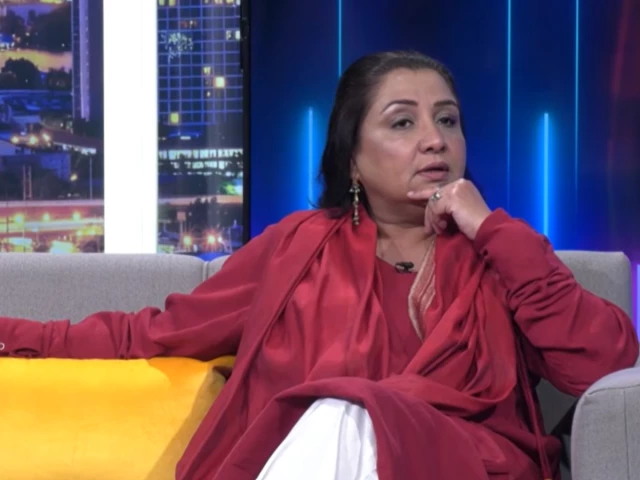
Actor Nadia Afgan is speaking candidly about the financial pressures young actors face early in their careers. She specifically criticised the trend of moving into expensive, high-status neighbourhoods purely to keep up appearances.

Reflecting on how demanding the profession really is, Nadia said the job is far tougher than it looks from the outside. She explained that young actors often work incredibly hard when starting out, and encouraged them to prioritise saving money or investing in property, rather than chasing status symbols just because their peers happen to live a certain lifestyle.

According to Nadia, that kind of comparison amounts to peer pressure, and it’s pushing many actors into spending well beyond what they can sustainably afford.

She also took aim at social media for reinforcing that illusion. Nadia pointed out that people readily post about their cars, scenic views or business-class flights, but rarely share the moments of genuine financial stress that often follow, like panicking over a hefty bill.

Speaking more broadly about shifts within the entertainment industry, Nadia said visibility now often matters more than actual talent. She noted that becoming an influencer first has become a common route into television dramas, with anyone holding a camera and an active social media following able to break in more easily.

She added that production houses tend to prioritise numbers over craft as well. According to Nadia, casting someone with a large following almost guarantees higher viewership, which directly benefits the channel or production house involved.

She admitted knowing many genuinely talented individuals who get overlooked, while influencers with large followings continue landing opportunities instead.

Beyond industry commentary, Nadia also reflected on her own journey as an actor. She spoke about her long-held desire to move beyond comedic roles, admitting that meaningful change only came gradually, as her personality and outlook evolved over time.

She shared that her father’s illness and eventual passing brought a newfound sense of steadiness to her life. According to Nadia, having witnessed life’s ups and downs so closely has helped her understand and portray complex characters with far greater depth.

Nadia is best known for her roles in dramas including “Suno Chanda,” “Shashlik,” “Shehr-e-Zaat” and “Kabuli Pulao.”

Similar Posts

  • |

    Oil prices edge lower as hopes rise for possible US-Iran agreement

    LONDON: Global oil prices slipped modestly on Thursday as optimism over a possible agreement between the United States and Iran eased concerns about potential supply disruptions in the Middle East, prompting investors to scale back risk premiums in the energy market. According to Reuters, market sentiment improved after reports of continued diplomatic engagement involving Iran and Oman, raising expectations that negotiations between Washington and Tehran could lead to a breakthrough. Traders believe any progress towards an agreement could help reduce regional tensions and improve the outlook for global oil supplies. Brent crude futures declined by 37 cents, or 0.5 per cent, to $79.08 per barrel, while US West Texas Intermediate (WTI) crude fell 53 cents, or 0.7 per cent, to $74.69 per barrel during early trading. The latest decline followed a modest gain in Brent crude during the previous trading session, reflecting continued uncertainty in global energy markets as investors closely monitor diplomatic developments and geopolitical risks. Market analysts said that hopes of a diplomatic settlement between the United States and Iran have encouraged traders to anticipate a more stable supply environment. A successful agreement could help resolve months of heightened tensions and reduce the risk of disruptions to oil exports from the Gulf region. Investors are also watching developments around the Strait of Hormuz, one of the world’s busiest oil shipping routes. Any easing of regional tensions is expected to improve the security of maritime trade and ensure the uninterrupted movement of crude oil, a factor that could put additional downward pressure on prices.

  • | |

    Poor internet access threatens girls’ education …

    PESHAWAR: Poor internet connectivity is creating serious problems for girls pursuing education in the merged districts of Khyber-Pakhtunkhwa. Students in remote areas often struggle to attend online classes. They also face difficulties downloading study material and submitting assignments. For 16-year-old Khadija Bibi from Kurram district, finding an internet signal has become part of her daily life. During the summer holidays, she often leaves her home and climbs a nearby hill. She carries her mobile phone with her. She stands on the rocky slope and searches for a stronger signal. She uses the limited connection to download lecture notes and complete academic tasks. She also tries to attend online classes from the hill. However, the weak network frequently disconnects. This causes her to miss lessons and submit assignments late. Khadija is a BS Computer Science student at Benazir Women University Peshawar. She said unreliable internet had become one of the biggest challenges in her education. She said students in remote areas were being left behind as education increasingly depended on digital technology. The problem is not limited to Kurram. Thousands of girls across the merged districts face similar difficulties. The region already has several major education challenges. Poverty remains a serious obstacle. Insecurity has also affected access to education. Many areas also lack proper schools and other educational facilities. The digital divide has added another challenge. Several schools in the merged districts either do not have computer laboratories or have laboratories without working computers. Some also lack internet connections. This prevents students from gaining basic computer skills. It also makes online education difficult. Official data highlights the wider education crisis in the region. Benazir Income Support Programme data shows that 66 per cent of children in North Waziristan are out of school. The rate stands at 63 per cent in Bajaur. It is 61 per cent in South Waziristan. Mohmand and Khyber each record an out-of-school rate of 51 per cent. Kurram and Orakzai each have a rate of 47 per cent. Girls face additional difficulties because of limited access to technology. The Khyber-Pakhtunkhwa Women Empowerment Policy 2026-2030 highlights the scale of the digital divide. According to the policy, only 11 per cent of women in the merged districts have access to the internet. The female literacy rate is also extremely low. It stands at only 17 per cent. Education and digital inclusion advocates say poor infrastructure is a major reason for the situation. Weak mobile networks make internet access unreliable. Many families also cannot afford smartphones or regular internet packages. Some girls have to borrow phones from family members. This makes it difficult for them to attend online classes regularly. Access to technology is also affected by social restrictions. In some communities, families remain concerned about girls using mobile phones and the internet. Concerns about online safety and social pressure often result in restrictions. Cultural norms can also limit girls’ access to digital technology. Experts say improving internet coverage alone will not solve the problem. Girls also need greater freedom to travel to schools, universities and training centres. Better transport facilities could help students reach educational institutions more easily. It could also improve access to vocational training and employment opportunities. Experts have urged the provincial government and telecommunications authorities to give greater attention to the merged districts. They say residents should receive reliable internet services similar to those available in settled areas. Improved digital infrastructure could transform educational opportunities for girls in remote communities. Reliable internet would allow students to attend online classes without travelling long distances. They could access digital libraries and educational resources. They could also develop computer skills and participate in online training programmes. For students like Khadija, internet access is more than a technological facility. It is directly linked to education and future opportunities. Without reliable connectivity, many talented girls may continue to struggle despite their willingness to study. Addressing the digital divide therefore requires investment in telecommunications infrastructure, schools, digital devices and affordable internet services. It also requires efforts to remove social barriers that prevent girls from using technology.

  • | |

    Acting President of Azad Kashmir urges election co…

    Acting President of Azad Jammu and Kashmir (AJK) Chaudhry Latif Akbar has sent two letters to the Election Commission of Azad Jammu and Kashmir, demanding action over alleged security failures and irregularities reported during the polling process. In his letters, Chaudhry Latif Akbar raised serious concerns regarding the arrangements made for election security and claimed that effective security measures were not provided at several polling stations. He called for a thorough investigation into the incidents reported during the voting process and urged the Election Commission to take appropriate legal action against those found responsible. The Acting President stated that polling agents at various locations were allegedly prevented from entering polling stations, which he described as a serious violation of the electoral process. According to him, the presence of polling agents is essential to ensure transparency and maintain public confidence in elections. Chaudhry Latif Akbar further requested an inquiry into reports of firing incidents, alleged interference in the polling process, and claims that some voters were deprived of their right to cast their votes. He emphasized that all such allegations should be investigated impartially to determine the facts and ensure accountability. In one of his letters, the Acting President highlighted delays in the start of polling at Koomi Kot and Jhandgran areas. He stated that voting began late in these locations and requested that polling time be extended in the affected areas to compensate for the lost time and allow voters a fair opportunity to exercise their democratic right. He also referred to an alleged armed attack on Mumtaz Hussain Naqvi, calling for an immediate investigation into the incident. Chaudhry Latif Akbar demanded that those responsible for the attack be identified and legal proceedings be initiated against them. The Acting President stressed that all incidents reported during the election process must be examined through transparent investigations. He called upon the Election Commission to ensure that no individual or group involved in electoral violations escapes accountability. In his communication with the Election Commission, Chaudhry Latif Akbar reiterated the importance of maintaining a free, fair, and peaceful electoral environment. He stated that public trust in democratic institutions depends on ensuring that elections are conducted without intimidation, interference, or unlawful practices. The letters come amid political tensions surrounding the election process in Azad Jammu and Kashmir, where various political parties have raised concerns over alleged irregularities and security issues. Opposition parties have also questioned aspects of the polling arrangements, while authorities have maintained that necessary measures were taken to conduct peaceful elections. Chaudhry Latif Akbar’s demands reflect concerns about transparency and fairness in the electoral process. He emphasized that protecting voters’ rights and ensuring equal participation should remain the top priority of election authorities. He concluded by urging the Election Commission to conduct a comprehensive review of all reported incidents, publish the findings transparently, and take strict action against anyone found involved in misconduct. According to him, only a credible and impartial investigation can strengthen public confidence and ensure that the democratic process reflects the genuine will of the people.

  • | |

    Asim Azhar invites cover artists for ‘Khabbay Sajjay’ unplugged version

    Pakistani singer Asim Azhar is giving one talented cover artist a chance to work with him on the official unplugged version of his popular Punjabi song ‘Khabbay Sajjay’. Azhar announced the opportunity through an Instagram reel after noticing the large number of fans and musicians sharing their own covers of the track. The singer asked his followers to tag their favourite cover artist in the comments of his latest reel. He said one selected artist would get the opportunity to join him for the official unplugged rendition of the song. Azhar later shared an Instagram story to clarify that the opportunity was genuine. He said he was impressed by the creativity and talent shown by musicians who had performed their versions of the song. He also hinted that the unplugged project could include a music video featuring the selected artist. ‘Khabbay Sajjay’ is among the 10 tracks featured on Azhar’s album. The Punjabi romantic song revolves around deep affection and devotion towards a loved one. The track has also attracted significant attention on YouTube, where it has crossed the one-million-view mark. With the new initiative, Azhar is not only celebrating the song’s popularity but also creating an opportunity for emerging musicians to work alongside an established Pakistani artist.

  • | |

    White House hit by Swift, Spider-Man backlash

    Questions are growing over the removal of Taylor Swift’s music from several social media videos associated with US President Donald Trump and the White House, as a separate controversy erupted over the administration’s use of Spider-Man in an immigration-related post. Neither Swift nor the White House has publicly explained why the songs were removed. The development has prompted speculation among fans about whether the singer or her representatives objected to the use of her music. The controversy comes as the White House faces criticism over a social media post featuring Spider-Man in connection with Immigration and Customs Enforcement (ICE). The post used images styled around the superhero’s web-slinging abilities. It portrayed people being caught in a web alongside a message referring to the detention and deportation of undocumented immigrants. The White House caption described the imagery as coming from “your friendly neighborhood ICE agents.” The post quickly triggered criticism from Spider-Man fans, with many users calling on Marvel Studios to take action over the unauthorised use of the character for political messaging. Several commenters urged Marvel to seek the removal of the post, while others argued that Spider-Man should not be associated with the administration’s immigration policies. Marvel Studios has not publicly responded to the controversy or indicated whether it plans to challenge the White House over the use of Spider-Man. The backlash has also drawn comparisons with the recent disappearance of Swift’s songs from Trump-related and White House social media content. Swift has previously been politically outspoken. In the 2024 US presidential election, she endorsed Democratic candidate Kamala Harris, who was then serving as vice president, rather than Trump. However, Swift has not recently made public comments about Trump in connection with the latest developments. The absence of an official explanation has left fans debating whether the removal of her music was requested by the singer herself, prompted by licensing issues or resulted from another decision by the White House or Trump campaign. The two controversies have unfolded at the same time, prompting renewed discussion about the use of entertainment figures, music and popular fictional characters in political communication.

  • | |

    Pakistan-Belarus deepen defence ties, top military…

    ISLAMABAD: Pakistan and Belarus have reaffirmed their commitment to expanding defence cooperation following high-level talks between senior military officials at Air Headquarters in Islamabad. According to the Inter-Services Public Relations (ISPR), a Belarusian defence delegation led by Major General Muraveiko Pavel Nikolayevich, Chief of the General Staff of the Armed Forces and First Deputy Defence Minister, met with Air Chief Marshal Zaheer Ahmed Baber Sidhu, Chief of the Air Staff, on Thursday. The discussions focused on regional security, matters of mutual interest and opportunities to broaden military collaboration between the two countries. During the meeting, the Pakistan Air Force chief reiterated the PAF’s resolve to strengthen bilateral defence ties through greater cooperation in joint training, military exercises, technological innovation and defence industry partnerships. The Belarusian military chief praised the Pakistan Air Force for its high level of operational readiness, technological progress and growing self-reliance in defence capabilities. He also reaffirmed Belarus’ interest in expanding military cooperation with Pakistan across key areas. The meeting highlighted the shared determination of both countries to reinforce defence relations and explore new avenues of collaboration aimed at promoting mutual strategic interests

Leave a Reply

Your email address will not be published. Required fields are marked *