pti leader mian
| |

PTI leader Mian Mahmoodur Rashid shifted to servic…


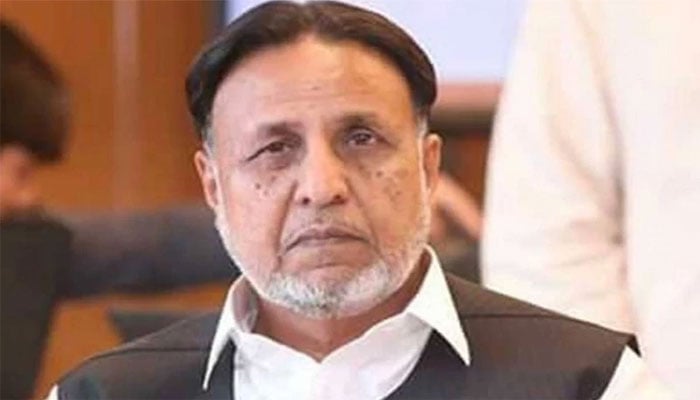
LAHORE:Former Punjab minister and Pakistan Tehreek-e-Insaf (PTI) leader Mian Mahmoodur Rashid has reportedly developed health complications and was shifted from prison to Services Hospital in Lahore for medical treatment.

According to party sources in Lahore, Mahmoodur Rashid was transferred to the hospital after his health condition deteriorated. The move was made to provide him with specialised medical care and allow doctors to carry out the necessary treatment.

Party sources said that the PTI leader underwent surgery for a tumour located in his abdomen. The operation was performed at Services Hospital, where doctors treated the medical condition that had been causing him health concerns.

Following the surgery, Mahmoodur Rashid was reportedly transferred back to the prison hospital for post-operative care and monitoring. His condition is being observed by medical staff as he recovers from the procedure.

The development has attracted attention because Mahmoodur Rashid is a senior PTI figure and a former member of the Punjab provincial government. His health has previously been a matter of concern for his party, particularly while he has remained in custody.

The party sources did not provide extensive details about the nature of the tumour, its size or whether it was benign or malignant. They also did not disclose further information regarding the exact duration of his hospital stay or the expected recovery period.

Medical procedures involving abdominal tumours can require careful post-operative observation, particularly during the initial recovery period. The decision to keep the PTI leader under medical supervision after the operation indicates that doctors are continuing to monitor his condition.

Mahmoodur Rashid has remained a prominent figure within PTI and has held important political responsibilities in Punjab. As a former provincial minister, he has been associated with the party’s political activities for several years.

His transfer from prison to a major public-sector hospital highlights the medical arrangements made for prisoners who require treatment beyond the facilities available inside a jail. Prison authorities generally rely on external hospitals when inmates require specialised diagnostic procedures, surgery or other forms of treatment that cannot be adequately provided by a prison medical unit.

According to the available information, the sequence of events involved his transfer from prison to Services Hospital, the surgical treatment of the abdominal tumour and his subsequent return to the prison hospital for continued care.

The party sources did not indicate any immediate complications resulting from the surgery. Further information about his health is expected to depend on the medical assessment carried out by doctors during his recovery.

PTI supporters and party members have expressed concern over the health of the former Punjab minister, particularly because he is currently in custody and requires ongoing medical attention.

The development comes as several PTI leaders and workers remain involved in legal and political proceedings following the party’s prolonged confrontation with the government and state institutions. Mahmoodur Rashid has remained among the senior party figures facing legal proceedings.

For now, his recovery and medical condition are being monitored by healthcare professionals. The latest reports indicate that after undergoing surgery for the abdominal tumour at Services Hospital, he has been moved to the prison hospital, where he will continue to receive medical care.

Further details about his condition, the outcome of the surgery and his recovery timeline are expected to emerge as doctors continue their assessment.

Similar Posts

  • |

    Documentary film on struggle for joint electorate …

    Karachi: A documentary titled A Separation Refused based on the Movement for Restoration of the Joint Electorate in Pakistan that was screened at Media Centre of SZABIST University Karachi. The 20-minute documentary, produced by the Centre for Social Justice and co-directed by Dawood Akhtyar Murad, traced the history of the Separate Electorate system and the movement for the restoration of the Joint Electorate in Pakistan. It highlighted the collective efforts of civil society organizations, political leaders, faith communities, and human rights advocates who campaigned for equal citizenship and inclusive democratic participation for religious minorities. Through historical narratives and personal testimonies, the documentary demonstrated how sustained advocacy contributed to democratic reforms and continues to inspire efforts towards equality, pluralism, social cohesion, and the protection of constitutional rights. The event also featured the screening of “Hum Juda Nahi,” a song reinforcing the themes of unity, equal citizenship, and peaceful coexistence. The event brought together university students, academics, lawyers, civil society representatives, human rights defenders, media professionals, political representatives, and religious leaders to reflect on an important chapter in Pakistan’s democratic history. Following the screenings, an interactive panel discussion explored the progress made towards equal citizenship and the challenges towards a democratic participation of religious minorities in Pakistan Speaking on the occasion, Anthony Naveed, Deputy Speaker of the Sindh Assembly, emphasized that a lack of public awareness remained one of the key challenges to advancing equal citizenship. He stressed the importance of strengthening community-based networks to build collective efforts capable of bringing meaningful and lasting change. Senior Advocate of the Supreme Court of Pakistan, Akhtar Hussain, who led a legal struggle against the separate elections, appreciated the documention of an important democratic struggle. He urged participants to carry forward the movement until equal political participation and equal citizenship were fully realized, emphasizing that equal participation is the right of every citizen. Dr. Riaz Ahmed Sheikh, Dean of the Faculty of Social Sciences and Education at SZABIST, highlighted the importance of upholding Article 22(1) of the Constitution. He called on the decision makers to discuss issues of equal citizenship and minority rights to mainstream that should play a more active role in promoting dialogue, constitutional values, and equal participation. Advocate Kalpana Devi called for legal and policy reforms to address discriminatory constitutional provisions and public policies that continue to limit equal rights and opportunities for religious minorities. Speaking at the event, Peter Jacob, Executive Director of the Centre for Social Justice, emphasized the need for constitutional reforms to strengthen equal citizenship. He called for a review of Articles 41 and 91 of the Constitution, which attach a precondition of being a to Muslim for the offices of the President and Prime Minister. Moreover, implementation of Article 22(1) of the constitution of Pakistan that guarantees unbiased education. In the open discussion, participants emphasized that this documentary film highlighting constitutional rights, democratic inclusion, and the experiences of religious minorities should be screened more widely through universities, arts councils, mainstream media, and other public platforms to encourage informed dialogue and greater public awareness. The event concluded with a shared commitment among participants to continue promoting constitutional rights, equal citizenship, democratic participation, and peaceful coexistence through sustained advocacy, public dialogue, and collaborative action. (END) William Sadiq: 0300 2062332 Aiman Zameer: 0316 4762471  

  • | | |

    Iran and Oman discuss temporary shipping corridor …

    Iran and Oman are discussing a proposal to establish a temporary joint shipping corridor through the Strait of Hormuz one of the world’s most important routes for oil and gas shipments. The proposal was discussed during a meeting in Tehran between Omani Foreign Minister Badr Al-Busaidi and Iranian Foreign Minister Abbas Araghchi. A joint statement described their talks as constructive and said both sides discussed developments surrounding the strategic waterway. The discussions come as tensions remain high between Iran and the United States. US President Donald Trump said Tuesday that mines had been removed or destroyed in international waters around the Strait of Hormuz. He warned that any vessel found placing new mines would face immediate military action. Trump also said the United States was closely monitoring the waterway and maintained a zero-tolerance policy toward further mine placement. The Strait of Hormuz is a crucial global energy route with roughly one-fifth of the world’s crude oil and liquefied natural gas flows passing through it before the conflict. Shipping activity has fallen sharply during the current crisis, with only two commodity vessels reportedly using the waterway on Monday. Iran has also communicated its position on the strait through Pakistan. Iranian officials reportedly want provisions of an earlier Islamabad memorandum to be implemented including arrangements requiring safe passage for commercial shipping and consultation with Oman over the waterway’s future management. Meanwhile, Washington has expanded economic pressure on Tehran. US Treasury Secretary Scott Bessent announced additional sanctions targeting Iranian individuals entities and vessels warning that countries continuing to support Iran’s economy could face consequences. China has criticized the new US measures saying unilateral sanctions could disrupt global economic and financial stability. Beijing is a major buyer of Iranian oil and has urged Washington and Tehran to return to negotiations. The United States has also warned that military action against Iran remains possible. Defence Secretary Pete Hegseth said Washington would use military force if necessary and did not rule out further strikes around Iran or the Strait of Hormuz. Iran, meanwhile, has promised to respond to the expanded sanctions and warned that threats to its infrastructure could trigger attacks against US interests and regional energy routes. The diplomatic discussions involving Iran, Oman and Pakistan could therefore become important for restoring commercial shipping through the Strait of Hormuz. However, continued military threats, sanctions and tensions between Tehran and Washington remain major obstacles to a lasting agreement.

  • | |

    SC seeks lawyers’ appearance for 49 suspects in …

    The Supreme Court of Pakistan has resumed hearing a case seeking the cancellation of bail granted to 49 suspects allegedly linked to the suicide attack on Chinese engineers in Bisham. A prosecution appeal has been filed before the top court. It seeks the cancellation of bail granted to the suspects in the case. During the hearing, Justice Naeem Akhtar asked whether the suspects were regularly appearing before the trial court. The judge also asked whether the suspects wanted to engage lawyers to represent them in the proceedings. The court directed the suspects to appear at the next hearing with their lawyers. It made it clear that failure to comply with the order could result in the cancellation of their bail. The court did not cancel the bail at the latest hearing. Instead, it gave the suspects an opportunity to ensure their appearance and legal representation. The Supreme Court then adjourned the proceedings until August 20. The case relates to the suicide attack in Bisham, where Chinese engineers were targeted. The incident had raised serious security concerns and prompted investigations into those allegedly involved in the attack. The prosecution has challenged the bail granted to 49 suspects and wants the Supreme Court to overturn the relief provided to them.

  • | |

    Vance pledges military, diplomatic pressure on Iran

    The United States will use military, economic and diplomatic measures to bring the conflict with Iran to an end, Vice President JD Vance has said, stressing that Washington remains committed to preventing Tehran from acquiring nuclear weapons. In a television interview, Vance said negotiations with Iran remain difficult due to internal divisions within the country’s leadership. He claimed that while some factions in Iran want to end the conflict through diplomacy, others continue to support confrontation, making negotiations more complicated. Despite the challenges, Vance expressed confidence that a settlement could eventually be reached, although he acknowledged the process would take time. He said the US hopes regional stability will improve and global oil prices will ease once tensions decline. The vice president reiterated that the United States would continue using every available tool, including military strength, economic sanctions and diplomatic engagement, to achieve what he described as a lasting resolution. Meanwhile, President Donald Trump said he still prefers diplomacy over military action. Speaking at a public event, Trump said he would rather reach an agreement with Iran than resort to war, but warned that military action remains an option if negotiations fail. Trump also dismissed reports suggesting the United States is facing shortages of key military ammunition. He insisted that the country has substantial stockpiles of weapons and said defence manufacturers are rapidly expanding production to meet future requirements. The president further warned that individuals responsible for leaking classified information about US military capabilities would face legal action, saying authorities were actively pursuing those involved. The developments come as tensions remain high around the Strait of Hormuz, one of the world’s most important shipping routes for oil exports. At the same time, eight leading international shipping organisations have urged the United Nations to oppose any proposal to impose mandatory transit fees on vessels passing through the Strait of Hormuz. In a joint letter addressed to the UN and the International Maritime Organization (IMO), the organisations warned that introducing tolls would undermine the internationally recognised principle of free navigation and could increase shipping costs, fuel prices and inflation worldwide. The maritime groups also cautioned that allowing such charges could create a dangerous precedent for other international waterways and disrupt global trade. The appeal follows recent discussions between Iran and Oman on future arrangements for the Strait of Hormuz. Iranian officials said the two countries have reached preliminary understandings on several issues related to maritime traffic, although they clarified that the agreement does not mean the waterway will be fully reopened under a new system. Separately, reports in US media claimed President Trump had questioned senior defence officials over alleged shortages of military munitions during a recent Cabinet meeting. According to the reports, concerns over weapon supplies had influenced military planning regarding Iran.

  • | |

    CM Maryam Nawaz extends Milad-un-Nabi greetings

    Punjab Chief Minister Maryam Nawaz has extended her greetings to Muslims on the occasion of Eid Milad-un-Nabi (PBUH). In her message, she said the blessed occasion is a source of happiness and spiritual fulfilment for every Muslim. She said the birth of the Holy Prophet Muhammad (PBUH) brought immense blessings and guidance to humanity. Maryam Nawaz said the arrival of the Holy Prophet (PBUH) transformed the course of human history. His message provided people with a clear path based on faith, justice and compassion. She said the Holy Prophet (PBUH) gave dignity and respect to the weak and vulnerable members of society. He established principles of equality and justice and taught people to treat others with kindness and fairness. The chief minister said the birth of the Holy Prophet (PBUH) brought an end to ignorance and false beliefs. It spread the message of monotheism and strengthened the belief in the oneness of Allah Almighty. She said the teachings and character of the Holy Prophet (PBUH) remain a source of guidance for Muslims and humanity as a whole. Maryam Nawaz urged people to reflect on the life and teachings of the Holy Prophet (PBUH) and follow his example in their daily lives. She said the true spirit of Eid Milad-un-Nabi (PBUH) lies in promoting peace, compassion, brotherhood, justice and respect for humanity. She prayed that Allah Almighty bless the country and its people and enable everyone to follow the teachings of the Holy Prophet Muhammad (PBUH).

  • | |

    Shazia Marri demands accountability over PIMS trag…

    ISLAMABAD: Pakistan Peoples Party (PPP) leader and Member of the National Assembly Shazia Marri has strongly criticised the federal government over the deaths of newborn babies in the Pakistan Institute of Medical Sciences (PIMS) fire, calling the incident a serious example of administrative negligence. In a statement, Marri said innocent children had lost their lives, yet no one appeared to be taking responsibility for the tragedy. She alleged that ordinary citizens were paying the price for what she described as incompetence and poor management by the federal government. Marri demanded that those responsible for the incident be identified and proceeded against according to the law. She questioned the federal health minister’s position, asking what justification there was for remaining in office if the minister could not ensure the safety and proper administration of a major government hospital. The PPP leader said the deaths of newborns could not simply be dismissed as an accident while ignoring possible administrative failures. She called for a transparent and impartial investigation into the PIMS fire and urged authorities to determine whether negligence or shortcomings in hospital management contributed to the loss of lives. Marri also questioned the hospital’s fire safety arrangements and emergency response. She asked where the required safety measures were when the fire broke out and why immediate rescue and emergency procedures could not prevent the deaths. The PPP leader demanded strict legal action against anyone found responsible following the investigation. She said the federal government should accept responsibility for the incident and ensure justice for the families who lost their children. Marri described the loss of innocent lives as irreparable and said those found guilty of negligence should not be given any concession. Her remarks came amid widespread public anger following the PIMS tragedy, which has prompted demands for accountability, improved fire safety systems and stronger emergency preparedness at government hospitals.

Leave a Reply

Your email address will not be published. Required fields are marked *