trump era over

Trump Era is over?

Donald John Trump entered the White House as the 45th President of the world’s oldest constitutional democracy in January 2017. As incumbent he lost the election at the end of his four-year term. He took oath of office as the 47th head of state in January 2025. As there is a two-term constitutional restriction most Presidents falter in the later years of power. It was George Washington, the founding father and the first President who set this tradition of going home after eight years at the helm. Franklin Delano Roosevelt ( FDR ) the 32nd President served from 1933 to 1945 until his death in office. He is the longest serving US President. As his rule stretched over four terms, a constitutional amendment was made to restrict the term in office to two. Since then, craziness of the final term has increased manifold as humans are fond of building their legacy to be remembered for all times to come. Richard Nixon had to resign in his second term on charges of break-in and lying. President Ronald Reagen got involved in the Iran Contra Affair that seriously dented his popularity. Jimmy Carter was a great President who never got a second term. Bill Clinton did well in his first term but then had to face impeachment because of the Monica Lewinsky affair in the second. Bush Sr had single term while Bush Jr started the Afghanistan war which proved to be disastrous. Barrick Hussain Obama promised to end wars but badly failed. In fact, the inferno spread in the entire Middle East. Joe Biden did not run for office for the second term as the first was not very glorious and he was out of steam so he nominated his Vice President for the top slot.

Legacy is earned not forced. There are no short cuts to lasting glory. Craziness does not help it only complicates. Capturing and killing head of states in the 21st century indicates brutalized narrow thinking and over simplification of the long-term complexities. Such an approach may have worked in the 18th of 19th century but not anymore. Trump wanted to control oil. He first took control of Venezuela by abducting its President through palace intrigue. Most countries in the Middle East ( ME ) were already subservient. He decided to take control of Iran as was done in the decade of the fifties when Shah was reinstated through CIA action. Mohammaed Mussadiq the elected President was captured and imprisoned. The Pahlavi Dynasty ruled Iran till 1979 when it was over thrown by the Islamic Revolution led by Imam Khomeni. Since then, the country has been struggling for its sovereignty

At the behest of the rogue Israeli Prime Minister Benjimin Nathenyau, Trump decided to attack Iran and kill its top leadership through clandestine on the ground information sharing and intrigue. Imam Khamenei, the successor to Imam Khomeni, was assassinated but the regime survived. Iran decided to retaliate. The US bases were the closet targets. Israel looked the other way for self-preservation leaving USA to face the wrath. The vulnerability of the oil rich states was exposed. Reality set-in. Yankees have to go home was the clear verdict. Power structure in the entire ME is gearing for change. Mecca Joint Defense Agreement ( MJDA ) has been signed by Turkey, Pakistan and Saudi Arabia, others may join soon. A reasonable peace agreement can provide the much-needed face saving for Pakistan is on the forefront. The Abraham Accord to legitimize the illegitimate state of Israel has been thrown in the cold storage. After Iran, Trump also sought regime change in Afghanistan which has not happened so far. His heroics have failed to produce results. Losers are rejected by the American public. Congressional elections are scheduled for Nov. The polls are not favorable for the Republicans. If Democrats gain control of the house, Trump may have to face impeachment. It will then be the end of his political ambitions, leaving behind a legacy of ill-planned misadventures for personal glorification.

Fall of the most powerful leader of the only super power of the world will certainly have ripple effects. First, it will be the totally dependent and subservient leadership in the ME followed by other friendly regimes. The countdown has started for Trump. Collateral damage has to be understood and contained. I remember the words of the legendary Cricket Captain Hafiz Kardar when Pakistan was at the verge of victory in the Oval cricket test in the decade of the fifties; ” Only rain can save England from defeat “. Pakistan prevailed, Fazal Mahmood emerged as a hero. Since then, there has been no looking back. Pakistan emerged as a major player in the cricketing world. Trump should pray for divine intervention otherwise it is all over for him and his cronies.
Similar Posts

  • Young People Are Not the Future, They Are the Pres…

    The United Nations General Assembly settled 12 August as International Youth Day in 1999, following a recommendation of the World Conference of Ministers Responsible for Youth. The first International Youth Day was observed in 2000. Since then, every year on 12 August, the world observes International Youth Day. This day recognizes the contribution of young people and brings the challenges they face into public and policy discussions. Young people must have meaningful opportunities to participate in decisions that affect their education, employment, communities and future. The United Nations defines youth, for statistical purposes, as persons between 15 and 24 years of age. There are around 1.2 billion young people in this age group worldwide, representing approximately 16 percent of the global population. By 2030, their number is projected to reach nearly 1.3 billion. These figures tell an important story. The success of our development policies will depend significantly on whether this generation has access to quality education, decent employment, skills, justice, equality and meaningful participation. Young people are entering adulthood at a time of extraordinary change. Artificial intelligence and digital technologies are transforming education and employment. Climate change is reshaping economies and communities. Conflicts and displacement continue to affect millions. At the same time, young people themselves are developing new ideas, businesses, technologies and social movements to respond to these challenges. The question is not what governments can do for youth, but what governments and institutions can achieve with youth. The international approach towards youth has gradually evolved. Participation, development and peace have been central themes of the UN’s work on youth for decades. In 2015, the UN Security Council unanimously adopted Resolution 2250 on Youth, Peace and Security, recognizing the important role young people can play in preventing violence and building peace. This recognition is significant because youth participation should go beyond inviting young people to conferences, consultations or ceremonial events. Meaningful participation means providing them with a genuine opportunity to influence policies and institutions. One of the strongest messages emerging from recent International Youth Day discussions is the importance of local youth action. The UN’s 2025 theme, “Local Youth Actions for the SDGs and Beyond,” emphasized that global development commitments ultimately have to produce results in communities. The UN noted that more than 65 percent of Sustainable Development Goal targets are linked to local governance, making youth participation at the local level particularly important. The Sustainable Development Goals may be global, but many of the problems they address are experienced locally. A young person experiences unemployment in a household, not in an international conference. A girl experiences barriers to education in her community. Climate change may appear in the form of floods, drought, extreme heat or disappearing livelihoods. Discrimination, violence and exclusion are similarly experienced in everyday life. This is why youth participation must reach local government, educational institutions, community organizations and development programmes. Young people should have opportunities not only to identify problems but also to help design and implement solutions. The theme of International Youth Day 2026 is “Different Contexts, Common Aspirations,”. The theme explains that though young people live in very different social, economic, and geographic circumstances, they share common hopes for dignity, quality education, decent work, meaningful participation, equal opportunity, and a sustainable future. These aspirations are particularly important for youth in Least Developed Countries, Landlocked Developing Countries, and Small Island Developing States, where poverty, climate change, geographic isolation, digital inequality, and limited opportunities often create additional barriers. Yet young people are not simply recipients of development; they are leaders, innovators, and co-creators of change. Equipping them with future-ready skills can enable them to turn shared challenges into shared solutions. Education systems therefore cannot remain focused only on degrees and examinations. Young people need critical thinking, communication, creativity, digital literacy, problem-solving and the ability to continuously learn. At the same time, access must remain central. Opportunities created by technology mean little if large numbers of young people lack quality education, internet access, training or pathways into decent employment. Young people’s role is equally important in strengthening justice and peaceful societies. When young people feel excluded from institutions and decision-making, the distance between citizens and the State can increase. Conversely, meaningful civic participation can strengthen trust, social cohesion and accountability. Young people should therefore have space in discussions about the rule of law, access to justice, gender equality, climate justice, human rights and peacebuilding. Their participation should extend from community initiatives to national policymaking. The scale of Pakistan’s youth population makes these challenges even more significant. The 2023 census recorded 67 percent of Pakistan’s population as below the age of 30, while around 63 million people, or 26 percent of the population, were between 15 and 29. Yet demographic strength contrasts sharply with socioeconomic reality: around 27 percent of young people are illiterate, while World Bank estimates indicate that 37 percent of those aged 15-24 are not in employment, education or training. At the same time, this is an increasingly connected generation that uses digital technology and social media to express its opinions, aspirations and frustrations. Young Pakistanis want to be heard and to have a meaningful role in policymaking, but many perceive traditional political structures as disconnected from their concerns. Their disengagement from conventional politics should therefore not necessarily be interpreted as political apathy; it may instead reflect disillusionment with institutions that they believe do not adequately represent them. A particularly serious challenge is the growing sense of frustration among Pakistan’s young people. When young people see limited space for participation in political decision-making, few opportunities for economic advancement, and an education system that does not sufficiently encourage critical and independent thinking, frustration can gradually turn into hopelessness. 829,000 Pakistanis registered for employment abroad in 2022 as an indication of the desire to seek opportunities elsewhere. The larger lesson is that Pakistan cannot treat its youth merely as a population statistic; young people need meaningful inclusion in political, economic and intellectual life. International Youth Day should encourage governments, universities, civil society, development organizations

  • India’s nuclear security dilemma: Kudankulam…

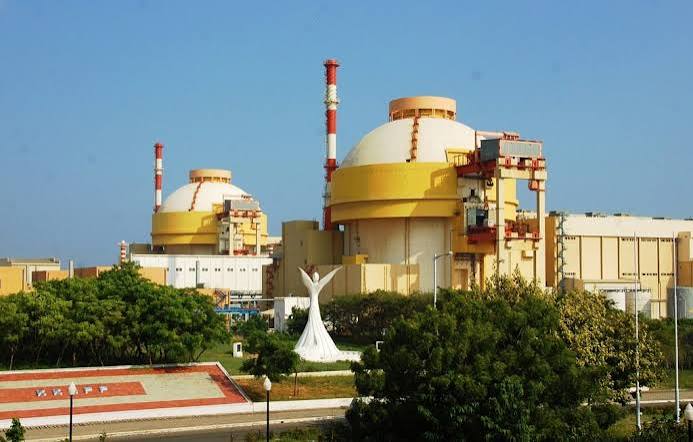
    By Sharjeel Zafar “Nuclear security is first and foremost a national responsibility.” This principle is not merely a diplomatic commitment – it is the minimum requirement for any state operating nuclear facilities. Against this fundamental principle, the reported data breach involving India’s largest nuclear power station, the Kudankulam Nuclear Power Project (KKNPP), which came to public attention on 15 July 2026, represents a serious setback to confidence in India’s nuclear security architecture and highlights vulnerabilities within one of its most critical strategic facilities. The exposure of sensitive engineering documents from one of India’s flagship nuclear facilities is not just a cybersecurity failure; it is a warning sign of deeper vulnerabilities within a nuclear establishment that seeks to expand rapidly while struggling to secure the infrastructure it already operates. According to cybersecurity researchers, thousands of engineering files related to Kudankulam Units 3 and 4 were reportedly exposed following a ransomware attack on Reliance Infrastructure, a contractor associated with the project. The leaked material allegedly included drawings of ventilation and cooling systems, layouts of auxiliary control rooms, inspection records with site photographs, supplier information, and insurance documentation. Indian authorities have maintained that no reactor-core designs or operational control systems were compromised. Yet modern cyber operations seldom begin by targeting the most protected assets. Instead, adversaries assemble seemingly routine engineering documents, contractor records, and infrastructure layouts to build an intelligence picture that can support future cyber intrusions, supply-chain compromises, or physical sabotage. In this context, the significance of the breach lies not merely in what was leaked, but in what such information can enable. The incident is particularly concerning because it follows an earlier cybersecurity breach at the same facility. In 2019, malware attributed by cybersecurity researchers to the Lazarus Group infiltrated an administrative network associated with Kudankulam. Although the Nuclear Power Corporation of India Limited (NPCIL) maintained that operational systems remained isolated, the episode demonstrated that India’s nuclear infrastructure had already become a target for sophisticated cyber actors. The recurrence of security incidents involving the same strategic installation suggests that vulnerabilities within India’s broader nuclear ecosystem, including contractors, suppliers, and administrative networks, remain insufficiently addressed. Such repeated breaches raise questions about the effectiveness of existing cybersecurity protocols and the resilience of critical nuclear infrastructure against evolving cyber threats. More troubling, however, is that Kudankulam represents only one aspect of a much larger problem. Over the past four decades, India has witnessed repeated incidents involving the theft, illegal possession, and trafficking of radioactive materials. Police have intercepted attempts to sell uranium and other radioactive substances in Maharashtra, West Bengal, Bihar, Jharkhand, Uttarakhand, and Dehradun involving stolen radioactive material. These repeated incidents raise serious questions about the effectiveness of India’s nuclear security mechanisms and its ability to maintain strict control over hazardous materials. These incidents expose a dangerous gap between India’s claims of maintaining a robust nuclear security architecture and the reality demonstrated by repeated security breaches. The timing of these concerns is particularly alarming. India is simultaneously seeking to dramatically expand its nuclear energy sector and introduce greater private-sector participation. Expansion without institutional strengthening creates a dangerous contradiction: the country is increasing the size and complexity of its nuclear ecosystem before fully resolving vulnerabilities already visible within the existing system. Private participation may bring investment, technological expertise, and efficiency, but it also introduces additional layers of complexity into nuclear security governance. Unlike a purely state-controlled system, a larger private-sector ecosystem involves multiple contractors, subcontractors, software providers, equipment suppliers, and service companies that may require access to sensitive information, digital networks, or operational support functions. Each additional entity connected to nuclear infrastructure expands the potential attack surface and creates new points at which cybersecurity failures, insider threats, inadequate security practices, or supply-chain compromises can occur. Differences in security standards, compliance capabilities, and oversight mechanisms among private entities may further complicate efforts to maintain uniform protection across the nuclear sector. Without strict regulatory control, mandatory cybersecurity standards, and continuous monitoring of third-party participants, privatization could unintentionally widen the pathways through which hostile actors attempt to access sensitive nuclear information or critical infrastructure. The implications extend far beyond India’s domestic energy programme. India’s expanding nuclear industry increasingly relies on international technology, foreign vendors, global supply chains, and cross-border investment. Consequently, vulnerabilities within one national nuclear programme can have wider strategic repercussions. A successful cyber operation or compromise of sensitive engineering information could undermine confidence in India’s nuclear security practices, raise concerns among international partners, and expose weaknesses in critical infrastructure protection within an increasingly interconnected nuclear industry. As civilian nuclear programmes worldwide become more digital and commercially integrated, cybersecurity failures in one country inevitably become matters of broader international concern. The Kudankulam breach should therefore serve as a strategic wake-up call, not another incident to be contained through official statements. A nuclear power’s credibility is not determined by the number of reactors it operates or the ambitions it announces, it is determined by its ability to prevent unauthorized access, protect sensitive information, secure radioactive materials, and maintain public confidence in its institutions. The question is whether the international community would still stay silent over a State’s perpetual weak demonstrated performance in nuclear security and remain vulnerable to risk of nuclear terrorism, cyber terrorism, illicit proliferation, and black market or transnational ecological disorder? India’s nuclear programme stands at a critical crossroads. Rapid expansion combined with unresolved security weaknesses creates a dangerous environment where a single successful cyber operation, insider compromise, or supply-chain failure could produce consequences far beyond financial losses or reputational damage. In the nuclear domain, prevention is not optional, and security lapses cannot be treated as routine administrative failures. The most serious threat facing India’s nuclear ambitions may not come from external adversaries seeking to undermine its programme, it may come from vulnerabilities that remain unaddressed within the programme itself. A nation aspiring to become a major nuclear power cannot afford a security culture built around reassurance after failure. It must build one based on prevention before disaster. The Kudankulam leak is not merely

  • Gulf in the Crossfire

    There is a particular kind of exhaustion that sets in when a war refuses to end on schedule. Five months into the conflict between the United States and Iran, we are living through it. Ceasefires are announced and collapse within weeks. Strikes are billed as decisive and are followed, days later, by more strikes. Each side insists the other will soon come to its senses, and each side is wrong. What we are watching is not a war moving toward resolution. It is a war that has become self-sustaining, and the longer it runs, the more countries get pulled into its logic whether they wanted a role in it or not. Saudi Arabia is the clearest example. For nearly four years, Riyadh had quietly extracted itself from the Yemen war, treating the 2022 ceasefire with the Houthis as one of the few unambiguous foreign policy wins of Crown Prince Mohammed bin Salman’s tenure. That restraint is now gone. When the Houthis resumed missile fire at Israel in solidarity with Tehran, and then began striking Saudi oil infrastructure directly, Riyadh had no real choice but to respond. It bombed Hodeidah. The Houthis retaliated against Aramco facilities in Yanbu and Jizan. A conflict Saudi Arabia spent years trying to bury is now, again, live on its border, not because Riyadh chose it but because a war between Washington and Tehran left no room for neutrality. This is the pattern worth naming plainly: nobody in this conflict is fighting the war they intended to fight. Washington launched its campaign framed around Iran’s nuclear program, wagering that decisive strikes would force capitulation or collapse. Instead it has strikes running past the two-week mark with no clear terminus, American service members killed in Jordan and Iraq, and a president publicly conceding that the exit could be “diplomatic or military” — which is another way of saying nobody currently knows how this ends. Iran, for its part, has responded to devastating strikes on its cities not with capitulation but with exactly the kind of asymmetric, proxy-driven defiance its doctrine was built for, activating fronts in Iraq, the Gulf, and now Yemen that cost it little and cost everyone else a great deal. The Strait of Hormuz tells the same story in economic terms. Daily vessel traffic through one of the world’s most important oil chokepoints has fallen to a small fraction of its prewar level. That is not an abstraction. It shows up in tanker insurance premiums in Piraeus and London, in fuel costs in Mumbai and Rotterdam, in the balance sheets of countries that have precisely nothing to do with this fight. War aims that once seemed narrowly bilateral — Washington versus Tehran, over centrifuges and missile stockpiles — have metastasized into a tax on global trade that nobody voted for and nobody can opt out of. It is tempting, watching this unfold, to look for a single culprit. Commentators sympathetic to Washington will point to Iran’s decades of proxy warfare, its nuclear ambiguity, its crackdown on its own protesters, and argue the current campaign is simply overdue accountability. Commentators sympathetic to Tehran will point to a US-Israeli strike that killed Iran’s Supreme Leader and ask what state, faced with the assassination of its head of state, would not treat that as an act of war demanding a response. Both arguments contain real grievances. Neither survives contact with what has actually happened since: a conflict that both sides insist is about narrow, defensible aims but that neither side has been able to keep narrow. Wars rarely stay the size their architects intend. What should worry observers most is not any single strike or retaliation but the absence of an exit ramp anyone believes in. Ceasefires here have not functioned as steps toward peace; they have functioned as pauses for rearmament, evidenced by how quickly each one has collapsed back into nightly bombing. That is the signature of a conflict without a theory of victory — one where both governments can inflict real pain on the other indefinitely, but where neither can convert that pain into a settlement it can sell to its own public. In that kind of war, the fighting does not stop because someone wins. It stops, if it stops, because the costs finally exceed what either government’s domestic politics can absorb — and on the evidence of the past five months, that threshold keeps receding rather than approaching. Saudi Arabia’s reluctant return to the Yemen battlefield should be read as an early warning rather than a footnote. It shows how a conflict that both Washington and Tehran describe as fundamentally about themselves keeps finding new participants who never agreed to join. If this war continues on its current trajectory, the question worth asking is not which superpower prevails, but how many other countries, currencies, and shipping lanes get quietly conscripted before it does.

  • Who Owns Your Digital Self? The Emerging Market fo…

    For years, people uploaded photographs, videos and voice recordings believing they were sharing moments or building audiences. What many did not realise was that public material could become training data for artificial intelligence. Large AI systems may be developed using datasets containing personal information collected from websites and platforms. European regulators acknowledge that AI models can be trained on personal data, while the UK Information Commissioner says developers still need a lawful basis even when information comes from the open web. Training a general model and cloning a person are not identical. The first learns patterns across datasets; the second uses targeted samples to reproduce an identifiable voice or appearance. Yet both raise the same question: who authorised the use? A new proposition is emerging: instead of companies quietly collecting human material, people may knowingly license their faces, voices and movements for AI development or commercial digital replicas. In return, they could receive a one-time payment, royalties or a fee whenever their synthetic identity is used. This is beginning. Shutterstock operates a contributor fund that compensates contributors when material from its library is licensed for AI model development. SAG-AFTRA has negotiated protections for digital replicas. The voice platform Narrativ allows performers to set prices and advertising preferences for AI-generated versions of their voices, with payment for approved uses. At first glance, this is progress. People’s data has already been feeding digital systems, often without their knowledge, meaningful choice or financial benefit. A transparent marketplace could be fairer. At least individuals would know that a voice sample or facial scan was being collected. There would be a contract, and some value created from human identity could return to the human being. It could also create work. A person might license a recorded voice for educational narration in several languages. A model could approve a digital replica for advertisements without attending repeated shoots. People far from production centres might gain opportunities previously unavailable to them. But payment is not the same as protection. A person offered a modest amount may sign away far more than they understand. A broadly written agreement could allow a company to reproduce a face or voice for years, transfer it to other businesses, train additional models and place the replica in contexts the person would never endorse. The human receives one payment; the synthetic version may generate revenue indefinitely. Faces and voices are not ordinary digital products. A password can be changed after a breach. A face cannot. A cloned voice can imitate a family member, support a fraudulent request or manufacture a statement that was never made. The US Federal Trade Commission has warned that scammers can create convincing voice clones from short audio clips found online. The answer is not to ban every voluntary AI licence. It is to establish non-negotiable human protections. Consent must be specific, informed and renewable. Companies should state whether material will be used for training, identity replication or both. Agreements must define the product, audience, country, platform and time period. Permission for an educational video must not silently become permission for political advertising, gambling, medical claims, intimate material or religious messaging. Compensation should continue when the replica continues earning. Where a digital identity is repeatedly used, the person should receive royalties or per-use payments, not merely a small initial fee. Individuals should be able to set minimum prices, reject industries and see where their replica appeared. There must also be a genuine right to stop future use. Companies should delete source files, block new generations and notify third parties when a licence ends. Independent audits should test compliance. Strong security and penalties for leaks are essential because biometric material cannot simply be replaced. Every synthetic performance should carry visible disclosure and a machine-readable marker. The European Union’s transparency rules, applicable from 2 August 2026, require certain AI-generated or manipulated material to be identifiable and deepfakes to be disclosed. Labels will not prevent every abuse, but they help preserve the distinction between human action and machine-generated imitation. Children need stronger protection. Parents should not be able to permanently commercialise a child’s future identity. Any limited agreement should expire and require the individual’s fresh consent upon adulthood. Pakistan should treat this as urgent. As of 2026, the country still lacks a comprehensive enacted personal data protection law. This creates vulnerability just as international companies may seek diverse and comparatively inexpensive populations for AI training.  The greatest risk is not that humans will earn from AI. Fairly sharing value could correct years of silent extraction. The danger is that people will exchange permanent control for temporary payment. As AI advances, societies must recognise the face, voice and digital personality as extensions of the human person, not raw material waiting to be harvested. Without consent, continuing compensation, traceability and the power to say no, we may lose more than jobs or privacy. We may lose the trust that allows us to believe what we see, hear and recognise. AI should expand human possibility, not gradually replace human ownership of the self.

  • Political Dynasties: A Silent Threat to Democratic…

    By Misbah Naz   Democracy derives its legitimacy from the principle that political power belongs to the people. Every citizen, regardless of family background, wealth, or social status, should have an equal opportunity to participate in governance and compete for public office. Yet, across many democracies, political power often remains concentrated within a handful of influential families. This phenomenon, commonly known as dynastic politics, raises an important question: can democracy truly flourish when leadership becomes a family inheritance? Political dynasties are not unique to one country or region. They exist in established and emerging democracies alike. From South Asia to North America, prominent political families have shaped electoral politics for decades. While family members have every democratic right to contest elections, democracy suffers when political succession depends more on lineage than merit. One of the greatest strengths of democracy is political equality. Elections are intended to provide a level playing field where ideas, competence, and public service determine electoral success. Dynastic politics undermines this principle by granting inherited political advantages. Established family names often enjoy greater access to party leadership, campaign financing, media exposure, and political networks than ordinary citizens. Consequently, capable individuals without influential backgrounds frequently struggle to enter mainstream politics. Dynastic politics also weakens internal democracy within political parties. Instead of selecting candidates through transparent and competitive processes, leadership positions may be concentrated within a single family or close associates. This discourages talented young leaders, limits political innovation, and reduces accountability. Political parties become personality-driven rather than institution-driven, making leadership transitions more dependent on family succession than democratic competition. Another concern is the weakening of public trust. Citizens expect elected representatives to prioritize national interests over personal or family influence. When political office appears to be inherited across generations, many voters begin to question whether democratic institutions genuinely offer equal opportunities. Declining trust in political institutions can reduce electoral participation, increase political polarization, and create public frustration with democratic governance. Political dynasties may also influence policymaking. Long-standing political families often develop extensive patronage networks that reward loyal supporters through appointments, contracts, or political favors. Such systems can encourage nepotism and undermine merit-based governance. Public institutions function most effectively when appointments are based on competence rather than political loyalty or family connections. Young people are particularly affected by dynastic politics. Across many developing democracies, youth constitute a significant proportion of the population, yet they remain underrepresented in political leadership. When political pathways are dominated by established families, emerging leaders with innovative ideas face structural barriers to participation. This disconnect between political leadership and demographic realities limits democratic renewal and policy innovation. However, it is equally important to avoid oversimplification. Belonging to a political family does not automatically make an individual an ineffective leader. Democratic principles do not prohibit relatives of politicians from contesting elections. The fundamental issue is whether they compete under fair conditions and remain accountable to voters. If political success is achieved through transparent elections, strong institutions, and genuine public support, democratic legitimacy remains intact. Problems arise when inherited influence consistently outweighs merit and competition. Strengthening democracy therefore requires institutional reforms rather than targeting individuals. Political parties should adopt transparent candidate selection procedures, encourage internal elections, and provide opportunities for grassroots leadership. Independent election commissions, campaign finance regulations, and stronger parliamentary oversight can further reduce undue political concentration. Equally important is an informed electorate that evaluates candidates on integrity, competence, policy vision, and public service instead of family legacy alone. Democracy is sustained not merely by regular elections but by equal political opportunity. Societies flourish when leadership emerges through merit, accountability, and public confidence rather than inheritance. Political dynasties may continue to exist in democratic systems, but they should never become substitutes for democratic competition. Ultimately, the health of any democracy depends on whether every citizen—not just those born into influential families—has a genuine chance to lead.

  • Shehbaz, Asim change regional calculus

    I will tell you exactly how it felt for Pakistanis all over the world the day the Makkah Defence Pact was signed. I am in London, and I can tell you that, for British Pakistanis, it felt like a wedding. I went to a café in central London and found a sort of celebration among Pakistanis. Phones were buzzing, television anchors were beaming, and for one evening, it seemed like every household in Lahore, Islamabad and Karachi was talking about the same thing: Pakistan, Saudi Arabia and Turkiye standing together, promising to defend one another. In Riyadh and Ankara, the mood was no different. Flags, statements, warm handshakes. A celebration, plain and simple. I miss Pakistan right now. Right now, Pakistan is illuminated. It is a sort of festivity. Celebration is in the air. Prime Minister Shehbaz Sharif and Field Marshal Asim Munir have made it possible to put Muslim countries on a single platform. But I am a curious man by nature, and celebrations make me curious in a particular way. When everyone in the room is smiling, I always want to know who is standing outside, looking in through the window. So I went looking. I wanted to know what India was saying, what Iran was saying, and what the UAE was saying. And what I found was a much more complicated story than the one being told at the wedding. Let me start with India, because that is where the unease runs deepest. Turkish journalist Aslı Aydıntaşbaş, who studies the region closely, said it would be too early to call this a “Muslim NATO” or “Sunni NATO.” But she also said something important: this pact shows a real desire among regional countries to build their own security system, owned by themselves. Strategic affairs expert Brahma Chellaney went further. He warned that this agreement could make it much harder to control tensions if India and Pakistan ever clash again. He pointed out that during Operation Sindoor, Pakistan received far more military help from China than from Turkiye, but Turkiye’s direct support made one thing clear: if a conflict with India happens, Turkiye is ready to stand by Pakistan. Former Indian ambassador to the UN, T S Tirumurti, was even more direct. He said the pact uses language similar to NATO’s Article 5, and that its effects will not stay confined to the Middle East. Given the long, tense history between Pakistan and India, he said, this has to be read with that relationship in mind. So, my friends in India must learn one thing: their government should think 10 times, or even more, before going into a military confrontation with Pakistan. Then there is Iran, and here the tone was different again. Ali Akbar Velayati, adviser to Iran’s Supreme Leader Ayatollah Ali Khamenei, did not criticise the new pact. Instead, in posts written in Persian, Arabic, English and Turkish, he spoke of the resilience of Iran’s armed forces and what he called the defeat of the United States and Israel. He said this defeat proved that foreign forces, which he called the main cause of insecurity, must leave the region. And in the same breath, he said that growing cooperation among regional states can secure the region’s own security. In other words, Iran is not against regional countries banding together. It simply wants outside powers to step back. The UAE, as I have written before, took the most careful line of all. No rejection, no celebration, just pointed questions about who exactly this alliance is meant to deter. For his part, Turkish President Erdoğan tried to calm every nerve in the room. He wrote that the pact follows Article 51 of the UN Charter, the right to self-defence, and is not directed against any country. It is open, he said, to any friendly nation that wants peace and stability in the region. So here is what I take from all this, writing as a Pakistani watching his own country’s celebration from the inside. Pride is natural, and this pact matters. But a wedding always looks different from outside the window. India sees risk. Iran sees an opening to push out foreign powers. The UAE sees questions still unanswered. As Pakistanis, we should enjoy this moment, but we should also read the room beyond our own hall.

Leave a Reply

Your email address will not be published. Required fields are marked *