king harald norways
| | |

King Harald V, Norway’s reform-minded head of state, dies at 89

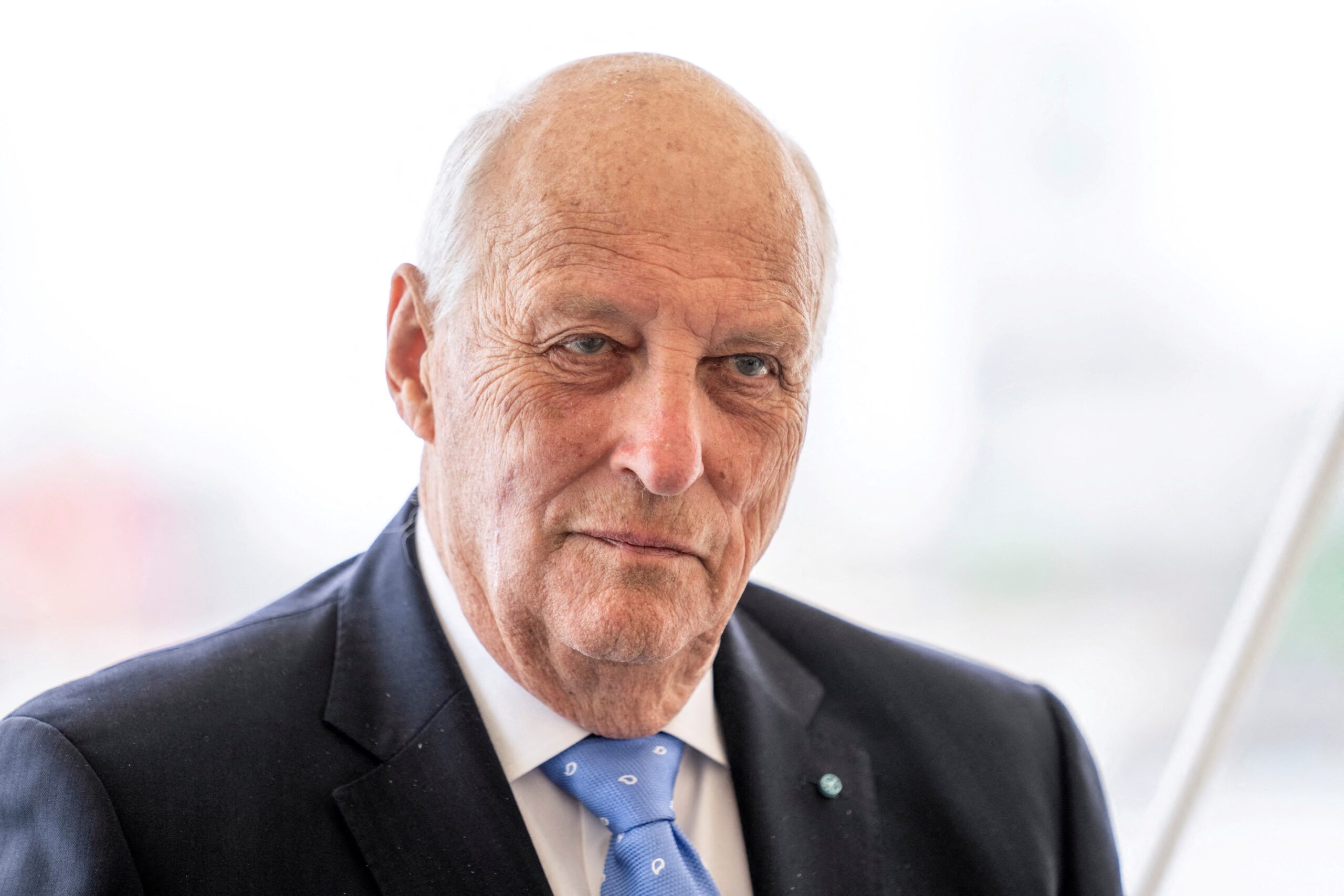
OSLO, Norway – Norway‘s King Harald, a reformer who emerged from the shadow of his well-loved, extrovert father over more than three decades on the throne, died on Friday, August 28, at the age of 89, the royal palace said, at a time of multiple crises for the Norwegian royal family.

“King Harald passed away peacefully at Oslo University Hospital on Friday 28 August, 0635 (local time, 0435 GMT),” the royal palace said on its website.

Harald, who was Europe’s oldest living monarch, was taken to hospital on August 17. The palace said he was being treated for a bacterial infection in his blood.

In 2024, he had been hospitalized for an infection while on holiday in Malaysia and received a temporary pacemaker at a hospital there. He was flown back home by the Norwegian armed forces and later fitted with a permanent device.

That same year, Harald, Norway’s ceremonial head of state since 1991, said he would reduce the number of official engagements in which he took part but ruled out abdication, insisting that his oath as king was for life.

Multiple challenges

Harald’s death comes at a tumultuous time for the royal family.

Crown Princess Mette-Marit, married to Harald’s son Crown Prince Haakon, is facing intense scrutiny for her friendship with the late sex offender Jeffrey Epstein, a relationship for which she has apologized.

Her son Marius Hoiby, born from a relationship predating her marriage to Haakon, was found guilty in June of ​two out of four counts of rape and one count of domestic violence and sentenced to four years in prison after a seven-week trial. Both he and the prosecution have appealed the sentence.

Two days after Marius was convicted, the palace said Mette-Marit had undergone a successful lung transplant, without specifying when the procedure took place.

After several weeks of recovery in hospital, she returned home and celebrated her silver wedding anniversary with Haakon in August.

Support for the monarchy dropped to 60% in February 2026, from 70% the previous month, according to a Norstat poll published by public broadcaster NRK, rising slightly to 64% in May.

Harald had constantly remained popular with Norwegians. According to the February poll, he was the royal who best represented the Norwegian royal family, with a note of 9.2, on a scale of 1 to 10.

A descendant of Queen Victoria

A great-great-grandchild of Britain’s Queen Victoria, Harald acceded to the throne in 1991 and slowly introduced modern touches that brought a ceremonial post seen mainly as a symbol of national independence into the 21st century.

The popular king played a crucial role comforting the nation in times of mourning.

When far-right, anti-Islam fanatic Anders Behring Breivik killed 77 people in 2011 in Oslo and on Utoeya island, the king consoled the nation with a powerful televised speech. His voice trembling with emotion, he said that “freedom is stronger than fear.”

After floods, storms and other disasters, he would travel to the scene wearing rubber boots and a well-worn jacket to meet those who had lost homes or loved ones.

Late in life he spoke up for tolerance, declaring in a 2016 speech that Norwegians could have many backgrounds, beliefs and sexual orientations.

In November 2005, Harald and his wife, Sonja Haraldsen, invited 550 Norwegians to a ball to celebrate the centenary of the country’s independence from Sweden.

Harald said in an interview at the time that Europe’s royal families should not be tempted to reverse moves towards openness and retreat to their palace towers.

“If you’ve opened the gate it’s very difficult to close it again,” he told Reuters. “I’m not sure I’d want to close it. So far so good, as far as I’m concerned.”

Like his father Olav, Harald was a sports and automotive enthusiast and often drove his own car, particularly to informal events.

A sailor, he captained his boat to win a world championship title and competed in several Olympics, but failed to repeat his father’s feat of winning Olympic gold.

Harald also took a great interest in the preservation of nature. He realised a lifelong dream when, aged 76, he spent four days deep in the Amazon jungle of Brazil, living with the Yanomami people and sleeping in a hammock.

Birth and reign

Harald’s birth on February 21, 1937, was cause for national celebration — he was the first royal heir to be born in Norway in almost 570 years. Danish and Swedish monarchs had ruled over the Scandinavian nation for centuries, until 1905.

Just three years after Harald was born, Nazi Germany invaded the country. King Haakon and then-Crown Prince Olav fled to Britain, where they led Norway’s government-in-exile, while the 3-year-old Harald went with his mother, Crown Princess Märtha, to neutral Sweden, then to the United States.

After living briefly at the White House, and then for five years in Bethesda, Maryland, Harald, his older sisters Ragnhild and Astrid and their mother met frequently with US President Franklin D. Roosevelt, whom Harald years later described as like a grandfather.

When he returned to Norway after the war ended in 1945, Harald attended state schools rather than the private lessons his father had received.

His marriage in 1968 to a commoner broke with tradition and followed a nine-year stand-off with his father that ended only after Harald threatened never to marry rather than give up Sonja.

Later years

In 1998, the king faced an unprecedented wave of public criticism over press reports that he had accepted a 4-million-crown ($400,000) yacht from a group of industrialists as a birthday present, and that palace repairs had cost the government 500 million crowns.

Around the same time, his former deputy private secretary suggested that Harald should abdicate at the egalitarian country’s normal retirement age of 67.

Opinion polls gave the king firm backing to stay on for life, however, and the criticism subsided. A year later, in another Reuters interview, Harald joked that he would remain on the throne for life unless he went mad.

“There is no tradition in Norway for that (abdication). But you never know. If you go completely bonkers,” he said. Queen Sonja laughed and said: “But who will ever tell you that?”

Harald’s son Haakon, 53, will be Norway’s fourth king since the country gained independence from Sweden in 1905, with Mette-Marit, also aged 53, as his queen. – Rappler.com
Similar Posts

  • |

    India warns border tensions could affect ties with China

      India has stressed that maintaining peace along its disputed border with China is essential for improving relations between the two Asian powers. The statement comes amid reports of renewed encounters between Indian and Chinese troops in a remote part of the Himalayas. India’s latest remarks mark the second time in less than a week that New Delhi has addressed concerns over the border. The two countries have been attempting to rebuild relations after deadly clashes in 2020 severely damaged diplomatic ties. The issue is particularly significant ahead of the BRICS summit, scheduled to take place in New Delhi from September 12 to 13, where Chinese President Xi Jinping is expected to participate. Speaking at a regular media briefing on Tuesday, Indian Foreign Ministry spokesperson Randhir Jaiswal said New Delhi considers border matters with China extremely serious. He stressed that the situation along the disputed frontier would have a direct impact on the broader relationship between the two countries. Jaiswal said India had consistently communicated to Beijing that the condition of the border was closely connected to the overall state of bilateral relations. His comments came in response to questions about reports of a recent military encounter between troops from both countries. China’s Foreign Ministry and Defence Ministry did not immediately respond to requests for comment regarding the reported developments. According to news , Indian and Chinese military patrols reportedly came into contact in late July near Taksing, a remote village in Arunachal Pradesh’s Upper Subansiri district. The area lies along the border with Tibet and is located in the eastern Himalayas. China claims Arunachal Pradesh as part of what it describes as southern Tibet, referring to the region as Zangnan. India strongly rejects Beijing’s claim and maintains that Arunachal Pradesh is an integral part of Indian territory. The reported encounter allegedly occurred around 2.5 kilometres inside territory controlled by India. Chinese personnel reportedly withdrew from the area initially but returned in early August and set up two tents. However, Indian defence officials have rejected reports suggesting that the developments represent a significant increase in military tensions. The defence spokesperson responsible for Arunachal Pradesh described the reports as unverified and lacking sufficient evidence. A residents’ welfare organisation in the region had earlier raised concerns in a July 26 letter sent to local authorities. The group claimed that Chinese personnel were increasing their presence and moving into strategically important areas near the border. Reuters reviewed the letter. Military patrols from India and China occasionally encounter one another along their disputed 3,488-kilometre frontier. Such confrontations are not unprecedented, although they do not happen regularly. Relations between the two countries deteriorated sharply after a deadly confrontation in the western Himalayas in 2020. Twenty Indian soldiers and four Chinese troops were killed during the clashes, leading both sides to deploy tens of thousands of troops and large quantities of military equipment along the frontier. Tensions gradually began to ease after Indian Prime Minister Narendra Modi and Chinese President Xi Jinping held talks in 2024. The two leaders agreed to take steps to end the prolonged military standoff and work toward reducing tensions. Despite those efforts, the latest reports highlight the continuing sensitivity of the border dispute and the importance of maintaining stability as India and China attempt to restore their broader relationship.

  • | | | | |

    Protest erupts in Washington over Netanyahu visit

    WASHINGTON: Israeli Prime Minister Benjamin Netanyahu’s visit to Washington has sparked a fresh wave of protests, with demonstrators taking to the streets to oppose U.S. support for Israel and demand that the Israeli leader be arrested. Pro-Palestinian protesters gathered in the U.S. capital carrying Palestinian flags and banners criticising Washington’s backing of Israel. The demonstrations came as Netanyahu arrived in the United States for a scheduled meeting with President Donald Trump. At the heart of the protest was a demand that U.S. authorities enforce the International Criminal Court’s arrest warrant against Netanyahu. Demonstrators argued that the United States should not provide protection to an Israeli leader facing allegations before the international court. The protest reflects the wider political and public debate in the United States over Washington’s relationship with Israel and its approach to the conflict in Gaza. Trump rules out Netanyahu arrest The demonstrations gained additional attention because Trump has already made his position clear. The U.S. president has said Netanyahu will not be arrested while he is in the United States, directly rejecting calls for his detention. Trump has also strongly defended Israel and Netanyahu in connection with the ongoing regional conflict. Netanyahu’s visit comes at a particularly sensitive moment. His meeting with Trump on Tuesday is the first between the two leaders since their joint war against Iran, with tensions reportedly emerging over how the conflict should be handled. Protest adds pressure ahead of Trump meeting The Washington demonstration adds another layer of political pressure surrounding Netanyahu’s visit. Protesters say U.S. support for Israel should be reconsidered and that international legal proceedings should not be ignored. The issue of Netanyahu’s potential arrest has also become prominent in U.S. politics. New York Mayor Zohran Mamdani has said his administration is examining whether the city could enforce the ICC warrant if Netanyahu visits New York for the United Nations General Assembly in September. For now, however, Trump’s administration has made clear that Netanyahu will not face arrest during his stay in the United States. With protests continuing and the Trump-Netanyahu meeting attracting international attention, the visit is likely to keep the debate over Gaza, U.S.-Israel relations and international accountability firmly in the spotlight.

  • |

    Nepal flood disaster deepens as new threat emerges

    KATHMANDU: Rescue teams in Nepal are digging through thick layers of mud and debris in search of survivors two days after a devastating flash flood swept through Himalayan communities, killing at least 469 people and leaving nearly 1,000 others missing in Nepal and neighbouring Tibet. The scale of the destruction has left entire villages cut off, roads and bridges destroyed and families desperately waiting for news of loved ones. With the possibility of another major flood looming, authorities are also racing to prevent a second disaster. The catastrophe began on Wednesday morning after a glacier collapse sent a massive torrent of water, rocks, ice and mud rushing through mountain river systems. The sudden surge tore through settlements along a major route connecting Nepal’s capital Kathmandu with Lhasa in Tibet. The affected region is also popular with trekkers and pilgrims, adding to concerns over the fate of foreign nationals caught in the disaster. Authorities said almost 1,000 people remained missing on both sides of the border. At least 540 of those reported missing are foreigners, according to officials. Rescue teams battle destroyed roads Nepalese rescue workers have been using heavy machinery, helicopters and sniffer dogs to search damaged areas. Helicopters have also been delivering emergency supplies to people stranded in remote towns and valleys where roads have disappeared beneath mud and debris. Rescue operations have been particularly difficult in the mountainous terrain, where landslides and damaged infrastructure have restricted access. In one of the most heartbreaking accounts from the disaster, Dibga Tamang was among the final people rescued from the badly affected town of Rasuwa on Thursday. He was airlifted with three others to an army camp in Nuwakot. Tamang described the devastation in deeply personal terms, saying that his community had been destroyed and that he had lost everyone who mattered to him. His account reflected the grief of hundreds of families still waiting for information about relatives who disappeared when the floodwaters swept through their communities. New flood threat raises alarm Even as rescuers continue searching for survivors, authorities are facing a dangerous new threat. Nepal’s disaster management authorities warned that a debris blockage had created a lake on the Bhotekoshi River. The water level is continuing to rise, raising fears that the natural barrier could collapse and unleash another destructive flood downstream. Across the border, Chinese authorities are also monitoring a rapidly filling barrier lake in Tibet. Chinese officials said around three million cubic metres of water could flow into the already dammed lake over the next three days. That volume is roughly equivalent to 1,200 Olympic-sized swimming pools. The situation could become particularly dangerous around September 1, when officials expect the water flow to reach its peak. Chinese state media reported that authorities had deployed an eight-member engineering team to carry out aerial surveys and three-dimensional modelling of the barrier lake. Engineers are studying whether a drainage channel can be constructed through the natural dam to lower the lake’s water level. However, the operation is complicated by steep cliffs and unstable terrain created by the glacier collapse. Engineer Chen Hanxiao told Chinese state broadcaster CCTV that experts needed precise calculations of the lake’s filling rate and the speed at which water could pass through a proposed drainage channel. Teams are also expected to monitor the lake floor, collect additional data and keep a close watch on weather conditions in the coming days. Gyirong border crossing badly damaged On the Chinese side, the Gyirong border crossing has emerged as one of the worst-hit locations. Chinese rescue teams had yet to reach the most severely affected area by Thursday evening, with crews concentrating on clearing debris from the road leading to Gyirong Port. Dramatic footage from the disaster showed huge torrents of muddy water and debris racing through the border crossing within seconds. Structures were engulfed while people scrambled to escape. Authorities said 558 people were missing in Gyirong County, including 260 foreign nationals. Three deaths had been confirmed on the Chinese side at the time of the report. The seriousness of the disaster was underscored by the visit of Chinese Premier Li Qiang to Gyirong on Thursday. His presence signalled the high priority Beijing has placed on the rescue and relief operation. Families wait desperately for news Far from the disaster zone, relatives of missing people have been searching for answers. Sneha Sudhir, from Chantilly, Virginia, is among those desperately waiting for news. Her husband was part of a group of 10 men from northern Virginia who travelled from Nepal towards Tibet’s Mount Kailash when the disaster struck. Several Americans are believed to be among those still missing. Sudhir said families were supporting one another while contacting officials, politicians, friends and relatives in the United States and India in an effort to locate their loved ones. Her account captured the painful uncertainty facing families who do not know whether their relatives survived. US President Donald Trump said the United States had offered assistance to Nepal following the disaster. “Nobody’s ever seen anything quite like that,” Trump said, describing the destruction and promising American support. Bodies recovered hundreds of kilometres away The force of the flood was so immense that bodies were carried far from the areas initially hit by the torrent. Ganesh Aryal, administrator of Nepal’s Chitwan district, said authorities had recovered 103 bodies from the river system in his district. Chitwan lies around 100 kilometres from the worst-hit areas around Trishuli, highlighting the extraordinary reach of the floodwaters. Local hospitals have struggled to accommodate the large number of bodies recovered. Authorities have therefore been preparing tents and other facilities where families can identify and claim the remains of their relatives. Government faces major test Nepal’s Prime Minister Balendra Shah visited flood-hit Nuwakot on Thursday and acknowledged the severity of the situation. He said government agencies were operating at full capacity, with the immediate priorities being the rescue of missing people, treatment of the injured and delivery of emergency assistance to affected families. The disaster presents a

  • |

    US Immigration and Customs Enforcement (ICE) to complete nationwide body-camera rollout by late August

    US Immigration and Customs Enforcement (ICE) has confirmed that its nationwide distribution of body-worn cameras to all field officers and agents is moving ahead of schedule, with deployment set to wrap up by the end of August. Acting Director David Venturella announced the accelerated timetable amidst intense public and congressional scrutiny following recent fatal enforcement encounters. Public outrage mounted after lethal shootings during traffic stops in Maine and Texas, as well as the fatal shooting of two US citizens during an immigration crackdown in Minnesota. In response to the incidents, Department of Homeland Security Secretary Kristi Noem previously stated that the camera programme would expand nationwide as funding allowed, while border czar Tom Homan directed that officers record vehicle stops using at least one body camera. Under current internal policies, ICE permits expedited footage releases following incidents involving severe injury or death in custody. However, the agency retains broad authority to withhold recordings to safeguard active investigations or personal privacy. Transparency advocates and legal scholars have criticised the framework, arguing that granting agency leadership discretionary power to block or delay footage releases risks shielding federal operations from meaningful public oversight.

  • |

    NYC homeowners sue Mamdani over new pied-à-terre tax rollout

    A group of New York City homeowners has taken legal action against Mayor Zohran Mamdani and the city’s finance authorities over the rollout of a new pied-à-terre tax, arguing that the administration wrongly identified some primary residences as potential second homes. The lawsuit was filed on Friday by homeowners Simon Hedley, Rachel O’Brien and Carmine Morano. The plaintiffs are not challenging the legality of the tax itself. Instead, their case focuses on how city officials identified properties and made information about potentially affected homeowners publicly available. The dispute follows the publication of a city property tax roll containing the names and addresses of more than 900,000 property owners. Although most of those properties are not subject to the new surcharge, nearly 17,000 homeowners received notices warning that their properties could potentially fall under the tax. The homeowners allege that the city’s process has incorrectly flagged primary residences and unnecessarily exposed private information. O’Brien said her family’s permanent home was identified as a possible second residence despite records indicating that the property was their primary residence. She described the situation as unreasonable and questioned why homeowners were publicly listed when their properties might not ultimately be subject to the tax. The plaintiffs have asked the court to declare the notices and the publicly released property information unlawful. They are also seeking restrictions on public access to the list. In addition, the homeowners want the city to suspend response requirements and halt enforcement measures while the legal proceedings are underway. A spokesperson for Mayor Mamdani said the administration was committed to ensuring that the tax process remained clear and accessible. The spokesperson added that the city’s Law Department was prepared to defend the administration against the lawsuit. The pied-à-terre tax targets qualifying non-primary residences valued at more than $5 million, along with certain cooperative apartments valued at $1 million or above. The surcharge was included in Mamdani’s fiscal 2027 budget as part of efforts to address New York City’s budget shortfall. The rollout has triggered significant criticism from affected homeowners. In response, Mamdani extended the deadline for property owners to demonstrate that their homes are their primary residences by four weeks. The new deadline is now September 18, giving homeowners additional time to challenge their classification and provide documentation to city authorities.

  • |

    Trump appoints Will Scharf as new White House counsel

    US President Donald Trump has named Will Scharf as the incoming White House counsel and assistant to the president, succeeding David Warrington on September 1, 2026. Warrington, who previously served as general counsel for Trump’s campaign and managed initial administration legal affairs, will be departing for the private sector. Scharf currently serves as the White House staff secretary, a role where he manages the daily flow of papers and documents reaching the president’s desk. In addition to these duties, he chairs the National Capital Planning Commission, where he helped fast-track approvals for a controversial $400 million White House ballroom project. A former federal prosecutor and appellate law clerk, Scharf joined Trump’s personal legal team in 2023. He played a central role in defending Trump across several high-profile legal battles, including the federal election interference case and the landmark presidential immunity ruling before the US Supreme Court. In his new post, Scharf will lead the administration’s legal strategy. His responsibilities will include overseeing executive privilege, managing judicial nominations, liaising with the Department of Justice, and preparing for potential congressional inquiries ahead of the upcoming midterm elections.

Leave a Reply

Your email address will not be published. Required fields are marked *