hits canadian goods
|

US hits Canadian goods with 50% tariffs after trade talks fail

The US imposed 50% tariffs on some Canadian goods on Saturday, August 22, after the two longstanding allies failed to reach a trade deal, with each side accusing the other of derailing days of talks.

The tariffs that came into effect just after midnight (0400 GMT) on some $20 billion of Canadian goods – things like wooden ice hockey sticks that are rarely used anymore – are far from an economic game-changer for the largest US trading partner after Mexico. That represents just over 5% of Canada’s exports to the US.

But the new tariffs mark an increase in tensions between President Donald Trump and Prime Minister Mark Carney, and will likely make broader talks to renew the US-Mexico-Canada free trade agreement more difficult.

Carney said he had suspended trade negotiations and Canada would retaliate “dollar for dollar” on the new tariffs.

“I have decided to suspend trade negotiations with the US and have directed Canada’s negotiators to return to Ottawa,” Carney said in a statement.

“They (negotiators) have worked hard, in good faith, to defend the interests of Canadians throughout these negotiations up until the very last minute,” he said. “However, last-minute changes in the US proposed terms were unfair, uneconomic, and called into question the reliability of any deal.”

Carney, the only person to ever run the central banks of two major economies, was elected last year on promises to stand up to Trump, and remains broadly popular. Polls show most Canadians oppose making any concessions to Trump.

Hours earlier, the two sides had seemed close to an agreement that sources said would have lowered tariffs on steel, aluminum and autos and potentially brought American alcohol back to Canadian liquor stores.

“Tonight, Canada declined to finalize the trade deal under the terms agreed earlier this week,” US Trade Representative Jamieson Greer said during a White House briefing.

“This is a missed opportunity for Canada to partner with the United States, which is the fastest-growing economy in the G7,” Greer said.

A senior Trump administration official said the US offer would have put Canada in the best tariff position of any major exporter to the US, but that Canada had sought additional concessions, especially on steel, aluminum, autos and softwood lumber.

No additional talks are scheduled as the US implements the new duties, the official said.

Trump last month threatened to impose a raft of duties on a range of Canadian imports including wine, furniture, dairy products, cement, clothing, fishing rods, hockey equipment.

The tariffs, which do not qualify for preferential treatment under the US-Mexico-Canada free-trade agreement, open up some already vulnerable sectors to potential severe damage that could lead to job losses and business closures, trade experts have said.

The decision by the US administration followed three days of talks in Washington between Canada’s minister for trade with the US, Dominic LeBlanc, and Greer.

The new duties add to existing US tariffs on steel, lumber and autos which have taken major hit in the last 18 months, although the malaise has been largely contained within these sectors. – Rappler.com

Similar Posts

  • | | | |

    Iran rejects talks on ceasefire extension

    Pakistan is making diplomatic efforts to help extend the ceasefire between the United States and Iran, as the current truce is scheduled to expire on Sunday, August 16. Sources said Islamabad is trying to use the understanding reached under the Islamabad Memorandum of Understanding to encourage both sides to maintain the ceasefire and return to negotiations. According to the sources, mediators believe additional time is needed to bridge differences between Washington and Tehran. Diplomatic efforts are therefore continuing to prevent the situation from deteriorating after the current ceasefire period ends. However, an Iranian senior official gave a different assessment of the situation. The official said there have been no discussions between Iran and the United States regarding an extension of the ceasefire. Iran has maintained that Washington must return to the agreement and honour its previous commitments. Tehran has also demanded a clear and credible timeline for the implementation of those commitments before any further understanding can be reached. Meanwhile, US President Donald Trump has made strong statements about the strategic Strait of Hormuz. Trump claimed that the United States now has complete control over the vital waterway and said Iran has limited options to challenge the American naval blockade. The Strait of Hormuz remains a major international shipping route and plays a crucial role in global energy supplies. Any prolonged disruption in the waterway could have serious consequences for oil and gas markets and international trade. Iranian military officials have warned that a renewed US offensive could lead to a wider confrontation. An Iranian military spokesman said energy transmission networks, power plants and infrastructure connected to the global internet could become targets if American military action resumes. The warning has raised concerns that any collapse of the ceasefire could expand the conflict beyond conventional military targets and affect critical infrastructure. Meanwhile, Turkish President Recep Tayyip Erdogan has expressed hope that additional countries will join the Makkah Defence Agreement. He indicated that broader participation could strengthen regional security cooperation. In another development, US Central Command said a Panama-flagged cargo vessel attempting to breach the naval blockade was disabled after a US helicopter fired a missile at the ship. The incident has further highlighted the risks facing commercial shipping in the region amid continuing tensions between Washington and Tehran. Separately, Japanese Prime Minister Sanae Takaichi discussed the situation with Iranian President Masoud Pezeshkian in a telephone conversation. Takaichi called for the Strait of Hormuz to be reopened once negotiations between Iran and the United States reach a successful conclusion.

  • |

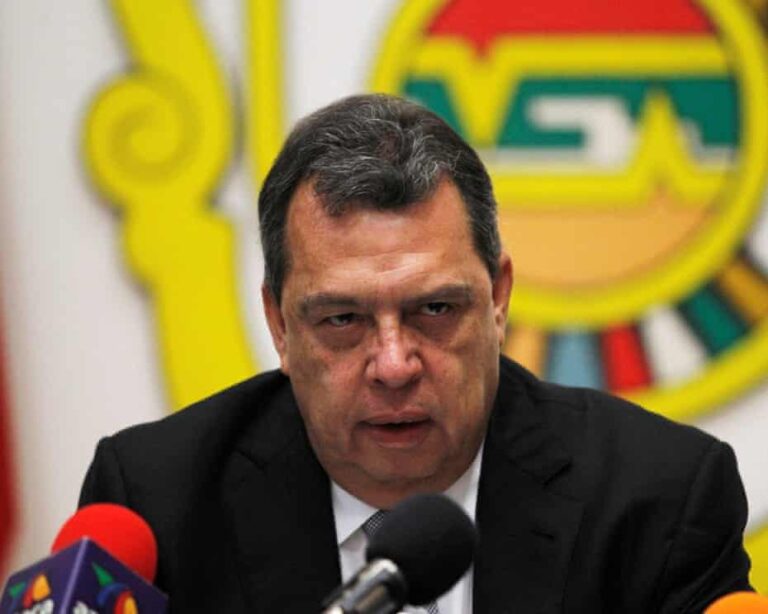
    Former Mexican governor formally charged over 2014 disappearance of 43 Ayotzinapa students

    A Mexican judge has ruled that prosecutors presented sufficient evidence to formally charge Ángel Aguirre, the former governor of Guerrero state, with forced disappearance and obstruction of justice in connection with the 2014 vanishing of 43 students. Aguirre, who was arrested following new testimony gathered by a federal investigative unit, is accused of ordering the destruction of surveillance camera recordings that could have clarified the events surrounding the abduction of students from the Raúl Isidro Burgos Rural Teachers’ College in Iguala. Defence counsel denied all allegations, asserting that Aguirre was attending a high-level meeting at the time the recordings were allegedly transferred to him. The judge ordered that Aguirre remain held in a maximum-security prison pending trial. The indictment represents one of the most prominent legal developments in the case since the 2022 arrest of former federal Attorney General Jesús Murillo Karam. Of the 43 trainees abducted on 26 September 2014 after commandeering buses for a protest, the remains of only three have been positively identified.

  • |

    South Korea beats NASA to first photos of SpaceX Moon crash

    A spent SpaceX rocket stage slammed into the Moon on August 5, travelling at roughly 8,700 kilometres per hour. South Korea’s Danuri orbiter was perfectly positioned to capture the moment. The Korea Aerospace Administration released the images on August 6, beating NASA’s own Lunar Reconnaissance Orbiter to the first confirmed photos of the impact site. KASA had adjusted Danuri’s orbital path specifically for this event. The manoeuvre let the probe fly around 340 to 350 kilometres above the impact zone near Einstein Crater, capturing images just before and after the collision. Using its high-resolution Lunar Terrain Imager, the satellite photographed the site at an estimated resolution of five metres per pixel. A separate instrument measured changes in surface reflectivity to help gauge how much debris the impact had thrown up. KASA compared the difficulty of the shot to photographing a car crash in Busan from an aircraft flying above Seoul. The comparison highlighted just how precise the timing and positioning needed to be. The rocket stage originally launched in January 2025, carrying Firefly Aerospace’s Blue Ghost lander and ispace’s RESILIENCE spacecraft toward the Moon. Both spacecraft were part of separate lunar missions at the time. Falcon 9 upper stages are typically destroyed by burning up in Earth’s atmosphere after their missions end. This particular stage, however, had used up nearly all its fuel reaching lunar orbit, leaving it drifting as space debris. Gravitational and solar forces eventually pulled the stage back down, resulting in the lunar impact. SpaceX confirmed it had coordinated with NASA on the disposal process for the spent stage. The company noted that controlled descents are not always possible for upper stages following this kind of trajectory. NASA administrator Jared Isaacman downplayed the event’s significance afterward. Isaacman pointed out that meteoroids strike the lunar surface roughly every hour. He noted that impacts of this scale happen approximately every six days, framing the incident as fairly routine rather than dramatic.

  • |

    Kim Yo Jong warns Japan over expanding military power

    North Korea has issued a fresh warning to Japan, saying it could adopt new military measures in response to Tokyo’s growing defence capabilities. The statement came after Japan conducted a test of a US-made Tomahawk cruise missile, a move Pyongyang described as a serious security threat. Kim Yo Jong, the influential sister of North Korean leader Kim Jong Un, accused Japan of abandoning its traditional defensive military posture and moving toward offensive capabilities. In a statement released through North Korea’s state media, she claimed Tokyo is developing the ability to carry out pre-emptive strikes and military operations beyond its borders. She pointed to Japan’s recent Tomahawk missile launch from the Aegis destroyer Chokai in the Pacific Ocean, along with other missile tests and its participation in joint military exercises led by the United States in the Philippines earlier this year. Kim warned that North Korea would take additional military steps if Japan continued strengthening its armed forces. Although she did not specify what actions Pyongyang might take, she said Japan would face greater security risks as a consequence of its military expansion. The North Korean official also blamed the United States for supporting Japan’s military modernisation. She accused Washington of supplying Tomahawk missiles, upgrading Japanese naval vessels to operate the weapons, and backing missile tests, arguing that the US is encouraging policies that increase tensions in the region. According to Kim, Japan’s acquisition of long-range strike capabilities places North Korea and other neighbouring countries within potential missile range, raising concerns over regional stability. The latest remarks are part of a broader campaign by Pyongyang against growing security cooperation between the United States, Japan and South Korea. North Korean state media has repeatedly criticised joint military exercises and defence partnerships, describing them as provocative and a threat to peace on the Korean Peninsula. Regional analysts believe the statement is aimed at portraying Japan’s military modernisation as justification for North Korea’s continued weapons development. Experts also suggest the rhetoric could signal preparations for future military demonstrations, including missile launches or other strategic weapons tests, as Pyongyang seeks to reinforce its deterrence strategy amid rising regional tensions.

  • |

    Iran condemns Israeli minister’s remarks over Gaza killings

        Iran’s Deputy Foreign Minister Kazem Gharibabadi has strongly condemned remarks attributed to Israeli National Security Minister Itamar Ben-Gvir regarding the killing of Palestinians in Gaza, accusing him of openly advocating mass violence and the forced displacement of Palestinians. According to media reports, Gharibabadi said Ben-Gvir had set a daily target of killing between 30 and 40 people in Gaza. He described the remarks as further evidence of what Iran considers systematic violence against Palestinians and called for such statements to be preserved as evidence for possible future legal proceedings. Gharibabadi said that Israeli officials were openly discussing the expulsion of Palestinians from Gaza and the establishment or expansion of Jewish settlements in Palestinian territory. He argued that these statements should not simply be treated as political rhetoric but should be documented carefully because they could potentially become important evidence in future cases involving alleged violations of international law. “The statements and admissions made by Israeli officials should be preserved as evidence,” Gharibabadi said, according to the reports. He added that such evidence could be presented when Israeli officials are held accountable and legal proceedings are initiated against those accused of crimes against Palestinians. The Iranian official’s comments came in response to statements attributed to Ben-Gvir concerning Israel’s military campaign in Gaza. Media reports said the Israeli minister had spoken about killing between 30 and 40 people in Gaza every night. He was also reported to have said that the people of Gaza should not remain alive. Ben-Gvir, a far-right Israeli politician, has repeatedly faced international criticism over his statements and positions concerning Palestinians and the Gaza conflict. His remarks have frequently generated controversy, particularly when he has discussed military operations, Palestinian displacement and the future of Gaza. Gharibabadi’s response reflects Iran’s broader criticism of Israel’s military operations in Gaza. Iranian officials have repeatedly accused Israel of committing serious violations against Palestinians and have called for international action against Israeli leaders and officials. Tehran has also consistently supported the establishment of an independent Palestinian state and opposed the expansion of Israeli settlements in Palestinian territories. The issue of accountability has become increasingly prominent amid the continuing conflict in Gaza. Palestinian officials and international organizations have reported extensive civilian casualties and destruction in the territory since the outbreak of the war. Israel, meanwhile, has maintained that its military operations are aimed at Hamas and other armed groups and has defended its actions as necessary for national security and the release of hostages. The latest exchange between Iran and Israel comes amid continued regional tensions. Iranian officials have frequently used international forums and diplomatic statements to call attention to the humanitarian situation in Gaza and to demand accountability for alleged violations of international humanitarian law. Gharibabadi’s call to preserve statements made by Israeli officials highlights Iran’s argument that public comments by political and military figures could later be examined in legal proceedings. He suggested that remarks regarding killings, forced displacement and settlement expansion should be documented so they can potentially be used when questions of responsibility and accountability are considered. The controversy surrounding Ben-Gvir’s reported remarks is therefore likely to add to international scrutiny of Israel’s conduct in Gaza and the statements of its political leaders. As the conflict continues to generate diplomatic and legal debate, allegations concerning civilian killings, displacement and settlement policies remain major points of contention between Israel and its critics, including Iran.

  • | |

    British Columbia declares emergency as fast-moving…

    British Columbia declared a provincial state of emergency on Saturday after a rapidly spreading wildfire forced thousands of residents in the western Canadian province to flee their homes overnight, with the blaze nearly doubling in size within hours. The Bald Range wildfire burned out of control and expanded rapidly to roughly 9,500 hectares, prompting evacuation orders across Summerland, Peachland and other districts west of Okanagan Lake in the province’s southern interior. The region produces the majority of British Columbia’s wine and ranks as Canada’s second largest wine producing area, adding an economic dimension to the disaster beyond the immediate threat to homes and lives. Officials describe explosive fire behaviour Premier David Eby told a news conference on Saturday that one fire official had compared the blaze to an explosion going off. Eby said the official described flames reaching 100 feet up trees, with additional flames shooting a further 200 feet above that, and the fire generating its own weather system that produced lightning, which in turn fed further fire growth in a self-sustaining cycle. “Homes have been lost, and properties have been destroyed,” Eby said, adding that some residents became trapped as conditions shifted rapidly and required rescue. The premier described the situation as highly dynamic and continuing to pose a serious threat to the region. Summerland had a population of about 12,000 residents according to the 2021 census, while neighbouring Peachland is home to roughly 6,500 people. Province activates emergency powers The declaration of a state of emergency grants provincial authorities immediate access to special powers, including the ability to impose travel restrictions, protect essential supplies from price gouging and deploy specific tools to coordinate rescue operations across affected areas. Officials said the Bald Range wildfire has triggered the largest evacuation event of the summer so far, with more than 20,000 people across British Columbia forced from their homes since the fire began its rapid expansion. Summerland Mayor Doug Holmes, speaking by phone from nearby Penticton, said a large number of farms in the area have been affected and that officials do not yet know the full extent of structural losses. “They’re still busy fighting the fire,” Holmes said, adding that the community needed to prepare for the worst possible outcome as firefighting efforts continued. Residents flee as highways begin closing Many residents left their homes overnight, driving south toward Penticton or north toward Kelowna before several highways in the region began closing due to the advancing fire. Terry Fries, a Summerland resident, said he was watching a football game on Friday night when a neighbour warned him to prepare an emergency bag as the fire continued to grow nearby. Fries said the fire remained visible behind nearby hills earlier in the evening before conditions worsened. When British Columbia authorities issued the formal evacuation order around midnight, Fries and his family drove approximately 45 kilometres north to the city of Kelowna to reach safety. Residents captured video footage showing fires burning along the highway and structures engulfed in flames as they fled the area. By Saturday afternoon, ash had begun settling on cars and houses in nearby communities as smoke from the fire cast an orange glow across the sky. Power and water systems disrupted Summerland lost electricity on Saturday and issued a boil water notice for residents after untreated water entered the municipal system when it bypassed the standard water treatment plant due to disruptions caused by the wildfire. Wildfires strain resources nationwide Several Canadian provinces, including Ontario and Quebec, have battled significant wildfires this year as hot and dry weather conditions fuelled blazes across dense forest regions. International firefighting crews from Mexico, Australia, France and New Zealand have travelled to Canada to assist local personnel in combating the fires. In British Columbia specifically, where continued hot and dry conditions have heightened the risk of further fire spread, approximately 1,500 firefighting personnel are currently battling more than 100 active fires across the province. Authorities have issued 40 formal evacuation orders and an additional 49 evacuation alerts as the fire season continues to intensify. Wildfires have burned through approximately 4 million hectares of land across Canada so far this year, according to figures from the Canadian Interagency Forest Fire Centre, underscoring the scale of a fire season that has placed sustained pressure on emergency services and firefighting resources nationwide.

Leave a Reply

Your email address will not be published. Required fields are marked *