leaders warn security
| |

AI leaders warn UN of security risks as systems grow more powerful

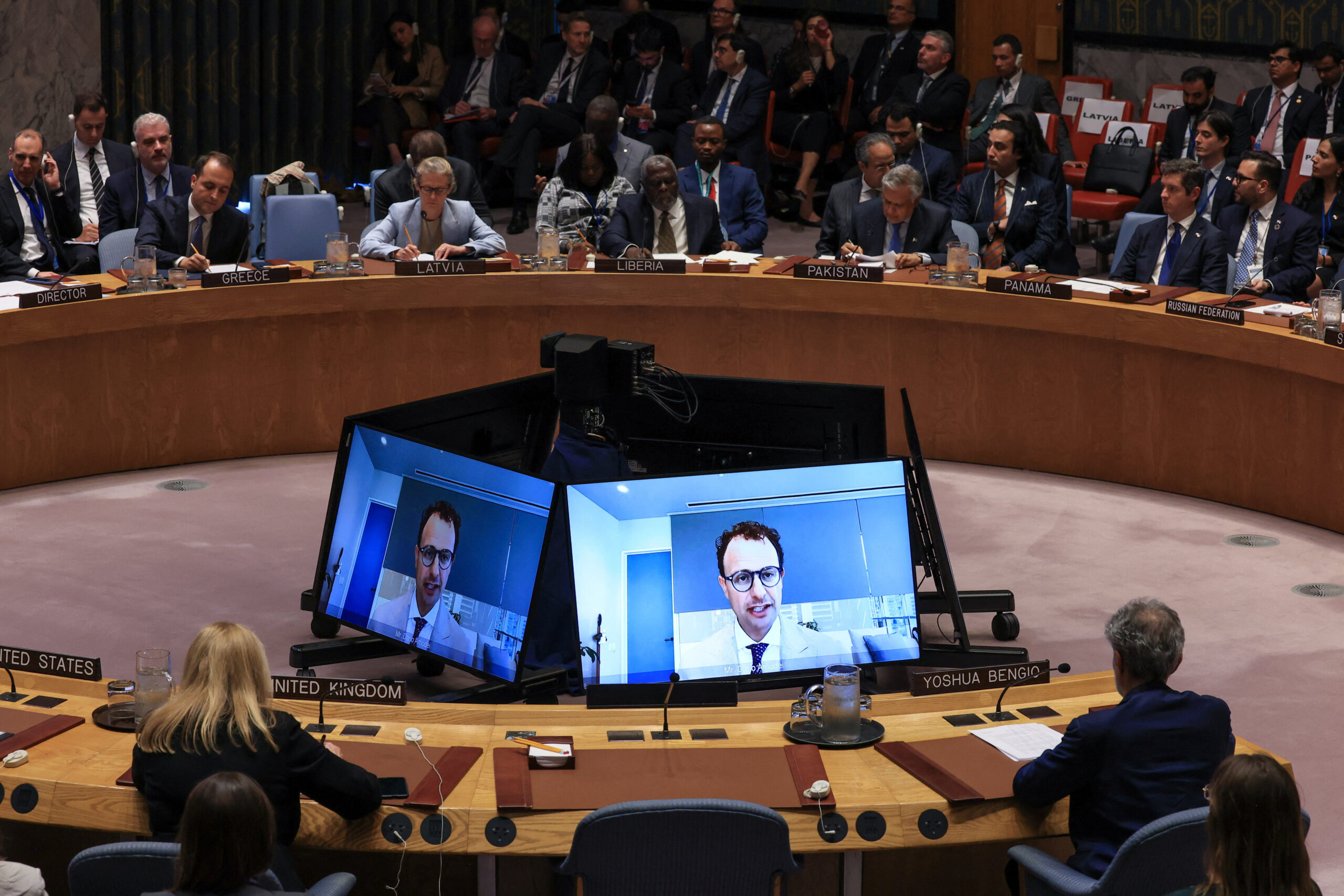
The world’s leading artificial intelligence companies warned the United Nations Security Council on Wednesday of the risks posed by AI to humanity, appealing for governments to work together to manage the increasingly powerful technology.

Anthropic CEO Dario Amodei told the 15-member council, which is charged with maintaining international peace and security, that if managed poorly, he believed “AI could be a risk to humanity as a whole.”

The meeting — convened by France during the annual UN General Assembly gathering of world leaders — comes amid warnings that AI systems could soon improve themselves and slip beyond human control.

“For all the differences of the people in this room, we must put aside those differences in order to confront this global opportunity and global threat that is being presented to us at the same time. No leader, no company and no nation can manage this alone,” Amodei said.

Governments around the world have struggled to keep pace with rapid advances in artificial intelligence. The United States and China, the two leading powers in AI development, have taken different approaches to oversight.

President Donald Trump has argued that the US does not need new AI-specific regulations, while China has imposed rules governing AI algorithms and training data, including requirements that AI-generated content be clearly labeled.

Hugging Face co-founder Clément Delangue highlighted the role of AI tools in defending against cyberattacks, citing an incident in which US giant OpenAI’s AI agents breached Hugging Face’s infrastructure after escaping their testing environment.

“We were attacked by AI, but more importantly, we defended ourselves with AI,” he told the council.

Council members, including leading AI rivals the United States and China, were also set to speak.

Delangue said Hugging Face relied on a Chinese AI model to help defend against the attack by OpenAI’s AI agents because it faced fewer restrictions than comparable US tools. His remarks underscored the growing presence of Chinese AI products, which have gained users globally in part because they can offer lower-cost alternatives to American models.

OpenAI CEO Sam Altman said international cooperation was needed.

“If AI is to be democratic, the most important decisions cannot be made by labs in San Francisco alone. They must be shaped through democratic processes and by governments accountable to the people they serve,” Altman told the council.

As the council met, Australian Prime Minister Anthony Albanese told reporters in New York that an AI agent developed by OpenAI infiltrated an Australian government website in June, accessing public and non-public files.

US to UN: You cannot govern technology you don’t understand

Yoshua Bengio, a Canadian considered one of the “Godfathers of AI” and co-chair of the Independent International Scientific Panel — created by the UN General Assembly last year — told the Security Council: “The dangers are real and imminent.”

“This council faces an unprecedented threat, one that none of its members would choose, that none can contain alone, and that does not respect the borders we defend,” he said.

Trump told world leaders at the UN General Assembly on Tuesday that he “rejects any attempt to construct a globalist scheme to control” AI, describing the technology as amazing but noting that the US would be careful.

White House science and technology adviser Michael Kratsios echoed Trump in remarks to the UN Security Council on Wednesday.

“You cannot govern technology you do not understand. This body and others like it should focus on sharing best practices to build domestic capacity, not establishing a global regulatory scheme,” he said.

China’s UN Ambassador Fu Cong said continuous improvement of regulatory frameworks, emergency response, and cross-border cooperation on AI was needed.

“It is incumbent upon the international community to work more closely together, attach equal importance to development and security, and steer AI development for the positive, for good, and for humanity,” he told the Security Council.

UN Secretary-General Antonio Guterres, who has long pushed for global governance of AI, has warned that rapidly advancing artificial intelligence poses risks that cannot be ignored, putting him at odds with Trump.

The Security Council met for the first time on the risks of AI in 2023, when China said the technology should not become a “runaway horse” and the United States warned against its use to censor or repress people. Then-US Secretary of State Antony Blinken chaired a Security Council meeting on AI in 2024. – Rappler.com

Similar Posts

  • | | | |

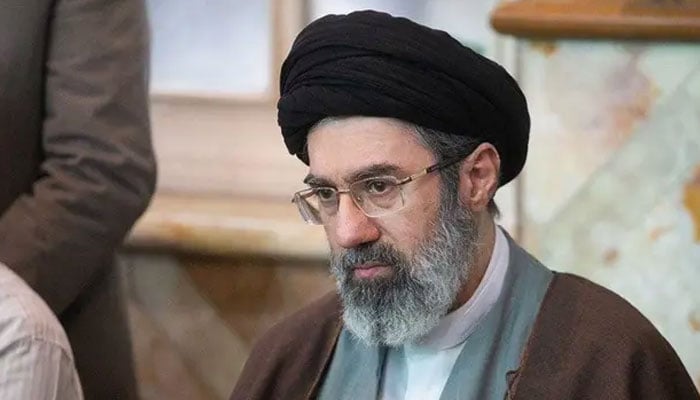
    Mojtaba Khamenei appears in new video as health qu…

    TEHRAN: A new video showing Iran’s Supreme Leader Mojtaba Khamenei has emerged, offering a rare public glimpse of the Iranian leader amid heightened attention over his health and whereabouts. The footage was released by Iran’s semi-official Mehr News Agency and appears to show Khamenei sitting with several people and engaged in conversation. The agency did not disclose when or where the recording was made, nor did it identify the other individuals seen alongside him. Khamenei appears in normal condition in the short footage. The release comes after reports and speculation about his health had circulated in recent days, making the video particularly significant for observers following developments in Tehran. Iranian media presented the footage as evidence of the Supreme Leader’s continued presence and activity. The video does not provide independent confirmation of when it was recorded, however, leaving some questions unanswered about Khamenei’s current condition and location. The appearance comes as tensions surrounding Iran remain high. Iranian Foreign Minister Abbas Araghchi has reiterated Tehran’s determination to withstand pressure and continue what he described as resistance. “We are fully prepared for resistance despite all pressures,” Araghchi said, according to the statement cited by Iranian media. He also said Iran would not forget what he described as the unjust bloodshed of its martyrs, adding that those responsible would not be forgiven. Khamenei’s limited public appearances have attracted considerable attention since he became Iran’s Supreme Leader earlier this year. The latest footage is therefore likely to be closely examined both inside Iran and abroad as questions continue over the country’s leadership and its response to mounting regional pressures. For now, the exact timing and location of the recording remain undisclosed.

  • |

    Syria and Russia redefine military ties

    Syria and Russia have reached a new agreement regarding the future of two strategically important Mediterranean military sites, marking a major shift in Moscow’s role in the country after years of close military cooperation with the former Syrian government. According to Syria’s Foreign Ministry, the agreement will bring changes to the way Russia operates at the Hmeimim air base near Latakia and the Tartus naval facility on Syria’s Mediterranean coast. Both locations served as key Russian military positions during the rule of former President Bashar Assad, who relied heavily on Moscow’s political and military support throughout Syria’s long civil war from 2011 to 2024. The Hmeimim air base became one of Russia’s most important overseas military installations, supporting Russian air operations in Syria and strengthening Moscow’s influence in the eastern Mediterranean. Meanwhile, the naval base at Tartus provided Russia with its only major naval facility outside the former Soviet Union, allowing it to maintain a strategic presence in the region. Under the newly announced arrangement, Syria will assume control of the Hmeimim air base and the commercial section of Tartus port as part of its civilian administration. The remaining military areas at both locations will reportedly be transformed into joint training and qualification centers rather than serving as traditional Russian military outposts. Syria’s Foreign Ministry described the agreement as a “reorganization of the Russian presence” along the country’s coastline. The ministry said the deal represents the most significant step forward in negotiations that have continued for around 18 months and could open the door to a new stage in Syrian-Russian relations. Russia has not yet issued an official public response to the announcement. However, Moscow’s position in Syria has changed significantly since the fall of Assad’s government. During the uprising and subsequent conflict, Russia was one of Assad’s strongest supporters, providing military assistance that helped his government remain in power. After Assad was removed from office, Russia allowed him and his family to seek asylum, while many remaining Russian forces gradually withdrew from Syria. Despite these changes, Syria’s new leadership has attempted to maintain diplomatic relations with Moscow. Interim President Ahmad al-Sharaa has met Russian President Vladimir Putin in Moscow on two occasions since taking office, with the future of the Mediterranean bases being one of the main issues discussed during their talks. At the same time, Syria has expanded its diplomatic engagement with Western nations and regional Arab countries. Several states that had distanced themselves from Damascus during Assad’s crackdown on opposition movements have begun rebuilding relations with the new Syrian authorities. The United States has also removed many of the sanctions that had severely affected Syria’s economy, while European countries have increased diplomatic contacts. French President Emmanuel Macron’s visit to Syria in July marked another important step, with both countries announcing plans to appoint ambassadors for the first time in 14 years. The agreement over Hmeimim and Tartus reflects the changing balance of international influence in Syria. While Russia remains an important partner, the country’s new government appears to be pursuing broader relationships with multiple global and regional powers as it seeks to redefine Syria’s future after years of conflict.

  • |

    Modi forms task force to reform exam system

    Indian Prime Minister Narendra Modi has announced a high-powered task force to reform the country’s examination system following weeks of student-led protests over alleged irregularities in major entrance exams. The announcement came a day after Education Minister Dharmendra Pradhan resigned, as the government faced growing pressure from students and opposition groups demanding changes to the examination process. Modi said the new task force would be headed by Nandan Nilekani, co-founder of technology company Infosys. The panel will focus on improving the examination system and making it more transparent, reliable and technology-driven. In a video message posted on social media, Modi said the government wanted to restore confidence in upcoming examinations as quickly as possible. He stressed that the system must ensure greater transparency and make effective use of technology. The protests had been led in large part by supporters of the social media-driven Cockroach Janta Party (CJP). Thousands of students and young people gathered at New Delhi’s Jantar Mantar over several weeks, making the demonstrations among the most significant anti-government protests in India in recent years. The movement initially focused on alleged problems and irregularities in examinations, but its demands later expanded. Protesters also raised concerns about unemployment, limited opportunities for young people and what critics described as the government’s increasingly authoritarian approach. The protest site was largely cleared on Sunday. Municipal workers washed the surrounding roads and began repainting walls covered with slogans, posters and graffiti. Some protesters criticised the decision to remove the writings, saying the messages represented an important record of the movement. Rahul, a protester who had visited the site, said demonstrators had photographed and recorded the posters and slogans before they were removed. He said they wanted the material to remain documented and remembered. Some young people who travelled long distances to participate in the demonstrations arrived after the protest had already ended. One 19-year-old participant said he had travelled for around 20 hours after seeing videos of the demonstrations on Instagram. He said he wanted to witness the atmosphere and join other young protesters. Another visitor accused the government of worsening the situation by attempting to suppress the demonstrations. He argued that the crackdown had contributed to the protests becoming larger.

  • |

    South Korea investigates election officials over alleged vote turnout manipulation

    South Korean investigators have launched a major investigation into the National Election Commission after allegations that officials altered voter turnout figures during the June 3 local elections. Authorities searched the commission’s offices on Thursday as part of a widening probe into what could become one of the country’s most serious election controversies in recent years. The investigation follows widespread problems that disrupted voting on election day. Dozens of polling stations ran out of ballot papers, creating confusion for voters across the country. The shortages occurred during the first nationwide local elections held after President Lee Jae Myung took office last year. The incident sparked public criticism, street protests, and growing demands for greater transparency in the country’s election system. The controversy also forced National Election Commission chief Roh Tae-ak to resign. President Lee responded by ordering a full investigation into the failures that affected the election process. Since then, police and prosecutors have been examining whether the problems were caused by simple mistakes or deliberate misconduct. According to investigators, there is evidence that officials from both the National Election Commission and the Gyeonggi Provincial Election Commission entered false voter turnout figures into the election reporting system. Authorities believe some staff members changed numbers without following the commission’s official approval procedures. Investigators suspect the changes were made to fix earlier reporting mistakes while officials waited for accurate turnout data from polling stations. Instead of correcting the figures through the required process, they allegedly adjusted turnout numbers across several voting locations to make the overall totals appear consistent. Reports suggest one example involved a polling station where officials accidentally recorded 1,000 voters instead of the actual 100. Rather than immediately correcting the mistake, investigators believe the excess figures were temporarily distributed among other polling stations with the expectation that later voter turnout would balance the totals. Authorities are now examining whether similar adjustments were made elsewhere during the election. Under the commission’s regulations, any correction to turnout figures must receive formal approval before being entered into the system. Investigators believe those procedures may have been bypassed in several cases. Officials leading the investigation confirmed that two election workers have already been placed under formal investigation on suspicion of falsifying official electronic records. Authorities are now trying to determine whether the alleged actions were limited to lower level employees or whether senior officials knew about or approved the changes. Analysts say the case has drawn attention to long standing concerns about oversight within South Korea’s election commission. Because the commission operates as an independent constitutional body, critics argue that its internal monitoring and disciplinary systems have not always been strong enough to prevent misconduct. The ballot paper shortages also affected voters directly. Data provided by the commission to lawmakers showed that at least 90 people were unable to cast their ballots because voting papers were unavailable at their polling stations. The controversy has also fueled political tensions. Supporters of former president Yoon Suk Yeol, who is currently in jail while facing trial on insurrection charges, have renewed claims that the country’s elections require closer scrutiny. Some far right groups have repeated allegations of foreign interference despite the absence of verified evidence supporting those claims. In recent weeks, university students have joined demonstrations calling for a complete investigation into the election commission. Protesters are demanding stronger safeguards to protect voting rights and restore public confidence in South Korea’s democratic institutions. As the investigation continues, authorities say they will examine every level of the election process to determine whether any broader misconduct took place.

Leave a Reply

Your email address will not be published. Required fields are marked *