aviation agency issues
| |

EU aviation agency issues Saudi airspace advisory after Houthi attacks

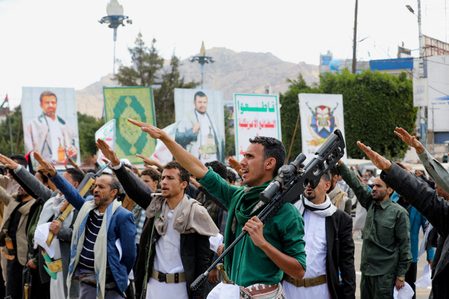
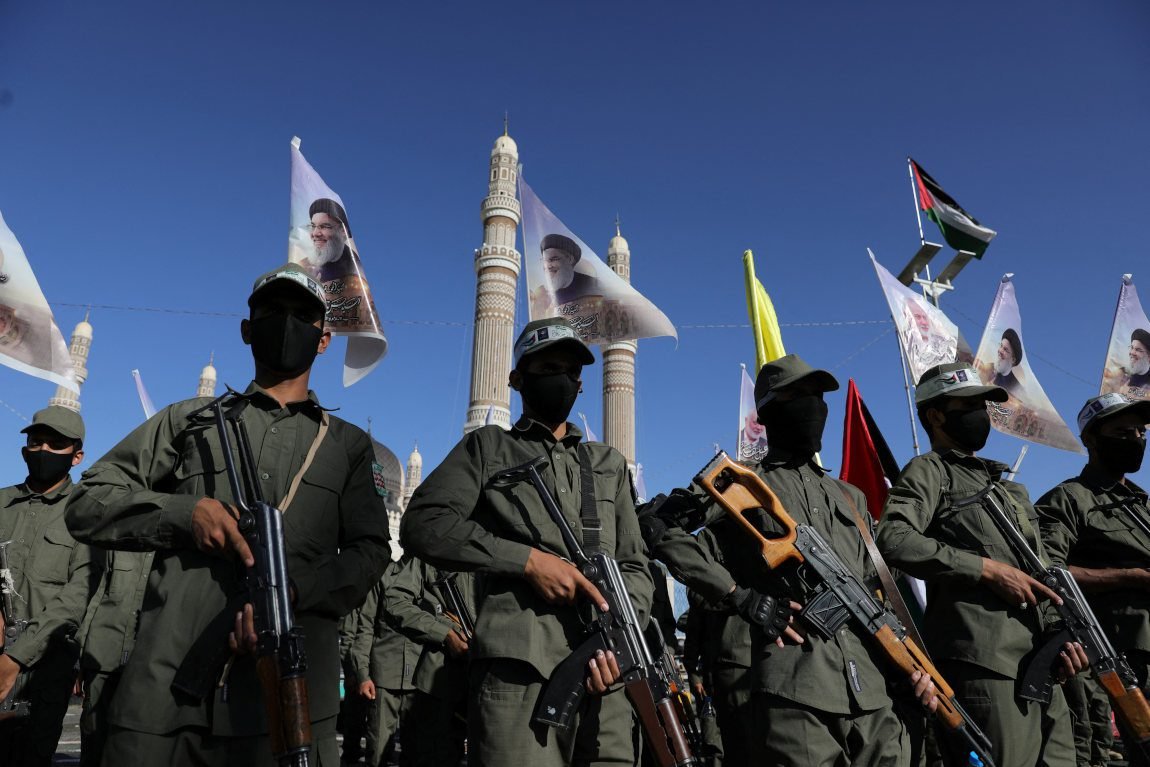
The European Union Aviation Safety Agency issued an advisory to airlines to avoid Saudi airspace, according to a bulletin posted on its website on Wednesday, Septembet 30, following a recent increase in attacks by the Iran-aligned Houthis.

The latest advisory on Saudi Arabia does not mention Wednesday’s incident involving a diverted flydubai airliner, and the EASA said it will continue to monitor the situation to assess whether there is an increase or decrease in risk for EU airlines in the country.

The EASA, in a separate bulletin, recommended that flights not operate within the airspace of Jordan at any altitude or flight level, a change from a previous advisory to exercise caution.

Must Read

Allies unite behind Saudi Arabia as Houthis step up attacks


Allies unite behind Saudi Arabia as Houthis step up attacks

The agency also extended until November 16 its warning to airlines to avoid the airspace over Lebanon, Iran and Iraq, as well as the territorial Gulf waters of Bahrain, Kuwait, Qatar, the United Arab Emirates and Oman, revising earlier bulletins that recommended avoiding those countries’ entire airspace.

The seven-month-old conflict in the Middle East, sparked by US and Israeli attacks on Iran, has seen Tehran strike US allies in the Gulf with drones and missiles, while Yemen’s Houthis have targeted Saudi interests. – Rappler.com

Similar Posts

  • |

    Pentagon drops 41 new UFO files spanning 1950 to 2026

    The Pentagon has released 41 new declassified documents related to unidentified flying objects. The files span an enormous timeframe, covering incidents from 1950 all the way through 2026. Among the most striking entries is a 1963 telegram from Brazil, describing a dead crewman found inside a crashed metal balloon. A follow-up cable sent just six days later, however, called the entire report fabricated. This marks the fifth batch of declassified UFO material released so far this year. Chief Pentagon spokesman Sean Parnell announced the files on Friday under the Presidential Unsealing and Reporting System for UAP Encounters, known as PURSUE. The collection draws from multiple agencies, including the Pentagon, FBI, CIA, State Department and the Executive Office of the President. Parnell confirmed that additional releases are already being prepared for the future. Interestingly, these documents predate today’s broader UFO disclosure movement by decades. The earliest file dates back to January 1947, referencing so-called “ghost rockets” spotted over Finland and Denmark the year before, believed at the time to be Soviet rocket tests. A separate 1948 memo sent to Wright-Patterson Air Force Base confirmed that some kind of flying object had genuinely been sighted, though no explanation was ever given. More recent entries include a 2021 account from military personnel in the Gulf of Oman. They reported spotting 25 objects moving at speeds up to 1,300 miles per hour during a live-fire operation. Another document details a former service member’s account of a massive, silent, triangular object seen over Bagram Airfield in Afghanistan back in 2002. The object was reportedly around 500 feet long and blocked out the stars as it passed overhead. Two additional triangle sightings, both from Colorado Springs, were digitally rendered by the FBI based on witness testimony rather than actual photographs. One reconstruction dates to 2011, the other to 2023. Together, the newly released files offer a rare, wide-ranging look into decades of military encounters with unexplained aerial phenomena.

  • |

    China and Japan give conflicting accounts of ministers’ ASEAN meeting

    China and Japan have offered different versions of whether their foreign ministers spoke during last week’s ASEAN meetings in the Philippines, highlighting the continued strain in relations between the two neighboring countries. Japanese Foreign Minister Toshimitsu Motegi said after the regional gathering that he had briefly spoken with Chinese Foreign Minister Wang Yi when the two crossed paths during the event. According to Motegi, the short conversation included discussion about bilateral relations, which Japan considers an important step in maintaining communication despite ongoing tensions. However, China’s Foreign Ministry rejected that account. Speaking at a regular press briefing on Monday, spokesperson Lin Jian said Wang Yi had no meeting scheduled with the Japanese side during his visit to Manila and insisted that no informal conversation or exchange took place at the venue. The conflicting statements reflect the growing diplomatic divide between Beijing and Tokyo, whose relationship has worsened significantly since last November. The decline followed comments by Japanese Prime Minister Sanae Takaichi regarding Taiwan, which China strongly condemned. Japan has expressed interest in improving ties with China and continues to support dialogue at every level. Motegi said maintaining communication is essential because both countries play a major role in preserving peace and stability across the region. Although he described his interaction with Wang as a discussion on bilateral relations, Japanese media reported that the exchange was limited to greetings and brief pleasantries. Prime Minister Takaichi said on Monday that contacts between the two governments remain active through various diplomatic channels, including the exchange Motegi referred to during the ASEAN meeting. The current tensions stem from remarks Takaichi made shortly after becoming prime minister. During a parliamentary session, she was asked whether a Chinese military blockade or attack on Taiwan could trigger Japan’s collective self defense policy. She replied that such a situation could threaten Japan’s survival and therefore might meet the legal conditions for military involvement alongside an ally, most likely the United States. China viewed those comments as crossing a major diplomatic red line. Beijing considers Taiwan part of its territory and strongly opposes any statement or action that it believes supports Taiwan’s independence or suggests foreign military involvement in a future conflict. Taiwan, meanwhile, governs itself independently despite China’s territorial claims. Although Takaichi later said she would avoid discussing specific military scenarios in future parliamentary debates, she has refused to withdraw her original remarks. Her position has continued to frustrate Beijing and has made efforts to restore stable relations more difficult. The dispute has affected more than diplomacy. Economic ties have also been impacted, with reports of fewer Chinese tourists visiting Japan and growing concern in both countries over each other’s expanding military capabilities. The disagreement over what happened during the ASEAN meeting has become another sign of the deep mistrust that continues to shape relations between Asia’s two largest economies.

  • |

    Wildfires force 43,000 to flee in France

    More than 43,000 people have been evacuated from southwestern France as massive wildfires continue to spread across several regions, threatening residential areas, forests and popular tourist destinations. French authorities have launched one of the country’s largest emergency operations of the year as firefighters work around the clock to contain the rapidly advancing flames. The worst-affected area is located near Arcachon Bay and the Cap Ferret peninsula in the Gironde region. The wildfire has already burned through more than 8,700 hectares of land and continues to spread because of strong winds, dry vegetation and extremely high temperatures. Authorities ordered the complete evacuation of the Cap Ferret peninsula, a major holiday destination on France’s Atlantic coast that attracts thousands of visitors every summer. Residents, tourists and campers were instructed to leave immediately as emergency services expanded evacuation operations. To speed up the evacuation, authorities arranged transport by both road and sea. Special boats were deployed from several coastal villages while vehicles used the peninsula’s only highway leading to the mainland. Emergency officials urged everyone in the affected areas to leave without delay for their own safety. French Interior Minister Laurent Nunez described the Gironde wildfire as the largest fire of the current season. He said around 80 homes have been damaged, including nearly 50 houses that were completely destroyed by the flames. More than 1,000 firefighters, supported by helicopters, military engineering units and civil security teams, are working to control the blaze in Gironde. Hundreds of police officers and emergency personnel have also been deployed to help with evacuations, traffic management and public safety. A second major wildfire is burning near Biscarrosse in the neighbouring Landes region. The fire has destroyed more than 2,500 hectares of forest and forced the evacuation of over 23,000 residents, tourists and campers. Local authorities said the blaze remains out of control after continuing to spread overnight. French President Emmanuel Macron has requested international assistance through the European Union Civil Protection Mechanism. Several European countries have agreed to send additional firefighting aircraft and helicopters to help French authorities contain the fires. Croatia is sending Canadair water-bombing aircraft, while Portugal will provide specialised firefighting planes. The Czech Republic and Slovakia are also deploying heavy helicopters to assist emergency crews. Emergency officials said there have been no confirmed fatalities in the Gironde wildfire so far. However, they warned that weather conditions remain highly dangerous and could make firefighting efforts even more difficult in the coming days. Fire experts say the blazes are spreading unusually quickly because of prolonged heatwaves, severe drought and strong winds. These conditions have left forests and vegetation extremely dry, allowing fires to expand rapidly across large areas. Authorities estimate that nearly 50,000 hectares of land have burned across France since the beginning of this year’s wildfire season, making it one of the country’s most destructive fire seasons in recent years.

  • | |

    Austria opens police station at house where Hitler…

    Austria has opened a police station inside the house in Braunau am Inn where Adolf Hitler was born, closing out years of debate over how to handle the building’s dark history. The 17th century structure once operated as an inn and served as the birthplace of the Nazi dictator in April 1889. Authorities have now completed a substantial renovation that changed the building’s facade, though managing the site has posed a persistent challenge for Austrian officials determined to prevent it from turning into a destination for neo Nazi pilgrimage. Hitler lived in the building, located at Salzburger Vorstadt 15, for only a few weeks before his family relocated to another address in Braunau. The family left the town permanently when Hitler was three years old. He briefly returned to Braunau in 1938 while traveling to Vienna after annexing Austria into Nazi Germany. Interior Minister Gerhard Karner attended the opening ceremony alongside other local officials, which featured police musicians performing on tuba and other brass instruments. Karner said Austria is taking responsibility for what he called the terrible legacy of the past, adding that although deciding the building’s fate proved difficult, he believes the new police station represents a fresh chapter for the site. He said the building will now stand as a place representing democracy, the rule of law, security, freedom and human dignity. A Catholic police chaplain then blessed two crosses that will hang inside the new station. For decades, Austria’s interior ministry rented the building from its former owner, a local woman named Gerlinde Pommer, paying her generous rent in an effort to keep the property from becoming a site for far right tourism. A local charity used the building for years as a day center and workshop for people with special needs, but the organization had to vacate in 2011 after Pommer blocked planned renovations. She also repeatedly declined to sell the property to the government, leaving the building empty for several years while she and authorities disputed terms. In 2016, Austria’s parliament passed legislation allowing the government to seize the property from Pommer, paying her compensation of 812,000 euros. She later challenged the amount in court, arguing it was too low, but ultimately lost the case. Wolfgang Sobotka, who served as interior minister at the time, suggested the building should be demolished and replaced with a new structure altogether, echoing an earlier proposal from a Russian lawmaker who had offered to purchase the house and destroy it. Both ideas drew significant criticism, with opponents arguing that tearing down the building would amount to denying Austria’s Nazi era history. In 2019, the government unveiled plans to convert the building into a police station and launched an EU wide competition inviting architects to submit design proposals. Officials subsequently spent millions of euros renovating the structure, transforming its appearance dramatically from its earlier state. The building, now painted white both inside and out, features extensive oak woodwork throughout, while an original winding staircase and arched entrance hall have been preserved from the earlier structure. The transformation marks a stark contrast to the building’s condition decades ago, when the Lebenshilfe charity operated a small shop in one of its front rooms. Police Chief Inspector Ludwig Heise said he feels fortunate to work in such a modern facility, noting the additional space compared to previous quarters, though he added that beyond its size, the station functions just like any other police facility in Austria. The reopening marks the culmination of a long and often contentious effort by Austrian authorities to neutralize the symbolic weight of Hitler’s birthplace, transforming a site once feared as a potential magnet for extremist sympathizers into a functioning symbol of the democratic institutions Austria has built in the decades since the Second World War.

Leave a Reply

Your email address will not be published. Required fields are marked *