spy scandal midterm
|

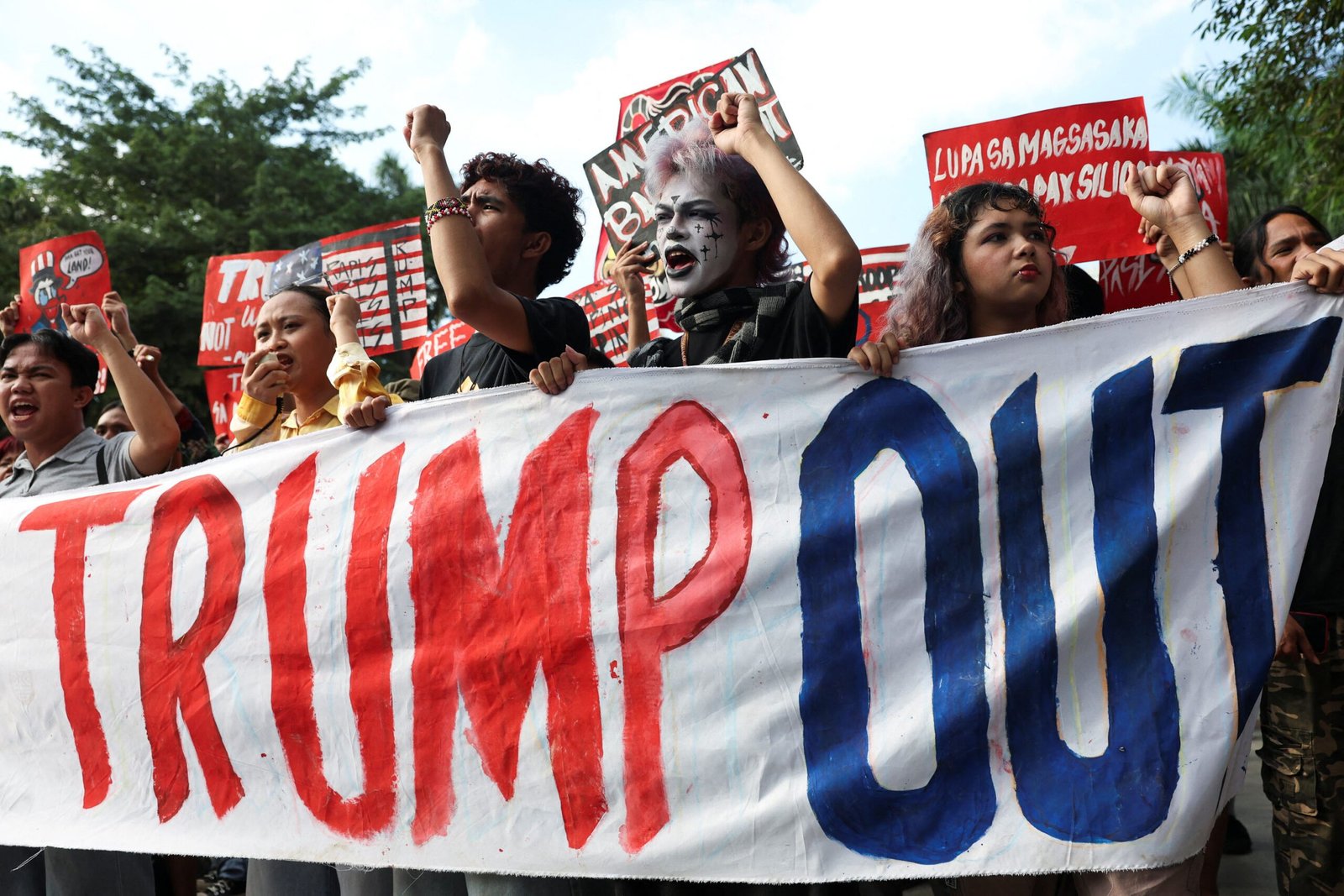
Spy scandal, US midterm defeat heat up Trump’s Asia visit

WASHINGTON, USA – US President Donald Trump headed to Manila on Monday, November 16, after a midterm election drubbing and allegations involving a suspected Chinese spy that have raised the stakes for his latest meeting with Beijing’s powerful leader, Xi Jinping.

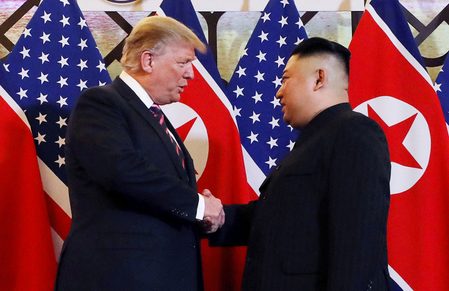
As he left the White House, Trump said he might also meet with North Korean leader Kim Jong Un in China, a surprise announcement that could reshape his swing through the region if it in fact occurs.

Trump will first visit Manila for meetings with Southeast Asian and other regional leaders on Tuesday before jetting to Shenzhen for the Asia-Pacific Economic Cooperation (APEC) forum, where he will meet the Chinese president and hold three-way discussions with Xi and Russia’s Vladimir Putin.
Must Read

Trump says he might meet with North Korea’s Kim Jong Un in China


Trump says he might meet with North Korea’s Kim Jong Un in China

Trump said he would discuss denuclearization, Iran and Ukraine in the meeting with Putin and Xi, as well as trade and the economy.

“We may meet with Kim Jong Un also,” Trump said, adding: “He may come. I don’t know. That’s up to President Xi.”

The president met the North Korean leader several times during his 2017-2021 term and has repeatedly expressed interest in another meeting, but has also previewed meetings that never took place, including during a trip to Asia last year.

North Korea, whose mission to the United Nations did not immediately respond to a request for comment, has publicly indicated it has no intention of meeting with the US president at this time.

With a fragile trade-war truce between the US and China extended to early next year, and more Trump-Xi talks due in December at the G20 in Miami, some analysts had initially billed the Shenzhen meeting as a low-stakes summit.

But a backlash against Trump’s Republican Party in this month’s midterms and criticism that his administration failed to act on intelligence that Nvidia CEO Jensen Huang, who has close ties to Trump, had an affair with a suspected Chinese spy have muddied those expectations.

Chinese analysts say there are concerns in China that allegations that restricted semiconductors were diverted to Chinese customers could harden US attitudes toward China.

“With less reason to worry about market reactions or electoral fallout, (Trump) may be more willing to consider disruptive measures,” said Ruby Osman, a senior policy adviser on China at the Tony Blair Institute, a London-based think tank.

Washington has already signaled such willingness ahead of the meeting, urging China to live up to its commitments made under the truce agreed between Trump and Xi a year ago.

And on Monday, the Trump administration issued a rule that will restrict chip exports to overseas data centers in countries like Malaysia and Thailand and hurt Chinese companies that use these to access advanced AI chips to train their artificial intelligence models.

US House Speaker Mike Johnson said last week there was growing consensus in Congress on further limiting Chinese access to advanced chips after the scandal, and Democrats are expected to press hard on the issue when they take over the House and Senate majorities in January.

Zhu Feng, director of the Institute of International Studies at Nanjing University, said the spat could also speed up “the decoupling of AI” between the world’s two superpowers even as they try to cooperate on mitigating the technology’s risks.

Legacy building

China has said the US has fabricated the spy narrative to justify a technological blockade. One senior US administration official said the Nvidia situation “should not really have any bearing on the trip,” on which analysts say Trump may want to focus on legacy-building.

Trump said on Monday he would not mind seeing Jensen Huang reinstated as Nvidia’s CEO and that he did not believe his relationship with the tech executive had put national security at risk.

Trump sees the unprecedented summit with Xi and Putin as possibly providing movement toward an agreement on nuclear arms control. But that is a non-starter for China, which has far fewer warheads than the others, Chinese analysts said.

The proposed three-way meeting has drawn comparisons, particularly in Russia, with the 1945 Yalta Conference between the US, Britain and the Soviet Union that formalized spheres of influence, set the stage for the post-World War Two order and became shorthand for great-power deals imposed on smaller countries.

Such a framing is particularly worrisome for Ukraine, which is engaged in a four-year war with Russia.

The Kremlin said on Monday that the meeting between Putin, Trump and Xi would have a major impact on global affairs.

Some analysts say Xi could seek to take advantage of Trump’s political weakness after his election humbling.

Top of Beijing’s wish list is ensuring the US president doesn’t approve a $14 billion arms package to Taiwan, which China claims as its own. Trump has said he is holding the arms back as a “negotiating chip” with China.

“Xi just needs Trump to remain reluctant to revert toward a more competitive posture toward China for as long as possible,” said Jonathan Czin, a foreign policy analyst at the Brookings Institution, a US-based think tank, and a former director for China at the US National Security Council.

He said Beijing will be acutely aware that whoever succeeds Trump when his term ends in two years may be less accommodating and “will take whatever time it can get to fortify itself for the next round in the contest.”

Despite the frustration the US has voiced over Chinese implementation of the terms of a truce in a trade war that threatened the global economy last year, analysts like Kurt Tong, a former senior State Department official now with the Asia Group think tank, expect that deal to be further extended beyond its January 10 expiration.

“The two sides are quite incentivized to maintain this fragile stability … despite also having some disagreements,” said senior China analyst Chim Lee at the Economist Intelligence Unit. “They both have quite a lot to lose.” – Rappler.com


Similar Posts

  • |

    British driver sets hydrogen vehicle speed record at 654 km/h

    British driver and former Royal Air Force pilot Andy Green has set a new world land-speed record using a hydrogen-powered vehicle. According to foreign media reports, 64-year-old Andy Green drove the hydrogen-powered vehicle at 406 miles per hour (654 km/h) at the Bonneville Salt Flats in Utah, USA making it the fastest speed ever achieved by a vehicle of this type. According to the report, the HydroMax is equipped with two hydrogen engines that generate a combined 1,600 horsepower. 20-year-old record broken The new HydroMax vehicle more than doubled the previous world record of 185.5 miles per hour, set in 2004 by a hydrogen-combustion vehicle. Twenty years ago at the same location, the same company’s diesel-powered vehicle, DieselMax set a world record by reaching 350 miles per hour (563 km/h). Only person to break sound barrier on land Andy Green has already made history in motorsports. In 1997, he drove the jet-powered ThrustSSC to a speed of 763 miles per hour (1,228 km/h) breaking the sound barrier on land. Andy Green remains the only person to have broken the sound barrier in a land vehicle.

  • | | |

    Lindsay Clancy psychiatrist ‘surprised’ by sui…

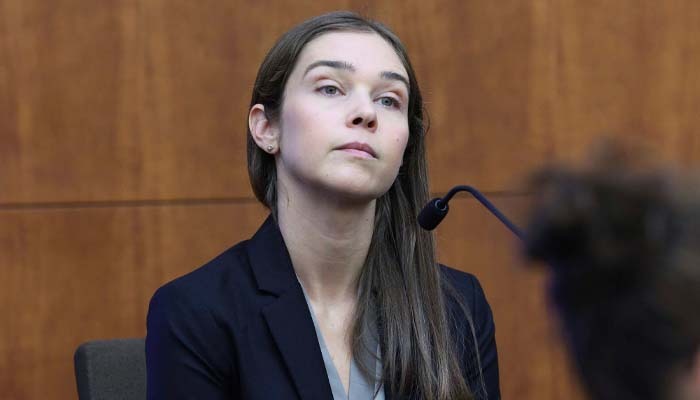
    Lindsay Clancy’s psychiatrist testified in court Monday as her defense lawyer questioned whether warning signs were missed during the Massachusetts mother’s deteriorating mental health in the months before the deaths of her three young children. Dr. Jennifer Tufts, who began treating Clancy in September 2022, faced detailed questioning from defense attorney Kevin Reddington about her approach to treatment, medication decisions and the use of relatively brief video appointments. According to the Associated Press, Reddington argued that Clancy’s mental healthcare may have been inadequate at a time when she was experiencing serious emotional and psychological difficulties. He focused on 25-minute telehealth appointments, computerized clinical forms and the numerous medications prescribed as Clancy reported different symptoms and side effects. During questioning, Reddington challenged Tufts over whether Clancy should have received more intensive or in-person care. When asked why she did not recommend that Clancy meet her face-to-face instead of continuing with video appointments, Tufts said she did not believe there was a problem with providing treatment through telehealth. The psychiatrist also told jurors she was “surprised” to learn that Clancy had contacted a suicide hotline twice while receiving treatment. Tufts said Clancy had denied experiencing suicidal thoughts during their treatment, although she acknowledged that she had been “close to feeling suicidal.” Reddington highlighted an appointment roughly two months before Clancy strangled her children, asking the psychiatrist what she had done after Clancy described feeling hopeless. Tufts responded that she had reassured Clancy that there was hope and that treatment options and different programs were available. She said her goal was to make Clancy understand that she still had options and reasons to hope. Reddington highlighted an appointment roughly two months before Clancy strangled her children, asking the psychiatrist what she had done after Clancy described feeling hopeless. Tufts had previously testified for prosecutors that Clancy initially sought treatment because of anxiety and had raised concerns about medication side effects. Court records indicate that Clancy was prescribed more than a dozen psychiatric medications through multiple healthcare providers before the killings. The testimony is part of the ongoing trial involving Clancy, whose case has drawn significant attention because of the deaths of her three children. The defense continues to examine the care she received and whether her mental health deterioration was properly recognized and addressed before the tragedy. As the trial continues, jurors are expected to hear further testimony about Clancy’s mental state, treatment history and the circumstances surrounding the deaths of her children.

  • | | | |

    Iran threatens action over US economic support

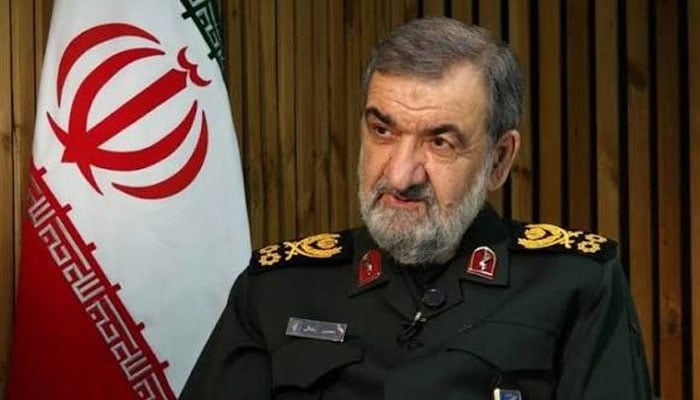
    Iran’s National Security Council chief Mohsen Rezaei has warned that the interests of countries assisting the United States in its economic war against Iran could be targeted. In an interview, Major General Mohsen Rezaei urged Iran’s neighbouring countries not to cooperate with Washington against Tehran. He warned that Iran could consider them hostile if they joined the US economic campaign. Rezaei said Iran did not want to escalate the conflict. However, he warned that any neighbouring country supporting the economic war could face attacks on its interests. He also threatened to prevent even a single drop of oil from passing through the Persian Gulf or the Strait of Hormuz. He said other routes used to import oil through the Persian Gulf could also be targeted. Rezaei further warned that locations linked to Iranian opposition groups could also come under attack if the United States continued meeting groups opposed to the Iranian government. According to Rezaei, the US had expected to end the conflict within a few days and take control of Iran’s oil and gas resources. He claimed that around 1,200 oil tankers had become unusable during the conflict, affecting 15 per cent of the global fleet. He said Tehran should reconsider its approach to the conflict and its diplomatic engagement with the international community. Rezaei accused Washington of failing to honour its commitments. Rezaei said Iran was no longer the same country it was before the conflict. He described new military appointments by Supreme Leader Mojtaba Khamenei as a sign that Iran was preparing for war. He added that the perception of the United States among Iranian youth had also changed. According to him, many young Iranians no longer view America as a country committed to peace. Rezaei accused Washington of betraying negotiations, diplomacy and agreements it had signed. He also warned that US policies could encourage more countries to seek nuclear weapons. He criticised US President Donald Trump and claimed that the world had begun viewing Iran differently. Rezaei said Iran would change its approach to warfare and use the lessons learned from the current conflict in any future war. Asked about the Makkah agreement involving Pakistan, Türkiye and Saudi Arabia, Rezaei said it indicated that the United States had informed those countries of its intention to leave the region. On former Crown Prince Reza Pahlavi, Rezaei said those who believed his return would turn Iran into a “paradise” should reconsider their view. He claimed that bringing Pahlavi back to power could instead lead to Iran being divided into five parts.

  • |

    Indian police use water cannons to disperse Bihar exam protesters

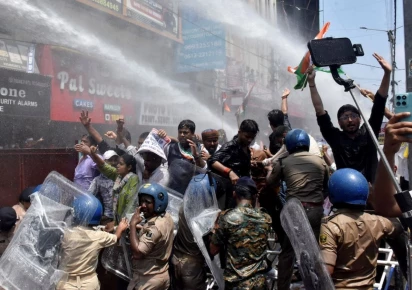
    PATNA: Indian police used water cannons and detained several protesters in Bihar on Tuesday as students demonstrated against alleged irregularities in a civil services recruitment examination. The protesters were demanding cancellation of the Bihar Public Service Commission (BPSC) examination over allegations that question papers had been leaked and that other irregularities had affected the recruitment process. The protesters attempted to march towards the governor’s residence in the state capital, Patna. Police blocked their route and used water cannons after demonstrators pushed through barricades. Several protesters were also taken into police custody and transported away from the demonstration site. The BPSC examination is one of Bihar’s most competitive recruitment tests. It is conducted to select officials for various positions in the state administration. The latest demonstrations are linked to an examination held in December 2024. More than 300,000 candidates reportedly competed for around 2,000 positions. The recruitment process was completed in June after multiple stages, including examinations and interviews. Authorities have previously rejected claims of a widespread question paper leak. However, a re-examination was ordered at one examination centre following complaints at the time. Police later said the protest had become peaceful. Senior police officer K.S. Anupam said most of the protesters’ demands had been addressed by the government. Bihar Education Minister Mithilesh Tiwari also said the government had responded to the students’ concerns. He maintained that discussions with the protesters remained possible and that the government’s doors were open for further dialogue. The dispute comes amid growing student protests in India over alleged irregularities in competitive examinations. Similar demonstrations have taken place in other Indian states, with concerns ranging from alleged paper leaks to recruitment procedures and examination management. In neighbouring Jharkhand, protests over similar allegations previously resulted in the cancellation of civil service examinations. The latest unrest has also added to pressure on authorities to strengthen safeguards around competitive examinations, which attract hundreds of thousands of applicants seeking government jobs.

Leave a Reply

Your email address will not be published. Required fields are marked *