chinas huawei convicted
| | | |

China’s Huawei convicted in sprawling US criminal trial over Iran business

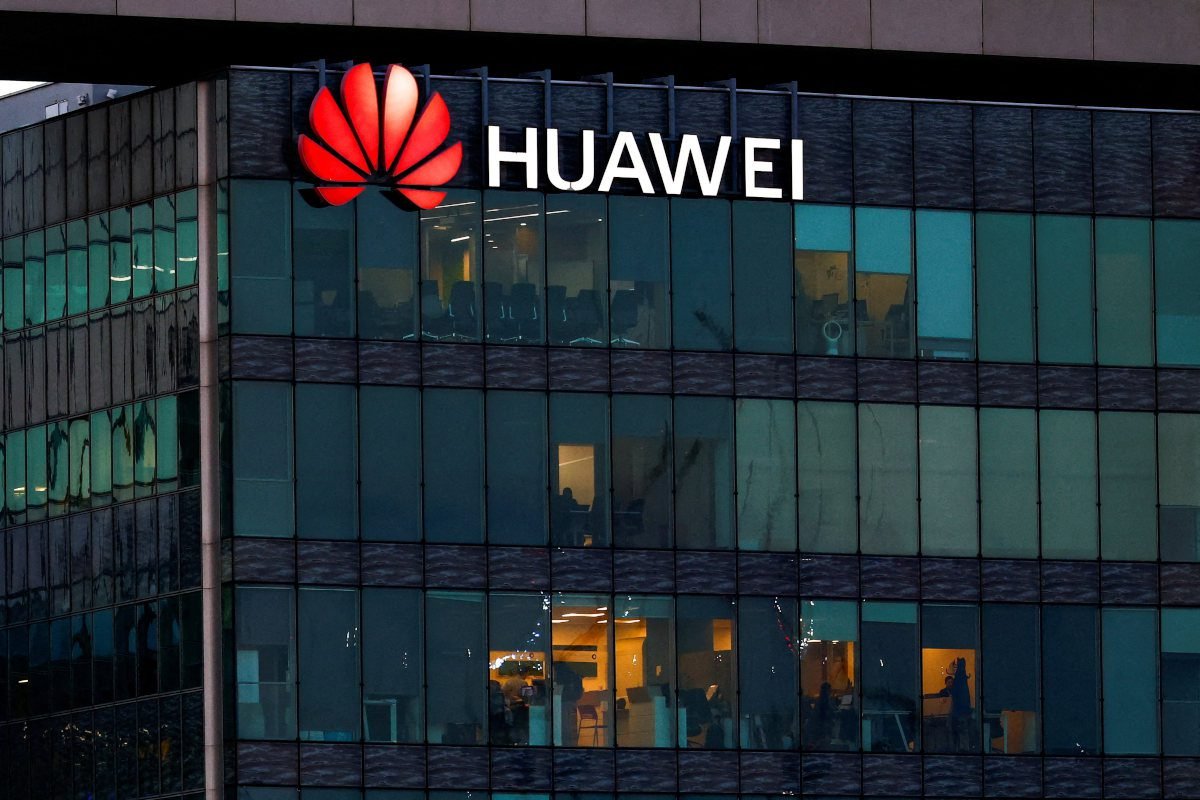
NEW YORK, Philippines – Chinese telecommunications equipment maker Huawei was convicted by a jury in New York City on Tuesday, November 24, in a sprawling US criminal case on charges that it deceived banks about its business in Iran and stole trade secrets from American companies.

The verdict came in a criminal case that began in 2018, with the US government the following year placing Huawei on a trade blacklist that restricted its access to US technology amid American concerns that Huawei posed national security risks.

The jury in Brooklyn federal court found Huawei guilty on 10 of the 12 criminal counts the company faced, including bank fraud, wire fraud, sanctions violations and conspiring to steal trade secrets. The jury acquitted Huawei of conspiring to obstruct justice and racketeering conspiracy, a charge alleging the company had acted as a criminal enterprise.

The trial lasted more than two months, with prosecutors calling more than 60 witnesses and the defense calling 15. It was not immediately clear what penalties Huawei will face when US District Judge Ann Donnelly sentences it on September 14, 2027.

Reuters stories in 2012 and 2013 helped expose Huawei’s activities in Iran and were discussed during the trial.

“After the media started questioning Huawei’s operations in Iran, so did Huawei’s banks,” prosecutor Meredith Arfa told jurors during closing arguments in the case last week.

Brian Heberlig, a lawyer for Huawei, said the company was disappointed by the convictions but said the acquittal on the racketeering conspiracy charge vindicated its “good-faith compliance culture.”

“We fully expect to appeal,” Heberlig told reporters.

US Attorney Joseph Nocella said in a statement: “Few crimes are as serious as Huawei’s decades-long pattern of endangering US national security, violating the sanctity of US commerce, and impeding the enforcement of US laws.” China’s embassy in Washington did not immediately respond to a request for comment.

Asked how much the company may have to pay in penalties, Heberlig said it was premature to comment, but said the acquittal on the racketeering conspiracy charge could make a significant difference.

Experts have said the case did not undermine Huawei’s business, as the company diversified and emerged as a key player in China’s push for artificial intelligence.

Founder’s daughter was detained

In December 2018, Meng Wanzhou, Huawei’s chief financial officer and daughter of the company’s founder, was detained in Canada on a US warrant, prompting a diplomatic crisis involving the United States, China and Canada.

Meng had been secretly indicted on US charges of misleading an HSBC banker about Huawei’s business in Iran, so the company could move dollars in and out of Iran in violation of American sanctions. Meng fought extradition to the US for nearly three years, before entering a deferred prosecution agreement and flying home to China to a hero’s welcome. The charges against her were dropped.

Meng did not testify at trial, though an HSBC banker she met with in 2013 did testify.

The 2018 indictment alleged that Huawei misled HSBC, Standard Chartered and BNP Paribas about its business dealings in Iran. Prosecutors added new charges in 2020, including allegations that Huawei conspired to steal trade secrets from US technology companies over two decades.

The prosecution case

During the trial, prosecutors sought to prove that Huawei stole source code from Cisco Systems CSCO.O for its routers, stole wireless telecommunications company Quintel’s antenna technology, and hired a professor to gain access to a circuit board developed by semiconductor company CNEX.

Jurors watched a video that, according to prosecutors, showed a Huawei employee slipping a piece of a T-Mobile testing robot into his backpack, and heard about a Huawei engineer sneaking into a Fujitsu booth at a trade show to photograph a device.

Prosecutors gave jurors a statement attached to Meng’s deferred prosecution agreement in which she acknowledged that the company illegally conducted business in Iran.

The defense argued that HSBC and the other banks knew about Huawei’s business in Iran and were competing for Huawei’s business.

Heberlig accused prosecutors during his closing argument of having “cherry-picked” a handful of disparate incidents to support their claim of a 20-year conspiracy. Heberlig said Huawei succeeded through “hard work, innovation, and investment in research and development.”

The company has more than 200,000 employees and operates in approximately 170 countries. – Rappler.com

Similar Posts

  • | |

    North Korean hacking group builds AI tools for cyberattacks – report

    The findings suggest the hacking group is moving beyond using generative AI to create phishing lures and is building capacity to integrate existing AI models into malware development, data analysis, and attack automation

  • |

    Former Mexican governor formally charged over 2014 disappearance of 43 Ayotzinapa students

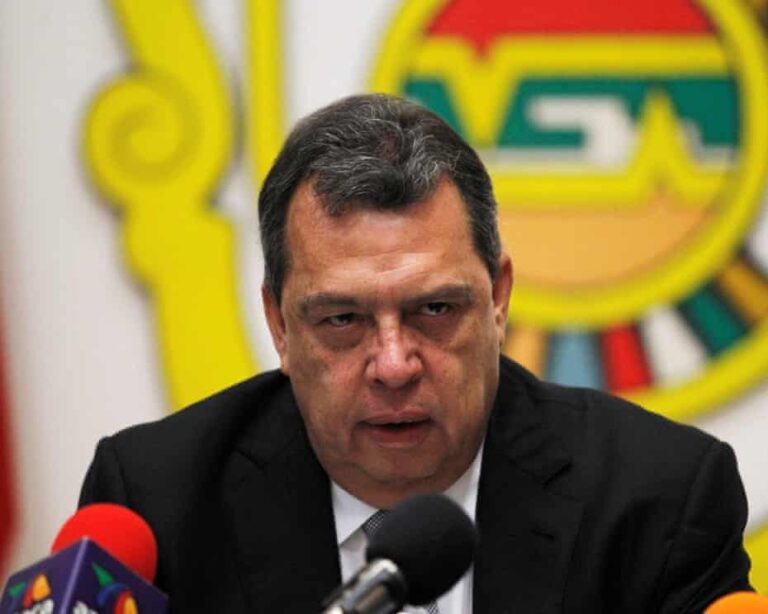
    A Mexican judge has ruled that prosecutors presented sufficient evidence to formally charge Ángel Aguirre, the former governor of Guerrero state, with forced disappearance and obstruction of justice in connection with the 2014 vanishing of 43 students. Aguirre, who was arrested following new testimony gathered by a federal investigative unit, is accused of ordering the destruction of surveillance camera recordings that could have clarified the events surrounding the abduction of students from the Raúl Isidro Burgos Rural Teachers’ College in Iguala. Defence counsel denied all allegations, asserting that Aguirre was attending a high-level meeting at the time the recordings were allegedly transferred to him. The judge ordered that Aguirre remain held in a maximum-security prison pending trial. The indictment represents one of the most prominent legal developments in the case since the 2022 arrest of former federal Attorney General Jesús Murillo Karam. Of the 43 trainees abducted on 26 September 2014 after commandeering buses for a protest, the remains of only three have been positively identified.

  • |

    PSX sheds over 1,800 points as US-Iran peace deal uncertainty triggers selling

    KARACHI: Selling pressure intensified at the Pakistan Stock Exchange (PSX) on Tuesday, with the benchmark KSE-100 Index suffering a sharp decline as investors turned cautious amid growing uncertainty surrounding the prospects of a near-term peace agreement between the United States and Iran. By 1:24pm, the benchmark index had dropped 1,806.12 points, or 0.89%, to 178,896.29, compared with the previous close of 180,502.44. The decline reflected widespread profit-taking and fresh selling across several key sectors of the market. The KSE-100 started the session at 180,502.44 and initially moved higher, reaching an intraday peak of 180,602.44. However, the early gains failed to hold as investors began offloading positions, pushing the index steadily lower. During the session, the benchmark touched an intraday low of 178,488.91, highlighting the intensity of selling activity. At one stage, the index was down 1,545.52 points, or 0.86%, at 178,956.92, before losses widened further. Market sentiment was affected by renewed uncertainty over the possibility of a diplomatic breakthrough between Washington and Tehran. Investors remained concerned that prolonged tensions could create additional risks for energy supplies and regional trade, particularly if disruptions affect major oil-producing and transportation routes. The rise in international oil prices added another layer of concern for investors. Higher crude prices can increase Pakistan’s import bill and place additional pressure on external-sector balances, while also raising concerns about inflationary pressures and corporate costs. The selling was not confined to a single segment. Significant weakness was witnessed in automobile assemblers, cement manufacturers, commercial banks, oil and gas exploration companies, oil marketing companies and power generation firms. The broad-based nature of the decline suggested that investors were adopting a cautious stance rather than selectively rotating into individual sectors. Market participants appeared particularly sensitive to developments in global geopolitics and their potential implications for commodity prices and Pakistan’s macroeconomic outlook. Trading activity, meanwhile, remained robust despite the decline in the benchmark. Around 358.21 million shares had changed hands by midday, while the total traded value stood at approximately Rs22.47 billion, indicating considerable participation from investors. The latest decline came after the KSE-100 ended the previous trading session at 180,502.44, leaving the index vulnerable to profit-taking following its recent strong performance. Tuesday’s movement therefore reflected a combination of investor caution, external geopolitical concerns and selling in major market segments. Analysts and market participants are expected to closely monitor developments on the US-Iran front, movements in international crude oil prices and domestic economic indicators for direction in the coming sessions. Any improvement in geopolitical sentiment or a renewed expectation of progress toward a peace agreement could help restore confidence, while further escalation and sustained increases in global oil prices could continue to weigh on equities.

  • |

    Indian officer suspended after firing rifle during student protest

    Indian authorities have suspended a police officer after he fired an AK-47 rifle into the air while attempting to disperse student protesters in the eastern state of Bihar. The incident has intensified criticism of the government’s handling of nationwide demonstrations that recently led to the resignation of Education Minister Dharmendra Pradhan. The confrontation took place on Saturday in the city of Siwan, where students were protesting against alleged irregularities in national examinations and broader concerns about unemployment. Videos shared on social media showed a police officer in riot gear running toward a crowd of protesters before pointing his assault rifle into the air and firing at least three rounds. Police later confirmed that the footage was authentic. Senior Bihar police official Nilesh Kumar said no one was injured during the incident. He explained that the suspended officer belonged to an intelligence unit that normally deals with dangerous criminals and had been issued the rifle as part of his official duties. However, Kumar said the weapon was used inappropriately because the protesters were students and did not pose a threat that justified such action. He said the officer’s conduct could not be defended under any circumstances and confirmed that disciplinary proceedings had begun. According to Kumar, further action will be taken following an investigation into the incident. The protests began after question papers for a national medical college entrance examination were leaked in May. More than two million students had taken the exam before authorities were forced to order a retest because of the security breach. The controversy sparked widespread anger among young people who accused the government of failing to protect the integrity of the examination process. As demonstrations grew larger, students also began raising concerns about rising unemployment and fears that artificial intelligence could reduce future job opportunities, especially in India’s information technology and outsourcing sectors. These issues helped expand the movement beyond the examination scandal, drawing support from students across different parts of the country. Public pressure eventually led to the resignation of Education Minister Dharmendra Pradhan, who stepped down after nearly five weeks of protests. Despite the resignation, demonstrations have continued as students demand broader reforms and greater accountability from the government. The police response has faced increasing criticism. Officers have been accused of using excessive force against demonstrators, including beating students with batons and firing tear gas during a large march toward India’s parliament in New Delhi earlier this month. Human rights advocates and opposition leaders argue that authorities have responded too aggressively to mostly peaceful protests. Speaking in parliament, Congress Party president Mallikarjun Kharge condemned the police action and described it as one of the most serious attacks on democratic rights in recent years. He said reports that an assault rifle had been used against student protesters in Bihar were deeply troubling and called for those responsible to be held accountable. Parliamentary proceedings were repeatedly disrupted as opposition lawmakers raised the issue and demanded answers from the government. Ministers did not immediately respond before both houses were adjourned amid heated exchanges. The controversy also drew attention from India’s judiciary. Supreme Court Justice Ujjal Bhuyan expressed concern about what he described as the shrinking space for people to express different opinions in the country. In a public speech, he said the right to voice opinions and participate in peaceful demonstrations is a fundamental freedom guaranteed to every citizen. His remarks were seen as an unusual intervention by a sitting judge and added to growing calls for restraint in the handling of public protests.

  • | | |

    Ishaq Dar reaffirms Pakistan’s commitment to Com…

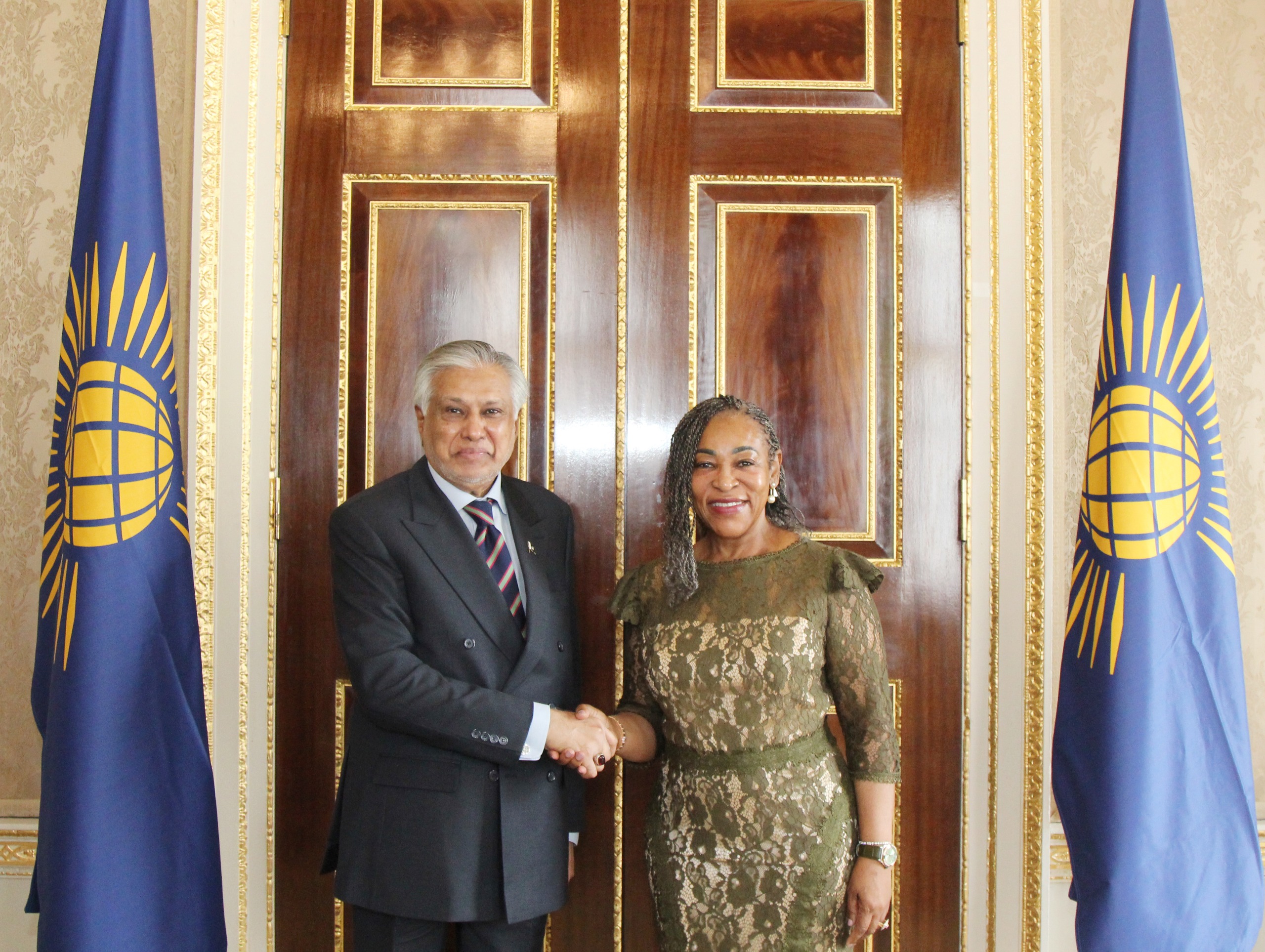
    LONDON: Deputy Prime Minister and Foreign Minister Senator Mohammad Ishaq Dar reaffirmed Pakistan’s unwavering commitment to the Commonwealth during a meeting with Commonwealth Secretary-General Shirley Botchwey at Marlborough House in London on Wednesday. As a founding member of the Commonwealth, Senator Dar reiterated Pakistan’s support for the Secretary-General’s vision to strengthen the organisation and reaffirmed the country’s commitment to advancing the Commonwealth’s agenda on youth empowerment, climate resilience and sustainable economic development. The Deputy Prime Minister emphasised the importance of promoting intra-Commonwealth trade through institutionalised cooperation between banking sectors, saying stronger financial connectivity would help unlock greater economic opportunities for member states. Highlighting Pakistan’s expertise in climate change mitigation and disaster management, Senator Dar said Commonwealth countries could benefit from Pakistan’s experience in responding to natural disasters. He renewed Pakistan’s offer to host the proposed Commonwealth Disaster Resilience Hub at the National Disaster Management Authority (NDMA) in Islamabad. Secretary-General Botchwey welcomed Pakistan’s offer and said the Commonwealth Secretariat looked forward to working closely with Islamabad to strengthen disaster preparedness and resilience across member states. The two leaders also agreed to expand cooperation on youth development under Pakistan’s co-chairmanship of the Commonwealth Youth Ministers Meeting (CYMM). They underscored the importance of creating greater opportunities for young people through enhanced Commonwealth programmes and initiatives. During the meeting, Senator Dar briefed the Secretary-General on recent developments in the Middle East, including Pakistan’s diplomatic efforts in helping broker peace between the United States and Iran. Secretary-General Botchwey congratulated Pakistan, particularly Senator Dar, for his sustained diplomatic engagement and mediation efforts between the United States and Iran. She thanked him for helping avert a potentially destructive conflict and for making a significant contribution to regional peace and stability. The meeting reflected Pakistan’s continued commitment to strengthening multilateral cooperation through the Commonwealth while promoting dialogue, disaster resilience, youth development and international peace.

Leave a Reply

Your email address will not be published. Required fields are marked *