north korean hacking
| |

North Korean hacking group builds AI tools for cyberattacks – report

SEOUL, South Korea – A North Korean hacking group built large language model tools and collected software that could help automate cyberattacks, analyze stolen material, and produce more convincing phishing campaigns, a South Korean cybersecurity firm said on Monday, August 10.

The cybersecurity firm, Genians, said it found evidence that the North Korean-linked group Kimsuky had set up tools for running and managing AI models locally, including Ollama, GPT4All, and Msty, alongside document search technology known as retrieval augmented generation (RAG).

According to the company, the tools could allow operators to process documents without sending sensitive information to outside AI services.

Genians also found AI agent development frameworks, speech-to-text software and Cursor, an AI-assisted coding tool, on infrastructure it linked to the campaign.

The findings suggest Kimsuky is moving beyond using generative AI to create phishing lures and is building capacity to integrate existing AI models into malware development, data analysis, and attack automation, Genians said in its report.

Genians also said it found finance and cryptocurrency-themed decoy documents that appeared to have been generated with AI. The materials were designed to resemble legitimate investment reports and other workplace documents, it said.

The company’s findings could not be independently verified.

North Korea has for years used state-linked cyber units for espionage, financial theft and revenue generation, according to US and South Korean authorities, as well as cybersecurity experts.

The US Treasury in 2023 sanctioned Kimsuky as a North Korean government-controlled cyber-espionage group, saying it gathered intelligence in support of Pyongyang’s strategic objectives. – Rappler.com

Similar Posts

  • |

    AI matchmaking helps hundreds find life partners in Japan

    Tokyo- Artificial Intelligence (AI) is now being used for a wide range of purposes around the world including helping people find a life partner. In Japan, AI-powered matchmaking has already helped hundreds of couples get married. Japan has been facing a decline in marriage and birth rates while its aging population continues to grow. To address this issue, local governments have partnered with private companies to introduce AI-based matchmaking systems. The AI analyzes users personalities, values, interests, hobbies and lifestyle preferences to recommend compatible life partners. An AI-powered matchmaking app was launched in September 2024 to make it easier for people seeking marriage to find a suitable lifelong partner. To use the app, users must provide verified proof of identity, confirm that they are legally unmarried, submit income-related documents and complete an online interview before joining the platform. According to Japanese authorities, the technology has encouraged more people especially young adults to consider marriage. Previously, many young people showed little interest in traditional matchmaking services. Officials say the program has contributed to an increase in marriages in several Japanese cities. Its primary goal is to help boost Japan’s declining birth rate with the government introducing various initiatives to encourage marriage. Experts note that while AI cannot decide relationships on its own, it can help remove barriers and make it easier for people to find compatible life partners.

  • |

    US delegation walks out of UN Security Council after dispute with France

    The United States walked out of a United Nations Security Council meeting on Monday during remarks by France’s ambassador, escalating a diplomatic dispute between the two allies over human rights and the leadership of the UN’s top human rights office. The disagreement began after a recent vote on extending the term of Volker Turk as the United Nations High Commissioner for Human Rights. The United States joined Russia and North Korea in opposing his reappointment, placing Washington on the same side as two countries it has frequently criticized over human rights issues. Following the vote, France’s mission to the United Nations strongly criticized the US position on social media, saying Washington had once been a global symbol of human rights but no longer deserved that reputation. The statement drew a sharp response from American officials and set the stage for the diplomatic confrontation that followed. The latest tension unfolded during an emergency Security Council meeting on Russia’s war in Ukraine. As France’s UN Ambassador Jerome Bonnafont began speaking, members of the US delegation left the chamber in protest. US Ambassador Dan Negrea later said the walkout was a direct response to what he described as France’s disrespectful and condescending language toward the United States. He warned that similar protests would continue unless France changed its approach and withdrew its criticism. Earlier, US Ambassador Mike Waltz defended Washington’s opposition to Turk’s second term. He argued that the human rights chief had unfairly criticized democratic countries while failing to take a strong enough stance against governments with poor human rights records. Waltz did not identify specific examples to support his criticism. During his time in office, Turk has repeatedly condemned Russia’s invasion of Ukraine and has also raised concerns about Israel’s military operations in Gaza. Despite US objections, his second term was approved by a large majority of UN member states, with 144 countries voting in favor, 10 voting against and 13 abstaining. The dispute reflects broader tensions between the United States and the United Nations under President Donald Trump’s administration. In recent years, Washington has reduced financial support for several UN agencies and withdrawn from a number of UN bodies as part of a wider review of its international commitments. After the vote on Turk’s reappointment, US Ambassador Jeff Bartos warned that the United States would reconsider its participation, engagement and funding for UN institutions. He accused the organization of allowing procedural abuses and political deals to influence key appointments. France, however, strongly defended Turk’s leadership. Ambassador Bonnafont described him as a principled and impartial official who had carried out his responsibilities with integrity during his first term. France argued that his reappointment reflected the confidence of the overwhelming majority of UN member states. A spokesperson for the United Nations declined to comment directly on the American walkout but said the organization expects all member countries to respect decisions made through its established voting process. The incident has added to growing friction between Washington and the UN at a time when international cooperation is already under pressure from several global conflicts.

  • |

    AI builds 16 brand-new viruses in world-first genome experiment

    Artificial intelligence has designed 16 entirely new viruses that have never existed in nature before. Researchers in the US are calling it a genuine scientific breakthrough. According to the team behind the project, these newly designed viruses are fully functional and can replicate successfully in lab conditions. Scientists are describing the achievement as a major turning point for the field. This marks the first time AI has managed to design a complete viral genome from scratch. The viruses were specifically built to target bacteria, particularly drug-resistant strains of E. coli, and pose no risk to humans. The work was led by Dr Brian Hie and his team at Stanford University. They relied on genome language models, including systems called Evo1 and Evo2, trained using data from roughly two million bacteriophages. To keep the research safe, the team deliberately excluded any genetic data linked to viruses capable of infecting humans, animals or plants. That precaution was built into the training process from the very start. Hie explained that this represents a new level of complexity for what generative AI can design. He noted that building a complete, functional genome capable of replicating inside cells was completely uncharted territory for his team. Out of thousands of AI-generated designs, researchers narrowed the list down to around 300 for lab synthesis. After testing, only 16 of those proved effective at killing antibiotic-resistant E. coli. Scientists have framed the achievement as a potential breakthrough with real medical applications ahead. Tom Ellis, a synthetic genome expert at Imperial College London, called the work impressive but pointed out its current limitations. He noted that this particular genome remains one of the simplest and smallest to design successfully. Ellis added that concerns around AI-designed pathogens are often overstated compared to more realistic risks. He explained that modifying existing pathogens through gain-of-function techniques remains a far easier and more likely biosecurity threat. Still, some researchers in the wider scientific community remain cautious about where this technology could eventually lead. Experts at the Johns Hopkins Center for Health Security warned that proper oversight for this kind of AI-driven genome design doesn’t fully exist yet. Dr Filippa Lentzos from King’s College London argued that regulation needs to focus on multiple layers, including lab safety and DNA synthesis screening, rather than restricting AI models alone.

  • |

    Workers discover gold while replacing sewer line

    When a drainage or sewerage line is replaced, workers generally expect to find nothing more than waste and garbage inside it. However, during routine renovation work in Belgium, workers made an astonishing discovery: gold worth billions of Pakistani rupees. The incident took place in Sint-Gillis-Dendermonde, Belgium. Workers were replacing a sewer line during the renovation of a building. They removed part of the foundation to install new pipes when they noticed something shining underground. At first, they thought they had found one-euro coins but they soon realized that the objects were actually gold. According to Mario, the workers’ manager, “I looked carefully and picked up the gold. Then we dug further and found more coins and gold pieces. It was an incredible experience.” He said that in his 33 years of construction work, he had never experienced anything like this before. An 18-year-old student working with the team said that at first they could hardly believe what they had found because they had never expected to discover gold. After the treasure was examined, it was estimated to be worth around $14 million equivalent to more than Rs2.5 billion. Unfortunately for the workers, they were unable to keep the treasure and had to hand it over to the police. The treasure is currently being kept by a charitable organization.It is still unclear who originally owned the gold. However, the building was reportedly once owned by a wealthy family. Under Belgian law, the original owner can claim such a treasure within five years. If no claim is made during that period, the treasure will be divided between the person who discovered it and the owner of the property.

  • |

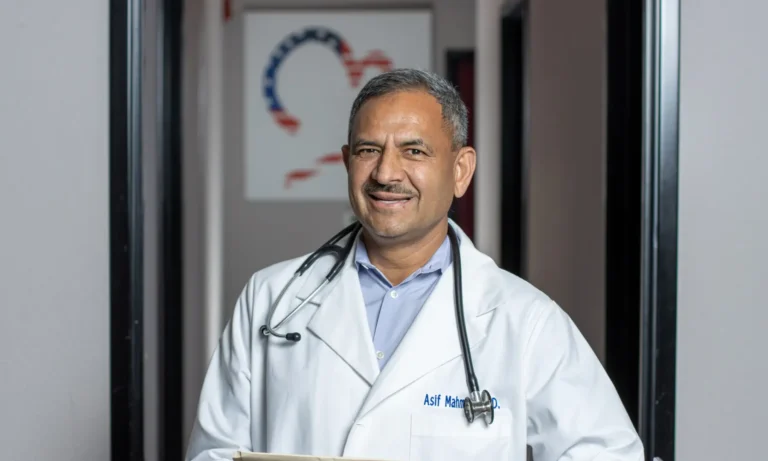
    Pakistani American Dr Asif Mahmood elected chair of US religious freedom commission

    Pakistani American physician and human rights advocate Dr Asif Mahmood has been unanimously elected as chair of the US Commission on International Religious Freedom, becoming the first South Asian to lead the independent bipartisan body. Dr Mahmood, who previously served as the commission’s vice chair, described his election as a great honour and reflected on his journey from a small village in Pakistan to leading one of the world’s leading organisations focused on protecting freedom of religion and belief. In his acceptance remarks, he said he remains committed to defending the rights of people from all religious backgrounds as well as those who do not follow any faith. He expressed hope for a world where religious freedom, human dignity and peaceful coexistence are respected and protected. His appointment follows his reappointment to the commission for a second term in May 2026, extending his service until 2028. Earlier this year, he noted that he was the first Pakistani, the first Muslim and the first Asian American to serve consecutive terms on the commission. The US Commission on International Religious Freedom was established in 1998 under legislation signed by former President Bill Clinton. It serves as an independent advisory body that monitors religious freedom around the world and provides policy recommendations to the White House, the US State Department and Congress. The commission is made up of nine members appointed by the US president and congressional leaders from both major political parties. Dr Mahmood was reappointed by House Minority Leader Hakeem Jeffries and now succeeds former congresswoman Vicky Hartzler as chair. Political observers have described his election as significant because of his Democratic Party affiliation despite receiving his latest appointment during the Trump administration. His leadership is expected to draw international attention, particularly because of his work on religious freedom issues in South Asia. Dr Mahmood has played a leading role in preparing reports examining allegations of religious freedom violations in India. He has publicly called for greater international scrutiny of the treatment of religious minorities and urged the United States to consider stronger measures in response to concerns raised by the commission. The commission has also recommended that US officials seek independent assessments of religious freedom conditions in India and consider targeted measures against individuals or organisations found responsible for serious violations. Those recommendations have generated considerable debate and have been strongly rejected by Indian authorities in the past. Beyond his work on religious freedom, Dr Mahmood has remained active in public service and politics. In 2022, he contested California’s 40th Congressional District as the Democratic candidate but was defeated by Republican incumbent Young Kim. Earlier, he also ran for California Insurance Commissioner and received hundreds of thousands of votes. A native of Kharian in Pakistan’s Punjab province, Dr Mahmood completed his medical education at Sindh Medical College before moving to the United States. He later completed his medical training at the University of Kentucky Medical Center and pursued a fellowship in pulmonary medicine at Harlem Hospital, which is affiliated with Columbia University. He currently serves on the Medical Board of California after being appointed by Governor Gavin Newsom in 2023. Over the years, he has also worked with several humanitarian and community organisations and has received recognition for providing free medical care to patients who could not afford treatment. His election as chair marks another milestone in a career that combines medicine, public service and advocacy for human rights.

  • | |

    Germany faces ICJ hearing over Nicaragua’s Gaza …

    THE HAGUE: The International Court of Justice (ICJ), the United Nations’ highest judicial body, has announced that it will hold public hearings in September to examine Germany’s preliminary objections in a case filed by Nicaragua over alleged violations of international law related to the occupied Palestinian territory, particularly the Gaza Strip. According to an official statement issued by the court, the hearings will take place from September 7 to September 10 at the Peace Palace in The Hague. The proceedings will focus solely on Germany’s objections to the court’s jurisdiction and the admissibility of parts of Nicaragua’s legal claims before the case can move forward on its merits. Nicaragua initiated the case on March 1, 2024, accusing Germany of breaching its obligations under the Genocide Convention, the 1949 Geneva Conventions, their Additional Protocols and other principles of international humanitarian law. The Central American nation argues that Germany has failed in its duty to help prevent genocide by continuing political, financial and military support for Israel during the conflict in Gaza. Nicaragua also claims Germany’s decision to suspend funding for the United Nations Relief and Works Agency for Palestine Refugees (UNRWA) contributed to worsening the humanitarian situation. According to Nicaragua, the ongoing conflict, which began in October 2023, has created what it describes as a recognized risk of genocide against the Palestinian population in Gaza, making all states party to the Genocide Convention responsible for taking preventive measures. Germany formally challenged the case on October 21, 2025, filing preliminary objections that argue the ICJ does not have jurisdiction to hear the dispute. Berlin also contends that several of Nicaragua’s claims are legally inadmissible. Under ICJ procedures, consideration of the main case has been suspended until the court decides whether it has the authority to proceed. The hearing schedule provides Germany with the first opportunity to present oral arguments on September 7, followed by Nicaragua on September 8. Germany will return for a second round on September 9, while Nicaragua will deliver its final submissions on September 10. The case is being closely watched by governments, legal experts and international human rights organizations, as the court’s eventual ruling on jurisdiction could determine whether one of the most closely followed legal disputes arising from the Gaza conflict proceeds to a full hearing on its merits.

Leave a Reply

Your email address will not be published. Required fields are marked *