china got access
| |

How China got access to Nvidia’s AI chips despite rules to stop them

AI chips are a central battleground in the US-China technology race. To preserve its lead, in recent years Washington has imposed and revised rules to restrict China’s access to advanced semiconductors and chipmaking technology, while balancing national security concerns with trade considerations.

The drama around Nvidia, the top US exporter of AI chips to China, has thrust those rules into the spotlight.

Delving into the resulting regulations is a quagmire. Export control rules are often likened to the US tax code in their complexity and constant revision.

Here are some basics for understanding what’s legal, and what’s not, when it comes to China’s access to US AI chips:

When did the US start to restrict chips to China?

In October 2022, the US unveiled sweeping restrictions on advanced chips to China, marking the biggest shift in US policy toward exporting technology to China in decades.

A year later, it tightened the rules to capture more chips and stop chip designers such as Nvidia from selling products engineered to fall just below the performance thresholds of the earlier restrictions. It also expanded the restrictions to countries in the Middle East and restricted chips to overseas companies headquartered in China.

In January 2025, the Biden administration extended the restrictions globally, imposing a worldwide license requirement. But in May, days before it was set to take effect, the Trump administration announced it would not enforce that rule.

The Trump administration only formally rescinded and replaced the rule last week, leaving a gap that allowed data center capacity to proliferate in countries such as Singapore, where Chinese companies could rent computing power remotely to train and deploy AI models.

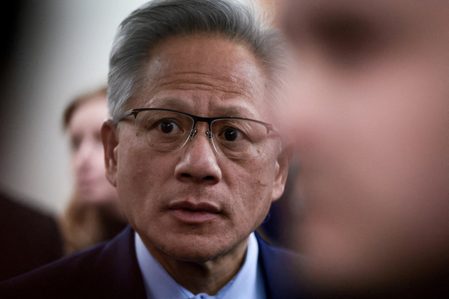
Did Megaspeed, the Singapore cloud company whose former executive allegedly had an affair with Nvidia CEO Jensen Huang, operate legally?
Must Read

At AI speed, Nvidia’s Jensen Huang finds exoneration


At AI speed, Nvidia’s Jensen Huang finds exoneration

For over two years, authorities have been investigating whether Megaspeed diverted chips to China, which would be illegal. But companies in countries including Singapore were allowed to buy advanced AI chips for their data centers license-free until the US issued a new rule last week cutting off that practice.

Megaspeed likely won’t be getting any more chips. It was added to a US trade blacklist this week, along with its Thai and Malaysian subsidiaries, essentially blocking shipments. Nvidia also said it cut off sales to Megaspeed in June 2025.

About a year ago, President Donald Trump allowed Nvidia to ship its H200 chip to China, drawing criticism from experts who said the chips would help jumpstart China’s military modernization and erode the US lead in AI. The H200 chip is one of Nvidia’s more advanced chips, but not top-of-the-line.

Nvidia cannot simply ship the chips to Chinese companies that pay for them. Nvidia must apply for licenses from the US Department of Commerce, which has issued them since last spring on a case-by-case basis.

Last week, the House foreign affairs committee released licensing data showing the Trump administration approved shipments of nearly 900,000 advanced AI chips made by Nvidia and AMD for Chinese companies from December 2025 through May 2026.

What does the new Trump administration rule do?

Last week, the Trump administration issued a new regulation, adding license requirements for five countries including Malaysia, Singapore and Thailand, in an effort to crack down on chips being smuggled into China.

Prior to that, the chip-based license requirement generally applied to countries like Russia that raise national security concerns, along with companies headquartered in arms-embargoed countries. Now they also apply to Southeast Asian countries viewed as transshipment points with a high risk for illegal diversion to China.

The rule also clamped down on AI chip sales to non-US data centers that supply a high volume of computing power to Chinese-headquartered firms.

How big a problem is chip smuggling?

For years, Nvidia’s Huang has said there is no evidence of chip smuggling to China.

But that assertion, which experts already viewed skeptically, was further questioned in March when US prosecutors charged three people associated with California-based AI server maker Super Micro Computer SMCI.O, including its co-founder, in a scheme to divert about $2.5 billion of US technology into China, including AI servers packed with Nvidia AI chips.

Critics say Nvidia has tried to minimize a well-known risk. Huang once said Nvidia’s sophisticated Grace Blackwell AI chip platform weighed nearly 1.8 metric tons and could not fit into a pocket or backpack. But servers are not smuggled in backpacks. They are routed through third countries and intermediary companies.

Supporters say Nvidia may not have had verified evidence of diversion and that the company cannot keep tabs on all its products after they’re sold.

Can Nvidia track its chips to see where they end up?

Nvidia has built location verification technology that could indicate which country its chips are operating in, the company confirmed in December 2025. It has offered the feature as a software option for customers.

But the company has opposed proposed legislation that would require location verification and diversion reporting for advanced AI processors.

A measure known as the Chip Security Act is among several export control bills that gained new momentum in the wake of the Nvidia scandal, and may be included in the National Defense Authorization Act that Congress is expected to pass next month. – Rappler.com
Similar Posts

  • |

    Japan earthquake disrupts auto and chip production as death toll rises to 34

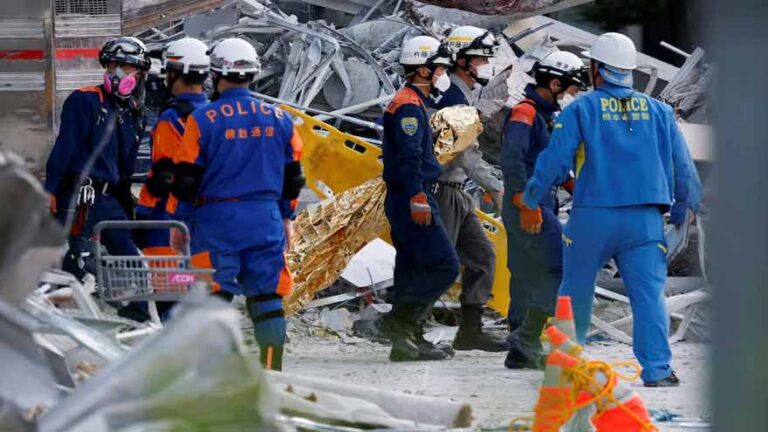
    A powerful earthquake that struck Japan’s Kumamoto region has killed at least 34 people and disrupted major manufacturing operations, exposing the continued vulnerability of the country’s industrial supply chains. The 7.1 magnitude quake damaged roads, interrupted essential services and forced several automobile and semiconductor companies to suspend production, raising concerns about delays across global supply networks. The earthquake struck on Tuesday, causing widespread destruction in southern Japan. Thousands of households were left without basic utilities while damaged roads and transport links made it difficult for businesses to continue normal operations. Kumamoto is one of Japan’s most important manufacturing regions and plays a key role in producing vehicles, auto parts and semiconductors used around the world. Toyota has temporarily suspended production at three factories in Fukuoka until August 5 because of concerns about employee safety and disruptions affecting suppliers and transport companies. The company has also decided to halt operations at one of its plants in Aichi, located more than 600 kilometres from the disaster zone, showing how shortages of essential components can quickly affect factories far from the earthquake’s epicentre. One of Toyota’s major suppliers, Aisin, also suffered disruptions at its factory near the hardest hit area. The company manufactures engines, doors and other vehicle parts for Toyota, Nissan and Daihatsu. Aisin said it plans to restart production gradually after confirming that facilities are safe and product quality can be maintained. However, it has not announced when full operations will resume. Trucks carrying supplies, including portable toilets, were seen entering the factory as recovery work continued. Local businesses reported that water services had been interrupted although electricity remained available. The latest disaster has revived memories of the 2016 Kumamoto earthquake, which caused severe damage to the same Aisin plant and forced Toyota to suspend production across Japan because of shortages of a critical door component. Industry officials said smaller suppliers further down the supply chain may also have been affected this time, increasing the risk of continued production delays. Auto parts manufacturer Denso said one of its suppliers had already reported damage while several others were still assessing conditions. Nissan has suspended some production at its two vehicle plants in Kyushu because of delays in receiving parts. Mitsubishi Motors has also halted certain production lines at its factory in Okayama as the effects of the earthquake continue to spread through the manufacturing sector. Kumamoto has also become one of Japan’s leading centres for semiconductor production in recent years. The region is often referred to as the country’s Silicon Valley because of its concentration of advanced chip manufacturers. Taiwan Semiconductor Manufacturing Company, the world’s largest contract chipmaker, evacuated workers from its Kumamoto plant immediately after the earthquake. The company later confirmed that operations had started to resume within a few hours. Other semiconductor companies are expected to take longer to recover. Renesas said damage at one of its facilities included fallen ceiling panels, cracked walls and water leaks. The company plans to restart production in stages beginning on August 5. Tokyo Electron announced that it expects to resume production next week, while Sony said efforts are continuing to restore operations at its semiconductor factory in Kumamoto. Although the number of deaths is lower than the more than 260 people killed in the 2016 earthquake, this disaster has still caused significant human and economic losses. Nearly half of the fatalities occurred inside commercial buildings. Nine people died when severe structural damage struck a Nippon Paper Industries mill near the epicentre. Another seven people lost their lives at an Aeon shopping mall where authorities believe a gas explosion occurred more than an hour after the initial earthquake. The disaster has once again highlighted the challenge Japan faces in protecting both its population and its globally important manufacturing industry from natural disasters.

  • | | | |

    Trump says US-Iran talks to resume Monday

    US President Donald Trump has announced that fresh negotiations between the United States and Iran are expected to begin on Monday, saying he decided to suspend planned military action after being encouraged by signs of progress toward a possible agreement. Speaking to reporters aboard Air Force One, Trump said discussions with Tehran would resume through diplomatic channels, expressing hope that negotiations could help prevent further escalation in the region. He did not disclose the venue of the talks or identify the officials expected to participate. Earlier, Trump stated that he had delayed what he described as a large-scale military operation after receiving requests from Iran and several key US allies in the Middle East to give diplomacy another opportunity. According to him, regional partners believed a negotiated settlement was within reach and urged Washington to avoid immediate military action. Trump said Saudi Arabia, the United Arab Emirates and Qatar had all encouraged restraint, arguing that continued dialogue offered the best chance for reducing tensions. He added that discussions were expected to cover issues related to the Strait of Hormuz as well as Iran’s nuclear programme. Despite Trump’s comments, Iranian authorities have not officially confirmed the planned negotiations. Iran’s semi-official Mehr News Agency rejected claims that Tehran had requested the United States to postpone military action, describing the assertion as inaccurate. Iranian Foreign Minister Abbas Araghchi, however, said negotiations involving Oman over the future of the Strait of Hormuz were progressing toward a final stage, indicating that diplomatic contacts remain active. Trump also declined to set a deadline for reaching an agreement, saying his administration was prepared for different outcomes but preferred a peaceful resolution over military confrontation. The announcement had an immediate impact on global energy markets. Oil prices fell sharply in early Asian trading as investors reacted to the possibility of reduced tensions in the Gulf region. Brent crude and US benchmark oil both recorded notable declines following Trump’s remarks. The Strait of Hormuz remains one of the world’s most strategically important shipping routes, with roughly one-fifth of global crude oil and liquefied natural gas supplies passing through the narrow waterway. Any disruption in the area has the potential to significantly affect international energy markets.

Leave a Reply

Your email address will not be published. Required fields are marked *