trump says usiran
| | | |

Trump says US-Iran talks to resume Monday

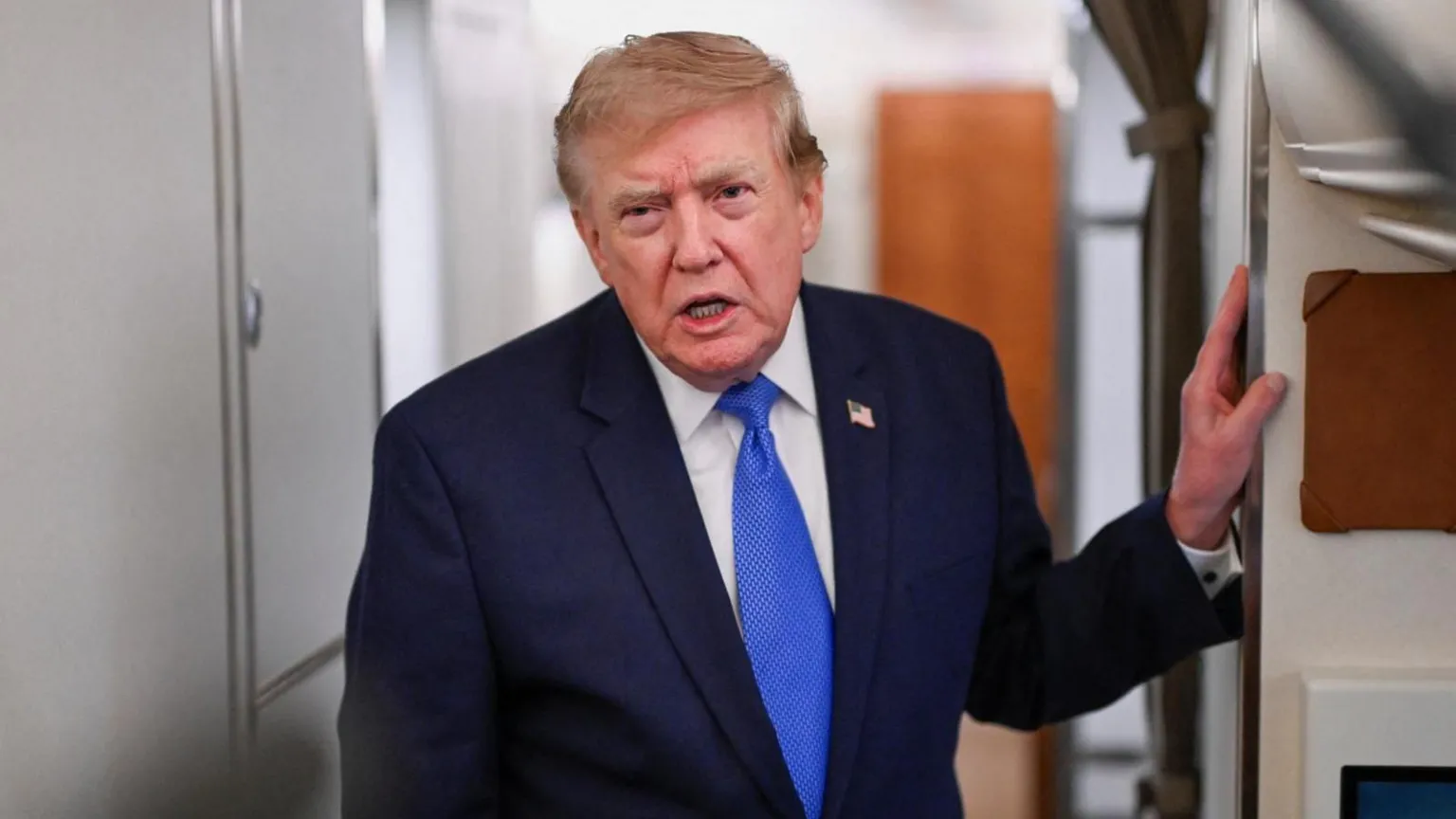
US President Donald Trump has announced that fresh negotiations between the United States and Iran are expected to begin on Monday, saying he decided to suspend planned military action after being encouraged by signs of progress toward a possible agreement.

Speaking to reporters aboard Air Force One, Trump said discussions with Tehran would resume through diplomatic channels, expressing hope that negotiations could help prevent further escalation in the region. He did not disclose the venue of the talks or identify the officials expected to participate.

Earlier, Trump stated that he had delayed what he described as a large-scale military operation after receiving requests from Iran and several key US allies in the Middle East to give diplomacy another opportunity. According to him, regional partners believed a negotiated settlement was within reach and urged Washington to avoid immediate military action.

Trump said Saudi Arabia, the United Arab Emirates and Qatar had all encouraged restraint, arguing that continued dialogue offered the best chance for reducing tensions. He added that discussions were expected to cover issues related to the Strait of Hormuz as well as Iran’s nuclear programme.

Despite Trump’s comments, Iranian authorities have not officially confirmed the planned negotiations. Iran’s semi-official Mehr News Agency rejected claims that Tehran had requested the United States to postpone military action, describing the assertion as inaccurate.

Iranian Foreign Minister Abbas Araghchi, however, said negotiations involving Oman over the future of the Strait of Hormuz were progressing toward a final stage, indicating that diplomatic contacts remain active.

Trump also declined to set a deadline for reaching an agreement, saying his administration was prepared for different outcomes but preferred a peaceful resolution over military confrontation.

The announcement had an immediate impact on global energy markets. Oil prices fell sharply in early Asian trading as investors reacted to the possibility of reduced tensions in the Gulf region. Brent crude and US benchmark oil both recorded notable declines following Trump’s remarks.

The Strait of Hormuz remains one of the world’s most strategically important shipping routes, with roughly one-fifth of global crude oil and liquefied natural gas supplies passing through the narrow waterway. Any disruption in the area has the potential to significantly affect international energy markets.

Similar Posts

  • | | | |

    Houthi attack on Yemen’s Mokha leaves six dead

    MOKHA: A Houthi attack on Yemen’s Red Sea port city of Mokha has killed six people, including two security personnel, according to a military official from Yemen’s internationally recognised government. The attack, which took place on Friday, targeted commercial vessels unloading cargo at the port, raising fresh concerns over the security of maritime activity along one of the world’s most strategically important shipping routes. The military official said the Iran-aligned Houthi group fired five missiles at the vessels. The strikes reportedly hit the port area and caused fires to break out aboard two ships. The attack comes as tensions continue to rise across Yemen, with Houthi forces increasingly targeting areas controlled by the internationally recognised government. The latest violence has also added to concerns over the safety of commercial shipping operating near the Red Sea and Bab el-Mandeb Strait. Mokha, historically known as Mocha, is located on Yemen’s western coast near the Bab el-Mandeb, a narrow maritime passage linking the Red Sea with the Gulf of Aden. Its location gives the port significant importance for regional trade and shipping. The latest incident follows a series of Houthi attacks in and around Yemen’s government-held territories and against commercial vessels. The United Nations has warned that Yemen is at increasing risk of a return to wider conflict, with military activity intensifying despite the fragile calm that followed the 2022 truce. The renewed attacks have also raised fears of further disruption to international shipping. Maritime authorities continue to warn commercial operators about missile, drone and other threats in the southern Red Sea, Bab el-Mandeb and Gulf of Aden. Details about the identities of those killed and the extent of damage to the vessels were not immediately available. The attack is likely to further deepen concerns about Yemen’s fragile security situation and the growing risks facing civilian and commercial activity along its Red Sea coastline.

  • | | | |

    PM, Field Marshal inaugurate Sky47 Karakoram One D…

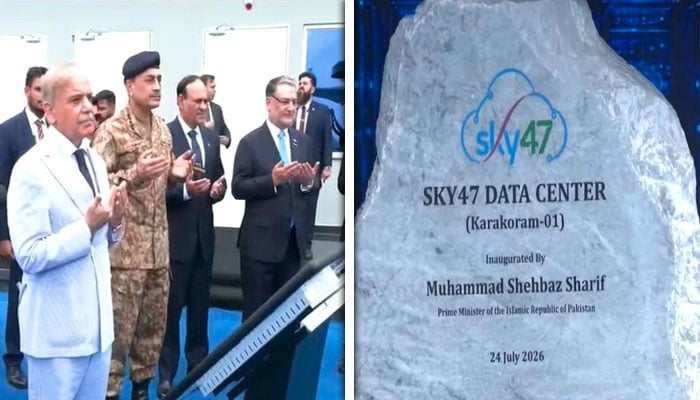
    Prime Minister Shehbaz Sharif and Field Marshal Syed Asim Munir have inaugurated the Sky47 Karakoram One Data Centre, marking a major step towards strengthening Pakistan’s digital infrastructure. During a briefing at the facility, the prime minister was informed that the data centre would provide a strong foundation for cloud computing, data hosting and advanced digital services. Officials said the project would help Pakistan move towards technological self-reliance. The Sky47 Data Centre has the capability to support emerging technologies, including artificial intelligence (AI), machine learning and high-performance computing. It is expected to play an important role in meeting the country’s growing digital and technological needs. Addressing the inauguration ceremony, Prime Minister Shehbaz Sharif described the modern data centre as an impressive and remarkable achievement. He praised the completion of the project in a short period, saying it reflected strong commitment, expertise and determination. The prime minister appreciated the leadership of Field Marshal Asim Munir and the contribution of technology partner ZTE in making the project possible. He said the country’s achievements during difficult times showed that challenges could be overcome through unity, determination and hard work. Shehbaz Sharif said projects like Sky47 represent Pakistan’s future and would contribute to national progress. He thanked all stakeholders involved in delivering the facility and said such initiatives would enhance the country’s digital security and technological capabilities. Federal Minister for Information Technology Shaza Fatima Khawaja said the inauguration of the Sky47 Data Centre marked the beginning of a new era of artificial intelligence in Pakistan. She said the project would open doors to new economic opportunities and allow Pakistan to better utilise its resources, data and skilled workforce. The minister added that transforming data into practical solutions and converting artificial intelligence into economic value would be crucial for future growth. She said the global AI race would depend on secure, affordable and effective use of technology.

  • | |

    Interior Minister Talal Chaudhry says government&#…

      ISLAMABAD: Minister of State for Interior Talal Chaudhry has asserted that the ruling coalition will complete its full five-year constitutional term, even as he acknowledged that political speculation intensifies after the two-and-a-half-year mark. The minister addressed a range of pressing political questions, from the possibility of an opposition alliance to the stability of the current government. Chaudhry began by offering a pragmatic observation about Pakistan’s political rhythm. “After two and a half years, the countdown for any government effectively begins,” he said. However, he quickly dispelled any notion that this countdown implies an early end for the present administration. “The five years will be completed in full,” he emphasized, “and the coalition will continue to function in exactly the same manner as it does today.” He expressed complete confidence that the ruling alliance, led by the Pakistan Muslim League-Nawaz (PML-N), remains cohesive and resilient against any internal or external pressures. When questioned about the Pakistan Peoples Party (PPP) – a key coalition partner – Chaudhry delivered a nuanced response. He acknowledged that the PPP possesses a certain political awareness, or “ehsas”, regarding its current position within the alliance. He went further to state that this awareness will only deepen with time. “The PPP has this feeling today, and more feeling will also come,” he remarked, suggesting that as the government progresses, all partners will increasingly recognize the mutual benefits of remaining united. He framed this evolving consciousness not as a threat, but as a natural part of political maturity within a multi-party democratic setup. One of the most emphatic parts of Chaudhry’s interview was his categorical dismissal of any potential alliance between the PPP and the Pakistan Tehreek-e-Insaf (PTI). He stated, “There is no possibility of an alliance between the PPP and the PTI,” calling such speculation unfounded and politically motivated. He further reassured the public and investors alike that the government faces no existential threat from the opposition. According to the minister, the opposition remains fragmented and lacks the numerical strength or public mandate to destabilize the elected administration. Chaudhry then elevated his argument beyond mere political expediency, framing the continuity of the coalition as a national imperative. “It is in the best interest of Pakistan and the entire political system that the current alliance continues to function as it is,” he declared. He warned that any premature disruption of the government would create a dangerous power vacuum at a time when the country is grappling with economic stabilization, security challenges, and the need for institutional reforms. He called on all political stakeholders to prioritize national unity over partisan scores. The minister also took the opportunity to defend the government’s performance on key issues, including inflation management, anti-terrorism operations, and diplomatic engagements. While conceding that difficulties persist, he argued that the government has set the foundation for long-term recovery and that the opposition’s role should be constructive criticism rather than obstructionism. He urged political parties to rise above personal rivalries and focus on the greater good of the nation. In his concluding remarks, Talal Chaudhry made it clear that while the government is not afraid of early elections, it is also not shirking its responsibilities. “We were elected for five years, and we will serve for five years,” he said firmly. He expressed confidence that the public will ultimately judge this administration on its tangible achievements, not on opposition rhetoric. He dismissed the “two-and-a-half-year countdown” as a political cliché rather than a prophecy, reiterating that the coalition will not only survive but thrive until the very last day of its term. Overall, the interview projected an image of a self-assured government determined to see through its tenure, while subtly reminding its coalition partners – especially the PPP – that their long-term political futures are best secured within the existing fold. Whether this confidence will translate into political reality remains to be seen, but for now, Chaudhry’s message was unambiguous: the alliance is stable, the system is strong, and the government is here to stay.

  • | |

    Another Reko Diq-Sized mining project in Pakistan,…

    ISLAMABAD: The United States has expressed strong confidence in Pakistan’s mineral sector, with a senior US Embassy official revealing that the Trump administration is prepared to support another mega mining project on the scale of  to invest in Pakistan despite security concerns, viewing the country’s vast mineral wealth as strategically important for future global industries. During a background briefing with journalists on Wednesday, the embassy official said Washington considers Pakistan a key partner in the global race for critical minerals that are essential for advanced technologies, clean energy, artificial intelligence, semiconductors and defence manufacturing. According to the official, the US government is encouraging American investors to explore Pakistan’s untapped mineral resources, ranging from large-scale copper and gold projects to smaller mining ventures worth only a few million dollars. US Prepared to Finance Another Mega Project The official said the US administration is ready to support another project comparable to the multibillion-dollar Reko Diq development if geological surveys and feasibility studies demonstrate strong commercial potential. He added that financing support could be extended through US institutions such as the Export-Import (Exim) Bank and the Development Finance Corporation, both of which are playing a growing role in securing global supply chains for critical minerals. The official noted that American companies are not only interested in major mining investments but are also examining opportunities to acquire, develop and expand smaller mining operations across Pakistan. Reko Diq Progress Continues Despite Delays Discussing the Reko Diq copper and gold project, the official acknowledged that work is progressing, although at a slower pace than initially anticipated. He explained that project costs are currently being reassessed, after which developers will return to financiers to finalize the remaining funding package. The first phase of the Reko Diq project is estimated to cost around $7.7 billion, while the US Exim Bank has already offered $1.25 billion in financing. However, the overall financial structure remains under discussion. The project has experienced delays due to rising construction costs and security concerns in Balochistan, prompting project stakeholders to revise cost estimates more than once. Earlier this year, Barrick Gold, which owns a 50 percent stake in the project, also reviewed development timelines because of increasing costs and security-related challenges. Major Economic Benefits Expected The embassy official said Reko Diq has the potential to transform Pakistan’s economy once it becomes fully operational. According to the estimates shared during the briefing, the project could generate nearly $2 billion in annual free cash flow. Of this amount, around $500 million would go directly to the Government of Balochistan, while another $500 million would benefit Pakistan’s state-owned enterprises. The official further stated that Pakistan’s mining sector currently contributes roughly 3 percent to the country’s economy, while Reko Diq alone could increase national GDP by approximately 0.5 percentage points, highlighting its significance for long-term economic growth. Critical Minerals Becoming Strategic Priority The US official emphasized that critical minerals have become a top strategic priority for Washington as demand continues to rise across technology, renewable energy and defence sectors. Pakistan possesses commercially attractive reserves of copper, antimony, tungsten and several other minerals considered essential for future industries. He said American companies believe Pakistan has enormous untapped potential, particularly as global demand for copper is expected to rise sharply over the coming decades. The official added that US firms are actively seeking long-term supply agreements for minerals extracted from Pakistani mines, while some investors are interested in purchasing and developing smaller mining assets. Investment Opportunities Across Pakistan Besides Balochistan, American investors are also exploring mineral opportunities in Khyber-Pakhtunkhwa, particularly for copper deposits, while rare earth mineral prospects in Gilgit-Baltistan have also attracted attention. The official said the United States is searching globally for around 60 critical minerals needed for emerging technologies, many of which are found in Pakistan. He noted that several companies have already begun exploration and extraction activities in different regions of the country. Security Remains the Biggest Challenge Despite strong investment interest, the official acknowledged that security remains one of the most significant obstacles facing mining projects in Pakistan. He said US companies fully understand the risks associated with operating in regions such as Balochistan and Khyber-Pakhtunkhwa but remain willing to invest if appropriate security arrangements are provided. The official stressed that the Pakistani government should continue strengthening security measures and facilitating investors to ensure long-term success of mining projects. He added that American companies are encouraged to partner with local firms, which possess valuable experience in navigating operational and security challenges in remote mining areas. US Calls for Transparent Investment Environment The embassy official also urged Pakistan to maintain a transparent, predictable and competitive investment climate to attract greater foreign investment into the mineral sector. He noted that Pakistan’s participation in the US Critical Minerals Initiative earlier this year reflects growing cooperation between the two countries in securing future mineral supply chains. According to the official, if exploration and investment continue at the current pace, Pakistan’s mining industry could emerge as one of the country’s strongest economic sectors over the next 10 to 20 years, creating employment, increasing exports and significantly boosting national revenues.

  • | |

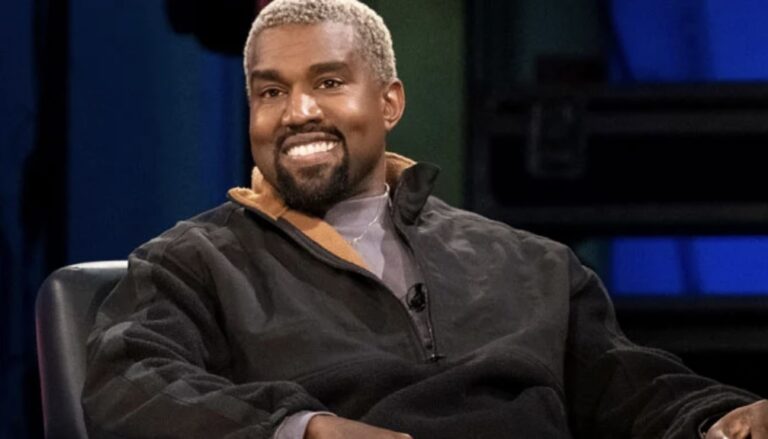
    How Kanye West celebrated after settling ex-assist…

    Kanye West appears to have put a lengthy legal battle behind him after reaching a settlement with his former assistant, Lauren Pisciotta. Just days after the civil lawsuit was resolved, the rapper was reportedly seen enjoying a night out in Ibiza, signaling a return to public life following months of courtroom headlines.  According to court filings, West and Pisciotta reached an unconditional settlement in the lawsuit that began in 2024. The terms of the agreement remain confidential, and Pisciotta is expected to formally dismiss the case within 45 days. West has consistently denied the allegations made against him throughout the legal proceedings, and the settlement does not include any admission of wrongdoing by either party.  Soon after news of the settlement became public, TMZ reported that West was spotted celebrating in Ibiza, Spain. The rapper was seen visiting one of the island’s popular nightlife venues, appearing relaxed as he spent time with friends. The outing marked one of his first public appearances since the legal dispute came to an end.  Lauren Pisciotta, who worked as West’s personal assistant and later as his chief of staff, first filed her lawsuit in June 2024. She accused the rapper of sexual harassment, wrongful termination and breach of contract. The complaint was later amended to include additional allegations, including sexual assault and sexual battery. West denied the accusations, with his representatives previously describing the claims as false and unfounded. No criminal charges were filed in connection with the civil case.  Although the settlement closes one chapter, West continues to attract attention both for his music career and his public appearances. The artist, who legally changed his name to Ye in 2021, has remained a frequent subject of headlines over the past several years due to legal disputes and personal controversies.  Neither West nor Pisciotta has publicly commented on the specific terms of the settlement. Legal experts note that confidential settlements are common in civil litigation and often allow both parties to avoid a lengthy trial. Because the agreement remains private, it is unclear whether any financial compensation was involved.  For now, West appears focused on moving forward. His appearance in Ibiza quickly drew media attention, with many viewing the outing as a sign that he is leaving the legal battle behind. While the settlement brings an end to one of his most closely watched civil cases, the rapper remains one of the entertainment industry’s most talked-about and closely followed figures. 

  • | | | |

    Pakistan’s blasphemy cases hit record low

    Pakistan has witnessed a significant decline in registered blasphemy cases this year following a crackdown on hardline religious groups, signalling what analysts describe as a major shift in the country’s security policy. According to figures cited by the Human Rights Commission of Pakistan (HRCP), only 13 blasphemy cases have been registered so far in 2026, marking a fall of nearly two-thirds compared with the same period in recent years. Data from conflict monitoring organisation ACLED also indicates that only one blasphemy-related riot or attack has occurred over the past year, compared with an annual average of more than seven incidents between 2021 and 2024. The decline comes after security agencies intensified action against several extremist organisations accused of exploiting blasphemy allegations to incite violence. Officials familiar with the matter said the campaign has included arrests of key figures, restrictions on organisational activities, freezing of financial assets and tighter monitoring of religious gatherings. The change was evident during an incident in Karachi last month, where allegations of blasphemy against a Christian family drew a large crowd. Police officers intervened before the situation turned violent and persuaded protesters to disperse peacefully. Authorities later determined that the accusations against the family were baseless, allowing them to be moved to safety without further harm. Analysts believe the reduced presence of organised extremist groups has played a key role in preventing mob violence that has historically followed blasphemy accusations. Pakistan has witnessed around 90 blasphemy-related lynchings since 1990, with many incidents beginning after rumours spread through local communities. Security experts say the military leadership has adopted a tougher stance against groups previously accused of using religious sentiments to mobilise supporters and pressure governments. They argue the policy shift is linked to broader efforts to strengthen Pakistan’s international image, attract foreign investment and improve relations with Western countries while tackling growing security threats at home. Officials also believe that curbing religious extremism is necessary to address worsening militancy in Balochistan and Khyber Pakhtunkhwa, where insurgent violence continues to challenge the state’s authority. Some analysts say extremist organisations and militant groups have historically drawn support from similar networks of radicalised youth. The country’s largest hardline religious party, Tehreek-e-Labbaik Pakistan (TLP), was banned last year after authorities concluded that its activities posed a threat to public order and Pakistan’s international reputation. Government measures reportedly included detaining senior leaders, sealing offices and restricting financial operations. The party has rejected the ban, calling it unconstitutional. Despite the decline in violence, observers caution that extremist ideology remains deeply rooted in parts of society. Human rights advocates say minority communities, including Christians, Ahmadis and Shia Muslims, continue to live under the fear of false accusations, as Pakistan’s blasphemy laws remain in force and carry the death penalty. Security analysts also warn that sustained enforcement will be necessary to prevent banned organisations from regrouping or resurfacing under new identities. They argue that long-term success will depend on consistent policies rather than temporary crackdowns.

Leave a Reply

Your email address will not be published. Required fields are marked *