interior minister talal
| |

Interior Minister Talal Chaudhry says government&#…


ISLAMABAD: Minister of State for Interior Talal Chaudhry has asserted that the ruling coalition will complete its full five-year constitutional term, even as he acknowledged that political speculation intensifies after the two-and-a-half-year mark. The minister addressed a range of pressing political questions, from the possibility of an opposition alliance to the stability of the current government.

Chaudhry began by offering a pragmatic observation about Pakistan’s political rhythm. “After two and a half years, the countdown for any government effectively begins,” he said. However, he quickly dispelled any notion that this countdown implies an early end for the present administration. “The five years will be completed in full,” he emphasized, “and the coalition will continue to function in exactly the same manner as it does today.” He expressed complete confidence that the ruling alliance, led by the Pakistan Muslim League-Nawaz (PML-N), remains cohesive and resilient against any internal or external pressures.

When questioned about the Pakistan Peoples Party (PPP) – a key coalition partner – Chaudhry delivered a nuanced response. He acknowledged that the PPP possesses a certain political awareness, or “ehsas”, regarding its current position within the alliance. He went further to state that this awareness will only deepen with time. “The PPP has this feeling today, and more feeling will also come,” he remarked, suggesting that as the government progresses, all partners will increasingly recognize the mutual benefits of remaining united. He framed this evolving consciousness not as a threat, but as a natural part of political maturity within a multi-party democratic setup.

One of the most emphatic parts of Chaudhry’s interview was his categorical dismissal of any potential alliance between the PPP and the Pakistan Tehreek-e-Insaf (PTI). He stated, “There is no possibility of an alliance between the PPP and the PTI,” calling such speculation unfounded and politically motivated. He further reassured the public and investors alike that the government faces no existential threat from the opposition. According to the minister, the opposition remains fragmented and lacks the numerical strength or public mandate to destabilize the elected administration.

Chaudhry then elevated his argument beyond mere political expediency, framing the continuity of the coalition as a national imperative. “It is in the best interest of Pakistan and the entire political system that the current alliance continues to function as it is,” he declared. He warned that any premature disruption of the government would create a dangerous power vacuum at a time when the country is grappling with economic stabilization, security challenges, and the need for institutional reforms. He called on all political stakeholders to prioritize national unity over partisan scores.

The minister also took the opportunity to defend the government’s performance on key issues, including inflation management, anti-terrorism operations, and diplomatic engagements. While conceding that difficulties persist, he argued that the government has set the foundation for long-term recovery and that the opposition’s role should be constructive criticism rather than obstructionism. He urged political parties to rise above personal rivalries and focus on the greater good of the nation.

In his concluding remarks, Talal Chaudhry made it clear that while the government is not afraid of early elections, it is also not shirking its responsibilities. “We were elected for five years, and we will serve for five years,” he said firmly. He expressed confidence that the public will ultimately judge this administration on its tangible achievements, not on opposition rhetoric. He dismissed the “two-and-a-half-year countdown” as a political cliché rather than a prophecy, reiterating that the coalition will not only survive but thrive until the very last day of its term.

Overall, the interview projected an image of a self-assured government determined to see through its tenure, while subtly reminding its coalition partners – especially the PPP – that their long-term political futures are best secured within the existing fold. Whether this confidence will translate into political reality remains to be seen, but for now, Chaudhry’s message was unambiguous: the alliance is stable, the system is strong, and the government is here to stay.

Similar Posts

  • | |

    BBC documentary renews scrutiny of Jared Leto

    A new BBC documentary, Jared Leto: Hollywood’s Dark Secret, has renewed public scrutiny of Oscar-winning actor and musician Jared Leto after multiple women alleged they were teenagers when they first encountered him. Leto has strongly denied all allegations, while the documentary has also reignited debate over Hollywood’s handling of long-standing rumours involving powerful figures. The documentary examines allegations made by several women regarding their interactions with Leto. Although the claims have attracted widespread attention, the actor has categorically rejected every accusation made against him. In a statement, Leto said: “I have never sexually assaulted anyone in my entire life. These claims are absolutely and categorically false.” The documentary has prompted broader discussions beyond the allegations themselves, with many industry insiders questioning whether Hollywood has done enough to address persistent rumours before they become major public scandals. One talent agent interviewed in connection with the documentary criticised the industry’s culture of silence, saying: “Hollywood doesn’t have an information problem. It has a courage problem. Everybody hears the whispers. Almost nobody wants to be the first person to ask the hard question.” According to the documentary, reports and entertainment industry gossip regarding Leto’s interactions with younger women have circulated for years, including a 2005 Page Six report that cited anonymous allegations. However, none of those reports established criminal wrongdoing. Critics interviewed in the documentary argue that while allegations alone should not be treated as proof of misconduct, repeated concerns should have encouraged greater scrutiny instead of being dismissed. A veteran Hollywood manager commented: “Young actresses talk to each other. Hair and makeup artists talk. Assistants talk. Drivers talk. The idea that nobody knew anything is almost never true.” The documentary also draws comparisons with lessons learned during the #MeToo movement, suggesting that repeated allegations deserve careful attention even when they have not been legally proven. It argues that the entertainment industry should be willing to investigate concerns earlier rather than waiting until they receive widespread media coverage. A longtime entertainment executive featured in the programme summarised the broader issue by saying: “The real test of Hollywood isn’t how it reacts after a documentary airs. It’s what it does with the whispers years before anyone picks up a camera.” The documentary has therefore shifted part of the conversation away from Leto himself and towards the wider culture within the entertainment industry. Many observers believe the central question is whether Hollywood has truly changed since the #MeToo movement or whether concerns continue to be ignored until they become impossible to overlook. While Leto continues to deny all allegations and no criminal wrongdoing has been established in relation to the claims discussed in the documentary, Jared Leto: Hollywood’s Dark Secret has once again placed the spotlight on accountability within the entertainment industry. For many, the debate now extends beyond one celebrity to whether Hollywood is willing to confront troubling rumours before they evolve into public controversies. 

  • |

    Zendaya praises Tom Holland’s real-life dedication to Spider-Man

    Zendaya has opened up about what she admires most in Tom Holland’s take on Spider-Man, pointing to how he handles the role once the cameras stop rolling. Speaking alongside Holland in a joint sit-down with Rotten Tomatoes, the actress, who plays his on-screen love interest MJ, said her favourite part of his portrayal has nothing to do with action scenes or costumes. Instead, she pointed to how seriously he takes the character in everyday life, especially around fans who see him as more than just an actor. She explained that countless people, particularly kids, form a deep bond with Peter Parker, and Holland has managed to carry that responsibility with genuine grace. According to Zendaya, he never loses sight of what the role means to young admirers who look up to him. She went further, telling Holland directly that stepping into the suit comes with real weight because, for those children, he does not just play Spider-Man, he becomes him in their eyes. Zendaya said watching how he embraces that role beyond the screen is something she genuinely admires about her husband. The comments come shortly after Holland reflected on the pressure of stepping back into Peter Parker’s shoes for Spider-Man: Brand New Day, a film that went on to earn a massive $927 million at the global box office. Talking to Kino TV, Holland admitted that the success of his earlier Spider-Man outings and his run in the Avengers franchise made him fully grasp how much the character meant to audiences worldwide. He revealed that he felt more nervous returning to set this time around than ever before. Despite those nerves, Holland said the experience turned out to be even more fulfilling, largely because of the pressure he put on himself to get it right. He credited that anxiety with pushing him to deliver a performance that matched the scale of what fans expected from him. Between Zendaya’s praise and Holland’s own reflections, it is clear the actor’s connection to Spider-Man runs far deeper than just another movie role for him.

  • |

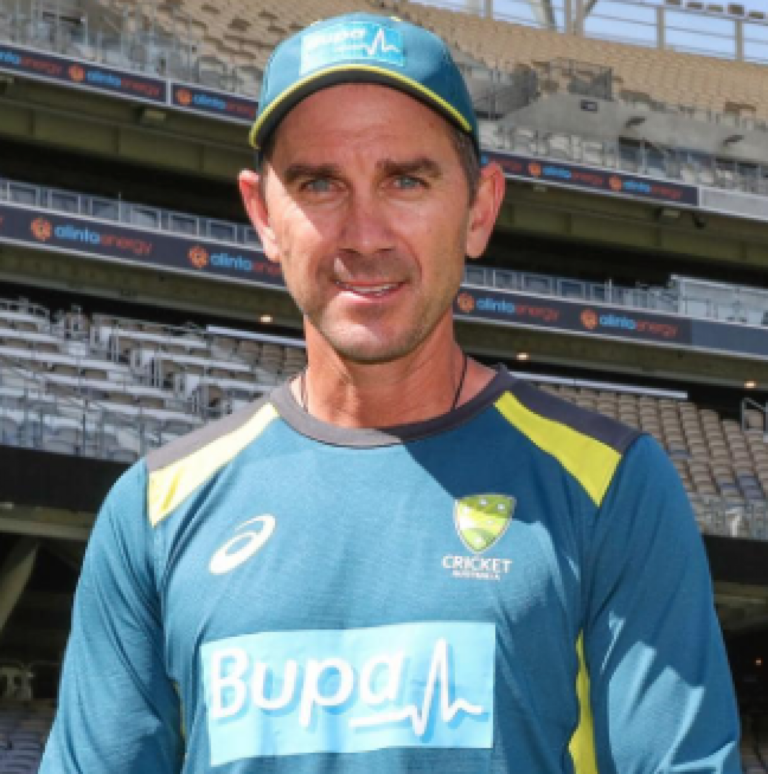
    Justin Langer breaks silence on England Test coach rumours

    Former Australia head coach Justin Langer has dismissed speculation linking him with England’s vacant Test coaching position, saying he has not been contacted by the England and Wales Cricket Board (ECB). Langer’s name has been widely mentioned as one of the possible candidates after England began searching for a new Test coach following Brendon McCullum’s exit from the role. Despite the growing rumours, the former Australian opener made it clear that no discussions have taken place. Speaking on the Stick to Cricket podcast, Langer addressed the reports and denied that the ECB had approached him about the position. “I haven’t heard from anyone,” Langer said. “A lot of what you read is simply speculation and rumours.” Although he ruled out any current talks with England, Langer admitted that the position is among the most sought-after coaching jobs in international cricket. He believes any experienced coach would naturally be interested in considering such an opportunity if it became available. According to Langer, there are only a handful of coaching positions that stand above the rest in world cricket. He identified the head coaching roles of Australia, India and England as the biggest jobs in the game, while stressing that discussions about his future remain entirely hypothetical. The 54-year-old also described coaching as a professional career in which individuals regularly assess opportunities that may arise. However, he emphasized that there has been no contact regarding England’s vacancy. England are currently looking for a new Test coach after deciding to return to a split-coaching structure. Under the revised setup, Brendon McCullum will continue overseeing England’s white-ball teams, while a separate coach will take charge of the Test side. Several prominent names have reportedly been linked with the position. Former New Zealand captain Stephen Fleming is believed to be among the leading contenders, while former England spinner Richard Dawson, ex-England batter Jonathan Trott and Australian coach Tom Moody have also been mentioned as possible candidates. Former England opener Marcus Trescothick has reportedly emerged as an option for an interim appointment ahead of England’s upcoming Test series against Pakistan, which is scheduled to begin on August 19. Meanwhile, former England head coach Andy Flower has already ruled himself out of contention. Flower recently stated that he remains fully committed to his coaching responsibilities with Royal Challengers Bengaluru and London Spirit, making it unlikely that he will return to the England setup. Langer also shared his thoughts on the qualities required for whoever eventually takes over England’s Test team. He believes the successful candidate will need to work closely with McCullum under the new coaching structure while maintaining a clear vision and strong leadership. He added that building an effective support staff and creating a unified direction for the team will be essential for long-term success. While Langer said he has no idea who will ultimately be appointed, he believes the next England Test coach will face an important challenge in guiding one of cricket’s leading sides through a new era.

  • |

    Petrol, diesel prices may fall further

    Petroleum product prices in Pakistan may see another reduction from August 5, offering potential relief to consumers already facing high fuel costs. According to sources within the Oil and Gas Regulatory Authority (OGRA), the price of petrol could decrease by Rs3.39 per litre, while high-speed diesel may become cheaper by Rs4.07 per litre. The latest calculations suggest that the price of petrol could fall to approximately Rs328.56 per litre after the proposed reduction. Similarly, the price of high-speed diesel may come down to an estimated Rs385.86 per litre. OGRA sources said the initial working for the possible price adjustment has been completed. The final decision, however, will depend on the government’s review of the latest calculations and other relevant factors before announcing the new prices. The possible reduction comes shortly after the government announced a cut in petroleum prices. In the previous adjustment, the government reduced the price of petrol by Rs4.08 per litre, while the price of diesel fell by Rs2.45 per litre. If the latest proposed cuts receive approval, consumers could see another decline in fuel prices within a short period. A reduction in petrol prices would directly benefit motorists and households that rely on private vehicles for daily commuting. Lower diesel prices could also provide some relief to the transport sector, as diesel powers a large number of commercial vehicles, buses, trucks and other heavy transport used to move people and goods across the country. A decline in fuel prices may also help reduce pressure on transportation and logistics costs. Since diesel plays a major role in the movement of agricultural produce, industrial goods and essential commodities, any reduction in its price could potentially ease some of the cost burden on businesses and consumers. However, the impact of the proposed reduction on overall inflation will depend on several factors, including transportation costs, exchange rate movements and international oil prices. The government is expected to announce the final petroleum prices after completing its review and approving the new rates. The expected adjustment comes as consumers continue to closely monitor fuel prices because of their direct impact on household budgets and the cost of everyday goods and services. Any further reduction in petrol and diesel prices could provide some short-term financial relief to the public and businesses.

  • |

    NCCIA under fire over social media figures, PECA cases and newspaper column complaint

    Islamabad: A controversy has erupted over the National Cyber Crime Investigation Agency (NCCIA) after a Senate committee questioned differences in social media statistics, delays in transferring PECA cases and the registration of complaints linked to a newspaper column. The Senate Standing Committee on Information and Broadcasting has sought answers from NCCIA over claims that figures shared earlier with lawmakers were later described as incorrect by its own officials. The committee questioned how NCCIA could provide one set of figures before the Senate and later have its officials reportedly distance themselves from those numbers. The dispute mainly focused on claims about fake social media accounts and content removal requests. Earlier figures suggested that around 20 percent of social media accounts were fake, but questions were raised after officials allegedly suggested that the number was much lower. The committee also questioned claims that 83 percent of content removal requests received responses from social media companies. Officials explained that a response from platforms does not always mean the request was accepted or action was taken. They said some requests were accepted while others were rejected, but companies provided replies. During the meeting, NCCIA officials defended the figures and said the data was publicly available online. They said the 83.64 percent response figure related to Meta was available through official reports and could be verified by anyone through the internet. Officials said if journalists had checked the available reports before publishing news, the confusion could have been avoided. They also explained that Pakistan’s response rate was compared with India’s figures, noting that both countries’ data was available online. Another major issue discussed was the transfer of cases under the Prevention of Electronic Crimes Act (PECA). The committee questioned why provinces had not transferred all relevant cases to NCCIA after PECA powers were shifted. NCCIA officials informed the committee that hundreds of cases existed across Pakistan. According to the briefing, Islamabad had 19 cases, Punjab had 268, Khyber Pakhtunkhwa had 47, Balochistan had 7, Sindh had 21, Azad Jammu and Kashmir had 10, while Gilgit Baltistan had none. The total number mentioned was 372 cases across Pakistan. Officials said only nine cases from Sindh Police had so far been transferred to NCCIA, while many others were still pending. Committee members questioned why cases already before courts or under trial were not being transferred. They said earlier instructions had been issued to provincial authorities to move investigation stage cases to NCCIA, but the orders had not been fully followed. The committee decided to again contact provincial police chiefs and legal authorities to ask why transfers were delayed. The most sensitive discussion came a complaint related to journalist Toufeeq Butt’s column published in Daily Nai Baat. The column titled “Bero Corrupts” became controversial after the Pakistan Administrative Services Association filed a complaint. The complainant argued that the term used in the article was insulting and damaging to the reputation of civil servants. NCCIA officials clarified that no case had been registered against the writer. They said only a complaint was received and an inquiry process started to hear both sides. Toufeeq Butt was issued notices to provide his explanation, but officials said he did not appear after receiving two notices. The committee debated whether NCCIA should handle newspaper content or if such matters should go to press related institutions. Members warned that allowing every complaint against newspapers and journalists to reach the NCCIA could create a flood of cases. They pointed out that newspapers are regulated by the Press Council while television is handled by PEMRA. Some members argued that asking for an explanation differed from taking legal action. They said every person has the right to present their side before any decision is made. Others warned that using cybercrime laws for newspaper related matters could open a new door for pressure against journalists. Chairman directed NCCIA to refer both the complaint and the complainant to the Press Council of Pakistan, being the appropriate forum to examine the published column and decide the matter.

  • | |

    ‘I got so much love’, Sunny Deol on Pakistan Kartarpur Corridor visit

    Bollywood actor Sunny Deol has recalled his visit to the Kartarpur Corridor, saying he received considerable affection in Pakistan despite the political tensions between the two neighbouring countries. Deol made the remarks while promoting his latest film, Batwara (1947), which was released in India and several other countries on Friday. During a recent interview, the actor was asked whether he had ever travelled to Pakistan. Deol clarified that he had never formally visited Pakistan, but had the opportunity to travel to the Kartarpur Corridor when it was opened. As the corridor falls within his parliamentary constituency, he was included in a delegation that visited Kartarpur. Recalling the experience, Deol said he was surprised by the warmth he encountered on the Pakistani side. “I received a lot of love in Pakistan,” the actor said, adding that members of the military also expressed affection and spoke to him about his films. According to Deol, some of those he met told him they admired him but asked him not to make films portraying Pakistan negatively because they felt a strong connection with him as an actor. Deol said his response was that he was only performing a character in films and that the views of a fictional character should not necessarily be confused with his personal beliefs. The actor also spoke about the wider human dimension of relations between India and Pakistan. He said people naturally love their own countries but argued that innocent civilians should never be targeted. His comments come as Deol promotes Batwara (1947), a film dealing with the turbulent period surrounding the Partition of British India. The Kartarpur Corridor, which links India with the Gurdwara Darbar Sahib in Pakistan, has long been viewed as an important religious and people-to-people connection between the two countries. Deol’s recollection has attracted attention because of his long association with patriotic and action-oriented Bollywood roles, some of which have featured strong anti-Pakistan themes. His latest remarks, however, offered a more personal perspective, highlighting how an encounter across the border left him with memories of warmth and affection.

Leave a Reply

Your email address will not be published. Required fields are marked *