ahsan khan reveals
|

Ahsan Khan reveals why he said yes to Aap Ki Izzat

Pakistani actor Ahsan Khan has opened up about the reasons that convinced him to join the hit drama Aap Ki Izzat, sharing how the project’s strong team, compelling script, and talented director made it an easy decision.

The drama has quickly become one of the most talked-about television serials, earning praise from audiences and critics alike. Since its premiere on HUM TV, the series has generated millions of views across digital platforms while maintaining impressive television ratings.

Penned by celebrated writer Umera Ahmed, Aap Ki Izzat is produced by Nina Kashif and Momina Duraid and directed by Saifee Hassan. The cast features Ahsan Khan, Urwa Hocane, Sania Saeed, Nauman Masood, and Saif Ali Khan in pivotal roles.

During a recent interview, Ahsan Khan reflected on how the project came his way and explained why he immediately felt connected to it.

According to the actor, producer Nina Kashif was the first to approach him with the drama. He later met Momina Duraid, and the conversations about the project left a lasting impression on him.

Ahsan said he felt warmly welcomed back and appreciated the supportive environment created by the production team. He noted that their professionalism and sincerity made it difficult for him to turn down the offer.

The actor also expressed his admiration for director Saifee Hassan, describing him as one of the finest directors in the Pakistani television industry. Ahsan said working with Saifee had long been one of his career ambitions because of the director’s attention to detail and ability to bring emotional depth to every scene.

He explained that Saifee Hassan’s narration of the story made the project even more appealing, adding that the director’s vision helped him better understand the emotional layers of his character.

Ahsan also praised renowned writer Umera Ahmed, saying that her scripts naturally draw actors in because of their engaging storytelling and well-developed characters. He remarked that it was nearly impossible not to be captivated by a script written by her.

The actor further acknowledged that the success of Aap Ki Izzat is the result of a collective effort. He credited the entire production team, including the cast, director, makeup artists, and crew members, for bringing the story to life on screen.

Ahsan is currently portraying the character of Tabish, a role that has sparked widespread discussion among viewers. The character has received mixed reactions from fans, with many praising Ahsan’s powerful performance despite the criticism surrounding Tabish’s actions in the drama.

The actor also spoke about the conversations generated by his character, suggesting that such reactions are part of portraying a complex role that resonates with audiences.

As Aap Ki Izzat continues to attract viewers each week, Ahsan Khan’s performance remains one of the major highlights of the drama, with fans eagerly waiting to see how Tabish’s journey unfolds in the coming episodes.

Similar Posts

  • |

    Morocco commits to repatriating unaccompanied minors following mass migration into Ceuta

    The Moroccan government has announced its willingness to collaborate with Spain and European authorities to identify and repatriate unaccompanied minors who crossed into the Spanish North African enclave of Ceuta during a recent surge in border crossings. According to state news agency MAP, King Mohammed VI directed the interior and foreign affairs ministries to coordinate the identification and safe return of the young migrants to their families in Morocco. The official statement follows diplomatic discussions aimed at addressing the logistical and legal challenges surrounding under-age migrants, who cannot be immediately turned back under standard border control agreements. The initiative comes in the wake of a massive border influx that saw tens of thousands of individuals attempt to enter European territory on foot and by sea. Spanish officials estimated that 72,000 migrants crossed the border during the height of the crisis, while Moroccan estimates placed the figure closer to 40,000. Although the vast majority of adult migrants have since returned or been repatriated to Morocco, local authorities in Ceuta report that at least 1,100 unaccompanied minors remain in government reception facilities. The diplomatic agreement marks a pivotal step toward relieving pressure on regional welfare services in Ceuta while establishing formal bilateral protocols between Rabat and Madrid to ensure child protection standards are met during repatriation procedures.

  • |

    Perez Hilton’s livestream prompts police response in Miami

    Celebrity gossip blogger Perez Hilton prompted widespread concern after police responded to his Miami home following a disturbing TikTok livestream in which he appeared to harm himself. Videos that quickly spread across social media showed the 48-year-old internet personality in an apparent state of distress. In the clips, Hilton appeared visibly agitated and was seen with blood on his body while repeatedly using an object to injure himself. The footage led viewers to contact emergency services, fearing for his safety. Authorities confirmed they received multiple reports from concerned members of the public regarding a person appearing to self-harm during a livestream. Deputies were dispatched to Hilton’s residence to assess the situation and ensure his well-being. After arriving at the property, officers determined that Hilton was alone inside his home. Law enforcement officials said they chose a de-escalation approach, avoiding direct confrontation while also communicating with members of his family. Officials explained that when responding to incidents involving an individual experiencing a mental health crisis, officers often prioritize creating time and distance to reduce tension. Crisis intervention strategies are commonly used in such situations to encourage communication while minimizing the risk of harm to the individual, responding officers, and the public. The incident has sparked renewed discussion online about mental health awareness, crisis intervention, and the emotional pressures faced by public figures whose personal struggles often unfold in front of large audiences. Hilton has previously spoken publicly about his health and emotional challenges. Earlier this year, he revealed that he had been hospitalized for nearly three weeks after what initially appeared to be a case of the flu developed into a series of serious medical complications. According to Hilton, his condition worsened significantly, leading to an ulcer, a perforation, and eventually sepsis, a life-threatening response to infection. He later described the experience as one of the most difficult periods of his life. Following his recovery and return home, Hilton shared that the ordeal had transformed his outlook on life and faith. He said the experience strengthened his spiritual beliefs and inspired him to reconnect with religion. The media personality explained that he believed the difficult experience brought him closer to God and encouraged him to begin attending church regularly with his children. He described the change as deeply personal and life-changing. In recent months, Hilton had also hinted at ongoing emotional struggles through social media. In one video shared earlier this year, he asked followers to pray for him, saying he felt he was facing intense personal challenges. Perez Hilton, whose real name is Mario Armando Lavandeira Jr., rose to fame in the mid-2000s through his celebrity gossip website, becoming one of the internet’s most recognizable entertainment bloggers. Over the years, he has remained active across various social media platforms while also focusing on raising his three children, all of whom were welcomed through surrogacy. The latest incident has prompted an outpouring of concern from fans and followers, many of whom expressed hope that Hilton receives the care and support he needs as he navigates this difficult period.

  • | | |

    ‘No more theatre’: Ghalibaf challenges Trump over talks

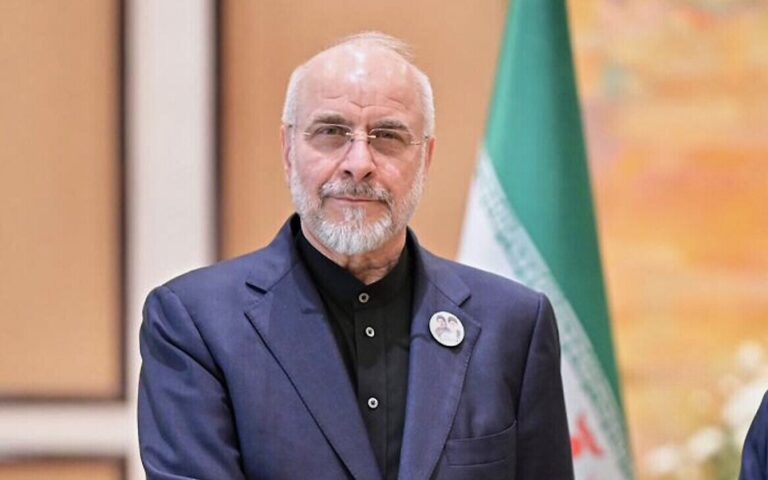
    TEHRAN: Iran’s Parliament Speaker and chief negotiator Mohammad Bagher Ghalibaf has delivered a blunt message to US President Donald Trump, calling for facts, commitments and serious diplomacy instead of what he described as political theatre. Reacting to Trump’s remarks suggesting that a major attack could be imminent, Ghalibaf said Iran was still prepared to negotiate, but expected the United States to demonstrate seriousness at the negotiating table. “Accept the facts and fulfil your promises,” Ghalibaf said, stressing that there was no need for further diplomatic drama and that responsible conduct was required. His comments come amid heightened tensions between Tehran and Washington, with negotiations remaining a key focus even as both sides continue to exchange strong warnings. Ghalibaf has emerged as a central figure in Iran’s diplomatic efforts and has been involved in negotiations with the United States. He was also re-elected as speaker of Iran’s parliament in May, securing 235 votes from 271 lawmakers who cast ballots. Ghalibaf accused Washington of repeatedly using pressure tactics, including threats, broken promises and what he characterized as false reports. According to him, such an approach has failed to achieve its intended purpose. The Iranian official’s message combines a firm warning with an opening for dialogue: Tehran, he suggested, is willing to talk, but not under pressure. The latest remarks could add another layer of uncertainty to already fragile US-Iran diplomacy, particularly as both sides weigh whether negotiations can prevent another escalation.

  • |

    Pakistan dismisses Indian defence minister’s Azad Kashmir threats as attempt to hide domestic turmoil

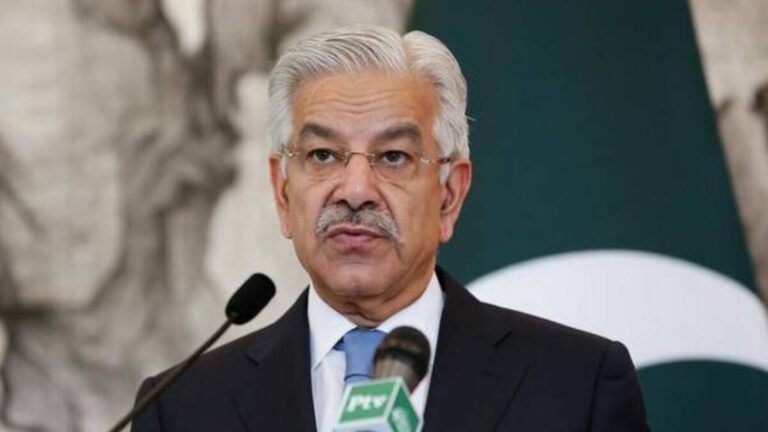
    Defence Minister Khawaja Muhammad Asif has forcefully rejected comments by his Indian counterpart, Rajnath Singh, who declared that New Delhi would only hold talks on Azad Kashmir, claimed the Pakistani-administered region as an “integral part of India”, and warned that any attempt to undermine Indian sovereignty would invite a “decisive response” from its armed forces. Singh had also accused Islamabad of continuing to sponsor “terrorism” against India. Asif hit back directly, stating that Singh’s aggressive rhetoric was a clear attempt to “deflect the attention from internal turmoil and increasing unrest” following mass protests against Prime Minister Narendra Modi’s government. He warned New Delhi against distortion and military posturing, emphasising that while Pakistan remains committed to peace, its resolve to defend its sovereignty is absolute and must never be tested. The Pakistani Foreign Office echoed these concerns, calling on the United Nations to hold India accountable to Security Council resolutions guaranteeing the Kashmiri people’s right to self-determination.

  • | | |

    South Korean energy firm seeks PM Shehbaz’s …

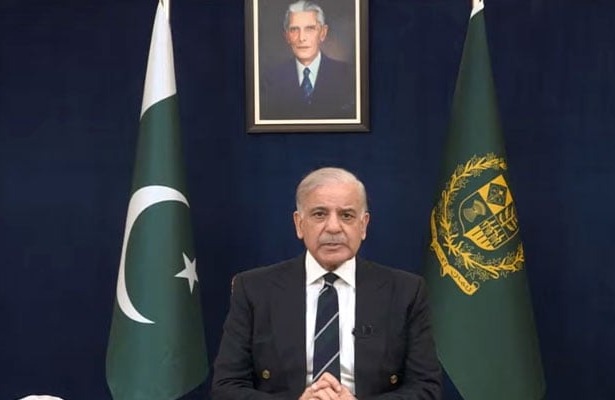
    A South Korean state-owned energy company has appealed directly to Prime Minister Shehbaz Sharif, claiming that prolonged regulatory delays have placed its planned $1 billion investment in Pakistan’s hydropower sector at serious risk. In a letter addressed to the prime minister, Korea South-East Power Co. Ltd. (KOEN) said it had spent nearly a decade developing two run-of-the-river hydropower projects on the Swat River in Khyber Pakhtunkhwa but remains unable to move forward because of unresolved regulatory approvals. The company, a subsidiary of Korea Electric Power Corporation (KEPCO), is developing the 229-megawatt Asrit Kedam and 238-megawatt Kalam Asrit hydropower projects. Together, the projects represent an investment of approximately $1 billion, with the company already investing around $25 million in feasibility studies, surveys, and other preparatory work. According to KOEN, the projects have met all major government requirements since development began in 2016. The company signed a memorandum of understanding with the Khyber Pakhtunkhwa government, obtained letters of intent from the Pakhtunkhwa Energy Development Organization (PEDO), completed feasibility studies, secured a power generation licence from the National Electric Power Regulatory Authority (Nepra), and maintained all required financial guarantees. Despite fulfilling these requirements, KOEN said the tariff determination for the projects has remained pending for nearly three years. The company noted that Nepra conducted a public hearing on its tariff petition in July 2023, but a final decision has yet to be issued. The company said it repeatedly approached Nepra and later appealed to the Nepra Appellate Tribunal, which directed the regulator to decide the tariff matter. However, KOEN claims that the tribunal’s order has still not been implemented. Adding to its concerns, the company said both hydropower projects have been excluded from the draft Indicative Generation Capacity Expansion Plan (IGCEP) 2025–35. KOEN warned that if the revised plan is approved without the projects, its proposed investment could remain stalled indefinitely. In its appeal, the company urged the prime minister to intervene and ensure a timely tariff determination while allowing the projects to continue under Pakistan’s Power Generation Policy 2015, the framework under which the investment was originally made. KOEN also stated that it understands Pakistan’s current surplus electricity generation and is willing to align the commercial operation of the projects with the country’s future energy requirements rather than adding unnecessary capacity. The issue comes as Pakistan and South Korea continue discussions aimed at strengthening bilateral trade and investment ties through a proposed Comprehensive Economic Partnership Agreement (CEPA). Analysts say resolving regulatory bottlenecks will be crucial for maintaining investor confidence and attracting future foreign direct investment into Pakistan’s energy sector.

  • |

    Indonesia central bank chief resigns suddenly

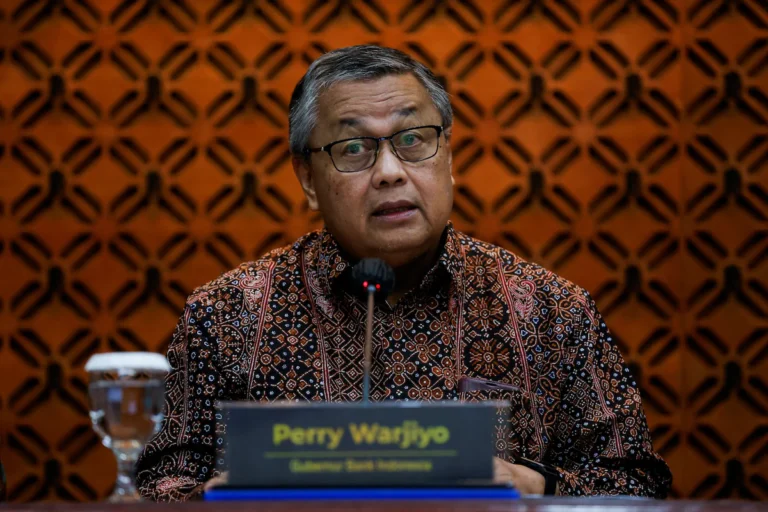
    JAKARTA: Indonesia’s central bank governor Perry Warjiyo has unexpectedly stepped down, raising concerns among investors about the future independence of monetary policy and the stability of financial markets. President Prabowo Subianto accepted Warjiyo’s resignation on Monday. The government said the governor resigned for personal reasons. Destry Damayanti, a senior deputy governor at Bank Indonesia (BI), has been appointed interim governor. She has pledged to maintain continuity and ensure that the central bank continues carrying out its responsibilities. The surprise resignation came at a sensitive time for Indonesia’s economy. Bank Indonesia has faced growing pressure to support the government’s ambitious economic growth plans. The Indonesian rupiah has also faced significant pressure. It fell to a record low in June amid concerns over fiscal management and the independence of the central bank. Following news of Warjiyo’s departure, the rupiah weakened further. It fell as much as 0.36% to around 18,000 against the US dollar. Indonesia’s main stock index also moved between gains and losses during volatile trading. Analysts warned that the sudden leadership change could unsettle investors. Some economists said concerns could increase if the next permanent governor is seen as closely aligned with the government. They stressed that Bank Indonesia’s independence is important for maintaining investor confidence and stable monetary policy. Warjiyo submitted his resignation to the president on Saturday. Officials did not provide further details about his personal reasons. Warjiyo has spent decades at Bank Indonesia. He joined the institution in 1984 and was appointed governor for the first time in 2018. He was reappointed in 2023 for another five-year term. The appointment of his permanent successor will require both presidential and parliamentary approval. The president will nominate a candidate, who will then face a parliamentary suitability review before a final decision is made. The government has not yet submitted a permanent nomination. Officials have urged investors and other market participants to remain calm during the transition. They said the selection process would be conducted transparently and would not interfere with monetary policy or financial stability. Destry said the central bank would continue working to maintain rupiah stability and protect the country’s financial system. The leadership change comes after Indonesia introduced legislative changes affecting the central bank and other independent financial regulators. The new framework gives lawmakers greater authority to issue binding recommendations to these institutions. The changes have already raised questions about the level of Bank Indonesia’s independence. Credit rating agencies have also been monitoring developments surrounding the central bank’s mandate. Moody’s and Fitch previously highlighted concerns about changes to the institution’s role when they revised Indonesia’s credit outlook to negative. S&P Global Ratings, however, maintained a stable outlook this month. It said Bank Indonesia had maintained operational independence broadly comparable with other central banks in the region. Bank Indonesia has recently taken measures to support the rupiah and attract foreign investment. It unexpectedly kept interest rates unchanged last week while introducing new incentives aimed at encouraging capital inflows. The central bank had previously raised interest rates by a total of 100 basis points since May to support the currency. The latest resignation adds another layer of uncertainty for investors as the government seeks faster economic growth. Markets will now closely watch the selection of Warjiyo’s permanent successor. Investors are expected to assess whether the new leadership can maintain monetary stability while responding to the government’s economic priorities.

Leave a Reply

Your email address will not be published. Required fields are marked *