james haven comes
|

James Haven comes out as gay after marriage annulment

James Haven, the older brother of Hollywood actress Angelina Jolie, has publicly shared that he is gay following the end of his marriage to Romi Imbelli.

Haven revealed his sexuality during a live broadcast that appeared on Imbelli’s Substack platform. During the conversation, he also announced the launch of his upcoming weekly podcast, Save Haven with James Haven, where he plans to speak with guests about the defining moments, personal decisions, and life experiences that have shaped their identities.

Speaking openly about his journey, Haven explained that he came out to Imbelli after their marriage was annulled in March 2025. The couple had tied the knot in August 2024, but their relationship ended only 15 days after the wedding.

Reflecting on his childhood, Haven shared that he had always felt different but did not have the words to explain those feelings at the time. He recalled being fascinated by Disney princesses from a very young age, saying the characters helped him connect with a part of himself that he could not yet understand.

He emphasized that his interest was never about pretending to be someone else. Instead, he described it as allowing his authentic personality to shine through. According to Haven, publicly acknowledging his sexuality is not about changing who he is but about letting others see the person he has always been.

The actor and producer also expressed hope that his family and those close to him would respond with compassion and understanding. He said he wished people would choose love over fear and focus on their personal connection with him rather than labels or assumptions. Haven added that he remains the same individual, with the same personality and heart, despite sharing this deeply personal part of his life.

During the livestream, Romi Imbelli voiced her support for Haven and admitted that she had long suspected he was gay. She explained that accepting the reality of the situation was emotionally difficult because she feared it would mean losing the relationship they had built together.

Imbelli said she wanted to continue loving and supporting Haven while also coming to terms with the truth. She acknowledged that balancing those emotions had been challenging but ultimately believed honesty was the best path forward.

Despite the end of their marriage, Imbelli described Haven as her lifelong partner in a different sense, saying they would continue to support one another through life. She expressed affection for him and said his sexual orientation did not change the love and respect she had for him as a person.

Haven and Imbelli were married in a private ceremony in Laguna Beach, California, in August 2024. The intimate event was attended by close family members, including Haven’s father, actor Jon Voight. However, his sister, Academy Award-winning actress Angelina Jolie, was reportedly not present at the ceremony.

By publicly sharing his story, Haven hopes his experience will encourage greater understanding, acceptance, and compassion for others who are navigating similar personal journeys.
Similar Posts

  • | |

    Dar, Iran FM reaffirm diplomatic cooperation

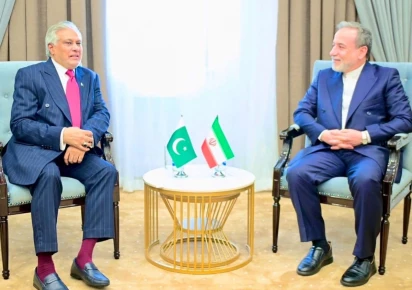
    Deputy Prime Minister and Foreign Minister Ishaq Dar held a meeting with Iranian Foreign Minister Abbas Araghchi on the sidelines of the Shanghai Cooperation Organisation (SCO) Council of Foreign Ministers’ meeting, where both leaders reaffirmed their commitment to strengthening bilateral relations and promoting peace through diplomacy. During the meeting, the two foreign ministers reviewed the evolving regional situation, particularly rising tensions in the Middle East. They discussed recent developments affecting regional security and agreed that continued dialogue, restraint and diplomatic engagement remain the most effective path toward achieving lasting peace and stability. Dar reaffirmed Pakistan’s commitment to maintaining close and friendly relations with Iran. He stressed the importance of avoiding further escalation and called on all parties to resolve differences through peaceful negotiations. He also highlighted the need to build upon the understandings reached under the Islamabad Memorandum of Understanding (MoU) signed in June 2026, which aimed to encourage diplomatic engagement and reduce regional tensions. The Pakistani foreign minister expressed concern over the deteriorating security situation in the region and said cooperation among neighbouring countries is essential to preserve peace, protect economic interests and ensure regional stability. Iranian Foreign Minister Abbas Araghchi appreciated Pakistan’s diplomatic efforts to reduce tensions and promote constructive dialogue. He thanked Pakistan for its continued support in regional peace initiatives and acknowledged Islamabad’s role in facilitating the safe return of Iranian fishermen and crew members, including individuals whose vessels had been intercepted during recent regional tensions. Both leaders agreed to maintain close coordination and regular consultations on regional and international issues of mutual interest. They reiterated their shared commitment to strengthening cooperation for peace, security and prosperity in the region. The meeting took place as tensions between the United States and Iran continue to escalate. Recent military exchanges have increased concerns about wider instability in the Middle East, with continued air strikes and retaliatory actions raising fears of a broader regional conflict. The situation has also affected key international shipping routes, particularly around the Strait of Hormuz and the Red Sea, increasing concerns over global energy supplies and international trade. The uncertainty has contributed to higher oil prices and renewed fears about the impact on the global economy. In recent days, US President Donald Trump warned of stronger military action against Iran following attacks on commercial shipping in the Red Sea. Iranian officials, however, have continued to reject the accusations and have criticised recent US policies, including proposals concerning frozen Iranian assets. Against this backdrop, Pakistan has continued to advocate dialogue and diplomacy as the only sustainable solution to regional disputes. Pakistani officials maintain that peaceful engagement remains essential to preventing further escalation and ensuring long-term stability across the Middle East.

  • |

    Pakistan’s total debt burden nears Rs84 trillion as government borrowing rises

    Pakistan’s total government debt stock climbed to a record level of nearly Rs84 trillion by the end of June 2026, highlighting the growing financial burden facing the country amid continued reliance on domestic and external borrowing. According to the latest data released by the State Bank of Pakistan (SBP), the federal government’s total debt increased by 7.4% on a year-on-year basis during the fiscal year ended June 2026. The central government’s debt stood at Rs83,642 billion in June 2026, compared with Rs77,888 billion recorded in June 2025. The debt stock also increased significantly on a monthly basis, rising from Rs81,955 billion in May 2026. The latest figures indicate that the government’s debt increased by around Rs5,754 billion, or Rs5.75 trillion, over the course of the fiscal year. Domestic debt remains major component Domestic borrowing accounted for the largest portion of the government’s total debt. According to SBP data, the federal government’s domestic debt rose by 9.1% year-on-year to Rs59,441 billion by June 2026. The increase reflects continued dependence on the domestic financial market to meet the government’s financing requirements, including budgetary needs and debt-servicing obligations. Meanwhile, the federal government’s external debt increased by 3.3% during the year, reaching Rs24,201 billion by June 2026. Although the growth in external debt remained comparatively lower than domestic borrowing, the foreign-currency component continues to place pressure on the country’s external financing position, particularly when debt repayments coincide with periods of weak foreign exchange inflows. Debt servicing poses growing challenge The continued rise in the debt stock is also raising concerns about the government’s ability to manage debt-servicing costs while creating fiscal space for development spending and public services. A growing share of government revenues is required to meet interest and principal repayment obligations, limiting the resources available for infrastructure, social development and other productive investments. Economic experts have warned that if the debt trajectory is not brought under control, the rising burden could turn into a “debt trap” for the economy. They argue that reducing dependence on borrowing would require stronger revenue mobilisation, greater fiscal discipline, higher exports and sustained economic growth. Improving the efficiency of public spending and reducing reliance on debt-financed expenditures could also help contain the pressure.

  • |

    Pakistan, Japan sign $2.2 million grant agreement for civil servants’ scholarships

    ISLAMABAD: The governments of Pakistan and Japan have signed a grant agreement worth JPY 350 million, equivalent to around $2.2 million, to support the Human Resource Development Scholarship Programme (JDS) for 2026. The agreement was signed during a ceremony held at the Ministry of Economic Affairs on Tuesday, August 11, as both countries reaffirmed their commitment to strengthening cooperation in human resource development and institutional capacity building. Secretary of the Ministry of Economic Affairs Muhammad Humair Karim and Japanese Ambassador to Pakistan Akamatsu Shuichi signed the Record of Discussions and Exchange of Notes during the ceremony. The grant agreement was separately signed by Miran Mohiyuddin Soomro, Senior Joint Secretary at the Ministry of Economic Affairs, and Yusuke Shinozaki, Chief Representative of the Japan International Cooperation Agency (JICA) in Pakistan. Senior representatives from the Embassy of Japan, JICA and Pakistan’s Ministry of Economic Affairs also attended the signing ceremony. 17 scholarships to be offered Under the latest phase of the JDS programme, 17 Pakistani government officials will receive scholarships to pursue higher education at leading Japanese universities. The 2026 programme will offer 16 scholarships for master’s degree programmes and one scholarship for a doctoral programme. The initiative is primarily aimed at young officers serving in Pakistan’s Federal Civil Service and Ex-Cadre services. The scholarship programme is designed to enhance the professional expertise of government officials by providing them with opportunities to acquire advanced academic knowledge and specialized skills in Japan. Officials who benefit from the programme are expected to contribute to policymaking, public administration and Pakistan’s broader socio-economic development after completing their studies. Ninth phase since 2018 The latest grant marks the ninth instalment of Japan’s JDS programme in Pakistan since its launch in 2018. Over the past eight batches, approximately 17 to 18 Pakistani officials per batch have benefited from the scholarship initiative. The programme has consequently created a growing network of Pakistani officials with exposure to Japanese academic institutions, public-sector practices and professional training. The JDS initiative is part of Japan’s broader development cooperation with Pakistan, with a particular focus on strengthening human resources and improving the capacity of government institutions. In addition to the long-term JDS scholarships, Japan also facilitates short-term training opportunities for Pakistani government officials in various fields. These programmes provide participants with exposure to international practices and technical expertise that can be applied to their respective departments in Pakistan. Focus on bilateral cooperation Speaking at the ceremony, Japanese Ambassador Akamatsu Shuichi reiterated Japan’s commitment to working with Pakistan on human resource development and other areas of mutual interest. JICA Chief Representative Yusuke Shinozaki also expressed the agency’s willingness to continue cooperating with the Government of Pakistan to strengthen institutional capacity and promote sustainable development. The Japanese side said such initiatives also contribute to closer people-to-people links and reinforce the longstanding friendly relations between Pakistan and Japan. The two countries have maintained development and economic cooperation for decades, with Japan supporting Pakistan through grants, technical assistance, training programmes and other capacity-building initiatives. The continuation of the JDS programme is expected to further deepen bilateral cooperation while equipping Pakistani public-sector officials with knowledge and skills that can support more effective governance and economic development.

  • | | | |

    Pakistan’s blasphemy cases hit record low

    Pakistan has witnessed a significant decline in registered blasphemy cases this year following a crackdown on hardline religious groups, signalling what analysts describe as a major shift in the country’s security policy. According to figures cited by the Human Rights Commission of Pakistan (HRCP), only 13 blasphemy cases have been registered so far in 2026, marking a fall of nearly two-thirds compared with the same period in recent years. Data from conflict monitoring organisation ACLED also indicates that only one blasphemy-related riot or attack has occurred over the past year, compared with an annual average of more than seven incidents between 2021 and 2024. The decline comes after security agencies intensified action against several extremist organisations accused of exploiting blasphemy allegations to incite violence. Officials familiar with the matter said the campaign has included arrests of key figures, restrictions on organisational activities, freezing of financial assets and tighter monitoring of religious gatherings. The change was evident during an incident in Karachi last month, where allegations of blasphemy against a Christian family drew a large crowd. Police officers intervened before the situation turned violent and persuaded protesters to disperse peacefully. Authorities later determined that the accusations against the family were baseless, allowing them to be moved to safety without further harm. Analysts believe the reduced presence of organised extremist groups has played a key role in preventing mob violence that has historically followed blasphemy accusations. Pakistan has witnessed around 90 blasphemy-related lynchings since 1990, with many incidents beginning after rumours spread through local communities. Security experts say the military leadership has adopted a tougher stance against groups previously accused of using religious sentiments to mobilise supporters and pressure governments. They argue the policy shift is linked to broader efforts to strengthen Pakistan’s international image, attract foreign investment and improve relations with Western countries while tackling growing security threats at home. Officials also believe that curbing religious extremism is necessary to address worsening militancy in Balochistan and Khyber Pakhtunkhwa, where insurgent violence continues to challenge the state’s authority. Some analysts say extremist organisations and militant groups have historically drawn support from similar networks of radicalised youth. The country’s largest hardline religious party, Tehreek-e-Labbaik Pakistan (TLP), was banned last year after authorities concluded that its activities posed a threat to public order and Pakistan’s international reputation. Government measures reportedly included detaining senior leaders, sealing offices and restricting financial operations. The party has rejected the ban, calling it unconstitutional. Despite the decline in violence, observers caution that extremist ideology remains deeply rooted in parts of society. Human rights advocates say minority communities, including Christians, Ahmadis and Shia Muslims, continue to live under the fear of false accusations, as Pakistan’s blasphemy laws remain in force and carry the death penalty. Security analysts also warn that sustained enforcement will be necessary to prevent banned organisations from regrouping or resurfacing under new identities. They argue that long-term success will depend on consistent policies rather than temporary crackdowns.

  • | |

    Ameesha Patel explains why she avoids marriage

    Bollywood actress Ameesha Patel has opened up about her decision not to get married. The actress recently interacted with her fans during a question-and-answer session on social media platform X. During the session, a fan asked Patel when she planned to get married. The actress responded in a humorous and straightforward manner, saying that she had no plans to marry and was very happy living her life independently. Patel said she already has a large circle of people who love and support her. She explained that around 100 people, including close family members and friends, are already part of her life and provide her with companionship. The actress further joked that she could not tolerate someone entering her life and changing everything. Her response reflected her independent approach to marriage and relationships. Patel’s candid comments attracted attention from her followers. Many fans appreciated her humorous response and her confidence in choosing a lifestyle that makes her happy. The actress has remained active in the entertainment industry and regularly interacts with her followers on social media. Her latest comments have once again sparked interest in her personal views on marriage and relationships.

  • | | | |

    US forces to leave Iraqi Kurdistan by September 30

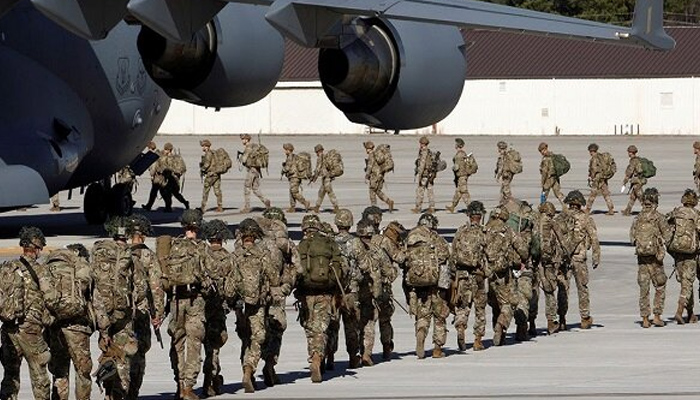
    BAGHDAD: The Iraqi government has announced that US forces will complete their withdrawal from Iraq’s Kurdistan region by September 30, marking another step in the planned transition of the American military mission in the country. According to foreign media reports, Iraqi and US officials held discussions in the Kurdistan region regarding the withdrawal and the transfer of military responsibilities. Under the plan, US military bases in Kurdistan will be handed over to Iraqi security forces following the departure of American personnel. The Iraqi government said the movement of US military equipment and personnel out of the region is already underway. The withdrawal is expected to take place in coordination with Iraqi authorities to ensure an orderly transition. The announcement comes as Baghdad and Washington continue implementing an agreement reached in 2024 on the gradual transition of the US-led military mission in Iraq. The agreement envisaged a phased reduction of the international coalition’s military role while strengthening Iraq’s own security capabilities. US forces have played a significant role in supporting Iraqi forces in the fight against Islamic State militants and in providing training, intelligence and logistical assistance. The latest withdrawal from Kurdistan is therefore likely to attract attention as Iraq assumes greater responsibility for securing military facilities previously used by US forces. The Iraqi government has not provided further details on the exact number of American troops or equipment involved in the latest phase of the withdrawal.

Leave a Reply

Your email address will not be published. Required fields are marked *