dar iran reaffirm
| |

Dar, Iran FM reaffirm diplomatic cooperation

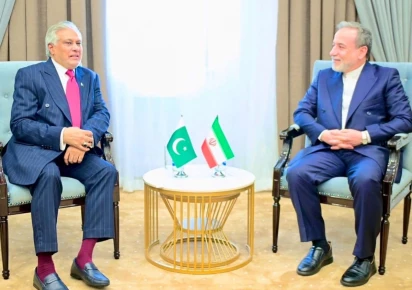
Deputy Prime Minister and Foreign Minister Ishaq Dar held a meeting with Iranian Foreign Minister Abbas Araghchi on the sidelines of the Shanghai Cooperation Organisation (SCO) Council of Foreign Ministers’ meeting, where both leaders reaffirmed their commitment to strengthening bilateral relations and promoting peace through diplomacy.

During the meeting, the two foreign ministers reviewed the evolving regional situation, particularly rising tensions in the Middle East. They discussed recent developments affecting regional security and agreed that continued dialogue, restraint and diplomatic engagement remain the most effective path toward achieving lasting peace and stability.

Dar reaffirmed Pakistan’s commitment to maintaining close and friendly relations with Iran. He stressed the importance of avoiding further escalation and called on all parties to resolve differences through peaceful negotiations. He also highlighted the need to build upon the understandings reached under the Islamabad Memorandum of Understanding (MoU) signed in June 2026, which aimed to encourage diplomatic engagement and reduce regional tensions.

The Pakistani foreign minister expressed concern over the deteriorating security situation in the region and said cooperation among neighbouring countries is essential to preserve peace, protect economic interests and ensure regional stability.

Iranian Foreign Minister Abbas Araghchi appreciated Pakistan’s diplomatic efforts to reduce tensions and promote constructive dialogue. He thanked Pakistan for its continued support in regional peace initiatives and acknowledged Islamabad’s role in facilitating the safe return of Iranian fishermen and crew members, including individuals whose vessels had been intercepted during recent regional tensions.

Both leaders agreed to maintain close coordination and regular consultations on regional and international issues of mutual interest. They reiterated their shared commitment to strengthening cooperation for peace, security and prosperity in the region.

The meeting took place as tensions between the United States and Iran continue to escalate. Recent military exchanges have increased concerns about wider instability in the Middle East, with continued air strikes and retaliatory actions raising fears of a broader regional conflict.

The situation has also affected key international shipping routes, particularly around the Strait of Hormuz and the Red Sea, increasing concerns over global energy supplies and international trade. The uncertainty has contributed to higher oil prices and renewed fears about the impact on the global economy.

In recent days, US President Donald Trump warned of stronger military action against Iran following attacks on commercial shipping in the Red Sea. Iranian officials, however, have continued to reject the accusations and have criticised recent US policies, including proposals concerning frozen Iranian assets.

Against this backdrop, Pakistan has continued to advocate dialogue and diplomacy as the only sustainable solution to regional disputes. Pakistani officials maintain that peaceful engagement remains essential to preventing further escalation and ensuring long-term stability across the Middle East.


Similar Posts

  • | | |

    Pakistan targets $1.5bn hybrid rice market in Chin…

    Pakistan has a major opportunity to increase its hybrid rice exports to China and could potentially secure exports worth up to $1.5 billion, according to industry experts. The opportunity has emerged as China looks for alternative sources of non-Basmati rice amid a decline in rice trade with India. Pakistani exporters believe the changing market conditions could allow the country to expand its presence in China. Shahzad Ali Malik, founding chairman of the Rice Exporters Association of Pakistan (REAP) and CEO of Guard Agricultural Research and Services, said Pakistan should move quickly to take advantage of the situation. He said Pakistan had a competitive edge because local farmers already grow Chinese hybrid rice varieties. With a coordinated strategy between the government and private sector, Pakistan could significantly increase its exports to the Chinese market. China is expected to remain one of the world’s largest rice importers. Its rice import demand for 2025-26 has been estimated at around 3.1 million tonnes. India had previously been an important supplier of non-Basmati rice to China. However, changes in Chinese import requirements and non-tariff restrictions have affected Indian rice shipments. This has created an opening for other suppliers. Pakistan is considered well placed to benefit because it already produces both Basmati and non-Basmati rice. Pakistan also has surplus stocks of several non-Basmati varieties. These include Chinese hybrid rice and IRRI varieties that are used in China for food processing and strategic food reserves. The hybrid rice segment offers particular potential. Pakistan uses hybrid seed parent lines imported from China. This could make it easier for Pakistani producers and Chinese buyers to maintain compatibility in varieties and quality standards. Pakistan also has an advantage in the non-GMO segment. Industry representatives believe this could strengthen the country’s position as Chinese buyers become more selective about imported rice. The Pakistan-China Free Trade Agreement could further support exports. Existing trade links and CPEC-related logistics may also help Pakistani exporters reduce transportation time and improve their competitiveness. The changing market could benefit both exporters and farmers. Lower competition from India may increase demand for Pakistani rice and could improve prices. Chinese buyers may also seek long-term contracts and assured supplies. Such arrangements could provide farmers with greater market certainty and encourage investment in rice production. However, industry experts say Pakistan must improve its export systems to take full advantage of the opportunity. The government and private sector will need to work together on contract farming, seed quality, certification and food safety requirements. Chinese authorities have strict standards for food safety and pesticide residues. Pakistani exporters will therefore need to ensure that rice consistently meets the required specifications. Seed companies can also play an important role. Improved hybrid seeds could increase yields per acre while helping farmers produce rice of consistent quality. Logistics will be another key factor. Industry representatives believe Pakistan’s ports and CPEC-linked infrastructure could help shorten delivery times and reduce costs. Rice is one of Pakistan’s most important export commodities and ranks second after textiles. An increase in rice exports could generate additional foreign exchange and provide greater economic opportunities for farmers, particularly in Punjab and Sindh. Malik estimated that Pakistan could increase its overall rice exports to around $5 billion within three to five years if the necessary planning, investment and policy support are provided. He also proposed establishing a Pakistan-China Rice Export Task Force. The proposed body could include rice exporters, seed companies and relevant government authorities. The task force could develop a long-term export strategy, coordinate with Chinese buyers and address regulatory and logistical challenges.

  • | |

    Pakistan rise in WTC standings after West Indies w…

    Port of Spain: Pakistan breathed new life into their ICC World Test Championship (WTC) 2025-27 campaign after defeating the West Indies by eight wickets in the second and final Test, a victory that lifted them off the bottom of the standings and restored confidence under new captain Babar Azam. The convincing win helped Pakistan move up to seventh place in the WTC table with a points percentage of 22.22, replacing the West Indies, who dropped to the bottom after another disappointing result. Pakistan have now won two of their six matches in the current championship cycle, while the Caribbean side have managed just two victories in 12 Tests. At the top of the standings, Australia remain the dominant force with seven wins in eight matches and a remarkable winning percentage of 87.50. Defending champions South Africa occupy second place, followed by New Zealand, Bangladesh, India, Sri Lanka, England, Pakistan and West Indies. Pakistan entered the Caribbean series under fresh leadership after Babar Azam replaced Shan Masood as Test captain. However, the new chapter began on a disappointing note as the visitors suffered a 90-run defeat in the opening Test at Tarouba. The Green Shirts responded in style in the second Test at Queen’s Park Oval with an impressive all-round performance. After electing to bat, the West Indies posted 344 thanks to fighting half-centuries from captain Roston Chase and Justin Greaves. Pakistan answered with determination as opener Abdullah Shafique produced a magnificent unbeaten 160, anchoring the innings from start to finish. Captain Babar Azam added a composed half-century as Pakistan reached 387, taking a valuable first-innings lead of 43 runs. The turning point came in the West Indies’ second innings when Pakistan’s spin duo completely dominated the hosts. Sajid Khan and Ali Usman claimed four wickets each to dismiss the West Indies for just 117, leaving Pakistan a modest target of 75. Pakistan completed the chase comfortably with eight wickets to spare. Shafique and Babar remained unbeaten on 24 each, guiding their team to its first away Test victory since July 2023. Teams Matches Wins Losses Draw Points Winning Percentages Australia       8    7      1     0    84        87.50 South Africa       4    3      1     0    36           75 New Zealand       6    4      1     1    52        72.22 Bangladesh       4    2      1     1    28        58.33 India       9    4      4     1    52        48.15 Sri Lanka       4    1      1     2    20        41.67 England      13    4      8     1    38        24.36 Pakistan       6    2      4     0    16        22.22 West Indies      12    2      8     2    30        20.83   The morale-boosting triumph not only squared the two-match series 1-1 but also revived Pakistan’s hopes in the World Test Championship race. With Babar Azam’s captaincy beginning to take shape and key players delivering under pressure, Pakistan will now look to build momentum in the remainder of the WTC cycle.

  • | |

    Court awards Ahsan Iqbal Rs2.5m in defamation case

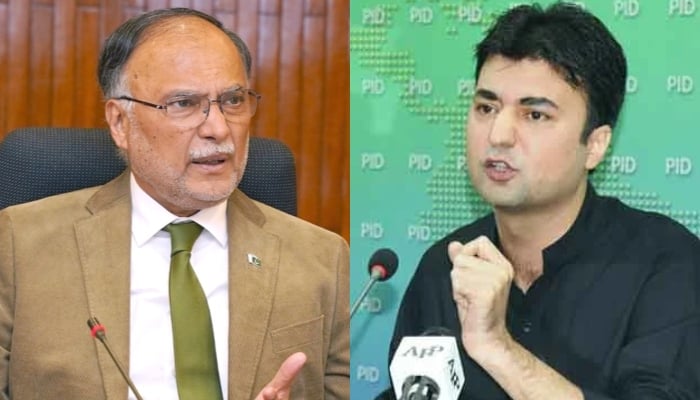
    An Islamabad District and Sessions Court has ruled in favour of Federal Minister Ahsan Iqbal in a long-running defamation case against PTI leader Murad Saeed. The court ordered Murad Saeed to pay Rs2.5 million in damages for making allegations that were not proven during the proceedings. Additional Sessions Judge Hakim Khan announced the verdict after hearing the case. The court held that Murad Saeed’s statements had damaged Ahsan Iqbal’s reputation and public image. It directed the PTI leader to compensate the federal minister with Rs2.5 million. According to the judgment, Murad Saeed accused Ahsan Iqbal of being involved in corruption worth Rs70 billion. However, the court found that he failed to provide any evidence to support the allegations. The court ruled that the accusations of corruption, misuse of authority, and receiving illegal commissions were defamatory because they remained unsubstantiated. The judgment stated that Ahsan Iqbal had initially sought Rs10 billion in damages for the alleged harm caused to his reputation. However, the court observed that the amount claimed was excessive in view of the evidence presented during the trial. It therefore awarded Rs2.5 million as reasonable compensation. The court further observed that Murad Saeed’s controversial statements had harmed Ahsan Iqbal’s reputation, dignity, and credibility. It said the allegations created a negative impression of the minister among the public and directly targeted his honesty, integrity, and professional standing. The judgment also noted that Murad Saeed neither appeared before the court during the proceedings nor submitted evidence to substantiate the corruption claims. The absence of supporting material, the court said, weakened his defence and left the allegations unproven. The case originated from statements made by Murad Saeed in 2019 regarding the Multan-Sukkur Motorway project. At the time, he alleged that Ahsan Iqbal had committed corruption in connection with the project. After reviewing the evidence and hearing the arguments, the court concluded that the accusations were not established and therefore amounted to defamation. The verdict marks the conclusion of the defamation proceedings, with the court reaffirming that public allegations of corruption must be backed by credible evidence.

  • | | |

    Fake Iranian statements allegedly used to push nuc…

    TEL AVIV: An Israeli journalist has alleged that a fabricated statement attributed to an Iranian official was circulated as part of an effort to portray Tehran as actively seeking to develop nuclear weapons. According to Israeli journalist Ronen Bergman, a false statement was allegedly created and attributed to Ahmad Vahidi, a senior commander of Iran’s Islamic Revolutionary Guard Corps. The fabricated remarks purportedly claimed that Iran was developing nuclear weapons. Bergman said the alleged fake statement was initially circulated through the social media account of a Hindu extremist in India before being amplified by a number of prominent Israeli and US-linked accounts and figures. He alleged that the material was subsequently shared by accounts associated with Israel’s Mossad, an Israeli television channel, Israeli Prime Minister Benjamin Netanyahu and the US ambassador to the United Nations. The claims have raised questions about the role of disinformation in the highly sensitive debate surrounding Iran’s nuclear programme, particularly amid continuing tensions between Tehran and Israel. The allegation is significant because claims about Iran’s nuclear ambitions have repeatedly featured in political and security debates in the region. Any fabricated statement presented as an authentic admission could potentially influence public opinion and international perceptions. However, the reported allegations concern the authenticity and circulation of the statement rather than independently establishing the broader question of Iran’s nuclear intentions. The development highlights how rapidly unverified material can spread across social media and be amplified by influential accounts, especially during periods of heightened geopolitical tension. The claims attributed to Bergman are likely to fuel further debate over information warfare, source verification and the use of alleged intelligence-related material in the ongoing Iran-Israel confrontation.

  • | |

    ‘How to Lose a Guy in 10 Days’ sequel confirmed

    LOS ANGELES: Fans of the popular romantic comedy How to Lose a Guy in 10 Days have reason to celebrate as a sequel to the 2003 film is officially moving forward, more than two decades after the original became a rom-com favourite. The upcoming project is being developed by Paramount Pictures, with actress Kate Hudson, who played the lead character in the original movie, attached as a producer. Details about the sequel are currently being kept under wraps. The storyline has not been revealed, and no official cast announcement has been made so far. However, there is growing speculation that Hudson and Matthew McConaughey could return to their famous roles as Andie Anderson and Benjamin Berry. Neither actor has officially confirmed a return at this stage. The original film centred on Andie Anderson, a journalist working for Composure magazine. She takes on an unusual assignment to write an article explaining how a woman could make a man end a relationship within 10 days. Her target is Benjamin Berry, an advertising executive who becomes involved with her without knowing the real reason behind her behaviour. Benjamin, meanwhile, has his own secret challenge. He makes a bet that he can make Andie fall in love with him within the same period. Their competing plans lead to a series of misunderstandings, romantic moments and comedic situations. The film eventually turns into a genuine love story despite both characters initially having hidden motives. McConaughey’s casting was reportedly not straightforward. Hudson previously revealed that the studio did not initially consider him the obvious choice for the male lead. She said she pushed for McConaughey because she believed the two actors had the right chemistry for the film. Hudson later explained that she wanted to work with him because they had a competitive energy and could challenge each other on screen. She credited his commitment and focused approach to acting as important factors behind their successful pairing. Her decision proved successful. The chemistry between Hudson and McConaughey became one of the film’s biggest attractions and helped turn the movie into one of the better-known romantic comedies of the early 2000s. McConaughey has also spoken positively about the film years after its release. He has described it as one of his favourite romantic comedies and said its popularity has continued to benefit him financially. The actor previously joked that the movie remains his biggest source of so-called “mailbox money”, referring to the continuing income he receives from its popularity and repeated screenings. Directed by Donald Petrie, How to Lose a Guy in 10 Days was a commercial success when it reached cinemas in 2003. The film was made on a reported budget of around $50 million and earned nearly $180 million worldwide. Over the years, the movie has developed a strong following and become a staple of the romantic-comedy genre. The announcement of a sequel has therefore generated considerable interest among fans who have long wanted to see what happened to Andie and Benjamin after the events of the original film. For now, Paramount has not disclosed the sequel’s release date, storyline or confirmed cast. Any return by Hudson and McConaughey will depend on official confirmation from the studio and the actors

  • Punjab to support students from other provinces, Education Minister

    Lahore – Punjab Education Minister Rana Sikandar Hayat has announced that the Punjab government will support students from other provinces who wish to study at universities in Punjab. He also revealed that a Semester Exchange Program for students from other provinces is expected to be launched soon while Daanish Schools will also be established in Balochistan, Azad Jammu and Kashmir and Gilgit-Baltistan. The announcement came during a meeting between Punjab Education Minister Rana Sikandar Hayat, Punjab Communications and Works Minister Sohail Bharth and a delegation of students from various universities in Balochistan. The delegation also included students from Khyber Pakhtunkhwa, Gilgit-Baltistan and Azad Jammu and Kashmir. During the meeting, students praised Punjab Chief Minister Maryam Nawaz and Education Minister Rana Sikandar Hayat for their education reforms. Students from Balochistan humorously remarked that they wished to have Punjab’s Chief Minister and Education Minister lead their province for six months so that Balochistan could also achieve similar progress. The students discussed Punjab’s development projects, education system and other public initiatives with the provincial ministers. They also requested the introduction of a Semester Exchange Program to which the Education Minister responded that, subject to the approval of the Chief Minister, the program could be launched from next year. Many students from Balochistan, Khyber Pakhtunkhwa, Azad Kashmir and Gilgit-Baltistan expressed their desire to enroll in Punjab’s universities. In response, Rana Sikandar Hayat assured them that students from Balochistan would be offered admissions through scholarship programs in Punjab’s universities. He personally recorded the details of interested students during the meeting. The minister said that more than 15,000 students from other provinces are currently studying in educational institutions across Punjab. He added that he has a deep emotional connection with Balochistan and would be proud to see more Baloch students pursuing higher education in Punjab. Rana Sikandar Hayat also revealed that he has been in regular contact with the Education Minister of Balochistan to launch the Google Education Program in the province with both ministers having held seven consultations over the past few months. He further assured students that Punjab would also support learners in distance education. He emphasized that if students from Balochistan or any other province wish to study at any university in Punjab, the provincial government will extend full support. The minister also announced that Daanish Schools will soon be established in Balochistan, Azad Kashmir and Gilgit-Baltistan. He noted that 1,900 students from Gilgit-Baltistan are currently studying in Punjab on scholarships while the 10 percent admission quota for Balochistan students in Daanish Schools is also being increased. Rana Sikandar Hayat said that Chief Minister Maryam Nawaz has a special commitment to supporting the youth of Balochistan and other provinces. Therefore, students from other provinces have been included in scholarship programs, university admission quotas and the Punjab laptop scheme. At the end of the meeting, Rana Sikandar Hayat and Sohail Bharth presented one laptop each on behalf of the Chief Minister of Punjab to every student in the visiting delegation.

Leave a Reply

Your email address will not be published. Required fields are marked *