teen footballer goes
|

Teen footballer goes missing from Pakistan camp after Norway Cup

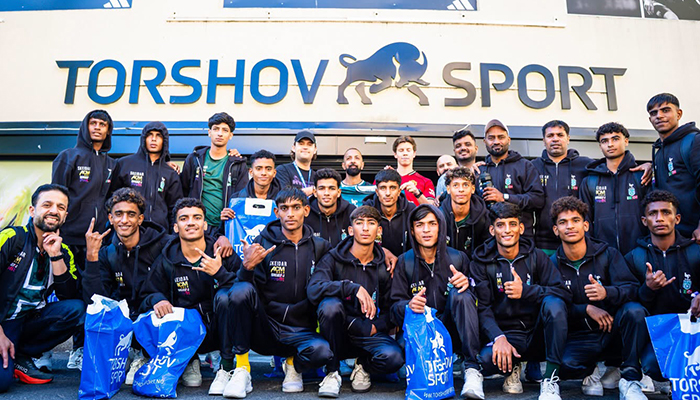
OSLO: A 15-year-old Pakistani footballer has gone missing after reportedly leaving the Better Future Pakistan camp in Norway without informing team officials, prompting an immediate police search during the team’s stay in Oslo.

According to a statement issued by Better Future Pakistan, the young player departed the camp on his own without seeking permission from the management. The organization said his whereabouts remain unknown despite ongoing efforts to locate him.

Officials stressed that preliminary findings suggest the footballer left the camp voluntarily, with no evidence so far indicating foul play, kidnapping or coercion. They urged the public to avoid speculation while authorities continue their investigation.

The camp management said police were notified within 20 minutes of the player last being seen. Norwegian authorities responded promptly, launching search operations and initiating the necessary legal procedures to trace the missing teenager.

Better Future Pakistan stated that it is maintaining close contact with local law enforcement agencies and is fully cooperating with the investigation. The organization also said it is providing updates to the player’s family and relevant Pakistani authorities as new information becomes available.

The incident occurred after the conclusion of the Norway Cup, one of the world’s largest international youth football tournaments, which was held in Oslo from July 25 to August 1. Better Future Pakistan had sent a group of young footballers to participate in the event as part of its youth development program.

While the missing player’s disappearance has raised concern, officials confirmed that all other members of the Pakistani contingent have safely returned home following the completion of the tournament.

The case has drawn attention in Pakistan’s sporting community, coming shortly after other reports involving Pakistani athletes going missing during overseas tours. However, Better Future Pakistan emphasized that each case is unique and cautioned against drawing premature conclusions.

Authorities in Norway continue their search, while the football community hopes the teenager is found safe and reunited with his family as soon as possible. Both police and team officials have appealed for anyone with credible information about the player’s whereabouts to contact the relevant authorities immediately.

Similar Posts

  • |

    Why did Zelensky sack his Army Chief?

    Ukrainian President Volodymyr Zelensky has removed the country’s top military commander, General Oleksandr Syrskyi, in a major change to Ukraine’s military leadership as the war with Russia enters its fifth year. The decision comes during a difficult period for Ukraine, where fighting continues on several front lines and pressure is mounting on the government to improve military performance. General Syrskyi had been serving as Commander-in-Chief of the Armed Forces of Ukraine. He was responsible for leading the country’s military operations against Russian forces. President Zelensky announced that General Mykhailo Drapatyi will replace him as the new army chief. In his statement, Zelensky thanked Syrskyi for his service and praised Ukrainian soldiers for defending the country. However, he said Ukraine now needs a “reset” in military leadership to strengthen operations, improve coordination among commanders and address challenges related to troop mobilisation and battlefield management. The leadership change comes only a few days after Zelensky removed Defence Minister Mykhailo Fedorov from office. That decision sparked public protests in the capital, Kyiv, with many people expressing concern about changes in the country’s defence leadership while the war is still ongoing. Who is Oleksandr Syrskyi? General Oleksandr Syrskyi is one of Ukraine’s most experienced military officers. He was born in Russia in 1965 when both Russia and Ukraine were part of the former Soviet Union. During his early military career, he served in Soviet forces before choosing to remain in Ukraine after it became an independent country in 1991. Over the years, Syrskyi rose through the ranks of the Ukrainian military. In 2014, he led Ukrainian forces during fighting against Russian-backed separatists in eastern Ukraine. When Russia launched its full-scale invasion of Ukraine in February 2022, Syrskyi became one of the country’s most important military commanders. He played a leading role in defending the capital, Kyiv, from Russian attacks during the early weeks of the war. His leadership was widely praised, and he later received Ukraine’s highest national honour, the title of “Hero of Ukraine.” He was also credited with planning Ukraine’s successful counteroffensive in the Kharkiv region in 2022. During that operation, Ukrainian forces regained control of several key cities that had been occupied by Russian troops. Why was he removed? President Zelensky has not accused Syrskyi of any wrongdoing. Instead, he said the leadership change is aimed at improving Ukraine’s military strategy as the war continues. Reports suggest there had been disagreements within Ukraine’s defence leadership over military reforms, mobilisation policies and battlefield planning. Former Defence Minister Mykhailo Fedorov had previously criticised Syrskyi, saying some reforms were progressing too slowly. The appointment of General Mykhailo Drapatyi is seen as an attempt to bring fresh leadership and improve cooperation between military commanders and government officials. Ukraine has changed several military leaders This is not the first time Ukraine has replaced senior defence officials since the war began. In September 2023, Defence Minister Oleksii Reznikov left office after corruption allegations involving the defence ministry. In February 2024, General Valerii Zaluzhnyi, who was one of Ukraine’s most popular military commanders, was replaced by Syrskyi as commander-in-chief. Several other senior officers have also been reassigned as Ukraine continues to adjust its military leadership during the conflict. Russia has also changed its commanders Russia has also replaced several top military officials since launching its invasion of Ukraine. The commander of Russia’s Black Sea Fleet was removed after the sinking of the warship Moskva in 2022. Major General Ivan Popov was dismissed after publicly criticising Russia’s military strategy. General Sergey Surovikin, who once commanded Russia’s aerospace forces, was also removed following the failed Wagner Group rebellion in 2023. Why does this matter? Military leadership plays a crucial role in any war. Commanders make important decisions about troop movements, battlefield tactics, defence planning and military operations. Ukraine hopes the appointment of General Drapatyi will strengthen its armed forces at a time when Russia continues to launch attacks across different regions. The change also reflects Kyiv’s effort to improve military efficiency and prepare for future operations

  • | | |

    Shaheen Shah Afridi leaves Lanka Premier League du…

    Pakistan’s star fast bowler Shaheen Shah Afridi has returned home after leaving the Lanka Premier League (LPL) due to personal reasons. The left-arm pacer, who was representing the Kandy Royals in the tournament, departed from the event before its conclusion, ending his participation in the ongoing competition. During his time in the Lanka Premier League, Shaheen Afridi was also involved in a disagreement with his team management over his exclusion from the playing squad for a match on July 19. The incident reportedly created tension between the player and the franchise during the tournament. In the match against the Colombo Capitals, Shaheen Afridi was informed that he would be used as an impact player. However, his name was not included in the official team sheet submitted for the match. The omission reportedly upset the Pakistani fast bowler, who expressed his disappointment over the situation. The issue was later addressed after the Kandy Royals management apologized to Shaheen Afridi. Following the apology and discussions with the team officials, the fast bowler returned to action and participated in subsequent matches for the franchise. Despite the disagreement, Shaheen Afridi continued to contribute to his team’s campaign in the tournament. He played six matches in the Lanka Premier League and took seven wickets, demonstrating his effectiveness as one of the leading fast bowlers in the competition. Shaheen Afridi is regarded as one of Pakistan’s most important international cricketers and has established himself as a key figure in the national team’s bowling attack. Known for his pace, swing, and ability to take early wickets, he has represented Pakistan across all formats of international cricket and has earned recognition as one of the world’s top fast bowlers. His participation in overseas T20 leagues has provided him with valuable experience and exposure against international players. The Lanka Premier League was another opportunity for him to showcase his skills and maintain competitive form ahead of future international assignments. The Kandy Royals management’s decision to apologize after the team sheet controversy helped resolve the matter, allowing Shaheen Afridi to continue his involvement in the tournament. However, his early departure due to personal reasons means that he will no longer be available for the remaining matches of the league. The exact nature of the personal reasons behind Shaheen Afridi’s return to Pakistan has not been disclosed. His decision comes as part of his personal commitments, and there has been no official indication that his departure is related to any injury or cricketing issue. Fans and cricket analysts have closely followed Shaheen Afridi’s performances in the tournament, particularly because of his reputation as a match-winning bowler. His seven wickets in six matches highlighted his continued ability to perform at the highest level in franchise cricket. The Pakistan Cricket Board and supporters will now be hoping that Shaheen Afridi returns refreshed and prepared for upcoming international challenges. His fitness, form, and availability remain important factors for Pakistan’s future cricketing plans.

  • |

    Xi backs Brazil against foreign interference in call with Lula

    Chinese President Xi Jinping expressed support for Brazil’s efforts to protect its sovereignty and resist foreign interference during a phone conversation with Brazilian President Luiz Inacio Lula da Silva, according to Chinese state media. The discussion took place just months before Brazil’s closely watched presidential election and against the backdrop of growing trade and diplomatic tensions with the United States. According to China’s Xinhua news agency, Xi praised Brazil’s role on the international stage and said Beijing values the country’s influence in global affairs. He stated that China supports Brazil in defending its independence, rejecting outside interference, and contributing to regional and international peace and stability. The phone call comes less than three months before Brazilians head to the polls in an election expected to be highly competitive. President Lula is seeking another term and faces a challenge from right wing candidate Flavio Bolsonaro, the son of former president Jair Bolsonaro. The Brazilian presidency said the two leaders also discussed strengthening economic cooperation. Both sides agreed on the importance of accelerating negotiations for a trade agreement between China and Mercosur, the South American trade bloc that includes Brazil, Argentina, Paraguay, and Uruguay. Such an agreement could expand trade opportunities between the region and the world’s second largest economy. During the conversation, which lasted more than an hour, Lula reaffirmed his commitment to expanding Brazil’s international trade network. He said his government is working to diversify export markets and reduce dependence on a limited number of trading partners, particularly as Brazil faces increased tariff pressure from the United States. Relations between Brasilia and Washington have become more strained in recent months. The United States introduced two additional rounds of tariffs on a range of Brazilian products this month, following a significant tariff increase imposed last year. The measures were linked to political tensions surrounding the legal case that resulted in former president Jair Bolsonaro being sentenced to prison over an alleged coup plot. Lula has strongly criticized the tariffs, arguing that they amount to political pressure during an election year. He has accused Washington of attempting to influence Brazil’s domestic affairs through economic measures, an allegation the United States has rejected. Diplomatic tensions have also surfaced over election related issues. According to diplomatic sources, Brazil recently refused entry visas for two American officials who planned to visit the country’s election authorities ahead of the October vote. The move reflected growing sensitivity within the Brazilian government over foreign involvement in electoral matters. Meanwhile, Flavio Bolsonaro has continued to question the reliability of Brazil’s electronic voting system despite repeated assurances from election officials that it is secure. His claims have echoed similar allegations made by US President Donald Trump regarding American elections, although no credible evidence has supported those accusations. While the Chinese government highlighted Xi’s support for Brazil in resisting external interference, the official statement released by the Brazilian presidency did not specifically mention that part of the discussion. Instead, it focused on economic cooperation and the importance of strengthening trade ties between Brazil, China, and the Mercosur bloc. The conversation underscores the increasingly close relationship between Beijing and Brasilia at a time when Brazil is balancing political challenges at home with shifting economic and diplomatic dynamics on the global stage.

  • | |

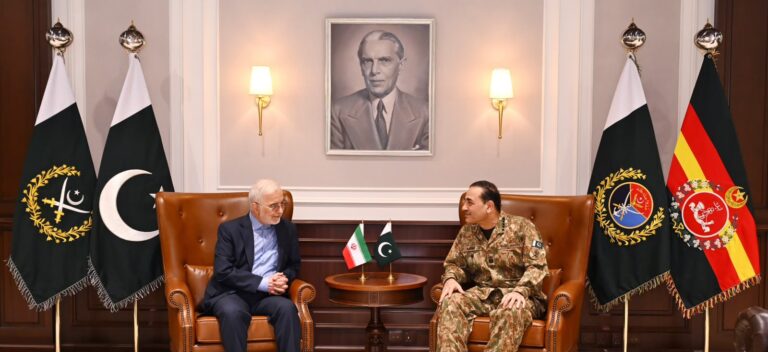
    Field Marshal Asim Munir,  Iranian Momeni hold ke…

    Iranian Interior Minister Eskandar Momeni called on Field Marshal Syed Asim Munir, Chief of Army Staff and Chief of Defence Forces, at the General Headquarters (GHQ) in Rawalpindi on Tuesday to discuss regional security and bilateral cooperation. The meeting focused on issues of mutual interest, including regional security, defence cooperation and effective border management between Pakistan and Iran. Both sides exchanged views on the evolving regional security environment and stressed the importance of maintaining close coordination to address common security challenges and strengthen bilateral relations. The Iranian interior minister appreciated Pakistan’s diplomatic efforts in promoting regional peace and stability. He acknowledged the country’s role in encouraging dialogue, reducing tensions and supporting peaceful solutions to regional disputes. The two sides also underscored the importance of continued cooperation to improve border security and strengthen mechanisms aimed at preventing cross-border threats while promoting stability in the region. The meeting concluded with a shared commitment to enhancing cooperation and maintaining regular coordination in support of regional peace, security and mutual prosperity.

  • | |

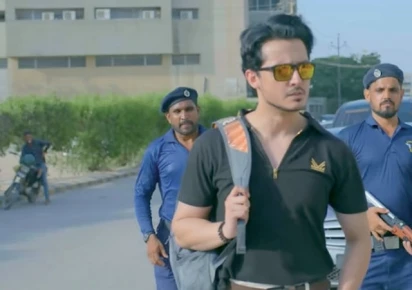
    Shaandaar brings a different kind of story to Pakistani television

    Pakistani television dramas tend to follow familiar patterns. Family feuds, romantic misunderstandings, domestic conflicts. Shaandaar, the new crime thriller airing on Express Entertainment, has made a deliberate choice to go somewhere different, and the early response suggests audiences are ready for exactly that. The 16-episode drama, directed by Wajahat Rauf, draws inspiration from several real-life roadside killing cases that have sparked public debate and outrage in Pakistan. It is not a dramatisation of any single incident. Instead, the story brings together elements from different cases involving violence, privilege and the kind of power that can sometimes make consequences disappear. The question it keeps returning to is one that many Pakistanis have asked in real life: what happens when the powerful believe they are beyond accountability? For Ahsan Afzal Khan, who plays the central character Salar, the project offered something rare. “A script picked by Mr Wajahat Rauf already gives you the impression that something different is coming,” he told The Express Tribune. He described the opportunity to work in this genre as one of the main reasons he signed on. “There are very few such stories. We were getting a chance to do something different, a crime thriller genre.” Salar is not easy to like. He is privileged, arrogant and narcissistic. He looks down on others and misuses his influence. But Khan was careful to distinguish between understanding a character and excusing one. “I hope people relate to the human side of Salar, but not to his entire personality,” he said. He also pushed back on the idea that characters can be neatly sorted into good and bad. “No negative character is a bad person, and no positive character is a good person. We are all layered somewhere.” His explanation for how someone becomes Salar is rooted in how they were raised and what they absorbed along the way. “Did we face bullying? What did we face? All of that is incorporated into your mind. You are reacting as a defence mechanism.” Beneath the arrogance, there is a human being shaped by something. But those origins do not erase the damage. The drama is designed to move quickly. Khan described it as “fast-paced, gritty and dark,” but said the tone is not relentlessly heavy. “There is a light mood too, then slowly it gets darker and darker. There are social messages and a lot of things.” He said he watches the episodes with his family and finds himself wanting to see the next one. “It keeps you interested. It is not dragged.” That pace appears to be connecting with a younger audience. “Teenagers and Gen Z are enjoying this drama a lot,” Khan said. He also noted that viewers who usually prefer international content have expressed interest in the series, which says something about how far Shaandaar’s tone and subject matter depart from what Pakistani television typically offers. The ensemble cast includes Shamoon Abbasi, Shahzad Sheikh, Areeka Haq, Ali Dayan, Laila Wasti and Ahsan Afzal Khan. Together they inhabit a world where privilege and power create consequences that ordinary people cannot escape, and where the same actions carry very different costs depending on who commits them. It is a world many Pakistani viewers will recognise without needing it explained.

Leave a Reply

Your email address will not be published. Required fields are marked *