pakistans total debt
|

Pakistan’s total debt burden nears Rs84 trillion as government borrowing rises

Pakistan’s total government debt stock climbed to a record level of nearly Rs84 trillion by the end of June 2026, highlighting the growing financial burden facing the country amid continued reliance on domestic and external borrowing.

According to the latest data released by the State Bank of Pakistan (SBP), the federal government’s total debt increased by 7.4% on a year-on-year basis during the fiscal year ended June 2026.

The central government’s debt stood at Rs83,642 billion in June 2026, compared with Rs77,888 billion recorded in June 2025. The debt stock also increased significantly on a monthly basis, rising from Rs81,955 billion in May 2026.

The latest figures indicate that the government’s debt increased by around Rs5,754 billion, or Rs5.75 trillion, over the course of the fiscal year.

Domestic debt remains major component

Domestic borrowing accounted for the largest portion of the government’s total debt. According to SBP data, the federal government’s domestic debt rose by 9.1% year-on-year to Rs59,441 billion by June 2026.

The increase reflects continued dependence on the domestic financial market to meet the government’s financing requirements, including budgetary needs and debt-servicing obligations.

Meanwhile, the federal government’s external debt increased by 3.3% during the year, reaching Rs24,201 billion by June 2026.

Although the growth in external debt remained comparatively lower than domestic borrowing, the foreign-currency component continues to place pressure on the country’s external financing position, particularly when debt repayments coincide with periods of weak foreign exchange inflows.

Debt servicing poses growing challenge

The continued rise in the debt stock is also raising concerns about the government’s ability to manage debt-servicing costs while creating fiscal space for development spending and public services.

A growing share of government revenues is required to meet interest and principal repayment obligations, limiting the resources available for infrastructure, social development and other productive investments.

Economic experts have warned that if the debt trajectory is not brought under control, the rising burden could turn into a “debt trap” for the economy.

They argue that reducing dependence on borrowing would require stronger revenue mobilisation, greater fiscal discipline, higher exports and sustained economic growth. Improving the efficiency of public spending and reducing reliance on debt-financed expenditures could also help contain the pressure.
Similar Posts

  • | |

    Justice Akbar Dogar emerges, top performing judge …

    Justice Sardar Ali Akbar Dogar has emerged as the highest-performing judge of the Lahore High Court during the judic ial summer vacations, disposing of the largest number of cases among all judges, according to the court’s weekly disposal report. The report, released on July 31, 2026, states that a total of 425 cases were decided at the Principal Seat of the Lahore High Court in Lahore between July 27 and July 31, 2026. According to the report, a Division Bench comprising Justice Mirza Waqas Rauf and Justice Sardar Ali Akbar Dogar disposed of 44 cases during the reporting period. Meanwhile, Justice Dogar, sitting as a Single Bench judge, disposed of an impressive 381 cases, making him the highest case-disposing judge during the vacation week. The report further reveals that the Single Bench disposed of 57 habeas corpus petitions, 33 pre-arrest bail applications, 27 post-arrest bail petitions, and 12 petitions seeking cancellation of bail. Justice Dogar also decided 32 petitions seeking the quashment of FIRs, 53 petitions relating to the registration of criminal cases, 63 petitions alleging police harassment, and 74 petitions concerning unlawful detention and illegal confinement. In addition, the court disposed of five petitions involving national identity cards and citizenship issues, while 14 cases of a religious nature were also decided during the same period. The Lahore High Court’s weekly report notes that the disposal statistics cover the period from July 27 to July 31, 2026. However, it also clarifies that the figures remain subject to official verification before being treated as final.

  • | |

    KPC President Fazil Jameeli: Sindh govt offers fin…

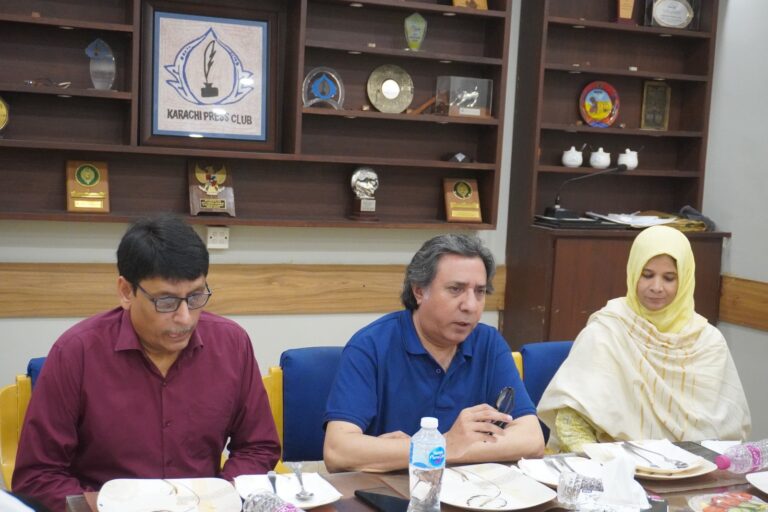
    In a rare but welcome gesture, Karachi Press Club President Fazil Jameeli, serving his second consecutive term, hosted a luncheon for women journalists to hear their concerns and suggestions firsthand. A good number of female journalists attended. KPC General Secretary Aslam Khan and governing body member Sheema Siddiqua were also present. For women journalists in Karachi, the newsroom is only half the story. Beyond deadlines, beats, and breaking news, they carry the weight of a double role — as working professionals and as homemakers. It is this unseen labor that makes spaces like the KPC luncheon significant — not just as a meeting, but as recognition that their challenges are different, and their voices need a dedicated forum. During the discussion, President Fazil Jameeli disclosed that the Sindh government’s Pink Scooty scheme was initially his brainchild. He said he had advised the Sindh Minister for Information and Transport, Mr Sharjeel Inam Memon, to launch it to empower women, building on the province’s existing Pink Bus service for females. The conversation moved beyond formalities to everyday issues — from canteen management and cleanliness to broader facilities. Jameeli briefed the gathering on ongoing initiatives, including the Pink Scooty Training program and the club’s pending requisition to the Sindh government for support. More importantly, he sought concrete recommendations from the women present on making KPC’s services more inclusive, signaling a shift from token representation to real consultation. The luncheon concluded with a vote of thanks from women members. Later, in an interview, President Fazil Jameeli — a poet and writer of repute who enjoys great respect in literary and scholarly circles — outlined the elected body’s plans. Known for his thoughtful verse and warm leadership, he spoke with vision and clarity about expanding facilities and empowering members. In a major announcement, he said: “KPC will be the first club in Pakistan to introduce daycare centers for women members. This will help them work with greater peace of mind.” While the Women Development Department had committed to building one, no action has followed. KPC is now approaching the corporate sector and overseas Pakistanis for support. The women’s complex infrastructure is ready, but running a daycare will require significant expense — trained governesses, teachers, a nutritionist, and food for toddlers and school-going children. “This project is very close to my heart,” he said. Jameeli added that the club was preparing women journalists for the digital media boom. “We have already set up a state-of-the-art studio. Dozens are already benefiting by making vlogs and monetizing their channels,” he said. The aim, he noted, is to help women become financially independent through digital content. He also highlighted a major opportunity: Sindh government financing for digital projects. “The Sindh government has offered to finance documentaries and digital content that showcase Sindh to the world,” he said. The scope includes the province’s landscape, rivers, coastline, Indus Delta, history, culture, languages, Sufi heritage, folk music, handicrafts, cuisine, and ancient civilizations like Mohenjo-daro and Kot Diji, as well as contributions of Sindhi scholars, poets and leaders. “From the government’s point of view, this is about narrative building,” he said. “They want young content creators to tell Sindh’s real story — its pluralism, resilience and heritage — through modern digital platforms. In return, the Sindh government will provide financial support for quality projects that project a positive image of the province.” On sustainability, Fazil Jameeli said KPC was the only club in Pakistan working on green energy. The current body was enhancing solar capacity with larger panels and better batteries to make the club more self-reliant and cut electricity costs. He also updated members on KPC Media Town. A summary sent to the provincial government has been approved for sewerage, drainage, roads and other infrastructure at Hawksbay Media Town. The President further said the body was considering a big family picnic and an annual family gala. Recommendations are being invited from women members to make club life more inclusive. Wrapping up, Jameeli said; the focus is clear: to make KPC more inclusive, self-reliant and future-ready. “From green energy and Media Town infrastructure to daycare centers, digital studios and skill programs for women, the aim is to build a club where every member — especially women — feels supported. These are not just projects. They are steps toward a KPC that reflects the creativity, resilience and spirit of its journalists.

  • | |

    Internet restored in Muzaffarabad after 53 days

    Broadband internet services have been restored in Muzaffarabad after a 53-day suspension, bringing relief to residents, businesses, journalists and students who had struggled with limited digital connectivity since early June. The restoration took effect late Wednesday night, allowing broadband users to regain access to online services. However, mobile internet connectivity remained unstable in several areas, with users continuing to report intermittent disruptions. The prolonged shutdown had significantly affected communication, online banking, digital businesses, educational activities and media coverage, particularly during the ongoing election season in Azad Jammu and Kashmir (AJK). Journalists and political workers had repeatedly raised concerns over the lack of internet access, saying it hindered the flow of information and election-related reporting. The restoration comes just days before the second phase of the AJK Legislative Assembly elections, scheduled for August 2, when more than 1.24 million voters are expected to cast their ballots in 21 constituencies. The polls will include nine constituencies in Muzaffarabad Division and 12 seats reserved for Jammu and Kashmir refugees residing in Pakistan. Election authorities have completed polling arrangements and announced enhanced security measures to ensure peaceful, transparent and orderly elections. A total of 351 candidates are contesting the second phase, with several high-profile political leaders participating in closely watched races. Political campaigning has intensified across Muzaffarabad, Neelum Valley and Jhelum Valley as major parties make their final push to secure voter support before polling day.

  • | |

    LHC says illness, physical weakness can justify ba…

    The Lahore High Court (LHC) has ruled that illness, physical weakness, old age or disability can serve as valid legal grounds for granting post-arrest bail, issuing an important judgment on bail applications filed on medical grounds. Justice Amjad Rafiq issued a detailed written verdict while deciding the post-arrest bail petition of Dr Iftikhar Ahmed, who is suffering from Parkinsonism, a progressive neurological disorder that affects movement and physical independence. The court observed that if a prison medical report confirms that an accused is physically weak, there is no need to separately assess the severity of the illness. It held that physical weakness itself may be sufficient to justify consideration for bail. According to the judgment, illness and physical weakness are separate legal grounds for granting bail. The court noted that imprisonment can cause greater hardship for elderly, physically weak and disabled individuals, and the justice system should protect them from unnecessary physical suffering. The LHC further stated that the bail application had not been filed on the merits of the criminal case but solely because of the accused’s deteriorating physical condition. The prison medical report confirmed that Dr Iftikhar Ahmed was suffering from Parkinsonism, a disease that gradually limits a person’s physical abilities and independence. Rejecting the prosecution’s argument, the court ruled that the mere fact an accused is receiving medical treatment in prison cannot, by itself, be used as a reason to deny bail. The judgment also referred to principles of Islamic law and international judicial precedents, stating that sick, elderly and vulnerable individuals are entitled to special legal protection and humane treatment. The Lahore High Court granted post-arrest bail to Dr Iftikhar Ahmed against surety bonds of Rs1 million. The court directed the accused not to influence prosecution witnesses, to surrender his passport and not to leave the court’s jurisdiction without prior permission. Dr Iftikhar Ahmed has been in jail since March 2025 in a case registered at Sabzazar Police Station, where he is accused of administering an incorrect injection to a citizen’s son. The criminal proceedings will continue in accordance with the law.

  • | |

    Fake govt representative arrested in Lahore, NCCIA…

    LAHORE: The National Cyber Crime Investigation Agency (NCCIA) Lahore has arrested a man accused of impersonating government institutions and senior officials to influence officers and collect money through fraudulent promises. The suspect, identified as Faiz Ali Syed, was arrested on the special directions of NCCIA Punjab Director Muhammad Ali Wasim. Investigators said the suspect allegedly used fake identities and documents to approach officials and private individuals, claiming he could arrange government-related work and facilitate appointments in public departments in exchange for money. According to FIR No. 171/2026, Syed allegedly contacted officers through multiple WhatsApp numbers while presenting himself as a representative of prominent government institutions. Investigators also found that he used a fake green registration plate on a private vehicle to create an impression of official authority. A man dressed in a police uniform was also allegedly kept with him to reinforce the appearance of influence and official status. Three mobile phones were recovered from the suspect. Their preliminary examination reportedly uncovered WhatsApp conversations, official-looking correspondence and evidence of financial transactions linked to the alleged fraud. One of the WhatsApp accounts was reportedly labelled “Apex Court,” while conversations showed the suspect allegedly portraying himself as a member of an important state institution. Investigators also recovered several letters issued in the suspect’s name that contained claims regarding appointments to senior government positions. Further analysis of the mobile devices revealed communications suggesting that money was allegedly collected from individuals on the promise of getting their work done or securing favours through government departments. The NCCIA is investigating the case from several angles, including electronic fraud, forgery, impersonation of government institutions and financial deception. A detailed forensic examination of the recovered phones and other evidence is continuing, with investigators expecting further revelations as the probe progresses.

  • | | | |

    Attack on one, defence of all: Makkah pact

    Saudi Arabia, Türkiye and Pakistan have signed a joint defence agreement aimed at strengthening collective security and defence capabilities among the three countries. According to the Foreign Office spokesperson, the agreement was signed during a trilateral joint defence summit held in Makkah. Saudi Crown Prince and Prime Minister Mohammed bin Salman, Prime Minister Shehbaz Sharif and Turkish President Recep Tayyip Erdogan signed the agreement. Under the pact, an armed attack against any one of the three countries will be treated as an attack against all three. The Foreign Office said the agreement is aimed at strengthening the three countries’ collective defence capabilities against any act of aggression. The development came after Prime Minister Shehbaz Sharif met Saudi Crown Prince Mohammed bin Salman in Makkah. Field Marshal Syed Asim Munir and other members of the Pakistani delegation also attended the meeting. The leaders discussed the regional situation and ways to further strengthen the strategic partnership between Pakistan and Saudi Arabia. Earlier, a trilateral summit involving Saudi Arabia, Pakistan and Türkiye was scheduled to take place in Jeddah, with expectations of important developments concerning regional peace and security. According to Turkish media reports, the three countries were set to sign an agreement concerning regional security during the summit. Turkish President Recep Tayyip Erdogan also arrived in Saudi Arabia to participate in the high-level meeting. Prime Minister Shehbaz Sharif and Field Marshal Syed Asim Munir had arrived in Saudi Arabia a day earlier at the invitation of the Saudi Crown Prince. During their visit, the Pakistani delegation also performed Umrah and offered prayers at the Holy Kaaba.

Leave a Reply

Your email address will not be published. Required fields are marked *