houthi attack yemens
| | | |

Houthi attack on Yemen’s Mokha leaves six dead

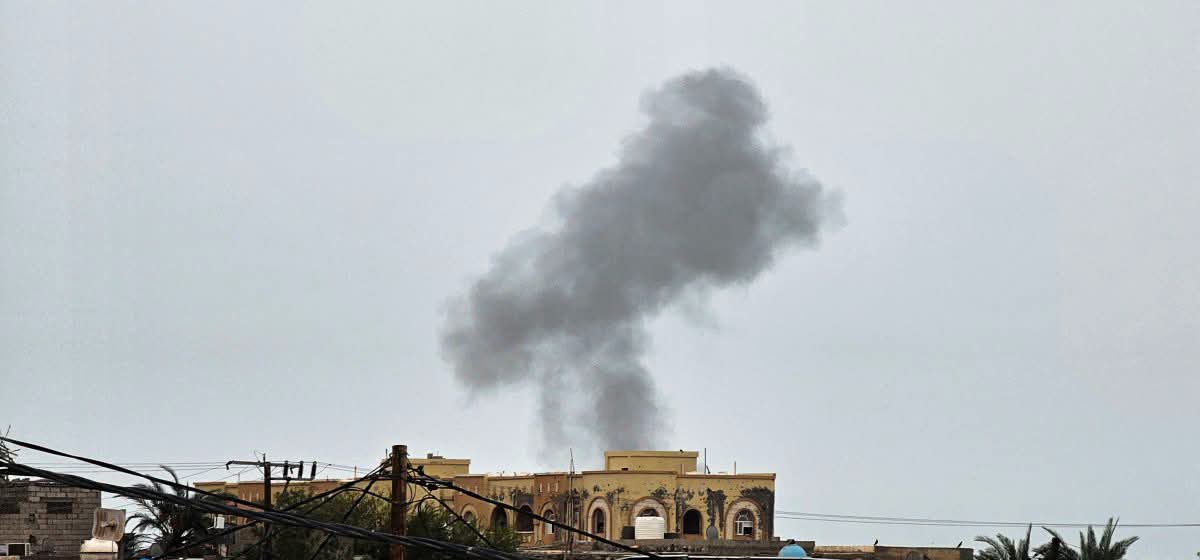
MOKHA: A Houthi attack on Yemen’s Red Sea port city of Mokha has killed six people, including two security personnel, according to a military official from Yemen’s internationally recognised government.

The attack, which took place on Friday, targeted commercial vessels unloading cargo at the port, raising fresh concerns over the security of maritime activity along one of the world’s most strategically important shipping routes.

The military official said the Iran-aligned Houthi group fired five missiles at the vessels. The strikes reportedly hit the port area and caused fires to break out aboard two ships.

The attack comes as tensions continue to rise across Yemen, with Houthi forces increasingly targeting areas controlled by the internationally recognised government. The latest violence has also added to concerns over the safety of commercial shipping operating near the Red Sea and Bab el-Mandeb Strait.

Mokha, historically known as Mocha, is located on Yemen’s western coast near the Bab el-Mandeb, a narrow maritime passage linking the Red Sea with the Gulf of Aden. Its location gives the port significant importance for regional trade and shipping.

The latest incident follows a series of Houthi attacks in and around Yemen’s government-held territories and against commercial vessels. The United Nations has warned that Yemen is at increasing risk of a return to wider conflict, with military activity intensifying despite the fragile calm that followed the 2022 truce.

The renewed attacks have also raised fears of further disruption to international shipping. Maritime authorities continue to warn commercial operators about missile, drone and other threats in the southern Red Sea, Bab el-Mandeb and Gulf of Aden.

Details about the identities of those killed and the extent of damage to the vessels were not immediately available.

The attack is likely to further deepen concerns about Yemen’s fragile security situation and the growing risks facing civilian and commercial activity along its Red Sea coastline.

Similar Posts

  • | |

    Nearly 2,000 child abuse cases reported in Pakista…

    Pakistan recorded 1,914 reported cases of child abuse during the first six months of 2026, with child sexual abuse making up the largest share of incidents, according to a new report released by child rights organisation Sahil. The report, based on cases published in national and regional newspapers, revealed that 1,015 children were victims of sexual abuse between January and June. It also documented 558 abductions, 101 missing children, 35 child marriages and 98 cases involving child pornography linked to sexual abuse. In addition, 49 newborn babies were found abandoned in different parts of the country during the reporting period. Girls accounted for 58 percent of the reported victims, while children between the ages of 11 and 15 were identified as the most vulnerable group. The report also noted that children aged 16 to 18 and those between six and 10 years old were among the frequently affected age groups. According to Sahil, many victims were abused by people they knew. Acquaintances were identified as the alleged perpetrators in 43 percent of the reported cases, while strangers accounted for 34 percent. The findings further showed that nearly half of the abuse incidents occurred inside the victims’ homes, highlighting the hidden nature of child abuse. Other cases took place in the homes of the accused or at various public locations, while the location was not specified in several reports. Urban areas recorded a higher number of reported incidents than rural regions. Punjab accounted for around 80 percent of all reported child abuse cases nationwide, followed by Sindh with 15 percent. The remaining cases were reported from Khyber Pakhtunkhwa, Balochistan, Islamabad Capital Territory, Azad Jammu and Kashmir, and Gilgit-Baltistan. The report also stated that police registered cases in 89 percent of the reported incidents. However, a small number of cases were either not reported to law enforcement or allegedly faced refusal in the registration of a First Information Report (FIR), while the registration status of some cases remained unknown.

  • | |

    Pakistan’s major dams reach 72% storage capa…

    Pakistan’s water reserves have improved significantly, with the country’s major reservoirs now filled to 72% of their total storage capacity, according to official data released on Sunday. The latest figures show that the combined water storage in the country’s key reservoirs has reached 9.466 million acre-feet (MAF), compared with a total storage capacity of 13.149 million acre-feet. Officials said the improvement follows a substantial increase in water inflows across the Indus River system, with inflows significantly exceeding outflows. The higher inflow has helped replenish major dams and strengthen the country’s water reserves. The increase in reservoir levels is expected to support irrigation needs, improve water availability for agriculture and enhance overall water management during the current season. Authorities continue to monitor inflows and reservoir levels as the monsoon season contributes to rising water storage across the country’s major dams.

  • | |

    Preity Zinta backs CJP protest and urges government dialogue

    Actor Preity Zinta has publicly voiced her support for students demonstrating under the Cockroach Janta Party (CJP) banner, urging the Indian government to initiate “meaningful dialogue” with student bodies and climate activist Sonam Wangchuk to resolve the ongoing crisis surrounding competitive exam paper leaks. ​Taking to social media, Zinta expressed deep concern over the health of Wangchuk, who has been on an indefinite hunger strike demanding accountability and comprehensive educational reforms following widespread irregularities in the NEET-UG examination. Urging the activist to prioritize his well-being, the actor appealed for an immediate end to his fast while affirming her solidarity with the youth movement: ​”I hope our govt starts a meaningful dialogue with Sonam Wangchuk and the student bodies so his health does not deteriorate any further! Please end your fast Sonam. Your health is as important as this fight. You and the students are fighting for the future of India and for our youth. My heartfelt & unwavering support to every student & to Sonam in this fight to uplift & upgrade our educational system.” ​The CJP-led demonstrations at New Delhi’s Jantar Mantar escalated dramatically following a police crackdown and lathi-charge on peaceful student marchers, triggering widespread outrage across civil society and the entertainment fraternity. Addressing the growing unrest, Zinta issued a follow-up statement stressing the need to protect the genuine intent of the movement while cautioning against violence or political exploitation. ​She emphasized that while demanding reforms and holding authorities accountable is essential for the nation’s future, peaceful protests must remain focused on their core objective and avoid being manipulated by disruptive elements. Reaffirming her faith in democratic institutions, law, and order, she appealed to both authorities and student representatives to enter into constructive discussions to restore stability and secure better educational standards for the nation’s youth. ​Zinta’s intervention joins a swell of public support from prominent cultural figures—including veteran actors Shabana Azmi and Prakash Raj, actor Imran Khan, and singer Diljit Dosanjh—who have collectively called on leadership to engage constructively with the country’s students rather than resorting to force. With public pressure mounting and health concerns for key activists intensifying, calls for immediate government dialogue have moved to the forefront of the national debate.

  • | |

    Lahore declares August 4 public holiday

    The Lahore district administration has declared Tuesday, August 4, as a public holiday across the district to facilitate devotees attending the annual Urs celebrations of the revered Sufi saint Hazrat Data Ganj Bakhsh. According to an official notification, the holiday will remain effective only within the limits of Lahore district, allowing worshippers to participate in the religious events without disruption. The 983rd annual Urs officially commenced with a traditional chadar-laying ceremony and the inauguration of a milk sabeel at the shrine. The opening ceremony was attended by Deputy Prime Minister Senator Ishaq Dar, who paid tribute to the great Sufi saint and highlighted his enduring message of peace, tolerance, and unity. The Urs is observed over three days and attracts thousands of devotees from across Pakistan. Religious scholars, spiritual leaders, and followers gather at the shrine to offer prayers, recite the Holy Quran, and take part in various religious and spiritual activities held throughout the celebrations. Hazrat Data Ganj Bakhsh, also known as Hazrat Ali Hajveri, was an 11th-century Persian Sufi scholar born in Ghazni. He later settled in Lahore, where he dedicated his life to spreading the teachings of Islam, compassion, and brotherhood through Sufism. His shrine has since become one of the most significant spiritual landmarks in the region. Data Darbar is widely regarded as South Asia’s largest Sufi shrine and receives millions of visitors every year.

  • |

    Pakistan eyes PNSC ships to boost GCC trade amid shipping crisis

    ISLAMABAD: The government is considering a range of emergency measures, including the deployment of Pakistan National Shipping Corporation (PNSC) vessels, to keep Pakistan’s trade links with Gulf Cooperation Council (GCC) countries operational amid severe disruption to maritime traffic. The move comes as Pakistan’s exports to the GCC region declined significantly in July 2026, while imports also recorded a sharp fall compared with the same month last year, according to data shared by the Ministry of Commerce. The ministry’s figures show that exports to GCC countries dropped by around 12% year-on-year in July, reflecting the impact of heightened maritime security concerns and disruptions to established shipping routes. Exports to major Gulf markets decline Pakistan’s exports to the United Arab Emirates (UAE), its largest GCC trading partner, fell 9.5% in July 2026, reaching $144.6 million compared with $159.8 million recorded in July 2025. Exports to Saudi Arabia witnessed a steeper decline of 20.5%, falling to $42 million from $52.8 million a year earlier. Shipments to Oman decreased 3.7% to $15.8 million from $16.4 million. Pakistan’s exports to Bahrain suffered the sharpest percentage decline among the GCC markets, dropping 50.8% to $2.3 million from $4.2 million. Exports to Kuwait declined 7.4% to $7.4 million, while shipments to Qatar fell 4.2% to $8.7 million from $9 million in the corresponding month of 2025. The decline has raised concerns over the ability of Pakistani exporters to maintain regular deliveries to Gulf markets, particularly for goods that depend heavily on maritime transportation. GCC imports also fall sharply Pakistan’s imports from GCC countries also recorded a substantial decline during July. The Commerce Ministry reported that imports fell 32.5% year-on-year to $1.0009 billion from $1.4825 billion in July 2025. Imports from the UAE decreased 34.2%, falling to $380.7 million from $576.5 million. Imports from Saudi Arabia declined 4.7% to $295.3 million from $310 million, while purchases from Bahrain dropped 44.4% to $15.1 million from $27.2 million. The most significant declines were recorded in imports from Kuwait and Qatar. Imports from Kuwait plunged 92.8% to $9.5 million from $132.1 million, while those from Qatar fell 96.1% to $10.2 million from $261.8 million. Oman was the exception, with Pakistani imports from the country increasing 67.7% to $290.2 million from $173 million a year earlier. Month-on-month trade also weakens The trade slowdown was also visible on a month-on-month basis. Pakistan’s exports in July were 2.7% lower than in June 2026. However, the performance varied considerably across GCC destinations. Exports to the UAE increased 15.7%, while shipments to Kuwait and Qatar rose 19.4% and 88%, respectively. In contrast, exports to Saudi Arabia declined 34.5% during the month. Shipments to Oman fell 34.6%, while exports to Bahrain decreased 18.2%. Imports recorded an even sharper monthly decline, falling 32.5% in July compared with June. Imports from the UAE decreased 17.9%, while those from Saudi Arabia fell 41.4%. Imports from Oman declined 49.9%, and purchases from Qatar plunged 93.2%. Imports from Bahrain and Kuwait, however, increased during the month, rising 295.8% and 72%, respectively. Maritime security disrupts Gulf trade The Commerce Ministry linked the deterioration in trade flows to the worsening maritime security situation following the breakdown of an interim truce between the United States and Iran in July 2026. According to the ministry, the resulting security concerns severely affected international shipping movements through key maritime routes and created uncertainty for commercial vessels operating in and around the Gulf. The ministry said the waterway normally accommodates between 70 and 80 commercial vessel crossings each day. However, traffic reportedly dropped to as few as six vessels a day during the disruption, leaving hundreds of ships waiting outside the Strait of Hormuz. The ministry also referred to statements attributed to Iran’s Islamic Revolutionary Guard Corps (IRGC), according to which vessels were required to obtain permission to pass through the strategic waterway. Such developments, coupled with threats against shipping, significantly increased the risks and costs associated with maritime trade. Red Sea tensions add to shipping risks The Commerce Ministry also highlighted the impact of attacks attributed to Houthi militants on Saudi oil facilities and areas along the Red Sea coast. The resulting security threats to Saudi-linked vessels have increased concerns surrounding shipping through the Bab al-Mandab Strait, another critical maritime gateway connecting the Red Sea with the Gulf of Aden. With shipping operators facing heightened security risks, commercial maritime movement between Pakistan and GCC markets has been severely disrupted. The ministry said some Pakistani exports had consequently been shifted to air freight to ensure the delivery of goods to Gulf customers. However, air transport is considerably more expensive than sea freight, creating additional pressure on exporters and potentially reducing the competitiveness of Pakistani products in GCC markets. Government considers alternative shipping routes To reduce the impact of the disruption, the Commerce Ministry has proposed establishing dedicated feeder links between Karachi and safer maritime nodes outside the immediate Hormuz chokepoint. The proposed connections include Fujairah and Khor Fakkan in the UAE, as well as suitable Omani ports located outside the affected maritime corridor. Such routes could provide Pakistani exporters with alternative channels for moving cargo to the Gulf while reducing their exposure to disruptions around the Strait of Hormuz. The ministry has also recommended accelerating the operationalisation of multi-purpose passenger and cargo ferry services between Gwadar and GCC ports. The proposed ferry network is intended to provide another avenue for transporting commercial goods and passengers while strengthening Gwadar’s role as an alternative regional logistics hub. PNSC vessels under consideration Another option being examined by the government is the use of vessels operated by the Pakistan National Shipping Corporation to maintain trade connectivity with GCC destinations. The deployment of national-flag shipping capacity could provide greater control over cargo movement at a time when private commercial operators are facing security and logistical constraints. Officials believe that maintaining reliable access to Gulf markets is important because GCC countries remain a major destination for Pakistani exports and a key source of energy and other imported commodities. The proposed measures are therefore aimed

Leave a Reply

Your email address will not be published. Required fields are marked *