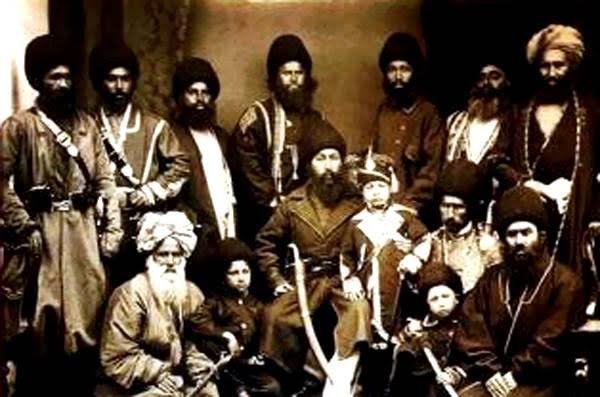
pashtun identity modern
|

Pashtun identity in modern South Asia

The Pashtuns represent one of the most populous indigenous groups across South and Central Asia, predominantly in Afghanistan and Pakistan. Their social backbone relies on interconnected lineages, extended families, clans, and tribal alliances rather than a centralized political authority.

From major confederations like the Durrani and Ghilzai to influential communities such as the Yusufzai, Afridi, Mohmand, Khattak, Wazir, and Mahsud, Pashtun society is a rich tapestry of overlapping regional, religious, and civic loyalties. At the core of their culture is Pashtunwali, an ancient honor code governing daily life through principles of hospitality, courage, asylum, and restorative justice. Historically, community issues and disputes were negotiated collectively through jirgas, or assemblies of local elders, maintaining order through consensus.

Empire Builders and Cultural Crossroads

Beyond tribal structure, Pashtuns have repeatedly reshaped the political landscape of the Indian subcontinent and Central Asia.

Sultanate Dynasties: The Lodi dynasty established its rule over the Delhi Sultanate, paving the way for intricate South Asian governance structures.

Administrative Reforms: Imperial leader Sher Shah Suri founded the Sur Empire in North India, pioneering sweeping reforms in taxation, infrastructure development, and currency.

Empire Founding: In the 18th century, Mirwais Hotak challenged Safavid Persian dominance, while Ahmad Shah Durrani established the Durrani Empire in 1747, laying the groundwork for modern Afghanistan.

This history is far more than military conquest. Pashtun territories served as vital crossroads where Persian, Turkic, Indian, and Islamic traditions converged. Consequently, their heritage spans beyond warrior traditions. It thrives in rich oral poetry, musical compositions, complex embroidery, craftsmanship, and trade networks.

The Borderlands and Modern Challenges

The 19th century brought prolonged conflict with British imperial forces along the northwestern frontier. A pivotal turning point arrived with the demarcation of the Durand Line in 1893. By drawing an artificial boundary between Afghanistan and British India (now Pakistan), the British divided ancestral Pashtun communities, establishing a geopolitically sensitive frontier that continues to spark debate and shape regional politics today.


In recent weeks, administrative re-alignments and border disputes in provinces like Balochistan and Khyber Pakhtunkhwa have reignited local debate. Prominent political and tribal leaders have voiced strong resistance to state restructuring, asserting that top-down administrative decisions risk erasing historical identities. Through renewed calls for broad political dialogue rather than bureaucratic divisions, modern Pashtun communities continue to rely on unified assemblies to safeguard their cultural heritage, self-determination, and historical voice in a changing region.

Similar Posts

  • How to stay positive during difficult times

    Life is full of both success and failure. Sometimes our hard work brings rewards while at other times we face criticism disappointment or feelings of failure. How we respond to these difficult moments can shape our future. Some people hold on to anger and negative thoughts which only increase their stress. Others choose to learn from their struggles and use them as motivation to grow stronger and achieve their goals. Experts say that turning negative energy into positive energy means using your mental emotional and physical strength in healthy ways. This can help you build a happier calmer and more successful life. Here are some simple ways to develop a more positive mindset. •Recognize your feelings Negative emotions often begin with our thoughts. If you feel sad angry or stressed try to understand what caused those feelings. Remember that difficult emotions are usually temporary and can be managed. •Practice meditation or yoga Meditation and yoga can help calm the mind reduce stress and improve emotional balance.  Even a few minutes of daily practice can make a difference. •Be thankful Gratitude is a simple but powerful habit. Taking time to appreciate the good things in your life can improve your mood and help you focus on the positive. •Stay physically active Regular exercise is good for both your body and your mind. Physical activity releases natural chemicals called endorphins which help reduce stress and improve happiness. •Do things you enjoy Spend time on activities that make you happy such as learning a new skill reading books or enjoying a favorite hobby. These activities can help replace negative thoughts with positive ones. •Use positive self talk The way you speak to yourself matters. Instead of saying, “I can’t do this,” remind yourself, ” I can improve,” or “I will keep trying.” Positive words can build confidence and reduce negative thinking. •Stay away from negative people The people around you can influence your mood and mindset. Try to spend more time with supportive and positive people who encourage you to grow. Building a positive mindset takes time but small daily habits can help you become stronger more confident and better prepared to handle life’s challenges.

  • Talking to yourself may boost brain power

    Some habits may look strange to other people. Talking to yourself is one of them.  Many people think it shows poor concentration or a weak mind but research suggests that this habit can sometimes have positive effects. Self talk can support your brain Talking to yourself can help you organize your thoughts and understand your feelings.  It may also help improve memory focus, and confidence. A 2012 study found that people who talked to themselves could identify objects in pictures more quickly.  This suggests that saying things out loud may sometimes help the brain focus on what it is looking for. It may improve self control Research has also found a possible link between self talk and better self control.  Talking through a problem can help people think before acting and make better decisions. Self talk may also help people understand themselves better by giving them a chance to think about their feelings plans and problems. Positive self talk matters Not all self talk is helpful. Constantly criticizing yourself or using negative words can make you feel worse and may affect your confidence. Positive and balanced self talk can be more useful. For example reminding yourself to stay calm focus on a task or keep trying can help you manage difficult situations. So if you sometimes talk to yourself there is no need to feel embarrassed.  When kept positive and balanced this simple habit may help you focus organize your thoughts and understand yourself better.

  • Talking to yourself could be sign of intelligence

    Some habits are considered by people to be signs of foolishness or poor mental ability. In fact, many people associate such habits with a lack of concentration, poor discipline or mental decline. However, one such habit that may seem strange to others has been linked to intelligence in some research reports. Yes, the habit is talking to yourself which is often viewed negatively by people. According to research reports, if you have a habit of talking to yourself, it does not mean you are crazy. Instead, it could be a sign that you are more intelligent than other people. Although people may not generally view this behaviour positively, there is evidence suggesting that talking to yourself can benefit the brain. It may improve memory, boost confidence and help with concentration. A 2012 study found that people who talked to themselves were able to identify objects in pictures more quickly. Similarly, a 2023 study found a connection between self-talk and self-control or self-discipline. The study suggested that people who talk to themselves often have a better understanding of themselves. However, these benefits may occur when self-talk is practiced in moderation. Negative self-criticism, on the other hand, can have harmful effects. So, if you have a habit of talking to yourself, there is no need to feel embarrassed about it. This unusual habit may help you analyze details, improve concentration and sharpen your mind.

  • Frailty, thy name is woman

    Frailty, thy name is woman. When William Shakespeare wrote those famous words in Hamlet, he was reflecting a cultural dogma that would shackle women for centuries. For generations, society treated female vulnerability not as a situational condition, but as an inherent biological truth. Women were categorized as delicate creatures requiring protection, physically incapable of heavy labor, and psychologically unsuited for high-stakes conflict. That archaic myth has officially crumbled. Across military frontlines, deep-sea research facilities, high-altitude athletics, and outer space, women are consistently performing tasks once deemed physically and mentally impossible for them. The notion that physical and emotional fragility is uniquely female is just outdated. It is empirically false. To understand how rapidly this paradigm is shifting, one needs to look no further than recent milestones in defense and aerospace news. Over the past decade, armed forces around the globe including the United States, Britain, and Ukraine have systematically opened elite infantry, combat engineering, and special forces units to women. Reporting from military defense outlets highlights that female service members are completing rigorous combat fitness tests, enduring punishing load-bearing marches carrying 80-pound packs, and demonstrating tactical mastery under live fire. During recent global conflicts, female soldiers have served directly on combat lines, driving heavy tactical vehicles, executing artillery strikes, and providing direct tactical support under extreme duress. The old argument that women lack the physical stamina or aggressive grit for battlefield conditions has been disproven not by rhetoric, but by operational reality. Beyond Earth’s atmosphere, space exploration news provided another definitive refutation of female frailty when NASA astronauts Christina Koch and Jessica Meir conducted the world’s first all-female spacewalk. Working outside the International Space Station for more than seven continuous hours, the pair maneuvered massive hardware components while tethered over 200 miles above Earth. Operating in heavy, pressurized extravehicular suits requires immense upper-body endurance, spatial coordination, and psychological coolness under pressure. Their performance demonstrated that when training, gear, and opportunity align, gender is completely irrelevant to high-risk technical performance. For centuries, skeptics cited raw biological differences such as lower average muscle mass compared to men as definitive proof of female inadequacy for physically demanding tasks. However, modern exercise physiology and ergonomics present a far more nuanced picture. While average biological markers differ across populations, top-tier female athletic conditioning overlaps significantly with high-level male capabilities. A trained female soldier or weightlifter easily outperforms the vast majority of untrained men in functional strength, endurance, and power output. Studies in ultra-endurance athletics such as 200-mile marathons and open-water ocean swims show that women often narrow the performance gap as distance increases. Female physiology displays high metabolic efficiency in utilizing fat stores during prolonged exertion, alongside exceptional psychological resilience in managing physical discomfort. Modern warfare, heavy industry, and aviation rely less on brute force and more on endurance, technical precision, decision-making, and specialized gear. Advances in ergonomic equipment and load-distribution technology ensure that operational success hinges on skill and stamina rather than raw power alone. Physical capability is only half the equation. The traditional stereotype of frailty was always as much about mental weakness as physical limitation. Women were portrayed as overly emotional, prone to panic, and ill-equipped for decisive leadership during crises. Real-world experience repeatedly contradicts this bias. From emergency room physicians navigating mass-casualty events to political leaders steering nations through global pandemics and conflicts, women consistently exhibit calm, strategic resolve under fire. Calling frailty a woman’s trait was never a scientific fact. It was a social construct designed to limit access, independence, and authority of women. When women were barred from gymnasiums, sports, military academies, and executive boardrooms, society pointed to their absence as proof of their inability. Once those doors were forced open, the illusion dissolved. Acknowledging that frailty is not a female trait does not mean pretending that men and women are biologically identical. It means recognizing that human potential is defined by discipline not by gender.

  • Why do people talk in their sleep

    Sleep talking is quite common. People who talk while sleeping usually do not know what they are saying.  Their words may sound unclear or random making it difficult for others to understand them. Some people only mumble a few words while others may speak in full sentences.  It can sometimes be confusing or surprising for anyone sleeping nearby. What is sleep talking? Sleep talking also known as somniloquy is a type of sleep behavior called a parasomnia. Parasomnias are unusual actions that can happen while we are asleep such as walking moving around or talking. Sleep talking can happen during different stages of sleep including deep sleep and REM sleep. It may also occur when the brain is moving from one sleep stage to another. This means that what a person says while sleeping may not always have a clear connection to their dreams or real life thoughts. Why do people talk in their sleep? Experts believe that sleep talking can sometimes run in families. However several other factors may also play a role. Stress anxiety emotional experiences and certain mental health conditions may increase the chances of sleep talking.  In some cases poor sleep or major changes in a person’s routine may also contribute. Can sleep talking be linked to dreams? Sometimes a person may suddenly speak while sleeping and say something that seems related to what they were thinking about during the day. The brain continues to process information while we sleep. It may replay memories emotions and events from the day. As a result, some sleep talking may sound like random pieces of thoughts or conversations. However sleep talk does not always tell us exactly what someone is dreaming about.  The words may be unclear incomplete or completely unrelated to what the person remembers after waking up. For most people occasional sleep talking is harmless. However if it happens very often or comes with other unusual sleep behaviors it may be worth discussing with a sleep specialist.

  • Lower protein may boost longevity

    Protein rich foods such as cereals coffee water and many other products have become increasingly popular. However a new study suggests that for many people eating less protein instead of more may actually be better for overall health and could even help people live longer. The review published on July 31 in the journal Cell Press Blue examined more than 350 scientific studies exploring the connection between lower protein intake and healthy aging. Researchers found that reducing protein intake may improve metabolism help cells respond better to nutrients lower cell damage and support normal cell function. Together these effects may promote better health and a longer lifespan. The study’s lead author Dudley Lamming said that protein is important for people who exercise regularly because it helps build muscle and improves workout results. However he added that most people are not very physically active which means they may be eating more protein than their bodies actually need. In some cases this could have negative effects on health. Experts also noted that the right amount of protein is different for everyone.  It depends on factors such as age overall health physical activity and lifestyle. They recommend following a balanced diet and getting advice from a healthcare professional before making major changes to protein intake.

Leave a Reply

Your email address will not be published. Required fields are marked *