nca lcca grounds
|

NCA, LCCA grounds finally get the upgrade

Work has officially started on upgrading two of Pakistan’s key cricket facilities. Both the National Cricket Academy (NCA) and the LCCA ground are set to receive major upgrades, bringing them closer to international standards.

According to sources, the first step has already begun. The boundary wall that separates the NCA and LCCA grounds is being taken down. This is expected to open up the space for a larger, more connected training hub.

Once the wall is cleared, work will begin on a new pavilion at the LCCA ground. The pavilion will come equipped with modern facilities. The ground’s drainage system is also getting an upgrade as part of the same project.

The National Cricket Academy itself is set for a bigger transformation. Sources say a modern gym will be added. A swimming pool is also part of the plan. Along with these, new training and rehabilitation facilities will be built specifically for national cricketers.

Once finished, both grounds are expected to offer training facilities on par with international standards. Officials believe this upgrade will make a real difference in how players train and prepare going forward. Fitness levels, recovery, and overall match readiness are all expected to improve as a result.

This move comes at a time when Pakistan cricket has faced repeated calls for better domestic infrastructure. Many current players have had to look abroad for facilities like rehabilitation centers and proper swimming pools. A setup like this could help change that.

Combining the NCA and LCCA grounds into one upgraded space is also expected to simplify things for coaches and support staff. Managing schedules, monitoring fitness, and coordinating training sessions should become easier with everything centralized in one location.

So far, no official timeline has been announced for when the project will be completed. Still, the early progress, especially the wall coming down, suggests that the plan is already moving forward without unnecessary delays.

If everything goes as planned, this could turn out to be one of the more meaningful infrastructure upgrades for Pakistan cricket in recent memory. Giving players access to modern training resources at home, instead of depending on facilities overseas, could go a long way in supporting long-term player development.

For now, all eyes remain on how quickly the project moves from demolition to full completion.

Similar Posts

  • |

    Pakistan inflation falls to 9.2% in July 2026: PBS

    Pakistan’s annual inflation eased to single digits in July 2026, with the latest official figures showing a noticeable decline in price growth compared to the previous month. However, economists cautioned that inflationary pressures have not disappeared, as higher fuel costs and other economic challenges continue to weigh on the outlook. According to data released by the Pakistan Bureau of Statistics (PBS) on Monday, the Consumer Price Index (CPI) recorded an annual inflation rate of 9.2% in July 2026. The reading marked a significant decline from 11.1% in June, although it remained considerably higher than the 4.1% recorded in July 2025. On a monthly basis, consumer prices increased by 1.2% during July, reversing the 0.3% decline witnessed in June. In comparison, monthly inflation had risen by 2.9% in July last year. Urban and rural inflation The PBS data showed that inflation in urban areas slowed to 8.7% year-on-year in July, down from 11.2% in June. During the same month last year, urban inflation had stood at 4.4%. Month-on-month, urban prices climbed 1.2%, compared to a 0.5% decline in June and a 3.4% increase recorded in July 2025. Meanwhile, rural inflation also moderated, with the annual rate easing to 9.9% in July from 10.9% a month earlier. Rural inflation had been 3.5% in the corresponding month of last year. On a monthly basis, rural prices increased by 1.2%, compared with no change in June, while July 2025 had witnessed a 2.2% monthly increase. Government projects inflation to remain elevated The Finance Division had earlier projected inflation to remain between 9% and 10% in July, warning that rising international oil prices could continue to exert pressure on domestic prices. The ministry’s latest economic outlook also highlighted concerns over external investment, noting that Pakistan’s foreign direct investment (FDI) fell by 33.9% during the last fiscal year, declining from $2.48 billion in FY2024-25 to $1.64 billion in FY2025-26. SBP keeps policy rate unchanged Last week, the State Bank of Pakistan’s Monetary Policy Committee maintained the benchmark policy rate at 11.5% during its first monetary policy meeting of the new fiscal year. Speaking after the decision, SBP Governor Jameel Ahmad said inflation was expected to decline in July and expressed optimism that it would gradually move towards the central bank’s target. He said the State Bank expects inflation to settle within the upper end of its 5-7% target range by the close of the current fiscal year. Analysts see base effect behind slowdown Market analysts had largely anticipated inflation returning to single digits in July, though many argued that the improvement was mainly due to favourable statistical base effects rather than a broad-based easing in price pressures. Analysts at Ismail Iqbal Securities estimated July inflation at 9.3%, saying the decline reflected comparison with a higher base from the previous year rather than a sustained reduction in inflationary momentum. Similarly, JS Global projected headline inflation at 9.1% for July, indicating that while inflation has eased, underlying economic pressures continue to pose risks for the months ahead. The latest inflation reading provides some relief for consumers and policymakers, but economists believe the path ahead will depend on global commodity prices, exchange rate stability, energy costs and the government’s fiscal management during the current financial year.

  • |

    UN General Assembly extends rights chief’s term despite US objections

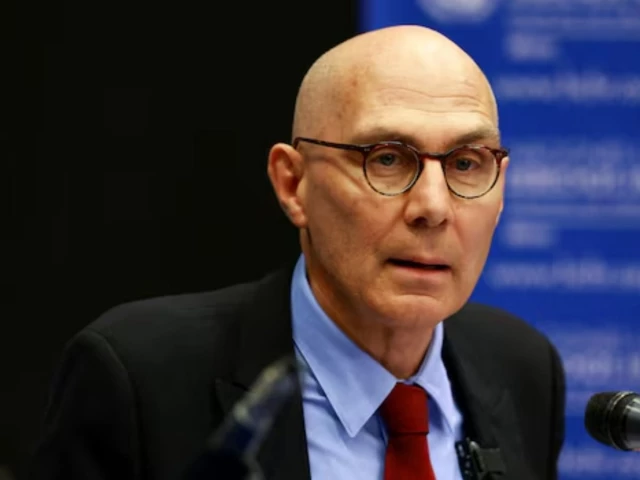
    The United Nations General Assembly has voted by a large majority to grant UN High Commissioner for Human Rights Volker Turk a second four-year term, despite strong opposition from the United States, Russia and Israel. The decision came after member states rejected calls to delay the vote and instead backed Secretary General Antonio Guterres’ recommendation to keep Turk in office when his current term expires in October. The 193-member General Assembly approved the extension with 144 countries voting in favor, while 10 countries voted against the proposal and 13 abstained. Before the final vote, member states also rejected a Russian proposal that would have extended Turk’s mandate only until the end of 2026 instead of giving him another full term. Turk has become one of the UN’s most outspoken voices on global human rights issues during his first term. He has repeatedly criticized Russia’s military actions in Ukraine and raised concerns over Israel’s conduct during the conflict in Gaza. He has also called for investigations into deaths that occurred in US immigration detention facilities. His willingness to publicly challenge major world powers has drawn criticism from several governments, including Washington, Moscow and Tel Aviv. The vote reflected growing tensions between the United States and the United Nations under President Donald Trump’s administration. In recent years, Washington has reduced financial support for several UN agencies and withdrawn from multiple international bodies. The administration has argued that reforms are needed before the United States continues its current level of participation and funding. Before the vote, the United States urged the General Assembly to postpone the decision for further consultations. US Representative for UN Management and Reform Jeff Bartos warned member states that approving the appointment without additional debate would damage the organization’s credibility. He said the United States would review its future engagement, participation and financial contributions if the assembly ignored its concerns. The US State Department also criticized the process before the vote, describing it as rushed and lacking sufficient discussion among member countries. Officials argued that member states should have been given more time to examine the proposal before making a final decision. Despite those objections, a broad coalition of countries supported Turk’s reappointment. The European Union strongly backed the extension, along with many African and Latin American nations. China also voted in favor of the proposal, helping secure the overwhelming majority needed for approval. UN Secretary General Antonio Guterres nominated Turk for a second term after working closely with him for several years. Guterres, who is due to leave office in December, praised Turk’s experience and commitment to defending human rights around the world. Turk, an Austrian lawyer, has spent decades working within the United Nations in senior positions based in Geneva as well as field assignments, including Kosovo. With the latest vote, he will become the first UN High Commissioner for Human Rights to serve two full four-year terms since the position was established in 1993. Human Rights Watch welcomed the decision, arguing that strong and independent leadership is needed at a time when democratic freedoms are facing increasing pressure in many parts of the world. The organization’s UN director, Louis Charbonneau, said the global human rights situation requires a commissioner willing to challenge powerful governments regardless of their influence. Russia and Israel strongly criticized the outcome after the vote. Russia’s deputy ambassador to the United Nations accused Turk of showing political bias and making unfair allegations against Moscow. Israeli officials also condemned the decision, describing it as a mistake and arguing that the appointment should have been left to the next UN secretary general rather than being decided during Guterres’ final months in office. The result highlights the continuing divisions within the United Nations over human rights issues and the organization’s relationship with some of its most influential member states. While a large majority of countries supported Turk’s leadership, the objections raised by the United States, Russia and Israel suggest that debates over the UN’s role and future direction are likely to continue throughout his second term.

  • | |

    Egypt could join expanding Mecca Agreement, says E…

    Turkish President Recep Tayyip Erdogan has said Egypt could become part of the Mecca Agreement in the future, describing the framework as open to participation by additional countries. Speaking to Arab media, Erdogan said the agreement provides for collective action if any participating member comes under external attack. He suggested that the inclusion of Egypt could further broaden the scope of the regional arrangement. Erdogan also said Turkey’s immediate priority is not the European Union, arguing that Europe is currently facing serious shortcomings. He further stressed the need to reopen the Strait of Hormuz, warning that keeping the strategic waterway closed for an extended period would serve no country’s interests.

  • |

    Here’s the Most Likely 2027 Super Bowl Winner, According to Current Odds

    Super Bowl 60 took place in February, but NFL fans are already looking toward the 2026-27 and Super Bowl 61 in Los Angeles, California. Two teams already stand out as the favorites, according to Polymarket. Both of these teams hail from the NFC West, the division that captured Super Bowl 61 last season. Polymarket currently […]

  • | | |

    FBR starts fiscal year strong with rs810 billion t…

    ISLAMABAD: Pakistan’s Federal Board of Revenue (FBR) kicked off the new fiscal year on a positive note by surpassing its July tax collection target, although a shortfall in income tax receipts and the government’s decision to reject a key enforcement proposal highlighted the challenges that lie ahead. According to provisional figures, the FBR collected Rs810 billion in July, exceeding its monthly target by Rs30 billion. The collection also marked a 7% increase compared to Rs757 billion collected during the same month last year. The strong performance was largely driven by robust sales tax collections, which reached Rs358 billion, surpassing the target by Rs53 billion and recording an 18% year-on-year increase. A significant 78% of total sales tax, amounting to Rs275 billion, was collected at the import stage, where tax compliance is generally higher. However, income tax collection remained below expectations. The FBR collected more than Rs300 billion in income tax, falling Rs23 billion short of the target. Analysts attributed the shortfall to advance tax collections made in June to meet last fiscal year’s revised revenue goals, along with reduced withholding tax rates for salaried individuals and property transactions introduced in the latest federal budget. Meanwhile, customs duty collection stood at Rs105 billion, matching the target, while federal excise duty generated Rs48 billion, slightly exceeding expectations. The July performance marks the beginning of a crucial fiscal year in which the government has committed to collecting Rs15.263 trillion in taxes under an agreement with the International Monetary Fund (IMF). Meeting the annual target is considered essential for securing future IMF loan disbursements and creating fiscal space for development, defence and water resource projects. The FBR also reported encouraging progress in tax compliance, receiving around 227,000 income tax returns during July after updated tax return forms became available. Additionally, the authority issued Rs98 billion in tax refunds, approximately Rs13 billion more than in the same period last year. Despite the positive revenue performance, the federal cabinet declined an FBR proposal to activate restrictions on high-value purchases by individuals with insufficient declared assets. Had the proposal been approved, it would have limited the purchase of luxury vehicles, expensive properties, large stock investments and major cash withdrawals by non-compliant taxpayers. Economic observers say the government’s ability to sustain monthly revenue growth will be closely watched, as consistent tax collection remains critical to maintaining fiscal stability and meeting commitments under Pakistan’s economic reform programme.

  • |

    Umerkot flour millers reject Rs128/kg official rate, seek fresh price review

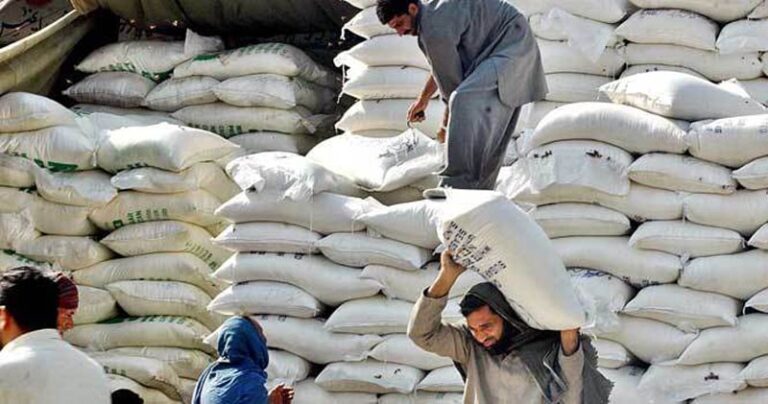
    UMERKOT: Flour mill owners in Umerkot district have rejected the government-fixed price of Rs128 per kilogram, arguing that the sharp increase in wheat prices has pushed their production costs far above the officially notified rate. The millers said the prevailing wheat price in the open market had climbed to around Rs125 per kilogram, while additional expenses related to milling, labour, electricity, transportation and other operations had increased the overall cost of producing flour to nearly Rs140 per kilogram. They maintained that selling flour at Rs128 per kilogram was therefore commercially unsustainable and would force mill owners to operate at a loss. In this regard, representatives of the flour milling industry have submitted written applications to the Mirpurkhas commissioner and the Umerkot deputy commissioner, requesting authorities to reconsider the existing flour price and determine a new rate based on prevailing market conditions and production costs. The mill owners also raised objections to what they described as excessive administrative action against flour mills across the district. They specifically complained about raids and wheat seizures allegedly carried out by assistant commissioners in Umerkot, Kunri, Samaro and Pithoro. According to the millers, government policy allows flour mill owners to maintain wheat stocks of up to 850 bags per stone at their mills or designated warehouses. They alleged that despite the provision, local administrative officials had conducted raids on mills and storage facilities and seized wheat stocks. The mill owners termed the alleged seizures unjustified and said such actions were creating additional difficulties for an already financially pressured industry. They urged the authorities to ensure that enforcement measures were carried out strictly in accordance with the relevant government policy. The millers further called for an investigation into alleged irregularities involving food department inspectors. They demanded that senior provincial officials examine the complaints and take appropriate action if any wrongdoing is established. They appealed to the Sindh chief minister, provincial food secretary, Mirpurkhas commissioner, Umerkot deputy commissioner and other concerned authorities to intervene in the matter and review the officially fixed flour price. The mill owners argued that the price should be determined after taking into account the current cost of wheat as well as electricity, labour, transportation, maintenance and other expenses associated with flour production. They warned that continued enforcement of a price they consider economically unviable could increase financial losses for flour mills and put further pressure on the district’s milling industry. The millers said they were willing to cooperate with the administration in maintaining the availability of flour and preventing unjustified price increases, but stressed that any official pricing mechanism must reflect actual market and production costs. They also urged the provincial government to establish a transparent mechanism for monitoring wheat stocks and flour prices so that disputes between millers and local administrations could be resolved through clear rules rather than repeated raids and seizures.

Leave a Reply

Your email address will not be published. Required fields are marked *