fundamental right protection

Fundamental Right No. 12: Protection Against Retro…

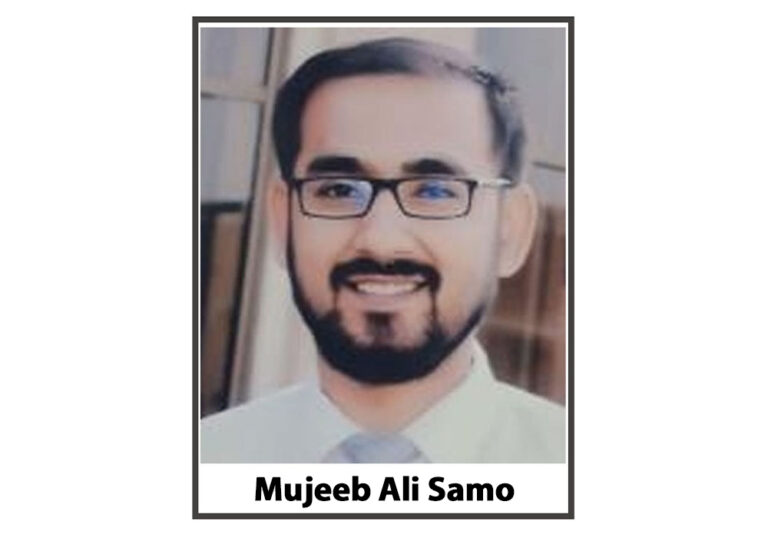
By Muhammad Imran, Staff Member, SAHSOL-LUMS and Asma Rahmat, Final Year Law Student, SLC, Superior University and Muhammad Ameer Hamza, Final Year Law Student, SLC, Superior University

Article 12 of the Constitution of the Islamic Republic of Pakistan, 1973, enshrines one of the oldest and most celebrated principles of criminal jurisprudence, namely nullum crimen, nulla poena sine lege, which means there can be neither a crime nor a punishment without prior law. This constitutional guarantee embodies the rule of law by prohibiting retrospective criminal legislation and protecting every individual from arbitrary prosecution or punishment. It ensures that a person may be held criminally liable only for conduct that constituted an offence under the law at the time it was committed, and that no punishment more severe than that then prescribed may subsequently be imposed.

The first part of Article 12 prohibits the retrospective creation of criminal offences. A person cannot be convicted for an act or omission which was lawful when committed merely because the legislature subsequently criminalises that conduct. The second part prohibits the retrospective enhancement of punishment. Accordingly, where the law prescribes a maximum sentence of six months’ imprisonment or two years’ imprisonment at the time of the offence, neither the judiciary nor the legislature may subsequently impose or authorise a more severe penalty for that completed act. The constitutional guarantee thus preserves legal certainty, protects legitimate expectations, and prevents arbitrary exercises of legislative and executive power.

Article 12 is founded upon the universally accepted doctrine of legal certainty, which requires that criminal laws be clear, prospective, and predictable. Individuals must be capable of regulating their conduct according to existing law without fear that future legislation will retrospectively criminalise their past actions or increase their punishment. The principle therefore operates as an indispensable safeguard against governmental arbitrariness and political persecution and constitutes a cornerstone of every constitutional democracy governed by the rule of law.

The constitutional philosophy embodied in Article 12 is consistent with internationally recognised human rights norms. Article 11(2) of the Universal Declaration of Human Rights, 1948, provides that no person shall be held guilty of any penal offence on account of any act or omission that did not constitute a penal offence under national or international law at the time it was committed, nor shall a heavier penalty be imposed than that applicable at the time of the commission of the offence. Likewise, Article 15 of the International Covenant on Civil and Political Rights (ICCPR), to which Pakistan is a State Party, reiterates the same prohibition against retrospective criminal liability while recognising only the limited exception relating to offences recognised under the general principles of international law.

Comparable constitutional protection is also found in the United States Constitution, where Article I, Sections 9 and 10 expressly prohibit Congress and the States from enacting ex post facto laws. This prohibition has long been regarded as a fundamental limitation upon legislative authority and reflects a universal constitutional commitment to fairness in criminal justice.

The superior courts of Pakistan have consistently treated Article 12 as an indispensable constitutional safeguard. In Mian Muhammad Nawaz Sharif v. The State, the Supreme Court reaffirmed that Article 12 embodies the constitutional prohibition against retrospective penal legislation and protects individuals from being subjected to criminal liability or enhanced punishment under laws enacted after the commission of the alleged offence. The Court emphasised that retrospective penal laws offend the rule of law because criminal consequences must always be determined according to the law in force at the relevant time. Similarly, in Benazir Bhutto v. Federation of Pakistan, the Supreme Court underscored that fundamental rights must receive a liberal and purposive interpretation so as to prevent arbitrary governmental action and preserve constitutional liberties. Although that case did not directly concern Article 12, its interpretative philosophy has significantly influenced the constitutional protection afforded to penal safeguards.

A significant constitutional question concerns the offence of high treason under Article 6 of the Constitution. High treason, comprising the abrogation, subversion, suspension, or holding in abeyance of the Constitution, represents the gravest constitutional offence. Through the Constitution (Eighteenth Amendment) Act, 2010, Parliament expanded Article 6 to include persons who aid, abet, collaborate with, or validate such unconstitutional acts. Nevertheless, Article 12 continues to apply with full constitutional force. Even in prosecutions for high treason, criminal liability and punishment cannot be imposed retrospectively. Any legislative amendment increasing punishment or enlarging criminal liability can operate only prospectively and cannot constitutionally affect acts committed before its enactment.

The historical experience of constitutional development further demonstrates the importance of this principle. Following the restoration of the English monarchy, the remains of Oliver Cromwell were exhumed in 1661 upon the orders of Charles II, symbolically hanged, beheaded, and publicly displayed. Although this episode belonged to a different constitutional era, it illustrates the dangers of political vengeance unconstrained by constitutional guarantees. Modern constitutional democracies reject such practices and instead insist that criminal justice must always be governed by legality, due process, and prospective application of penal laws.

Article 12, therefore, is not merely a procedural safeguard but a substantive manifestation of constitutionalism itself. It preserves the supremacy of law over arbitrary power, protects individual liberty against retrospective criminal legislation, and strengthens public confidence in the fairness and integrity of the criminal justice system. Together with Articles 4, 9, and 10A of the Constitution, it forms an integral part of Pakistan’s constitutional architecture for the protection of human dignity, legal certainty, and the rule of law.

Article 12 of the Constitution of the Islamic Republic of Pakistan, 1973, is a cornerstone of constitutionalism and the rule of law. By prohibiting retrospective criminal legislation and the retrospective enhancement of punishment, it embodies the fundamental principle of nullum crimen, nulla poena sine lege, ensuring that no person is punished except in accordance with the law in force at the time of the alleged offence. In conjunction with Articles 4, 9, and 10A, Article 12 protects legal certainty, due process, and individual liberty while preventing arbitrary or politically motivated prosecutions.

The superior courts of Pakistan have consistently recognised that Article 12 is not merely a procedural safeguard but a substantive constitutional guarantee that restrains the arbitrary exercise of State power. Its effectiveness, however, depends upon strict constitutional compliance by all organs of the State. Parliament must refrain from enacting retrospective penal laws, while the judiciary should continue to interpret Article 12 purposively to uphold the principles of legality and fairness. Regular constitutional training for judges, prosecutors, investigators, and law enforcement agencies, together with greater public awareness of fundamental rights, would further strengthen its practical implementation.

Pakistan should also continue to harmonise its criminal justice framework with international human rights standards, particularly the principle of legality embodied in the Universal Declaration of Human Rights and the International Covenant on Civil and Political Rights. Above all, no political necessity or public pressure should ever justify departure from the constitutional prohibition against retrospective punishment. By faithfully preserving Article 12, Pakistan reinforces constitutional supremacy, safeguards human dignity, and affirms that the rule of law—not political expediency—must remain the ultimate foundation of justice.


Similar Posts

  • A Nation in Focus: The Social Contract and the Mak…

    (When the water rises, who shows up and who is left waiting?) ‎I live in Sabzazar, a neighborhood in Lahore, Pakistan, but part of my heart is always sitting along the banks of the Moxahala Creek back home in Southeast Ohio. When the water rises in Muskingum County or the Punjab plains, who shows up, and who is left waiting? I live in Sabzazar, a neighborhood in Lahore, Pakistan, but part of my heart is always sitting along the banks of the Moxahala Creek back home in Southeast Ohio. ‎ ‎My mother and brother still live right near South Zanesville, just a stone’s throw from Crooksville. When heavy rains hit Perry and Muskingum counties, I don’t need to be there to know what it looks like. I can picture the heavy, chocolate-brown water backing up into the low spots, the damp chill that settles into a basement, the fears of what if the waters reach a house trailer, and that specific, exhausting smell of river mud that takes weeks to scrub out of porch boards and carpet. The worries of if the home has structural damage.. Halfway across the world in Pakistan, the landscape couldn’t look more different. But when monsoon season swells the rivers across the Punjab, the view from the ground is hauntingly identical. ‎ ‎Standing in a flooded doorway feels the same whether you are in Ohio or Lahore. The quiet shock is the same. The ruin of things you worked years to buy is the same. And the very first instinct is to grab your coat, shovel, a chainsaw and a pair of boots and go check on the elderly woman next door.. Start hauling wet furniture, debris to the curb and giving comfort, food and basics to those in need is entirely universal. Watching both worlds at once makes you look at governance differently. It strips away abstract political jargon and leaves you asking one fundamental question: When a community is hit with a crisis, does its system build capable people who can act, or does it leave them sitting on their hands, waiting for permission to survive? ‎ ‎What a Small Ohio Village Taught Me About Governance ‎ ‎Growing up around South Zanesville and Crooksville, you learn pretty early that small-town life relies on a very specific kind of quiet, distributed agency. ‎Crooksville isn’t a rich town. It’s a hard-working Appalachian village of under 1,500 people. But when the creek overflows, nobody sits around waiting for a press conference out of Washington, D.C., or a mandate from the state capital in Columbus. ‎ ‎The response moves in waves because the connections are already wired: ‎On the local levels we see neighbor checks on neighbor. The volunteer fire department turns on the sirens, pulls out the high-water gear, and starts the door to door knocks. At the County level we have the Perry County 911 dispatch and Emergency Management Agency (EMA) start tracking water levels and routing equipment where it’s needed most. At the State level, If the county gets overwhelmed, pre set legal triggers immediately call in the Ohio EMA or the National Guard. ‎ ‎Government here doesn’t replace the community’s instinct to help itself; it validates it, organizes it, and backs it up with real resources. The system trusts the people on the ground to know their own roads. Here in Pakistan, the human spirit is just as generous, if not more so. The impulse toward hospitality, neighborly charity, and mutual support runs incredibly deep. When disaster strikes, ordinary citizens open their wallets and their homes without a second thought. It’s just what they do… ‎ ‎And Pakistan’s has one of the world’s top class military engineering, a massive national disaster agency (the NDMA), and incredible private charities. The raw capacity is immense. Yet, too often, there is a however a very heartbreaking disconnect between that high-level power and the family standing in ankle deep water in a local neighborhood. An ordinary citizen here once described the country to me using a metaphor I’ve never forgotten: a child that was never allowed to stand on its own feet. An infant isn’t helpless because it lacks potential. It’s helpless because it hasn’t been given the space to build muscle, fall over, adjust its balance, and try again. If an authority figure picks the child up every single time it tries to pull itself up, the child never learns to walk—not from a lack of ability, but because the environment denied it the chance to build strength. ‎ ‎That is how systemic learned dependency takes root: Central authorities assume total control, bypassing local municipal councils. Neighborhoods are given no real budget or authority to fix their own drainage or organize local response teams. And when a flood comes, citizens have no choice but to wait for distant, top-down relief. The authorities look at the waiting crowd and say, “See? The people can’t manage without us.” ‎We witness power centralized even further, deepening the exact helplessness it claims to fix. Over generations, people adapt to the system they are given. If a system rewards waiting for a political patron, people learn to wait for patrons. If it rewards local initiative, communities build habits of self-reliance. It is very easy to blame culture or public apathy for civic passivity, but that misses the point entirely. Culture simply reflects the structural incentives people are given to survive and adapt. It is nature vs nurture and we have a break down when these two things fail to promote a cohesiveness and inclusion of what is a community and what that actually means. ‎ ‎Across the globe, the relationship between state control and citizen participation varies wildly, proving that central authority does not have to mean public powerlessness. In China, a deeply centralized state framework actively structures and expects local neighborhood committees and civil volunteer groups to manage community-level crises. Across much of Europe, comprehensive state safety nets exist alongside highly empowered municipal councils and professionalized local volunteer forces.

  • Decolonizing Minds: Reclaiming Intellectual Freedo…

    Decolonization is often thought of as the process through which colonized nations became free from foreign rule. Flags changed, colonial governments were removed and national governments were. Political independence was officially given back. Yet political freedom did not always mean intellectual, cultural, linguistic or psychological freedom. In places that were once colonized the structures of colonialism stayed long after the colonizers left. These structures continued through education systems, languages, cultural expectations, literary standards, social organizations, economic systems, media portrayals and inherited ideas about what’s considered knowledge, civilization, intelligence, progress and even beauty. This ongoing influence brings up a question: Can a country really be independent if its people still judge themselves using the intellectual standards of their former rulers? The point of this article is that political decolonization is not complete without the decolonization of the mind. Decolonizing minds does not mean rejecting everything from the West. Does it mean replacing one way of thinking with another? Instead it means looking at the systems of knowledge that have been passed down, finding voices that have been ignored, acknowledging indigenous ways of thinking, challenging language and culture hierarchies and building confidence to create knowledge based on one’s own history and society while still being open to global ideas. The idea of the “colonization of the mind” is very important because colonialism was not about politics or money. Colonial powers often tried to show that their language, literature, religion, schools, social systems and ways of knowing were better than those of the people they ruled. The people who were colonized were. Sometimes forced to believe that the culture of the colonizers was modern while their own traditions were backward. The result was a system where the colonized person started to see themselves through the eyes of the people who ruled them. Frantz Fanon in his books about the psychology of colonialism showed how colonial control gets into the minds of the people who are oppressed. So colonialism does not end because the person in charge leaves. Its biggest success happens when its ideas and beliefs become part of the colonized person’s thinking. The mental impact of colonialism is one of its lasting effects. A colonized mind may feel ashamed of its language, accent, literature, clothing, history, traditions and ways of thinking. It may think that foreign things are advanced and local things are outdated. A student may think that an English source is automatically more important than a source from their country that is just as good. A university may value ideas from Europe or North America while not giving attention to ideas from Africa, Asia, Latin America or native communities. A society may celebrate culture while thinking its own traditions are old-fashioned. These views are not always because of individuals; they are often the result of historical systems that have taught generations what to admire and what to ignore. Education is one of the important places where decolonization needs to happen. Colonial education systems were often built not to help the people they ruled but to serve the needs of the rulers. Even though schools today have changed a lot, many still repeat the ways of knowing. The lessons may focus on history, Western books, European philosophy and Western science while giving little space to local knowledge and traditions. This does not mean that Shakespeare, Aristotle, Kant, Newton or other great thinkers should be removed from the lessons. That would only replace one kind of exclusion with another. The real goal is to have balance. Students should read Shakespeare along with writers from South Asia, Africa, the Caribbean and other areas. They should study philosophy while also learning about philosophies from Asia, Africa, the Islamic world and native communities. The purpose is not to get rid of knowledge but to make the learning more wide. A decolonized class asks tough questions about who has been allowed to create knowledge. Who writes history? Who is considered important in literature? Whose language is seen as academic? Whose knowledge is seen as scientific? Whose view defines life? These questions show the politics of knowledge. Knowledge is never made in a vacuum. Schools, universities, publishers, governments, colonial systems and international groups have often decided which types of knowledge are accepted. Decolonization means we have to see these systems and think about them carefully or just accept them as better. Language is possibly the obvious place where intellectual decolonization needs to happen. Colonial languages like English, French, Spanish and Portuguese still hold positions in many countries that used to be colonized. English in particular has become a language and gives access to international learning, technology, jobs, diplomacy and higher education. So the argument for decolonization can’t just be to stop using English. That would be unrealistic. Might even hurt students who need to speak English to communicate internationally. A better argument is to have languages. English should be seen as one tool, not a measure of smartness, civilization or social value. In countries where many languages are spoken, local languages carry histories, memories, identities, oral stories, cultural knowledge and different ways of looking at the world. When a language is pushed aside an entire system of thinking can be weakened. Losing a language is not just losing words; it can also lose knowledge about nature, stories, cultural memory, native words and community identity. Decolonizing the mind means people need to see that speaking a language does not make someone less educated and speaking English does not automatically make someone more intelligent. Knowing a language and being smart are things. A person can be very educated and still express themselves best in a language. At the time, decolonization should not make people dislike English or other global languages. English has been taken by writers, scholars, activists and thinkers from countries and used to show their own experiences. Writers like Chinua Achebe, Ngũgĩ wa Thiong’o, Salman Rushdie, Derek Walcott, Wole Soyinka and many others have shown ways to use colonial languages. Their work shows that language can

  • Fix the 41 Words That Run Your Street

    Pakistan does not have a shortage of governments. It has a shortage of governance. The Constitution promises power to the people, but the money and the decisions stay in provincial capitals. A mother in Khuzdar waits for a hospital that Quetta forgot to fund. A father in Sahiwal sends his child to a school that Lahore never inspects. The distance between the citizen and the state is not measured in miles. It is measured in signatures, files, and political mood. The Constitution already knows this is wrong. Article 140A says every province must devolve power to elected local representatives. But that is all it says, a skeletal clause with no fixed tenure, no election deadline, and no guaranteed funding. It is a promise written in smoke. A single signature can dissolve a local government, elections can be postponed indefinitely, and local budgets can be reduced to zero overnight. When the rules are this fragile, governance becomes impossible. A mayor who can be fired by ordinance cannot sign a contract to build a road. A council that may not exist next year cannot hire a professional to run a hospital. A budget that arrives only if the provincial finance minister is in a good mood cannot pay for textbooks or vaccines. The fix is not complicated. Article 140A must be strengthened to include three guarantees. Every elected local government must serve a full five-year term, synchronized with the provincial assembly. It cannot be dissolved by ordinance or executive order. The only way to remove it is a two-thirds vote of the provincial assembly, a high threshold that ensures broad consensus. When tenure is secure, local leaders can plan beyond the next political season. Local elections must happen on the same day as provincial assembly polls. When you vote for your MPA, you vote for your local councilor on the same ballot. The mayor is then elected by those councilors. The only difference is that the election actually happens, on time, every five years, without delay or discretion. And a fixed percentage of provincial development funds must flow to districts through a transparent formula, population plus backwardness plus performance. The money moves automatically to the local government account. No approval required. No delay permitted. With these three guarantees in place, the district becomes what it was meant to be: the place where governance actually happens. A mayor with a real budget and real time can fix the sewer on your street because he needs your vote in five years. A council with secure tenure can hire an engineer to repair the school roof instead of waiting for a file to move through a provincial secretariat. A health budget that arrives automatically can keep a doctor at the rural clinic six days a week. This matters across thousands of union councils and hundreds of tehsil and municipal bodies that already exist under provincial local government acts, from the largest metropolitan corporations to the smallest town committees. Each one represents citizens who currently have a vote but no voice, a representative but no revenue. In districts where this works, where roads get built, schools get roofs, clinics get medicine, and the accounts are published, citizens will see something they have never seen before: a government that delivers because it is close enough to hear them and accountable enough to fear them. In districts where it fails, where the money disappears, the projects stall, and the accounts are blank, citizens will know exactly who failed, because the mayor’s name is on the ballot and the audit is on the website. This is how governance evolves in stable democracies. You empower the unit that already exists, let it prove its competence, and let the people decide what follows. If a district can educate its children, heal its sick, and pave its roads better than a distant capital can, the argument makes itself. Pakistan has spent decades concentrating power in a few hands and complaining about the results. Whether or not new provinces are created, the answer begins in the same place: with the districts that already exist. Let them prove what better governance looks like. Amend Article 140A. Give the district its money, its term, and its election. The people deserve better than promises that dissolve with a signature. They deserve a government that earns its authority by delivering results, starting where they live.

  • The Most Important AI Revolution Isn’t Happening…

    By Ali Dar Every few weeks, Artificial Intelligence seems to produce another headline. A new model. A larger investment. A faster processor. A company valued in the hundreds of billions. The conversation has become almost entirely centered on the race to build more powerful machines.   I follow these developments with genuine interest. But I often find myself wondering whether we are all looking in the wrong direction. History has a curious habit of reminding us that the inventors of transformative technologies are not always the ones who transform society. James Watt improved the steam engine. It was factories that transformed economies. The internet was built by engineers. It was entrepreneurs, educators, governments and ordinary citizens who changed the way we lived because of it. Technology begins the story. Institutions decide how the story ends. That distinction has occupied my thoughts for some time. Perhaps because I spend more time thinking about government than algorithms. Perhaps because the questions that matter most are no longer technological. They are institutional. People often speak about bureaucracy as though it were an outdated mistake waiting to be dismantled. I see it differently. Modern government was designed for the world in which it existed. Information travelled slowly. Documents moved from one office to another because there was no practical alternative. Decisions climbed through layers of administration because knowledge itself moved through those same layers. Those systems were not inefficient by accident. They were remarkably effective for their time. They created order, consistency and accountability. They allowed governments to function at a scale that had previously been impossible. The challenge today is not that bureaucracy failed. The challenge is that the world around it has changed more quickly than bureaucracy itself. For the first time in history, governments are not struggling because they lack information. They are struggling because they have too much of it. A district administration receives more information in a single week than previous generations of public servants might have encountered in an entire year. Hospitals generate enormous volumes of clinical data. Schools continuously measure educational outcomes. Agriculture increasingly depends upon satellite imagery, weather intelligence and real-time market information. The constraint is no longer access. It is interpretation. That, I believe, changes everything. Artificial Intelligence is often described as a technological revolution. I am beginning to think it is something else. It is an institutional revolution. It’s greatest contribution may not be writing reports or generating images. It’s greatest contribution may be helping institutions distinguish what is important from what is merely available. That is a subtle difference. It is also an enormously important one. Governments have spent the past two decades becoming digital. That was necessary. Files became electronic. Services moved online. Citizens could access information without standing in long queues. These were meaningful achievements. Yet digitisation should never be confused with transformation. Replacing paper with screens does not automatically produce better judgement. A digital government stores information more efficiently. An intelligent government learns from it. There is a profound difference between the two. One preserves knowledge. The other improves decisions. This is why I believe the next chapter of public administration will not be defined by technology alone. It will be defined by institutional learning. Can governments recognise emerging problems before they become crises? Can public services adapt more quickly to changing circumstances? Can policymakers spend less time searching for information and more time exercising judgement? These are leadership questions. Technology merely provides new tools with which to answer them. Around the world, different countries are beginning to explore these possibilities in different ways. Estonia has shown what becomes possible when digital infrastructure is treated as a public utility rather than a technical project. Singapore continues to demonstrate that institutional discipline remains one of the greatest competitive advantages any nation can possess. Neither model should be copied uncritically. Every society carries its own history, institutions and public expectations. Punjab will do the same. Our objective should never be to imitate another government’s technology. It should be to strengthen our own capacity to govern. That is the thinking behind The Office of AI. Contrary to popular perception, its purpose is not simply to introduce Artificial Intelligence into government. Technology, on its own, has never transformed institutions. People do. Leadership does. Culture does. The real ambition is more demanding than digital transformation. It is to cultivate public institutions that learn continuously, coordinate more effectively and ultimately deliver better outcomes for citizens. That is a much harder challenge. It is also a far more worthwhile one. I suspect history will remember this period rather differently from the way we describe it today. It may not be remembered as the moment machines became intelligent. It may be remembered as the moment governments were compelled to become more thoughtful. Perhaps that is the real revolution. Not smarter software but smarter institutions. And if that proves to be true, the defining governments of this century will not be those that purchased the most advanced technology. They will be the ones that developed the wisdom to use it well. About the Author Ali Dar is a software engineer by education, business leader and Advisor to the Chief Minister of Punjab on Artificial Intelligence and Special Initiatives. He writes on the future of governance, Artificial Intelligence, digital transformation and public policy.

  • The Partition of 1947: Colonial Flight, Constituti…

    The geopolitical partition of the Indian subcontinent in the mid-twentieth century and the subsequent emergence of two sovereign nation-states remain among the most complex and defining chapters in modern global history. Within constitutional studies, postcolonial scholarship, and international affairs, this monumental shift has often been viewed through overly reductive lenses—frequently chalked up to imperial haste, nationalist fervor, or entrenched religious polarization. Yet, evaluated through a critical, detached twenty-first-century historical paradigm, a far more nuanced reality emerges: the creation of Pakistan was neither the product of a singular conspiracy nor a sudden historical accident. Rather, it represented a profound tripartite structural crisis triggered by Britain’s post-war imperial retreat, the Indian National Congress’s persistent anxiety over central authority, and the All-India Muslim League’s long-standing constitutional struggle to secure the political rights, economic safeguards, and existence of the subcontinent’s Muslim minority. To comprehend the foundational tier of this historical watershed, one must first analyze the global political economy and British colonial strategy of the 1940s. The devastation of the Second World War eroded the financial, administrative, and military underpinnings of the British Empire. British India—once celebrated as the crown jewel of the realm—had transmuted into an unsustainable administrative burden for Clement Attlee’s post-war Labour government in London. Official imperial correspondence compiled in The Transfer of Power 1942–47 exposes an unmistakable truth: London’s primary objective was no longer to establish an equitable political settlement in South Asia, but rather to execute a swift, low-cost exit that mitigated further economic and military liability. This imperial burnout precipitated Lord Mountbatten’s rushed exit strategy, which abruptly advanced the timeline for the transfer of power from June 1948 to August 1947. The human and spatial catastrophe that followed was exacerbated by the Boundary Commission led by Sir Cyril Radcliffe—a man with no prior familiarity with the subcontinent’s intricate demographic and cultural fabric, tasked with carving borders across maps in a matter of weeks. The chaotic fallout of the Radcliffe Award, the controversial inclusion of Muslim-majority tehsils like Gurdaspur into India, the bloody bifurcation of Punjab and Bengal, and the largest forced migration in human history were ultimately the catastrophic human costs paid by millions of South Asians for a retreating empire’s hasty flight. The second dimension of this tripartite framework involves the political, ideological, and constitutional stance of the Indian National Congress—a position frequently mischaracterized in one-sided narratives as sheer personal hubris or partisan bias. A rigorous, objective historical analysis of the Congress leadership, particularly figures like Jawaharlal Nehru and Sardar Vallabhbhai Patel, reveals that their overriding strategic fear was the “Balkanization” of the subcontinent into scores of autonomous, warring princely states. The Congress maintained that governing a vast, culturally diverse land mass under a weak central power alongside sprawling princely domains was fundamentally unviable. They advocated for a highly centralized state capable of driving industrialization, economic cohesion, and geopolitical stability. Consequently, Congress consistently resisted flexible federal structures that granted extensive provincial autonomy, fearing that a weak central government would inevitably lead to the fragmentation of India’s geographical and political integrity. However, the third and arguably most crucial ideological and legal dimension was the constitutional resistance led by the All-India Muslim League under Quaid-e-Azam Muhammad Ali Jinnah—a struggle born out of the inherent limitations of majoritarian, “Westminster-style” numerical democracy. In culturally homogenous Western societies, the principle of “one person, one vote” forms the bedrock of democratic governance. Yet in the deeply stratified, multi-religious reality of the subcontinent, strict numerical majoritarianism effectively condemned a twenty-five percent Muslim minority to permanent political subordination under a seventy-five percent Hindu majority. For the Muslim population, this contest was never merely about securing a share of administrative power; it was a fundamental fight for legislative self-determination, economic survival, and cultural preservation. A close reading of the subcontinent’s constitutional trajectory demonstrates that the demand for Pakistan did not originate as a call for immediate territorial separation. From the Simla Deputation of 1906 and the constitutional reforms of 1909 to the Lucknow Pact of 1916, Jinnah’s Fourteen Points of 1929, and the Government of India Act of 1935, the primary objective of Muslim leadership was to secure provincial autonomy, separate electorates, and robust constitutional safeguards within a unified Indian federation. As the eminent Cambridge historian Ayesha Jalal highlighted in The Sole Spokesman, the demand for Pakistan functioned for a long time as a sophisticated strategic bargaining chip aimed at securing equal constitutional weight at the center, ensuring minority rights could not be overridden by sheer majoritarian dominance. The pivotal turning point occurred following the 1937 provincial elections. When the Indian National Congress formed unilateral governments across most of British India while sidelining minority representation, its twenty-month tenure transformed the Muslim League’s theoretical anxieties into stark political reality. The final, most promising opportunity for a united, decentralized India was the Cabinet Mission Plan of 1946. It proposed grouping British Indian provinces into three autonomous tiers, restricting the federal center strictly to defense, foreign affairs, and communications. Demonstrating extraordinary political foresight and statesmanship, Jinnah accepted the Cabinet Mission Plan despite heavy internal dissent, striving to preserve the geographic unity of the subcontinent while securing constitutional autonomy for Muslims. This fragile compromise collapsed in July 1946 during a press conference in Bombay, where Jawaharlal Nehru declared that Congress would enter the Constituent Assembly “unfettered by agreements” and free to modify the Cabinet Mission Plan. In his seminal work Partition of India: Legend and Reality, renowned Indian jurist and constitutional historian H. M. Seervai meticulously documented how Congress’s rigid insistence on hyper-centralization and rejection of a loose federation torpedoed the Cabinet Mission Plan. At that crucial juncture, the demand for a separate, sovereign state ceased to be an idealistic campaign; it became the sole viable, logical pathway to guarantee political equality, dignity, and constitutional security for millions of Muslims. Underpinning this prolonged political contest was an essential socio-economic reality often overlooked in conventional historiography. In British India, commercial networks, civil administration, and industrial capital were predominantly concentrated within the Hindu middle class, leaving the Muslim agrarian class, tenant

  • Europe experiences what Pakistan has been facing f…

    For decades, Pakistan has been living with extreme heat. Every summer, temperatures rise above 50°C in parts of Sindh and Balochistan, and cities across Punjab and southern Pakistan face prolonged heatwaves that make daily life a struggle for survival. Agricultural workers, construction labourers, sanitation staff and traffic police continue working under the blazing sun, often without adequate rest, shade, drinking water or legal protection. Heat has long been an occupational hazard in Pakistan, but, unfortunately, it has rarely received the policy attention it deserves. Now, Europe is confronting an extreme heat that Pakistan has experienced for years recorded above 50°C. The recent heatwave across Europe has pushed temperatures above 40°C in Germany, France, Italy, Spain and several other countries. Heat warnings have become routine, hospitals have reported sharp increases in heatstroke cases, schools have closed, transport systems have been disrupted, and governments have activated emergency response plans. The crisis has revealed that no country, regardless of its wealth or technological advancement, is immune to the accelerating consequences of climate change. The difference is that Europe’s heat emergency is still treated as an exceptional event, whereas in Pakistan extreme heat has become almost routine. Every year, millions face dangerous temperatures with little expectation of institutional support. When temperatures exceed 50°C in Jacobabad, Dadu, Sibi and surrounding districts, headlines fade within days even though the suffering continues for months. Pakistan has already paid a heavy price for climate inaction. The 2015 Karachi heatwave claimed well over a thousand lives within a few days, overwhelming hospitals and exposing serious weaknesses in disaster preparedness. Later investigations identified prolonged power outages, water shortages and the absence of coordinated emergency planning as major contributors to the tragedy. The disaster should have transformed national preparedness for future heatwaves. Instead, progress has been uneven and largely confined to a few urban centres. The devastating floods of 2022 offered another painful lesson. Although Pakistan contributes less than one percent of global greenhouse gas emissions, it suffered one of the worst climate disasters in its history, affecting more than 33 million people, destroying homes, schools, hospitals and agricultural land, and causing economic losses worth billions of dollars. The catastrophe exposed Pakistan’s vulnerability to climate extremes, ranging from floods to droughts and heatwaves. A long-term climate adaptation has failed to keep pace with rapidly increasing climate risks. Yes, climate change is not an environmental issue. It is a public health crisis, to be very clear, it is an economic challenge and a labour rights issue. Thousands of outdoor workers continue to perform physically demanding jobs during the hottest hours of the day without mandatory heat safety standards. Lost productivity, rising healthcare costs, declining crop yields, and growing pressure on electricity and water systems are becoming defining features of Pakistan’s summers. Europe’s current experience should be seen as a lesson that climate friendly cannot be built only after disasters occur. Infrastructure must be redesigned for rising temperatures, cities need more trees and green spaces instead of endless concrete, early warning systems must reach vulnerable communities, and labour laws should guarantee rest breaks, access to drinking water and protection for outdoor workers during extreme heat. Schools, hospitals and public buildings should also be adapted to withstand prolonged periods of extreme temperatures. For developed countries, the heatwave exposes the limits of relying solely on emissions reduction without making sufficient investments in climate adaptation. For Pakistan, it is another warning against repeating the cycle of learning lessons only after each catastrophe. The country’s climate history from Karachi’s deadly heatwave to the unprecedented floods of 2022 offers painful experiences of the cost of delayed action. The climate crisis no longer belongs to the future or to any single region. It is unfolding across continents, exposing both rich and poor nations to unprecedented risks. Europe is now discovering what Pakistan has known for years: extreme heat is not merely uncomfortable. It is deadly, economically destructive and socially unequal. The real question is no longer whether another climate disaster will arrive, but whether governments will finally learn from the ones that have already occurred.

Leave a Reply

Your email address will not be published. Required fields are marked *