ending insurgency months

Ending the Insurgency in Months, Not Decades: What…

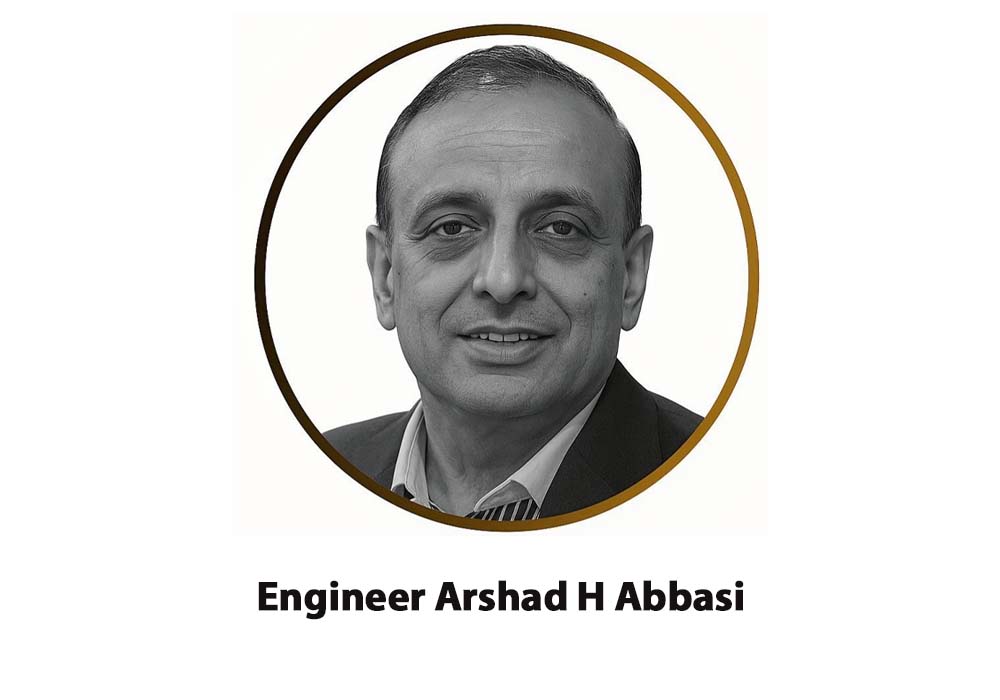
I have stood in places most policymakers only read about in briefing papers. I spent time in Afghanistan during the Ashraf Ghani years, and the whole of 2010 in what was then Ex-FATA — a zone so dangerous that even seasoned aid workers called it the place where devils refuse to go. Later, I worked on rehabilitation efforts in Azad Jammu and Kashmir. None of what I am about to argue is theoretical. It is drawn from villages of EX-FATA I walked through, water I watched women carry for miles on donkeys, and children I saw crossing frozen ground without shoes while, an hour’s drive away, the Afghan elite lived behind walls that looked like fortresses.

That contrast is the whole story of why the Taliban won. Over two decades, the Western-backed Afghanistan collapsed not primarily on the battlefield but in the space between Kabul’s donor-funded skyline and the rural provinces that never saw a rupee — or a dollar — of that money trickle down. Billions moved through Kabul. Almost none of it moved past it. Into that vacuum, the Taliban did not need to conquer the countryside. They simply had to show up where the state never had, and offer order where there was only neglect. In 2010, in FATA, I watched the same mechanism recruit teenage boys into suicide bombing — and the driving force was rarely ideology in its purest form. It was poverty, weaponised by men who understood exactly how to turn deprivation into obedience.

I say this because Pakistan is now watching its own soldiers and citizens bleed in Balochistan, Khyber Pakhtunkhwa, and Azad Jammu and Kashmir, and we keep mistaking the symptom for the disease. In Balochistan, it is poor living conditions and the absence of work that push young men toward the BLA and other militant groups — not some inherited hatred of the state, but the calculation of someone with nothing left to lose. In KPK, mining activity that could employ tens of thousands sits frozen, and extremist preachers walk into that economic silence with a ready-made narrative of grievance, exactly as I watched happen in FATA 16 years ago. In Azad Jammu & Kashmir (AJK), where I subsequently served on the front lines of post-disaster rehabilitation, the work executed under the leadership of General Musharraf and Lieutenant General Nadeem was nothing short of extraordinary. They transformed the region—erecting world-class infrastructure that spanned rural housing, modern hospitals, and state-of-the-art universities. Having witnessed his work firsthand, I can unhesitatingly attest that Lt. Gen. Nadeem exemplified the highest standards of professional integrity and selfless duty in the field.

Regrettably, subsequent regimes, particularly the current political regime, failed to capitalize on this monumental achievement. Worse still, political negotiators deliberately suppressed these successes under strict orders to deny General Musharraf the credit he rightly deserved

It was neither the foreign conspiracies spun about Modi nor the shadow plays attributed to Netanyahu that brought us to our knees—it was the quiet, deliberate treason of our own. The true architects of our ruin sat comfortably in our own cabinets, presiding over the Ministry of Planning and the Ministry of Petroleum.

Let the record be unsealed, and let the ledger of corruption show the reality of our sabotage. While the global solar revolution was gaining unstoppable, undeniable momentum as far back as 2012, our planners turned a blind eye to the sun. Instead, they peddled dirty imported coal and structurally flawed LNG infrastructure, deceitfully masquerading them as national “game-changers.” They were not mistakes; they were choices.

They willfully shackled this nation to predatory FSRU contracts, riddled with toxic force majeure loopholes that bled our public treasury dry to enrich foreign syndicates and domestic middlemen. Their actions expose a chilling, unvarnished truth: capital was never the bottleneck. Financial constraints were a myth. The true poverty of this nation was the shameless, treasonous lack of political will to break free from the payout loop and build a sovereign future.

According to Pakistan’s own energy regulator, NEPRA, consumers were burdened with roughly Rs1.81 trillion in capacity payments in fiscal year 2024–25 alone — fixed payments to power producers simply for having plants available, regardless of whether they generated a single unit of electricity. That figure made up 61 percent of the country’s entire power purchase cost. On a per-unit basis, Pakistanis paid roughly Rs14.3 for capacity alone, compared to about Rs9.0 for the energy actually consumed. Multiply that pattern across recent years and the country has handed over trillions of rupees to keep idle machinery on standby, while Pakistani manufacturers pay electricity rates nearly double what their competitors pay in India and Vietnam, hollowing out the very industries that could have employed the young men now being recruited by militants instead.

Even a third of what has been paid out in capacity charges over the past five years — redirected honestly into youth employment programs in KPK, Balochistan, and AJK — would have done more to end this insurgency than any military operation conducted so far. This is not sentiment. It is arithmetic that any finance ministry could run in an afternoon.

And here the accountability question becomes unavoidable. The man who, as federal minister for petroleum and natural resources from 2013 to 2018, championed the LNG import architecture that helped lock Pakistan into the very capacity-payment structure now crushing consumers, later became Prime Minister of Pakistan. He subsequently faced formal NAB proceedings, an indictment, and questions in court over unexplained deposits connected to that period — a matter of public record, still contested by his supporters as political victimization, but investigated nonetheless by the country’s own anti-graft body. I raise this not to relitigate one man’s guilt or innocence in a courtroom I am not sitting in, but to make a structural point: the same energy policy architecture that produced Pakistan’s capacity-payment crisis was built, negotiated, and defended by people who moved seamlessly from ministry to premiership to private life, largely untouched by the consequences their decisions imposed on ordinary consumers and, ultimately, on the unemployed young men now being recruited into insurgency. Whatever the final legal verdict, the pattern is the one Interior Minister Naqvi and the DG ISPR have themselves now openly admitted to: a convergence failure, where policy decisions enrich a narrow circle while the regions bearing the consequences are left to fight over scraps. I fully endorse that diagnosis. Where I differ is in insisting we say plainly what the prescription must be.

The world has already shown Pakistan the playbook for recovering what has been taken. The Philippines recovered more than a billion dollars from Ferdinand Marcos’s hidden accounts through sustained international legal pursuit. Nigeria clawed back hundreds of millions of dollars looted by the Sani Abacha regime. Peru pursued and recovered funds stolen by Vladimiro Montesinos. None of these recoveries happened overnight, and none happened without political will at the very top. But all of them happened. Pakistan does not lack the legal precedent. It lacks the resolve to use it against its own.

Alongside asset recovery, Pakistan must finish what it has only half-started: renegotiating every Independent Power Producer agreement clause by clause, not the partial, selective renegotiations conducted so far, and extending that same rigor to the LNG agreements with Qatar and the FSRU contracts that continue to lock in costs the country can no longer justify. Partial reform protects the politically connected. Complete reform protects the country.

If even a fraction of recovered wealth and averted capacity payments were channeled transparently — tracked, published, and audited in real time — into merit-based employment, functioning mines, and basic services in Balochistan, KPK, and AJK, the insurgency would not need years to fade. It would lose its recruiting argument within months, because the argument was never really about ideology. It was about a state that fed its capital while starving its periphery, exactly as I watched happen in Kabul, exactly as I watched it happen in EX-FATA, and exactly as I am now watching repeat itself, province by province, inside my own country. We do not need a new war to win this one. We need the courage to follow the money home.

A Final Word to the Field Marshal

Sir, no institution in Pakistan today commands the trust, the discipline, or the sheer leverage that you command. That is not flattery — it is simply the reality of where this country stands. It means something harder and, in the long run, far more lasting: using every ounce of that leverage to make sure those institutions finally do the job they were built for, in the open, on the record, where every citizen can watch it happen. Order NAB to publish the status of every stalled inquiry. Insist the courts set final dates for cases that have drifted for years. Demand that every rupee recovered from looted wealth be tracked publicly, line by line, to the districts of Balochistan, KPK, and AJK it is owed to. That is not restraint for its own sake — it is the only version of justice that outlives any one man’s tenure, because it is built into the system rather than borrowed from your office.

DG ISPR  alongside the Interior Minister said that this is a convergence failure. Both are not wrong. But the fix for a convergence failure is not one more man standing above the law — Pakistan has tried that path before, and each time the growth it bought did not survive the return to civilian rule that inevitably followed. The fix is a Field Marshal who spends his authority forcing accountability into daylight, so that the next generation never again has to ask one man to be their hero, because the system itself finally works. That is the legacy worth having. That is the moment in front of you. Do not let it pass by half-measures and quiet diplomacy while young men in Balochistan, AJK, and KPK keep choosing the gun because no one showed them the money ever really moved. Two hundred and sixty million citizens stand behind you. You hold the historic opportunity to become the champion of Gen Z—a generation completely exhausted by corrupt, self-serving political elites. While a handful of paid media loyalists may protest, the international community will ultimately respect and applaud your leadership for bringing stability to a nuclear-armed nation.

Similar Posts

  • Why System Collapsed in Pakistan?

    These days, one phrase echoes throughout our country: “Pakistan’s system has collapsed.” If we translate the word collapse into plain, colloquial language, it means that our so-called system has completely broken down, gone to ruin, or become utterly dysfunctional. Therefore, the argument goes, the country now needs a new system. This, they claim, can only happen if, instead of the existing four provinces, Pakistan is reorganized into thirty or thirty-two new provinces. Such a restructuring, they believe, would push aside the traditional politicians and allow a new generation of political leaders to emerge. Otherwise, they warn, just as in India, there will be an uprising of the “cockroaches”—that is, the youth—which will force this collapsed, rotten system to surrender. At first glance, these words appear attractive and appealing. They express not only frustration and disgust with our current political situation but also offer hope to the younger generation, particularly Generation Z. It is as if they are saying: “Dear frustrated young people! We are opening the doors to your future. You will rise, dominate the scene, and sweep away all the debris of the past—that is, the traditional politicians—with the force of your determination and enthusiasm.” However, this humble writer sees, behind these beautiful words, not a bright future but the same worn-out and ugly mirage of the past. In reality, those who are truly responsible—the real culprits—cleverly distance themselves from blame, divert the attention of the youth toward others, and then present themselves as the young people’s sympathizers and supporters. In our poetry, it is through such tricks that the beloved murderer becomes an innocent beloved, and the criminal appears as the trusted confidant. But this humble writer calls it what it really is: “the thief making the loudest outcry.” Our national poet, Iqbal, once wrote: There is an outcry that Muslims have vanished from the world; We ask: Were true Muslims ever really present? In appearance you resemble Christians, in civilization the Hindus; These are the Muslims before whom even the Jews would feel ashamed. If, in today’s circumstances, you replace the word “Muslims” with “system,” the verses take on a striking new meaning: There is an outcry that the system has vanished from the country; We ask: Was there ever really a system to begin with? If we were to parody the remaining verses, they might be difficult for some to digest. Suffice it to say that those in power never truly allowed a genuine system to develop here. And whenever, after much struggle, some semblance of a system did emerge, there were always certain “respectable gentlemen” who seemed to have taken an invisible oath—or perhaps a vow of deliberate silence—that it must never be allowed to function. In the eyes of this humble writer, our system truly collapsed on 16 August 1946, when, under the guidance of the British establishment, the Direct Action Day was observed, reducing the foundations of any future system to rubble. From that point onward, the struggle was no longer for a functioning system but for personal rule. That struggle strangled democracy, human rights, liberty, and freedom, and instead built a grand highway of coercion and dictatorship. Anyone who dared to step off that path or disagree with it was labeled a traitor, an enemy of the nation, an Indian agent, or part of the so-called “Fitna-e-Hind” (the Indian conspiracy). These labels were then applied to whomever those in power wished. The first victim was Dr. Khan Sahib’s democratically elected provincial government in the North-West Frontier Province (now Khyber Pakhtunkhwa), which was dismissed within the very first week. Soon afterward, the same authoritarian mentality struck the government of Ayub Khuhro in Sindh. It was also decided that any cabinet member who failed to say “Yes, Sir” to the Governor-General would be considered dispensable. Once the founding generation established such principles of governance, why would later generations lag behind in following them? Thereafter, the race for personal power was inevitable. In the end, victory was bound to go to whoever possessed the greater force—whether the power of the stick or the gun. How could it be otherwise? If, instead of making the Constitution and the rule of law your source of authority, you rely on personal superiority, intimidation, prestige, and the power of office, then someone carrying a gun will inevitably dominate the throne of personal power. And once that happens, the cycle simply continues. It is a law of nature that the bigger fish eats the smaller fish. Muhammad Ali Jinnah, Liaquat Ali Khan, Ghulam Muhammad, and Iskander Mirza all played their respective roles. Later, when greater power confronted lesser power, the result was the rise of powerful military rulers such as Ayub Khan, Agha Yahya Khan, Zia-ul-Haq, Pervez Musharraf, Ashfaq Parvez Kayani, and Qamar Javed Bajwa. (To be continued)

  • Institutional Entropy

    By Syed Tahir Rashidi Democracies do not usually die in a dramatic moment. Their decline is usually quiet. Elections are still held constitutions are still there on paper and institutions that represent the people are still around.. Beneath these democratic rituals the things that make constitutional government work gradually get weaker. What people think starts to matter more than what people know institutions start to lose their authority and politics starts to reward show more than leadership. These problems were already being talked about in Athens, the city that first came up with the idea of democracy long before they became issues in modern democracies. The people of Athens had to deal with a paradox that still affects societies today: how can a system that is based on freedom protect itself from the bad effects of too much freedom? How can the power of the people avoid being controlled by emotions, populism and demagoguery? Plato, one of the thinkers in history was very concerned about these questions. His criticism of democracy is often seen as the complaints of an aristocrat who did not like the idea of the people having power.. That is not a complete understanding of his thoughts. Plato was worried because he saw what happened in Athens especially when his teacher Socrates was put to death by a jury. This event made Plato realize that a democracy could allow great injustices to happen through its institutions. In his book The Republic Plato talks about democracy not as a system of government but as a way of life. It is a society where what people think matters more than what they know, where emotions control reason and where freedom, if not limited loses its value. Plato said that if people are too free they will eventually become disorderly. When people want much freedom they become impatient with authority, expertise and discipline.. This impatience can lead to the rise of a leader who promises to restore order by taking control. History has shown us that this paradox is real. When there are many factions in a country people often want a strong leader to take charge. Democracies can inadvertently create the conditions for authoritarianism if they do not have institutions to limit power. This transition from democracy to authoritarianism rarely happens suddenly. It happens gradually as the norms of democracy get weaker. People start to value certainty over discussion. Physicists use the term entropy to describe the natural tendency of complex systems to drift from order towards disorder unless sustained by continual effort. Democracies are no exception. When constitutional norms weaken, institutions lose their independence, and public trust steadily erodes, political systems begin to experience what may be called institutional entropy: a slow but relentless decay in the structures that preserve constitutional order. Democracies seldom collapse because elections cease. They falter because the institutions that give elections meaning gradually lose their authority. Plato was not the one who saw these dangers. Thucydides, who wrote about the Peloponnesian War said that democratic Athens was surrendering to the power of leaders. Aristotle, who was more sympathetic to democracy than Plato also warned that democracy could fail if the law did not control life and emotions took over. For both thinkers democracy needed institutions that could control power, including the power of the majority. These old ideas are still relevant today because they point out a weakness in politics. Elections alone do not guarantee government. Having a majority is important for democracy. It is not enough. There also need to be institutions, a system of laws and informed citizens. Without these things democracy can become just a numbers game than responsible government. This is especially important in countries where politicss about personalities rather than institutions. When election wins are seen as mandates rather than responsibilities governments start to confuse popularity with legitimacy. Politics becomes more divided public debate becomes more about parties than issues and the quality of government is measured by rhetoric than competence. The experience of Athens is not just a historical curiosity; it is a warning for today. The questions that Plato and Aristotle asked are still relevant for every experiment that tries to balance the power of the people with the need for a constitutional order. Pakistans democratic journey, with its recurring crises and contested political authority must be understood in this broader historical context. The challenge for Pakistan is not just to keep procedures but to build democratic institutions. Voting can give legitimacy. Legitimacy alone cannot produce effective government. Constitutions can proclaim rights. Rights are only meaningful if institutions are independent and credible enough to protect them. Democracy survives not just because people vote,. Because both rulers and the ruled accept that power must be limited by law, restraint and accountability. The relevance of this dilemma is clear in Pakistan. Since it was founded Pakistan has said it is committed to government. Constitutions have been written and suspended elections have been held and disputed assemblies have been. Dissolved.. The fact that democratic rituals have continued has not necessarily meant that democracy has become stronger. The recurring crisis has been less about the lack of elections than about the weakness of institutions that can turn legitimacy into constitutional governance. This distinction is crucial. Democracy is often mistaken for the act of voting but its survival depends on a much broader system of limits. Independent courts, impartial bureaucracy, professional legislatures, autonomous regulatory institutions and political parties based on ideas than personalities are not just nice to have; they are essential for democracy. Without them elections can become contests for power rather than ways to hold government accountable. Plato illustrated this problem with his allegory of the ship of state. A ship with a crew may have a great structure but without knowledge of navigation it will not reach its destination. The story was not meant to argue against participation but to show how important competence, wisdom and responsibility are in government. This allegory is still relevant today in

  • Ebola Outbreak-The deadly Epidemic

     The Ebola outbreak in DRC is not getting the required traction from the world despite being categorized as the fastest growing infection so far recorded by the World Health Organization (WHO). Before diving deep into the threats posed by this disease, it is imperative to provide the readers with an overview of this viral infection. An Overview of Ebola Outbreak The Bundibugyo virus, one of the Orthoebolavirus species is responsible for causing severe Ebola disease known as Bundibugyo virus disease (BVD). It is a zoonotic disease, with fruit bats suspected to be the natural reservoir.  With the close contact of a human to the blood or secretions of infected wildlife (including bats or non-human primates), the human gets the infection. Consequently, the infection spreads from one human to other through direct contact with the blood, bodily secretions, and organs of the infected ones. The viral infection can also spread through close contact with the surfaces and materials contaminated with the bodily secretions of the infected individuals. Very similar to the Corona virus, the spread of this infection is particularly high in health-care settings having inadequate sterilization measures in place. Moreover, a direct contact with the infected deceased individuals during their burial can contribute to its spread as well. Incubation period and Clinical symptoms The incubation period for BVD ranges from 2 to 21 days, and infected individuals are not infectious until symptom onset. Fever, fatigue, muscle pain, headache, and sore throat may represent as the early symptoms of this disease. But the non-specific nature of these symptoms often makes the diagnosis difficult resulting in delayed detection. Without early detection, the symptoms of this disease aggravate leading to gastrointestinal symptoms and organ dysfunction. In some cases, haemorrhagic manifestations may also occur in the infected individuals. Diagnosis and Treatment In the absence of confirmatory tests such as Polymerase Chain Reaction (PCR) or antigen- or antibody-based assays in the laboratory, it becomes a challenge for the health care professionals to differentiate BVD from other endemic febrile illnesses such as malaria. Outbreak control depends on early detection, isolation and care, contact tracing, safe burials and strong community engagement. Since there are no approved vaccines or specific treatments available for BVD, the current mortality rate of 44% to 46% for this disease poses a great threat to the affected communities. Current situation of Ebola outbreak Ebola, which spreads through contact with bodily fluids and causes a hemorrhagic fever, has killed more than 15,000 people in Africa over the past 50 years. As per the reports of international media outlets, the Ebola outbreak in DR Congo has spread to sixth province as death toll passes 2,100 with 4665 confirmed Ebola cases. The World Health Organization has already warned about its pace- the Ebola epidemic, already the deadliest in the country’s history, is spreading faster than any previous Ebola outbreak. Until now, five Congolese provinces had recorded cases: Ituri, which borders Uganda and South Sudan, North Kivu and South Kivu, Haut-Uélé and Tshopo. The risk of cross-border spread of this infection primarily to Uganda and South Sudan is very high. To make things worse, the response to contain this virus in the DRC is hampered by stretched health services, insufficient clean water and safe toilets. Some of the provinces where Ebola is present are densely populated and have only a weak government presence and largely lacking health infrastructure. North Kivu and South Kivu are also split by the front lines between the Congolese army and the anti-government armed group M23, backed by Rwanda, which has seized vast swathes of territory. This makes the conflict-ridden territory extremely prone to viral spread. Should we be worried? According to WHO official statement, the organization hopes to reverse the spread of this deadly virus in DRC within a span of three months with proper medical intervention. However, the pace with which it is spreading within DRC and bordering areas, it is quintessential to take some preventive measures. Since the globalization of the world was primarily responsible for Covid-19 pandemic, it is essential to have preparedness in advance. The healthcare authorities should establish proper communication channel with their counterparts in DRC to have real time data in hand. Similarly, a stock of screening kits should be maintained in the repository. In our airports and seaports, no preventive measures are in place for the screening of any such disease. To put things into perspective, our agencies working in the airports handle body search of persons and their belongings with no protective gears. They do not even wear any mask while dealing with international flights. Most of the time, those passengers who present with clinical symptoms of disease like coughing, flu or fever tend to wear no mask. This puts the fellow passengers and the airport authorities at risk of many diseases. Therefore, the government should take proper measures in this regard. The seaport and airport personnel should be trained to wear masks and protective gear while handling the flights coming from DRC directly or indirectly. Proper screening booths should be installed having health care professionals equipped with medical kits and personal protective gear. There should be proper sanitization within the airports and seaports vicinities. All these measures will put us in a better position to prevent many contagious diseases beforehand. Prevention should be the top most priority of our health care system only then we can envisage a healthy future. In the end, let us hope the viral infection in DRC subsides before getting out of control.

  • Beyond Public Finance: Towards Constitutional Poli…

    The preceding parts of this series began with a simple question: why do technically sound economic and tax reforms repeatedly fail in Pakistan? The answer cannot be found in tax rates, revenue targets or administrative capacity alone. Pakistan’s fiscal failures arise from the constitutional and political order within which taxation, expenditure, borrowing and distribution take place.  The country does not merely have an inefficient tax system. It has a fiscal state whose incentives favour immediate extraction, selective enforcement, negotiated privilege and recurring external dependence. The previous part IX applied this framework to contemporary proposals for closing Pakistan’s tax gap. Empirical estimates of untaxed capacity, sectoral inequality and revenue potential are valuable.  Data tell us where disparities exist and what additional resources might theoretically be mobilised. However, data do not explain why those disparities have survived repeated reform efforts, nor why the same burdens continue to fall upon documented businesses, salaried persons and ordinary consumers. That explanation lies beyond public finance. Constitutional Political Economy (CPE) begins from the recognition that the state is not an abstract guardian automatically pursuing collective welfare. It consists of institutions and individuals responding to incentives, protecting authority, bargaining over resources and operating within formal and informal rules.  Fiscal outcomes reflect the distribution of political power as much as principles of efficiency or equity. Pakistan’s tax crisis is the fiscal expression of that political order. Revenue without a fiscal compact A sustainable tax system rests upon a fiscal compact between citizen and state. Citizens contribute according to lawful and reasonably distributed burdens. The state, in return, provides security, justice, education, healthcare, infrastructure, economic opportunity and protection against vulnerability.  Pakistan has progressively weakened both sides of that compact. The state demands more from those already visible while tolerating privileges for those capable of political resistance.  Citizens encounter taxes in electricity bills, fuel prices, banking transactions, telecommunications, imports, contracts and ordinary consumption. Much of this extraction occurs without determining their actual income or ability to pay. Public services remain inadequate and uneven. Taxpayers are then told that services cannot improve because revenue is insufficient. The state responds to the resulting mistrust with more withholding, surveillance and coercion.  This creates a destructive cycle: weak services reduce consent; declining consent increases reliance on coercive collection; coercion deepens mistrust; mistrust encourages informality; and informality becomes the justification for still more transaction-based taxation. A fiscal compact cannot be created through fear. Restoring income taxation The first requirement is to restore the meaning of income tax. Income taxation should ordinarily measure net income after legitimate costs and losses and impose liability according to capacity to pay. Pakistan has instead constructed a vast structure of advance, minimum, final, presumptive and withholding taxes imposed upon transactions, turnover and gross receipts. This structure is administratively convenient. It allows the state to collect through banks, employers, utilities, import authorities and private businesses without developing the institutional capacity to determine real income. Its convenience is precisely the problem. Withholding should remain where deduction at source is logically connected with the recipient’s income and operates as an adjustable advance—principally salaries, dividends and profit on debt. It should not function as a substitute for return-based taxation, proper assessment and intelligent audit. Turnover cannot permanently replace income. A business earning a narrow margin cannot justly be taxed in the same manner as one earning extraordinary profits merely because both record similar receipts. Minimum and presumptive regimes penalise investment, distort business structures and convert losses into taxable events. The objective should not be abolition of withholding overnight. It should be a legislated transition towards a system in which withholding becomes limited, adjustable and subordinate to final determination of income. A genuine value added tax The second requirement is restoration of sales tax as a genuine value added tax. Pakistan has retained the vocabulary of VAT while repeatedly breaking its chain through exemptions, special schedules, blocked credits, fixed regimes, multiple rates and arbitrary restrictions. The result is cascading, litigation, refund accumulation and a bias against documented production. A genuine VAT should apply through a broad and coherent base, a substantially lower standard rate and unrestricted adjustment of legitimate input tax.  Exemptions should be confined to carefully identified necessities and public-interest activities. Refunds should be treated as taxpayers’ money, not as an unofficial source of financing for the state. The constitutional division between sales tax on goods and services need not condemn businesses to fragmented administration. Harmonised definitions, a common return, integrated registration, shared information and an agreed clearing mechanism can preserve provincial taxing authority while reducing compliance costs. Coordination is essential. Re-centralisation is not. Pakistan’s federation was not designed solely for administrative convenience. Article 160 of the Constitution protects the distribution of specified revenues between the Federation and provinces, while Article 140A requires devolution of political, administrative and financial responsibility to elected local governments.  Fiscal reform must strengthen all three levels of constitutional government rather than treating provinces and local bodies as spending agencies dependent upon federal discretion.  Ending taxation through labels A constitutional fiscal order must also respect the actual nature of each levy. Parliament cannot convert a provincial tax into a federal tax merely by attaching a different label. Nor can the executive create a new taxable event through rules, notifications or administrative directions where the legislature has not imposed one. Article 77 requires federal taxation to rest upon parliamentary authority. Articles 4, 24 and 25 bring legality, protection against arbitrary deprivation and equality into the same constitutional inquiry. Legislative enactment is indispensable, but enactment alone does not validate a levy that exceeds legislative competence, discriminates irrationally or denies due process.  The annual Finance Act should not be used as a container for major structural changes receiving limited parliamentary examination. Essential elements of a tax—the subject, person liable, measure, rate and taxable event—must be stated clearly in primary legislation. Delegated legislation may implement the law. It cannot become an alternative legislature. Expenditure is the other side of taxation The debate over Pakistan’s tax-to-GDP ratio often proceeds as though every additional rupee

  • The Orchard Classroom: Remembering Dr Pervez Butt

    Dr Pervez Butt died on the 26th of July, 2026, at the age of 84, and with him Pakistan lost one of the last living architects of its nuclear age. The obituaries will rightly recount the long arc of his public service: joining the Pakistan Atomic Energy Commission in 1963, cutting his teeth on the design of KANUPP-I, Pakistan’s first commercial nuclear power plant, spending years at GE Canada absorbing the discipline of reactor engineering, and eventually rising to chair the PAEC from 2001 to 2006 — a tenure during which he oversaw the expansion of Chashma and laid groundwork that would carry Pakistan’s nuclear power programme well into this century. He would go on to serve as Federal Secretary for Science and Technology, as an adviser at the Planning Commission, and, until his final days, as a quiet counsel to the National Command Authority. Nishan-i-Imtiaz, Hilal-i-Imtiaz, Sitara-i-Imtiaz — the honours are a matter of record.     But I did not know him first as a chairman or a decorated public servant. I knew him as a teacher who happened to hold the keys to some of the country’s most consequential engineering decisions, and who chose, for reasons I am still grateful for, to hand a few of those keys to me. I want to remember him the way I actually experienced him — not through the official biography, but through three long afternoons at his house in F-11 Sector, Islamabad, where he taught me something the textbooks never quite manage: how the price of nuclear electricity in Pakistan is actually determined. Anyone who has sat through a lecture on tariff determination knows how dry the subject can be made to sound — EPC cost, fuel cost, capacity purchase price, energy purchase price, indexation, decommissioning liability. Dr. Butt made none of it dry. He made it a ritual. Each session began the same way, and the way it began told you everything about the man. There was no walking straight into the numbers. First came tea — always a full spread of dry fruits, delicate sandwiches, fresh fruit, chana chaat, and cappuccino. It was in his drawing room that I had my first Cortado, and my first Mocha, both poured by a man who clearly took as much pride in introducing a good cup of coffee as he did in explaining a heat-rate calculation. Only once the plates were cleared did the real class begin. He held nothing back. The sessions ran from ten in the morning until nearly four in the afternoon — six hours at a stretch, with no formal lunch break at all. Instead, somewhere past midday, a trolley would appear, loaded with Lahori chanay and naan, and he would keep teaching straight through it, tariff formulas in one breath and the economics of fuel fabrication cost in the next, a piece of naan in hand the whole time. I have sat in university seminars with more structure and far less learned. What I remember most, though, is the break. Every two hours, without fail, he would stop — not because he was tired, but because he knew I smoked, and he had built an orchard directly across the road from his house for exactly this purpose. We would walk over together, and his waiter would already be there ahead of us, a fresh cappuccino on the table, an ashtray set out with wet tissue paper folded neatly beside it — a small, deliberate touch that told you this man planned for his guests down to the last detail. And it was in that orchard, not at his desk, that the real teaching happened. He would ask me, plainly, to repeat back what I had just understood. Not to test me — to correct me, gently, if I had drifted, and to make sure the idea had actually landed before we walked back inside for the next round. I was, I suspect, an unlikely student for him to invest that kind of care in. I have never been a person drawn to nuclear energy for its own sake — the physics of it, the fission and the neutrons and the reactor cores, left me largely unmoved. What pulled me toward him was the economics: how a country decides what a unit of nuclear electricity should cost, how the capital recovery on a plant like K-2 or C-3 gets built into a tariff, how fuel cost and EPC cost and decommissioning liability all get stitched together into a number that regulators can defend and the public can pay. That was the language I wanted to learn, and he taught it to me the way he taught everything — thoroughly, patiently, and without ever once looking at the clock. Looking back, I think that was the most VIP treatment anyone taught by him could have asked for — not a title, not a certificate, but three full days of a man who had chaired the PAEC choosing to spend his mornings, his working lunches, and his smoking breaks making sure a subject I hadn’t cared about a week earlier had become one I could speak on with confidence. Pakistan will remember Dr. Pervez Butt for KANUPP and Chashma, for the plants he helped design and the institutions he helped build — the Pakistan Welding Institute, the nondestructive testing facility at Taxila, decades spent quietly ensuring that a technically demanding and politically sensitive programme kept working. Those achievements belong to the history books, and they are considerable. I will remember the orchard. I will remember a Cortado poured by a man who insisted the tea come before the tariff, and a lecture that never stopped even for lunch. That was his real gift — not just what he knew, but how completely he was willing to give his time to make sure someone else knew it too. Rest well, sir. The lesson stayed.

  • Greed in Modern Age

    By Latif Tunio Imagine two people standing outside a bakery. One has not eaten since yesterday. The other has already had breakfast but buys every loaf on the shelf because nobody else should have one. The first person is hungry. The second is greedy. That is the difference we often forget. Human needs are surprisingly small. We need food, shelter, safety, affection and dignity. Yet somewhere along the road to modern civilization, our desires stopped listening to our needs. We no longer ask, “Do I need this?” We ask, “Will people notice if I don’t have it?” Perhaps that is why we live in an age where skyscrapers grow taller while patience grows shorter. Greed is not new. Kings fought wars for gold centuries ago. Empires swallowed nations for spices, land and power. But today greed wears expensive perfume, carries a smartphone and speaks the language of success. It no longer hides in dark corners; sometimes it sits on television panels giving motivational speeches. A hundred years ago, a respected person was often remembered for honesty, wisdom or service to the community. Today, many people first ask, “What car does he drive?” or “How much is she worth?” Character has quietly been replaced by price tags.Social media has made this worse. Every morning millions of people wake up and immediately begin comparing their ordinary lives with someone else’s carefully edited highlights. One person posts a luxury vacation. Another uploads a new phone. Someone else announces another achievement. Nobody uploads sleepless nights, unpaid bills or family arguments. We compare our behind-the-scenes life with everyone else’s movie trailer.Then we wonder why we feel poor. The market has discovered something dangerous: making people dissatisfied is excellent for business. If people become content, who will buy the next upgrade Advertisements rarely sell products anymore. They sell insecurity. Frankly They whisper, “You are incomplete without this watch.” “You are unsuccessful without this car.” “You are unattractive without this cream.” Apparently even happiness now comes with monthly installments. Yet greed is not always born from vanity. Sometimes it grows out of fear. A father worried about rising school fees saves every rupee he can. A mother fears another economic crisis. A young graduate sees unemployment everywhere and begins believing that only endless money can guarantee safety. Fear slowly changes saving into hoarding, and caution into obsession. There is an old saying often attributed to Mahatma Gandhi: “The Earth provides enough for everyone’s need, but not everyone’s greed.” The tragedy is that many people no longer know where need ends and greed begins. Another reason is that we have quietly lost the art of contentment. Previous generations owned fewer things but often worried less about owning more. Today many people possess wardrobes full of clothes while insisting they have “nothing to wear.” We buy bigger houses only to spend less time inside them. We own faster internet but have slower conversations. Modern life keeps promising that the next purchase will finally complete us. It never does. Greed also flourishes where justice is weak. When honest people struggle while corrupt people become celebrities, society learns a dangerous lesson. Bribes become “connections.” Fraud becomes “smartness.” Tax evasion becomes “good business.” Before long, honesty begins looking like a financial disability. The message becomes painfully simple: if cheating pays and integrity suffers, why remain honest? This is how corruption stops being an individual crime and becomes a social culture. The damage reaches far beyond bank accounts. Families break apart over inheritance before the funeral flowers have even dried. Lifelong friendships disappear over business deals. Brothers become strangers because land suddenly becomes more valuable than blood. Perhaps the saddest part is that greedy people rarely enjoy what they collect. They spend years protecting possessions they never truly have time to use. They own everything except peace. Nature also pays the bill. Forests disappear because cutting trees is profitable today, even if floods arrive tomorrow. Rivers become sewers because treating waste reduces corporate profits. Mountains are blasted apart, oceans filled with plastic and clean air sold back to us in expensive machines. Humanity has become astonishingly efficient at converting tomorrow’s disasters into today’s profits. Can greed be reduced? Not by preaching alone. Children should learn that success includes honesty, kindness and responsibility—not only salaries. Schools should celebrate integrity as loudly as achievement. Families should teach gratitude before ambition. We also need digital wisdom: learning that a perfect life on a screen is often nothing more than excellent lighting and careful editing. Governments have responsibilities too. Laws must punish corruption without asking whether the offender is rich, famous or politically connected. Justice loses its meaning when it becomes negotiable. Above all, we need to rediscover contentment—not laziness, but the wisdom of knowing when enough is truly enough. A society does not become civilized because it builds taller buildings or produces richer billionaires. It becomes civilized when people can trust one another, when honesty is rewarded instead of mocked, and when success does not require sacrificing conscience. The greatest poverty in the twenty-first century may not be empty pockets. It may be full wallets attached to empty hearts. The writer is a Social activist. He can be reached at tunio.latif786@gmail.com

Leave a Reply

Your email address will not be published. Required fields are marked *