escalating clashes northern
|

Escalating clashes in northern Ethiopia spark mass displacement across Sudanese border

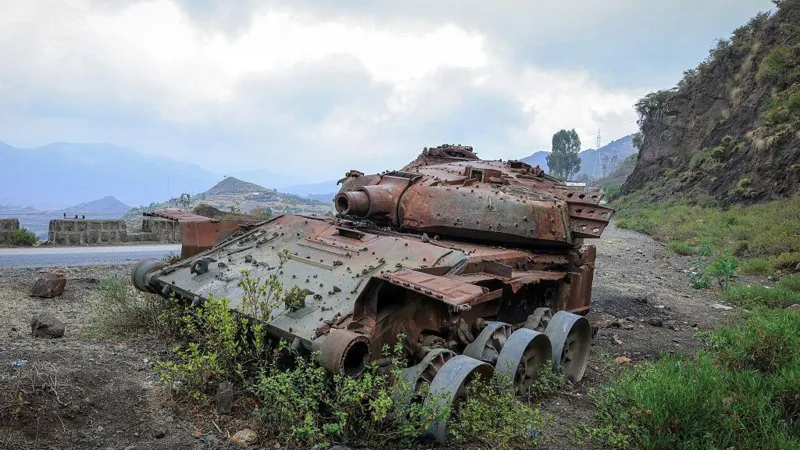
Hundreds of displaced Ethiopian citizens from the Tigray region have fled into neighboring Sudan following intense military engagements between regional forces and the Ethiopian national army, raising international concerns over a potential resurgence of full-scale civil war.

The recent outbreak of violence centered around Shererina, a strategically sensitive locality near the border with Sudan, marking the most severe military confrontation in the region since the conclusion of the 2020–2022 conflict. Eyewitnesses and regional representatives reported sustained exchanges involving heavy artillery shelling and aerial drone strikes across the weekend.

The renewed hostilites follow growing instability surrounding the incomplete execution of the 2022 African Union-mediated peace agreement, alongside the Tigray People’s Liberation Front (TPLF) regaining control over regional administrative institutions. Regional analysts have also expressed concern that the border area could become entangled in the wider Sudanese conflict through external proxy alignments.

Both sides have traded blame for initiating the offensive. Officials representing the Tigray regional administration accused federal forces of launching an unprovoked military assault aimed at suppressing the region. Conversely, federal minister Abraham Belay accused TPLF leadership of instigating the skirmishes, warning of severe repercussions while urging both parties to seek a negotiated diplomatic resolution to prevent further devastation.

While formal casualty figures remain unconfirmed, Sudanese medical teams and local authorities verified that civilians alongside wounded combatants continue to seek asylum across the border.

Similar Posts

  • |

    Young people increasingly turn to AI chatbots for emotional support and social advice

      Artificial intelligence is becoming an increasingly common source of support for teenagers and young adults as many begin relying on AI-powered chatbots to navigate personal conversations, relationships, and everyday social situations. Recent national studies suggest that around 20 percent of young people now seek guidance from AI companions for emotional support and relationship advice instead of turning to friends, family members, or other trusted individuals. Experts say that the growing popularity of AI chatbots reflects changing communication habits among younger generations. Many users are employing these digital tools to help write difficult text messages, prepare for challenging conversations, and better understand complicated social interactions. For many, artificial intelligence provides a convenient and accessible way to think through personal situations before speaking with others. Researchers have found that many teenagers appreciate AI because it is available at any time of the day or night. Unlike human conversations, interacting with a chatbot does not involve the immediate fear of criticism, embarrassment, or rejection. This constant availability has made AI an appealing option for individuals who may feel anxious about discussing sensitive topics with people in their lives. Clinical psychologist Joshua Goodman believes that AI chatbots can offer users a comfortable environment to explore their thoughts and emotions. He explained that conversations with artificial intelligence may feel like a safe place where young people can discuss issues they might hesitate to share with parents, teachers, or friends. This sense of privacy and emotional comfort has contributed to the increasing use of AI for personal guidance. However, mental health professionals caution that artificial intelligence should not be viewed as a replacement for genuine human relationships. While AI can provide information, suggestions, and conversational support, experts emphasize that it lacks the emotional understanding, empathy, and lived experience that real people bring to meaningful relationships. Clinical psychologist Mary Alvord has warned that although AI conversations may seem safe, users should remember that perceived privacy is different from actual privacy. She pointed out that interactions with chatbots may be stored, analyzed, or processed by technology providers, meaning users should be careful about sharing highly personal or sensitive information. Experts also stress that artificial intelligence cannot fully replicate the complexity of human communication. Media psychologist Don Grant explained that chatbots are generally designed to remain supportive and non-confrontational. While this may make conversations feel comfortable, it also means users may not experience the constructive challenges, disagreements, or honest feedback that often help people develop stronger communication skills and emotional resilience. According to specialists, relying too heavily on AI for social interactions could reduce opportunities to practice real-life communication. Building confidence in conversations, resolving disagreements, and forming lasting friendships require experiences that technology cannot fully provide. Human relationships involve empathy, body language, emotional understanding, and shared experiences that remain difficult for artificial intelligence to reproduce. To encourage a healthy balance, health professionals recommend using AI as a supportive tool rather than a substitute for personal relationships. They advise parents, educators, and young adults to establish clear boundaries regarding AI use while continuing to prioritize conversations with family members, friends, teachers, and mental health professionals when needed. Experts also encourage young people to regularly practice face-to-face communication, participate in social activities, and develop interpersonal skills that strengthen emotional well-being. These experiences help build self-confidence, improve problem-solving abilities, and create meaningful personal connections. As artificial intelligence continues to become part of everyday life, specialists believe it can play a positive role when used responsibly. However, they emphasize that maintaining genuine human relationships remains essential for emotional growth, mental health, and long-term social development. AI may offer convenience and support, but meaningful human connection continues to be irreplaceable.

  • |

    Senegal court jails TikTok creators for insulting president

    A Senegalese court has sentenced three TikTok influencers to custodial sentences and fines for insulting President Bassirou Diomaye Faye. Critics have condemned the ruling as a direct blow to free expression within the country. The creators work for Feenal Digital, an online channel known for producing content supportive of former Prime Minister Ousmane Sonko. The decision follows a recent political rift between President Faye and Sonko. Mandoumbe Diop, operating under the moniker Lamignou Darou, received a three-month unconditional prison term. He represents the most prominent of the group, boasting over 500,000 followers on TikTok. Magueye Diaw and Moustapha Ndiaye were each handed two-month custodial sentences alongside fines of 500,000 CFA francs. Defence counsel Abdy Nar Ndiaye argued the posts were purely satirical and did not warrant criminal sanction.

  • | |

    G-B flash floods leave widespread destruction

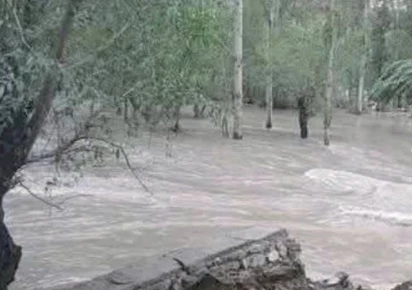
    GILGIT: Torrential rains have triggered devastating flash floods, mudslides and landslides across Gilgit-Baltistan, leaving a trail of destruction that has damaged hundreds of homes, swept away bridges and disrupted road links in several districts. According to the latest assessment by the Gilgit-Baltistan Disaster Management Authority (GBDMA), 60 weather-related incidents have been recorded across the region, causing extensive damage to homes, transport infrastructure and livestock. Officials reported that 184 houses were affected, including 49 completely destroyed and 135 partially damaged. The disasters also washed away nine bridges, damaged nearly eight kilometres of roads and claimed the lives of 68 animals. Astore emerged as the worst-hit district in terms of housing damage, where more than 80 homes were partially damaged after flash floods and landslides struck the Lous and Doyan Khichik areas. Diamer also suffered significant losses, with 42 houses damaged, including 16 that were completely destroyed in Thore, Buner Dass, Khanbary, Shahi Mahal and Darel. In Skardu, rising water levels and flash floods destroyed 15 houses and swept away four bridges, the highest number of bridge losses reported in any district. Ghizer witnessed damage to two dozen homes and one bridge due to flash floods, cloudbursts and river erosion, while Ghanche reported damage to 12 houses and the loss of three bridges. Gilgit district also experienced flooding in several valleys, where eight houses were damaged and around 50 livestock perished, accounting for the highest livestock losses in the region. Although Hunza and Nagar escaped major residential damage, road infrastructure in both districts was affected by flooding and erosion. Relief efforts are continuing in the affected areas. Emergency supplies, including tents, food packs, kitchen sets, plastic mats and bedding, have been distributed among displaced families in Diamer and Skardu. Authorities have also dispatched additional relief consignments to flood-hit valleys to support affected communities. Meanwhile, road clearance operations are underway to restore connectivity. Heavy machinery has been deployed to remove landslide debris along the Jaglot-Skardu Road, where restoration work is progressing at multiple locations. Officials said road networks in Ghizer, Hunza, Shiger and Kharmang have been reopened, while emergency teams and equipment remain on high alert as authorities continue monitoring the evolving situation.

  • | |

    Security forces foil suicide attack in South Wazir…

    Pakistan security forces have foiled a suicide attack on a checkpost in South Waziristan district of Khyber Pakhtunkhwa, killing four terrorists, including the suicide bomber, the Inter-Services Public Relations (ISPR) said. According to a statement issued by the military’s media wing, terrorists attempted to attack a security forces checkpost by driving an explosives-filled vehicle toward the installation. However, the attack was stopped due to the quick and effective response of security personnel. The ISPR said that the explosives-laden vehicle was engaged and destroyed before it could reach the checkpost, killing the suicide bomber inside. The failed attack caused no damage to the security installation and no casualties were reported among security forces. Following the initial attack attempt, troops engaged other militants who tried to enter the area. According to the statement, three terrorists were forced into a nearby compound and were later killed during a targeted clearance operation carried out by security forces. The military said a sanitisation operation was also launched in the surrounding area to search for any remaining militants and ensure the security of the region. The ISPR reiterated that counter-terrorism operations under the “Azm-i-Istehkam” initiative will continue with full commitment to eliminate terrorism and prevent attacks against the country. The operation is part of ongoing efforts by security forces and law enforcement agencies to tackle militant threats. The incident comes a day after a terrorist attack on a joint police checkpost in Tank district of Khyber Pakhtunkhwa resulted in the deaths of 15 people, including security personnel. Officials said the attack highlighted the continuing security challenges faced by the province. Khyber Pakhtunkhwa has witnessed an increase in militant activities over the past year, with security forces conducting frequent operations against armed groups operating in the region. Security officials have stated that intelligence-based operations and targeted actions will continue to counter militant networks and protect civilians and security personnel. The latest operation in South Waziristan reflects the ongoing security efforts aimed at preventing attacks and maintaining stability in areas affected by terrorism.

  • | |

    Azad Kashmir enters final counting phase

    Polling has ended in the third phase of the Azad Jammu and Kashmir Legislative Assembly elections. The vote-counting process has now begun. Polling was held in four constituencies of Bagh and Haveli. These included LA-14 Bagh-1, LA-15 Bagh-2, LA-16 Bagh-3 and LA-17 Bagh-4 Haveli. The polling process started at 8am and continued until 5pm. Voters were allowed to cast their ballots throughout the scheduled polling hours. With polling now concluded, election officials have started counting the votes. The results will determine the outcome of the remaining constituencies in the third phase. The first two phases had already produced a lead for the Pakistan Muslim League-Nawaz. In the first phase, polling was held for 13 seats in the Mirpur Division. The PML-N won nine of these seats, while the Pakistan Peoples Party secured four. The second phase covered nine seats in the Muzaffarabad Division and 12 seats reserved for refugees. The PML-N won 15 seats in the second phase, while the PPP secured six seats. The third phase is being closely watched as the counting process will complete the voting process across the remaining constituencies. Election authorities are expected to announce results after the completion of counting and the required verification process. The outcome of the third phase will also determine the final balance of seats and pave the way for the formation of the next government in Azad Kashmir.

  • |

    Houston hosts major Muharram haleem feast

      HOUSTON: Friends of Karachi Houston, a prominent Pakistani-American community organization, hosted a grand Haleem feast on August 2, 2026, to mark Muharram-ul-Haram, continuing a tradition that has brought the community together for the past 12 years. More than 2,000 people attended the annual community gathering, making it one of the largest Muharram-related Haleem events held in Texas, according to the organizers. The event attracted a diverse cross-section of the Pakistani-American community, including former federal and provincial ministers, former members of the National and Provincial Assemblies, political leaders, social workers, business figures and community representatives. Members of the US Congress also attended the gathering, along with representatives and office-bearers from both the Republican and Democratic parties. Their participation highlighted the event’s growing importance as a platform for community engagement and cultural connection. The gathering also brought together Pakistanis from different schools of thought and backgrounds, reflecting the spirit of unity and brotherhood associated with Muharram. Families, community members and guests gathered to enjoy traditional Pakistani Haleem while reconnecting with their cultural roots. Guests praised the organizers for the event’s arrangements and the authentic taste of the Haleem. Many attendees said the gathering gave them a strong sense of connection with Pakistan and made them feel as though they had briefly returned to their homeland. The annual feast has become a much-anticipated event for the Pakistani community in Houston. Over the years, it has provided an opportunity for people to come together, celebrate their shared cultural heritage and strengthen relationships within the wider community. At the conclusion of the event, the Friends of Karachi Houston administration thanked all guests, volunteers and supporters whose contributions helped make the gathering successful. The organizers also reaffirmed their commitment to continuing the tradition in the coming years and bringing the community together with the same spirit of service, solidarity and brotherhood during Muharram.

Leave a Reply

Your email address will not be published. Required fields are marked *