death toll kabal

Death toll in Kabal suicide bombing rises to 17; Chief Minister, IGP visit Swat, JIT announced

SWAT: The death toll from the suicide bombing at the main gate of Kabal Police Station in Pakistan’s northwestern Swat district has risen to 17 after two more injured victims succumbed to their wounds, officials said on Monday.

The deceased include seven police personnel and 10 civilians, while more than 23 injured people remain under treatment at various hospitals. Funeral prayers for the victims were offered before they were laid to rest in their native villages. Markets across Kabal remained completely shut as residents observed a day of mourning.

Police have registered a First Information Report (FIR) against unidentified terrorists at the Counter Terrorism Department (CTD) Police Station in Kabal. The case includes charges of murder, attempted murder, and terrorism-related offences under Pakistan’s Anti-Terrorism Act.

Preliminary investigations indicate that the suicide bomber used between six and eight kilograms of explosives.

Inspector General of Police (IGP) Khyber Pakhtunkhwa Zulfiqar Hameed paid an emergency visit to Swat following the attack. He visited the injured police personnel and civilians receiving treatment at Saidu Sharif Teaching Hospital, inquired about their condition, praised their courage, and wished them a speedy recovery.

The IGP also directed doctors and medical staff to ensure the best possible treatment for the injured. Additional Inspector General CTD, Regional Police Officer Malakand, and District Police Officer Swat accompanied him during the visit.

Later, the IGP chaired a high-level security meeting at the Regional Police Office Malakand to review the overall law and order situation in the region and assess the progress of the investigation into the attack, including efforts to identify the perpetrators and their facilitators.

Officials informed the meeting that the suicide bomber had been identified and that investigators were using modern forensic and technological methods to expedite the probe. The IGP instructed authorities to ensure the swift arrest of everyone involved and bring them to justice.

Speaking to reporters, Zulfiqar Hameed announced that a Joint Investigation Team (JIT) would be constituted to investigate the bombing. He said the families of the fallen police personnel would receive the full martyrs compensation package.

He added that stringent security arrangements had already been in place due to potential threats and that police officers displayed exceptional bravery by preventing the suicide bomber from reaching the main target, thereby averting even greater casualties. He reaffirmed that terrorists would not be allowed to regroup and said police continue to receive modern weapons, equipment, and operational support.

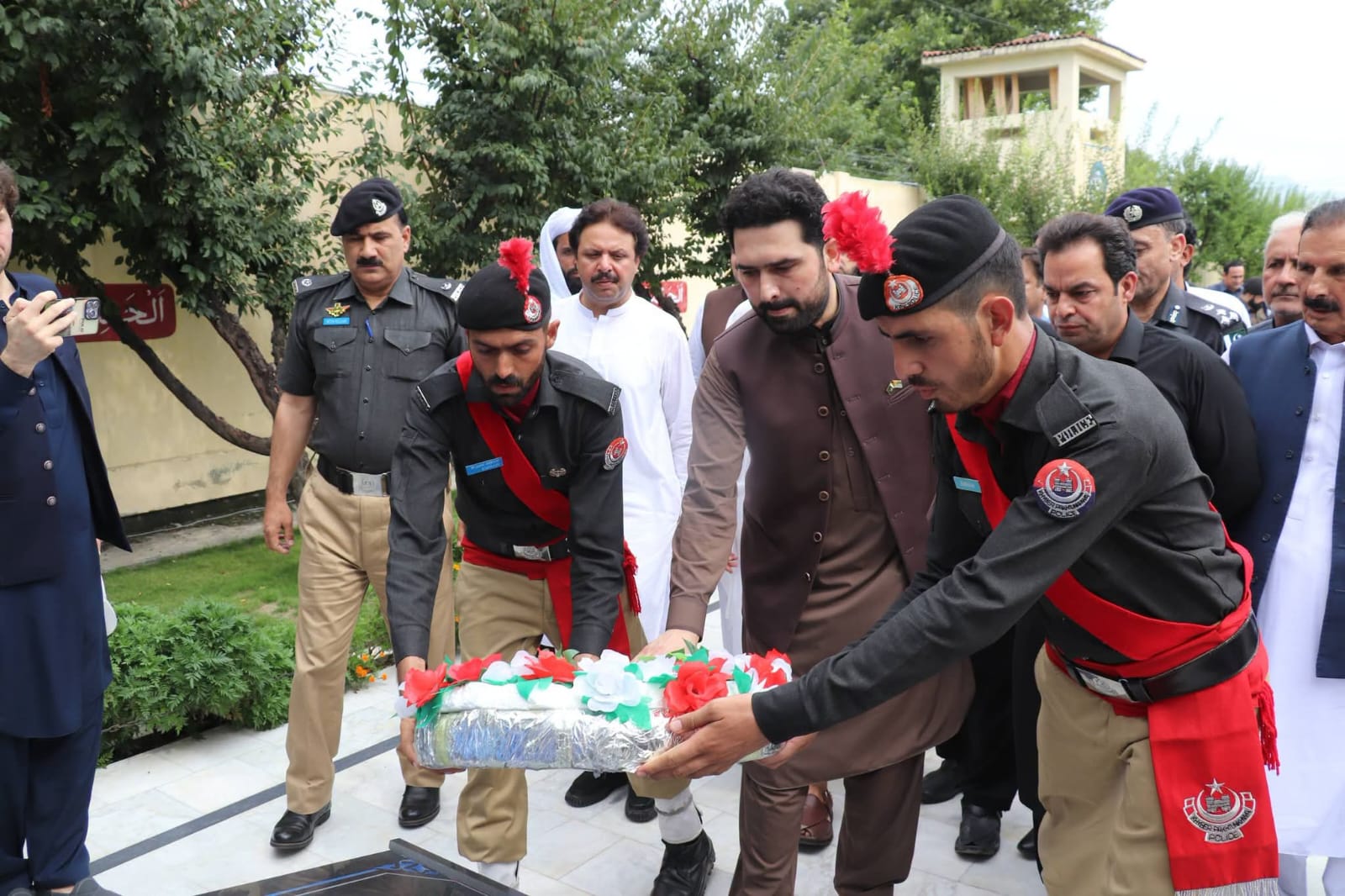
Meanwhile, Khyber Pakhtunkhwa Chief Minister Muhammad Suhail Khan Afridi arrived in Swat along with Special Assistant for Home Tariq Saeed, Chief Secretary Shahab Ali Shah, and the provincial police chief. The chief minister met the families of the victims, offered condolences, and prayed for the departed. He also visited the injured at Saidu Sharif Teaching Hospital and directed hospital authorities to ensure they receive the best available medical care.

The chief minister later chaired a high-level meeting on the security situation in Swat, where he was briefed on the bombing, the region’s overall security environment, and the ongoing counterterrorism operations.

Addressing the meeting, Afridi said the people and police of Khyber Pakhtunkhwa were paying the price for what he described as the federal government’s flawed security policies. However, he stressed that the sacrifices made by police personnel and innocent civilians in the fight against terrorism would not go in vain.

He called for unity among the public, police, and all political and religious stakeholders to defeat terrorism, describing the current campaign as a decisive phase in eliminating the threat. The chief minister said the provincial government was providing all necessary resources to the Khyber Pakhtunkhwa Police and the Counter Terrorism Department (CTD), including a Rs20 billion allocation to strengthen the police force’s operational capacity.

Reaffirming his government’s commitment to restoring peace, Afridi expressed confidence that Khyber Pakhtunkhwa would overcome the security challenge and declared that the 2026–27 fiscal year would be a year of peace, development, and prosperity for the province.
Similar Posts

  • | |

    Norway’s Foreign Minister arrives in Islamabad f…

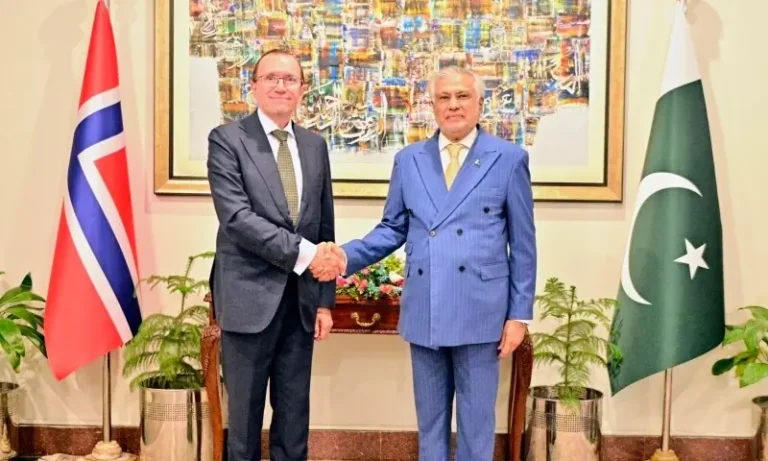
    ISLAMABAD: Norwegian Foreign Minister Espen Barth Eide arrived in Islamabad on Thursday for an official two-day visit, marking the first visit by a Norwegian foreign minister to Pakistan in a decade and opening a fresh chapter in bilateral engagement. Eide, who is visiting Pakistan on the invitation of Deputy Prime Minister and Foreign Minister Ishaq Dar, was received at Islamabad International Airport by Additional Foreign Secretary for Europe Ambassador Ayesha Ali. He later held a meeting with Dar at the Ministry of Foreign Affairs, where the two sides are expected to discuss a broad range of issues concerning Pakistan-Norway relations. According to the Foreign Office, Eide’s visit will continue through August 14 and include delegation-level talks between the two countries. The discussions are expected to focus on areas where Islamabad and Oslo see potential for stronger cooperation. Trade and investment will be among the key subjects, while climate change, renewable energy and education are also expected to feature prominently in the talks. The two sides will additionally explore ways to strengthen people-to-people contacts. The visit comes at a time when Pakistan is seeking to deepen economic and diplomatic partnerships with European countries, particularly in areas linked to investment, clean energy and sustainable development. Beyond bilateral matters, the foreign ministers are also expected to exchange views on important regional and international developments. This could give the two sides an opportunity to discuss shared concerns and assess developments affecting the wider region. The Foreign Office said the visit builds on a series of high-level contacts between Pakistan and Norway in recent months. Dar and Eide held telephone conversations in March and April, while Norwegian State Secretary Andreas Motzfeldt Kravik visited Islamabad in May. The two countries have also maintained engagement through diplomatic channels, with both sides showing interest in expanding cooperation beyond traditional areas. Eide’s arrival therefore carries significance not only because of its timing but also because of the gap since the last visit by a Norwegian foreign minister. The trip provides an opportunity to translate recent diplomatic contacts into practical cooperation. For Islamabad, stronger ties with Norway could bring opportunities in trade, investment, renewable energy and education. For Oslo, deeper engagement with Pakistan offers a chance to strengthen relations with an important South Asian partner. The Foreign Office described the visit as an opportunity to further strengthen the “longstanding and cordial relations” between the two countries and identify new areas of mutually beneficial cooperation. With formal talks now underway, attention will turn to whether the two-day visit produces concrete initiatives that can give Pakistan-Norway relations fresh momentum.

  • |

    Pakistan sets record with 5,438 companies registered in July

    Islamabad – A new business record has been set in Pakistan with thousands of new companies registered with the Securities and Exchange Commission of Pakistan (SECP) in a single month. Business activity in Pakistan’s corporate sector has witnessed a significant acceleration as the SECP set a new record for the registration of new companies during July. According to official figures, 5,438 new companies were registered across the country in July marking the highest number of registrations recorded in a single month. During the same period, five international companies also established their offices in Pakistan including companies from Malaysia, the United Arab Emirates and China. According to the report, 112 newly registered companies have foreign directors on their boards indicating growing foreign investment and international business interest in Pakistan. The newly registered companies include 3,148 private limited companies while Punjab remained at the top with 2,756 new companies registered. This was followed by Islamabad with 1,053, Sindh with 864, Khyber Pakhtunkhwa with 450, Gilgit-Baltistan with 180 and Balochistan with 135 newly registered companies. IT sector leads new registrations A sector-wise analysis shows that Information Technology (IT) remained the leading sector with 1,008 new companies registered. Other sectors also recorded significant registrations including 845 companies in trading, 638 in services, 348 in construction, 256 in food and beverages, 207 in tourism, 181 in e-commerce, 165 in education, 162 in real estate development and 145 in corporate agriculture. According to business experts, the increasing number of new company registrations reflects growing private-sector investment, business confidence and new economic activity in the country. The rapid growth in registrations in the IT sector is also being viewed as a positive sign for the expansion of Pakistan’s digital economy.

  • | |

    Afghan man married to Pakistani woman granted bail…

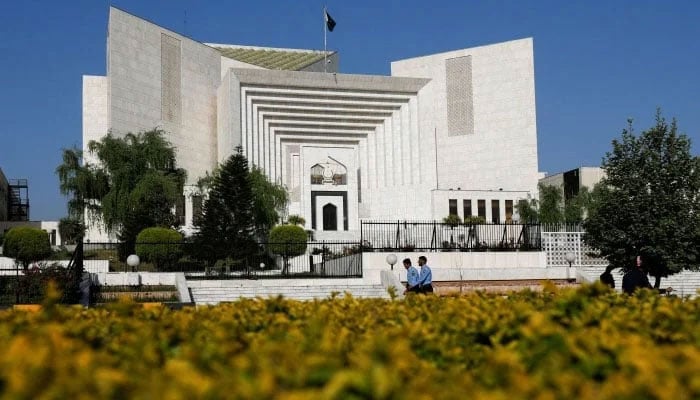
    The Supreme Court of Pakistan has granted bail to an Afghan national, who is married to a Pakistani woman, against surety bonds worth Rs20,000 in a case registered under the Foreign Act. During the hearing, the government lawyer informed the court that the accused had been arrested under the Foreign Act. He argued that the man did not possess a marriage certificate proving his marriage to the Pakistani woman at the time of his arrest. The prosecution further stated that the marriage certificate was obtained in 2024, although the accused claimed to have married in 1993. The lawyer also told the court that the man had no documentary evidence of his entry into Pakistan and was not carrying an Afghan passport. Justice Hashim Kakar questioned the prosecution’s arguments, observing that in many rural areas marriages are conducted without immediately registering a formal marriage certificate. The defence counsel told the court that the couple had married in 1993 and only later obtained official documentation. Justice Kakar also noted that two high courts had already directed authorities to issue the man a domicile, adding that the government itself had allowed Afghan nationals to enter Pakistan in the past. He remarked that they had even been provided ration support. The judge further questioned the prosecution, asking what additional proof of marriage was required when the couple had two children together. He also asked how the authorities had concluded that the accused was an Afghan citizen if he allegedly had no identification or official documents. After hearing the arguments from both sides, the Supreme Court approved the Afghan national’s bail, subject to the submission of surety bonds worth Rs20,000.

  • | |

    14 August: Films that bring Quaid-e-Azam’s i…

    Every year on August 14, Pakistan celebrates its Independence Day, marking the day in 1947 when the country emerged as an independent nation. The occasion is a reminder of the struggle, sacrifices and leadership that shaped Pakistan’s journey towards independence. Among the many personalities connected with this historic movement, Quaid-e-Azam Muhammad Ali Jinnah remains one of the most important figures. From his early career as a lawyer to becoming the leader of the Pakistan Movement, Jinnah’s life has continued to inspire filmmakers, writers and storytellers. Over the years, several films, dramas and documentaries have explored different phases of his life, highlighting his political struggle, leadership and the challenges behind the creation of Pakistan. One of the most notable films based on his life is Jinnah (1998), directed by Jamil Dehlavi. The biographical drama stars Christopher Lee as Quaid-e-Azam Muhammad Ali Jinnah and follows his journey from a successful lawyer to the founder of Pakistan. The film focuses on important moments from Jinnah’s political career, including his efforts during the Pakistan Movement and the challenges he faced while working towards the creation of a separate homeland. Written by Akbar S. Ahmed, Farrukh Dhondy and Jamil Dehlavi, Jinnah presents a detailed portrayal of the events that shaped one of South Asia’s most influential leaders. Although the film received mixed responses at the time of its release, it remains one of the most recognised international productions based on the life of Pakistan’s founder. On television, Jinnah Se Quaid Tak became another important drama that introduced audiences to different stages of Jinnah’s life. The PTV production showed his transformation from a successful barrister into a political leader who played a central role in the independence movement. Directed by Mohsin Ali, the drama focused on key historical events and highlighted Jinnah’s dedication towards achieving his political goals. Through television, the series reached audiences who wanted to explore the personal and political journey behind Pakistan’s creation. Another production that explores Jinnah’s legacy is the documentary Quaid-e-Azam: Founder of Pakistan. Unlike fictional portrayals, documentaries use archival footage, historical records and expert discussions to present a closer look at his personal life and political career. These documentaries provide viewers with an opportunity to understand not only the major events surrounding independence but also the leadership qualities and decisions that shaped Pakistan’s early years. Apart from these productions, Pakistani cinema and television have continued to revisit stories connected with the country’s history and independence. Historical films and dramas allow audiences to connect with important moments from the past while introducing younger generations to personalities who played a significant role in shaping the nation. As Pakistan celebrates its Independence Day, these cinematic portrayals offer a chance to revisit the journey behind August 14, 1947. They highlight the determination, political struggle and leadership that contributed to the creation of Pakistan. Through films, dramas and documentaries, the story of Quaid-e-Azam Muhammad Ali Jinnah continues to remain part of Pakistan’s cultural memory, allowing new generations to learn about the man behind the independence movement.

  • | |

    Sindh to introduce AI in public service recruitmen…

    KARACHI: The Sindh government has decided to introduce artificial intelligence (AI) and modern technology into the recruitment and examination system of the Sindh Public Service Commission (SPSC). The decision was taken during a high-level meeting chaired by Sindh Chief Secretary Asif Haider Shah on Tuesday. The chairman of the SPSC, the secretary of information technology and other senior officials attended the meeting. During the meeting, the chief secretary said AI and modern technology would be used to make the SPSC examination process more efficient and transparent. Officials discussed the use of technology in several stages of the examination process. This includes the preparation of question papers, assessment of candidates and management of examination-related data. The new system is also expected to reduce unnecessary human involvement in certain stages of the examination process. Officials believe greater use of technology could help improve efficiency and minimise administrative delays. The Sindh government also plans to establish technology-equipped workstations across the province. These facilities will provide candidates in different areas with access to modern examination services. The initiative is aimed at improving accessibility for applicants from various parts of Sindh. The government said the use of AI and digital tools would help modernise the recruitment process and improve the overall management of SPSC examinations.

  • | |

    Five Nepali climbers’ bodies reach Islamabad

    The bodies of five Nepali climbers who died in an avalanche on Broad Peak have been brought to Islamabad. According to Deputy Commissioner Hamza Murad, the bodies were transported to Islamabad by air and have been placed in the morgue at the Pakistan Institute of Medical Sciences (PIMS). He said the bodies would be sent to Nepal once the necessary travel documents had been completed. The avalanche struck Broad Peak about a week ago, leaving 10 climbers missing. According to the deputy commissioner, the bodies of eight climbers, including renowned Nepali mountaineer Nirmal Purja, have so far been recovered. The search for two missing climbers is still underway. They include Pakistani mountaineer Sohail Sakhi and a foreign female climber. Authorities are continuing efforts to locate the remaining climbers while arrangements are being made to repatriate the recovered bodies to their respective countries.

Leave a Reply

Your email address will not be published. Required fields are marked *