death toll kabal

Death toll in Kabal suicide bombing rises to 17; Chief Minister, IGP visit Swat, JIT announced

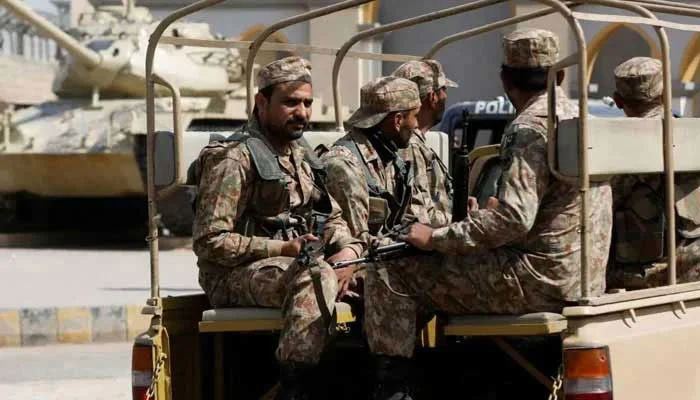
SWAT: The death toll from the suicide bombing at the main gate of Kabal Police Station in Pakistan’s northwestern Swat district has risen to 17 after two more injured victims succumbed to their wounds, officials said on Monday.

The deceased include seven police personnel and 10 civilians, while more than 23 injured people remain under treatment at various hospitals. Funeral prayers for the victims were offered before they were laid to rest in their native villages. Markets across Kabal remained completely shut as residents observed a day of mourning.

Police have registered a First Information Report (FIR) against unidentified terrorists at the Counter Terrorism Department (CTD) Police Station in Kabal. The case includes charges of murder, attempted murder, and terrorism-related offences under Pakistan’s Anti-Terrorism Act.

Preliminary investigations indicate that the suicide bomber used between six and eight kilograms of explosives.

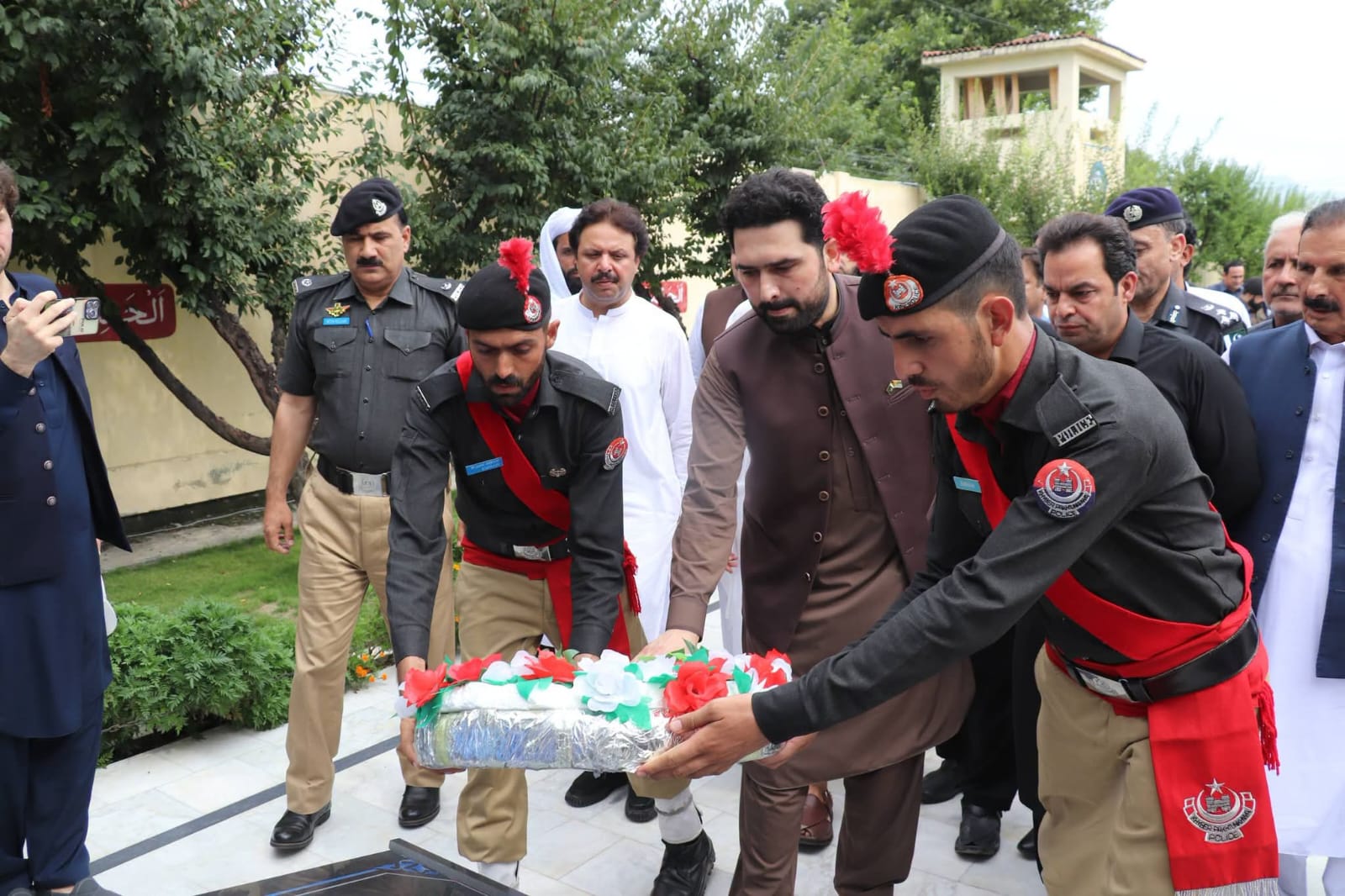
Inspector General of Police (IGP) Khyber Pakhtunkhwa Zulfiqar Hameed paid an emergency visit to Swat following the attack. He visited the injured police personnel and civilians receiving treatment at Saidu Sharif Teaching Hospital, inquired about their condition, praised their courage, and wished them a speedy recovery.

The IGP also directed doctors and medical staff to ensure the best possible treatment for the injured. Additional Inspector General CTD, Regional Police Officer Malakand, and District Police Officer Swat accompanied him during the visit.

Later, the IGP chaired a high-level security meeting at the Regional Police Office Malakand to review the overall law and order situation in the region and assess the progress of the investigation into the attack, including efforts to identify the perpetrators and their facilitators.

Officials informed the meeting that the suicide bomber had been identified and that investigators were using modern forensic and technological methods to expedite the probe. The IGP instructed authorities to ensure the swift arrest of everyone involved and bring them to justice.

Speaking to reporters, Zulfiqar Hameed announced that a Joint Investigation Team (JIT) would be constituted to investigate the bombing. He said the families of the fallen police personnel would receive the full martyrs compensation package.

He added that stringent security arrangements had already been in place due to potential threats and that police officers displayed exceptional bravery by preventing the suicide bomber from reaching the main target, thereby averting even greater casualties. He reaffirmed that terrorists would not be allowed to regroup and said police continue to receive modern weapons, equipment, and operational support.

Meanwhile, Khyber Pakhtunkhwa Chief Minister Muhammad Suhail Khan Afridi arrived in Swat along with Special Assistant for Home Tariq Saeed, Chief Secretary Shahab Ali Shah, and the provincial police chief. The chief minister met the families of the victims, offered condolences, and prayed for the departed. He also visited the injured at Saidu Sharif Teaching Hospital and directed hospital authorities to ensure they receive the best available medical care.

The chief minister later chaired a high-level meeting on the security situation in Swat, where he was briefed on the bombing, the region’s overall security environment, and the ongoing counterterrorism operations.

Addressing the meeting, Afridi said the people and police of Khyber Pakhtunkhwa were paying the price for what he described as the federal government’s flawed security policies. However, he stressed that the sacrifices made by police personnel and innocent civilians in the fight against terrorism would not go in vain.

He called for unity among the public, police, and all political and religious stakeholders to defeat terrorism, describing the current campaign as a decisive phase in eliminating the threat. The chief minister said the provincial government was providing all necessary resources to the Khyber Pakhtunkhwa Police and the Counter Terrorism Department (CTD), including a Rs20 billion allocation to strengthen the police force’s operational capacity.

Reaffirming his government’s commitment to restoring peace, Afridi expressed confidence that Khyber Pakhtunkhwa would overcome the security challenge and declared that the 2026–27 fiscal year would be a year of peace, development, and prosperity for the province.
Similar Posts

  • | |

    Delay in NOC stalls NADRA counter at Pakistan Emba…

    A proposed NADRA counter at the Pakistan Embassy in Tokyo, expected to benefit nearly 30,000 to 35,000 Pakistanis living in Japan, has remained stalled for the past three to four months due to delays in the issuance of a No Objection Certificate (NOC), despite receiving formal approval from NADRA. According to official documents, NADRA granted in-principle approval for the establishment of the counter on April 22, 2026, and requested the relevant authorities to issue the required NOC without delay. The documents stated that the counter would become operational immediately after the NOC is issued. The delay has prevented the project from moving forward, leaving thousands of overseas Pakistanis in Japan facing continued difficulties in accessing essential identity and registration services. Sources said the initiative was made possible through the persistent efforts of Overseas Pakistanis Foundation (OPF) Chairman Syed Qamar Raza Shah. During his visit to Japan in April, he met members of the Pakistani community, listened to their concerns, and identified the absence of NADRA services as one of their most pressing issues. After returning to Pakistan, Shah reportedly pursued the matter with the relevant departments and raised it at senior government levels, resulting in NADRA’s formal approval for establishing the counter at the embassy. Under the approved plan, NADRA agreed to provide biometric machines, fingerprint devices, cameras, technical support, and staff training. The Pakistan Embassy in Tokyo is responsible for providing office space, computers, internet connectivity, furniture, and other administrative facilities. Officials said all technical and administrative arrangements have already been finalised. However, the project remains on hold because the required NOC has yet to be issued by the concerned ministry. As a result, Pakistani nationals living in Japan continue to face significant challenges in obtaining or renewing national identity cards, completing family registration, biometric verification, and accessing other NADRA-related services. Members of the Pakistani community in Japan have praised Syed Qamar Raza Shah for his efforts, saying the project would likely not have reached the approval stage without his personal involvement. They urged the relevant authorities to demonstrate the same commitment by removing the remaining administrative hurdles and ensuring that the approved project is implemented without further delay. The community has also appealed to Prime Minister Shehbaz Sharif and Deputy Prime Minister Senator Ishaq Dar to personally intervene and direct the concerned authorities to issue the pending NOC so that the NADRA counter can be established at the Pakistan Embassy in Tokyo as soon as possible, providing long-awaited relief to thousands of overseas Pakistanis.

  • |

    Buleha” faces suspension as Senate demands name change and removal of Bulleh Shah dialogue

    Islamabad: A controversy over the Pakistani film “Buleha” after a Senate committee questioned whether the movie damaged the image of legendary Sufi poet Baba Bulleh Shah by showing a character connected with violence, weapons and personal justice. During a heated discussion, Senator Pervaiz Rashid questioned how a film carrying the name of a famous symbol of peace and love was approved despite scenes and dialogues that critics said were opposite to Bulleh Shah’s teachings. The controversy intensified when members of the Censor Board admitted that some important points were overlooked during the approval process. Dr. Sultan Azam Taimuri, a senior member of the board, accepted responsibility and said the concerns raised about the connection between the fictional character and Baba Bulleh Shah should have been discussed more carefully. The committee argued that Baba Bulleh Shah was known for promoting peace, humanity and love, while the film appeared to show a character using force and weapons to fight criminals. Members questioned whether such a portrayal could create confusion among young viewers about the real message and personality of one of Punjab’s most respected Sufi poets. The debate became intense when a Senator Pervaiz Rashid asked if a film about another respected poet, such as Khushal Khan Khattak or Ghalib, showed that personality in a completely opposite way, would the Censor Board approve it. A censor board member admitted that such a film would not be acceptable and said it would be wrong to show a historical personality against their actual beliefs. The committee then questioned why the same standard was not applied to “Buleha.” The Censor Board defended its decision by saying the movie was not a biography of Baba Bulleh Shah. Officials explained that the character in the film was fictional and had no direct connection with the real life of the Sufi poet. They said the board considered the movie a fictional story and believed the name alone was not enough reason to stop its release because Bulleh Shah himself used the word “Bullah” in his poetry. However, the committee pointed out that the board’s explanation created confusion. Members questioned how the film could have no connection with Bulleh Shah but still use a name and dialogue strongly linked with him. The discussion became more serious when Dr. Sultan admitted that the committee’s concerns had a point. He said the board did not discuss this angle properly at the time of approval and accepted responsibility. He also admitted that a dialogue in the film where the character compares himself with Bulleh Shah could be controversial. Another Censor Board member, Syed Farooq Hassan, also accepted that the board overlooked this perspective. He said the board knew Baba Bulleh Shah’s teachings were completely different from the violence shown in the film, but members believed the character was fictional and not based on the actual life of Bulleh Shah. The board members also explained that Pakistan’s film industry was already struggling, and they wanted to support local movies within acceptable limits. They said promoting cinema was also one reason behind their decision. The committee, however, questioned whether supporting the film industry should come before protecting the image of respected cultural and historical figures. During the meeting, criticism was also directed at the writer of the film. Members questioned whether being a successful film writer was enough qualification to handle the story of a major historical and spiritual personality. They argued that the writer’s fame came mainly from action based films and said success in commercial cinema does not automatically mean expertise in history, culture or the lives of national figures. One committee member strongly criticised the idea of approving a film simply because it was written by a famous writer. He said the writer was known for introducing violent action elements in films but was not known as an expert on Sufi personalities or Pakistan’s cultural traditions. The committee also rejected the argument that other provincial censor boards had already approved the film. Officials said Punjab and Sindh censor boards had approved the movie without cuts, and it had also been aired on Local TV. However, committee members said approval by other boards did not remove the responsibility of reviewing the film’s impact. The discussion also raised questions about the knowledge and background of Censor Board members. Members suggested that people approving films about major personalities should have knowledge of history, literature, culture and society. They said the selection criteria for board members should ensure they understand how films can influence children and families. The committee argued that showing respected personalities incorrectly could affect how younger generations understand their history. At the end of the meeting, the committee made a strong recommendation regarding the film. The committee suggested that the film name should be changed and the dialogue in which the character calls himself Bulleh Shah should be removed. It further recommended that the film’s exhibition licence should remain suspended until these changes are made and that online versions should also be removed if available. The Senate Standing Committee on Information and Broadcasting has also included the film “Buleha” issue in its upcoming agenda, calling Censor Board members and producers to explain the certification process and the discussions behind the film’s approval.

  • | |

    PTI holds nationwide protests to mark three years

      Supporters of Pakistan Tehreek-e-Insaf (PTI) staged demonstrations across Pakistan on Wednesday to mark three years since former prime minister Imran Khan was first taken into custody. One of the largest gatherings was held outside Lahore’s Aiwan-e-Adl, where members of the Insaf Lawyers Forum, along with party leaders, lawyers and supporters, demanded Khan’s release and called for an end to the legal cases against him. The Lahore protest took place on Upper Mall, outside the court complex, where participants waved party flags and chanted slogans in support of the jailed PTI founder. Demonstrators maintained that the cases filed against Imran Khan were politically motivated and urged authorities to withdraw all charges. They insisted that the legal proceedings were intended to prevent him from participating in politics, an allegation that both the government and state institutions have consistently denied, maintaining that the judicial process is independent and conducted in accordance with the law. Several senior PTI leaders, including Salman Akram Raja, Ali Aijaz Butta, Rehan Dar and Shaukat Basra, addressed the gathering. During their speeches, they called for Imran Khan’s immediate release and vowed that the party would continue its campaign until he was freed and all cases against him were resolved. Protesters repeatedly chanted slogans demanding his release and described the demonstrations as peaceful expressions of public support. The Lahore rally formed part of a nationwide protest campaign announced by PTI to coincide with the anniversary of Khan’s imprisonment. Similar demonstrations were organised in different cities across Pakistan, while overseas PTI supporters also held rallies in several countries to express solidarity with the former prime minister and draw attention to his continued detention. Imran Khan has remained in prison since August 2023, when he was convicted in a corruption case. Since then, he has faced several additional prosecutions and convictions, including cases involving corruption allegations, the disclosure of official secrets and marriage-related legal matters. Khan and his party have consistently rejected all accusations, describing them as politically driven. The government, however, maintains that the cases are being handled through an independent legal process and rejects claims of political interference. Wednesday’s demonstrations were the latest in a series of protests organised by PTI following Khan’s arrest. The party has repeatedly demanded his release and called for fresh general elections. Previous protests have at times faced restrictions imposed by authorities, while some demonstrations have also witnessed incidents of violence and clashes. Separately, PTI leader Shaukat Basra alleged that journalist Natiq Rehan was assaulted by Punjab Police while reporting on the Lahore protest. According to Basra, the journalist was attacked despite performing his professional duties. Punjab Police did not immediately issue a response to the allegation. A day before the nationwide protests, Amnesty International issued a statement urging Pakistani authorities to safeguard Imran Khan’s fundamental rights as his detention entered its third year. Isabelle Lassee, the organisation’s Acting Regional Director for South Asia, expressed concern over what Amnesty described as the denial of a fair trial, prolonged solitary confinement, and restrictions on family visits, legal representation and medical care. The human rights organisation also called on the authorities to respect the right to peaceful assembly and avoid arbitrary action against demonstrators. It further urged that Imran Khan and his wife, Bushra Bibi, be granted regular access to their families, legal counsel and appropriate medical treatment in accordance with international human rights standards.

  • | |

    Father, two relatives held over newlywed’s deat…

    KHANEWAL: The sudden death of a 25-year-old newlywed woman in Khanewal has taken a disturbing turn after police arrested her father and two relatives over allegations that she was strangled days after marrying a man of her choice. The woman, identified as Iqra, died in Mehr Shah, an area falling within the jurisdiction of Sadar Khanewal Police Station. Police said her family initially attempted to present the death as an electrocution incident. According to the police and the FIR, Iqra had married Sohail three days before her death despite opposition from her family. Her husband alleged that her father, angered by the marriage, brought her back from her in-laws’ home on the pretext of formally sending her off from her parental house. Investigators allege that after bringing her home, Iqra was strangled with the assistance of her uncle and brother. Police are also examining claims that the family later staged the scene to make the death appear accidental. The case has now triggered a formal murder investigation, with authorities focusing on the circumstances surrounding the young woman’s death. Police arrested Iqra’s father, Falak Sher, and registered a case. Her body was shifted to the District Headquarters Hospital in Khanewal for a post-mortem examination, which is expected to help establish the exact cause of death. Sadar police SHO Ramzan Gul said Falak Sher was in custody and that investigators were waiting for the post-mortem report before drawing final conclusions. The officer said preliminary findings suggested that Iqra’s father could be the main suspect, while investigators were questioning other family members and examining the alleged strangulation and reported attempt to disguise the circumstances of her death. Police said the investigation would proceed further once the medical findings are received. Until then, the allegations remain under investigation, while authorities continue to determine what happened to Iqra after she returned to her family home.

  • | |

    Pakistan, Norway discuss counterterrorism and regi…

    ISLAMABAD: Interior Minister Mohsin Naqvi and Norwegian Foreign Minister Espen Barth Eide held talks on Friday and reviewed bilateral relations, regional security and cooperation against terrorism. The meeting focused particularly on security concerns linked to Afghanistan. Naqvi told the Norwegian minister that militant groups were continuing to use Afghan territory for attacks inside Pakistan. The two sides agreed to strengthen cooperation in counterterrorism and other security-related areas. They also discussed preventing illegal immigration, police training and mutual legal assistance. The Afghan situation was another key issue during the meeting. Pakistani officials briefed the Norwegian side about activities of banned organisations operating from Afghan territory and their alleged involvement in terrorism in Pakistan. Naqvi stressed the need for coordinated international efforts to eliminate terrorism. He said Pakistan was playing an important role in preventing terrorist threats from spreading beyond the region. Eide praised Pakistan’s role in the ongoing US-Iran conflict and described its approach as constructive and active. Illegal migration to Europe was also discussed. Naqvi said Pakistan had introduced strict measures against illegal migration and that these efforts had resulted in a 47 per cent decline in illegal migration from Pakistan to Europe. He said Pakistan had adopted a zero-tolerance approach towards illegal migration. He added that encouraging legal migration was essential to address the issue effectively. According to Pakistani officials, the European Union had also recognised Islamabad’s measures against illegal migration. The two ministers also discussed broader steps to improve relations between Pakistan and Norway. Eide appreciated the contribution of the Pakistani community in Norway, particularly its role in politics, healthcare and other sectors. Naqvi described Eide’s visit as an important opportunity to strengthen bilateral ties and expand cooperation between the two countries. Eide is on a two-day visit to Pakistan. His trip is the first visit by a Norwegian foreign minister to the country in around a decade. During his engagements on Thursday, Eide met senior Pakistani civilian and military officials. Discussions covered trade, investment, technology, climate resilience, maritime cooperation, skilled labour and security. Both sides also exchanged views on developments in the region and explored areas where Pakistan and Norway can further expand cooperation.

  • | | |

    Gold rate slips to Rs426,736 per tola

    Gold prices witnessed a sharp decline across Pakistan on Saturday, providing some relief to buyers after recent fluctuations in the bullion market. The decrease came in line with a fall in international gold prices, according to the All Pakistan Gems and Jewellers Association. The association said the price of 24-karat gold per tola dropped by Rs3,700, bringing the new rate to Rs426,736. Similarly, the price of 10 grams of 24-karat gold fell by Rs3,202, with the new price fixed at Rs365,857. Jewellers said the domestic gold market remained under pressure due to changes in global bullion prices. They explained that local gold rates are determined by international market trends along with fluctuations in the value of the Pakistani rupee against the US dollar. In the international bullion market, the price of gold also registered a noticeable decline. The price per ounce dropped by $37, settling at $4,043. Market analysts said international gold prices continue to fluctuate because of changes in investor sentiment, global economic conditions, inflation expectations and movements in the US dollar. These factors directly influence gold prices in Pakistan.

Leave a Reply

Your email address will not be published. Required fields are marked *