pakistan exempted visa
| |

Pakistan exempted from US visa bond requirement 


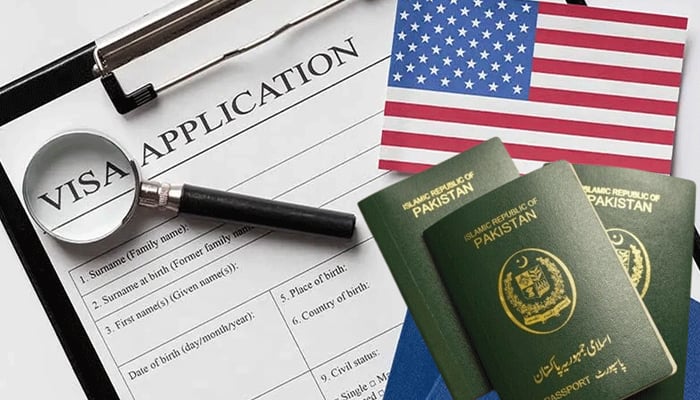
Pakistanis have been exempted from the United States’ proposed US$20,000 visa bond requirement, after the country was left out of the list covered by the new policy.

The United States has officially made its 2025 Visa Bond Pilot Program a permanent measure. However, Pakistan is not included among the countries subject to the financial guarantee requirement.

Under the program, travelers from certain countries may be required to pay a visa bond of up to US$20,000 before entering the United States. The bond serves as a financial guarantee to ensure visitors comply with the terms of their visas, including departing the country before their authorized stay expires.

According to the latest list released by US authorities, Pakistan, Afghanistan, Iran, and India are not among the countries included in the permanent visa bond program. As a result, Pakistani applicants seeking US visas will not be required to deposit the US$20,000 financial guarantee under this policy.

The visa bond initiative was originally introduced as a pilot program in 2025 to reduce visa overstays and encourage compliance with US immigration laws. The program allows the US government to impose a refundable financial bond on visitors from selected countries that have high rates of visa overstays or other immigration concerns.

With the program now becoming permanent, only nationals of the countries designated by the US government will be subject to the bond requirement. Since Pakistan has not been placed on that list, Pakistani travelers applying for US visas will continue to follow the standard visa application process without the additional financial bond.

The decision is expected to provide relief to many Pakistani citizens planning to visit the United States for tourism, business, education, or family-related purposes, as the proposed bond could have posed a significant financial burden on applicants.

While the visa bond requirement does not apply to Pakistan, all applicants must still meet the existing US visa eligibility criteria, including submitting the required documentation, attending a visa interview when necessary, and satisfying immigration officers that they intend to comply with the conditions of their visa.


Similar Posts

  • | |

    Heavy rains drench Islamabad, Rawalpindi, Lahore

    ISLAMABAD: Heavy rain lashed Islamabad and Rawalpindi, while several parts of Lahore also received showers, providing relief from hot and humid weather. The rainfall lowered temperatures in many areas, although it also caused traffic disruptions and water accumulation on some roads. The downpour began in the morning and continued intermittently in the twin cities. Residents experienced cooler weather after several days of warm and humid conditions. In Lahore, rain was reported from different localities, bringing pleasant weather to the provincial capital. According to the Pakistan Meteorological Department (PMD), a weak monsoon system is currently affecting parts of the country. The weather department said the monsoon winds are interacting with a westerly weather system, which is influencing the northern regions and increasing the chances of rainfall. The PMD has forecast that Islamabad, Punjab, Khyber Pakhtunkhwa, Gilgit-Baltistan and Azad Jammu and Kashmir are likely to receive rain at isolated places during the day. Some areas may experience moderate to heavy showers accompanied by gusty winds. The weather department has advised the public to remain cautious during periods of heavy rainfall, particularly in low-lying areas where water may accumulate. Motorists have also been urged to drive carefully on slippery roads and avoid unnecessary travel during intense downpours. Authorities are monitoring the weather situation and have asked relevant departments to stay prepared for any emergencies caused by heavy rain. Citizens have also been encouraged to follow official weather advisories and take precautionary measures where needed.

  • | |

    Hamza Sohail’s new look sparks Chulbul Pandey comparisons

    Pakistani actor Hamza Sohail has grabbed attention on social media with his latest appearance. Fans were quick to compare his new look with Salman Khan’s iconic character Chulbul Pandey from the Bollywood film Dabangg. Hamza recently shared a short mirror video on his Instagram Story. He appeared in a noticeably different style. The actor was seen wearing glasses and sporting a thick moustache. His new appearance was a clear change from his usual clean-shaven look. The unexpected transformation immediately caught the attention of his followers. Fans began discussing his new style across social media platforms. Several users compared Hamza’s moustache-and-glasses look to Salman Khan’s portrayal of police officer Chulbul Pandey. The character became widely popular after Salman Khan played the role in the blockbuster Dabangg franchise. Fans praised Hamza’s latest appearance in the comments and online posts. Many described him as a “hero” and a “90s-style hero”. Others called him extremely dashing. Several fans also used fire emojis to show their appreciation for the new look. The new appearance comes as Hamza continues to attract attention both for his acting and his personal life. Rumours surrounding Hamza Sohail and actress Sajal Aly have also recently gained momentum on social media. However, the latest discussion surrounding the actor has largely focused on his dramatic change in appearance. Hamza is considered one of the prominent young actors in Pakistani television. He is the son of renowned actor and comedian Sohail Ahmed. Despite coming from an established entertainment family, Hamza has worked to build his own identity in the industry. The actor began his television career with the drama Raqeeb. His performance helped him establish himself as a young talent. He later gained wider recognition through the comedy drama Fairy Tale. The show brought him considerable popularity among television viewers. Hamza subsequently appeared in Zard Patton Ka Bunn. His performance in the drama was also appreciated by audiences. Over the years, the actor has continued to experiment with different roles and appearances. His latest style has once again placed him in the spotlight. The comparison with Salman Khan’s Chulbul Pandey has added further interest to his new appearance.

  • | |

    Two terrorists killed in Balochistan operation

    Security forces have killed two terrorists and wounded three others during an intelligence-based operation in Killi Zaik, Balochistan, according to security sources. The operation was launched after intelligence reports indicated the presence of suspected terrorists in the area. Security personnel moved in on the reported hideout and conducted a targeted operation. Two terrorists were killed during the operation, while three others sustained injuries. Security forces also recovered ammunition, hand grenades and materials believed to have been used for preparing improvised explosive devices (IEDs). Officials said security operations against militant groups in Balochistan are continuing as part of ongoing efforts to prevent terrorist attacks and dismantle militant networks operating in the province. The latest operation comes amid an increase in security activity across Balochistan. In recent days, security forces have conducted several intelligence-based operations in different districts of the province. On Sunday, seven terrorists were killed during an intelligence-based operation in the Lajay area of Kharan. The previous day, 10 terrorists were killed and several others were injured during an operation in the Shor Pard area of Khuzdar district. Earlier, 18 terrorists were reported killed in operations in Surab district. Eight of them were killed after an explosive device detonated prematurely, according to security officials. Security forces have also carried out operations in Panjgur, where five terrorists, including a key militant commander, were killed in the Sarkini and Chedgi areas. The intensified security operations come as Balochistan continues to face serious security challenges. The province has witnessed a rise in militant activity and casualties in recent months. A recent security assessment by the Pakistan Institute for Conflict and Security Studies showed a sharp deterioration in the security situation in Balochistan during July. According to the assessment, deaths linked to violence in the province increased from 109 in June to 372 in July. The number of security personnel killed also rose significantly, from six in June to 62 in July. The report further recorded an increase in militant deaths, with 238 terrorists reportedly killed in July compared with 75 in June. Civilian deaths also rose from 28 to 54 during the same period.

  • NA Committee calls for better support for children with Dyslexia

    Islamabad: More than two years after the approval of the Dyslexia Special Measures Law, the National Assembly Standing Committee on Federal Education and Professional Training has raised serious concerns over the slow progress in implementing measures designed to support children facing learning difficulties. During the 25th meeting of the National Assembly Standing Committee on Federal Education and Professional Training, chaired by Ms. Mahtab Akbar Rashdi, MNA, the committee reviewed the progress of recommendations made for children with dyslexia and questioned whether the required rules, support systems and professional facilities had been fully developed. The issue was brought before the committee after Dr. Shazia Sobia Aslam Soomro, MNA, presented the report of the sub committee on dyslexia. She informed the committee that a meeting on the subject was held on 19 February 2024 at the National Assembly regarding the Dyslexia Bill passed in 2022. She stated that officials had earlier informed the committee that work on implementation was still in progress. Dr. Shazia highlighted that dyslexia is often misunderstood as a disease, while it is actually a learning condition that requires proper identification and specialised support. She stressed the need for trained experts who can identify children with dyslexia and help them continue their education effectively. The committee had earlier recommended that the Ministry of Federal Education and Professional Training provide details about the implementation status of the Dyslexia Special Measures Law, including rules, regulations, screening reports and future plans. It also called for the creation of a national database and the availability of trained remedial therapists and educational psychologists to support affected children. The committee also recommended that examination boards develop special arrangements for students with certified dyslexia and related learning difficulties so they can receive appropriate support during examinations. Dr. Shazia further recommended bringing all major education stakeholders together, including the Higher Education Commission, National Vocational and Technical Training Commission, Allama Iqbal Open University, Federal Board of Intermediate and Secondary Education, Inter Boards Coordination Committee, National Institute of Psychology, National Book Foundation and National Curriculum Council. She said that joint efforts were necessary to prepare proper rules and regulations and start practical work under the law. Chairperson Ms. Mahtab Akbar Rashdi directed that the recommendations should officially be sent to the Ministry of Federal Education and Professional Training. She said the Ministry should review the recommendations and provide information about implementation progress or any concerns. A ministry representative informed the committee that some steps had already been taken and a report on completed and ongoing actions would be submitted. The official also stated that remedial therapy services had already been started in government schools. Committee members also suggested involving organisations already working voluntarily for children with learning difficulties so their experience and feedback could help improve the system. The committee’s discussion highlighted concerns over the lack of a complete national system for identifying children with dyslexia, shortage of trained specialists and the need for stronger coordination between education institutions and government departments. The committee stressed that children with learning difficulties should not be ignored and must receive proper educational support, trained professionals and suitable examination facilities so they can achieve their full potential.

  • | | |

    CM Punjab Rahmat Card enters digital disbursement …

    LAHORE: Following the successful computerized ballot held on June 23, 2026, the CM Punjab Rahmat Card initiative has entered its next major milestone with JazzCash commencing digital disbursements to selected widows and orphans across Punjab. The launch of digital payments marks the successful transition from beneficiary selection to financial assistance delivery, completing another key phase of one of Punjab’s most technologically advanced social welfare initiatives. The CM Punjab Rahmat Card is a collaborative initiative of the Government of Punjab, Zakat & Ushr Department, Punjab Information Technology Board (PITB), NADRA, Punjab Social Protection Authority (PSPA), Urban Unit, JazzCash, and other stakeholders to digitize the complete lifecycle of welfare assistance from citizen application and eligibility verification to transparent beneficiary selection and digital financial disbursement. During the computerized ballot ceremony, officials acknowledged the successful completion of the project’s technology implementation. Special Assistant to the Chief Minister (SACM) Rashid Iqbal Nasrullah appreciated the PITB team for its continuous technical support throughout the implementation of the initiative within stringent timelines. He also specially acknowledged the prompt guidance and support extended by PITB Chairman Faisal Yousaf at various stages of the project whenever required. Secretary, Zakat & Ushr Department, Irfan Ahmad Sandhu also commended the dedicated efforts of PITB in designing, developing, and operationalizing the comprehensive digital ecosystem supporting the Programme. He appreciated PITB’s commitment to ensuring the timely completion of all assigned deliverables despite challenging timelines. Participants observed that the CM Punjab Rahmat Card is the first initiative of its kind undertaken by the Zakat & Ushr Department in terms of both scale and technological sophistication. By replacing conventional manual processes with integrated digital workflows, the Programme has introduced unprecedented levels of transparency, efficiency, accountability, and speed in the delivery of welfare assistance. As the technology implementation partner, PITB designed, developed, and operationalized the complete digital platform supporting the initiative. The digital ecosystem includes an online citizen application portal, an Android mobile application, a dedicated helpline for application support, inquiries, and complaints, a Beneficiary Management System, a multi-agency digital verification engine integrated with NADRA and Punjab Socio-Economic Registry (PSER) databases, automated scrutiny and eligibility determination workflows, a computerized district-wise balloting mechanism, and real-time monitoring and decision-support administrative dashboards. The end-to-end digital workflow enabled citizens to submit applications online, which were then verified through multiple government databases, assessed against approved eligibility criteria, allocated according to district quotas, and finally selected through a transparent computerized ballot before being transferred for digital disbursement through JazzCash. The CM Punjab Rahmat Card initiative stands as a successful example of how digital public infrastructure can enable multiple government institutions to operate through a unified technology platform, facilitating data-driven decision-making, automated eligibility verification, transparent Programme execution, and secure digital payments. The project reinforces the Government of Punjab’s commitment to delivering technology-enabled, scalable, and accountable citizen services that improve the lives of vulnerable segments of society.

  • |

    Delhi pushes electric vehicle drive to tackle worsening air pollution

    Delhi has launched one of India’s boldest electric vehicle plans as authorities step up efforts to reduce dangerous air pollution in the capital. The new policy, introduced on July 1, aims to ensure that most newly registered vehicles in the city are electric by 2027. Officials believe the move will improve air quality and reduce harmful emissions, although experts say its success will depend on expanding charging facilities and strengthening the electricity network. Across several parts of Delhi, electric vehicle charging stations are becoming increasingly busy as more residents switch to battery powered scooters, cars and commercial vehicles. Even so, many drivers say the city still lacks enough charging points to support widespread use. Shyam Singh, who uses an electric scooter for work, said the existing infrastructure is not sufficient, especially for people who travel long distances. He explained that limited battery range and the shortage of charging stations remain major concerns for potential buyers. Under the new policy, existing petrol and diesel vehicles will not be banned, but the government expects their numbers to decline over time as electric vehicles become more common. Buyers will receive financial incentives including subsidies, exemptions from registration fees and some road taxes. People who scrap older fuel powered vehicles will also qualify for additional cash rewards. Authorities estimate the policy will cost around 150 billion rupees and is designed to encourage faster adoption of cleaner transport across the city. The plan focuses heavily on two and three wheelers, which make up nearly 70 percent of vehicles on Delhi’s roads. From 2027, all newly registered three wheelers and small commercial trucks must be electric. The same requirement will apply to newly registered two wheelers from the following year. Larger passenger cars and heavy vehicles running on conventional fuels will still be allowed for now. Electric vehicles currently account for only about five percent of the nearly 8.7 million vehicles registered in Delhi. However, registrations have grown steadily over the past year, with more than 100,000 new electric vehicles added, most of them scooters and auto rickshaws. Experts say the latest policy sends a clear signal that the city is committed to reducing dependence on fossil fuel powered transport. Energy specialists have described Delhi’s strategy as one of the most ambitious electric vehicle policies introduced by any Indian state. Jaideep Saraswat of the Vasudha Foundation said the firm deadlines make it clear that the transition to electric transport is unavoidable. He believes the policy will encourage both manufacturers and consumers to prepare for a future where electric vehicles dominate the market. Delhi has struggled with severe air pollution for years, particularly during winter when smog often reaches hazardous levels. The city regularly experiences school closures, restrictions on construction and emergency health measures because of poor air quality. Vehicles contribute around one quarter of pollution across the National Capital Region, while two and three wheelers alone account for almost half of transport related emissions within the city. Analysts say Delhi has already taken important steps toward cleaner transport in the past, including shifting many public vehicles to compressed natural gas. According to energy experts, electric vehicles represented around 12.7 percent of new vehicle sales in Delhi during the 2026 financial year, compared with the national average of 8.3 percent. They believe the latest policy builds on that progress by linking financial incentives with strict registration deadlines for conventional vehicles. Despite the optimism, several challenges remain. Some residents are still hesitant to switch because they worry about battery life, charging convenience and the effect of seasonal flooding on electric vehicles. Others believe more advanced and affordable models will become available in the coming years, making it worthwhile to delay their purchase. Experts also stress that expanding charging infrastructure is only part of the solution. Delhi must increase the use of renewable energy to power electric vehicles and modernize its electricity grid to handle rising demand. Fast charging stations, battery storage systems and better electricity management will all be necessary to support large scale adoption. Specialists also believe cooperation with neighboring states will be essential to reduce emissions from the wider power network and create a cleaner transport system for the entire region.

Leave a Reply

Your email address will not be published. Required fields are marked *