super nio hit

Super El Niño to Hit Thailand with Extreme Heat and Drought, Expert Warns

BANGKOK — Thailand is entering a Super El Niño phase that will bring extremely hot weather and a prolonged dry season, leading to drought conditions that could severely impact the agricultural sector, a leading environmental expert has warned.

Thailand Braces for Scorching Heat and Violent Summer Storms This Week

Sonthi Kochawat, a prominent climate analyst, cautioned that the phenomenon is already making its presence felt across the country. He noted that outdoor temperatures over the past two days have averaged 38 degrees Celsius and may reach 39 degrees. With relative humidity exceeding 60 percent, the heat index could rise to approximately 58.7 degrees Celsius, an extremely dangerous level that significantly increases the risk of heatstroke. Sonthi explained that under such conditions, the extreme heat may cause the human body’s internal temperature to rise to 40 degrees within just 10 to 15 minutes of direct exposure to sunlight.

The body’s temperature regulation systems may fail under such sustained stress, Sonthi warned. The skin may turn red and dry without producing sweat, a clear sign that the body’s natural cooling mechanism has ceased to function, and a person could lose consciousness rapidly without warning signs. While El Niño conditions were first detected in Thailand early this year, there are mounting signs that weather patterns could escalate into a full-blown Super El Niño in the second half of the year, according to Sonthi.

Thailand prepares for a stormy Songkran: Thunderstorms, hail and scorching heat nationwide

He urged the government to prepare contingency plans for water management immediately, ensuring sufficient supply for both agricultural needs and household consumption as rainfall is expected to dwindle significantly. For the general public, Sonthi advised avoiding direct exposure to sunlight during periods of extreme heat, staying hydrated and checking on vulnerable individuals such as the elderly and young children who are most susceptible to heat-related illnesses. Farmers are being urged to adjust planting schedules and consider drought-resistant crops as the country braces for what could be one of the most severe dry spells in recent memory.

-Thailand News (TN)

Similar Posts

  • | | |

    Pakistan imposes new restrictions on foreign media

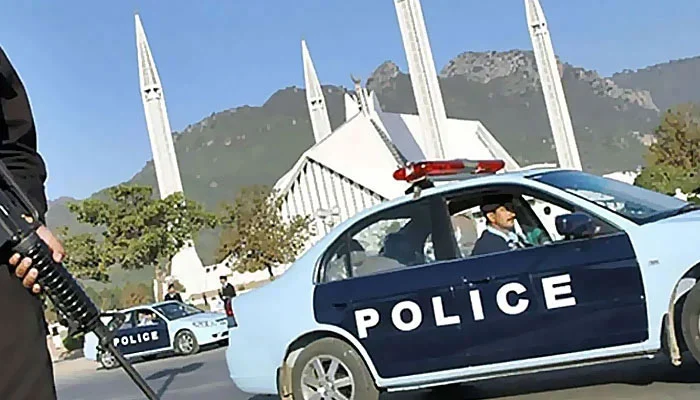
    Pakistani authorities have exposed regulatory measures governing foreign media operations in the country. The strategy has triggered an alarm among press freedom advocates, legal observers, and media personnel. Under the newly issued Foreign Media Facilitation Guidelines, journalists representing international organizations will no longer be permitted to travel or cover news events outside three major metropolitan hubs without explicit prior authorization from the government. The regulations come at a delicate juncture marked by escalating political instability, public demonstrations, and security crackdowns across key regions including recent demonstrations connected to heightened tensions in Kashmir and subsequent enforcement actions in urban centers like Lahore. Critics argue that by constraining the scope of international newsgathering precisely when accurate coverage is most vital, the state risks deepening information voids and exacerbating the spread of unverified claims. Key Requirements of the New Media Framework Administered through the External Publicity Wing of Pakistan’s Ministry of Information, the updated regulatory policy establishes procedural hurdles for international news agencies. Foreign correspondents, local staff, contributors, and freelance journalists working for international outlets must secure an official No Objection Certificate (NOC) before traveling to conduct reporting assignments outside Islamabad, Karachi, and Lahore. Regions requiring prior approval now explicitly cover all provincial territories, sensitive border zones, and Pakistan-administered Kashmir. The framework provides no defined processing timeframe for NOC applications, leaving reporting teams facing unpredictable delays and potential administrative holds. The Ministry reserves the authority to suspend or revoke official media accreditation if reporting is judged to run counter to the country’s national sovereignty, ideology, or public safety phrasing that legal analysts describe as intentionally open-ended. Backlash from Analysts and Rights Groups The enactment of these guidelines has drawn sharp rebuke from political commentators, civil society organizations, and international press watchdogs, who view the move as part of a systematic contraction of independent journalism within the country. Former senator and political commentator Mustafa Nawaz Khokhar highlighted the grave consequences of curtailing foreign news organizations, warning that restricting legitimate press operations ultimately undermines public trust. These guidelines are tantamount to choking international media in an increasingly shrinking space, Khokhar noted, emphasizing the vital role global news outlets play when local media environments face structural pressure. The public looks at the international media for independent reporting. Placing restrictions simply creates more room for disinformation and the spread of fake news.   Rights groups including the Pakistan Federal Union of Journalists (PFUJ) and international watchdogs have echoed these concerns. They’re pointing out that advance the requirement of government permission for routine reporting effectively grants authorities veto power over what news reaches the global audience. Broader Context of Press Freedom in Pakistan Pakistan’s media environment has historically operated in a complex space balancing constitutional guarantees of free speech against national security laws. However, media analysts note that state oversight of both traditional print/broadcast journalism and online digital spaces has tightened significantly in recent years. The introduction of the new foreign media guidelines coincides with broader legislative shifts aimed at regulating online speech and social media platforms. Observers express concern that administrative barriers, combined with strict digital laws, could leave remote or politically sensitive areas completely cut off from independent news coverage. By limiting foreign journalists’ mobility primarily to the capital and two largest economic centers, field reporting from rural regions, border zones, and conflict-affected territories will become exceptionally difficult to conduct legally. Implications for International Coverage As international newsrooms adapt to the new framework, news gathering strategies across South Asia are likely to face operational friction. Bureau chiefs and correspondents report that unpredictable NOC processing times make time-sensitive breaking news coverage outside major cities nearly impossible to guarantee.   Without direct on-the-ground access for independent journalists, global news consumers may increasingly have to rely on official statements or unverified social media updates during crises. For a country navigating complex domestic politics and delicate international relations, press freedom advocates warn that restricting the lens through which the world views Pakistan could backfire, isolating the nation’s political discourse and fostering an environment where misinformation thrives unchecked.

  • | |

    Israel raises concerns over Trump’s Gaza plan

    Israel has raised concerns with the United States over a Gaza peace plan praised by President Donald Trump after Hamas reportedly agreed to discuss disarmament. Prime Minister Benjamin Netanyahu’s office said Israel had shared its objections with US officials and stressed that the publicly released version of the proposal did not reflect its position. Israeli officials also accused Hamas of rebuilding its military capabilities and recruiting fighters since a ceasefire announced by Trump in October. Israel has continued carrying out strikes in Gaza despite the truce, while the conflict has seen a reduction in overall violence. Trump described Hamas’s reported agreement as a “major milestone” in efforts to end the war and claimed that Israel welcomed the development. However, Netanyahu’s office said Hamas’s alleged military preparations showed that the group could still pose a serious threat to Israel. It argued that any long-term agreement must include the complete, verifiable and irreversible disarmament of Hamas. An Israeli official said Israel would not withdraw its forces from Gaza under the proposed framework until it could confirm that Hamas had fully surrendered its weapons. Meanwhile, Israeli strikes continued after the Hamas announcement. Palestinian authorities said Israeli attacks on Sunday killed at least 13 people. According to Palestinian authorities, more than 73,000 Palestinians have died in Israel’s military campaign in Gaza since October 7, 2023.

  • | |

    Anya Taylor-Joy shares unfiltered take on method a…

    Anya Taylor-Joy is sparking fresh conversation about one of Hollywood’s most debated acting techniques. During a recent interview with Complex News, the acclaimed actress shared her candid thoughts on method acting, explaining why she believes many women approach the craft differently from their male counterparts. Rather than staying in character around the clock, Taylor-Joy said she prefers maintaining a healthy balance between her work and personal life.  The Queen’s Gambit and Furiosa star argued that women often have responsibilities outside of work that make it difficult to fully immerse themselves in a role 24 hours a day. “If you’ll notice, women don’t method act because we have things to take care of. We can’t completely lose our minds,” she explained during the interview. Her comments quickly gained attention online, with many fans praising her practical perspective on the demanding acting technique.  Although Taylor-Joy acknowledged that acting requires deep emotional commitment, she described it as a form of “controlled psychosis” rather than a lifestyle that should continue once filming stops. She believes actors must fully understand their characters while still remaining grounded in reality. According to the actress, maintaining that balance helps performers deliver authentic performances without allowing their roles to consume their everyday lives.  Taylor-Joy also stressed the importance of professionalism on set. She said actors have a responsibility to create a positive working environment for everyone involved in a production. Staying in character between takes, she suggested, should never come at the expense of treating fellow cast and crew members with kindness and respect. She added that becoming too invested in difficult characters could make collaboration far more challenging.  Her remarks arrive as method acting continues to divide opinion across the entertainment industry. While some performers believe the technique helps them deliver unforgettable performances, others argue that it has occasionally been used to justify disruptive behavior on set. Taylor-Joy’s perspective adds another voice to the ongoing discussion about whether complete immersion is truly necessary to create compelling performances.  The actress has built a reputation for portraying emotionally complex characters in projects such as The Witch, The Queen’s Gambit, Last Night in Soho, and Furiosa: A Mad Max Saga. Despite taking on psychologically demanding roles, she says she relies on self-awareness and support from those around her to stay emotionally healthy throughout the filmmaking process.  As Taylor-Joy prepares for future projects, including The Lord of the Rings: The Hunt for Gollum and Dune: Part Three, her latest comments offer fans a revealing look into her creative philosophy. Rather than embracing extreme methods, she believes great performances come from empathy, discipline, and emotional control. Her thoughtful approach suggests that, for her, the best acting happens when talent and professionalism work hand in hand. 

  • | |

    US publication praises Pakistan’s digital financ…

    A US publication has praised Pakistan’s efforts to modernise its financial system, saying the country is steadily strengthening its position in the global digital financial landscape through reforms and technological innovation. The article highlighted Pakistan’s initiatives to promote digital transformation and said the country has the potential to play a meaningful role in the evolving global digital economy. It also commended the vision of Pakistan Virtual Assets Regulatory Authority (PVARA) Chairman Bilal Bin Saqib, stating that Pakistan must actively position itself within the international digital financial system to benefit from emerging technologies and new economic opportunities. According to the publication, the future will belong to countries that make swift decisions and implement reforms without delay. It noted that Pakistan has the opportunity to emerge as a leader in the digital economy by embracing innovation and adopting forward-looking policies. The article further stated that governments can no longer rely solely on traditional bureaucratic systems. Instead, they must adopt the speed, flexibility and innovation-driven approach of technology startups to remain competitive in a rapidly changing global environment. It added that digital assets are becoming the foundation of the future financial infrastructure and countries investing in digital finance today will be better positioned for long-term economic growth and global competitiveness. The publication’s remarks come as Pakistan continues to promote digital payments, financial technology and cashless transactions as part of its broader strategy to modernise the economy and expand financial inclusion.

  • | |

    Ishaq Dar to attend Jerusalem ministerial meeting …

    Deputy Prime Minister and Foreign Minister Ishaq Dar will travel to Jordan to participate in a ministerial meeting focused on the worsening situation in occupied Jerusalem, reaffirming Pakistan’s diplomatic support for the Palestinian cause. According to the Foreign Office, the meeting, scheduled for August 5, will bring together foreign ministers from Arab League member states and several Islamic countries to discuss recent developments in Jerusalem and coordinate a unified response to the evolving situation. The Foreign Office said Dar is attending the meeting at the invitation of Jordan’s Deputy Prime Minister and Foreign Minister Ayman Safadi. During the visit, participating foreign ministers are also expected to meet Abdullah II to discuss regional developments and ongoing efforts aimed at addressing the challenges facing the Palestinian people. On the sidelines of the conference, Ishaq Dar is expected to hold bilateral meetings with several foreign ministers to exchange views on regional issues, including the humanitarian situation in Palestine and broader Middle East developments. The Foreign Office described Pakistan’s participation as a reflection of its longstanding and principled support for the Palestinian people. It reiterated Pakistan’s position in favor of an independent, sovereign and contiguous State of Palestine based on the pre-1967 borders, with East Jerusalem (Al-Quds Al-Sharif) as its capital. Pakistan has consistently condemned actions that it says threaten the historical and legal status of Islamic and Christian holy sites in Jerusalem, including repeated incursions into the Al-Aqsa Mosque compound.

  • | |

    Colombia’s death toll from earthquake climbs…

    Rescue crews continue combing through collapsed buildings across western Colombia after a powerful magnitude 7.4 earthquake struck the region on Monday, August 10, with officials confirming the death toll has risen to at least 164 people. Authorities said more than 880 people have sustained injuries, while over 3,200 remain unaccounted for as soldiers, emergency responders and local volunteers work through debris from dozens of collapsed structures. Thousands of residents have been forced from their homes since the quake struck, adding to the scale of the humanitarian response now underway. The earthquake flattened multi story buildings in cities including Pereira and Cali, and severely damaged one of the towers of a historic cathedral in Manizales. The tremor originated at an intermediate depth with its epicenter located near San José del Palmar in the western department of Chocó, causing widespread destruction across Pereira, Cali, Manizales and other communities in Colombia’s coffee growing region. Residential buildings, hospitals, schools and key infrastructure, including several regional airports, all suffered severe damage in the quake. At one city hospital, several upper floors, including sections dedicated to pediatric care, collapsed inward, trapping some patients inside and forcing hospital staff to treat roughly 600 additional patients outdoors on a street littered with debris, according to hospital director Irne Torres Castro, who spoke to a Colombian television network. That same city saw some of the earthquake’s most extensive destruction, with entire residential blocks reduced to piles of concrete and twisted metal. Video circulating online captured buildings shaking violently as residents fled into the streets, while separate footage showed a regional airport swaying dramatically during the quake as large sections of ceiling came down around people sheltering inside. Among the most widely shared images online is footage showing the Cathedral Basilica of Our Lady of the Rosary shaking and partially collapsing. The cathedral, built in the 1920s, holds the distinction of being Colombia’s tallest cathedral and ranks among the highest neo Gothic churches anywhere in the Americas. The disaster struck just days after Abelardo De La Espriella was sworn in as Colombia’s president, immediately confronting his new administration with a major crisis. The earthquake also comes with memories still fresh of a pair of devastating earthquakes that struck neighboring Venezuela in June. Colombia’s national government has declared a state of emergency and mobilized the military, police and specialized rescue units to lead recovery operations, while accepting offers of international assistance as the search for survivors continues. The disaster adds to a string of major seismic events across the region in recent months, underscoring the ongoing vulnerability of Andean nations to powerful earthquakes and the strain such disasters place on emergency infrastructure even in areas with established disaster response systems.

Leave a Reply

Your email address will not be published. Required fields are marked *