europe encounters greatest
| |

Europe encounters greatest solar eclipse in decade…

Daylight dissolved across the United Kingdom and continental Europe as millions of onlookers turned to witness the most spectacular solar eclipse the region has seen since 1999. From packed coastal beaches in southwestern England to historical strongholds in northern Spain, the cosmic alignment delivered an breathtaking celestial display that left crowds cheering, whispering, and in some places, standing in complete, awestruck silence. The majority of the UK experienced a deep partial eclipse with the Moon blocking out over 90% of the Sun’s face. A sselected orridor running through Iceland and northern Spain was treated to the coveted prize: a rare total solar eclipse.

A Shared Experience Across the British Isles

Across Britain, ordinary routines came to a sudden halt as people gathered on hilltops, city plazas, and seafront promenades equipped with protective eclipse glasses and homemade pinhole projectors.

In Cornwall, the atmosphere at a seaside beach cafe was described by locals as absolutely buzzing. As the lunar shadow gradually bit deeper into the solar disk, the bright summer sunlight faded into an uncanny, metallic haze, accompanied by a noticeable drop in temperature.

Further north in Scotland, grey weather initially threatened to ruin the party. Hundreds had gathered on Edinburgh’s iconic Castle Rock, anxiously watching a thick blanket of cloud. Just as the peak of the eclipse approached, a sudden break in the overcast weather revealed the glowing crescent Sun above, prompting a massive roar of applause and collective relief from the crowd below.

Chasing Totality: 84 Seconds of Pure Wonder

For those who traveled to the narrow path of totality in Western Europe, the event transformed from a impressive atmospheric novelty into a profoundly emotional moment.

In the town of Benavente, located in northwestern Spain, an estimated 84 seconds of complete totality turned day directly into night. As the Moon entirely covered the Sun, revealing the ghostly white halo of the solar corona, the cheering crowd fell completely silent. For nearly a minute and a half, the town stood wrapped in twilight, suspended in a collective hush before the sun’s edge re-emerged and brought back the day.

Nearby in Burgos, science journalists and eclipse chasers found themselves caught up in the raw emotion of the event. Even veterans who had traveled the world noted that watching the horizon glow in a 360-degree sunset never loses its magic. They described the sudden arrival of the Moon’s umbral shadow as an experience that triggers goosebumps.

A Once-in-a-Generation Celestial Event

Solar eclipses themselves are not inherently rare. However, having a total shadow track across populated European landmasses is an event that occurs only a few times a century. For many young observers, this was their very first taste of a major astronomical event. On contrary, older generations recalled the legendary 1999 eclipse that captivated the continent previously.

Similar Posts

  • | |

    Karachi roads blocked as JI protests fuel levy

    Traffic was disrupted across several major parts of Karachi on Friday as Jamaat-i-Islami (JI) workers staged sit-ins against the federal petroleum levy. The protests were part of a nationwide campaign announced by the party. JI had said it would hold demonstrations at hundreds of locations across the country by blocking major roads. Karachi traffic police issued an advisory warning motorists about congestion, temporary diversions and partial road closures in several areas. Major routes affected included areas around Mazar-i-Quaid, Numaish Chowrangi, Saddar, Sharea Faisal, Shahrah-i-Pakistan, UP Mor, Power House Chowrangi, Defence Housing Authority, Sea View, Shahrah-i-Orangi, Hub River Road, Super Highway and National Highway. The traffic police advised citizens to avoid the protest-hit areas where possible and use alternative routes. Commuters were also asked to allow additional time for their journeys. According to updates shared by JI Karachi, protesters blocked the road connecting Sharea Faisal with Natha Khan. The Super Highway and Hub River Road were also affected. Another road connecting the Sharea Faisal Nursery Bus Stop with the airport was reportedly blocked as protesters gathered at the designated locations. The demonstrations prompted criticism from the Sindh government. Provincial government spokesperson Sadia Javed said the petroleum levy was a federal issue and questioned why Karachi’s residents were facing difficulties because of the protest. She accused the JI of using the demonstrations for political gains instead of addressing public issues through relevant constitutional forums. Javed said road blockades were affecting the daily lives of millions of Karachi residents and raised concerns about the movement of ambulances and patients during the disruptions. She urged the party to raise its objections in Parliament and other relevant forums rather than blocking roads. The government spokesperson also warned protesters against damaging public property or taking the law into their own hands. The demonstrations were not limited to Karachi. JI workers also gathered in Lahore, Islamabad, Quetta and Peshawar as part of the nationwide campaign. In Islamabad, protesters reportedly blocked Srinagar Highway near Golra Mor while attempting to march towards Chungi 26. Several locations across Sindh also witnessed demonstrations, including Thatta, Matiari, Tando Allahyar and Shikarpur.

  • | | | |

    Oil slips as higher supplies ease market fears

    Global oil prices declined on Friday as increased crude shipments through key maritime routes helped calm supply concerns, despite continued geopolitical tensions in the Middle East and limited progress in diplomatic talks between the United States and Iran. Brent crude futures dropped by $1.03, or 1.2%, to trade at $88 per barrel, while US West Texas Intermediate (WTI) crude fell $1.50, or 1.8%, to $82.09 per barrel. Even with the daily decline, both international benchmarks remained on track to post monthly gains of around 20%. Market analysts said the fall in prices was mainly driven by improving oil flows through the Strait of Hormuz, one of the world’s most important energy shipping routes. The increase in exports helped offset fears that the ongoing regional conflict could lead to major supply disruptions. The Strait of Hormuz normally carries nearly one-fifth of the world’s crude oil and liquefied natural gas shipments. The route has remained under close watch since tensions escalated following the conflict involving the United States, Israel and Iran. At the same time, Saudi Arabia is working with regional partners to strengthen maritime security in strategic waterways, including the Bab el-Mandeb Strait, the Red Sea and the Gulf of Aden. These routes play a vital role in global energy transportation. According to Saudi officials, 14 countries have expressed support for the proposed multinational maritime defence initiative, aimed at improving the safety of commercial shipping in the region. Meanwhile, the security situation remains uncertain after Yemen’s Houthi movement announced a naval blockade targeting Saudi Arabia, raising fresh concerns over the safety of Red Sea shipping lanes, which serve as an alternative route for oil exports. Although oil tankers continue to pass through both the Strait of Hormuz and the Red Sea, traders say higher security risks have pushed up shipping costs and insurance premiums. These additional expenses continue to keep a geopolitical risk premium built into global oil prices.

  • Border Clashes Escalate as Cambodian Rockets Strike Surin’s Ta Kwai Area

    SURIN – Sustained fighting erupted along the Thai-Cambodian border in Surin province on Monday, marked by Cambodian rocket fire targeting strategic high ground. According to informed border sources, the attack commenced around 6:06 a.m., with rockets fired from BM-21 launchers exploding near the historic Ta Kwai temple ruins and Hill 350. Thai forces immediately returned […]

  • | | | |

    Pakistan, Saudi Arabia eye historic economic partn…

    Prime Minister Shehbaz Sharif has said Pakistan wants to transform its economic relations with Saudi Arabia into a long-term strategic economic partnership. The prime minister made the remarks during a meeting with Prince Mansour, chairman of the Saudi-Pakistan Joint Business Council, who was accompanied by a high-level Saudi business delegation. According to an official statement issued in Islamabad, Prime Minister Shehbaz conveyed his respect and best wishes for Saudi King Salman bin Abdulaziz and Crown Prince Mohammed bin Salman. The meeting focused on expanding economic cooperation and increasing investment between Pakistan and Saudi Arabia. Both sides discussed opportunities for stronger business-to-business and government-to-government collaboration. Prince Mansour expressed interest in investment opportunities in several key sectors of Pakistan’s economy. These included agriculture, ports, highways and the outsourcing of airport operations. The Saudi delegation also showed interest in investment opportunities in real estate, energy, power distribution and information technology. Prime Minister Shehbaz said the time was right to strengthen joint cooperation between the two countries through both government and private-sector partnerships. He stressed the importance of developing stronger economic and commercial ties with Saudi Arabia and creating opportunities for increased investment. Prince Mansour reaffirmed the Saudi government and business community’s interest in expanding commercial links with Pakistan. During their visit, the Saudi business delegation is scheduled to meet senior government officials as well as important representatives of Pakistan’s private sector. The meetings are expected to explore potential investment projects and identify areas where Pakistani and Saudi companies can develop joint ventures.

  • | |

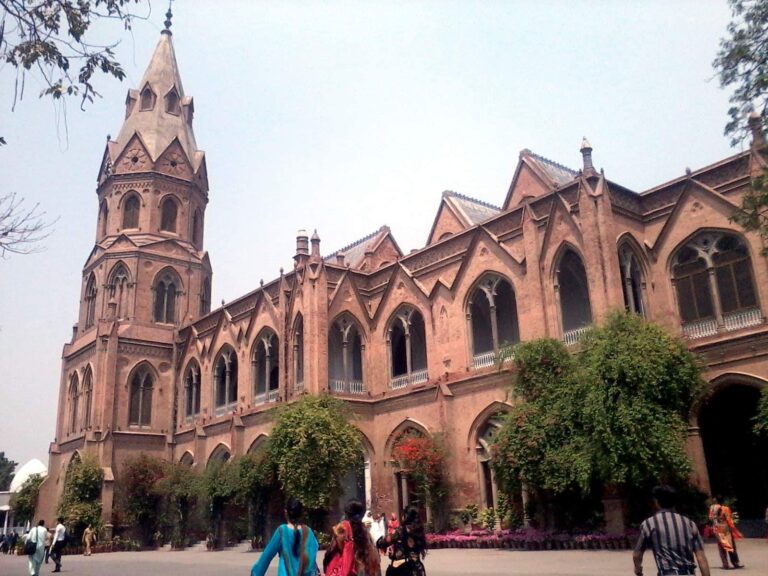
    GCU Lahore goes fully paperless in major digital s…

    LAHORE: Government College University (GCU) Lahore has officially moved its administrative operations to a fully paperless digital system, marking a major step towards modernising governance and reducing reliance on traditional office files. The transformation has been achieved through the implementation of the e-Filing and Office Automation System, a cloud-based digital platform developed by the Punjab Information Technology Board (PITB). The system has been provided to the university free of cost under special directions from the Punjab government, according to university officials. Under the new framework, administrative processes across GCU’s departments will now be handled online through a single digital platform. Routine matters such as leave applications, travel permissions, annual performance reports, official orders and departmental correspondence can now be processed electronically. The university said the system would also cover digital note sheets for proposals between departments, approval of payments for visiting faculty, purchase requests and agendas for departmental meetings. No more files moving from desk to desk One of the most significant changes will be the elimination of the traditional practice of physically moving files from one office to another. Instead, officials will be able to create, review, approve and track documents digitally through the cloud-based platform. This is expected to improve administrative efficiency while making it easier to monitor the progress of official matters. GCU Vice Chancellor Professor Muhammad Umar Chaudhry described the transition as more than an environmental initiative, saying digital governance was essential for a modern educational institution. He said moving administrative affairs away from paper would strengthen transparency, speed and accountability, while reducing delays associated with manual file tracking. According to the vice chancellor, removing routine administrative delays would allow faculty members and heads of departments to devote more time to teaching and research. Part of wider digital transformation The university said the paperless initiative is part of a broader digitalisation drive launched during the previous academic year under the vice chancellor’s leadership. Before implementing the complete e-office system, GCU had introduced online approval mechanisms for student society events and digital billing for payments to visiting faculty members. The administration is now preparing to take the process further with the planned launch of a comprehensive e-Services Portal. The upcoming platform is expected to streamline requests related to campus maintenance and other facilities. Officials hope the system will allow infrastructure-related problems to be reported and addressed more quickly without disrupting academic activities. Alumni records also going digital GCU’s digital reforms are not limited to current campus operations. The university is also working on a major project to digitise the records of its alumni, expanding technology-based management beyond day-to-day administration. The move towards a paperless campus could ultimately reduce paperwork, improve record management and provide university officials with faster access to important information. With administrative processes increasingly moving online, GCU Lahore is positioning itself as an example of how Pakistan’s public-sector universities can use digital technology to make governance faster, more transparent and more efficient.

  • | | |

    Europe to witness rare total solar eclipse today

    A total solar eclipse is set to occur today, offering skywatchers across parts of Europe an opportunity to witness a rare astronomical phenomenon, according to Arab media reports. The eclipse is being described as the first total solar eclipse visible from Europe since 1999. The event will be particularly prominent in western Spain and Iceland, where observers will have the chance to see the Moon completely cover the Sun for a brief period. The total phase is expected to begin at around 6:27pm local time in the areas where the eclipse will be visible. Near Iceland, the period of totality is expected to last approximately two minutes and 18 seconds, making it one of the key locations for viewing the phenomenon. However, the eclipse will not be limited to areas experiencing totality. Several major European cities are expected to witness a significant partial eclipse. In Madrid and Barcelona, around 99% of the Sun’s disc will be obscured, while Paris is expected to experience approximately 92% coverage. London will see about 91% of the Sun covered, while Berlin is expected to experience an eclipse of around 85%. The exact appearance and timing of the eclipse will vary depending on the location of observers. Parts of Africa, Canada and the United States are also expected to witness the eclipse in its partial form, although the degree of visibility will differ from one region to another. Eclipse not visible in Pakistan Pakistanis will not be able to observe the solar eclipse, as the astronomical event will take place outside the country’s visible path. The Pakistan Meteorological Department (PMD) has said that the eclipse will begin at approximately 8:34pm Pakistan Standard Time. It is expected to reach its maximum phase at around 10:46pm before ending at approximately 12:58am. Since the entire event will occur during nighttime in Pakistan, the eclipse will remain below the horizon and therefore cannot be seen from the country. The Meteorological Department has also indicated that another major astronomical event is expected later this month. A partial lunar eclipse is scheduled for August 28, but this event, too, will not be visible from Pakistan. Solar eclipses occur when the Moon passes between the Earth and the Sun and temporarily blocks some or all of the Sun’s light from reaching certain parts of the Earth. A total solar eclipse occurs when the Moon completely covers the visible disc of the Sun for observers located within the narrow path of totality.

Leave a Reply

Your email address will not be published. Required fields are marked *