turkish catering truck

A Turkish catering truck was used to spirit Trump away

A clandestine security maneuver at Ankara’s Esenboğa International Airport has captured global attention. The following reports that U.S. security forces deployed an airport catering truck as a transport vessel to move U.S. President Donald Trump between aircraft. The high-stakes decoy operation, carried out in July following a NATO summit in Turkey, was triggered by credible intelligence warnings of an impending Iranian threat aimed at the U.S. commander-in-chief.

The Covert Tarmac Operation

According to reporting published by The Washington Post and corroborated by federal intelligence sources, the elaborate scheme revealed shortly after the conclusion of diplomatic talks in Ankara. Under the watchful eye of news cameras and international onlookers, Trump publicly climbed the airstairs of the iconic presidential Boeing 747 serving as Air Force One. He gave his signature wave before disappearing inside the cabin.

However, behind the closed doors of the primary aircraft, a specialized security protocol was initiated. While journalists, White House personnel and ground staff assumed the President remained on board, a Turkish airport catering truck was positioned against the main boarding entrance.

Using hydraulic lifts, the enclosed food-service container was elevated to match the plane’s service door. Trump and a small contingent of top national security aides slipped quietly into the catering container. The truck was then lowered back to tarmac level and driven across the flight line toward a less conspicuous Air Force C-32A. It’s a modified Boeing 757 frequently used for military transport and executive diplomatic travel.

Moments later, both aircraft departed Turkish airspace, with the press pool and non-essential staff aboard the primary jet under strict instructions to keep all window shades lowered throughout the transit.

When questioned mid-flight about the unusual cabin restrictions, Trump reportedly remarked via communications channels that they were likely on a “dangerous flight,” adding, “If I go, you go.”

Both planes touched down in the United Kingdom minutes apart, where Trump resurfaced without official acknowledgment of the mid-air swap.

Intel Warnings and Aviation Decoys

U.S. intelligence agencies had reportedly detected a high-priority plot involving Iranian state agents or affiliated proxy groups attempting to target the presidential aircraft as it departed Turkey. Tensions between Washington and Tehran had escalated significantly in the weeks leading up to the NATO summit. They’re prompting heightened defensive measures across regional defense posture networks.

The operation also highlighted ongoing debates regarding presidential transit security. Trump had initially arrived in Ankara aboard a newly renovated Boeing 747-8, a luxury jet donated by Qatar that had recently undergone extensive security retrofitting. Hours before departing Turkey, Trump publicly announced on social media that he would be taking the older, classic Air Force One back to Britain for old time’s sake. Officials later confirmed that using the older jet as a decoy while operating the smaller C-32A allowed U.S. forces to mitigate potential surface-to-air or tracking vulnerabilities.

White House Communications Director Steven Cheung defended the precautions taken by executive security teams, emphasizing that U.S. protective services employ all necessary tactical protocols to counter foreign threats.

Social Media Reactions and Political Firestorm

Once details and tarmac footage of the catering truck maneuver surfaced online, social media platforms erupted with intense debate and viral commentary.

Proponents praised the agility of U.S. Secret Service and military logistics officers, arguing that using unconventional decoys and misdirection is standard operational doctrine when faced with imminent missile or drone threats in non-permissive environments.

Opponents raised concerns about transparency and safety, pointing out that members of the press pool and essential flight personnel were left aboard a high-profile decoy aircraft without knowledge that they were serving as operational cover.

Memes, AI-generated video parodies, and sarcastic posts proliferated across platforms like X and TikTok, with users marveling at the image of a world leader navigating an airport tarmac inside a food delivery vehicle.

The direct usage of commercial catering infrastructure on foreign soil marks one of the most unusual security maneuvers in modern presidential history.
Similar Posts

  • |

    Court pauses construction of $400 Million White Ho…

    A U.S. federal appeals court issued a ruling to halt construction on the ambitious $400 million White House ballroom project. The decision by the U.S. Court of Appeals for the District of Columbia Circuit upholds a preliminary injunction that brings above-ground work on the massive 90,000-square-foot facility to a standstill. The legal challenge was originally brought by the National Trust for Historic Preservation. The timing was right after the administration demolished the historic East Wing to clear space for the new addition. This project was devised without receiving formal authorization from the United States Congress or regulatory historic preservation bodies. The Core Legal and Historic Dispute The dispute began after the historic East Wing was razed to make way for a grand event space capable of hosting hundreds of guests. Preservationists quickly filed suit. Their argument was that the administration overstepped its legal boundaries by destroying part of the historic executive mansion without proper congressional oversight. In earlier lower court proceedings, the federal judge sided with the preservation group. The judge concluded that the executive branch could not bypass legislative authorization to construct such a massive structure. The administration argued that the ballroom itself would be funded primarily through private contributions rather than taxpayer dollars. Critics maintained that private funding does not grant an administration the right to alter iconic federal heritage sites at will. Security Exceptions vs. Architectural Expansion A major focal point of the ongoing litigation involves the distinction between above-ground construction and essential subterranean infrastructure. Lower court decisions made allowances for below-ground work to proceed. The allowed spots were specifically underground bunkers, military installations and updated security infrastructure meant to replace outdated Cold War-era facilities. Justice Department attorneys representing the administration argued that halting any portion of the project could jeopardize executive branch safety. The new complex integrates crucial defensive elements against modern airborne and ballistic threats. However, judges questioned whether national security arguments could be applied to justify an entire 90,000-square-foot ballroom built above those installations. The appellate court’s latest order reinforces the restriction on above-ground structural work. However, the order allows government a temporary 14-day emergency intervention from the U.S. Supreme Court. Broader Presidential Power Implications The ruling marks on significant constitutional questions regarding the limits of executive power over federal property. Government lawyers previously asserted to the court that judges lacked the authority to intervene in executive branch building decisions once work was underway. The judiciary’s willingness to block the project highlights a sharp pushback against the idea that rapid demolition creates a fait accompli immune to judicial review.   As the 14-day stay ticks down, all eyes are on the Supreme Court whether the nation’s highest tribunal will step in to allow construction or leave the high-stakes project frozen.

  • | |

    Europe encounters greatest solar eclipse in decade…

    Daylight dissolved across the United Kingdom and continental Europe as millions of onlookers turned to witness the most spectacular solar eclipse the region has seen since 1999. From packed coastal beaches in southwestern England to historical strongholds in northern Spain, the cosmic alignment delivered an breathtaking celestial display that left crowds cheering, whispering, and in some places, standing in complete, awestruck silence. The majority of the UK experienced a deep partial eclipse with the Moon blocking out over 90% of the Sun’s face. A sselected orridor running through Iceland and northern Spain was treated to the coveted prize: a rare total solar eclipse. A Shared Experience Across the British Isles Across Britain, ordinary routines came to a sudden halt as people gathered on hilltops, city plazas, and seafront promenades equipped with protective eclipse glasses and homemade pinhole projectors. In Cornwall, the atmosphere at a seaside beach cafe was described by locals as absolutely buzzing. As the lunar shadow gradually bit deeper into the solar disk, the bright summer sunlight faded into an uncanny, metallic haze, accompanied by a noticeable drop in temperature. Further north in Scotland, grey weather initially threatened to ruin the party. Hundreds had gathered on Edinburgh’s iconic Castle Rock, anxiously watching a thick blanket of cloud. Just as the peak of the eclipse approached, a sudden break in the overcast weather revealed the glowing crescent Sun above, prompting a massive roar of applause and collective relief from the crowd below. Chasing Totality: 84 Seconds of Pure Wonder For those who traveled to the narrow path of totality in Western Europe, the event transformed from a impressive atmospheric novelty into a profoundly emotional moment. In the town of Benavente, located in northwestern Spain, an estimated 84 seconds of complete totality turned day directly into night. As the Moon entirely covered the Sun, revealing the ghostly white halo of the solar corona, the cheering crowd fell completely silent. For nearly a minute and a half, the town stood wrapped in twilight, suspended in a collective hush before the sun’s edge re-emerged and brought back the day. Nearby in Burgos, science journalists and eclipse chasers found themselves caught up in the raw emotion of the event. Even veterans who had traveled the world noted that watching the horizon glow in a 360-degree sunset never loses its magic. They described the sudden arrival of the Moon’s umbral shadow as an experience that triggers goosebumps. A Once-in-a-Generation Celestial Event Solar eclipses themselves are not inherently rare. However, having a total shadow track across populated European landmasses is an event that occurs only a few times a century. For many young observers, this was their very first taste of a major astronomical event. On contrary, older generations recalled the legendary 1999 eclipse that captivated the continent previously.

  • | | |

    Benjamin Franklin’s iconic ‘Join, or Die’ cartoon

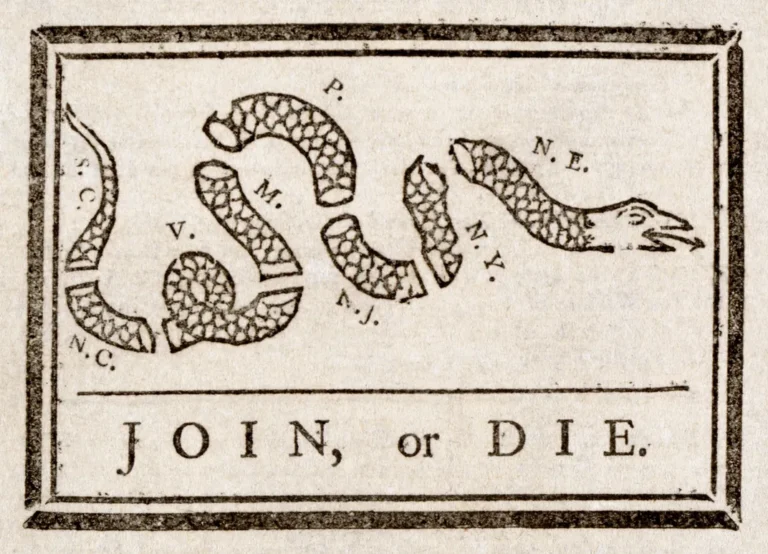
    In Philadelphia, a new public artwork inspired by Benjamin Franklin’s famous “Join, or Die” woodcut is being installed on Independence Mall. Designed by artist John Collins, the impressive 46-foot-long granite sculpture is slated for its official public unveiling later this autumn on the Liberty Bell Center Block, right in the historic heart of the city. From 18th-Century Print to 21st-Century Granite The original artwork that inspired this modern installation carries significant historical weight. On May 9, 1754, Franklin published the illustration in his newspaper, the Pennsylvania Gazette, as the French and Indian War was breaking out. Created as a woodcut print, the imagery depicted a serpent severed into eight distinct segments, directly above the stark warning “JOIN, or DIE.” A Collection of American Colonies Each section of the snake was carved with initials symbolizing the American colonies of the era. N.E. (New England, grouped as one block) N.Y. (New York) N.J. (New Jersey) P. (Pennsylvania) M. (Maryland) V. (Virginia) N.C. (North Carolina) S.C. (South Carolina) At the moment he published the print, Franklin was preparing for the Albany Congress. This critical meeting brought colonial delegates together to strategize against common external threats and to negotiate a vital alliance treaty with the Iroquois Confederacy. Strength Lies in Solidarity. The cartoon served as an urgent call for collective action, warning that a fragmented collection of colonies would inevitably perish individually. “The confidence of the French in this undertaking seems well-grounded on the present disunited state of the British Colonies, and the extreme difficulty of bringing so many different governments and assemblies to agree in any speedy and effectual measures for our common defence and security,” A Lasting Legacy of American Unity   By translating this historic woodcut into a physical, segmented granite monument, the National Park Service and artist John Collins aim to give visitors an interactive connection to early American history. Set against the backdrop of Independence Hall and the Liberty Bell, the 46-foot sculpture preserves Franklin’s message: strength lies in solidarity.

  • |

    Destructive earthquake hits Western Colombia

    An omnipotent earthquake hit western Colombia in the early morning hours, leaving destruction, multiple fatalities and dozens of collapsed structures across several municipalities. Emergency responders and local residents are rushing  to pull survivors from beneath piles of heavy rubble. In the heart of the country’s coffee-growing region, Pereira Mayor Mauricio Salazar confirmed that 18 residents lost their lives due to the tragic event. Salazar stated, “The situation is critical.” He addressed Caracol Radio regarding the growing casualty toll and structural collapse. Reports from neighboring municipalities highlighted the widespread reach of the disaster. In nearby Manizales, Mayor Jorge Eduardo Rojas reported three fatalities resulting from the shaking. Along Colombia’s Pacific coastline, the key port city of Buenaventura also suffered casualties. Mayor Ligia del Carmen Cordoba confirmed one death after a building caved in, trapping several individuals inside. Cali, one of the nation’s largest urban centers, was among the hardest hit. The municipal authorities have yet to confirm official death tolls there, though. Mayor Alejandro Eder informed Caracol Radio that at least 30 buildings had completely collapsed. The collapse happened even with rescue crews actively operating at 10 high-priority sites across the city. Speaking earlier to Blu Radio, Mayor Eder detailed the urgency of the ongoing efforts: At this point, two people have already been rescued alive, one elderly woman and one young girl. There are more people trapped, he explained, emphasizing the scale of the emergency. He noted further, We have at least 12 critical points and 25 collapsed structures that we are responding to. In order to handle the overwhelming strain on local resources, the city requested emergency disaster support from authorities in Bogota and Medellin. Cali resident Juan Carlos Osorio described the immediate aftermath while sifting through wreckage: The building completely collapsed. It sounded like a bomb. It was horrible, Osorio told Caracol Television. He added, All of us neighbors are working together, forming human chains. We need heavy equipment. There are many people trapped. The immense intensity of the tremor shook neighboring nations including Ecuador, Panama, and Venezuela. However, Colombian officials confirmed that there was no threat of a tsunami. In the capital city of Bogota, the morning quake caused widespread alarm. They’re prompting frightened residents to run into the streets in their pajamas as emergency sirens echoed. Bogota Mayor Carlos Galan reassured the public via Blu Radio that damage within the capital appeared relatively minor, consisting primarily of cracked building facades. Elsewhere, news footage revealed severe structural damage, including multi-story buildings with their outer walls completely sheared off. In Choco province, the governor posted on X that multiple injuries and severe structural damage occurred in the departmental capital of Quibdo. News outlets broadcast images of destruction across cities in the coffee-growing region, known locally as Eje Cafetero. 66-year-old Eje Cafetero resident Martha Estrada told reporters, “There is no electricity or cell phone coverage. It was strong, really strong. Things fell in my house,” recounting the blackout and sudden movement inside her home. Cali’s mayor, Alejandro Eder, re-emphasized that the city was managing major damage and noted that officials were deploying drones to assess structural integrity across neighborhoods. He reiterated that at least 20 buildings had collapsed with individuals trapped inside, driving the urgent appeal for specialized rescue reinforcement from Bogota and Medellin. Residents in Bogota also recalled the intensity of the event, with 29-year-old content creator Valeria Polo remarking, The quake was very, very strong. To safeguard air travel, Colombia’s civil aeronautics agency announced on X that six regional airports temporarily suspended operations. The affected terminals serve Pereira, Manizales, Quibdo, Armenia, Cartago, and Buenaventura, allowing inspection crews to verify runway and building safety. Geographically, Colombia experiences frequent seismic activity because it is situated across three ranges of the Andean mountains. Historically, however, landslides have proven to be the country’s most lethal natural hazards, such as the 1985 Armero disaster that claimed approximately 25,000 lives. Major earthquakes have also left dark marks on the region; in 1999, a 6.2 magnitude earthquake struck the coffee region, resulting in over 1,000 fatalities in Armenia and Pereira. De La Espriella, a right-wing politician who has not previously held elected office, released a video filmed aboard a flight to Bogota following the disaster. He announced that he was suspending his scheduled activities to personally oversee emergency coordination efforts from the national capital.   This natural disaster follows severe regional seismic activity earlier in the summer, when twin earthquakes measuring 7.2 and 7.5 magnitude struck Venezuela on June 24, leaving over 6,000 dead and causing catastrophic damage along the coast near Caracas.

  • | |

    COVID-19 legal battle against Anthony Fauci

    On August 6, 2026, the Senate Homeland Security and Governmental Affairs Committee hold Dr. Anthony Fauci in contempt of Congress. The resolution, driven by the committee’s Republican Chairman, Senator Rand Paul of Kentucky, recommends referring the 85-year-old retired public health official to the U.S. Department of Justice for potential criminal prosecution. The panel’s decision follows a contentious appearance by Fauci during an investigation into the government’s COVID-19 response and the origins of the coronavirus. Throughout the session, Fauci repeatedly invoked his Fifth Amendment constitutional protection against self-incrimination, refusing to answer key questions from lawmakers more than 100 times. A Long-Standing Feud Escalates The bitter confrontation represents the latest chapter in a multi-year rivalry between Rand Paul and Anthony Fauci, who served as the prominent face of the federal government’s pandemic response until his retirement in 2022. For years, Paul and conservative lawmakers have accused Fauci of misrepresenting information regarding the origins of the virus, public health guidance, and funding for viral research. Shortly before the hearing, Paul released over 1,000 pages of Fauci’s personal diary entries, claiming they demonstrated hidden doubts about the origins of the outbreak. During his opening statement at the hearing, Fauci delivered a rebuke of the proceedings, characterizing the hearing as a political trap. He accused Senator Paul of harboring an unhinged obsession with sending him to prison, arguing that the true purpose was to force him into a procedural error or perjury. Citing legal advice from his counsel, Fauci stated that pleading the Fifth Amendment was his only prudent option to protect against politically motivated prosecution, despite his history of testifying before Congress across multiple presidential administrations. The Legal Dilemma Over Clemency and Constitutional Rights At the center of the contempt vote lies a unprecedented constitutional debate involving executive clemency and Fifth Amendment rights. Before leaving office in January 2025, former President Joe Biden issued a preemptive pardon to Fauci covering his official actions between 2014 and early 2025, intending to insulate the scientist from what the former administration deemed politically motivated retributive investigations. Senator Paul argued that because Fauci holds presidential immunity for his past government conduct, he no longer faces real legal exposure for those events, rendering his Fifth Amendment claims invalid. “Holding a witness in contempt is a serious thing, and it should be rare,” Paul remarked prior to the vote. “But the contempt power exists for precisely this circumstance.” Conversely, Democratic members of the committee and legal experts contend that because current lawmakers and political figures have repeatedly threatened Fauci with new criminal proceedings, his apprehension regarding self-incrimination remains legally legitimate. Democrats tried to stall the contempt measure by introducing five procedural motions to table or delay the vote, but the Republican majority defeated every motion along party lines. Potential Next Steps With the committee’s approval, the contempt resolution moves forward, though its future path remains uncertain. Typically, a contempt of Congress resolution requires a full vote on the Senate floor, where it would need a 60-vote threshold to clear procedural hurdles, an unlikely outcome given solid Democratic opposition. However, Chairman Paul indicated he may attempt to bypass a full floor vote by referring the resolution directly to the Department of Justice. Whether the Justice Department chooses to take up the referral and pursue criminal charges against the veteran public health official remains to be seen. Regardless of the legal outcome, today’s vote underscores the persistent political divide in Washington over the scientific, social, and policy decisions made during the COVID-19 pandemic.

  • |

    America’s premier tourist destination

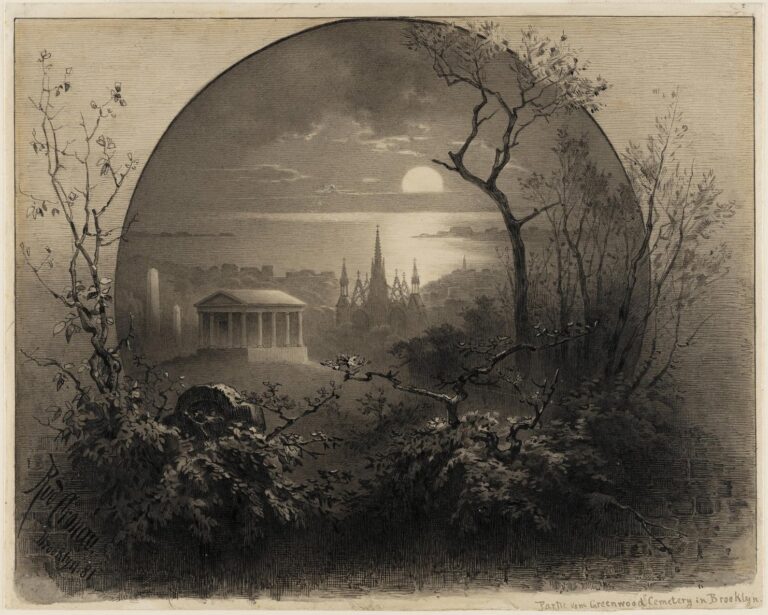
    During the early 1860s, an unexpected location ranked as the second most visited tourist spot in the United States: Green-Wood Cemetery in Brooklyn. Trailing only Niagara Falls in popularity, the vast burial ground welcomed roughly 500,000 visitors every year. Families routinely spent their afternoons strolling through the peaceful grounds. They took horse-drawn carriage rides and admiring the elaborate grand monuments across the landscape. When Green-Wood first opened its gates in 1838, New York City had virtually no public parks, as Central Park had not yet been conceived. By the time the early 1860s arrived, Central Park was only beginning to open its initial sections to the public. As a result, rural cemeteries like Green-Wood filled a massive void for city dwellers seeking fresh air, natural beauty, and a quiet escape from urban density. The unique charm and sweeping vistas of the cemetery caught the attention of Rudolf Cronau, a German-born illustrator and artist. Born in Solingen in 1855, Cronau trained at the prestigious Düsseldorf Art Academy under Andreas Müller before establishing his own studio. In 1881, he ventured across the Atlantic on an assignment for Die Gartenlaube, a popular German illustrated magazine. His mission was to document the landscapes, bustling cities, and diverse people of the United States, bringing the American experience to life for European readers through a mix of written reports and detailed artwork. While visiting Brooklyn in 1881, Cronau captured the cemetery’s famous skyline view in a artwork titled View from Greenwood Cemetery, Brooklyn. Rendered in delicate watercolor and black ink, the piece now resides in the permanent collection of the Brooklyn Museum. Cronau arranged his view in three distinct planes: an elaborate mausoleum anchored the foreground, Green-Wood’s iconic Gothic main entrance gates framed the middle ground, and the vast expanse of New York Harbor and the New Jersey coastline stretched out in the background. The mausoleum highlighted in the foreground of Cronau’s illustration belonged to John Anderson, a prominent NYC figure who amassed a massive fortune in the tobacco trade. Anderson, born in 1812, ran a well-known shop near Manhattan’s City Hall before eventually passing away in Paris in 1881.   Beyond serving as his final resting place, Anderson’s tomb was built as a bold political statement. Commissioned during the heights of the American Civil War, the Greek Revival-style structure was purposefully designed to symbolize a commitment to republican governance over monarchical rule, while serving as an unmistakable declaration of pro-Union support. Through art and architecture, a single cemetery hilltop managed to weave together personal wealth, national ideology, and one of the finest views of 19th-century New York.

Leave a Reply

Your email address will not be published. Required fields are marked *