fugitive abbot dhammakaya

Fugitive Abbot of Dhammakaya Temple Cleared as Statute of Limitations Expires

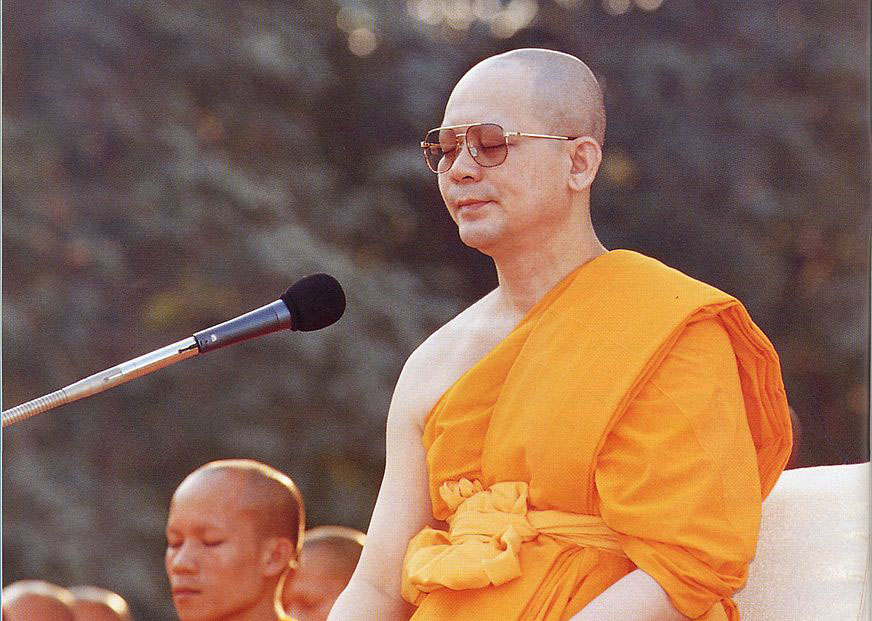
PATHUM THANI — Phra Dhammajayo, the controversial former abbot of Dhammakaya Temple, is now a free man after public prosecutors dropped money laundering charges against him in connection with the Klongchan Credit Union Cooperative case, citing the expiry of the statute of limitations.

Rumors claim Phra Dhammachaiyo has fled to Europe

On March 20, the Department of Special Investigation (DSI) informed complainants that special case prosecutors had ordered an end to litigation against Phra Dhammajayo and his associates, who had been accused of money laundering and receiving stolen property. The decision effectively closes a case that spanned more than a decade and saw one of Thailand’s most influential monks become a fugitive.

The Case Against Phra Dhammajayo

The once-influential monk commanded the respect and loyalty of tens of thousands of disciples, including senior government officials, politicians and wealthy businessmen. However, he evaded arrest for more than a decade after being implicated in the alleged mismanagement of Klongchan Credit Union Cooperative funds by its former president, Suphachai Srisuphaaksorn.

The case began in 2013 when the DSI launched a probe into alleged fund mismanagement at the cooperative. The investigation followed complaints from cooperative members who said they were unable to withdraw their investments. Tracing the money trail, the DSI found that Suphachai had allegedly issued several cheques benefiting the temple and its former abbot.

In 2015, the DSI estimated that the damage to the cooperative allegedly caused by Suphachai amounted to approximately 1.4 billion baht. This led to money laundering and receiving stolen property charges being filed against Phra Dhammajayo.

Evasion and Manhunt

Between March and May 2016, the DSI issued summonses for Phra Dhammajayo to acknowledge the charges, but the temple declined on his behalf, citing serious illness that prevented him from walking. On May 14 of that year, the DSI obtained a Criminal Court arrest warrant after he failed to respond to the summonses.

In June 2016, DSI officials attempted to enter the temple but were blocked by a human shield and forced to retreat. In February 2017, the military government invoked Section 44 of an executive order to declare Dhammakaya Temple a “special controlled area,” allowing police, DSI officials and soldiers to search for the elusive former abbot. The operation lasted more than 20 days but ultimately failed to locate him.

An order was later issued to defrock Phra Dhammajayo of his titles and ranks. He is now a layman under his birth name, Chaiyaboon Sudhipol. Chaiyaboon has since disappeared without a trace, amid rumors that he may have fled abroad.

Charges Dropped

On March 20 this year, the DSI informed victims in writing that special prosecutors had dropped all charges against the former abbot due to the expiry of the statute of limitations. The decision brings an official end to a case that captured national attention and sparked intense debate about the intersection of religion, law and political influence in Thailand.

Wat Phra Dhammakaya in Pathum Thani

The Dhammakaya Temple, one of Thailand’s largest and wealthiest Buddhist temples, has long been a source of controversy, with critics accusing its leadership of blurring the lines between religious devotion and commercial enterprise. For the thousands of followers who remained loyal to Phra Dhammajayo throughout his years as a fugitive, the decision may be seen as vindication. For his accusers, however, it marks a frustrating conclusion to a case that ultimately outran the law.

-Thailand News (TN)

Similar Posts

  • Italy Eyes Schengen Halt Over Ceuta Migrant Influx as Spain Rejects Emergency

    CEUTA, Spain / ROME, Italy — A severe migratory crisis in the Spanish autonomous city of Ceuta has reached a critical juncture, prompting the Italian government to consider suspending the Schengen Agreement with Spain. The situation has left local authorities overwhelmed, while the Spanish central government has firmly rejected requests to declare a national emergency […]

  • |

    Use of Pellet guns in Delhi protests revive Kashmi…

    Cockroach Janta Party protests in Delhi has sparked a nationwide debate while reopening old wounds in occupied Kashmir, where the weapon has been used extensively against peaceful protesters for years. The incidents in the capital have drawn attention to the long-standing suffering of Kashmiris, who have borne the brunt of pellet gun injuries, with many left blinded or permanently disabled. The Delhi protests, led by students demanding education reforms, ended successfully with the resignation of Education Minister Dharmendra Pradhan. However, the use of pellet guns against demonstrators has overshadowed the victory, raising concerns about the government’s approach to handling dissent. Critics have questioned why such force was used against peaceful protesters in the capital, drawing parallels to the devastation caused in occupied Jammu and Kashmir. Rahul Gandhi, a prominent opposition leader, expressed deep sorrow over the use of pellet guns, highlighting the tragic toll they have taken in Kashmir. Human rights organizations have repeatedly condemned pellet guns as a “cruel weapon” that causes disproportionate harm, and the international community has raised concerns about their use in the region. The Delhi incident has reignited calls for a ban on pellet guns, with activists urging the Indian government to adopt less lethal methods of crowd control. The controversy has also drawn attention to the broader issue of human rights violations in occupied Kashmir, where the use of such weapons has been a persistent concern. Hospital records from the region highlight the devastating impact of pellet gun injuries, with countless young Kashmiris left with permanent disabilities. The use of pellet guns in Delhi has not only sparked outrage but has also brought the Kashmir issue back to the forefront of national and international discourse. Human rights groups have called for a thorough investigation into the incidents and for the government to ensure that such weapons are no longer used against citizens exercising their fundamental rights. As the debate continues, the victims of pellet gun injuries in both Delhi and Kashmir await justice and accountability. The incident serves as a reminder of the urgent need for reforms in crowd control measures and the importance of protecting the rights of all citizens. The international community continues to monitor the situation closely, urging India to uphold its human rights obligations. The time for change is now. The government must act decisively to ensure that the rights of all citizens are protected and that such incidents are never repeated. The victims of pellet gun injuries, both in Delhi and Kashmir, deserve justice, and the government must take concrete steps to ensure that their voices are heard and their grievances addressed. The fight for justice continues, and the nation must stand united in its commitment to upholding the rights and dignity of all citizens. The use of pellet guns in Delhi has once again exposed the harsh realities of India’s approach to law and order, and the need for meaningful reform has never been more urgent.

  • | |

    Salman Raja demands Imran’s medical access

    ISLAMABAD: Pakistan Tehreek-e-Insaf leader Salman Akram Raja has called for meetings between the party’s founder, Imran Khan, and his sisters and medical team. Speaking to the media in Islamabad, Raja said PTI representatives had met the Registrar of the Supreme Court. During the meeting, they requested that the cases involving the party founder be taken up for hearing without further delay. The PTI leader also demanded that Imran Khan be allowed to meet his sisters. He said access to his doctors should also be restored so that his health can be properly monitored. Raja said the party had been assured that the pending cases would be scheduled for hearing next week. He added that the relevant cause list would also be issued. He expressed concern over the long gap between Imran Khan and his doctors. According to Raja, the PTI founder has not been able to meet his medical team for around one and a half years. Raja questioned the reason for preventing regular medical consultations. He said the issue was particularly important because of concerns about Imran Khan’s health. The PTI leader also discussed the former prime minister’s political activities. He said Imran Khan had the right to express his political views. However, Raja said the party was prepared to ensure that political discussions did not take place if they could affect Imran Khan’s health. He said the priority at present was his medical well-being and access to proper healthcare. Raja said the matter would be taken before the court next week. He indicated that the party would seek judicial intervention on meetings with family members and doctors. The PTI has repeatedly raised concerns over access to Imran Khan and his medical care. The latest demand comes as the party awaits hearings in several cases involving its founder.

  • |

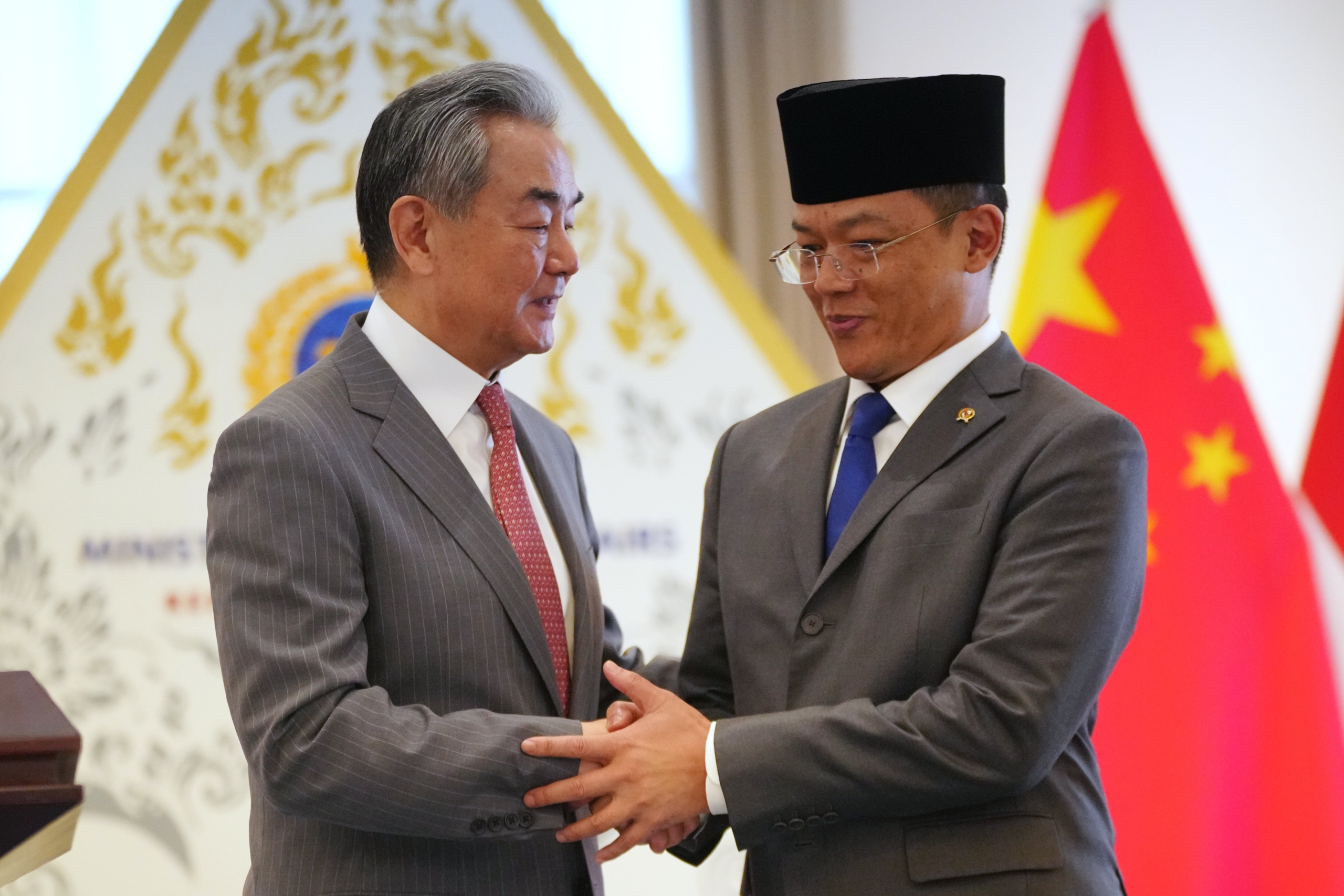
    China, Indonesia deepen security and economic ties

    JAKARTA: China and Indonesia opened a new round of high-level talks on Friday, with defence cooperation, regional security, political relations and trade expected to dominate discussions as Jakarta seeks to maintain strong ties with Beijing while preserving its relationship with Washington. Chinese Foreign Minister Wang Yi, visiting Jakarta for the first time in two years, met his Indonesian counterpart Sugiono before joining a “2+2” dialogue involving the two countries’ defence ministers. The talks come at a sensitive moment for Southeast Asia, where tensions in the South China Sea, competition between China and the United States and growing economic interdependence are putting pressure on regional governments to carefully balance their relationships with major powers. Wang said the new dialogue mechanism was timely as the world faced increasingly complex challenges. “Unilateralism and hegemonic acts bring serious impact on global cooperation and stability,” he said, adding that China aimed to build cooperation with Indonesia at a high level. Indonesian officials said economic issues and political relations would be among the foreign ministers’ priorities, while China said the discussions would also cover defence cooperation and international and regional affairs. Defence Cooperation Expands Chinese Defence Minister Dong Jun was welcomed with a military honour guard at Indonesia’s defence ministry, where he said the two armed forces had significant room to strengthen cooperation. “The prospects for cooperation between the two militaries are broad,” Dong said, describing the relationship as increasingly effective and higher in quality. Indonesia’s Defence Minister Sjafrie Sjamsoeddin said the countries planned to expand military activities, including joint exercises, officer exchanges and cooperation in the defence industry. He described the move as an important step in strengthening Indonesia’s defence capabilities. The discussions follow a joint naval exercise between China and Indonesia last week that drew attention because of its location east of Taiwan. Taiwan, which Beijing claims as part of China, expressed concern over the exercise. Indonesia’s navy said the activity was routine and noted that it conducts exercises not only with China but also with Japan and the United States. Defence analyst Curie Maharani said the episode highlighted how military diplomacy could serve broader strategic purposes. Indonesia, she said, had gained an important lesson about how major powers can use defence cooperation to project influence. Balancing China and Washington Jakarta’s approach reflects its long-standing “free and active” foreign policy. President Prabowo Subianto has repeatedly said Indonesia intends to remain non-aligned while maintaining friendly relations with all countries, including China and the United States. That balancing act is becoming more complicated as competition between Washington and Beijing intensifies. Indonesia also has differences with China over developments in the South China Sea. Beijing claims almost the entire disputed waterway, while Indonesia has sought to avoid becoming directly involved in broader territorial disputes between China and the Philippines, Malaysia and Vietnam. Jakarta has generally maintained a measured position, prioritising diplomacy and economic cooperation while protecting its own interests. Billions at Stake Economic ties provide another major reason for Indonesia to maintain close relations with Beijing. China contributed $3.9 billion in foreign direct investment to Indonesia during the first half of 2026, according to Indonesian figures. Chinese companies have invested heavily in industries ranging from nickel processing and steel to electric-vehicle batteries. Indonesia possesses the world’s largest nickel reserves, making it strategically important to China’s rapidly expanding electric-vehicle supply chain. Among major investors are Contemporary Amperex Technology, one of the world’s largest electric-vehicle battery makers, and Tsingshan Group, which operates nickel and steel facilities in Indonesia. However, the growing investment relationship has not been free of tension. In May, Chinese companies operating in Indonesia urged Jakarta to introduce more business-friendly policies, arguing that higher taxes and a new nickel pricing formula were increasing costs and threatening investment. The China Chamber of Commerce in Indonesia also complained of what it described as excessive regulation and enforcement, while raising allegations of corruption and extortion. The concerns underline the challenge facing both countries: expanding economic cooperation while managing disagreements over regulation, investment conditions and strategic interests. For Indonesia, Friday’s talks therefore carry significance beyond bilateral diplomacy. Jakarta is trying to strengthen its economy and defence capabilities without becoming overly dependent on either Beijing or Washington. In For China, deeper engagement with Indonesia offers an opportunity to strengthen its influence in one of Southeast Asia’s largest economies while expanding defence and economic partnerships in a strategically important region.

  • | |

    Karachi crime remains high in July

    The Citizens-Police Liaison Committee (CPLC) has released its latest crime statistics for Karachi, showing a significant number of killings, extortion cases, mobile-phone thefts and vehicle-related crimes during July. According to the CPLC data, 40 people lost their lives in different incidents across the city during the month. The figures also showed that extortion remained a concern, with 18 cases of bhata khori reported in July. Street crime continued to affect residents, particularly through mobile-phone and motorcycle theft. The CPLC recorded 1,846 mobile phones stolen across Karachi during the month, highlighting the continued risk faced by citizens while travelling or moving through public places. Vehicle-related offences also remained a major challenge. Criminals stole 110 vehicles in July, while 12 cars were snatched from citizens. The figures indicate that vehicle owners continued to face the threat of both theft and armed or forced snatching. Motorcycles accounted for the largest share of vehicle-related crime. The CPLC recorded 2,648 motorcycle thefts during July, while criminals snatched 492 motorcycles from citizens. The latest figures reflect the scale of crime reported across Karachi during the month, with motorcycles, mobile phones and vehicles remaining frequent targets. The data also highlights continued concerns over public safety, particularly in relation to street crime and property offences. The CPLC regularly compiles crime data from across the city to provide an overview of reported criminal activity. The July figures are likely to keep the focus on law-and-order conditions in Karachi and the need for stronger measures to protect citizens and their property.

  • |

    Bangladesh hints at joining Pakistan-Saudi-Türkiy…

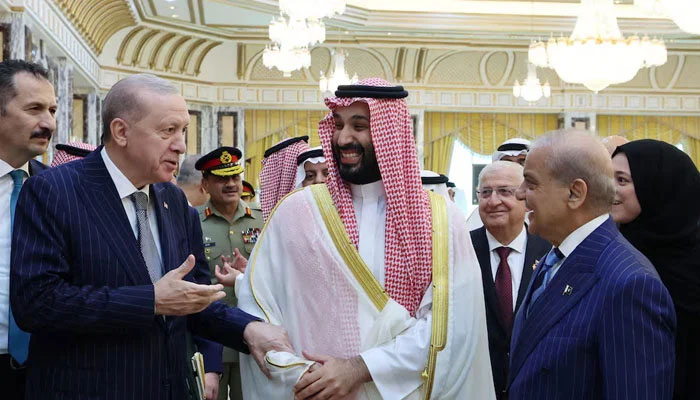
    DHAKA: Bangladesh has signalled that it could consider joining the emerging economic or defence framework involving Pakistan, Saudi Arabia and Türkiye, opening a potentially significant new chapter in regional diplomacy and security cooperation. Bangladesh Prime Minister’s Foreign Affairs Adviser Humayun Kabir said Dhaka was taking a positive view of the possibility of becoming part of a framework involving the three countries. His comments come only weeks after Pakistan, Saudi Arabia and Türkiye signed the Makkah Joint Defence Agreement. The agreement, signed in Makkah on Aug 7, commits the three countries to strengthening collective security and defence cooperation. It also states that an armed attack against any one of the three signatories would be regarded as an attack against all three. Kabir, speaking to Bangladesh’s state news agency, indicated that Dhaka would examine the idea through the lens of its own national interests and the rapidly changing global economic and trade environment. “The government is following a Bangladesh First policy,” Kabir said, according to reports, stressing that national interests remain at the centre of Dhaka’s foreign policy. The remarks are particularly noteworthy because Bangladesh has recently been working to strengthen practical ties with Pakistan. Kabir said the two countries were seeking greater cooperation in trade and people-to-people contacts, suggesting that economic engagement could form an important part of the relationship. For Pakistan, Bangladesh’s interest could give the Makkah framework a wider South Asian dimension. For Saudi Arabia and Türkiye, Dhaka’s possible participation could also expand the reach of an arrangement that the signatories have described as defensive rather than directed against any particular country. Turkish President Recep Tayyip Erdogan has said the agreement is open to other friendly countries seeking peace, prosperity and stability in the region. Turkish officials have also stressed that the pact does not identify a common enemy and is intended to strengthen defence cooperation and collective deterrence. Bangladesh’s possible move comes as Dhaka is also deepening its relationship with Saudi Arabia. Kabir said Prime Minister Tarique Rahman is expected to visit Saudi Arabia following an invitation from Crown Prince Mohammed bin Salman. The visit could provide an opportunity for discussions on economic cooperation, regional security and Bangladesh’s possible role in broader regional frameworks. For now, Dhaka has not announced any formal decision to join the defence agreement. But its positive signal is already attracting attention, particularly because Bangladesh’s participation could reshape the strategic picture across South Asia and the wider Muslim world. The next step will likely depend on how Dhaka assesses the proposed framework against its national interests, economic priorities and wider foreign-policy objectives.

Leave a Reply

Your email address will not be published. Required fields are marked *