thailand8217s fishing industry

Thailand’s Fishing Industry Grinds to Halt as Diesel Shortages Bite

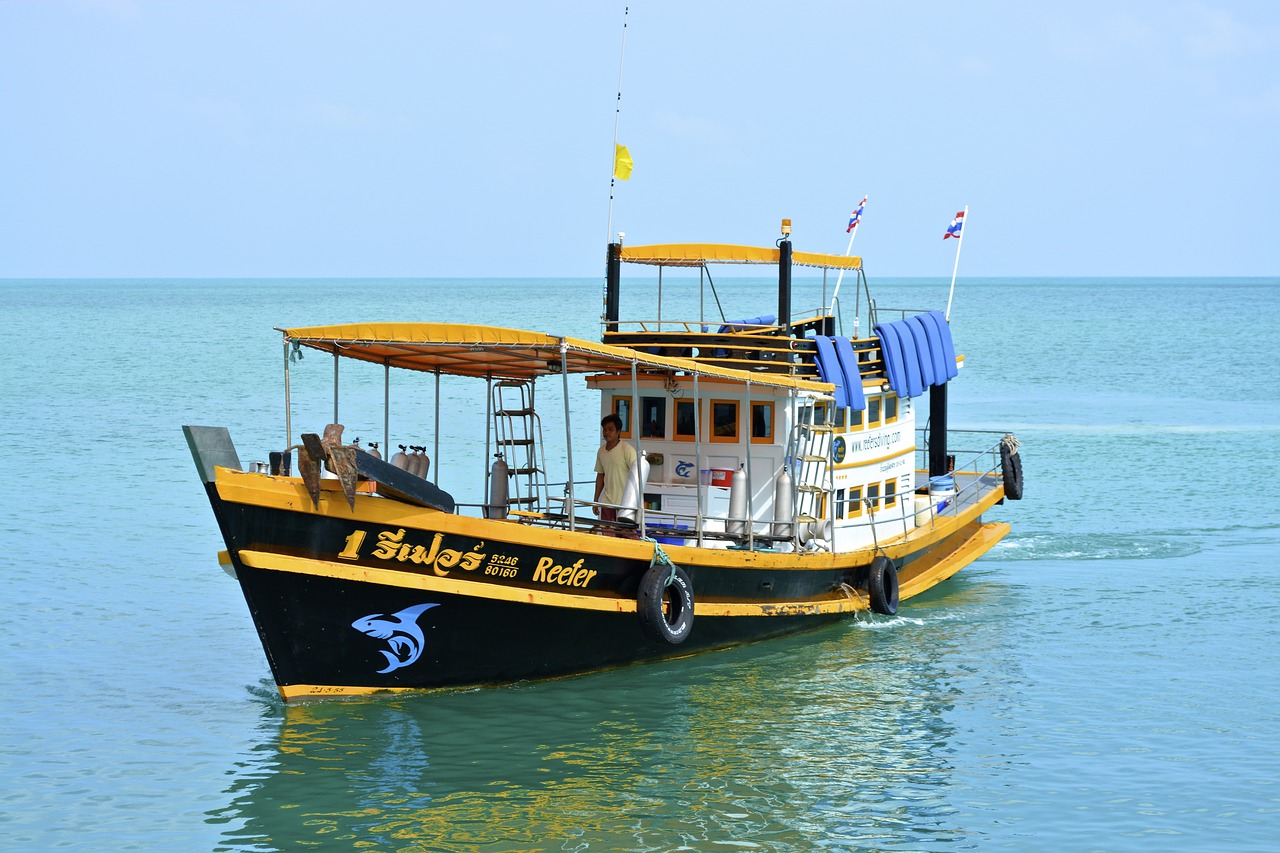
BANGKOK — Thailand’s vital fishing industry is facing a severe crisis as diesel shortages and soaring prices force vessels to remain in port, with industry leaders warning that more than half of the country’s 9,000 fishing boats may be unable to operate.

Pump Prices to Rise Starting Wednesday as Government Adjusts Fuel Subsidies

Many fishing vessels in the coastal waters of Songkhla and Samut Songkhram are no longer setting out to sea as subsidised diesel becomes increasingly unaffordable, despite government measures intended to keep the industry afloat.

The Thai Fisheries Association has issued a stark warning that more than half of the nation’s 9,000 fishing boats may have to remain in port due to shortages and rising prices of excise tax-discounted “green” diesel specifically allocated for fishermen. This specially designated fuel is officially priced at 20 baht per litre, compared with the standard pump price of approximately 30 baht.

However, many boat owners report that the price in Samut Songkhram and Songkhla has surged to as high as 34 baht per litre, making it financially impossible to operate. The discrepancy between official and actual prices has left fishermen struggling to cover basic operating costs.

Sinchai Sathirayakorn, president of the Association of Paired Trawlers in Samut Songkhram, outlined the severe economic impact on his members. He explained that a pair of trawlers requires about 1,200 litres of fuel per day, with each fishing trip typically lasting around 12 days, meaning each pair of vessels needs approximately 15,000 litres of fuel per trip. With about 400 trawler pairs operating in the province, fuel accounts for roughly 80% of operating costs.

“With the price of green diesel rising from 20 baht to 34 baht per litre, many trawler owners are struggling to justify the cost of going to sea,” Sinchai stated, highlighting the impossible arithmetic facing fishermen who must decide whether sailing is economically viable.

The reduced fishing activity has already begun affecting consumers, with seafood prices reportedly increasing by 20 to 100 baht per kilogram due to diminished catches. Chanon Attanart, vice president of the Songkhla Fisheries Association, confirmed that the Thai Fisheries Association is urgently seeking government assistance to address the crisis affecting the industry.

Wider Fuel Shortages Impact Daily Life

Beyond the fishing industry, petrol stations in several provinces have shortened their operating hours after running out of fuel, largely due to a surge in demand from motorists fearing shortages and higher prices. The panic buying has created a self-fulfilling prophecy, as motorists rush to fill tanks, accelerating the depletion of available supplies.

In Maha Sarakham province, filling stations along the bypass have been closing by early evening after running out of fuel, leaving motorists scrambling to find open stations during limited hours. One motorist in Nong Bua Lamphu described his frustrating search, saying he had to stop at seven petrol stations before finally finding one with enough fuel to sell.

In Chainat province, petrol stations have implemented rationing measures, limiting purchases to 500 baht for general vehicles and 1,000 baht for ambulances and other emergency vehicles. These restrictions aim to stretch available supplies and ensure that critical services can continue operating.

Cross-Border Fuel Runs

In Betong district near the Malaysian border, many motorists have resorted to crossing into Malaysia to refuel due to greater availability and lower prices across the border. However, Malaysian authorities have responded by capping purchases at 290 baht worth of fuel per Thai-registered vehicle, limiting the effectiveness of this strategy.

The price differential remains significant despite the cap. Petrol in Malaysia costs approximately 27 baht per litre, compared to 40.18 baht in Betong, while diesel sells for around 32 baht per litre in Malaysia, compared to 30.48 baht in Betong. The lower petrol prices make the cross-border journey worthwhile for many Thai motorists, despite the purchase restrictions.

The fuel shortages affecting Thailand are part of a broader crisis hitting Southeast Asia due to disruptions in oil imports from the Middle East following the escalation of the US-Israeli conflict with Iran, which has effectively closed the Strait of Hormuz. This strategic waterway carries about one-fifth of the world’s oil, and Thailand’s heavy dependence on fuel imports from the region has left it vulnerable to supply disruptions.

Nakhon Phanom Temple Halts Cremations Amid Fuel Restrictions

Similar issues have been reported across the region, with neighbouring countries experiencing their own fuel crises. In Cambodia, over 400 fuel depots and stations remain closed due to delays in new stock, while Myanmar has implemented an alternate-day driving rationing system for private vehicles to conserve scarce fuel supplies.

-Thailand News (TN)
Similar Posts

  • Thai Army Blames Own Landmine, Denies Cambodian Attack Allegations

    BANGKOK, Thailand — The Royal Thai Army has strongly rejected allegations from Cambodia that Thai soldiers crossed the border and injured three Cambodian troops with a hand grenade, asserting instead that the incident was likely the result of Cambodian forces accidentally detonating their own unexploded ordnance. Thai Soldier Seriously Injured by Landmine Near Cambodian Border […]

  • |

    Russia ready for Ukraine peace ideas, but sets con…

    MOSCOW: Russia is prepared to consider fresh proposals aimed at ending the war in Ukraine, but any initiative must take account of what Moscow describes as the “realities on the ground”, a senior Russian diplomat said on Friday. Deputy Foreign Minister Sergei Ryabkov said Moscow remained willing to maintain dialogue with Washington, while questioning whether the United States could exert enough influence over Kyiv and its European supporters to move negotiations forward. His comments came as diplomatic efforts to end the conflict remain largely stalled, with international attention also focused on the wider tensions surrounding the war in Iran. In an interview with Russian media outlet News.ru, Ryabkov said Moscow had seen signs that Washington was prepared for constructive discussions and showed some understanding of Russia’s position. “At this stage, it is more important to what extent Washington is able to influence the decisions of the Kyiv regime and its European sponsors,” he said. Ryabkov accused some European countries of continuing to seek what he called a “strategic defeat” of Russia, highlighting one of the central obstacles facing any potential peace agreement. Moscow Awaits New Proposals Russia and the United States have held discussions aimed at finding a path towards ending the Ukraine conflict, but negotiations have made little visible progress. The Kremlin said on Thursday that it had not received information about a possible new visit to Moscow by US presidential envoys Jared Kushner and Steve Witkoff. The two have previously played prominent roles in contacts with Russian officials. US Secretary of State Marco Rubio said last month that Washington remained committed to helping end the war after meeting Russian Foreign Minister Sergei Lavrov in Manila. However, Rubio also warned against expecting a rapid agreement, saying Washington was attempting to find a middle ground between the positions of the two sides. Ryabkov said Russia would be ready to examine any proposals put forward by Washington, provided they were consistent with Moscow’s stated objectives. “The Russian Federation is ready to listen to any reasonable proposals and ideas that are in line with the goals set by the Russian president and meet the ‘realities on the ground’,” he said. Territorial Disputes Remain Central The comments underline the continuing importance of territory in the negotiations. After almost four and a half years of war, Russia controls around one-fifth of Ukraine’s internationally recognised territory. Moscow has repeatedly said it is willing to negotiate, but insists that any settlement must acknowledge what it calls the new realities created by the conflict. Ukraine and its Western allies have opposed recognising Russian territorial gains, making the issue one of the most difficult elements of any potential peace agreement. The challenge for Washington is therefore not simply bringing Moscow and Kyiv back to negotiations, but finding terms that could satisfy competing demands over territory, security guarantees and the future political order in the region. Nuclear Dialogue Also on the Table Ryabkov also signalled that Moscow wants to keep diplomatic channels open with Washington on nuclear weapons. The issue has gained urgency since the New START treaty expired in February, leaving Russia and the United States without binding limits on their strategic nuclear arsenals for the first time in more than five decades. Moscow has said it would continue observing the treaty’s limits on missiles and warheads as long as Washington does the same. “We remain open in the future to find political and diplomatic ways to stabilise this area,” Ryabkov said. The nuclear issue adds another layer to an already complicated US-Russia relationship. Even as the two countries remain deeply divided over Ukraine, Moscow appears keen to prevent the collapse of communication on strategic weapons. For now, Russia’s message is that the door to diplomacy remains open — but only proposals that reflect Moscow’s stated conditions and its view of the battlefield are likely to receive serious consideration. With the war continuing and previous negotiations stalled, the next major test will be whether Washington can persuade Kyiv, Moscow and European governments to move beyond competing positions and return to substantive peace discussions.

  • Thailand Allows 24-Hour Fuel Deliveries to Ease Nationwide Shortages

    BANGKOK — Oil tankers will be permitted to operate around the clock for one month under special government measures aimed at accelerating fuel deliveries to petrol stations across the country and alleviating crippling shortages that have left many pumps dry. Truckers End Laem Chabang Rally, Vow to Keep Pressing Government on Fuel Crisis Interior Permanent […]

  • Two Boys From School Shooting Remain in Critical Condition After Surgery

    BANGKOK – A tragic school shooting at Debsirin Nonthaburi School has left a local community in deep shock. Currently, two young boys remain in the intensive care unit after surviving the horrific attack. Both students have undergone major surgery, but they are still fighting for their lives today. Dr. Sakon Sukphrom is the respected current […]

  • | |

    Another Reko Diq-Sized mining project in Pakistan,…

    ISLAMABAD: The United States has expressed strong confidence in Pakistan’s mineral sector, with a senior US Embassy official revealing that the Trump administration is prepared to support another mega mining project on the scale of  to invest in Pakistan despite security concerns, viewing the country’s vast mineral wealth as strategically important for future global industries. During a background briefing with journalists on Wednesday, the embassy official said Washington considers Pakistan a key partner in the global race for critical minerals that are essential for advanced technologies, clean energy, artificial intelligence, semiconductors and defence manufacturing. According to the official, the US government is encouraging American investors to explore Pakistan’s untapped mineral resources, ranging from large-scale copper and gold projects to smaller mining ventures worth only a few million dollars. US Prepared to Finance Another Mega Project The official said the US administration is ready to support another project comparable to the multibillion-dollar Reko Diq development if geological surveys and feasibility studies demonstrate strong commercial potential. He added that financing support could be extended through US institutions such as the Export-Import (Exim) Bank and the Development Finance Corporation, both of which are playing a growing role in securing global supply chains for critical minerals. The official noted that American companies are not only interested in major mining investments but are also examining opportunities to acquire, develop and expand smaller mining operations across Pakistan. Reko Diq Progress Continues Despite Delays Discussing the Reko Diq copper and gold project, the official acknowledged that work is progressing, although at a slower pace than initially anticipated. He explained that project costs are currently being reassessed, after which developers will return to financiers to finalize the remaining funding package. The first phase of the Reko Diq project is estimated to cost around $7.7 billion, while the US Exim Bank has already offered $1.25 billion in financing. However, the overall financial structure remains under discussion. The project has experienced delays due to rising construction costs and security concerns in Balochistan, prompting project stakeholders to revise cost estimates more than once. Earlier this year, Barrick Gold, which owns a 50 percent stake in the project, also reviewed development timelines because of increasing costs and security-related challenges. Major Economic Benefits Expected The embassy official said Reko Diq has the potential to transform Pakistan’s economy once it becomes fully operational. According to the estimates shared during the briefing, the project could generate nearly $2 billion in annual free cash flow. Of this amount, around $500 million would go directly to the Government of Balochistan, while another $500 million would benefit Pakistan’s state-owned enterprises. The official further stated that Pakistan’s mining sector currently contributes roughly 3 percent to the country’s economy, while Reko Diq alone could increase national GDP by approximately 0.5 percentage points, highlighting its significance for long-term economic growth. Critical Minerals Becoming Strategic Priority The US official emphasized that critical minerals have become a top strategic priority for Washington as demand continues to rise across technology, renewable energy and defence sectors. Pakistan possesses commercially attractive reserves of copper, antimony, tungsten and several other minerals considered essential for future industries. He said American companies believe Pakistan has enormous untapped potential, particularly as global demand for copper is expected to rise sharply over the coming decades. The official added that US firms are actively seeking long-term supply agreements for minerals extracted from Pakistani mines, while some investors are interested in purchasing and developing smaller mining assets. Investment Opportunities Across Pakistan Besides Balochistan, American investors are also exploring mineral opportunities in Khyber-Pakhtunkhwa, particularly for copper deposits, while rare earth mineral prospects in Gilgit-Baltistan have also attracted attention. The official said the United States is searching globally for around 60 critical minerals needed for emerging technologies, many of which are found in Pakistan. He noted that several companies have already begun exploration and extraction activities in different regions of the country. Security Remains the Biggest Challenge Despite strong investment interest, the official acknowledged that security remains one of the most significant obstacles facing mining projects in Pakistan. He said US companies fully understand the risks associated with operating in regions such as Balochistan and Khyber-Pakhtunkhwa but remain willing to invest if appropriate security arrangements are provided. The official stressed that the Pakistani government should continue strengthening security measures and facilitating investors to ensure long-term success of mining projects. He added that American companies are encouraged to partner with local firms, which possess valuable experience in navigating operational and security challenges in remote mining areas. US Calls for Transparent Investment Environment The embassy official also urged Pakistan to maintain a transparent, predictable and competitive investment climate to attract greater foreign investment into the mineral sector. He noted that Pakistan’s participation in the US Critical Minerals Initiative earlier this year reflects growing cooperation between the two countries in securing future mineral supply chains. According to the official, if exploration and investment continue at the current pace, Pakistan’s mining industry could emerge as one of the country’s strongest economic sectors over the next 10 to 20 years, creating employment, increasing exports and significantly boosting national revenues.

  • | |

    Sohail Afridi denied meeting Imran at Adiala Jail

    RAWALPINDI: Khyber-Pakhtunkhwa Chief Minister Sohail Afridi was stopped from meeting Pakistan Tehreek-e-Insaf founder Imran Khan at Adiala Jail on Thursday. Afridi reached the Medicine Factory checkpoint on Adiala Road with several PTI leaders and lawmakers. Police stopped the delegation from moving towards the prison. The chief minister was accompanied by Mena Khan, Shafi Jan, Ahad Shah, Abdul Salam Afridi and Shahid Khattak. Police had earlier blocked Adiala Road from Gorakhpur towards the jail. Traffic was diverted to alternative routes. Afridi questioned the SHO Saddar Beroni about the restrictions. He also asked what instructions had been issued to the authorities. The chief minister remained at the checkpoint until the scheduled meeting time ended. He and the accompanying PTI leaders were not allowed to meet Imran. After the delegation left, police removed the barriers. Traffic on Adiala Road was restored. Speaking to the media, Afridi announced a protest call if he was not allowed to meet the PTI founder. He said PTI workers would come out across the country at 10pm. He urged them to gather at major intersections while carrying the national and party flags. Afridi also asked workers to stay focused on the party’s planned march towards Islamabad on September 27. He claimed that the PTI planned to bring two million people to Islamabad. He said the number could be even higher. The chief minister said the authorities should allow a meeting with Imran before September 28 if they wanted to reduce political tensions. Afridi also criticised the treatment of Imran and PTI since 2022. He accused the authorities of pushing the country towards instability because of political differences and stubbornness. He further criticised other political parties and questioned their role in the country’s political situation. The latest incident comes amid growing concern within PTI over Imran’s health and access to him. The party has repeatedly demanded that its founder be allowed to meet family members, lawyers and party leaders. Imran has remained incarcerated at Adiala Jail since 2023. His wife, Bushra Bibi, is also imprisoned. The PTI founder has faced several legal cases during his imprisonment. He and Bushra Bibi were sentenced to 17 years in prison in the Toshakhana-II case in December 2025. PTI has also raised concerns over Imran’s eyesight and medical treatment. Earlier this year, doctors from the Pakistan Institute of Medical Sciences examined him at the jail. PIMS later confirmed that he had received an anti-VEGF injection for a condition affecting his right eye. A later medical examination indicated improvement in his eyesight following treatment. Imran’s sisters and PTI supporters have also held regular gatherings outside Adiala Jail on designated meeting days. However, access to the former prime minister has remained restricted in recent months. Afridi’s unsuccessful visit on Thursday is likely to further intensify the political confrontation between PTI and the authorities.

Leave a Reply

Your email address will not be published. Required fields are marked *