thailand confirms nipah

Thailand Confirms No Nipah Virus Cases, Urges Public Vigilance

BANGKOK – The Department of Disease Control (DDC) has assured the public that there are no confirmed cases of Nipah virus in humans in Thailand, and that strict surveillance systems have long been in place under the “One Health” framework.

Six dead as Nipah virus spreads in Kozhikode, India

Dr. Jurai Wongsawat, a DDC spokesperson, explained that monitoring is conducted collaboratively with the Livestock Development Department, the Department of National Parks, Wildlife and Plant Conservation, and other agencies to track both animal and human health, with a particular focus on symptoms related to meningitis and encephalitis.

Nipah virus is a deadly zoonotic pathogen transmitted primarily by fruit bats (flying foxes). Humans can contract the virus through direct contact with infected animals or consumption of food contaminated by bat saliva, urine, or feces. Human-to-human transmission is possible but usually requires close contact, such as between patients and caregivers.

The World Health Organization classifies Nipah as a high-risk pathogen due to its high fatality rate—between 40% and 75%—and the lack of a vaccine or specific treatment.

Currently, India is managing an outbreak in West Bengal, where five cases have been confirmed, including among healthcare workers. About 100 people are under home quarantine, and infected patients are being treated in hospitals in Kolkata.

Dr. Jurai emphasized that Thailand has not implemented special screening measures for arrivals from India, as the outbreak there remains localized and severely ill patients are unlikely to travel.

She advised the public to stay informed but not panic. Those traveling to outbreak-affected regions should avoid contact with sick individuals, consume only safe food, and wear face masks when appropriate.

Thailand to Screen For Marburg Virus at Points of Entry for Certain Travelers

The DDC continues to monitor the situation closely through its established surveillance networks.

-Thailand News (TN)

Similar Posts

  • | | |

    Initial report suggests Mir Raza Ali was shot from…

    KARACHI: An initial medical report has reportedly indicated that businessman Mir Raza Ali sustained a gunshot wound from behind, while several signs of physical violence were also found on his body following his exhumation for a fresh post-mortem examination. According to investigation sources, the preliminary report has addressed all 14 questions raised by police surgeon Dr Summaiya Syed during the medical examination. The findings reportedly include a gunshot injury to the rear of the body, fractured ribs and multiple injuries to Ali’s head and face. The report also noted marks of violence on different parts of the deceased’s body. However, investigators have yet to officially receive the medical findings. SSP SIU Samiullah Somroo, who is leading the police investigation, said the investigation team had not been informed about the report or its findings. The exhumation process lasted around three hours and was conducted under the supervision of forensic experts. During the procedure, 17 samples were collected from the body for further examination. Four samples were preserved for DNA testing, while the remaining samples were collected for chemical analysis. Two additional reference samples were obtained from Ali’s parents to assist with DNA matching. Investigators said the collected samples have been preserved and will be submitted to the forensic laboratory at the University of Karachi on Monday. The chemical and DNA examination reports are expected to be available within three to four days. Ali’s body was exhumed earlier as part of efforts to determine the circumstances surrounding his death. After the medical examination was completed, his remains were reburied at a graveyard near Tariq Road. Ali, an IBA graduate and businessman, had returned home from his shop on the night of July 28. He later left the house again, telling his family that he would return within 10 minutes. He did not return, and his body was subsequently recovered from Gulistan-e-Jauhar. His father, Mir Hussain, has maintained that his son was murdered and rejected suggestions that he died by suicide. During the latest proceedings, members of the medical board collected various samples from Ali’s grave as part of the renewed examination. His family members and their lawyer, Jibran Nasir, were present at the graveyard, while a heavy police contingent was deployed to maintain security. The authorities had restored the original eight-member medical board responsible for supervising the exhumation after the family objected to the replacement of the panel with a five-member board. The disagreement had earlier prevented officials from carrying out the scheduled exhumation. Mir Hussain later said he was satisfied with the latest proceedings. He expressed hope that the fresh examination would provide clarity about what happened to his son. The family has also alleged that a fake audio recording attributed to Ali was circulated in an attempt to influence the case and create confusion around the circumstances of his death. The family’s lawyer had earlier raised concerns about changes to the medical board and questioned the decision to replace the original panel. He later said the family was satisfied with the renewed proceedings, which were conducted in the presence of the judicial magistrate, investigation officer and members of the medical team.

  • | |

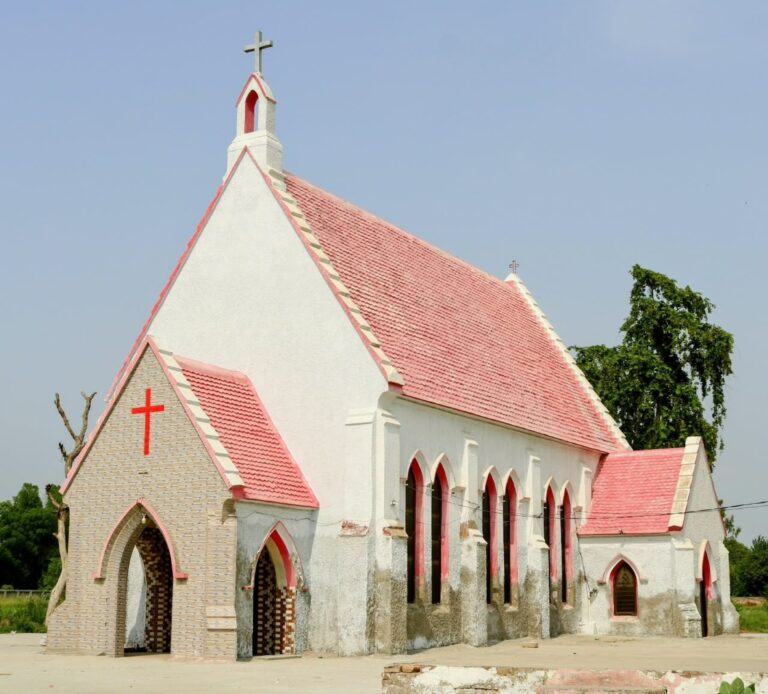
    DI Khan church still guards colonial memories

    There are some places we pass every day without realising how much history they hold. They remain untapped until some visitors put their eyes on them. During summer vacations, I travelled to Dera Ismail Khan, a district situated in southern Khyber Pakhtunkhwa. It takes six hours from Lahore to arrive in this historic city. During my stay there, I came across one such place that immediately captured my attention, and I thought to write about it. It was St Thomas Church, sacred place of worship for Christian community. A large cross standing at the entrance, old rusty walls, and an ambience of spiritualism. But the Church showcased more than that. Its walls contain historical accounts of colonial past, the military campaigns led by British soldiers in this area and a grave of one Lieutenant Governor of Punjab.   St Thomas Church was built in 1856 during British rule in the Indian subcontinent. It is one of the oldest churches in present-day Pakistan. It has survived political changes, the Partition of 1947, and the passing of time. Even today it stands as a symbol of the rich and diverse heritage of Dera Ismail Khan. The church is not only a place of worship but also a reminder that different faiths and communities have long been part of the history of this region. As we walked inside, we met the old priest and caretaker of the church named Chand. He welcomed us warmly and narrated the remarkable history of this place. There are memorials of British soldiers who lost their lives in this region during military campaigns. The priest stood in front of each tablet inscribed on the church wall and briefed about it. One memorial narrates the names, ranks and units of one hundred and 69 British military officers and other ranks who were killed or died due to injuries or disease in Waziristan military campaigns launched between 1919 to 1921.     Another memorial lists details of sixty-eight officers and other ranks who met a similar fate during the 1936-1938 Waziristan military campaigns. Similarly, one tablet erected by friends and fellow officers mourns the death of Herbert Walter Gee, ICS, deputy commissioner of Dera Ismail Khan, who died in 1901. There are other memorials as well, erected by colleagues in memory of the fallen officers. I thought that these names contain historical accounts year by year about what happened in this part of the world at that time. Every sentence of the Priest carried a new story, such as how the church has witnessed a lot of happenings through generations and that it still serves the small Christian community living in Dera Ismail Khan. As we stepped outside, believing our visit had come to an end, the priest said, “Wait. I have to show you one more thing.” He took me to the back of the building, where I saw a large white grave standing quietly among the dusty bushes. Here rests Lieutenant General Sir Henry Marion Durand (1812-1871). Durdand – a quite familiar name for the people of Pakistan and Afghanistan. Sir Durand was a career British military officer, diplomat, and administrator. He served in the East India Company Army, took part in several military campaigns, and later became the Lieutenant Governor of Punjab from 1870 to 1871. His son Sir Mortimer Durand is the one who drew the contours of the border between British India and Afghanistan in 1893. A man who once held such an important position now lies in silence behind an old church, while many people living nearby are unaware that his grave even exists. Henry Marion Durand died in 1871 at the age of 58 from a tragic accident. He was visiting Nawab of Tank Shahnawaz Khan along with his daughter when he fell from an elephant. The elephant was passing through the gateway by the town of Tank with the Nawab on the same elephant and an official (Chaprassy). The gate was too low to cross an elephant with howdah. The howdah struck the walls of crossing and the elephant got frightened resulting in the fall of Durand. He remained unconscious for a few days and never recovered. He was buried beside St. Thomas’ Church in Dera Ismail Khan. The British suspected some conspiracy into this incident. One of descendent of Nawab Shahnawaz Khan says that The British launched an enquiry into it. But the daughter of Durand gave testimony in favour of the Nawab that it was just an accident and there was no fault on his part. However, as a punishment, the British authorities stripped the powers of Nawab Shahnawaz Khan in 1875 and sent him to Lahore under strict watch. He passed away in 1881 while under surveillance. Standing beside the grave of Sir Henry Durand, I felt as if I had stepped into a forgotten chapter of history. The name engraved on the stone reminded me that many important events and personalities of the past remain connected to places that we often overlook. How easily history can fade from people’s memories, even when it is standing right in front of us. As I left St Thomas Church, I felt that I had walked through a chapter of history that few people ever get to read. Sir Henry Durand ruled Punjab from this soil, and his son later sat across a table in Kabul and drew the line that still separates Afghanistan and Pakistan today. That line appears in newspapers and political debates all the time. Yet the grave of the man whose name it carries lies quietly behind a church in Dera Ismail Khan.

  • HRH Princess Sirivannavari Awarded France’s Prestigious Grand Officier De La Légion D’honneur

    PARIS, France — Her Royal Highness Princess Sirivannavari Nariratana Rajakanya has been awarded the Grand Officier de la Légion d’Honneur, one of France’s highest distinctions, in recognition of her contributions to promoting French culture, the French art de vivre, and the enduring friendship between France and Thailand, according to an official statement from the Thai […]

  • New Year 2026 Road Safety Campaign Launched Nationwide

    Deputy Prime Minister and Transport Minister Phiphat Ratchakitprakarn has launched the national New Year 2026 road safety campaign at Krung Thep Aphiwat Central Terminal Station, leading the deployment of police officers to support public travel and safety during the holiday period. Thai authorities launch New Year’s road safety campaign to reduce traffic accidents and drunk […]

  • Songkran Holiday Road Death Toll Rises to 95 After Three Days

    BANGKOK — Ninety-five people have died in road accidents during the first three days of the Songkran holiday, with more than 500 accidents reported as of midnight on Sunday, according to the latest figures from the Transport Ministry. Songkran Road Toll at 71, With 317 Injured After Two Days Transport inspector-general Phadoongsak Sarujikamjornwattana said on […]

  • | | | |

    Yemen launches counter-operation against Houthis a…

    Yemen’s internationally recognised government forces have launched a military counter-operation against the Houthis following a series of missile and drone attacks on military positions in the provinces of Marib and Hadramout, according to a military spokesman. Yemeni army spokesman Majed al-Nazili said the government forces had begun responding to the attacks and would not tolerate threats against civilians, troops or military positions. “We will give a decisive military response to the threats facing the Yemeni people and armed forces,” al-Nazili said, according to the statement cited by local media. The announcement comes after Houthi forces carried out a series of attacks on government-aligned military camps in Marib and Hadramout. Recent reports said at least 30 Yemeni government soldiers were killed and 15 others wounded in the strikes. The escalation has raised fresh concerns over the fragile security situation in Yemen, where large-scale fighting had significantly declined following the UN-mediated truce that began in April 2022. Although the truce formally expired later that year, the country avoided a full return to nationwide warfare for an extended period. The latest violence is being closely watched because Marib remains strategically important to Yemen’s government, while Hadramout is a major eastern province with significant military and economic importance. The United Nations has repeatedly warned that renewed military escalation could undermine diplomatic efforts and worsen Yemen’s already severe humanitarian crisis. The UN Security Council has stressed the need for restraint and a Yemeni-led political process as the most viable route toward a lasting settlement. The latest developments could therefore mark a dangerous turning point if the government’s promised counter-operation leads to sustained fighting. For millions of Yemenis already affected by years of conflict, renewed hostilities could bring further displacement, economic hardship and pressure on essential services. With both sides now trading threats and military strikes, attention is turning to whether the latest confrontation remains limited—or develops into a broader escalation across Yemen.

Leave a Reply

Your email address will not be published. Required fields are marked *