thai central bank

Thai Central Bank Cuts Rate to 1.25% Amid Growth Fears

BANGKOK — The Bank of Thailand (BOT) reduced its benchmark interest rate by a quarter of a percentage point on Wednesday, moving to a more accommodative monetary stance in response to a slowing economy and heightened external risks. The unanimous decision by the Monetary Policy Committee (MPC) lowers the policy rate from 1.50% to 1.25%, effective immediately.

Thai Baht Hits Four-Year High, Intensifying Pressure on Central Bank

The committee stated the cut was necessary to ensure financial conditions support a fragile recovery and to ease the debt-servicing burden for vulnerable households. The central bank noted that the easing would also enhance the effectiveness of existing government financial measures.

In a downward revision of its economic forecasts, the BOT now projects gross domestic product (GDP) growth of 2.2% for 2025, followed by a sharper deceleration to 1.5% in 2026 before a modest recovery to 2.3% in 2027. The bank pointed to a persistent manufacturing slump and a decline in short-haul tourist arrivals as major factors dampening activity in the second half of this year.

Bank of Thailand signaling interest rates hike

Recent natural disasters have added to the economic pressure, with severe flooding in Southern Thailand expected to suppress activity into early next year. For 2026, the central bank warned that private consumption is likely to weaken as household incomes soften, while the export sector faces ongoing risks from potential new U.S. trade tariffs. The rate cut reflects the bank’s proactive move to mitigate these mounting headwinds.

-Thailand News (TN)

Similar Posts

  • Thai Marine Injured by Landmine During Border Clearance in Trat

    BANGKOK – A Thai Marine engineering specialist was wounded on Sunday morning after stepping on a landmine while conducting clearance operations along the border in Trat province. The incident occurred in the Ban Nong Ree area of Muang district, a zone recently retaken by Thai forces following intense clashes with Cambodian troops. Thai Navy Uncovers […]

  • | |

    AJK police accuse JAAC of hidden agenda, weapons s…

    Azad Jammu and Kashmir (AJK) Police have accused the proscribed Joint Awami Action Committee (JAAC) of pursuing an agenda aimed at creating unrest in the region. Senior Superintendent of Police (SSP) Khawar Ali Shaukat made the allegations during a press conference in Rawalakot on Wednesday. The police official said recent violence in Rawalakot had raised serious questions about the group’s claim that it was engaged in peaceful protests. Shaukat alleged that armed groups attacked security personnel at several locations across the city over the past two days. According to the police official, the attackers used sophisticated weapons during the clashes. He said security personnel came under repeated fire during the incidents. The SSP said one Rangers official was martyred in the violence. He added that around 15 police officers and other law enforcement personnel were injured. Shaukat claimed that several suspects had been arrested in connection with the attacks. He said a significant quantity of weapons and ammunition was recovered from those taken into custody. The recovered weapons allegedly included heavy arms. Police also claimed to have seized an automatic weapon believed to be of American origin. The SSP said the recovery raised concerns about the nature and objectives of the group involved in the violence. He accused the proscribed organisation of attempting to disrupt peace in AJK and create divisions within society. Shaukat also rejected claims circulating on social media that security forces had deliberately targeted peaceful protesters. He said the situation on the ground was different from the narrative being presented online. According to the police official, law enforcement agencies exercised restraint throughout the unrest. He claimed that security personnel responded only after coming under attack. The latest police statement comes after clashes between protesters and security forces in different parts of AJK. Violence was reported in Rawalakot on Monday and in Mirpur on Tuesday. The clashes reportedly resulted in several casualties, although details surrounding the losses remained disputed. The JAAC has been holding protests across the region for several weeks. Among its demands is the abolition of 12 seats in the local legislature reserved for refugees from Indian-administered Kashmir. The dispute has led to growing tensions between protesters and the authorities. The government has also accused militant elements of exploiting the protests. It has alleged that some groups involved in the unrest are pursuing a foreign agenda and receiving financial support from India. The JAAC has rejected such allegations and accused security forces of using excessive force against its supporters. The group has claimed that dozens of its supporters were killed during clashes. However, the claim has not been officially confirmed. The competing claims have added to uncertainty surrounding the situation in AJK. Authorities are now investigating the violence and the alleged involvement of armed individuals. Police have also indicated that further arrests could follow as the investigation progresses.

  • Thailand’s Transport Minister Orders Halt to All Elevated Road and Rail Projects

    SAMUT SAKHON – Transport Minister Phiphat Ratchakitprakarn has ordered an immediate suspension of all elevated road and rail construction projects nationwide pending a comprehensive review of safety standards. The announcement came during a television interview on Friday, following the second fatal crane collapse in 24 hours. Crane Collapse on Rama II Road in Bangkok, Kills […]

  • | |

    Petroleum minister defends daily fuel pricing mech…

    Petroleum Minister Ali Pervaiz Malik defended the government’s new daily fuel pricing system on Thursday, telling lawmakers it has ended a practice under the previous mechanism in which oil companies restricted petrol supplies ahead of expected price revisions. The federal government announced on July 17 that petroleum product prices would now be reviewed and notified daily rather than weekly, a shift introduced as renewed tensions between the United States and Iran continue to unsettle global oil markets and raise concerns about fuel supply security. The daily system followed an earlier move from fortnightly to weekly price revisions that had been introduced during the first phase of the US Iran conflict. The change has faced pushback from transporters, businesses and opposition lawmakers, who argue that frequent price adjustments create uncertainty, push up transport and freight costs, and make it harder for businesses and households to plan their spending. Petrol pump owners had threatened a nationwide strike over the issue before suspending their protest after receiving government assurances that their concerns would be addressed. Speaking at a meeting of the National Assembly Standing Committee on Petroleum, chaired by Umar Farooq, Malik said petrol and diesel prices still rely on a seven day rolling average of international market prices, even though the pricing is now updated daily instead of fortnightly. He said the government has delegated pricing authority to the Oil and Gas Regulatory Authority, which coordinates with stakeholders before finalizing prices, and noted that the pricing methodology and benchmark figures are published on the regulator’s website. He added that Prime Minister Shehbaz Sharif had instructed the regulator to also publish the formula in Urdu to improve transparency. Malik explained that international benchmark prices are drawn from Platts, with government taxes and oil company margins added afterward to determine domestic retail prices. He said the switch to daily pricing corrected a flaw in the earlier weekly system, under which companies could anticipate price movements from an emerging three day average and adjust supply accordingly. Under the new approach, he said, prices are set daily based on the seven day average, removing that predictability. Committee members pushed back sharply on the new mechanism. Senator Saifullah Abro described it as slow poison for consumers, saying the public has no way of knowing what today’s price is, let alone tomorrow’s. He questioned recent price increases, pointing out that international crude prices rose from 76 dollars a barrel on July 11 to 82 dollars on July 17, and asked how domestic fuel prices had climbed by 30 rupees over the same period. Malik responded that the comparison was misleading since domestic fuel prices track refined petroleum products rather than raw crude oil. The minister also defended the existing tax structure, saying the petroleum levy remains lower than the rate imposed during the height of the conflict period. He said reducing the levy further would be difficult without agreement from the International Monetary Fund, though he suggested an alternative revenue source could eventually make a reduction feasible. Ogra officials also addressed the committee in support of the new system. Acting Chairman Nabeel Ahmed Awan said daily prices remain based on the seven day average, meaning that both price declines and increases in the global market are passed on to consumers gradually over a week. He said the new mechanism removes opportunities for short term profiteering by preventing traders from creating false market impressions to turn a profit. Officials also told the committee that customs duty on petrol currently stands at 18.11 rupees per litre. The session grew tense at points, with committee members criticizing Ogra for failing to circulate a working paper ahead of the meeting. When the acting chairman asked what a working paper was, Abro rebuked him sharply, questioning his familiarity with basic regulatory procedure. Malik also told the committee that the process to appoint a permanent Ogra chairman had begun on schedule, but that interviews failed to produce a suitable candidate, prompting officials to restart the search. The government had reshuffled Ogra’s leadership in April, replacing then acting chairman Shahzad Iqbal with Nabeel Ahmed Awan, a senior Pakistan Administrative Service officer and secretary of the Establishment Division, who was appointed to a three month term as the search for a permanent chairman continues.

  • | |

    PTI must apologise to Fazl, says Kundi

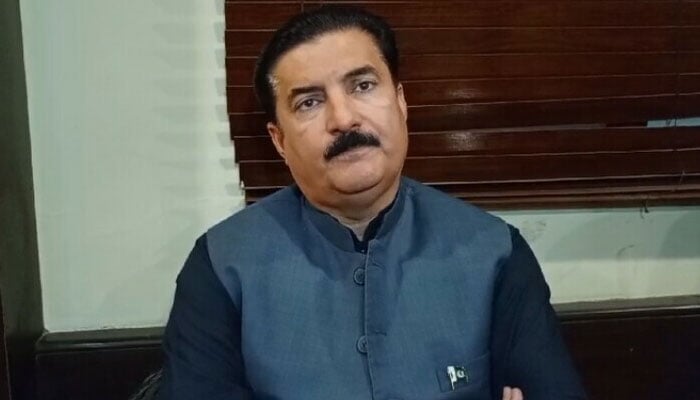
    Khyber Pakhtunkhwa Governor Faisal Karim Kundi has urged Pakistan Tehreek-e-Insaf (PTI) to apologise for its past statements and criticism directed at Jamiat Ulema-e-Islam-Fazl (JUI-F) chief Maulana Fazlur Rehman. Speaking to journalists in Nowshera, Kundi said PTI’s current political position appeared different from its earlier stance towards Fazlur Rehman. He said the party should acknowledge its previous remarks and offer an apology. The governor also criticised PTI’s approach towards the judiciary, saying the party had celebrated certain court decisions in the past but later faced adverse verdicts from the same judicial system. Kundi said PTI supporters had previously distributed sweets when courts issued decisions they considered favourable. However, he noted that subsequent decisions by courts resulted in PTI founder Imran Khan being sent to jail. He argued that political parties should maintain a consistent position on state institutions and should not support institutions only when their decisions favour them. Turning to the situation in Khyber Pakhtunkhwa, Kundi strongly criticised the provincial government and accused it of failing to address the province’s major governance and security challenges. He alleged that political activities and what he described as political drama surrounding Adiala Jail and D-Chowk had continued for years, while the province faced serious issues related to law and order. The governor claimed that the security situation had deteriorated and alleged that the province was being left vulnerable to militants. He said restoring peace and ensuring effective governance should be the government’s primary responsibilities. Kundi also pointed to what he described as a significant change in PTI’s political relationships. He said the party now regarded Maulana Fazlur Rehman and Mahmood Khan Achakzai as important political allies or figures, despite its previous criticism of them. He said the change in political positioning made it even more important for PTI to address its past statements against Fazlur Rehman. The governor’s comments come amid continued political disagreements between the federal and provincial governments, with security, governance and political alliances remaining major areas of contention.

  • | |

    Seven workers abducted in armed raid on Chagai min…

    Seven workers were abducted after a group of armed men raided a private mining site in Chagai district and allegedly took away vehicles, fuel and other equipment worth millions of rupees. According to sources, the incident occurred around 1pm on Tuesday at a mine in Mahian Kaur, located approximately 15 to 18 kilometres west of Chagai town. Eight unidentified armed men reportedly arrived at the mining site on motorcycles. They took control of the facility and held the workers hostage before taking seven employees away with them. Four of the abducted workers were from Gilgit. They were identified as Wajahat, Wajid, Shahid and Sabir. The other three workers were locals. They were identified as Ziauddin from Dalbandin, Shah Saleem from Mahian in Chagai and Saeed Muhammad, who is also from Mahian. Sources said the armed men remained at the mining site for several hours. They reportedly stayed there until around 7pm before leaving with the hostages and equipment. The attackers allegedly took a Zambad vehicle and a four-wheel-drive pickup from the site. A motorcycle was also reportedly taken. More than 20 solar panels were among the items removed from the mining facility. The attackers also allegedly took bedding, kitchen equipment and other supplies used by the workers. A large quantity of fuel was also taken. Sources said the stolen fuel included around 2,500 litres of diesel and 1,500 litres of petrol. The attackers reportedly carried out the operation without facing resistance. They then left the area with the seven workers and the stolen property. The incident was reported to the relevant authorities soon after the attackers departed. Local administration and security officials have launched efforts to trace the abducted workers and recover the vehicles and other property. Search efforts are continuing in the area, while authorities are also investigating the identity and motives of the armed men. The abduction has raised fresh security concerns for workers and private mining operations in Chagai, where remote mining sites can be difficult to secure. At the time of reporting, there was no confirmed information about the whereabouts or condition of the seven abducted workers.

Leave a Reply

Your email address will not be published. Required fields are marked *