health officials monitor

Health Officials Monitor Arsenic Exposure Risks in Chiang Rai Waterways

CHIANG RAI – Thailand’s Department of Disease Control (DDC) is expanding its health surveillance program to protect residents living near arsenic-contaminated waterways in Chiang Rai province. Health officials are focusing on individuals facing moderate to high risks of chemical exposure along the Kok, Sai, Ruak, and tributary rivers. This second-year campaign now spans 18 districts to evaluate daily behaviors, collect biological samples, and deliver targeted medical advice.

Key Takeaways

  • Expanded Health Screening: The DDC extended its arsenic exposure monitoring program across 18 districts in Chiang Rai province.
  • Targeted Urine Analysis: Public health teams are conducting risk assessments and gathering urine samples to detect toxic chemical absorption.
  • Proactive Community Guidance: Officials encourage residents to follow local water quality advisories and seek immediate medical care if unusual symptoms occur.

Health Officials Launch Field Operations Across Chiang Rai

Dr. Anek Mungaomklang, Deputy Director-General of the DDC under the Ministry of Public Health, led field operations from July 14 to 16, 2026. Officials gathered at the Rim Kok Health Promoting Hospital in Mueang Chiang Rai district alongside regional healthcare networks. This targeted initiative builds upon baseline health tracking established during the 2025 fiscal year.

Furthermore, medical teams are focusing heavily on workers whose daily livelihoods require direct contact with surface water. Health personnel conduct detailed interviews using official exposure assessment forms to evaluate personal risk factors. Local sub-district hospitals and Village Health Volunteers are coordinating closely to ensure all testing meets academic health standards.

Urine Testing and Environmental Exposure Tracking

Dr. Chantana Padungtod, Director of the Division of Occupational and Environmental Diseases, highlighted the critical need to reach high-risk populations. By pairing behavioral interviews with laboratory urine analysis, public health experts can determine exact contamination levels within human bodies. Consequently, these diagnostic results allow researchers to design effective long-term preventative care measures.

Public health agencies plan to return test results directly to residents along with personalized health recommendations. According to official guidelines from the Department of Disease Control, early monitoring prevents severe health complications associated with heavy metal toxicity. Local authorities continue to track arsenic concentration in surrounding soil, crops, and aquatic life.

The DDC advises all Chiang Rai residents to monitor local announcements regarding water quality and food safety. People living near rivers should refrain from consuming untreated surface water or untested local produce. Anyone experiencing unexplained physical abnormalities should consult a medical professional immediately.

Residents seeking further information can contact the official Department of Disease Control Hotline at 1422 for direct assistance.

Trending News:

Heavy Rains Turn Kok River Dangerously Murky, Sparking Fears in Chiang Rai

Toxic Tides: Rare Earth Mining in Myanmar is Poisoning Chiang Rai’s Rivers
 

Similar Posts

  • Chiang Rai Launches New Health Initiative to Combat Chronic Kidney Disease

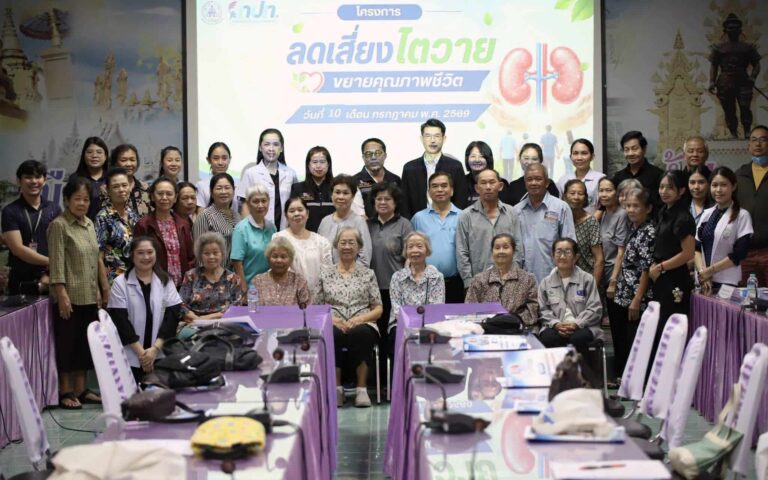
    CHIANG RAI – On July 10, 2026, Chiang Rai took a major step toward better community health. The city officially launched the “Reduce Kidney Failure Risk, Extend Quality of Life” project. Acting Sub-Lieutenant Bunrit Ayuyuen, the Deputy Municipal Clerk, opened the event at the Mueang Chiang Rai District Public Health Office. The new program specifically […]

  • | |

    South Indian actress Shakeela undergoes neck surgery after excessive phone use

      South Indian actress Shakeela has revealed that her excessive use of mobile phones left her with a serious neck problem that eventually required surgery costing around Rs300,000 Indian rupees. The 53-year-old actress shared her experience in a video posted on her YouTube channel and urged people, especially parents, to limit unnecessary mobile phone use. Shakeela, who has worked in Malayalam, Tamil, Kannada and Telugu films, said her habit of playing games and watching videos on her phone for several hours caused significant damage to her neck. She explained that she would often lie on her side in bed for long periods while using her phone. “I used to play games on my phone continuously for four hours while lying on my side in bed,” Shakeela said. She added that she would only get up occasionally to have tea or coffee before returning to her phone. After playing games, she would spend hours watching reels on YouTube and Instagram. According to the actress, maintaining an incorrect posture while using her phone, combined with prolonged screen time, affected important blood vessels in her neck and eventually led to serious health complications. She underwent surgery in Chennai and said that a titanium screw was also used during the procedure. After returning home, doctors advised Shakeela to wear a neck collar until she recovered. She said that following the surgery, she has needed assistance even with basic activities such as getting out of bed and eating. Shakeela stressed that mobile phones are useful devices when used responsibly, but excessive use can have serious consequences. She advised people not to spend unnecessary hours watching videos or playing games, even if the content is entertaining. She also issued a warning to parents, urging them to avoid giving mobile phones to children unnecessarily. According to her, children should use phones only for essential activities and educational or useful content rather than spending long periods watching short videos and playing games. The actress said that people could end up paying a heavy financial and physical price for excessive phone use, adding that her own experience had cost her around Rs300,000 and caused considerable pain and difficulty. Shakeela Begum was born in Chennai. Her mother, Chand Bee, was from Andhra Pradesh, while her father, Chand Basha, was from Tamil Nadu. She began her acting career with a Tamil film in 1995. However, she gained widespread recognition after appearing in the Malayalam film Kinnarathumbikal, released in 2000. Over the years, Shakeela became a well-known name in South Indian cinema, particularly for her work in Malayalam films. Her latest health experience has now prompted her to use her public platform to raise awareness about responsible mobile phone use and the potential health risks associated with prolonged screen time and poor posture.

  • |

    Why young minds internalize being a burden

    When a child begins to internalize the belief that their presence is an obstacle, the transformation rarely happens in an explosive moment. Instead, it is a gradual, quiet erosion of their sense of self-worth. Recent reports surrounding youth mental health have drawn urgent attention to how children absorb socio-economic pressure, domestic tension, and emotional distress. The youth has convinced themselves that their families would simply be better off without them. Psychological research identifies a specific mindset known as perceived burdensomeness. It’s the distorted cognitive belief that one’s existence imposes an unmanageable drain on loved ones.  Adults often process household stress out loud through financial worries or fatigue. However, children are acute observers but poor interpreters of these adult struggles. When young minds witness prolonged arguments over money, household strain, or family burnout, they frequently externalize the blame onto themselves. Rather than recognizing systemic or situational issues, a child’s natural self-referential worldview leads to a heartbreaking conclusion. If I weren’t here, my parents wouldn’t be so stressed. Triggers for Emotional Withdrawal in Children  Hearing constant worry over basic living costs or healthcare expenses. Feeling as though love or acceptance is tied strictly to high achievement or complete emotional compliance. When overwhelmed caregivers unintentionally treat basic parenting duties as exhausting chores. Receiving persistent feedback that their emotional or physical needs are too much to handle. How Burden Beliefs Manifest in Everyday Behavior Unlike adults, who might voice feelings of worthlessness directly, children express this weight through shifts in conduct. Identifying these subtle indicators early can make the difference between early intervention and severe psychological crisis. From Obligation to Belonging Addressing this internal crisis requires shifting household culture from transactional survival to unconditional emotional safety. Child mental health advocates emphasize that reassurance must go beyond simple verbal praise. It requires active, structural validation within the home. A child needs to know that their value isn’t dependent on their convenience to adults. Love is not a debt they owe back to the family, but a foundation they stand upon. Explicitly reassure children that adult challenges such as bills, jobs, or adult relationships are strictly the responsibility of grown-ups. Validate their requests for help, space, or care as healthy and welcome parts of growing up. Spend unhurried, non-evaluative time together where no performance or chore is expected. Rebuilding a child’s foundational sense of belonging takes consistency, but by recognizing the early signals of perceived burdensomeness, parents and educators can intervene before silence turns into deep-seated trauma.  

  • | | |

    Pattaya Deputy Mayor Opens Anti-Drug Training for Students on Koh Larn

    Koh Larn, Pattaya, August 3rd, 2026 – Pattaya City Deputy Mayor Mr. Damrongkiat Pinijkarn led the opening ceremony of a school-based anti-drug immunity training program at Muang Pattaya School 10 (Ban Koh Larn). Senior executives from Pattaya City, D.A.R.E. police instructors from Muang Pattaya Police Station, teachers, and students attended the event in full force. […]

  • | |

    South Indian actress Shakeela undergoes neck surgery after excessive phone use

      South Indian actress Shakeela has revealed that her excessive use of mobile phones left her with a serious neck problem that eventually required surgery costing around Rs300,000 Indian rupees. The 53-year-old actress shared her experience in a video posted on her YouTube channel and urged people, especially parents, to limit unnecessary mobile phone use. Shakeela, who has worked in Malayalam, Tamil, Kannada and Telugu films, said her habit of playing games and watching videos on her phone for several hours caused significant damage to her neck. She explained that she would often lie on her side in bed for long periods while using her phone. “I used to play games on my phone continuously for four hours while lying on my side in bed,” Shakeela said. She added that she would only get up occasionally to have tea or coffee before returning to her phone. After playing games, she would spend hours watching reels on YouTube and Instagram. According to the actress, maintaining an incorrect posture while using her phone, combined with prolonged screen time, affected important blood vessels in her neck and eventually led to serious health complications. She underwent surgery in Chennai and said that a titanium screw was also used during the procedure. After returning home, doctors advised Shakeela to wear a neck collar until she recovered. She said that following the surgery, she has needed assistance even with basic activities such as getting out of bed and eating. Shakeela stressed that mobile phones are useful devices when used responsibly, but excessive use can have serious consequences. She advised people not to spend unnecessary hours watching videos or playing games, even if the content is entertaining. She also issued a warning to parents, urging them to avoid giving mobile phones to children unnecessarily. According to her, children should use phones only for essential activities and educational or useful content rather than spending long periods watching short videos and playing games. The actress said that people could end up paying a heavy financial and physical price for excessive phone use, adding that her own experience had cost her around Rs300,000 and caused considerable pain and difficulty. Shakeela Begum was born in Chennai. Her mother, Chand Bee, was from Andhra Pradesh, while her father, Chand Basha, was from Tamil Nadu. She began her acting career with a Tamil film in 1995. However, she gained widespread recognition after appearing in the Malayalam film Kinnarathumbikal, released in 2000. Over the years, Shakeela became a well-known name in South Indian cinema, particularly for her work in Malayalam films. Her latest health experience has now prompted her to use her public platform to raise awareness about responsible mobile phone use and the potential health risks associated with prolonged screen time and poor posture.

  • Health Land Sathorn: Bangkok Best Spa Experience

    Bangkok can make even a well-planned trip feel exhausting. That is why many visitors recommend Health Land Sathorn when they want a reliable spa without paying boutique hotel prices. Its central Sathorn location, broad treatment menu, long daily hours, and easy access from BTS Saint Louis make it a practical choice. For many travelers, it […]

Leave a Reply

Your email address will not be published. Required fields are marked *