
second great wall

A Second Great Wall of Trust: Why Only China Can F…

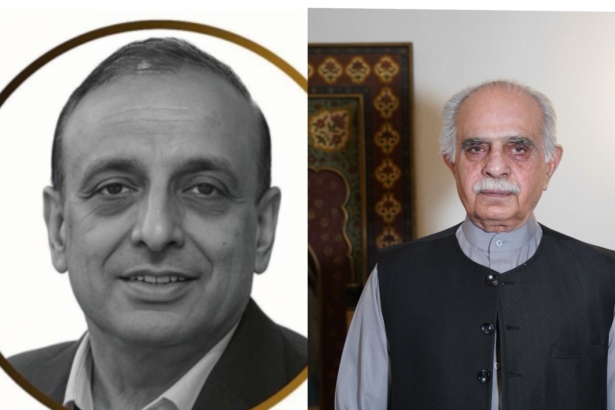
By General Ghulam Mustafa & Arshad H Abbasi 

We have stood together at the foot of the Great Wall of China more than once at different times, but today a thought has returned to both of us, unspoken until now. The Wall runs some 21,196 kilometres across dynasties and deserts, built stone by stone over centuries to secure a civilization’s frontier. Pakistan’s own most dangerous frontier — the Durand Line separating us from Afghanistan — runs roughly 2,625 kilometres, barely an eighth of that length. If a civilization on the scale of China could raise a barrier of that magnitude with the tools of the third century BC, then securing a border less than an eighth as long, with the tools of the twenty-first century, cannot be beyond the reach of the partnership Beijing and Islamabad have built. We do not ask China to build us a wall of stone. We ask Beijing to help us build something sturdier: a wall of enforced accountability against the militants using Afghan soil to bleed Pakistan dry.

That bleeding is not a metaphor. Since the Afghan Taliban returned to power in Kabul, the Tehreek-e-Taliban Pakistan has operated with a freedom of movement across our western border that it never enjoyed before. Balochistan burns. Khyber Pakhtunkhwa buries its soldiers and its schoolchildren in the same week. And now the shockwaves have reached Punjab, the country’s demographic and economic core. Every honest accounting of this violence traces back to the same source: sanctuary, training, and logistical freedom on Afghan soil, tolerated or unchecked by an administration in Kabul that owes its survival, in no small part, to Chinese patience and Chinese capital.

This is why we write to Beijing, and to Beijing specifically, rather than to Washington, Brussels, or Moscow. Survey after survey inside Pakistan finds that well over eight in ten of our citizens consider China, not any Western power, to be Pakistan’s true friend. Our leaders have called this friendship higher than the Himalayas and deeper than the ocean, and we do not repeat that line as ceremony. We repeat it because it is the only frame in which Beijing can hear what we are about to say plainly: no other country on earth holds the leverage over the Taliban that China holds, and no other country has more to lose from squandering it.

Consider what China has already built in Afghanistan without formal recognition of its government. The Xinjiang Central Asia Petroleum and Gas Company signed a twenty-five-year contract to develop the Amu Darya oil basin, committing roughly $150 million annually and scaling toward $540 million over three years. State-backed firms continue to negotiate the long-stalled Mes Aynak copper concession, one of the largest untapped copper deposits on earth, alongside serious interest in Afghan lithium and iron ore. Beijing has cut tariffs on 98 % of Afghan imports. An active Chinese embassy operates in Kabul today, accepting Taliban-appointed diplomats, even as formal recognition is withheld. This is not incidental engagement. This is the deepest economic relationship any major power currently has with the Taliban administration, and it gives China something no airstrike or sanction regime has ever given anyone: the ability to make continued investment conditional on results.

We are asking Beijing to use that leverage with the same discipline it has already shown in defending its own security interests. China has made clear, repeatedly and without apology, that it will not tolerate the Turkistan Islamic Party or East Turkistan Islamic Movement fighters operating from Afghan territory against Xinjiang. We are asking only that China extend that identical, non-negotiable standard to the Tehreek-e-Taliban Pakistan and its allied networks operating against us. If Kabul can be made to understand that Chinese mining contracts, Chinese tariff relief, and Chinese diplomatic cover all depend on a genuine, verifiable crackdown on TTP sanctuaries, this insurgency does not need years to end. It needs a Kabul administration that finally has more to lose from harbouring militants than from disowning them.

But security pressure alone will not hold, and here we want to be honest about what Afghanistan actually needs from its neighbours, China chief among them. Afghanistan’s national literacy rate stands at just 37 % — 52 % among men, a mere 27 % among women — and UNESCO reports that more than nine in ten ten-year-olds in the country cannot read a simple sentence. Two point two million adolescent girls remain locked out of secondary school entirely, the only country on earth to enforce such a ban, at a projected cost to Afghanistan’s own economy of nearly $9.6 billion in lost potential by 2066. No pipeline, no copper mine, and no railway line will stabilize a country where the next generation cannot read the contracts, safety manuals, or engineering plans that would let them run these projects themselves. It is China’s duty, as the neighbour with the deepest economic stake and the clearest long-term interest in a stable Afghanistan, to make literacy, vocational training, and the reopening of girls’ education a hard condition of its investment — not out of charity, but because an illiterate, disenfranchised population is the same population the TTP and ETIM recruit from. Afghanistan does not need a foreign army. It needs classrooms, teachers, and a workforce equipped to build the country’s own future, backed by an investor patient and disciplined enough to insist on it.

Every failed intervention in Afghanistan’s modern history has shared the same flaw: outsiders who came to fight a war, not to build a neighbour. Britain came and left. The Soviet Union came and left, at ruinous cost to itself. NATO and the United States spent two decades and did not leave functioning institutions behind them. China is different in the one respect that matters most: China is not leaving. It shares a border with Afghanistan. Its investments are measured in decades, not electoral cycles. And it has, through the Belt and Road Initiative and the China-Pakistan Economic Corridor, already built the template for what real regional integration looks like.

We believe Afghanistan is, as it has been called for centuries, the heart of Asia — but its arteries are blocked, and only China has the patience, the capital, and the discipline to reopen them. Extend the high-speed, dual-carriage rail corridor that already links Pakistan and China so that it runs onward through Afghanistan into Uzbekistan, Tajikistan, and Turkmenistan, linking Central Asia to the Arabian Sea and, eventually, to Europe. Make that connectivity the reward for security cooperation, and make security cooperation the price of that connectivity. Iran, Uzbekistan, Tajikistan, and Turkmenistan all share our interest in an Afghanistan that trades instead of exports terror; China is the only power with the standing to bring them all into a single framework.

Co-authored by a soldier and an engineer, this proposal recognizes a fundamental truth: Pakistan’s crisis on its western border is a twin failure of governance and development that cannot be treated in isolation. Because our foreign ministry remains distracted by frequent foreign tours and blinded by a transactional, businessman mindset—ignoring strategic, out-of-the-box solutions where no direct financial benefit exists, a state of collapsed governance recently confirmed by both the Minister of Interior and the DG ISPR—civilian leadership has failed to act. Had the Taliban not banned cryptocurrency in August 2022 as haram and fraudulent, our Foreign Office might have taken notice; yet today, core national sovereignty is sidelined.

We do not ask China for charity or conquest. We ask Beijing to convert patient capital into disciplined leverage, erecting a “second wall”—not of stone, but of enforced conditions, literacy, and connectivity—making the mountains between us yield to the roads running through them. Because distant powers an ocean away and non-contiguous actors like India cannot fix Afghanistan, its immediate border states—China, Iran, Pakistan, Tajikistan, Turkmenistan, and Uzbekistan—must forge an uncompromising regional coalition. To drive this vision, we propose the immediate establishment of a premier regional think tank bringing together top defense, intelligence, and policy experts. This institution will serve as the strategic engine to replace state paralysis with neighbor-led stability and long-term prosperity.

Similar Posts

  • From steel to semiconductors and back

    It is widely believed that the more things change, the more they remain the same. For nations to stand on their own feet, the basics have to be covered; it is the lesson of history which must never be ignored. Steel has always been considered the basic building block of advancement. Pakistan started off well in producing its metals. In the decade of the sixties, the Kalabagh Iron deposit was upgraded by the German Krupp Wrenn process to be later converted into steel. Germans are known for thoroughness; they produced VW cars with the local metal. The powerful import lobby prevailed and the Pilot Plant was shut down. Precious time was lost. Finally, in the decade of the seventies the Soviet Union came to our help. The Pakistan Steel Mills project was started outside Karachi at Port Qasim. In the decade of the eighties Pakistan started producing its own steel based on imported ore and coal. The plan was to gradually replace the imported raw materials with the indigenous. At its peak the mill produced about 3 MTPY ( Million Tons per year ) against a national demand of 5 MTPY. Instead of increasing capacity, the plant was shut down in the year 2015. Coming from a family of technologists, I opted for Metallurgical Engineering. I wanted to join Pakistan Steel Mills ( PSM ) which was recruiting students for education and training in USSR. But instead, I landed in the USA where I completed my masters study from the College of Mines University of Arizona ( U of A ). Arizona was considered the world Copper Capital with several mines around. In the decade of the seventies an organization was established at the federal level called Resource Development Corporation ( RDC ) with its head office in Karachi while PUNJMIN ( Punjab Mineral Company ) covered Punjab where Kalabagh and Chiniot Iron deposits were located. It was RDC that launched the first Copper-Gold project at Saindak through its subsidiary SML ( Saindak Metals Limited ) in the year 1992. I was closely associated with this project as the bench studies were conducted in Tucson by a consulting firm by the name of MSME ( Mountain States Mineral Enterprise ). Till my master’s level, mining remained my focus. After graduating in 1981 when I returned in 1983 to start my doctoral program in Arizona, mining had been replaced by high-tech Silicon based Semiconductors. Research was focused on electronic materials. Silicon was produced from Silica Sand on which Integrated Circuits ( ICs ) were built. Metals like Aluminum, Titanium, Gold and Copper were being used. Then came the Solar Cells which Pakistan had produced in the decade of the seventies but missed opportunity due to lack of commercial linkages. While the Semiconductors and Solar batteries are in great demand, the material needs have increased manifold. Mining is back with a bang. Without basic raw materials, the technological advancements are not possible. I have gone full circle in my own career, and so have the technological advancements. From Steel to Copper, then Silicon based Semiconductors followed by mining and gasification of Coal. As a nation, we have missed several opportunities. Catch-up is possible through Leap-Frogging which is widely used by late entrants. China and India have adopted this approach effectively. The crusade should start with a Minerals Development roadmap. PMDC ( Pakistan Mineral Development Corporation ) and PUNJMIN can take the lead. Most of our mineral deposits remain un-tapped which can be developed to meet our needs. Self-sufficiency in Steel and Copper is achievable. Even lithium is available to produce batteries. Minerals are the basic building blocks of the nation which have been ignored. High grade Silica Sand is available in the north to produce Solar Cells and Semiconductors. India has made major investments in the high-tech Semiconductor sector. In the recently held Mining Conference in Karachi, it was agreed to expand the operations at Thar to meet our energy and fertilizer needs after gasification of the Black Gold. Basics have to be covered; advancement cannot be achieved through imports and borrowing. The party should finally come to an end for nation building to start.

  • The Invisible Infrastructure of a Civil Society

    A man’s hand emerges from a moving car window on Lahore’s Ferozepur Road, opens, and lets go, garbage tumbling onto the road like something the city never asked for. He drives on, does not look back. Nearby, another man treats a red light as inconvenience, not command, and guns through it because the road, for one careless breath, looks empty, not realizing a motorcyclist is already crossing into that emptiness. Neither would call himself careless. Ask them, and they will say, with the confidence of the unexamined life, that they are decent, law-abiding citizens, and narrowly, they are not wrong. Neither has broken a law that will ever find them. What they are missing is something smaller than law and, in the end, far heavier: civic sense. Civic sense is a phrase worn smooth by overuse and rarely defined. It is not patriotism, that loud, flag-waving thing. It is not obedience, that bowed, fearful thing. It is, instead, a kind of seeing, the awareness that one’s actions ripple into rooms one will never enter: the neighbour’s wall, turned dumping ground; the footpath, swallowed by parked motorcycles, leaving the pedestrian nowhere to stand but the road; the river downstream, carrying someone else’s filth to a family that never asked for it. It is the quiet discipline of behaving as though other people exist and matter, even when no policeman stands at the corner. Pakistan is not short of laws. Karachi’s bylaws on waste disposal would look entirely respectable in any city hall in the world. Islamabad’s traffic regulations are detailed enough to please the most exacting planner. What is missing is not ink on paper but something beneath the skin: the private sense that a rule is worth keeping even when no one is watching. This is why civic sense cannot be legislated into being, however many statutes are stacked atop one another. You can fine a man for littering. You cannot fine him into loving the street he lives on. Take something as unremarkable as a queue. Anyone who has stood at a bank counter, a railway window, a hospital OPD here knows the choreography by heart: the line exists as an idea until someone decides their time outweighs everyone else’s, and it dissolves like sugar in water. This was never really about queues. It is about a deeper assumption: that public space belongs to no one in particular, and rules, somehow, are meant for other people. Multiply that across a city of ten million restless souls, and you get gridlock that swallows whole afternoons, bins overflowing like wounds left untended, and parks abandoned within a year of their own birth. There is a cost to all this, rarely counted honestly. Karachi bleeds away enormous productive hours each year to congestion worsened, not created, by drivers who treat lanes as suggestions and red lights as optional punctuation. Public health suffers when open drains and uncollected waste become nurseries for disease, an arithmetic residents of nearly every major Pakistani city have learned to expect each monsoon. None of this appears, tidy and legible, in a budget document. It appears in hospital wards, in wages lost to sick days, in a low-grade sense that public life is something to survive rather than inhabit. It would be convenient to lay the blame entirely at poverty or lack of schooling, and there is a grain of truth there; a person fighting daily to feed a family has little room left for civic virtue. But the explanation only carries so far. Plenty of well-off, well-schooled Pakistanis fling litter from car windows and treat public parks as private gardens annexed from the commons. Civic sense is not a simple function of income. It is a habit, built through repetition, example, and whatever a society quietly agrees to call normal. This is precisely where schools could do far more. Civic education in most Pakistani classrooms, where it exists at all, survives as a chapter memorized for an exam rather than a practice lived out. A child taught that littering is wrong, who watches the adults around her litter daily without flinching, will absorb the adults’ hands, not the textbook’s words. Civic sense must be modelled, not narrated: teachers who insist on a clean classroom, parents who do not fling wrappers from car windows in front of watching children, local governments that follow a complaint through to its end instead of letting it dissolve into some forgotten file. None of this demands grand reform. It demands a shift in what ordinary people find embarrassing. In cities where civic sense runs deep, a litterer feels a small, hot flush of shame, not because a fine is coming, but because it simply is not done, the way one does not spit at a wedding. That social pressure is more powerful, and far cheaper, than any enforcement machinery a government could design. Building it takes time, and begins small: a shopkeeper sweeping the pavement outside his door, a driver waiting his turn at a roundabout though no one would know if he cheated, a resident reporting a broken streetlight instead of learning to walk around the dark. Cities are not, in truth, built by planners and engineers alone. They are built street by street, choice by choice, by the accumulated decisions of the people who walk them. A country may possess the widest roads and tallest towers in the region and still feel chaotic if the people moving through them share no responsibility toward them. Civic sense is not a lesson for children, nor a slogan for a billboard. It is the invisible infrastructure, unseen and indispensable, that makes every other infrastructure actually work. The writer is serving as Director of the Institute of Humanities and Arts at Khwaja Fareed University of Engineering and Information Technology, Rahim Yar Khan, Pakistan.

  • Imposed War and Imposed Peace Have Failed

    Today, the world faces unprecedented challenges, including the spread of unbridled unilateralism, the weakening of the fundamental principles of the United Nations Charter, the illegal recourse to force, the imposition of unilateral and indiscriminate sanctions, and the instrumental use of economic and financial mechanisms to exert political pressure. Members of the international system, particularly states as its primary actors, must defend multilateralism, respect for national sovereignty, sovereign equality of states, and the rule of law in international relations. Since June 2025, the nation of the Islamic Republic of Iran has experienced its bitterest days. The martyrdom of the Supreme Leader of the Islamic Revolution—as the highest political and religious authority of the Islamic Republic of Iran—the tragic attack on the Minab school resulting in the martyrdom of 168 school children, the testing of America’s latest lethal weapons and cluster missiles in the attack on the city of Lamerd in Fars Province and the indiscriminate assassination of its defenseless people, along with attacks on medical and healthcare facilities, educational environments, and universities, and the continuation of these crimes demonstrate that when a superpower turns rogue, international peace and security are put at risk. By imposing war, the U.S. government has driven several rounds of negotiations with Iran into a deadlock. The mediatory efforts of Pakistan to restore peace and tranquility to the region are commendable, and Iran has respected this vital role. It is crystal clear that wars are always initiated by one side, but ending them requires the presence and role of both warring parties. If the Americans, who imposed this war, desire to end it, they must respect the Pakistan Memorandum of Understanding and stop trying to impose peace on Iran through their own self-authored rules. However, it appears the United States seeks to dictate its demands upon Iran, whether through war or through peace. You cannot have your cake and eat it too. The Americans want everything at once and afford no standing to the opposing side. The blatant violation of the terms of the Pakistan MoU, continued attacks on transportation infrastructure, drinking water facilities, fishing boats, local commercial vessels, meteorological centers, and other civilian infrastructure are clear instances of violations of international law and international humanitarian law, as well as a stark example of the ongoing policy of resort to force and disregard for international obligations. The Islamic Republic of Iran underscores its firm resolve to defend its sovereignty, independence, and territorial integrity. The U.S. government is an untrustworthy and law-defying regime that does not adhere to international rules, regulations, and agreements. For this reason, many political analysts believe that U.S. conduct regarding West Asian regional issues poses a threat to the stability of the international community. What Trump has been asserting since last year regarding a U.S. victory and the defeat of Iranian military forces is merely a strategic mirage; continuing Trump’s self-destructive policies will pull America into a deep quagmire, demonstrating that they lack a proper understanding and perception of Iran’s history and its people. Direct U.S. intervention in the implementation of security and maritime arrangements in the Strait of Hormuz, alongside the re-imposition of a naval blockade, has once again endangered the security of one of the world’s most strategic waterways and disrupted the normal flow of international commercial shipping. The principled policy of the Islamic Republic of Iran has always been grounded in dialogue, diplomacy, good-neighborliness, and regional cooperation. We firmly believe that lasting peace will only be realized when aggression, occupation, threats, and double standards give way to mutual respect, the impartial execution of international law, and genuine commitment to international obligations. Although the Islamabad Memorandum of Understanding was signed by the presidents of both Iran and the United States, neighboring and regional countries—especially the Arab states of the southern Persian Gulf, acting as “Middle Eastern allies” of the U.S. government—are required under Articles 1 and 2 of this agreement to cooperate toward an immediate and permanent end to the war and the establishment and maintenance of peace. These countries must not forget that their territories were used to commit aggression against the Islamic Republic of Iran, and that such acts of aggression persist. Whether the territory of these nations was placed at the disposal of the United States, or the United States exploited their territory against Iran without their consent, makes no difference, as ultimately their facilities and capabilities were utilized against us. Consequently, these states form part of the war front against Iran, and they too must remain faithful to the Pakistan MoU. Brad Cooper, Commander of United States Central Command (CENTCOM), explicitly announced the involvement of several Persian Gulf Cooperation Council (PGCC) member states and Jordan in the United States’ military aggression against Iran. If this claim is merely a falsehood, these countries must officially and transparently refute it. The pervasive insecurity and raging fires across the region are the exclusive byproduct of continuous aggression against Iran, and regrettably, the territory of certain states serves these destabilizing actions. The Islamic Republic of Iran reserves its inherent right to self-defense to protect itself. We hope our neighboring countries reach a common understanding that the actions taken by Iran do not stem from hostility toward regional nations. We all believe that we are neighbors and will remain neighbors. Iran has repeatedly emphasized the logic of a “Strong Region,” believing that the entire region must become powerful—a region capable of resolving its own issues and challenges without relying on foreign forces, which are themselves the source of instability and insecurity. This region is a shared home; its security belongs to all its nations, and everyone must endeavor to create and maintain peace, security, and prosperity.

  • From Aspiration to Reintegration: Rethinking Pakis…

    By Tahseen Ullah  For millions of Pakistanis, migration is a journey of hope and opportunity. Its success depends not simply on departure, but on informed decisions, relevant skills, ethical recruitment and proper preparation. Labour migration is a continuum—from reliable information and guidance, authentic career planning through skills development, documentation, overseas employment, work-visa processing, registration and Pre departure orientation at Protectorate of Emigrants, worker protection, and return and reintegration. For Pakistan, strengthening every stage of this cycle is essential to making labour mobility safe, regular, skills-oriented and rights-based. A well-managed migration system can protect workers, reduce exploitation and irregular migration, enhance employability, and transform migration from a response to unemployment into a strategic investment in human capital, economic resilience and sustainable national growth. The journey begins with one critical step: making an informed decision about whether, where and how to migrate Planning for Informed Migration: Skills, Choices and Readiness The migration journey begins with access to reliable information and informed decisions about overseas labour markets, occupations, wages, destinations, costs, legal pathways and potential risks. Once the decision to migrate is made, preparation should focus on employability and readiness through relevant technical skills, recognised certifications, language proficiency, digital literacy, financial awareness, and knowledge of employment contracts and workers’ rights. Aligning skills and qualifications with the evolving demands of destination-country labour markets can help prospective migrants pursue safe, regular and sustainable employment opportunities. Recruitment, Work Visa and Pre-Departure: Safe Pathways Recruitment is a critical stage of the migration cycle and a key point of vulnerability. Pakistani workers can access overseas employment through licensed Overseas Employment Promoters, the Overseas Employment Corporation, or direct employment. Verified employers, transparent contracts, fair recruitment costs and accessible grievance mechanisms help prevent fraud and exploitation. The process also includes obtaining the required work visa through the relevant diplomatic mission, completing emigration clearance and registration for protection, and attending Pre-Departure Orientation at the Protectorate of Emigrants (PoE) offices, equipping migrants with essential knowledge of their rights, responsibilities, workplace safety and available support services. Post-Arrival: Protection and Productivity The migration journey continues after arrival. Migrants may face contract violations, wage disputes, unsafe working conditions, language barriers, discrimination or limited access to support. Effective labour protection, employer compliance, consular assistance and accessible referral mechanisms are essential. Well-protected migrants are more likely to remain productive and successfully integrate into the workplace. Return and Sustainable Reintegration: Turning Experience into Opportunity Return marks an important transition in the migration cycle, particularly for workers completing their contracts and returning to Pakistan. A planned return and reintegration strategy can help returnees make productive use of their savings, skills, experience and professional networks. Access to psychosocial, legal, financial and employment support, along with skills recognition, entrepreneurship opportunities and further training, can facilitate sustainable reintegration. With the right support, returnees can turn their overseas experience into productive livelihoods and contribute to local economic development. Challenges and Opportunities Pakistan’s migration system faces persistent challenges, including information gaps, fraudulent recruitment, irregular migration, high recruitment costs, low skills levels, limited recognition of qualifications, inadequate protection and weak reintegration mechanisms. Fragmented coordination across institutions can further reduce the effectiveness of the migration process. At the same time, significant opportunities exist. Pakistan’s young population, expanding skills base and growing international demand for workers in healthcare, construction, engineering, IT, caregiving, manufacturing and green sectors provide a strong foundation for expanding regular labour mobility. The opportunity is to move from a labour-export model to a human-capital and talent-mobility model—through demand-driven skills development, international certification, language training, ethical recruitment, stronger bilateral labour mobility agreements and effective protection across the migration cycle. The Way Forward Pakistan’s National Emigration and Welfare Policy 2026 provide a framework for managing migration through a whole-of-cycle approach, covering safe and regular migration, skills development, worker protection, welfare, and return and reintegration. Its success will depend on effective implementation through clear short-, medium- and long-term strategies, strong institutional coordination and measurable outcomes. Relevant organisations, including Migrant Resource Centres, can complement these efforts through awareness-raising, guidance and information on legal pathways, referrals, Pre departure orientation, reintegration of returnees to helping migrants make informed decisions and avoid fraud, exploitation and irregular migration. Going forward, the priority should be to translate policy commitments into practical outcomes for migrants and their families. This requires sustained institutional coordination, responsive services and a system that remains connected to changing labour-market needs and the realities faced by workers throughout the migration journey. If managed effectively, migration can go beyond providing overseas employment and remittances to become a pathway for skills transfer, productive return and improved economic opportunities—contributing to a more resilient and prosperous Pakistan. Tahseen Ullah is a development and migration sector practitioner specializing in labour mobility, migration governance, education and child protection. He can be reached at tahseenanthro@gmail.com  LinkedIn: Tahseen Ullah

  • Beyond Riba: Reconstruction of Just Financial Orde…

    The preceding part of this series ended with a limit that productive finance cannot cross. Illness, unemployment, education, disability, orphanhood and temporary distress cannot always be converted into profitable investments. Human vulnerability itself cannot become another financial product. That is where a riba-free order must move beyond banking. A society may successfully redesign murabaha, musharakah, salam or ijarah and still remain unjust if a family facing cancer treatment must borrow at any cost, a student must enter adult life under debt, or a widow depends upon a local patron for survival. Prohibition of riba becomes socially meaningful only when basic human need is protected from financial extraction. Pakistan does not have to invent the institutional vocabulary from zero. It already has Pakistan Bait-ul-Mal, established under the Pakistan Bait-ul-Mal Act, 1991. Its official mandate includes assistance to the destitute, widows, orphans, persons with disabilities and other needy citizens, with support extending to medical treatment, education and rehabilitation. Its official position is that assistance is available to the poorest without differentiation of religion, creed, sect or region. This is an important foundation. It is not yet the structure required for a just financial order. Bait-ul-Mal should cease to be understood primarily as an agency dispensing discretionary relief to the “poorest of the poor”. Its larger purpose should be to guarantee a legally defined social floor. Food in destitution, essential healthcare, basic education, protection of children without support, disability assistance and temporary subsistence during involuntary unemployment should become matters of entitlement under transparent criteria, not favours obtained through political access. This distinction is fundamental. Charity depends upon the generosity of the giver. Entitlement rests upon the responsibility of society. It is one of the most emphasised Quranic directive on this idea. The directions given in the holy Quran need not be accepted in totality. This principle is accepted in all the classical juristic traditions. The practical discussion on this is important. In the transitional phase, all the scholarly works envisage gradual movement rather than an overnight abolition of existing economic arrangements. Individuals progressively devote more of their resources to collective purposes while organised society assumes responsibility for the basic necessities of life.   The transition, in any pragmatic scheme, is institutional rather than merely charitable. That insight deserves attention. An Islamic polity cannot measure success by the number of ration bags distributed after deprivation has occurred. Its test is whether institutions progressively remove the conditions that force citizens into dependence upon creditors, property owners, political patrons or charitable intermediaries. Bait-ul-Mal should therefore form the first pillar of social finance: the guarantee against destitution. The second should be waqf. Waqf historically converted wealth into enduring social capital. Whatever the juristic differences concerning its precise legal character, its institutional genius lies in removing an asset from ordinary private consumption and dedicating its benefit to a continuing purpose. Land, buildings and income-producing properties can support hospitals, schools, hostels, water systems, vocational institutions, research centres, shelters and community infrastructure across generations. Pakistan already possesses statutory waqf institutions. Punjab’s Auqaf Department, for example, operates under the Punjab Waqf Properties Ordinance, 1979, for the administration and regulation of waqf properties. Income arising from properties under its control is credited to the Auqaf Fund under the statutory framework. The potential is much larger than administration of shrines and mosques. Pakistan should develop professionally governed public waqf institutions—waqf lillah—at national, provincial and local levels. Public land lawfully dedicated for community benefit, voluntarily endowed private property and other permissible assets could constitute permanent pools of social capital. Their corpus should remain protected while their income finances clearly defined public purposes. This cannot become another avenue for bureaucratic or political capture. Every waqf property should be digitally registered. Its title, purpose, valuation, income, expenditure and beneficiaries should be publicly accessible. Independent audit, professional management and strict conflict-of-interest rules are indispensable. No minister, shrine manager, political family or local notable should be able to convert property dedicated for public benefit into an instrument of patronage. The third pillar is zakat. It should remain distinct from both the ordinary budget and waqf. Its compulsory redistributive character and specified purposes give it an institutional identity of its own. Combining every form of social finance into one government account would destroy these distinctions. The fourth pillar is qard hasan. Not every person requiring temporary liquidity is destitute. A worker may face a medical emergency. A small farmer may need funds after a flood. A graduate may require equipment to begin earning. A household may need a short bridge between unemployment and a new job. Such circumstances do not necessarily call for a grant. They require finance without extraction. Revolving qard hasan funds administered through Bait-ul-Mal, public waqf institutions and local cooperatives could provide precisely that bridge. Principal would return when the recipient regains capacity, allowing the same pool to assist another household. The institution earns no commercial return from distress; society recycles solidarity. This connects directly with the cooperative model discussed in Part IV. The ultimate objective cannot be to create permanent classes of beneficiaries. Social protection should lead towards economic agency. A citizen receiving emergency assistance today should, wherever possible, become tomorrow’s producer, saver and member of a cooperative financial institution. Bait-ul-Mal prevents collapse. Waqf creates enduring social assets. Qard hasan provides a bridge back to economic activity. Cooperatives enable citizens to pool savings, own institutions and finance one another. These mechanisms should operate together rather than as isolated schemes. The structure can be visualised as a ladder. At its base is an enforceable social floor below which no citizen is allowed to fall. Above it are education, healthcare and skills supported partly through public waqf. Temporary setbacks are met through qard hasan. Productive citizens then move towards cooperative and commercial risk-sharing finance of the kind discussed in Part IV. The direction is from dependency to capability, not from one form of dependency to another. Governance will determine whether this succeeds. Pakistan has repeatedly created institutions in the name of disadvantaged citizens and then allowed

  • Are Immigrants the Problem?

    A rise of anti immigration policies have been emerging rapidly across North America and Europe, especially in the United Kingdom and USA. The blue collar politicians and white people living there have expressed their concerns over these often labeled “illegal” immigrants causing crime and stealing the jobs of the “rightful” citizens. If looked closely upon, this is not about illegal immigration, rather it is a form of racism against the blacks, the Indians and rather anyone who is not white.   The United Kingdom had colonized a great part of the world which included the Indian subcontinent and a vast part of Africa along with other European colonizers whom they wanted to “civilize” as for them they were a “savage” race. This colonization resulted in thousands of black and Indian families migrating to Europe, especially the upper class who ought to receive English education and work in the British government.   This seems like a normal history dilemma where colonization led to great migrations and mixing, which the Europeans have now mayhaps forgotten. All over the UK, many rallies of white people have emerged in which they protested against immigration- however they in reality spread their similar racist views. These citizens may not realize the extent to which immigrants aided in growing the economy. If kicked out, the economy will collapse and suffer tremendously.   In recent years these anti immigration policies have caused major hurdles for students all over Asia, South America and Africa who are ambitious enough to study in the ivy leagues and settle abroad- however their visas being rejected have deteriorated their ambitions otherwise. This is being seen as a great disadvantage all over the world especially for the students who are forced into putting a hold on their education.   No more than the student, this poses a great threat to the Western countries themselves. Without the hands and minds of these students who are the future workforce who help stabilize and grow the economy, the countries will often suffer. Unlike most nations, Germany is seen as offering free education to these immigrants which has definitely bore the result making Germany one of the most powerful economies despite the restrictions imposed on them (after world war II).   The other side of this argument initiates from the government of respective countries like Pakistan whom the students and workers emigrate from- their government stating that they are much needed to support their own respective economies. Nevertheless, the great amount of corruption, instability and discrimination are the reasons in the first place for workers to emigrate seeking better secure jobs abroad. It is hard to revive the patriotic heart of civilians when the governments do not work in favour of them.   “France for the French” was said by Jean-Marie Le Pen since the immigrants are apparently threatening the French identity. The same french is spoken in 20 African countries who were forcefully colonized and turned into slaves, the countries who had their own languages (hundreds of them), cultures and identities. So it often seems extremely hypocritical to hear statements such as these.   Consequently, the immigrants framed as criminals are the result of centuries old racist ideologies. They pose no threat but the threat of looking different, which is again ironically hypocritical since white race is a minority in the world. Hence, even in the ripe year of 2026 racism thrives and the rest of the world suffers. Comments like “Immigration is not an opportunity. It is a tragedy.” ( by Marine Le Pen) are made openly without facing any backlash- instead receive grave support. Mayhaps immigration can stop once the British return the koh-e-noor, jewels and trillions of dollars worth of resources stolen from the sub continent.

Leave a Reply

Your email address will not be published. Required fields are marked *