poetry power 038

Poetry, Power & Humanity—IV Bulleh Shah: Be…

The ‘I’ of Bulleh Shah represents man in his very essential capacity as a unit of creation”.
Najm Hosain Syed, Recurrent Patterns in Punjabi Poetry 

Najm Hosain Syed’s reading of Bulleh Shah rescues one of Punjab’s most familiar poems from the ease of popular applause. Bullah ki jaana main kaun is commonly heard as a graceful confession that ultimate truth cannot be known. Najm sees something more demanding. Bulleh’s “I” is the elemental human being confronting the question “who?” Every answer offered by history—religion, institution, inherited status, nationality, relationship or dogma—tempts the seeker with a final identity. The poet accepts none as sufficient. His negatives are not an escape from commitment; they refuse to let any socially manufactured label exhaust the meaning of being human.
This makes Bulleh Shah indispensable to our inquiry into poetry, power and humanity. Shah Hussain crossed the narrow passage between possession and freedom [Poetry, Power & Humanity—III:  Shah Hussain: Crossing the Narrow Passage of Love & Rebellion, Minute Mirror, July 21, 2026]. Bulleh Shah interrogated the walls on either side. Who constructed them? Who benefits when human beings are separated into pure and impure, believer and unbeliever, ruler and subject, high-born and low-born? His poetry exposes how identity, initially a source of belonging, can be converted into an instrument of hierarchy.

اُٹھ گئے گوانڈھوں یار
رَبّا ہُن کیہ کریے
Uth gaye gawandhon yaar
Rabba hun ki kariye
The Beloved has left the neighbourhood;
Lord, what am I to do now?
اُٹھ چلّے ہُن رہندے ناہیں
ہویا ساتھ تیار
رَبّا ہُن کیہ کریے
Uth chale hun rehnde nahin
Hoya saath tayyar
Rabba hun ki kariye
He has risen and departed;
the caravan stands ready,
and he will remain no more.
Lord, what am I to do now?
ڈاڈھ کلیجے بل بل اُٹھے
بھڑکے بِرہوں نار
رَبّا ہُن کیہ کریے
Daadh kaleje bal bal uthe
Bharke birhon naar
Rabba hun ki kariye
The depths of my heart are aflame,
kindled by the fire of separation.
Lord, what am I to do now?
بُلھا شاہ پیارے باجھوں
رہے اُرار نہ پار
رَبّا ہُن کیہ کریے
Bulla Shah piyare bajhon
Rahe uraar na paar
Rabba hun ki kariye
Without the Beloved, says Bulleh Shah,
I remain stranded midstream,
reaching neither shore.
Lord, what am I to do now?

The kafi begins with departure, though it does not end in private sorrow. The familiar neighbourhood has lost its centre; the traveller is left between shores. This is the existential moment preceding Bulleh’s interrogation of identity. Once the familiar world departs, inherited answers can no longer shelter us. “What am I to do now?” becomes the cry of every human being whose social certainties have collapsed.

Bulleh Shah lived in a Punjab experiencing political dislocation, declining Mughal authority and sharpening religious and social conflict. His spiritual choice itself challenged inherited hierarchy. Born into a Syed family, he accepted Shah Inayat, traditionally identified with the Arain community, as his murshid. Knowledge and spiritual worth were thus placed above genealogy. Their relationship was not merely devotional; it denied the proposition that dignity could be inherited by one group and withheld from another.
His choice of Punjabi carried similar democratic force. Persian was associated with administration and cultivated elites; Arabic commanded religious authority. Punjabi was the living speech of cultivators, artisans, women, faqirs and labouring communities.

Through the kafi, philosophy ceased to be the exclusive property of courts and seminaries. It could be remembered, sung and transmitted without permission from those controlling formal knowledge. The kafi was central to Bulleh Shah’s poetic expression and to the wider Sufi traditions of Punjab and Sindh.

Bulleh’s resistance becomes sharper in the following kafi, where he compares the ostentatiously pious with dogs.

راتیں جاگیں کریں عبادت
راتیں جاگن کُتے
تیتھوں اُتے
Raatin jaagein karein ibaadat
Raatin jaagan kutte
Taithon utte
You remain awake at night in worship;
dogs keep vigil too—
and surpass you.
بھونکنوں بند مول نہ ہندے
جا روڑیں تے سُتے
تیتھوں اُتے
Bhonkanon band mool na honde
Ja roorin te sutte
Taithon utte
They never cease their watchful barking,
then sleep upon a refuse heap—
and surpass you.
خَسم اپنے دا در نہ چھڈدے
بھاویں وجن جُتے
تیتھوں اُتے
Khasam apne da dar na chhadde
Bhaven vajjan jutte
Taithon utte
They never abandon their Master’s door,
though struck repeatedly—
and surpass you.
بلھے شاہ کوئی رَخت وِہاج لے
نہیں تے بازی لے گئے کُتے
تیتھوں اُتے
Bulleh Shah koi rakht vihaaj lai
Nahin te baazi lai gaye kutte
Taithon utte
Bulleh Shah, acquire provisions for the journey,
or the dogs will carry away the prize—
and surpass you.

The poem reverses an established hierarchy with deliberate audacity. The dog, conventionally treated as impure, becomes the moral teacher; the visibly devout human being becomes the object of satire. Bulleh does not ridicule worship. He asks what worship is worth when it produces neither loyalty nor humility. The dog remains at its master’s threshold despite hunger, rejection and blows. The worshipper may remain awake, although ritual performed for reputation can coexist with pride, cruelty and the pursuit of power.

This distinction is critical. Bulleh Shah’s target is not religion but its conversion into social capital. Piety becomes another possession—something to display, trade and employ against others. In Erich Fromm’s terms, the mode of “having” invades faith: one “has” learning, sanctity, lineage and followers. Bulleh insists upon the mode of “being”, where truth appears through conduct rather than claim. The dog’s fidelity defeats the worshipper’s performance.

The same assault on borrowed identity culminates in three immortal lines:

بلھیا! کی جاناں میں کون Bulleya, ki jaana main kaun? Bulleh, how can I know who I am?
نہ میں مومن وچ مسیتاں
نہ میں وچ کفر دیاں ریتاں
Na main momin vich maseetan
Na main vich kufar diyan reetan
I am not confined to the believer in the mosque,
nor to the rituals called unbelief.
نہ میں موسیٰ، نہ فرعون Na main Moosa, na Firaun I am neither Moses nor Pharaoh.

Bulleh removes the available answers one after another. He is not contained by mosque or unbelief, purity or impurity, Moses or Pharaoh, Arab or Lahori. Najm Hosain Syed interprets this as contemplative self-questioning constructed like a riddle: mature experience proposes answers, while a childlike curiosity dissolves them. History presents its accumulated identities, but the refrain refuses to recognise any one of them as the final truth of a person.

Modern states and markets constantly manufacture such final answers. Citizens are reduced to sect, ethnicity, nationality, occupation, income, consumption and political affiliation. Digital culture adds measurable identities: followers, visibility and approval. Power thrives when these categories become more real than the human beings placed inside them. Economic systems perform a similar reduction by translating human worth into ownership, productivity and purchasing capacity.

Bulleh Shah offers no programme of public policy, though he attacks the psychological foundation upon which exclusion rests. A person who knows himself only through superiority must continually manufacture an inferior other. Caste requires the low-born; sectarian certainty requires the heretic; nationalism without humanity requires the suspect outsider. Bulleh’s repeated “not this, not that” breaks these dependencies. It creates a moral space in which another person can be encountered without first being classified.

His poetry survived because Punjab carried it in its collective voice. Singers, shrine communities and ordinary people preserved what institutions might have domesticated or discarded. Popularity can soften rebellion into entertainment, as Najm cautions, although the kafis resist complete domestication. Their questions return whenever power converts religion into spectacle, lineage into entitlement, wealth into virtue or identity into a weapon.

Shah Hussain showed the cost of attachment and the possibility of crossing beyond it. Bulleh Shah makes the journey more unsettling. The walls are not merely outside us. They have entered our language, institutions and image of ourselves. Freedom begins when we question the labels through which power teaches us to recognise ourselves and others.

Bulleh’s answer is not that identity is meaningless. It is that no inherited identity is large enough to contain a human being. Love, humility and fidelity reveal more than lineage, ritual and public acclaim. The essential “I” remains creative, searching and unfinished. That is why his question continues to disturb us: Who are we when power can no longer name us?

[To be continued]

________________________________________________________________

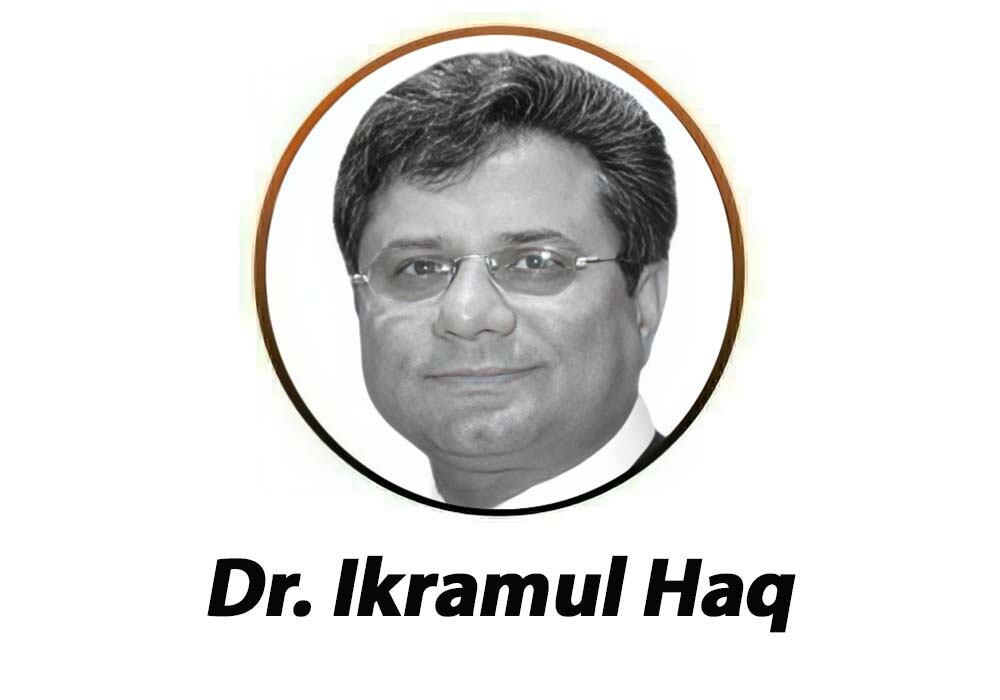
Dr. Ikramul Haq, Advocate Supreme Court, writer, literary critic, Adjunct Faculty at Lahore University of Management Sciences (LUMS), member Advisory Board and Visiting Senior Fellow of Pakistan Institute of Development Economics (PIDE), holds an LLD in tax laws. He was full-time journalist from 1979 to 1984 with Viewpoint and Dawn. He also served Civil Services of Pakistan from 1984 to 1996.
Similar Posts

  • Saudi Arabia Is Our Red Line?

    If someone were to say today that neither Iran nor the United States actually wants war, the immediate question would be: “Then why is this conflict happening?” The answer depends on whom you ask. Each side presents its own narrative, blaming the other for provoking the crisis and insisting that it is merely responding to aggression. From the Iranian perspective, the United States is portrayed as a global bully with a long history of military interventions. Iranian supporters argue that Washington has once again resorted to force, launching a sudden attack on February 28 that allegedly eliminated Iran’s top political and military leadership. They contend that the reported killing of Supreme Leader Ayatollah Ali Khamenei, along with members of his family, is an act that cannot simply be forgotten or forgiven. In their view, they now possess the moral right to seek revenge. If their highest leader was targeted, they argue, then retaliatory action against U.S. President Donald Trump, Israeli Prime Minister Benjamin Netanyahu, and those associated with them is justified. For many in this camp, revenge has become a national rallying cry. The American position is fundamentally different. Washington argues that Iran’s religious establishment under the doctrine of Wilayat al-Faqih has destabilized the Middle East for more than four decades. According to this view, Tehran has built, funded, and armed militant proxy groups not only around Israel but also across neighboring Gulf and Arab states. U.S. officials point to Syria, where former President Bashar al-Assad—despite belonging to a minority sect—was accused of carrying out decades of repression and mass violence against the Sunni majority, allegedly with Iran’s political and military backing. Similar accusations are made regarding Iraq, where Iranian influence is said to have fueled years of instability. In Lebanon, critics argue that Hezbollah, widely regarded as Iran’s most powerful proxy, has effectively established a state within a state, operating beyond the authority of the Lebanese government. They claim the group has not only maintained continuous hostility toward Israel but has also contributed to Lebanon’s internal political and economic paralysis. According to this narrative, tensions have escalated to the point where Lebanon’s elected government has explored understandings with Israel aimed at confronting these armed groups. American officials further argue that Iran’s regional influence has created deep anxiety among Israel as well as neighboring Gulf Arab governments, who fear that Iran’s Islamic Revolutionary Guard Corps (IRGC) or its affiliated groups could threaten their security at any time. They also maintain that the military action taken on February 28 was rooted in the events of October 7, when Hamas—described by Washington as an Iranian-backed organization—launched an unprecedented attack inside Israel that killed approximately 1,200 civilians and resulted in around 250 hostages, including women and children. Despite these deep divisions, the United States and Iran, with the mediation of Pakistan and Qatar, reportedly signed a Memorandum of Understanding aimed at reducing tensions. One of its key provisions allegedly guaranteed that the Strait of Hormuz would remain open, allowing international shipping to pass freely without Iran imposing fees, restrictions, or obstacles. However, according to the American account, tensions flared again when missiles were reportedly fired at Saudi and Qatari vessels passing through waters near Oman. Critics questioned the justification for such an action, arguing that instead of acknowledging responsibility or seeking de-escalation, elements within Iran’s Islamic Revolutionary Guard Corps insisted that the Strait of Hormuz should remain closed to commercial shipping. They further allege that the IRGC instructed Yemen’s Houthi movement to block the Bab el-Mandeb Strait in order to disrupt Saudi oil exports to Europe. If the Strait of Hormuz has already strained Asian energy markets, they argue, closing Bab el-Mandeb could create similar disruptions for Europe. Such developments would pose serious economic and strategic challenges for the Kingdom of Saudi Arabia. Adding to these concerns, Yemen’s Houthis—who are widely viewed by Western governments as being aligned with Iran—have reportedly threatened to strike Saudi oil infrastructure. It is within this context that Pakistan has chosen to clarify its position. Beyond the longstanding religious, diplomatic, and strategic relationship between Islamabad and Riyadh, Pakistan has repeatedly maintained that any attack on Saudi Arabia would be regarded as a direct threat to Pakistan itself. Against this backdrop, Pakistan’s leadership reportedly conveyed a clear message to Tehran: “An attack on Saudi Arabia will be treated as an attack on Pakistan. That is our red line.” In line with this policy, Pakistan has reportedly deployed fighter aircraft and thousands of military personnel to Saudi Arabia, with forces positioned near the Yemeni border. Alongside air and ground deployments, Pakistani naval units are also said to be prepared to cooperate with Saudi and U.S. forces in securing maritime routes and responding to Houthi activities if required. Given these escalating tensions, Iran’s Islamic Revolutionary Guard Corps is urged by its critics to recognize the gravity of the situation and avoid actions that could bring Pakistan and Iran into direct confrontation. They argue that disrupting both the Strait of Hormuz and the Bab el-Mandeb would not only inflict severe damage on the global economy but would also deepen international opposition toward Iran—an outcome they believe Tehran can ill afford. According to this perspective, divisions are already becoming visible within Iran itself. Some observers argue that the country’s elected political leadership is increasingly uneasy with policies that risk further isolation and conflict. They see growing differences between Iran’s political and military establishments, even though these tensions remain largely behind the scenes. The funeral of Iran’s Supreme Leader reportedly drew millions of mourners, reflecting widespread public sympathy. Yet critics argue that this did not necessarily indicate universal support for perpetual confrontation or calls for vengeance. Reports also suggested that hardline supporters directed slogans accusing President Masoud Pezeshkian of betrayal, while Foreign Minister Seyed Abbas Araghchi allegedly faced verbal hostility and even physical attacks during the proceedings. Those who criticize Iran’s hardline factions argue that such behavior deserves condemnation rather than praise. In their view, the greatest burden of continued escalation will ultimately

  • Beyond Riba: Reconstruction of Just Financial Orde…

    The preceding five parts of this series have argued that elimination of riba cannot be achieved by changing the vocabulary of finance. We began with definition, moved to creation of money, separated transaction deposits from investment capital, examined productive finance based on ownership and genuine risk, and then placed Bait-ul-Mal, waqf, zakat and qard hasan within a wider system of social protection. The final question is no longer conceptual. It is legislative. Pakistan now has a date. The Constitution (Twenty-sixth Amendment) Act, 2024 substituted Article 38(f) with the direction to “eliminate riba completely before the first day of January, two thousand twenty-eight”. The constitutional deadline reinforces the Federal Shariat Court’s 2022 judgment in the Riba cases, reported as PLD 2023 FSC 47. The problem is that a deadline does not itself create a new financial order. The Finance Division’s Post-2027 Financial System in Pakistan contains useful work on Sukuk, liquidity facilities, legislation, safety nets, technology and capacity building. It nevertheless remains a strategy, not a Prohibition of Riba law. More importantly, some of its transitional assumptions sit uneasily with the word “completely”. Majority foreign-owned institutions may decide voluntarily whether to convert; conventional obligations contracted before the deadline may continue according to their terms until maturity; and fresh foreign financing is contemplated through Shariah-compliant modes subject to availability of reasonable options. These concerns are understandable from the perspective of financial stability. They cannot become permanent legal exceptions. Pakistan therefore needs an umbrella Prohibition of Riba Act, enacted well before the constitutional cut-off, accompanied by consequential federal and provincial amendments [Who will draft Riba Prohibition Law? Minute Mirror, April 7, 2026]. Its first task must be the one identified in Part I: define what is prohibited. The law should distinguish a loan or debt carrying a stipulated increase because of time from lawful consideration arising from genuine sale, lease, service, partnership or productive risk. Courts and regulators should be empowered to examine connected contracts as one economic arrangement. A murabaha, ijarah, musharakah or Sukuk should not become immune from scrutiny merely because recognised Islamic terminology appears in its documents. The second requirement is a clear cut-off rule. No bank, financial institution, government agency or other regulated person should be permitted to originate a new interest-bearing financial contract in Pakistan after December 31, 2027. The prohibition must be activity-based, not ownership-based. A transaction cannot change its constitutional character because shareholders of the institution happen to be foreign. This is also the weakness we identified earlier in examining the Government’s strategy paper. Existing liabilities require different treatment. Pakistan cannot simply repudiate sovereign bonds, multilateral obligations or private contracts. That would replace one problem with default, litigation and financial isolation. The law should instead require a complete register of every conventional obligation extending beyond the cut-off: principal, return, maturity, governing law, creditor, refinancing possibility and proposed conversion date. Contracts capable of consensual refinancing should be converted. Those that cannot immediately be altered should continue only under a transparent transitional schedule with definite sunset dates, rather than receiving an indefinite exemption merely because they were signed before 2028. The third issue concerns money itself. Part II argued that commercial-bank money creation is not automatically riba. The power to create purchasing power through credit is nevertheless too important to remain outside reform. Parliament should require a time-bound examination of sovereign transaction money, reserve arrangements and separation of monetary creation from productive financial intermediation. This question should be decided upon economic evidence and institutional consequences, not theological assertion. Part III then demonstrated why payment accounts and investment accounts require legal separation. Money held for immediate payment and nominal safety should not be treated as risk capital. Funds deliberately invested for commercial return should carry transparent exposure to the enterprises and assets from which that return arises. Deposit protection against institutional failure must similarly be distinguished from a State guarantee against every commercial investment loss. The fourth area is productive finance. The law should protect genuine murabaha, ijarah, salam, istisna, musharakah, mudarabah and other permissible arrangements while prescribing minimum standards of ownership, possession, disclosure and risk. Shariah audit should examine economic substance rather than merely documentation. Taxation must also become neutral. Equity participation, leasing and genuine asset transactions should not suffer additional fiscal costs merely because legislation was historically designed around conventional debt. Public finance cannot remain outside this discipline. Government should not treat Sukuk merely as a technique for reproducing conventional borrowing against whatever public assets can be placed in a registry. The official strategy itself proposes an Assets Registry Company and expanded hybrid Sukuk issuance. Sovereign instruments must confer genuine economic rights and corresponding responsibilities rather than provide documentary assets solely to support a predetermined financial return. Fiscal reform is inseparable from elimination of riba. No monetary arrangement can remain sound where governments continuously borrow merely to finance structural deficits. Monetary policy requires the same intellectual honesty. The Government’s strategy envisages Shariah-compliant open-market operations, standing facilities and liquidity arrangements. These are necessary developments, but changing contractual forms will not be enough if their sole objective becomes mechanical reproduction of the existing interest-rate corridor. SBP ultimately needs a transparent post-riba monetary framework explaining liquidity creation and absorption, lender-of-last-resort assistance, foreign-exchange operations and monetary transmission. The fifth element takes us beyond banking altogether. Part V argued that riba flourishes not only because creditors seek gain but also because human beings are compelled by need. A successful transition must therefore strengthen Bait-ul-Mal, professionally governed public waqf lillah, independently administered zakat and revolving qard hasan funds. Essential healthcare, education, disability support and subsistence during genuine incapacity should never become markets for financial extraction. Local cooperative institutions should provide the bridge from protection to participation. The lesson drawn from Rabobank was not that Pakistan should import a Dutch banking model. It was that communities can mobilise their resources and build productive institutions from below. Properly regulated cooperatives can gradually shift economic power away from patrons and concentrated financial interests towards citizens themselves. Governance is consequently as important as Shariah nomenclature. Pakistan

  • Pakistan’s College Education Crisis

    Educational debates in Pakistan usually begin with schools and end with universities. Somewhere in between lies a vast public college network that has quietly undergone a transformation without receiving the reforms necessary to sustain it. For decades, colleges were viewed merely as institutions imparting Intermediate education. That perception is now obsolete. Government colleges across Pakistan award four-year BS degrees, supervise undergraduate research, implement semester systems, and produce graduates completing sixteen years of education. They have become institutions of higher education in every meaningful sense except in the standards by which they recruit, promote and evaluate their faculty. The real crisis begins not when institutions disappear but when they continue to exist while quietly abandoning the purpose they were meant to serve. Pakistan’s college education system increasingly reflects this uncomfortable reality. Buildings stand, classrooms remain occupied, salaries are paid and degrees continue to be awarded, yet the intellectual purpose that ought to define higher education is steadily weakening. The system continues to function, but it no longer asks whether it is producing scholars, researchers and critical thinkers or merely issuing degrees. This contradiction is not merely administrative. It is national. Countries do not build knowledge economies simply by increasing enrolment or opening new campuses. They do so by ensuring that those entrusted with educating the next generation possess the intellectual depth, scholarly discipline and professional integrity demanded by higher education. Pakistan has expanded the responsibilities of its colleges without fundamentally reforming the standards governing those who teach in them. It is this mismatch between expanding responsibilities and stagnant reforms that explains much of the present crisis. History offers repeated warnings against confusing continuity with progress. Great civilisations have seldom been defeated by ignorance alone; far more often, they have been weakened by their refusal to reform. Ancient Troy believed its mighty walls guaranteed safety until destruction entered concealed within the famous wooden horse. Institutions, too, often collapse not because external forces overwhelm them but because internal weaknesses become too familiar to recognise. Pakistan’s colleges face a similar danger. The greatest threat is not inadequate infrastructure or declining enrolment. It is the quiet normalisation of standards that no longer correspond with the responsibilities these institutions now carry. Perhaps nowhere is this more evident than in faculty recruitment. Every education system is ultimately only as strong as the people it appoints to teach. Laboratories, libraries and curricula matter, but they cannot compensate for weak academic recruitment. A nation’s classrooms reflect the intellectual standards it establishes at the point of entry into the profession. Countries that consistently perform well in higher education understand this principle with remarkable clarity. Finland recruits teachers from among its highest-performing graduates and treats teaching as one of the country’s most competitive professions. Singapore invests heavily in teacher selection, structured professional development and continuous evaluation throughout an educator’s career. South Korea subjects aspiring academics to rigorous competition, while Germany closely links academic progression with scholarly achievement and research productivity. These countries differ in culture, politics and economic history, yet they share one conviction that higher education depends first and foremost upon the quality of its faculty. Pakistan, regrettably, often operates on a different assumption. Recruitment is frequently treated as the culmination of academic achievement rather than its beginning. A lecturer appointed with only a sixteen years education may spend an entire career within the same system without acquiring higher qualifications or contributing substantially to research, yet still retire after holding senior academic positions carrying the titles of Associate Professor or Professor. Such a framework might have appeared understandable when colleges were primarily institutions for Intermediate education. It becomes increasingly indefensible once those same institutions award undergraduate degrees equivalent to those offered by universities. Academic titles should signify scholarly accomplishment rather than the mere passage of time. Across the world, the designation of Professor represents sustained intellectual contribution, recognised research, advanced qualifications and academic leadership. When promotion depends overwhelmingly upon seniority rather than scholarship, titles gradually lose their meaning. The loss is not symbolic alone. It diminishes public confidence in higher education itself. This is not an argument against experience. Experience remains indispensable in teaching. A seasoned educator often possesses insights that no newly qualified academic can immediately acquire. Classrooms are enriched by years of interaction with students, evolving pedagogical techniques and practical wisdom accumulated over decades. Experience, however, should complement scholarship, not replace it. Knowledge no longer remains static for an entire career. Disciplines evolve at astonishing speed. Artificial Intelligence is reshaping linguistics, medicine, engineering, law and the humanities alike. Climate science has transformed environmental studies. Digital humanities have altered literary scholarship. Advances in neuroscience continue redefining educational psychology. A qualification earned thirty years ago, valuable though it remains, cannot alone certify mastery over fields that have changed beyond recognition. Medicine provides an obvious comparison. No patient would willingly place complete trust in a surgeon who had never updated professional knowledge after graduation. Engineers continually adapt to changing technologies and safety standards. Judges engage with evolving constitutional interpretation. Military officers undergo regular professional education throughout their service. Every serious profession recognises that learning is continuous. Higher education cannot become the sole profession where intellectual growth effectively ends with appointment. The irony is that Pakistan’s college sector contains thousands of exceptionally capable teachers who have voluntarily pursued MPhil and PhD degrees despite limited institutional incentives. Many complete advanced research while balancing heavy teaching schedules, administrative responsibilities and family obligations. Their commitment deserves recognition because it reflects a genuine desire to improve professionally rather than merely fulfil formal requirements. Yet the existing structure frequently sends the opposite message. Promotion often rewards waiting more consistently than learning. When advanced qualifications receive insufficient institutional value, the incentive to pursue rigorous scholarship inevitably weakens. No education system can flourish if intellectual ambition appears optional while seniority remains sufficient. The anomaly becomes even more striking when one examines the present hierarchy within many public colleges. It is no longer uncommon to find an MPhil-qualified lecturer or even a PhD serving under an officer whose highest

  • Political Dynasties: A Silent Threat to Democratic…

    By Misbah Naz   Democracy derives its legitimacy from the principle that political power belongs to the people. Every citizen, regardless of family background, wealth, or social status, should have an equal opportunity to participate in governance and compete for public office. Yet, across many democracies, political power often remains concentrated within a handful of influential families. This phenomenon, commonly known as dynastic politics, raises an important question: can democracy truly flourish when leadership becomes a family inheritance? Political dynasties are not unique to one country or region. They exist in established and emerging democracies alike. From South Asia to North America, prominent political families have shaped electoral politics for decades. While family members have every democratic right to contest elections, democracy suffers when political succession depends more on lineage than merit. One of the greatest strengths of democracy is political equality. Elections are intended to provide a level playing field where ideas, competence, and public service determine electoral success. Dynastic politics undermines this principle by granting inherited political advantages. Established family names often enjoy greater access to party leadership, campaign financing, media exposure, and political networks than ordinary citizens. Consequently, capable individuals without influential backgrounds frequently struggle to enter mainstream politics. Dynastic politics also weakens internal democracy within political parties. Instead of selecting candidates through transparent and competitive processes, leadership positions may be concentrated within a single family or close associates. This discourages talented young leaders, limits political innovation, and reduces accountability. Political parties become personality-driven rather than institution-driven, making leadership transitions more dependent on family succession than democratic competition. Another concern is the weakening of public trust. Citizens expect elected representatives to prioritize national interests over personal or family influence. When political office appears to be inherited across generations, many voters begin to question whether democratic institutions genuinely offer equal opportunities. Declining trust in political institutions can reduce electoral participation, increase political polarization, and create public frustration with democratic governance. Political dynasties may also influence policymaking. Long-standing political families often develop extensive patronage networks that reward loyal supporters through appointments, contracts, or political favors. Such systems can encourage nepotism and undermine merit-based governance. Public institutions function most effectively when appointments are based on competence rather than political loyalty or family connections. Young people are particularly affected by dynastic politics. Across many developing democracies, youth constitute a significant proportion of the population, yet they remain underrepresented in political leadership. When political pathways are dominated by established families, emerging leaders with innovative ideas face structural barriers to participation. This disconnect between political leadership and demographic realities limits democratic renewal and policy innovation. However, it is equally important to avoid oversimplification. Belonging to a political family does not automatically make an individual an ineffective leader. Democratic principles do not prohibit relatives of politicians from contesting elections. The fundamental issue is whether they compete under fair conditions and remain accountable to voters. If political success is achieved through transparent elections, strong institutions, and genuine public support, democratic legitimacy remains intact. Problems arise when inherited influence consistently outweighs merit and competition. Strengthening democracy therefore requires institutional reforms rather than targeting individuals. Political parties should adopt transparent candidate selection procedures, encourage internal elections, and provide opportunities for grassroots leadership. Independent election commissions, campaign finance regulations, and stronger parliamentary oversight can further reduce undue political concentration. Equally important is an informed electorate that evaluates candidates on integrity, competence, policy vision, and public service instead of family legacy alone. Democracy is sustained not merely by regular elections but by equal political opportunity. Societies flourish when leadership emerges through merit, accountability, and public confidence rather than inheritance. Political dynasties may continue to exist in democratic systems, but they should never become substitutes for democratic competition. Ultimately, the health of any democracy depends on whether every citizen—not just those born into influential families—has a genuine chance to lead.

  • Xi Jinping’s vision for stronger party governanc…

    Since the 18th National Congress of the Communist Party of China (CPC), the CPC Central Committee with General Secretary Xi Jinping at its core has put forward a series of new ideas, new thinking and new strategies centered on the major issue of the era—what kind of long-term governing Marxist party to build and how to build it—giving rise to Xi Jinping Thought on Party Building. As an important component of Xi Jinping Thought on Socialism with Chinese Characteristics for a New Era, Xi Jinping Thought on Party Building carries significant practical relevance and far-reaching guiding significance for strengthening the Party and the nation. It explicitly sets forth the “14 commitments”, namely: adhering leadership by the CPC as the defining feature of socialism with Chinese characteristics; upholding the centralized, unified leadership of the Party Central Committee; exercising full and rigorous Party self-governance; staying true to the Party’s original aspiration and founding mission; taking strengthening the Party politically as the overarching principle; building cohesion and inner strength with the Party’s latest theory; forging strong Party spirit; improving the organizational system to ensure vertical coherence and effective implementation; cultivating high-caliber officials capable of shouldering the mission of national rejuvenation; making sustained and effective efforts to improve conduct; governing the whole Party with strict discipline; taking integrated steps to ensure that officials do not have the audacity, opportunity or desire to conduct corruption; governing the Party through systems and regulations, and ensuring that the political responsibility for Party self-governance is fulfilled. The “14 commitments” represent a concentrated summary of General Secretary Xi Jinping’s landmark, guiding new ideas and strategies on party building in the new era. They serve as the fundamental guideline for the CPC in strengthening party building, as well as a Chinese approach for political parties around the world to enhance self-improvement and state governance. China and Pakistan are ironclad friends and all-weather strategic cooperative partners. We are ready to deepen exchanges and mutual learning with Pakistan on party building and governance, work together to improve people’s well-being and promote prosperity and development, and accelerate the building of an even closer China-Pakistan community with a shared future in the new era. We must put people first and ensure that China-Pakistan cooperation delivers greater benefits to the two peoples. The CPC has always upheld building the Party for the public good and exercising state power for the people. Xi Jinping Thought on Party Building explicitly stresses “remaining true to the original aspiration and founding mission”, namely to seek happiness for the Chinese people and rejuvenation for the Chinese nation. Back in 2012, General Secretary Xi Jinping pointed out that our Party is dedicated to serving the people wholeheartedly; the people’s desire for a better life is the goal we strive to work for. Guided by this profound devotion to the people, in the well-known poverty elimination campaign in China, General Secretary Xi Jinping set a shining example through personal commitment. He conducted more than 50 field research visits on poverty alleviation, covering all 14 contiguous poor regions across China. Based on thorough investigations, he put forward and applied the concept of targeted poverty alleviation, setting a brilliant example of integrating the power of truth with moral integrity. Under his leadership, China won the poverty alleviation campaign, built a moderately prosperous society in all respects, and embarked on a new journey of advancing national rejuvenation and building a great modern socialist country through Chinese modernization. Practice since the 18th National Congress of the Communist Party of China (CPC) has fully demonstrated that the historic achievements and transformative changes in the cause of the Party and the country are fundamentally attributable to the steady guidance of General Secretary Xi Jinping as the core of the CPC Central Committee and of the Party as a whole, and to the scientific guidance of Xi Jinping Thought on Socialism with Chinese Characteristics for a New Era. Under the strong leadership of General Secretary Xi Jinping and the Party Central Committee, over 3 million first secretaries of CPC village committees and village-based officials, together with nearly 2 million township officials and millions of village officials, fought in unison to eliminate absolute poverty. This fully demonstrates the CPC’s capacity to mobilize resources to accomplish major undertakings, and embodies two core principles highlighted in Xi Jinping Thought on Party Building, which is “adhering to the leadership by the CPC as the defining feature of socialism with Chinese characteristics” and “upholding the centralized, unified leadership of the Party Central Committee. It is precisely because the CPC always puts people first and regards delivering people’s wellbeing as its paramount achievement that it enjoys enduring popular support and stands as the most reliable backbone for the Chinese people. Beyond seeking happiness for the Chinese people and rejuvenation for the Chinese nation, the CPC also strives for progress for humanity and the common good for the world. As General Secretary Xi Jinping noted, we Chinese not only aspire for good living for ourselves, but also hope people in other parts of the world lead a decent life. This is fully reflected in the development of China Pakistan relations in the new era. General Secretary Xi Jinping has always been concerned about and supported Pakistan’s national development and the improvement of people’s livelihoods. He and Pakistani leaders established the all-weather strategic cooperative partnership between the two countries and reached important consensus on building an even closer China-Pakistan community with a shared future in the new era. General Secretary Xi Jinping has stressed that China’s friendly policy toward Pakistan is always oriented toward all Pakistani people, the planning and layout of the China-Pakistan Economic Corridor (CPEC) should take into account all regions of Pakistan, so that the fruits of development can benefit all the Pakistani people. To date, CPEC has brought in over 25.9 billion US dollars in direct investment, created more than 260,000 jobs, added over 8,000 MW of power generation capacity, built 510 kilometers of highways and 886 kilometers of core national power

  • Debtocracy & bankruptcy of ideas   

    Pakistan’s debt problem has entered a new phase. The headline figure is alarming: total debt and liabilities reached Rs. 99.59 trillion by the end of fiscal year (FY) 2025-26. The deeper concern, however, lies in the composition of this debt, the burden of servicing it and the channels through which public borrowing now affects every productive sector of the economy. According to the latest State Bank of Pakistan data, total debt stood at Rs. 97.88 trillion. Gross government domestic debt reached Rs. 59.44 trillion, while external debt amounted to Rs. 36.20 trillion. Central government debt increased by 7.39% over the preceding year to Rs. 83.64 trillion. External debt and liabilities stood at US$138.85 billion. These numbers confirm the central argument developed in the a ten-part series published in these columns [‘Bankruptcy of ideas—X: Debt, Taxes & Democracy’, Minute Mirror, June 21, 2026]. Pakistan has not merely borrowed against its future. It has increasingly borrowed to service earlier borrowing, while failing to create sufficient productive capacity from the accumulated debt.   ‏The external debt-servicing profile for FY2026 makes this particularly clear. Pakistan serviced US$21.59 billion of external debt during the year. An extraordinary US$10.14 billion—nearly half of the annual amount—fell in the final quarter alone. Quarterly servicing was 2.63 times the amount paid in the preceding quarter, mainly because principal repayments jumped from US$2.70 billion in the third quarter to US$8.81 billion in the fourth. This concentration of repayments is as important as the overall debt stock. A country may carry a large debt if its economy generates sufficient revenue, exports and foreign exchange to service it. Pakistan’s difficulty is that debt obligations have expanded much faster than the productive and export capacities needed to meet them. The debt accumulated over decades cannot be attributed to one government or one fiscal year. Persistent fiscal deficits, a narrow and inequitable tax base, losses of state-owned enterprises, the energy-sector circular debt, excessive recurrent expenditure, exchange-rate depreciation and repeated balance-of-payments crises have all contributed to it. Borrowing became the preferred substitute for reform.  Governments borrowed because they could not tax influential sectors, restructure loss-making enterprises, reduce wasteful expenditure or build a competitive export economy. External lenders financed temporary stability, while domestic banks financed the fiscal deficit. Each arrangement postponed difficult decisions without removing the causes of the crisis. The Ministry of Finance reported public debt at 70.7% of GDP by June 2025. The ratio may improve when nominal GDP grows faster than debt, especially during periods of inflation, fiscal consolidation and lower interest rates. A declining debt-to-GDP ratio, however, does not necessarily mean that the debt burden has become harmless. Pakistan’s debt stock is still increasing. What has improved is the immediate cost of servicing parts of it. Total debt and liabilities servicing declined from Rs. 13.16 trillion in FY2025 to Rs. 11.97 trillion in FY2026. Interest payments on debt fell by more than 23%, from Rs. 9.47 trillion to Rs. 7.27 trillion, largely because lower policy rates reduced the cost of servicing domestic government debt. Interest payments on gross government domestic debt consequently fell from Rs. 8.08 trillion to Rs5.99 trillion. This is welcome relief. It should not be presented as the end of the debt crisis. Lower interest rates reduce the flow cost of debt; they do not extinguish the stock. Principal repayments on external debt and liabilities increased from Rs. 3.47 trillion to Rs. 4.47 trillion during FY2026. Pakistan therefore obtained relief on domestic interest payments while facing a substantially heavier external repayment burden. The distinction is between debt management and economic transformation. Pakistan may be moving from an acute debt-accumulation crisis towards a more manageable financing position. It has not escaped debtocracy—the system in which fiscal policy, taxation, banking, foreign relations and development priorities become subordinate to the requirements of borrowing and repayment. Debtocracy does not remain confined to the accounts of the Ministry of Finance. It is transmitted throughout the economy. The first channel is the banking system. Government securities offer banks sovereign backing, liquidity and attractive risk-adjusted returns. Lending to the government is easier than evaluating businesses, financing innovation or supporting small and medium enterprises. A large domestic borrowing requirement therefore creates continuous competition for available liquidity. The result is crowding out. The State obtains the funds it requires, banks earn relatively secure returns and the private sector bears the adjustment. Productive businesses face limited access to credit, higher risk premiums and shorter financing horizons. Smaller enterprises suffer the most because they cannot compete with the sovereign for bank liquidity. This creates a financial system that can remain profitable while the productive economy remains weak. Deposits are mobilised from citizens and businesses, channelled into government securities, and then used substantially to meet recurrent expenditure and service earlier debt. Banking expands without an equivalent expansion in productive capacity. The second channel operates through foreign exchange. External debt repayment creates demand for dollars. That demand places pressure on reserves and the current account. Any resulting exchange-rate depreciation increases the rupee value of external liabilities and raises the domestic price of imported fuel, machinery, raw materials and intermediate goods.  The chain is direct: External repayment creates foreign-exchange demand; reserve pressure increases exchange-rate sensitivity; depreciation generates imported inflation; and inflation raises working-capital requirements and production costs. Debt consequently becomes a corporate balance-sheet issue. An industrial enterprise may have no external loan, yet still bear the effects of sovereign external debt through a weaker rupee, costlier imports, higher energy prices and restricted access to domestic credit. Consumers ultimately pay through inflation, reduced employment and lower real incomes. The third channel is fiscal. Every rupee allocated to debt servicing is a rupee unavailable for education, health, water, climate resilience and productive infrastructure—unless the State raises additional revenue or borrows again. Pakistan then enters a circular arrangement: borrowing creates servicing obligations, servicing compresses development expenditure, weak development limits growth and revenue, and insufficient revenue necessitates further borrowing. This is why a primary surplus, though necessary, is not sufficient. It can stabilise debt dynamics, but

Leave a Reply

Your email address will not be published. Required fields are marked *