nawaz sharifs political

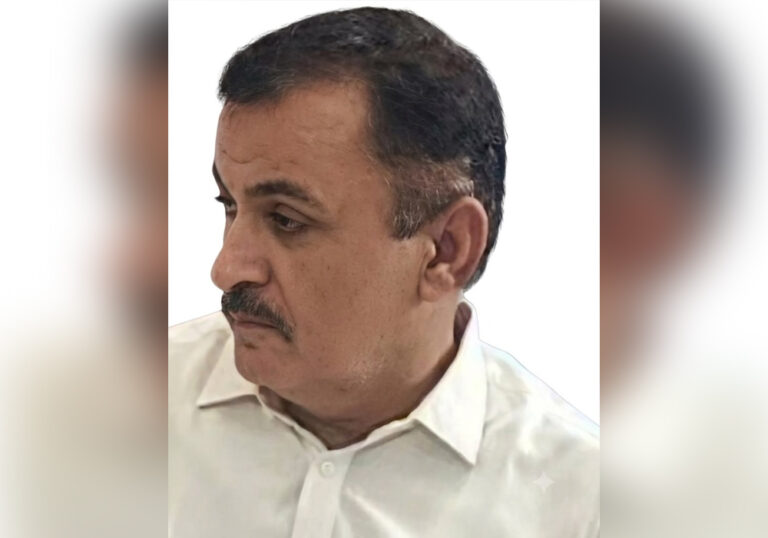
Nawaz Sharif’s political revival has begun — a…

In my view, Nawaz Sharif’s political revival is no longer just a possibility; it is clearly taking shape. His decision to return to the political frontline and personally lead the Pakistan Muslim League (N)’s campaign in Azad Jammu and Kashmir shows a leader who understands timing, patience and political strategy.

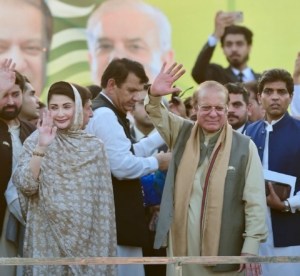
The massive rallies in Muzaffarabad and Mirpur were not just election gatherings; they carried a much bigger political message. They demonstrated, in my opinion, that Nawaz Sharif still has the ability to attract large crowds and energise his supporters. For many party workers and voters who had been missing his direct presence, his return to the campaign stage created renewed confidence and enthusiasm.
At the same time, these rallies sent a strong message to his political opponents and to those analysts who had predicted that Nawaz Sharif had retired from active politics. His presence on the ground has challenged that narrative and shown that he remains a central figure in Pakistan’s political landscape.
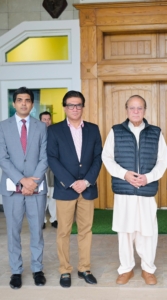
During my last two meetings with Nawaz Sharif — one in the Galyat hills near Murree and another at Jati Umra, Raiwind — I observed a leader who appeared to be carefully planning his political revival. My impression was that he was not looking for a short-term political comeback but working on a long-term strategy.

I have seen this before — not once, but twice.

The first time was in 2006, when Nawaz Sharif came to London after leaving Saudi Arabia following his years in exile. I observed how he patiently rebuilt his political network, reconnected with party workers and gradually prepared the ground for his return to Pakistan’s political arena.

The second time was before the 2024 general elections. During the more than three years he spent in London, I saw a similar approach — careful planning, political consultations and a gradual strategy to return at the right moment.

In my opinion, the current phase follows the same pattern. Nawaz Sharif has relied on a team approach. At the centre, Prime Minister Shehbaz Sharif has focused on managing difficult economic, diplomatic and political challenges. His supporters believe his administration has helped improve Pakistan’s international engagement and presented the country as an important voice on global issues.

On the other hand, Maryam Nawaz Sharif has emerged as a key part of this political strategy. As Chief Minister of Punjab, she has focused on development projects, infrastructure, public service delivery and administrative reforms. In my view, her performance has helped create the perception of a new generation of leadership within the PML-N.

Punjab has, in my assessment, become an important example of the party’s governance message — that provinces can deliver through development, better infrastructure, improved administration and stronger public services.

Nawaz Sharif’s political strength is also linked to his record as Prime Minister. His supporters highlight his focus on infrastructure development, including motorways, energy projects and large-scale national schemes. They argue that during his governments Pakistan moved towards economic stability, with greater emphasis on investment, connectivity and development.

While political opinions about his governments differ, there is no doubt that Nawaz Sharif remains one of Pakistan’s most experienced political figures. With decades of experience in public life, he is among the most senior leaders in the region and has maintained relationships with world leaders. His experience in governance, diplomacy and international affairs remains one of his biggest political assets.

Today, in my view, Nawaz Sharif is attempting another carefully planned political comeback. His direct involvement in the Azad Kashmir election campaign suggests that he is once again taking command of the political direction of his party.

I believe his strategy is working because he is repeating a formula he has used before: patience, organisation, strengthening his team and returning to the people when he believes the political environment is favourable.

History will ultimately be judged by the voters, but from my observations over the past two decades, Nawaz Sharif’s political revival appears to be following a familiar and carefully planned path.

Similar Posts

  • Privatization of DICSOs. Why Pakistan Should Hand …

    Pakistan is about to privatise three of its distribution companies — FESCO, GEPCO and IESCO — and call it reform. It is not reform. It is triage, dressed up by three institutions that have run out of the credibility to call it anything else. The government picked these three not because they are the future of Pakistan’s grid, but because they are the only ones healthy enough to survive being sold. Their transmission and distribution losses sit around 9–10 percent, low by Pakistani standards, and their books are clean enough to attract a buyer. That is not a privatisation strategy. That is a garage sale of the family’s least broken furniture while the roof still leaks — supervised by the very carpenters who let the roof rot. And look who is showing up to bid. Expressions of interest have come from a handful of Pakistani business houses — conglomerates looking for a new asset class. Not one of them has run a national distribution network at scale, with the theft, the political interference, and the feeder-level rot that defines an ex-WAPDA DISCO. We have seen this film before. It was called K-Electric. At the time of its 2005 privatisation, KE was drawing a subsidy of roughly Rs 8 billion. Two decades later, it needed a Rs163 billion tariff differential subsidy in the FY2026–27 federal budget just to keep its consumers’ bills from reflecting its own inefficiency. Twenty-fold growth in the subsidy bill is not what privatisation was sold as. If that is what “successful” privatisation looks like, Pakistan should be terrified of doing it two, or eleven, more times. The rot is institutional, and it has three addresses. NEPRA has spent years rubber-stamping tariff hikes, capitulating to circular debt, and failing to enforce performance standards on the DISCOs it already regulates — a ceremonial regulator that confuses notifying a tariff with governing a sector. CPPA-G, sitting at the centre of the power purchase and settlement system, has presided over a circular debt mountain that keeps climbing regardless of who is nominally in charge, and has never been made to answer for it. And the Ministry of Power itself has spent a decade approving capacity contracts, rejecting cheaper foreign offers, and rotating leadership through the same small circle of appointees who preside over one crisis and then the next. None of these three institutions has the standing left to supervise a privatisation of this scale. Handing FESCO, GEPCO and IESCO to private buyers while NEPRA still writes the tariff rules, CPPA-G still runs settlement, and the Ministry still calls the shots is not privatisation — it is a death sentence dressed in a share-purchase agreement, executed slowly, one quarterly tariff adjustment at a time, on the very consumers this reform claims to protect. A regulator that could not discipline a state-owned utility is not going to discipline a private one with dollar-indexed tariff protections and lawyers on retainer. Investors bidding for FESCO, GEPCO and IESCO are already demanding exactly that: payment guarantees in US dollars, contractual protection against future renegotiation, and freedom to slash staff. Pakistan is not privatising its grid. It is handing three of its most valuable state assets to whoever negotiates the toughest exit clause, under a regulator, a market operator, and a ministry with no track record of holding anyone to account. There was a better road, and Pakistan turned it down. In 2016, Chinese Smart Grid firms — brought to the table personally (Engineer Arshad H Abbasi) in that effort — offered to bring smart grid technology into Pakistan’s distribution network, the same technology that helped State Grid Corporation of China push national transmission and distribution losses down to roughly the mid-single digits in recent years. The proposal on the table was a shared-risk model: China would modernise the DISCOs into smart grids over a decade, splitting recovered losses fifty-fifty with the state. It would have cost Pakistan almost nothing upfront and aligned China’s incentives directly with reducing theft and technical loss — the two diseases actually killing Pakistan’s grid. The Ministry of Power and the Planning Commission rejected it. A parallel 2015 pitch to interconnect Pakistan’s grid with China’s has sat on the drawing board for over a decade. Meanwhile Pakistan built its way into the LNG and imported-coal trap that now drives the very capacity payments crushing consumers and taxpayers alike — a trap Chinese engineers, who have spent thirty years wiring one of the largest and most loss-efficient grids on earth, would likely have steered Pakistan away from. Compare the region. India already exports power to Nepal, Bhutan and Bangladesh and is deepening links with Sri Lanka and Myanmar. Bhutan alone hosts roughly 3,156 MW of Indian-financed hydropower capacity across five major projects — a model of a regional power partner investing in generation rather than merely trading finished electricity. Pakistan, by contrast, cannot even get its own national grid properly connected into Gilgit-Baltistan or Gwadar, a port city that still runs short of reliable power despite sitting at the centre of a multi-billion-dollar Chinese economic corridor. China already has more than 5,000 MW of committed CPEC power capacity inside Pakistan, selected and negotiated by the Planning Commission, and a demonstrated willingness to build hydropower in difficult terrain. It is time to stop pretending Pakistan can manage this alone. Invite China to finance and build the hydropower across GB, AJK and KPK the way India financed Bhutan, and let Pakistan’s surplus eventually be wheeled toward Afghanistan, toward India, even toward China itself — which still needs to retire coal capacity and would gladly take clean power off a friend’s grid. Because that is what China has been, in a relationship most Pakistanis do not need convincing about: a friend when the ledger was empty, a builder when nobody else would build, a partner sweeter than honey and, on the balance sheet of sixty years of cooperation, standing taller than Everest over every other option on the table. NEPRA and CPPA-G have failed

  • Shah Abdul Latif Bhittai: A Multifaceted Poet

    Shah Abdul Latif Bhittai was one of the most multifaceted poets of the subcontinent. The scope of his poetry covers various areas such as peace, humanity, humility, spirituality, patriotism, patience, struggle, and many other important aspects of human life. The light of his poetry reaches the minds and souls of people belonging to different walks of life. Latif was born in a period when Persian was the official language and was also the language of poetry and other means of expression. However, he broke the chains of tradition, put aside the fear of social conventions, and used Sindhi instead of Persian as the medium of his poetry. His narrative reinforces the idea that one should prefer native and indigenous languages to foreign ones, because one’s identity and cultural association are linked with indigenous languages. He does not mean to disrespect Persian; rather, he intends to reinforce the significance of native languages. Patriotism was one of the important themes of Latif’s poetry. Sur Marvi is a testament to his inner feelings about the homeland and the deep love attached to it. According to the story, when Marvi was allegedly kidnapped by Umar, the ruler of the time, and brought to his grand palace, she rejected the luxuries and comforts of the palace. Instead, she requested Umar to return her to Malir, her homeland. Marvi tells Umar that if she dies in imprisonment, her dead body should be sent back to her beloved parents, ancestors, and the land of Malir. Even after her demise, reaching her homeland would bring comfort and peace to her soul. She wishes to be buried among the fragrant herbs and plants of her beloved land. This symbolises love, simplicity, and attachment to the homeland and its people. It shows that despite achieving all worldly luxuries and privileges, a person with a true conscience desires to return to their native land. For Latif, love for the homeland is more than a feeling or a sense of belonging. It is an attachment to one’s identity, culture, and indigenous roots. Therefore, Marvi does not care about worldly luxuries but desires to return to Malir, which may be simple but possesses natural beauty, pure love, and the affection of relatives and fellow beings. For Marvi, her homeland Malir is superior and matchless. In Sur Sarang, Latif discusses rain and the prosperity that follows rainfall through agriculture, irrigation, and the grazing of domestic animals and livestock. Latif describes Thar as a thirsty land that has always longed for rain and showers because the sustainability of Thar depends upon rainfall. The dark clouds over Thar bring excitement and happiness, not only to the poor people but also to their livestock. For the rain-thirsty region of Thar, rain indicates the hope of prosperity. After rainfall, lands are cultivated, animals are kept in homes, and people experience prosperity. This reflects the deep association between humans and nature and shows how people keep high hopes from natural blessings such as rain. Latif’s poetry does not only confine itself to love, peace, and patriotism; patience, humanity, self-surrender, and contentment with minimum means are also significant themes of his poetry. He emphasises the purity and piousness of the inner soul and encourages people to sacrifice worldly desires to elevate their inner selves. During the British era, many British officers posted in Sindh recognised the greatness of Shah Abdul Latif’s poetry and paid tribute to him. Writers and scholars such as H.T. Sorley considered him one of the great poets of the world. Through their contributions, they tried to promote and spread Latif’s message of love, peace, humanity, brotherhood, and tolerance. They observed that although Latif’s poetry apparently covers regional issues and feelings, its thoughts and expressions are universal and comparable with the works of internationally recognised poets. While talking about the concept of the Lord, Latif explains that apparently there seems to be one palace having hundreds of thousands of doors and countless windows. Wherever one looks, one can see the presence of the Lord. This indicates that God is omnipresent and can be seen through different forms of His creation and symbols. One of the fundamental aspects of Latif’s poetry is real love and the approach towards the Creator. According to Latif, the initial step to achieve this elevated spiritual status is to become humble, submissive, caring, and kind towards people living on earth. He believes that in order to have access to God, one has to brush aside worldly desires and become humble and devoted. His poetry also contains messages of hope, patience, courage, and adventure. Latif says that those who have the courage and determination to cross rivers of difficulties and hardships will ultimately reach their destination. In his poetry, the river symbolises obstacles and difficult situations that a person faces while struggling to achieve success. Those who are brave enough to face the horrifying waves of difficulties can ultimately cross the river and achieve their goals. Latif also emphasises avoiding excessive desires of the material world. According to him, the way to spiritual elevation is to remain humble, kind, and caring towards the creatures of the Lord. His poetry teaches people that life is temporary and that one must play one’s role positively in this world to achieve success in the spiritual world. Sur Samundi is another important chapter of Latif’s poetry. In this Sur, Latif depicts the life of marine traders, their economic struggles, social issues, and the feelings of their loved ones when these sailors travel through deep seas and remain away from their homes for many months. In this chapter of his poetry, Latif observes that people of the olden days were involved in trade and commerce and lived prosperous lives. These mariners travelled to far off areas and traded various valuable items, including diamonds, pearls, and jewels. They left the comforts and luxuries of their homes because they preferred trade and adventure to a comfortable life. Latif not only highlights the success and struggles of these traders but also

  • Why Is Perception of China and President Xi Improv…

    Recently, the Pew Research Center released results from a study on global perceptions of China and President Xi. The results also compared China and President Xi with the USA and President Donald Trump. The study was conducted in 36 countries and included 42,151 respondents. The results are quite interesting and show that the overwhelming majority of people strongly favor China and President Xi. For example, respondents from 30 of the 36 countries ranked China and President Xi more positively. Moreover, 67% of respondents from 17 middle-income countries viewed China as a reliable partner. This suggests that China fulfills its commitments and never betrays its partners. And 57% believed that China takes care of the interests of other countries. These findings are in line with China’s philosophy of international relations, win-win cooperation and shared prosperity.   The results also indicated that, among the surveyed countries, all Muslim countries have a positive perception of China. Except for Nigeria (equal confidence in Xi and Trump), all Muslim countries showed confidence in President Xi and his leadership.   It is worth noting that in both categories, Pakistanis ranked China and President Xi highest. According to the results, 90% of Pakistanis held a favorable view of China, and 83% expressed confidence in President Xi’s leadership.   Now, the question is, despite all propaganda and malicious campaigns, why is the positive perception of China and President Xi very high?  The answer is that China believes in common development and development together and for everyone. It also resonates with President Xi’s vision that no one should be left behind on the road of development. Therefore, since its rise as a major economic and global power, China is contributing to global development, especially in the Global South. Simultaneously, China has been working to strengthen the voices of the Global South in global affairs and protect them against the hegemonic aspirations of some powerful countries. Moreover, China is striving to bring sustainable peace and security, and to ensure that everyone’s security and security concerns are treated equally. In the pursuit of these objectives, President Xi has launched numerous initiatives, including global, regional, and country-specific ones.   On the global front, President Xi launched five major initiatives: the Belt and Road Initiative, the Global Development Initiative, the Global Security Initiative, the Global Civilization Initiative, and the Global Governance Initiative. These initiatives have all the ingredients to help the world solve contemporary challenges and chart a path to peaceful, sustainable development and prosperity through cooperative coexistence.   First, China launched the Belt and Road Initiative (BRI) by adhering to the Chinese philosophy of shared growth through discussion and collaboration. Latest data show that China has invested almost US$ 1.4 trillion to help countries bridge the development gap. Second, the Global Development Initiative (GDI) was introduced in accordance with the vision of shared prosperity. Under GDI, China has invested more than US$ 23 billion. Third, the Global Security Initiative (GSI), which has been built on four pillars: common, comprehensive, coordinated, and sustainable security, was presented. Fourth, the Global Civilization Initiative emphasized harmony in diversity and the rejection of the clash of civilizations. Fifth, the Global Governance Initiative recognizes that all countries, regardless of size, strength, or wealth, are equal participants, decision-makers, and beneficiaries in global governance. The five key principles of GCI, proposed by President Xi, include respecting sovereign equality, adhering to the international rule of law, practicing multilateralism, advocating a people-centered approach, and prioritizing concrete actions.   The China International Import Expo (CIIE) is another initiative with global relevance and a vision of sharing prosperity. It is a unique idea, as there is no precedent in history for organizing an import expo. President Xi himself proposed, planned, deployed, and promoted the idea of the China International Import Expo to fulfill his promise of high-level opening up and creating opportunities for the world. CIIE has emerged as a new avenue to introduce new products, share ideas, and promote innovation. It plays a prominent role in promoting new products by helping companies find buyers for their products and vice versa. China’s technology and innovation penetration and diffusion policies encourage companies and investors to join the event. Therefore, it attracts innovators and leading companies from around the world to attend the event and showcase their products and ideas.   In the list of global initiatives, we can also include the construction of ecological civilization as a seventh initiative, as it is highly relevant to the global audience. The construction of ecological civilization is rooted in the philosophy of harmony between the planet and humans and among humans. It is urgently needed in the context of climate change and environmental degradation.   At the regional level, China has also launched numerous initiatives, including the Asian Infrastructure Investment Bank (AIIB), the Boao Forum, and the Shanghai Cooperation Organization (SCO), among others. AIIB was launched to bridge the investment gap in Asia. AIIB aims to build a prosperous future under the slogan “Building Infrastructure for Tomorrow” by adopting principles of sustainability, innovation, and prosperity for the benefit of its people in Asia. Since its launch, President Xi has ensured that the AIIB develops into a modern, innovative, inclusive, goal-oriented, and rule-based institution that can help bridge the investment gap. Thus, he discourages geopolitics, mainstream economic rationales, and sustainability principles.   The Boao Forum (BF) is another regional initiative for Asia. BF is a non-governmental, nonprofit organization hosted and promoted by China. It provides a platform for dialogue among leaders of national governments, industry and business, and academia from countries in Asia and other continents on important issues facing Asia and the world. An analysis of past forums shows that it has focused on multiple areas and helped bring people closer together. It has created opportunities for cooperation and collaboration. Building on the Boao Forum’s past successes and strengths, China is working to explore how to build a community with a shared future for humanity in Asia by deepening interaction and cooperation.   Second, despite propaganda against

  • We Grew the Wheat. We Chose to Import It.

    In early April the grain stood stacked by the roadside in Sahiwal, DG Khan and Bahawalnagar, harvested and bagged, waiting for a buyer the system had promised but never delivered. Three months later the buyer arrived. Not the state purchasing from Pakistani farmers, but the state purchasing from foreign suppliers, paying in scarce dollars. Pakistan’s 2025-26 wheat production is estimated at 29.31 million tonnes against consumption of roughly 31.9 million. The gap is real. This import, however, is not the product of a harvest failure. It is the product of a procurement failure. The wheat existed. What did not exist was the institutional will to buy it at a price that reflected its value while it was still in the farmer’s hands. Private intermediaries bought at Rs 2,900-3,200 per 40 kilograms from farmers who had loans falling due and no storage. Those intermediaries held the grain and watched the open-market price climb to Rs 4,600 by July. The middleman’s profit was the farmer’s loss. The state, having refused to spend rupees in April, must now spend dollars in August. The invoice, compiled from months of evasion, comes due all at once. The cycle was predictable. After the 2022 floods the administrative reflex became “import.” In 2023-24 the country allowed large duty-free private imports into a market already carrying record stocks. That was 3.44 million tonnes at a cost of $1.005 billion. In 2024 and 2025 the Minimum Support Price was first ignored and then abolished under IMF conditionality linked to a $7.1 billion Extended Fund Facility. This happened years ahead of the phased timeline the Fund had allowed until FY2026. In October 2025 the government reversed course and restored the price, but the supporting machinery never materialised. In January 2026 the aggregator model collapsed. Punjab set a procurement target of three million tonnes, but by late May, with partial procurement continuing into June, total procurement fell far short of the target. Three seasons, three frameworks, one recurring failure: the system arrives after the price has already been set. The old procurement system was deeply flawed. It captured only about a quarter of production and skewed toward large landholders and politically influential actors. According to a Competition Commission of Pakistan analysis, the top 40 per cent of farmers in Punjab sold 84 per cent of their wheat to official buyers, while the bottom 40 per cent sold only 6.4 per cent, forced to accept below-benchmark prices from private traders. Abolishing it overnight without private storage, warehouse-receipt financing or functioning commodity exchanges did not liberate the small farmer. It exposed him to cartels he could not match. The state was weak when farmers needed a floor. It is assertive now that consumers need a ceiling. That is not food security. It is political timing. The cost will be paid in November. Punjab’s wheat acreage has already fallen sharply. It fell by roughly 5.5 per cent between 2023-24 and 2024-25, a reduction of close to a million acres, according to official crop reporting data corroborated by independent assessments. The decline has continued into 2025-26. Farmers are not abandoning wheat out of ideology. They are doing arithmetic after three years of suppressed returns, delayed buyers and policy uncertainty. Many are moving into canola and mustard. These are thinner markets with less infrastructure, no public benchmarks and highly concentrated private buyers. Unlike wheat, which benefits from a massive state-backed consumption floor and established procurement infrastructure, edible oils face different demand elasticities and lack the same strategic reserve backing. If oilseed acreage expands faster than processing capacity, the same distress-sale pattern will simply be exported to a new crop. Climate stress amplifies the risk. The 2025 floods were the worst in Punjab in four decades, and the 2026 harvest lost further volume to heat and storms. Rising temperatures and erratic rainfall are no longer background noise; they are actively cutting yields. Yet the deeper threat remains institutional. A farmer who repeatedly experiences losses without protection responds rationally. He reduces acreage. He shifts crops. He exits. And once he exits, he does not return. Sovereignty does not lie only in borders or foreign reserves. It also lies in the ability to buy, store and release grain when the market fails. By that measure the import announcement is not a solution. It is the price of a failure we chose. The 2027 harvest window opens in November. Not in April when the crop arrives. Not in July when the state panics, but in November when the farmer stands in his field and decides what to plant. On that morning he will not be thinking about policy frameworks or export targets or buffer stocks. He will be thinking about what the last three seasons cost him and whether the state that failed him in April, imported in July and abandoned him after harvest has given him any reason to trust it again. That is the only question that matters now. That is the question that must be answered before he plants.

  • Key Insights from the University of Oxford’s AI,…

    I recently completed the AI, Justice, and the Rule of Law course, developed by the Saïd Business School at the University of Oxford in collaboration with UNESCO. The course was designed to equip legal professionals, judges, policymakers, researchers and justice sector practitioners with a comprehensive understanding of how artificial intelligence is transforming legal systems and the administration of justice while safeguarding the rule of law. Artificial intelligence (AI) is no longer a future possibility but an integral part of modern justice systems. A UNESCO survey of judicial operators from 96 countries found that 44% already use AI in their daily work, while only 9% have received formal AI training. AI is already being used in courts across more than one hundred jurisdictions to support legal research, document review, transcription, translation, case management, document summarisation, and drafting assistance. However, AI should not be viewed as a single technology; rather, it should be understood in terms of the specific task it performs within the judicial process. This functional approach is essential because the legal implications of AI depend on where and how it is used. Different categories of AI create different opportunities and risks. Administrative AI is primarily used for case management, transcription, translation, and other routine functions that improve court efficiency. Research and analytical AI assists legal professionals in identifying relevant legislation, precedents, and legal principles. Decision-support AI helps analyse patterns and provide recommendations, while generative AI produces summaries, drafts legal documents, and generates text. Each category presents distinct legal, ethical, and governance challenges, requiring different levels of scrutiny and oversight. A central theme in the course was that AI should support judicial work rather than replace judicial decision-making. Judicial authority must always remain with human judges, who retain ultimate responsibility for interpreting the law and deciding cases. AI can assist by improving efficiency and providing analytical support, but it cannot substitute independent legal reasoning or judicial discretion. The principle of Human-in-the-Loop (HITL) is emphasized, under which meaningful human oversight remains essential whenever AI influences legal processes or outcomes. There are considerable opportunities AI presents for improving justice systems. AI can significantly accelerate legal research, improve case management, automate transcription and translation, summarise lengthy legal documents, and reduce the administrative workload of judges and court staff. By automating repetitive tasks, AI enables judges to devote more time to hearings, legal analysis, and reasoned decision-making. AI has the potential to improve access to justice by making legal services faster, more efficient, and more accessible. Alongside these benefits, there are risks associated with AI in the justice sector. Generative AI may produce hallucinated legal authorities, inaccurate citations, or misleading legal analysis. Algorithmic bias may reinforce existing inequalities, while automation bias can encourage users to place excessive trust in AI-generated outputs without independent verification. Other important concerns include the lack of transparency in ‘black box’ algorithms, risks to privacy and confidentiality, and the possibility that excessive reliance on AI may gradually erode the professional skills and independent judgment of legal practitioners. The responsible adoption of AI requires governance rather than simply introducing new technology. Effective implementation depends upon institutional AI policies, comprehensive risk and human rights impact assessments, pilot testing before deployment, continuous monitoring and evaluation, transparency, explainability, and accountability. The importance of multidisciplinary oversight involving judges, technologists, policymakers, and civil society to ensure that AI systems remain trustworthy and aligned with the principles of justice and the rule of law. Another important aspect of the role of AI is in promoting access to justice. AI-powered legal assistants can help self-represented litigants understand legal procedures, prepare legal documents, translate court materials into different languages, and support mediation and dispute resolution processes. These applications have the potential to make legal information and services more accessible, particularly for individuals who face financial, linguistic, or geographical barriers in accessing justice. However, the ethical and professional responsibility always remains with human legal professionals. Regardless of how sophisticated AI systems become, judges remain accountable for their decisions, and lawyers remain responsible for the accuracy, quality, and integrity of their work. AI cannot replace professional ethics, judicial independence, impartiality, or the duty to provide transparent, reasoned, and legally sound judgments. Overall, AI should be viewed as a powerful judicial support tool rather than a judicial decision-maker. Its responsible use depends upon understanding the function of each AI system, maintaining meaningful human oversight, safeguarding fundamental rights, ensuring transparency and accountability, and adopting strong institutional governance so that technological innovation strengthens, rather than undermines, the rule of law.

  • Beyond Public Finance: Towards Constitutional Poli…

    The Part VI of this series argued that Pakistan cannot escape dependency merely by improving tax administration. Better value added taxation, digital integration and fiscal coordination are necessary, but they cannot substitute for constitutional restraints, accountable government and dismantling of systems of privilege. The same intellectual caution must be applied to the history of economic thought. Conventional accounts often move from Greek philosophy to European scholasticism, mercantilism, Adam Smith and modern economics, leaving several centuries of Muslim intellectual activity in an unexplained gap. This omission creates the false impression that systematic thinking about taxation, markets, money, public expenditure, state responsibility and economic justice developed almost exclusively in the West. Muslim scholars did not describe their work as “economics” in the modern sense. Economic questions appeared within jurisprudence, ethics, administration, history and political philosophy. Imposing contemporary categories upon them would be anachronistic. Excluding their contributions from the history of economic ideas is equally indefensible. Modern scholarship has documented a substantial body of Muslim economic thought that conventional textbooks have frequently overlooked. The purpose is not to replace a Western monopoly with a Muslim one. Knowledge has always travelled across cultures as common heritage of mankind. Muslim thinkers drew upon Islamic sources, practical experience and Greek, Persian, Roman and Indian traditions. Their works were subsequently transmitted, debated and transformed in other intellectual settings. The proper objective is to restore missing pages to a shared human history. One of the earliest important works on public revenue was Abu Yusuf’s Kitab al-Kharaj. It did not treat taxation as a ruler’s unrestricted right to maximise extraction. Tax liability had to take account of productive capacity, conditions of the land and the taxpayer’s ability to bear the burden. Abu Yusuf preferred proportional agricultural taxation where a fixed assessment would become oppressive in a poor harvest and unduly favourable during exceptional production. He insisted that collectors should be honest, collection economical and taxpayers treated justly. He opposed arrangements capable of turning revenue collection into tyranny and also emphasised irrigation, transportation and other infrastructure necessary for production. This was more than tax administration. It was an early recognition that revenue depends upon institutions, incentives and the conduct of public officials. A tax may be lawful in form and oppressive in operation. The character of the collector, method of assessment and use of revenue are therefore integral to the legitimacy of taxation. Pakistan’s fiscal debate still struggles to absorb this elementary insight. In the Land of Pure, tax laws are judged by the amounts they collect, while blocked refunds, arbitrary demands, compliance costs and damage to productive capacity are treated as secondary matters. Revenue obtained by weakening the taxpayer is celebrated as administrative success. Abu Yusuf’s approach reverses the perspective: the state must preserve the source from which sustainable revenue arises. Al-Ghazali examined markets, exchange, specialisation, division of labour, money and the interdependence of economic activities. He explained that production of even an ordinary item required the cooperation of numerous workers performing specialised functions. His examples involving bread and needle-making appeared centuries before Adam Smith’s famous pin factory. He also recognised that markets emerge from mutual need and voluntary exchange, while public authority remains necessary to maintain justice and prevent harmful practices. Economic development was not separated from education, security, infrastructure and public welfare. Prosperity, justice and legitimate political authority formed parts of an interdependent social order. This understanding is richer than the artificial contest often presented between state and market. Markets require rules, trust, reliable money and protection against fraud. The state must provide these conditions without converting regulation into a mechanism for distributing arbitrary favours. Ibn Taymiyyah similarly distinguished between price increases produced by changes in supply and demand and those caused by injustice, hoarding or monopoly. Not every increase in price justified administrative interference. Market forces had to be understood before intervention was attempted. Intervention became necessary where concentrated power allowed monopolists to exploit the public. Ibn Taymiyyah therefore combined recognition of market mechanisms with restraint upon abuse—an approach far removed from both indiscriminate price control and unregulated private coercion. Pakistan repeatedly swings between these extremes. Governments interfere through administered prices, selective subsidies and discretionary regulation, while tolerating cartels, protected industries and barriers to competition. The result is not a free market or an effective developmental state. It is a negotiated market in which access to authority frequently determines economic advantage. Al-Maqrizi’s analysis of monetary debasement and inflation provides another striking antecedent. Writing in the context of monetary disorder, scarcity and maladministration, he connected the excessive issue of inferior money with rising prices, disruption of exchange and hardship for the population. Ibn Taymiyyah had also warned that circulation of currencies with different intrinsic values could drive better money out of use. The instruments have changed. Modern states no longer depend upon metallic coins in the same manner. The underlying warning remains relevant: governments cannot conceal fiscal disorder indefinitely through manipulation of money. Inflation transfers resources without transparent legislative approval and imposes its harshest burden upon those least able to protect their savings and incomes. The most comprehensive contribution came from Ibn Khaldun. His Muqaddimah connected taxation with state formation, political authority, incentives, production, public expenditure, urban development, elite luxury and dynastic decline. Ibn Khaldun observed that during the earlier stages of a dynasty, moderate assessments could generate substantial revenue because economic activity remained vigorous. As ruling establishments expanded, expenditure increased and elites became accustomed to luxury, new taxes and higher rates were imposed. Productive incentives weakened, the tax base contracted and larger assessments produced smaller revenues. Arthur Laffer expressly acknowledged this antecedent in 2004, writing: “The Laffer Curve, by the way, was not invented by me”. He immediately referred to Ibn Khaldun’s analysis of high assessments and declining revenue. Laffer also mentioned other predecessors, so historical accuracy requires us to describe Ibn Khaldun as a major antecedent rather than the sole originator of the idea. Reducing Ibn Khaldun to the Laffer Curve would nevertheless diminish his contribution. His argument was not merely that tax cuts

Leave a Reply

Your email address will not be published. Required fields are marked *