ada lovelace tech
| |

Ada Lovelace, the tech woman

Long before the dawn of modern computers, a twelve-year-old girl named Ada Lovelace set her heart on how to fly. Rather than merely dreaming about the skies, she treated the challenge as a practical engineering problem. Beginning in early 1828, she meticulously studied avian anatomy and tested potential wing materials. Her experiments ranged from light paper and smooth silk to natural feathers. Lovelace even documented her findings in an illustrated manuscript she titled Flyology. Her pursuit only halted when her mother put an end to the project. A traditional mother who insisting that such whimsical ideas were a distraction from proper academic training.

This tension between wild imagination and strict logic defined Lovelace’s upbringing.  Mother Annabella Byron was an intensely practical woman whose mathematical tendencies led her estranged husband, the tempestuous Romantic poet Lord Byron, to nickname her the Princess of Parallelograms. Shortly after Ada was born, Annabella separated from Byron. She further  separated the infant from her father’s chaotic influence. Lady Byron made it her mission to raise her daughter on a rigid diet of arithmetic, French and music. By doing so, the mother explicitly aimed to suppress any artistic interest she believed Ada might inherit from Byron. When Byron inquired about his young daughter, Annabella noted Ada applied her imagination strictly to mechanical problem-solving.

Yet, despite her mother’s best efforts to extinguish her creative potential, Lovelace refused to treat reason and imagination as opposing forces. Instead, she fused them into a single approach to understanding the world. In early 1841, she pondered the true nature of imagination while identifying two distinct powers. First, she defined it as a combining faculty: the rare ability to find meaningful connections between entirely unrelated subjects. Second, more profoundly, she recognized imagination as a discovering faculty: the equipment that pierces the invisible world to reveal the hidden mechanics of science.


This hybrid worldview that Lovelace would later call poetic science is precisely what enabled her to look at Charles Babbage’s early mechanical calculating engines and see far past their raw math. While others saw mere gear-driven counting machines, Ada envisioned a future where machines could manipulate symbols, compose music, and run complex sequences of instructions. By bridging the emotional depth of her father’s romanticism with the rigorous structure of her mother’s mathematics, Ada Lovelace did not just become the world’s first computer programmer; she proved that groundbreaking technical innovation requires equal parts calculation and visionary artistry.


Similar Posts

  • Too much salt? Try these simple tricks

    Salt is one of the most important ingredients in cooking because it brings out the flavor of food.  A small change in spices may not make much difference but too little salt can make a dish taste bland while too much can ruin its flavor. Adding salt to food is easy when it is needed. But if you accidentally add too much salt you may think the whole dish is ruined.  Fortunately there are several simple kitchen tricks that can help reduce the strong salty taste and save your food. Add a Potato If your curry or another dish has too much salt take a raw potato cut it into two pieces and add it to the food. Let it cook for about 10 minutes and then remove it.  A boiled potato can also be used. If you prefer you can leave the potato in the curry and serve it with the dish. Use fresh cream Fresh cream can help make a salty dish taste milder. Add a small amount of cream to the curry or other suitable dishes and mix well.  It can reduce the strong salty taste while also making the food smoother and richer. Try a dough ball A small ball of flour dough is another traditional home method. Make a small dough ball and place it in the curry.  Leave it for around 15 minutes and then take it out. This may help reduce the salty taste of the dish. Add water or milk For dishes that can handle extra liquid adding a little water can reduce the salty taste.  Milk or cream can also work well in some recipes. Milk can make the flavor softer and more balanced. Use yogurt and fried onion Yogurt and fried onions can also help balance the taste especially in dishes such as meat curry karahi, or mixed vegetables. Grind some browned onions with yogurt and mix them into the dish. This can make the strong salty flavor less noticeable while adding extra taste. Add salt slowly The best way to avoid overly salty food is to add salt little by little while cooking. Taste the food before adding more.  This simple habit can help you control the amount of salt and keep your dishes flavorful. Using less salt overall is also better for general health. So instead of adding a large amount at once add small amounts gradually and adjust the taste as needed.

  • Henna hair dye benefits and possible risks

    Henna, also known as mehndi has been used for centuries as a natural hair dye and conditioner.  It can give hair a beautiful reddish brown color while making it feel conditioned. However like any hair treatment henna can cause problems if it is used incorrectly or if someone is sensitive to it.  Knowing the possible side effects can help you use it more safely. Allergic reactions Some people may develop an allergic reaction after using henna. Possible signs include itching burning redness swelling or skin rashes. To reduce the risk do a small patch test before applying henna to your entire scalp.  Wait and check for any reaction before using it more widely. Dry and dull hair Henna can sometimes make hair feel dry especially when it is used too often or left on for too long. If your hair tends to be dry, consider following your henna treatment with a good conditioner or using a suitable moisturizing hair product. Changes in hair color The final color from henna can vary depending on the quality of the powder how long it stays on the hair and your natural hair color. Using henna repeatedly can make the color darker over time. This may not always give the shade you want so avoid applying it too frequently. Burning or Irritation Some people may experience burning itching or redness after applying henna.  This could be a sign of irritation or an allergic reaction. Follow the instructions provided with the product and avoid leaving henna on your scalp longer than recommended. After the treatment rinse your hair and scalp thoroughly. Changes in hair texture Although henna is often used as a natural conditioner frequent use may make some people’s hair feel rough or stiff. To keep your hair healthy balance henna treatments with regular conditioning and moisturizing. If you notice ongoing irritation dryness or other unusual changes stop using the product and consider speaking with a dermatologist.

  • Smartwatch data may trigger anxiety

    Smartwatches have become popular health devices that can track heart rate sleep stress levels physical activity and recovery. While these features can help people understand their health better experts warn that relying too much on the numbers may lead to unnecessary anxiety. According to health experts the problem is not the smartwatch itself. The real issue begins when people trust the watch’s readings more than how they actually feel or the advice of a doctor. Nargiza Neumann Zander, founder of X Technology says health data is useful when it helps people make better choices. However it can become harmful if daily scores start controlling a person’s mood or decisions. One common sign of this is checking the smartwatch immediately after waking up instead of paying attention to how the body feels. Experts say people who naturally worry a lot try to be perfect or want to control everything are more likely to depend too much on smartwatch data.  A poor sleep score or low recovery rating may make someone think they are seriously ill even when there is no real medical problem. They also explain that smartwatch readings are based on algorithms and estimates not complete medical examinations. A low recovery score does not always mean a person is unhealthy because the human body gives many signals that wearable devices cannot fully measure. Constantly checking health data can also change people’s behavior. Normal changes such as temporary tiredness less sleep or a small increase in heart rate may be seen as signs of illness. As a result some people may skip exercise delay important tasks or believe they are not fit enough even though they are healthy. Heart specialists stress that smartwatches can increase health awareness but they should never replace professional medical advice. The devices can provide helpful information about heart rate sleep and activity but every reading should be understood in the context of a person’s overall health. Experts also note that movement poor sensor contact dehydration stress caffeine and environmental conditions can affect smartwatch readings. While a smartwatch may point to a possible issue only a qualified doctor can make a diagnosis after reviewing a patient’s medical history performing an examination and ordering any necessary tests. Health experts recommend focusing on long term improvements such as regular exercise better sleep and healthy daily habits instead of worrying about small day to day changes in smartwatch scores. People with conditions like high blood pressure diabetes or heart disease may benefit from monitoring certain health measures under a doctor’s guidance. They conclude that good health is not about getting the perfect smartwatch score every day. It is about maintaining long term physical and mental well being

  • |

     Why collectors pay millions for fractured porcelain

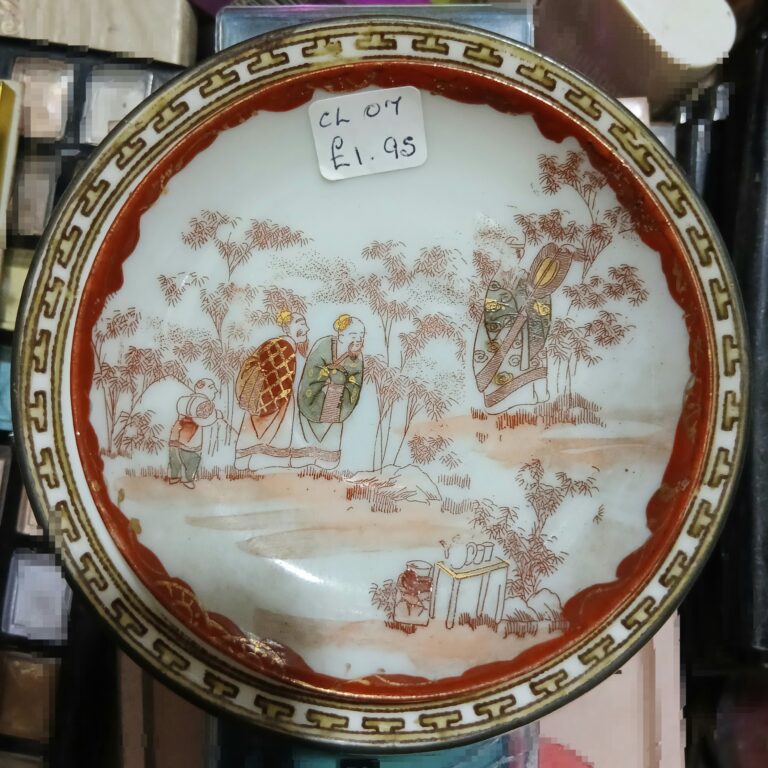
    There is a low-frequency hum inside an antique shop, an acoustic hush from dust and centuries of quiet survival. It is often the wounded object that commands the most reverence amidst the polished mahogany and gleaming silver. A spiderweb hairline fractured across the belly of a Qing dynasty jar; a cobalt Blue Willow plate stitched together with iron staples; a tea bowl held in delicate cohesion by golden veins of lacquer. In a modern economy obsessed with pristine surfaces and factory precision, these fractured ceramics defy logic. They do retain value despite their damage. Often, they derive their singular majesty precisely because they broke. The art market regularly bears witness to this quiet paradox. At major auction houses in London and New York, porcelain pieces bearing dramatic structural fractures, historic restorations or visible fractures routinely sell for astronomical sums. When a cracked 18th-century Chinese brush washer or a chipped Song Dynasty bowl is launched, purists do not turn away. Instead, connoisseurs see a vessel that has successfully negotiated with time. A pristine artifact can feel like an untouched relic in a glass museum case. A cracked ceramic, however, carries the irreplaceable friction of human history. This romantic obsession with fracture finds its deepest philosophical roots in the Japanese tradition of Kintsugi: literally, golden joinery. In 15th-century Japan, legend holds that the shogun Ashikaga Yoshimasa sent a damaged Chinese tea bowl back to China for repair. It returned bound by heavy and unsightly metal staples. Japanese craftsmen was displeased and sought a more poetic solution. He bonded the porcelain shards with Japanese lacquer dusting it with powdered gold. Rather than disguising the trauma, Kintsugi illuminated the break. This technique transformed a domestic accident into a radiant architecture of resilience. When collectors haunt dim antique parlors today for cracked celadon or worn earthenware, they are participating in a quiet rebellion against the disposable. We live in an era of engineered obsolescence where a small fracture on a smartphone screen renders the entire device wasted. Antique ceramics represent the opposite: fired earth that withstands centuries, absorbing the touch of generations, bearing scars as badges of longevity. A crack proves that the vessel was used, held, washed, dropped, mourned and salvaged. It shifts the object from a passive decoration to an active survivor. Even the historical methods of repair have become prized antiques in their own right. Before gold lacquer was widely available, 18th and 19th-century itinerant tinkerers repaired heirloom china using metal staples. They were drilling tiny holes on either side of a split and hammering in delicate bronze or iron rivets. To a contemporary eye, these industrial-looking stitches might seem like visual vandalism. Yet, to collectors of stapled china, those iron rivets are exquisite evidence of human ingenuity and resourcefulness from an era when nothing precious was ever casually thrown away.   Ultimately, the enduring value of cracked porcelain in antique shops lies in what it reflects about our own human condition. Perfection is intimidating, fragile and ultimately unfeeling. Rupture, on the other hand, is universal. When a buyer pays for a cracked jar, they are purchasing a physical manifestation of survival. They acquire a tangible reminder that broken things can be mended, that wounds can be highlighted with beauty and that time does not diminish value, but rather confers it.

Leave a Reply

Your email address will not be published. Required fields are marked *