How Ombudsman is pushing Sandiganbayan to revoke Revilla’s bail
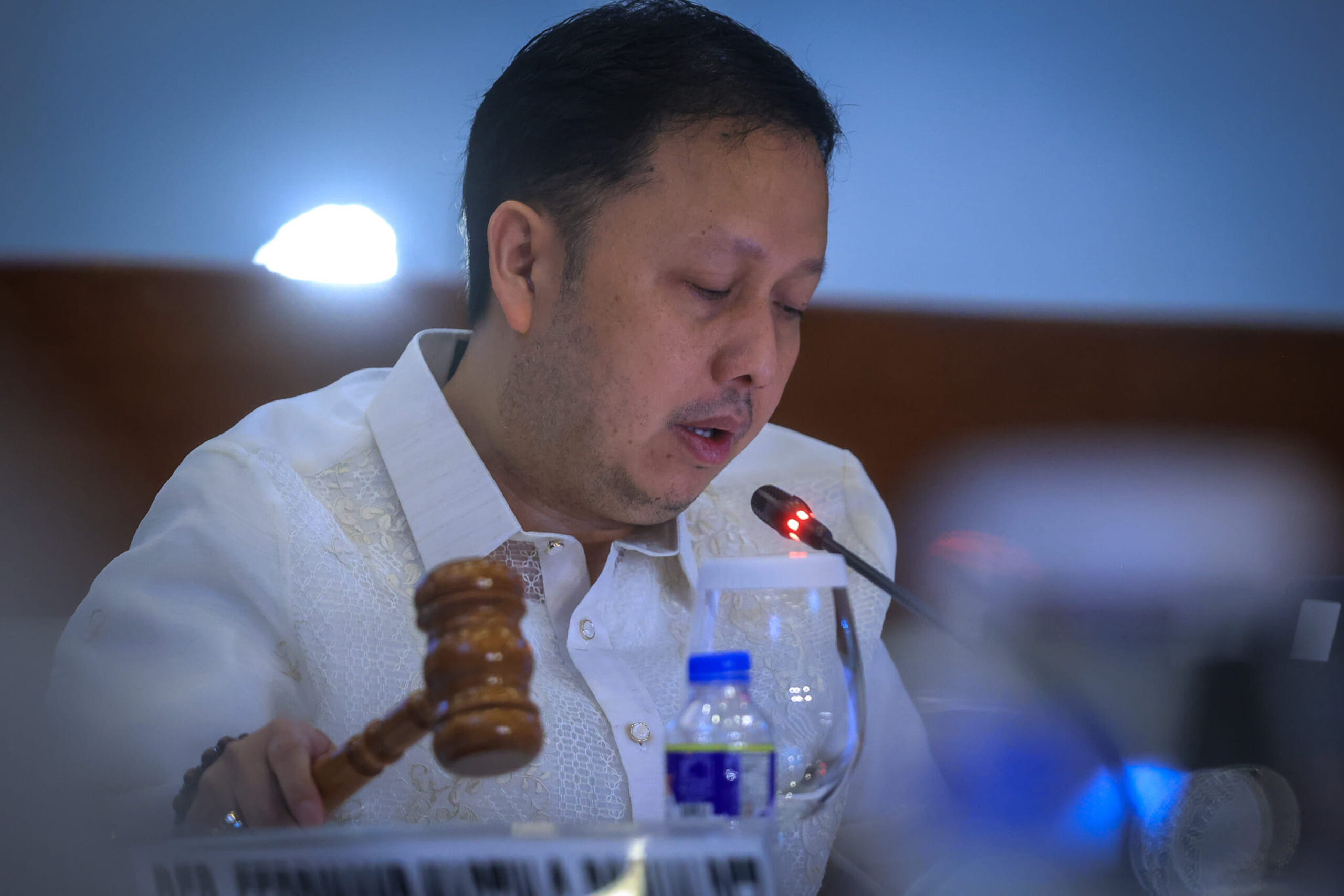
The Sandiganbayan 3rd Division recently granted former senator Bong Revilla’s petition for bail, allowing him to avail of temporary liberty.
This means Revilla is out of Bureau of Jail Management and Penology detention, while his malversation and graft cases are pending with the anti-graft court. Revilla is already out on bail for his graft; the latest resolution was for the malversation case.
But the prosecutors from the Office of the Ombudsman are not giving up the fight.
They filed an appeal on Wednesday, August 5, to ask the 3rd Division to reconsider its resolution on Revilla’s bail.
“Wherefore, it is respectfully prayed that the Resolution dated 31 July 2026 be partially reconsidered insofar as it granted the Petition for Bail filed by accused Ramon ‘Bong’ Bautista Revilla, Jr., and a new one be rendered denying the said Petition,” the 15-page motion said.
But how are the prosecutors trying to convince the anti-graft court to reverse its earlier decision on Revilla?

Errors from the resolution
The prosecution argued that Revilla was part of the conspiracy to commit malversation of public funds through falsification of public documents, and that the evidence, when taken as a whole, established Revilla’s presumptive guilt.
This is also the point of 3rd Division chairperson Associate Justice Karl Miranda, who dissented on the grant of bail.
For non-bailable offenses such as Revilla’s malversation, it’s the strength of the evidence that determines whether a petition for bail will be granted. If weak, the petition will be granted. This was what happened to Revilla’s case.
“In the present case, accused Revilla’s participation in the criminal design was not inconsequential nor peripheral. On the contrary, he was the leading link who set in motion the criminal chain,” the prosecutors said.
Revilla is at the center of the case involving a P92.8-million Bulacan flood control project because he allegedly acted as proponent for this Department of Public Works and Highways (DPWH) contract. In the alleged DPWH corruption scheme, a proponent is a lawmaker who ensures that a project will be funded and gets a “commitments” in exchange.
For the prosecution, Revilla’s act of requesting the list of DPWH projects for funding and demanding “commitments” showed that he was not only an active participant in the conspiracy, “but also a beneficiary in the diversion of public funds, with knowledge that the projects would serve only as vehicles for the disbursement of public funds.”
“No less important, the ruling failed to appreciate the prosecution’s evidence showing the scheme or ‘kalakaran‘ system which is prevailing and prevalent in the DPWH,” the Ombudsman argued.
“The prosecution’s evidence clearly reveals that accused Revilla was the proponent of the flood control project subject of this case. [Engineer Henry] Alcantara testified that the said project was included in the project lists he submitted to [Undersecretary Roberto] Bernardo, which eventually was included in the errata of the DPWH and provided a budget allocation in the GAA (General Appropriations Act),” it added.
Still liable
The court explained in its July 31 resolution that a government project has four stages: planning or proposal; funding; implementation; and post-auditing. It said that the crime of malversation, at least based on the evidence so far, happened during the implementation stage.
The Sandiganbayan said that Revilla’s alleged receipt of commissions happened before the implementation stage.
For the prosecution, while Revilla had no direct participation in the implementation, he is still liable. The Ombudsman, citing past cases, agued that a conspirator is not required to participate in every stage of the criminal act.
Revilla’s demand for “commitment” before the project’s implementation already showed his alleged knowledge of, and agreement to, the criminal design, said the Ombudsman.
“While accused Revilla may have been incognito in the implementation of the project, it must be remembered that he received the lion’s share of the proceeds,” the body added.
In its resolution, the court also explained that the funds Revilla had received from private contractors were not public funds under the definition of malversation.
The prosecution said it did not say that the money Revilla had received were from the same public funds involved in the project. The former senator was instead involved in the conspiracy to divert public funds, and the commitments not being “public funds” is not enough to clear him from the alleged conspiracy.
“It is a non sequitur to allow accused Revilla to post bail because of a simplistic characterization that his ‘commitments’ are not ‘public funds,’ since his liability emanates from his being a co-conspirator in the misappropriation of P76,916,337.42,” said the prosecutors.
“In parting, more than the wastage of public funds, what is really involved in this case is the betrayal by accused Revilla and his co-accused of the trust reposed on them as public officers,” said the motion.
“Indeed, to enrich themselves at the expense of public service is sheer moral callousness. While it is an evil that cannot be easily discovered, it cannot be hidden nor go unpunished forever.” – Rappler.com