asma abbas faces
|

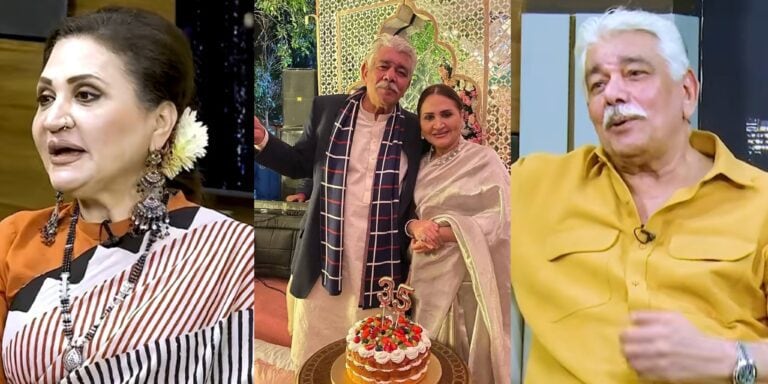
Asma Abbas faces criticism over husband’s second marriage

Asma Abbas is a well-known Pakistani television actress who has earned praise for her performances in several popular dramas, including Ranjha Ranjha Kardi, Khumaar, Akbari Asghari, GT Road, Baby Baji Ki Bahuwain, and Radd. She is also the mother of actress Zara Noor Abbas.

Asma Abbas is married to retired Colonel Ghulam Abbas, who was previously married. The actress has spoken openly about their relationship and revealed that her husband fell in love with her and wanted to have children with her, which eventually led to their marriage. She has also maintained that she shared a good relationship with his first wife and lived peacefully with her until her death.

Recently, Asma Abbas appeared on the television show Zabardast, hosted by Wasi Shah, alongside her husband. During the conversation, retired Colonel Ghulam Abbas shared details about what happened after he married Asma.

He explained that his first wife initially moved to the United States after his second marriage. According to him, she told him that she wanted to visit her sister in America, and he helped arrange her visa. She left their child behind and returned to Pakistan around six months later.

The retired army officer said that after her return, she continued to have an important place in their household. He recalled that the bedroom remained hers while he moved to Quetta for work. He also praised both women for staying with him despite the difficulties associated with his postings and career.

Ghulam Abbas expressed gratitude toward his first wife and Asma, saying that they supported him through difficult periods and made his life easier. He further credited his first wife for accepting the situation and revealed that the two women eventually became close friends.

According to him, there was even a point when Asma and his first wife would join forces against him during disagreements, turning their relationship into an unexpected friendship.

However, the couple’s comments did not receive a positive response from everyone. Several social media users criticized Asma Abbas and her husband, arguing that the discussion appeared to overlook the emotional impact of a second marriage on the first wife.

One commenter accused the couple of glorifying the second marriage and questioned why a married man would be pursued in the first place. Another described Asma as a “homewrecker” and argued that the first wife was the one who ultimately had to bear the consequences.

Some users also challenged the narrative surrounding the first wife, particularly claims about her family life and children. Others questioned the decision to publicly discuss the circumstances of the marriage in a celebratory manner.

While Asma Abbas and her husband presented their relationship as one that eventually became peaceful and respectful, the interview sparked a wider debate online about second marriages, the rights and emotions of first wives, and the complicated dynamics that can arise within families.

Similar Posts

  • | | |

    Nawaz Sharif fires warning: Politics must not beco…

    Pakistan Muslim League-Nawaz (PML-N) President Nawaz Sharif has called for political tolerance, saying political rivalry is a normal part of democratic politics but differences should never turn into personal or political enmity. Addressing a PML-N meeting in Murree on Saturday, Nawaz Sharif said he was surprised by the Pakistan Peoples Party’s (PPP) objections regarding the Azad Jammu and Kashmir (AJK) elections. He noted that the PPP had previously been in power in AJK and said the political situation that emerged during the elections was a matter of concern for all political stakeholders. Nawaz said the situation had developed because previous governments had failed to properly fulfil their responsibilities. He stressed that political parties should respect democratic differences and avoid creating an atmosphere of hostility. The PML-N president said his party had always treated its political opponents with respect. He urged all political forces to demonstrate patience and tolerance and keep political disagreements within the limits of democratic debate. Nawaz Sharif said the PML-N had secured a simple majority after the first two phases of the AJK elections. The party has won 24 seats, while the PPP has secured 10 seats in the first two phases. The third phase of the election process is yet to be completed, with final results expected after the remaining polling process. Nawaz expressed confidence that the PML-N would form the government in AJK. He said the party would work to fulfil the commitments made to voters during the election campaign. He congratulated PML-N leaders and workers on their electoral performance and appreciated their efforts during the election campaign. Nawaz Sharif called for maximum financial resources to be provided to Azad Kashmir. He said improving the lives of the people and accelerating development should remain the government’s top priority. He claimed that the people of AJK were looking towards Punjab for development and better public services. Nawaz said development work had been initiated during Shehbaz Sharif’s tenure in Punjab and later expanded under Chief Minister Maryam Nawaz. He pledged that the PML-N would seek to replicate its development model in AJK. “The way we transformed Punjab, we will transform Azad Kashmir as well,” Nawaz said, while stressing that failing to deliver on promises made to voters could result in public disappointment. The PML-N president also praised Prime Minister Shehbaz Sharif and his team for their efforts to address Pakistan’s economic and administrative challenges. He said the government inherited an extremely difficult situation but was now working to improve the country’s overall position. According to Nawaz, economic conditions were gradually improving and efforts were underway to put Pakistan on a stronger and more sustainable footing. He said the government was also seeking to reduce Pakistan’s dependence on the International Monetary Fund (IMF) and move the country towards greater economic self-reliance.

  • |

    South Korean President Lee Jae Myung calls for peace talks with North Korea

    South Korean President Lee Jae Myung has urged North Korea to return to dialogue to establish a permanent peace regime and formally conclude the 1950–53 Korean War. Delivering a speech to mark the anniversary of Korea’s liberation from Japanese colonial rule, Lee emphasised the necessity of peaceful coexistence and proposed diplomatic discussions to address Pyongyang’s nuclear capabilities alongside regional security safeguards. The Korean War concluded with an armistice agreement rather than a formal peace treaty, leaving the peninsula in a technical state of conflict for decades. Lee affirmed that Seoul is prepared to implement pre-emptive measures to reduce military friction and prevent escalation, building upon earlier pledges to respect North Korea’s governance system. Diplomatic relations between the two nations remain strictly frozen, with North Korean leader Kim Jong-un officially abandoning reunification goals and designating South Korea as a primary adversary. Pyongyang has repeatedly rejected previous diplomatic overtures from Seoul while criticising joint US–South Korean military exercises. Additionally, Lee addressed regional affairs with Tokyo, advocating for an approach that confronts historical grievances while fostering future cooperation with Japan as a neighbouring state.

  • | |

    Pakistan’s civil awards triple in nine years…

    ISLAMABAD: The number of people receiving Pakistan’s civil awards has increased sharply over the past nine years, but the share of women among the recipients has remained almost unchanged, according to an analysis by economist Zehra Farooq. Farooq, who has analysed civil award lists from 2018 to 2026, said she compiled all 2,209 awards announced during the nine-year period and examined each award by field, gender, level of award and nationality. Her analysis shows that the number of award recipients increased more than three times during the period, rising from 73 people in 2018 to 372 in 2026. However, the share of women receiving the awards did not show a similar increase. Women made up between roughly 10% and 16% of civil award recipients in each year from 2018 to 2026. Ms Farooq said the figures show that while the size of the annual awards lists changed greatly, the share of women remained within almost the same range. The lowest share was around 10% in 2023, while the highest was 16% in 2018 and 2021. The share stood at 15% in 2024 before falling to 12% in 2025 and 11% in 2026. Her analysis also looked at the figures after excluding gallantry awards. Gallantry awards were kept separate because they mainly relate to military and police roles. Even after removing these awards, the overall share of women increased only from around 12% to 14%, according to the analysis. This suggests that the low share of women is not limited to gallantry awards. Farooq said the same pattern can also be seen in civilian awards. Public service awards show a wider gap The Public Service category is the largest civilian category in the dataset and shows a particularly large difference between men and women. Among Pakistani recipients of Public Service awards, 295 were men and only 27 were women. This means men received about 92% of these awards, while women received only around 8%. Farooq noted that in several years, the entire Public Service list included only one or two women. The figures raise questions about how women are represented among people being recognised for public service. The analysis does not, however, establish why the gap exists. Farooq suggested that one possibility worth examining is whether the awards reflect the existing structure of Pakistan’s civil bureaucracy. She noted that the quota for women in the civil bureaucracy is around 10%, while the share of awards going to women remains below or around that level. This raises a question about whether the civil awards are reflecting the existing gender structure in public institutions rather than creating a separate pattern of their own. Major changes in fields The analysis also found major changes in the fields represented in the civil award lists. Science and engineering together accounted for close to one-third of the 2021 list. However, by 2025 and 2026, the two fields together made up less than 2% of the list. At the same time, some new categories appeared. Information technology appeared as a category for the first time in 2021, while climate appeared in 2025. Farooq said these changes raise questions about how the state decides which areas deserve recognition. She asked whether the decline in science and engineering awards reflects fewer major contributions in these fields, fewer people entering these professions, or a change in the areas where the state looks for achievement. The appearance of IT and climate-related awards also raises another question: whether official recognition is beginning to follow changes in the areas where Pakistan’s talent and work are growing. Women receive fewer top-level awards The analysis also examined the civil awards according to their level. The awards are divided into different levels, with Nishan and Hilal at the senior end, followed by Sitara and Tamgha. Ms Farooq found that the share of women becomes smaller as the level of the award becomes higher. At the two highest levels, women account for less than 5% of recipients. At the more common lower levels, the share of women is higher, generally ranging between 11% and 14%. This means that the overall percentage of women receiving civil awards does not tell the full story. Women may represent around 10% to 16% of all recipients in a year, but their representation becomes much smaller when only the highest-level honours are considered. The findings therefore point to two separate issues: the overall number of women receiving civil awards and the level of recognition they receive. Nine years provide a wider picture Ms Farooq said looking at the awards over several years gives a clearer picture than looking at a single annual list. The civil awards are announced every August, and each year’s list can show changes in the number and type of recipients. But when the lists are combined over nine years, longer-term patterns become visible. The biggest pattern in the data is the contrast between the rapidly growing number of awards and the almost unchanged share of women. From 73 recipients in 2018, the annual list reached 372 in 2026. Yet women remained within roughly the same 10% to 16% range throughout the period. The analysis also shows that the composition of the awards has changed in other ways, including the fields being recognised and the introduction of new categories. She said the data does not provide all the answers, but it raises questions that can be examined further.

  • |

    High Commissioner Tipu Usman unveils people-centred consular reforms for British Pakistanis

    LONDON:Pakistan’s High Commissioner to the United Kingdom, Tipu Usman, has announced a series of people-centred reforms aimed at improving consular services for the British Pakistani community. As part of the new measures, consular services at the Pakistan High Commission in London will now begin at 8:00 am, Monday to Friday, increasing the number of appointments available each day and helping reduce waiting times. The High Commission has also introduced a daily walk-in facility from 3:00 pm to 4:00 pm, Monday to Friday, on a first-come, first-served basis. The service will cover passport issuance and renewal, NADRA-related services, document attestation, including Powers of Attorney, and Police Character Certificates. The reforms are among the first major public service initiatives introduced by High Commissioner Tipu Usman since assuming office. They are aimed at making consular services more accessible, efficient and responsive to the needs of overseas Pakistanis living in London and surrounding areas. Members of the British Pakistani community have welcomed the initiative, describing it as a practical step that will ease access to essential consular services and improve the overall public service experience at the Pakistan High Commission in London.

  • |

    Sharmeen Ali opens up about rebuilding her life after divorce

    Pakistani actress Sharmeen Ali has candidly shared her journey of becoming financially independent after her divorce, revealing how she rebuilt her life while taking full responsibility for herself and her daughter. Speaking during a recent television morning show, the actress reflected on the difficult phase that followed the end of her marriage and how it ultimately led her to pursue a career in the entertainment industry. Sharmeen explained that after her separation, she felt she had no choice but to become self-reliant. Having married at a young age, she said she was unable to complete her education, leaving her with limited opportunities when she had to start over. Recalling that period, the actress said she returned to live with her parents after the divorce but was determined not to become a financial burden on them. She shared that her parents were growing older, and she wanted to support herself instead of relying on them for her daily expenses. Driven by that determination, Sharmeen began exploring different ways to earn a living. Before entering showbiz, she worked on various creative projects, including clothing design, home décor, and other freelance services. She said those early efforts helped her regain confidence and provided a foundation for a new beginning. According to the actress, her life changed within just three months when she received an opportunity to work from producer Nina Kashif. The offer marked the beginning of her acting career and opened the door to Pakistan’s television industry. Sharmeen admitted that not everyone in her family was initially comfortable with her decision to join showbiz. She said her loved ones had reservations about the profession, but given her circumstances, financial independence was her top priority. She believed pursuing a career in acting was the best way to secure a stable future for herself and her daughter. Although her early days in the entertainment industry were not easy, Sharmeen said she received only a limited number of projects at first. However, she remained grateful for every opportunity that came her way. She explained that those initial roles were enough to keep her moving forward and gradually helped her establish herself in the industry. The actress also reflected on the emotional impact her marriage had on her confidence. Despite having studied abroad before getting married, she said the experiences she went through during her marriage affected her deeply. She recalled that she had once been an independent and confident young woman, but after the challenges she faced, it felt as though that confidence had disappeared. Sharmeen said rebuilding her self-belief became one of the biggest challenges of her life. She described the period after her divorce as starting from zero, requiring patience, resilience, and consistent effort. Through hard work and determination, she slowly regained her confidence and created a new path for herself. Today, the actress views her journey as a reminder that difficult circumstances can become an opportunity for personal growth. By choosing independence and refusing to give up despite financial and emotional hardships, Sharmeen Ali has built a successful career while providing for her family. She hopes her story encourages others facing similar challenges to believe in themselves, remain persistent, and never lose hope, even when life demands a fresh start.

  • |

    AI errors hit report behind Australia’s under-16 ban

    A government-commissioned report that helped support Australia’s plan to restrict social media access for children under 16 has come under scrutiny after several inaccurate and apparently fabricated academic references were identified. The report, produced as part of a $3.48 million government-funded trial examining age-assurance technologies, was prepared by the Age Check Certification Scheme (ACCS). The organisation has acknowledged that ChatGPT was used to rewrite parts of the document after initially denying that artificial intelligence had been involved. An analysis of the report found six problematic citations in a chapter examining emerging technologies. Some of the digital object identifiers, or DOIs, reportedly directed readers to research papers that did not exist. Other references contained combinations of authors, journals and publication dates that could not be verified in academic records. In another case, a DOI reportedly led to a genuine research paper, but the paper did not support the claim attributed to it in the report. The controversy intensified after ACCS was questioned about the use of artificial intelligence. A spokesperson initially said no AI had been used in producing the report. The organisation later acknowledged that ChatGPT metadata was present in four links across two sections of the document. ACCS maintained that the metadata effectively disclosed the use of the tool and said the references had been manually checked. However, efforts to correct the disputed citations reportedly resulted in further inconsistencies. One example involved a research paper that an ACCS source said had been accessed in March 2025. According to the paper’s lead author, however, the research was not published until June 2025, raising additional questions about the accuracy of the report’s references. The report has attracted attention because it was used in the policy process surrounding Australia’s planned restrictions on social media for under-16s. Communications Minister Anika Wells had previously praised the report for identifying potential approaches to age verification. The minister’s department told a Senate inquiry that it had discussed the citation problems with ACCS. However, the department was reportedly informed about faulty links rather than allegations that some references had been fabricated. Australian National University academic Christian Downie warned that unreliable references can have serious consequences regardless of whether they were generated by AI or resulted from human error. He said inaccurate citations could contribute to poor policymaking and weaken public confidence in government-commissioned research. Independent Senator Fatima Payman also compared the controversy with a separate case involving Deloitte, which refunded part of a $440,000 government contract after problems were identified with AI-generated references.

Leave a Reply

Your email address will not be published. Required fields are marked *