bangko sentral raises
| | |

Bangko Sentral raises key rate to 5% as inflation risks remain

MANILA, Philippines – The Bangko Sentral ng Pilipinas (BSP) on Thursday, August 27, raised its key policy rate by another 25 basis points to 5%, saying persistent risks from oil prices, a possible severe El Niño, and wage increases require “preemptive monetary action” even as headline inflation eases.

This marks the third consecutive rate hike by the Monetary Board, following increases in April and June as the central bank moved to contain inflation that has remained above the government’s target range.

The rates on the BSP’s overnight deposit and lending facilities were likewise raised to 4.5% and 5.5%, respectively.

Inflation eased to 6.2% in July from 6.4% in June, its third straight month of deceleration, but remained well above the BSP’s 2% to 4% target range. Core inflation, which strips out volatile food and energy items, also slowed to 4.2% from 4.4%.

Still, the BSP said underlying price pressures were broadening.

“Headline inflation has eased, although oil prices remain volatile,” the Monetary Board said in a statement. “The possible impact of severe El Niño conditions on agricultural prices poses further upside risks to inflation.”

Potential wage adjustments also warrant close monitoring, according to the central bank, including the recently approved Metro Manila wage hike, although its implementation has since been challenged in court and temporarily paused. The BSP warned that higher labor costs, if eventually implemented, could be passed on to consumers and contribute to broader price increases or so-called second-round effects.

The BSP still expects average headline inflation to breach the 4% upper end of its target range in both 2026 and 2027, before declining close to its 3% target by 2028.

Central banks use interest rates to help control inflation. Raising rates makes borrowing more expensive, which can temper spending and demand, although tighter monetary policy can also weigh on economic growth.

The latest hike comes as the Philippine economy is already growing at its weakest pace in years. Gross domestic product expanded by only 2.3% in the second quarter, slowing from 2.8% in the first quarter. Investment, measured through gross capital formation, contracted 9.2% year-on-year in the April-to-June period.

The BSP, however, said the economy’s “fundamentals for growth appear to be intact over the medium term,” adding that fiscal measures should help strengthen growth in the second half.

Looking ahead, the Monetary Board said it is prepared to take further action “as warranted” to bring inflation back toward its 3% target.

Bank of the Philippine Islands lead economist Emilio Neri Jr. had similarly flagged broadening inflation risks, pointing to possible crop damage from monsoon rains and flooding, elevated fertilizer prices, a potential “super” El Niño, and higher labor costs. Neri argued that monetary policy has limited ability to address supply constraints. He also warned that further peso weakness could amplify imported inflation. – Rappler.com

Must Read

[Puso at Diwa] BSP monetary policy: When steady is not really steady


[Puso at Diwa] BSP monetary policy: When steady is not really steady

Similar Posts

  • | | |

    PSX retreats as profit-taking, oil prices hit sent…

    The Pakistan Stock Exchange (PSX) came under pressure on Friday as investors opted to book profits after the market’s recent gains. The benchmark KSE-100 Index fell sharply during early trading, reflecting cautious investor sentiment amid rising global oil prices and uncertainty over developments surrounding the Strait of Hormuz. The index dropped 771.05 points, or 0.42%, to 181,005.54 by 9:39am. Selling was reported across several major sectors, putting pressure on the overall market. By noon, the KSE-100 had recovered some of its losses and was trading at 181,326.54 points, down 450.05 points, or 0.25%, from Thursday’s close of 181,776.59. During the session, the index moved between an intraday high of 181,647.27 and a low of 180,620.08 points. Trading activity remained moderate, with around 146.05 million shares changing hands. The total value of traded shares stood at approximately Rs10.06 billion. Selling was visible in several heavyweight sectors, including automobile assemblers, cement companies, commercial banks, fertiliser firms, oil and gas exploration companies and oil marketing companies. Market sentiment was also affected by the continued rise in international crude prices. Investors remained cautious over possible disruptions to energy supplies amid tensions surrounding the Strait of Hormuz. Analysts attributed the decline largely to profit-taking following the market’s recent strong performance. Investors appeared reluctant to make fresh aggressive positions while global oil prices and geopolitical risks remained elevated. Despite Friday’s decline, the KSE-100 remained above the 181,000-point level, indicating that the broader market continued to retain much of its recent gains.

  • |

    Pakistan petroleum sales jump 23% in July as lower fuel prices boost demand

    Pakistan’s petroleum product sales recorded a significant increase in July 2026, reflecting stronger economic activity, improved agricultural demand, and the impact of lower fuel prices. Industry data released on Monday showed that total petroleum sales reached 1.51 million tons, marking a 23% year-on-year (YoY) increase and the strongest July performance in several years. According to a report by brokerage firm Arif Habib Limited (AHL), the growth was fueled by declining domestic fuel prices, improving conditions in the agriculture sector, and a gradual rebound in economic and automobile-related activity. The report noted that farmers’ purchasing power improved due to better agricultural economics, while lower fuel costs encouraged higher consumption across the country. Excluding furnace oil (FO), sales by oil marketing companies (OMCs) increased 18.5% YoY, making July 2026 the strongest July for petroleum demand since July 2021. Petrol and Diesel Consumption Climbs Demand for motor spirit (MS), commonly known as petrol, remained robust during the month. Petrol sales rose 23% YoY to 0.73 million tons, reflecting increased transportation activity and higher vehicle usage. Meanwhile, high-speed diesel (HSD) sales climbed 19% YoY to 0.62 million tons. Diesel consumption was supported by greater agricultural operations, commercial transportation, and industrial activity as the economy continued its gradual recovery. Furnace Oil Registers Massive Growth Furnace oil sales posted the strongest percentage increase among all petroleum products, surging 406% year-on-year to 0.08 million tons. AHL attributed this sharp rise primarily to increased furnace oil consumption by the power sector, where seasonal electricity demand during the summer months led to greater fuel usage for power generation. Strong Month-on-Month Growth On a month-on-month (MoM) basis, overall petroleum sales also recorded impressive gains, rising 20% compared to June 2026. Analysts said the monthly increase was largely driven by lower domestic petroleum prices, which followed a decline in international crude oil prices as geopolitical tensions eased in global markets. During the month: Petrol (MS) sales increased 12% over June. High-speed diesel (HSD) sales rose 25%. Furnace oil demand jumped 89%, supported by higher electricity generation requirements during peak summer temperatures. PSO Strengthens Market Position Among Pakistan’s oil marketing companies, Pakistan State Oil (PSO) emerged as the strongest performer in July. The company’s total petroleum sales climbed 38% year-on-year to 702,000 tons. Petrol sales increased by 44.1%, while diesel sales rose 40.3%, enabling PSO to expand its presence in the domestic fuel market. According to the report, PSO gained market share at the expense of Gas & Oil Pakistan (GO). GO’s market share in petrol declined to 5%, its lowest level since June 2024, while its diesel market share fell to 7%, the weakest since May 2024. Government Levy Collections Remain on Track The report also estimated that the federal government collected approximately Rs134 billion through the Petroleum Development Levy (PDL) during July. Based on current trends, AHL believes the government remains on course to meet its FY2026-27 PDL collection target of Rs1.68 trillion, representing an increase of nearly 12% compared with the revised target for the previous fiscal year.

  • | | |

    Pakistan seeks strategic economic ties with Saudi …

    ISLAMABAD: Prime Minister Shehbaz Sharif has expressed Pakistan’s desire to transform its longstanding relationship with Saudi Arabia into a mutually beneficial strategic economic partnership, in line with the vision of Saudi Crown Prince and Prime Minister Mohammed bin Salman. The Prime Minister made the remarks during a meeting with a high-level Saudi business delegation headed by Prince Mansour bin Mohammad Al Saud, Chairman of the Saudi-Pak Joint Business Council, at the Prime Minister’s House in Islamabad. During the meeting, Prime Minister Shehbaz conveyed his regards to Saudi King Salman bin Abdulaziz Al Saud and Crown Prince Mohammed bin Salman. He highlighted the deep-rooted brotherly relations between the two countries and stressed the need to expand bilateral trade, investment and economic cooperation. The prime minister expressed hope that Prince Mansour’s latest visit would build upon earlier discussions and lead to the signing of memoranda of understanding and agreements in several sectors. He described the current period as an ideal opportunity to strengthen cooperation through both government-to-government and business-to-business partnerships. The Saudi delegation showed interest in investment opportunities across a wide range of sectors, including agriculture, ports, highways, airport outsourcing, real estate, energy, power distribution and information technology. Prime Minister Shehbaz welcomed the proposals and assured the delegation of Pakistan’s support for mutually beneficial investment ventures. Prince Mansour thanked the prime minister for the warm reception and reaffirmed the Saudi government’s and business community’s commitment to expanding business-to-business ties with Pakistan. During its visit, the delegation is also scheduled to hold meetings with senior government officials and representatives of the private sector. PM Condemns Pishin Terrorist Attack Meanwhile, Prime Minister Shehbaz Sharif strongly condemned the terrorist attack on labourers working on a road construction project in the Suranan area of Pishin district. The prime minister expressed sorrow over the loss of lives and extended condolences to the families of the victims. He denounced the targeting of hardworking citizens as a cowardly act and reaffirmed the government’s determination to combat terrorism. He stressed that the nation remained united against terrorism and that terrorists and their facilitators would not be permitted to undermine peace and stability in the country. The prime minister also prayed for the departed souls and for strength and patience for the bereaved families.

  • |

    ECNEC approves Rs1.15tr development projects amid major cost escalations

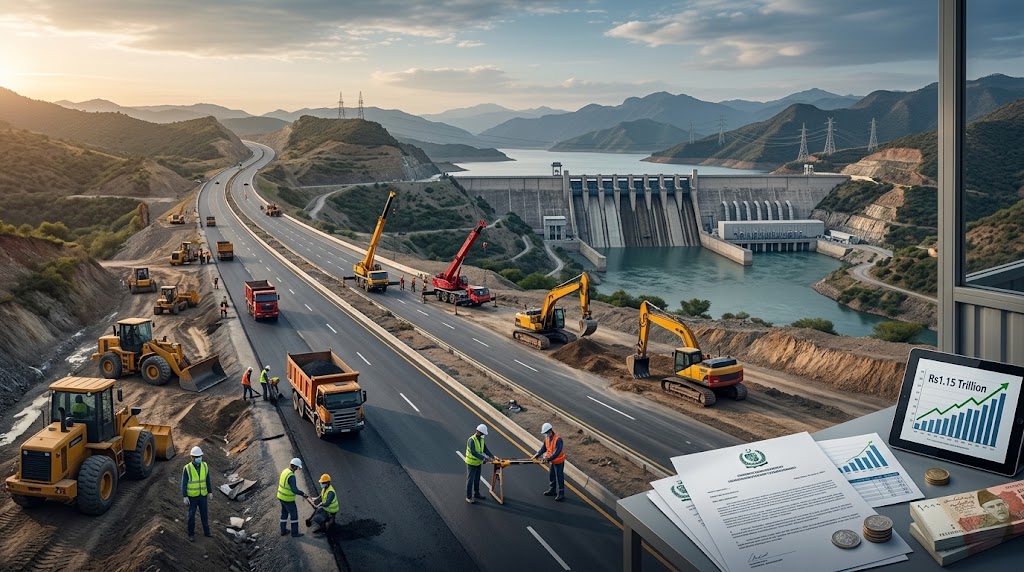
    ISLAMABAD: The government has approved 16 development projects with a combined estimated cost of around Rs1.15 trillion, including the controversial Lahore-Sahiwal-Bahawalnagar motorway and the fifth extension of the Tarbela hydropower project, whose cost has surged by nearly 282% from the original estimate. The decisions were taken by the Executive Committee of the National Economic Council (ECNEC), chaired by Deputy Prime Minister Ishaq Dar. Several of the projects had previously been considered by development forums and returned with revised costs following delays, changes in scope and rising construction expenses. Of the total approved amount, approximately Rs320 billion represents additional expenditure linked to cost increases and delays, highlighting the financial pressures facing major public-sector development schemes. The government, however, issued only a brief statement following the ECNEC meeting and did not provide a complete breakdown of all the projects and their financial details. The omission of the Lahore-Sahiwal-Bahawalnagar motorway from the official summary was particularly notable given the political controversy surrounding the scheme. Lahore-Bahawalnagar motorway approved The ECNEC approved the Rs407 billion Lahore-Sahiwal-Bahawalnagar Motorway project, retaining its original 295-kilometre alignment in accordance with a directive issued by Prime Minister Shehbaz Sharif earlier this year. The first package, covering an 18.5-kilometre stretch from the Lahore Ring Road to Raja Jang Interchange, was approved at an estimated cost of Rs49 billion through federal financing. The project has faced opposition from the Pakistan Peoples Party (PPP), which has raised objections to the scheme and its proposed alignment. Given the heavy financial burden on the Public Sector Development Programme (PSDP), the ECNEC directed the National Highway Authority (NHA) to examine public-private partnership options for sections that could attract private investment. For commercially viable portions, the NHA will arrange its contribution through its own revenues in the form of Viability Gap Funding. For sections that are considered financially unviable, alternative arrangements will be explored, including contributions from the Punjab government, loans or financing from international financial institutions and direct federal funding, subject to the availability of resources. Tarbela extension faces major cost increase One of the most significant approvals was the fifth extension of the Tarbela project, which received approval at a revised cost of Rs316 billion. The project’s original estimated cost stood at approximately Rs82 billion, meaning its revised price tag represents an increase of about 282%. The steep escalation has already attracted scrutiny from government officials. During the Central Development Working Party (CDWP) review, Planning Minister Ahsan Iqbal reportedly raised concerns over project management, transparency and oversight. Questions were also raised regarding the technical capacity of personnel associated with the project. The Ministry of Water Resources had previously highlighted shortcomings in an inquiry into problems encountered during project implementation. An inquiry into the failure of the downstream cofferdam reportedly concluded that the structural collapse was linked to design changes, inadequate supervision and delayed administrative action rather than flooding. The findings attributed the failure to the shift from roller-compacted concrete to a rock-fill structure, along with weaknesses in project oversight. The incident resulted in delays and financial losses, adding to concerns over the project’s rising cost. The Ministry of Finance also sought an explanation for the substantial increase in the project’s estimated cost. Since the scheme is being financed through international financial institutions, the ministry asked the Water and Power Development Authority (Wapda) to provide details regarding the mechanism for repayment. Despite the concerns and requests for additional information, the ECNEC ultimately approved the revised project cost. Road and infrastructure schemes The committee also approved the 48-kilometre Khwazakhela-Besham Expressway at a revised cost of Rs116.6 billion. The new estimate is around 47% higher than the original cost. Another interprovincial road scheme aimed at improving connectivity between Gilgit-Baltistan and Azad Jammu and Kashmir was approved at Rs29 billion, representing an increase of approximately Rs10 billion over its initial estimate. The Rathoa Haryam Bridge over the reservoir channel on the Mirpur-Islamgarh Road also received approval at a revised cost of Rs10.8 billion. Its original estimate had been only Rs1.4 billion, reflecting a substantial increase over the initial projection. The ECNEC further approved the Lahore Wastewater Treatment Plant at a cost of Rs56.6 billion, around Rs4.2 billion above the earlier estimate. Poverty alleviation and education initiatives The Southern Punjab Poverty Alleviation Project was approved at Rs29.7 billion and will cover 10 districts: Bahawalnagar, Bahawalpur, Bhakkar, Dera Ghazi Khan, Khushab, Layyah, Mianwali, Muzaffargarh, Rahim Yar Khan and Rajanpur. The scheme includes an additional cost escalation of around Rs6.8 billion and is aimed at improving socioeconomic conditions and livelihood opportunities in some of the region’s less-developed areas. The ECNEC also sanctioned Rs10.6 billion for the Fulbright scholarship programme, under which 816 scholarships are planned. Of these, 550 MS and 141 PhD scholarships will be administered through the United States Educational Foundation in Pakistan (USEFP), while the Higher Education Commission (HEC) will provide funding for another 125 PhD scholarships through the PSDP. Water projects in Sindh and Balochistan The Mazarani Dam project in Qambar Shahdadkot, Sindh, was approved at an estimated cost of Rs16.1 billion. The committee directed the provincial authorities to begin Command Area Development alongside construction of the main dam so that the project’s agricultural and economic benefits could be realised during its second phase. The Winder Dam project was also approved at Rs21.6 billion, with the federal government expected to contribute Rs15.6 billion. Meanwhile, the Mashkel Dam in Washuk, Balochistan, received approval at a cost of Rs41 billion. The project will be financed by the Balochistan government, while an environmental assessment report will be incorporated into the official project documentation.w Power-sector efficiency projects The ECNEC approved several schemes aimed at improving the performance of electricity distribution companies. A Rs24 billion project for the Supply, Installation, Testing and Commissioning of Asset Performance Management Systems at Lahore Electric Supply Company (LESCO) was approved. The committee also sanctioned Rs19 billion for the Electricity Distribution Efficiency Improvement Project of Hyderabad Electric Supply Company (HESCO). A similar initiative for Peshawar Electric Supply Company (PESCO) was approved at Rs30.2 billion. These projects are intended

  • |

    UK petrol theft hits £200,000 a day amid fuel price surge

    The sharp rise in fuel prices across the United Kingdom has triggered a significant increase in petrol theft, with filling stations now losing an estimated £200,000 worth of fuel every day, according to media reports. Petrol station operators have reported a growing number of “drive-off” incidents, where motorists fill their vehicles with fuel and leave without making payment. The trend has become increasingly common as higher fuel costs continue to put pressure on household budgets. Reports indicate that the overall financial impact of fuel theft has climbed by 48 percent following the recent surge in petrol and diesel prices. Retailers say the increase has added to the challenges already facing fuel station businesses, many of which are struggling with rising operating costs. The spike in fuel prices followed heightened tensions during the Iran conflict, when global oil markets experienced sharp volatility. During that period, the price of petrol reportedly increased by 27 pence per litre, while diesel prices rose by 37 pence per litre, making fuel significantly more expensive for consumers. Industry representatives warn that the consequences extend beyond financial losses. According to the Petrol Retailers Association (PRA), the rise in fuel prices has also been accompanied by an increase in abusive and aggressive behaviour directed at petrol station employees. Pump attendants have reportedly faced more verbal harassment and confrontations from frustrated customers. Fuel retailers are urging authorities to take stronger action against theft and improve security measures at filling stations. They also stress the need for greater protection for frontline staff, who are increasingly being exposed to difficult and sometimes dangerous situations while carrying out their duties.

Leave a Reply

Your email address will not be published. Required fields are marked *