becky opens about
| |

Becky G opens up about embracing complicated ideas…

Becky G is entering a new chapter in her music career, and she is no longer interested in fitting herself into just one box.

The Mexican-American singer, whose birth name is Rebbeca Marie Gomez, recently opened up about the personal ideas behind her fifth studio album, Baraja Bendita. Released on August 14, 2026, the 17-track project explores identity, culture, womanhood and the complicated experiences that have shaped her. (KUNC⁠)

For Becky, the album is about embracing every part of herself rather than choosing one identity over another. She has often described herself as being “200%” — both American and Mexican. That duality has influenced her career, from her language and music to the expectations placed on her as a Latina artist.

With Baraja Bendita, she decided to make that complexity part of the story.

In a recent interview, Becky explained that the album represents a meeting point between Becky G, the public performer, and Rebbeca, the person behind the stage name. She described the project as a personal collaboration between those two sides of herself. (KUNC⁠)

That honesty also appears in the subjects she tackles through her songs.

One example is “EPA,” a track that addresses the difficult political climate surrounding Latino communities. Rather than avoiding uncomfortable subjects, Becky uses music to create a sense of joy and safety for people who may be dealing with uncertainty.

She has emphasized that Latino communities deserve spaces where they can experience happiness, even when the world around them feels heavy. (HipLatina⁠)

Other songs explore more intimate sides of her identity. Tracks such as “CHULA” embrace confidence, sensuality and womanhood, while other songs move through vulnerability, relationships and emotional complexity. The album allows those different moods to exist together instead of forcing Becky into a single image. (FemMusic⁠)

That approach is especially meaningful for an artist who began working in entertainment as a teenager. After years of being publicly defined by her language, genre and cultural background, Becky now appears determined to define herself on her own terms.

The album also moves freely between musical styles, including Latin, pop, electronic and urban influences. Becky has said she does not want to be restricted to one genre or language, embracing Spanglish as another natural part of who she is. (LOS40⁠)

Ultimately, Baraja Bendita is less about becoming a new Becky G and more about accepting the woman she has always been.

Through complicated ideas, personal stories and cultural themes, she is showing listeners that identity does not have to be simple. Sometimes, the most honest version of yourself is made up of many different sides.
Similar Posts

  • |

    Gazans welcome Hamas disarmament plan but remain doubtful of Israeli withdrawal

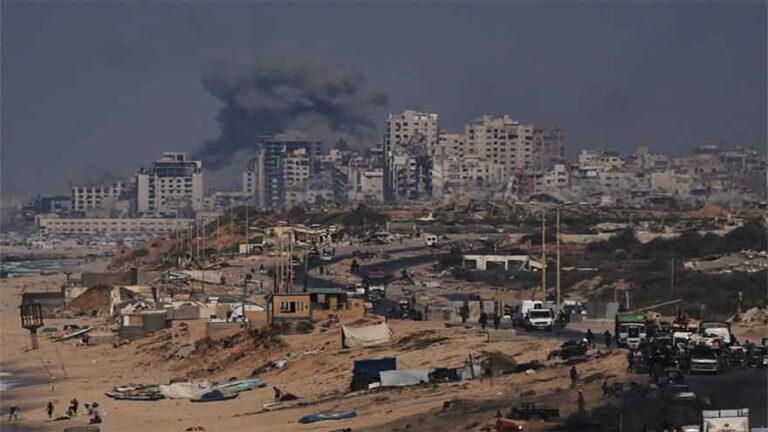
    Many Palestinians in Gaza have cautiously welcomed reports that Hamas has agreed to disarm under a new United States backed proposal, hoping it could eventually bring an end to the devastating conflict. However, despite this small sign of progress, many remain unconvinced that Israel will withdraw its forces or that lasting peace is within reach. US President Donald Trump recently announced that Hamas had accepted a plan to surrender its weapons as part of a broader roadmap aimed at stabilising Gaza and beginning reconstruction. Hamas later confirmed the agreement. Even so, Israeli military operations have continued, leaving many residents uncertain about whether the proposal will lead to any real change. Thousands of families remain displaced, while many others continue living in overcrowded tent camps where shortages of food, clean water, medicine and proper sanitation have created severe humanitarian conditions. Disease outbreaks and poor living conditions have become an everyday reality for much of the population. For many Palestinians, survival remains the immediate concern. Abdel Moneim Aboul Roos, a 24 year old tuk tuk driver who lost a leg in an Israeli airstrike, said discussions about disarmament and troop withdrawals mean little while people continue to struggle for basic necessities. He said access to food and medical care matters more than political agreements that have yet to improve conditions on the ground. The latest proposal builds on a ceasefire agreement reached last year with US support. That deal ended large scale fighting for a period, secured the release of Israeli hostages and increased humanitarian aid entering Gaza. It also included plans for a gradual Israeli military withdrawal, the formation of an international stabilisation force and the dismantling of Hamas’ weapons. However, the agreement soon stalled as both Israel and Hamas accused each other of violating its terms. Hamas retained its weapons while Israeli forces remained in the territory, causing negotiations to break down. The newly announced roadmap provides more detailed arrangements for transferring Hamas’ weapons to a technocratic Palestinian administration. According to the proposal, Israel would not participate in the disarmament process and would instead halt military operations to allow political transition and reconstruction efforts to move forward. Despite these commitments, many Gazans remain deeply sceptical because previous promises of peace failed to deliver lasting results. Displaced resident Ayman Ahmed said people have repeatedly been told that the war would end, only to see the violence continue. While he hopes Hamas eventually lays down its arms, he believes such a step is unlikely in the near future and expressed frustration that ordinary Palestinians continue to suffer while political leaders remain divided. The conflict began after Hamas launched its October 2023 attack on southern Israel, killing around 1,200 people and taking hundreds of hostages. Israel responded with a large military campaign in Gaza that has caused widespread destruction and heavy casualties. According to Gaza health authorities, more than 73,000 Palestinians have been killed during the war, while the fighting has displaced most of the territory’s population. The figures do not distinguish between civilians and fighters, although officials say women and children account for a large share of those killed. Many residents also fear that Israel has no intention of fully leaving Gaza even if Hamas is disarmed. Israeli officials have not publicly endorsed the latest roadmap and anonymous government sources have suggested that it does not match Israel’s security objectives. They have also indicated that Israeli forces intend to remain along the Yellow Line, a military zone separating Israeli controlled territory from the rest of Gaza. The military has strengthened its positions in these areas by building defensive barriers and carrying out demolition operations, leaving many displaced families uncertain whether they will ever return to their homes. Despite these fears, many Palestinians continue to hold onto hope. Anas Nakla, whose home in Rafah was destroyed during the war, said he still dreams of returning with his family even though nothing remains of his house. Mohamed Hamad, displaced from northern Gaza, believes that if the new plan results in even a partial Israeli withdrawal, it would restore hope that one day all displaced families could rebuild their lives in their own communities.

  • |

    US authorises private firms to target cybercrime groups

    WASHINGTON: The United States has taken an unusual step in its fight against international cybercrime by allowing selected private companies to conduct government-approved hacking operations against foreign criminal organisations. President Donald Trump has signed a memorandum directing the departments of Justice and Homeland Security to establish a framework under which approved private-sector partners can investigate, infiltrate and disrupt transnational cybercrime networks. The move is aimed at tackling growing threats including ransomware attacks, online fraud and so-called sextortion schemes. The White House said such crimes caused more than $20 billion in losses to Americans during 2025. Under the new framework, authorised companies could potentially infiltrate cybercriminals’ computer systems, deploy spyware or disrupt servers used to conduct criminal activities. However, each operation would require approval from the US government before any action is taken. Participating companies would also be required to provide a bond of at least $1 million. Operations involving actions that could cause death or physical injury would remain prohibited. Activities that could qualify as the use of force under international law would also be excluded. The initiative has drawn comparisons with privateering, a practice used centuries ago when governments authorised private vessels to attack or seize enemy ships. Supporters argue that private technology companies possess specialised cyber expertise and access to data that government agencies may not have. They believe combining those capabilities with government authority could help disrupt criminal networks more effectively. However, cybersecurity experts have raised concerns about accountability, oversight and the possibility of unintended consequences. Critics warn that allowing private companies to conduct offensive cyber operations could create diplomatic complications and make it difficult to control activities once they begin. The policy also represents a notable shift in the Trump administration’s previous position. Earlier this year, senior US officials had indicated that the government was not interested in using private companies to fight cybercriminals through offensive operations. It remains unclear what prompted the change in policy. Some cybersecurity specialists believe the programme contains important safeguards because operations will be conducted under government authorisation. Others remain concerned that existing oversight institutions may not be strong enough to monitor such activities effectively. The initiative could also expose participating technology companies to new risks. Experts warn that firms involved in government-sanctioned cyberattacks could become targets themselves and face retaliation from criminal groups or foreign governments. The Trump administration has 60 days to finalise the programme’s operational framework, while some details are expected to remain classified.

  • | |

    Tom Holland, Jon Bernthal bring humour to new Spider-Man film

    Tom Holland and Jon Bernthal have revealed how their friendship helped create a more humorous atmosphere while filming Marvel’s upcoming film Spider-Man: Brand New Day. The two actors had previously worked together on Christopher Nolan’s highly anticipated epic The Odyssey. Holland described that experience as remarkable but demanding. After completing work on Nolan’s film, the actors moved on to the new Spider-Man project. Holland said the change in atmosphere was immediate. According to Holland, the pair spent around six weeks working in an improvised and relaxed environment. They frequently joked on set and looked for new ways to add humour to the upcoming movie. Holland said their off-screen relationship also influenced the connection between their characters. He explained that the relationship originally written in the script changed significantly during production. Holland credited Bernthal’s acting and creative input for helping shape the final dynamic. Bernthal also spoke warmly about his long-standing relationship with Holland. The actor said he had known Holland since the British star was 17. The two had even worked together on audition tapes for the Marvel Cinematic Universe before Holland became widely known for playing Spider-Man. Bernthal praised Holland’s development as an actor and said he remained impressed by his personality. He described Holland as kind, hardworking and grounded despite his enormous success in Hollywood. The upcoming film will bring Holland’s Spider-Man together with Bernthal’s Punisher. Their partnership is expected to be one of the major attractions of the new Marvel project. The actors’ comments suggest that their real-life friendship played an important role in developing the chemistry between their characters.

  • | |

    Four summoned over posts targeting Sharjeel Memon

    KARACHI: The National Cyber Crime Investigation Agency (NCCIA) has summoned four Karachi residents for questioning over alleged defamatory content posted on social media against Sindh Senior Minister Sharjeel Inam Memon and his son. The inquiry was launched following a complaint submitted on behalf of Memon. The complaint relates to social media posts concerning the death of Karachi resident Mir Raza Ali. According to the notices issued by the agency, the respondents have been asked to appear at the NCCIA office in Karachi on August 13 at 11:30am. They have also been directed to bring their original identity cards and any documents or material they intend to use in their defence. The four individuals have also been asked to provide relevant digital devices and record their statements before the investigators. The agency warned that failure to appear could lead to further legal action. The development follows a complaint filed by Memon through his legal representatives. He had approached the cybercrime agency over what he described as false and malicious material being circulated online about him and his son. Memon has denied claims linking him to a guest house in Gulistan-i-Jauhar where Mir Raza Ali was allegedly subjected to violence. He also rejected allegations that his son travelled to London shortly after the incident and was later seen with security personnel. The senior minister said the allegations were not supported by facts or evidence. He alleged that the campaign was aimed at damaging his and his son’s reputation for political reasons. His legal counsel has requested that the agency identify those responsible and take action under applicable cybercrime laws. The complaint also seeks registration of a criminal case if sufficient evidence is found. The Mir Raza case has attracted significant public attention. Ali, who had studied at the Institute of Business Administration and owned a food business, was reported missing on July 28. His body was discovered the following day in bushes near Shahi Qila Ground in Gulistan-i-Jauhar. The investigation initially considered the possibility of suicide. However, Ali’s family consistently rejected that theory. They maintained that he had been kidnapped, assaulted and murdered. A second post-mortem examination later raised further questions about the circumstances of his death. The examination indicated that Ali had suffered a gunshot wound to the back, which challenged the earlier theory of suicide. The family’s lawyer, Jibran Nasir, called for changes to the investigation team. He also accused authorities of failing to properly pursue key aspects of the case. A new investigation team was assigned to the case on Sunday. Police also added a murder charge to the first information report.

  • | |

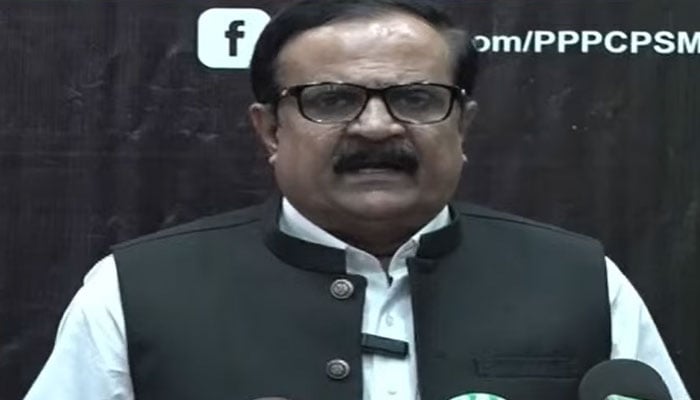
    Hassan Murtaza slams alleged AJK rigging

    Pakistan Peoples Party (PPP) Central Punjab General Secretary Hassan Murtaza has accused the ruling Pakistan Muslim League-Nawaz (PML-N) of rigging in the Azad Jammu and Kashmir (AJK) elections. Murtaza said the election process was marred by serious violations of the electoral code of conduct. He alleged that the rules were repeatedly ignored during polling. He made these remarks while addressing a press conference in Lahore. Murtaza also criticised the role of the Election Commission during the elections. He alleged that the commission failed to perform its duties impartially. According to him, it appeared to be acting like an election agent instead of an independent institution. The PPP leader strongly criticised the PML-N over the election results. He accused the party of setting a new example of electoral manipulation. “You steal the mandate of whoever you want,” Murtaza said while criticising the PML-N. He also referred to former prime minister Nawaz Sharif’s statements about AJK. Murtaza said Sharif was now visiting Kashmir and calling for himself to be made prime minister. The PPP leader said the current political situation in AJK was also linked to the sacrifices and political role of the PPP. Murtaza said that if Nawaz Sharif was able to go to Kashmir today and demand the prime minister’s position, it was partly because of the PPP’s political contribution. The PPP leader also raised serious concerns over violence during the polling process. He said a PPP worker was killed on election day. Murtaza described the incident as a serious matter that would remain part of the political record. He said history would record what happened during the elections. It would also establish who was responsible for the violence and who lost his life. The allegations came after the PML-N emerged as the leading party in the first phase of the AJK elections. The party secured nine seats, according to the results cited in the report

  • | | | |

    Why Lahore sinks whenever it rains in the city? 

    The rain on July 22 almost sank most parts of Defence Housing Authority. Those low-lying areas of the city were also under water. And this happened as the city was lashed with 343 millimetres of rain for two days, according to the Provincial Disaster Management Authority (PDMA). That spell has gone and when you are reading these lines, the city is undergoing a second rain spell. Pakistan’s Meteorological Department has issued a fresh weather advisory, warning that another active monsoon spell is expected from July 29 to August 5 across much of the country. The department said rain, wind and thundershowers, along with scattered heavy to very heavy rainfall, may trigger urban flooding, flash floods and landslides in vulnerable areas. This will keep the residents of low-lying areas, mainly of Lahore’s south, and DHA on the toe. Reacting to this advisory, environmental activist Rafay Alam explained why cities like Lahore keep flooding every monsoon season, and what is really behind the crisis. He said the Met Department had already notified that rain would continue for two days and people were warned in advance that urban flooding would take place, not just in Lahore, but in several cities across Punjab, including Gujranwala and Sialkot. He then pointed to last year’s floods for comparison. “Those floods were caused by heavy rains in the northern areas of the country, which caused rivers to swell,” he said. On top of that, India had released water from the Pong Dam and Bhakra Dam. He said a gate at the Madhopur headworks also broke, causing water levels in the Ravi river to rise sharply. Alam said the situation today is different. The flooding happening now is not caused by river floods or dam releases. Instead, it is simply due to heavy rainfall occurring within Pakistan itself. He said that if people read the Met Department’s advisory carefully, the heaviest rain in the coming days is expected in the northern areas once again, not directly over Lahore. He advised people to check whether they live in low lying or high lying areas, since this makes a big difference during heavy rain. However, he said that the real issue lies in the sheer intensity of rainfall being recorded now. “Some areas have received around 150 millimetres of rain within just a few hours,” he said. He added that 20 or 30 years ago, when the drainage systems and infrastructure in these areas were built, climate change was never part of the planning. Nobody at that time imagined that such intense rainfall could happen within just a few hours. As a result, the old infrastructure simply cannot handle the kind of rain Pakistan is now experiencing. Dr Farid A Malik, a resident of Defence Phase 5, witnessed the entire flood attack first hand. He said that when he was growing up in the 1950s, 1960s and 1970s, rainwater never used to stand in Lahore. At that time, he said, the city was much smaller and the population was far lower, yet even then, the city did not face standing water after rainfall the way it does today. “Whenever the rain would stop, we children used to go out on our bicycles looking for standing water, just for fun. And there were really only two places where water would collect. One was near Shahdara, and another was near the Do Moriya Pul area close to the railway station. That area of Shahdara was a low lying area,” he said. He recalled that in the 1970s, when Zulfiqar Ali Bhutto’s government came into power, and the People’s Party had a lot of support from that area of Lahore at the time, the government promised that they would install pumps in Shahdara and set up a proper system to drain the water out. And they actually did this. Heavy duty pumps were installed in Shahdara, and they used to successfully drain the water out. Dr Farid said the sewerage system Lahore has today simply cannot handle rainwater, because the amount of water that comes with heavy rain is very large, and the system does not have the capacity to handle that much water. He explained there are two separate problems here. First, the underground sewerage system is not cleaned properly. The pipes, whether four feet wide or six feet wide, have become clogged with scaling inside them over time. So even though a pipe might be four or six feet in diameter, the actual open space left for water to pass through has shrunk down to just one or two feet, meaning the whole system does not flow properly. Second, even if the sewerage system was clean, it still cannot handle rainwater on top of regular sewage. For this reason, Lahore used to have separate storm drains, called nalas in Urdu, which carried rainwater away separately into the Ravi river. Because of this separate system, rainwater never used to accumulate in the city. He said this has changed because storm drains have been blocked, either through neglect or construction on top of them. “An entire market has been built on top of a storm drain along Hall Road,” he said, adding that similar encroachment has happened along the Ravi river itself. Last year, water that should have gone into the river ended up flowing into housing societies instead. Dr Farid also pointed out that when Lahore had open drains instead of an underground sewerage system, the drainage actually worked better. Since the city moved underground, cleaning has become irregular, flow has suffered, and pumping stations work only some of the time. He said Lahore’s expansion added to the problem, since new areas were given sewerage systems but no proper storm drain network for rainwater. DHA, he said, expanded in phases over the years without any master plan covering how sewage and rainwater would both be managed. Speaking about his own neighbourhood, Dr Farid said there is a pumping station near the Sui Gas Society area of Defence that pumps sewage water

Leave a Reply

Your email address will not be published. Required fields are marked *